Grow Tent Basics: A Complete Beginner’s Guide to Indoor Gardening
Indoor gardening has come a long way from being a niche hobby. Today, it’s becoming a practical way for people to grow herbs, vegetables, seedlings, and ornamental plants year-round, regardless of the weather outside.
As urban living continues to reduce outdoor gardening space, more homeowners and apartment dwellers are turning to controlled indoor growing environments.
This shift is also reflected in the industry’s rapid growth. According to Grand View Research, the global indoor farming grow light market was valued at USD 1.79 billion in 2025 and is projected to surpass USD 7 billion by 2033, growing at a 19% compound annual growth rate (CAGR).
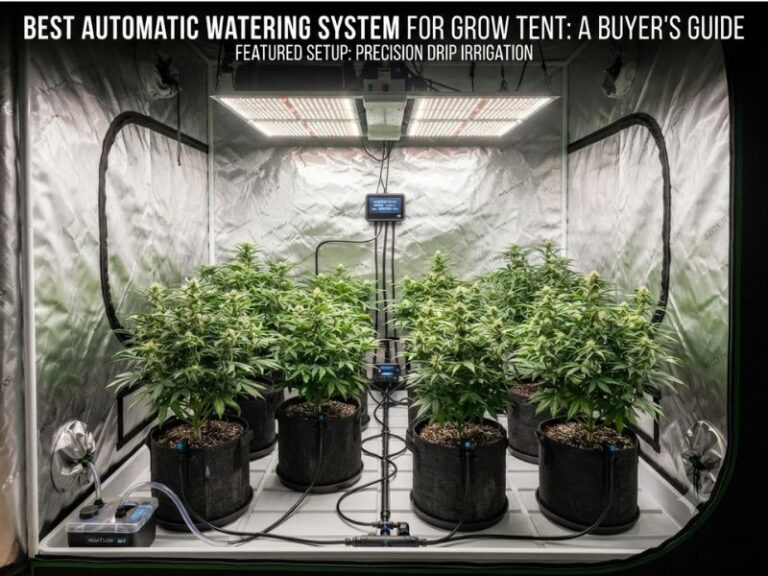
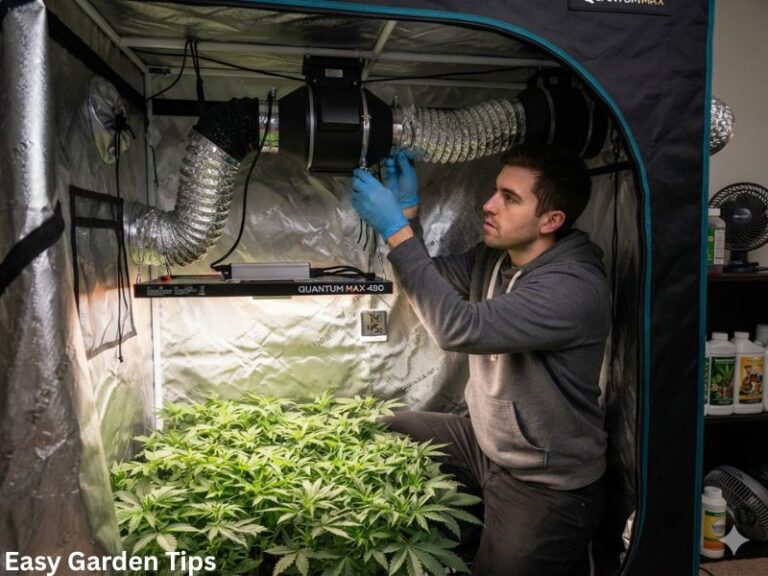
At the heart of many indoor gardens is a best grow tent. It provides an enclosed, controlled environment where you can manage the factors that have the biggest impact on plant growth, including light, temperature, humidity, airflow, and even CO₂ levels.
Instead of relying on changing outdoor conditions, a best indoor grow tent allows you to create a stable environment that supports healthy plants throughout every stage of growth. Whether you’re growing leafy greens, herbs, seedlings, or tropical houseplants, maintaining consistent conditions becomes much easier.
However, buying a grow tent is only the first step. Many beginners quickly realize they have far more questions than answers. What exactly is a grow tent? How does it work? What size should you choose? Is it worth the investment?
Then come the practical questions. How do you control humidity and temperature? Do you need an exhaust fan? What is a lung room? When should you use CO₂? And what exactly is VPD? Understanding these concepts can make the difference between a successful indoor garden and one that constantly runs into problems.
That’s exactly what this guide is designed to help with. Instead of covering just one topic, it brings together everything you need to know about grow tents in one place. You’ll learn how they work, what they’re made of, how to choose the right size, and the essential equipment needed to build an efficient indoor growing setup.
You’ll also get a beginner-friendly overview of environmental controls such as ventilation, humidity, temperature, CO₂, and VPD. Whenever a topic deserves a deeper explanation, you’ll find links to dedicated guides that explore it in detail, making this page your complete starting point for learning about grow tents.
What Is a Grow Tent?
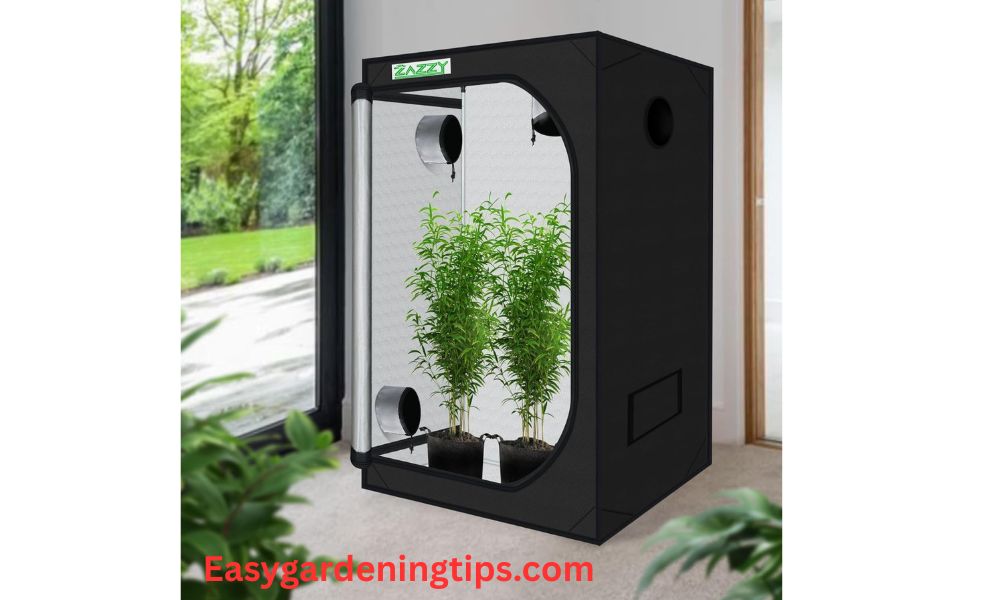
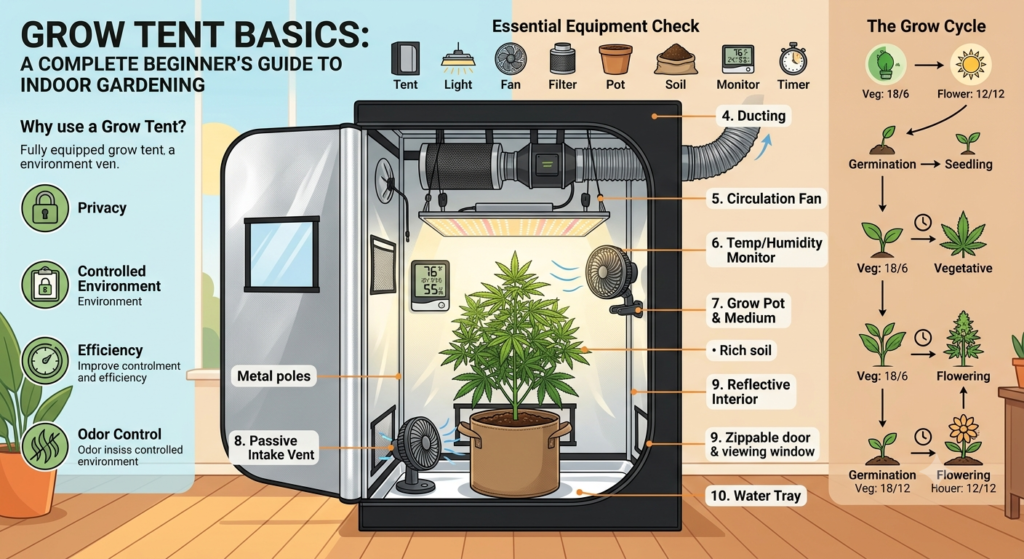
A grow tent is an enclosed, portable structure designed to create a controlled environment for growing plants indoors. It allows you to manage essential growing conditions—such as light, temperature, humidity, airflow, and ventilation—without relying on unpredictable outdoor weather.
Think of it as a miniature indoor ecosystem. Instead of exposing your plants to changing seasons, fluctuating temperatures, or unexpected storms, a grow tent lets you recreate the conditions your plants need to thrive all year round.
Most grow tents have a sturdy metal frame covered with a durable fabric shell. The inside is lined with highly reflective Mylar material, which bounces light back toward your plants instead of letting it escape. This improves light efficiency and helps ensure more even coverage across the growing area.
A typical grow tent also includes several built-in features, such as:
- Ventilation ports for intake and exhaust ducts
- Cable openings for electrical cords
- Observation windows (on some models)
- Heavy-duty zippers for light-proof sealing
- A removable waterproof floor tray
- Hanging bars for grow lights, fans, and carbon filters
These features make it much easier to build a complete indoor growing system while keeping everything organized inside a compact space.
One of the biggest advantages of a grow tent is environmental control. Since the growing area is enclosed, you can precisely adjust lighting schedules, maintain stable temperatures, control humidity, improve air circulation, and reduce the risk of pests or contaminants entering from outside. This level of control is difficult to achieve in an open room.
Grow tents are incredibly versatile. They’re commonly used for growing:
- Vegetables
- Herbs
- Leafy greens
- Seedlings
- Tropical plants
- Houseplants
- Orchids
- Hydroponic crops
Because they’re available in a wide range of sizes—from compact 2×2-foot models to large commercial tents—they’re suitable for everything from a few countertop herbs to a full indoor garden.
If you’re completely new to indoor gardening, you might also wonder how a grow tent differs from other growing spaces. Here’s a quick comparison.
| Grow Tent | Grow Room | Greenhouse |
| Portable and easy to assemble | Permanent indoor space | Outdoor structure with natural sunlight |
| Fully enclosed environment | Open room with modifications | Relies mainly on sunlight |
| Easier to control temperature and humidity | Requires more equipment | Limited environmental control |
| Lower startup cost | Higher setup cost | Weather-dependent |
| Ideal for beginners and hobby growers | Better for large-scale indoor gardens | Best for outdoor or backyard growing |
For most beginners, a grow tent offers the best balance between cost, simplicity, and environmental control. It provides many of the benefits of a dedicated grow room without requiring you to renovate an entire room in your home.
How Does a Grow Tent Work?
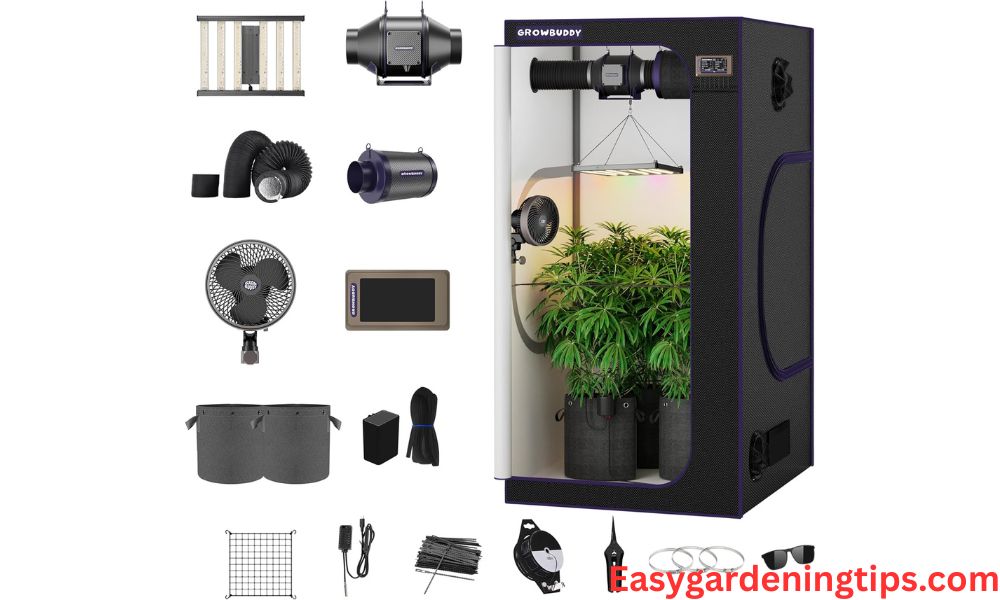
At first glance, a grow tent might look like nothing more than a fabric box with a few zippers. In reality, it’s a carefully designed system that creates and maintains an ideal environment for plant growth.
Instead of leaving your plants at the mercy of changing weather or inconsistent indoor conditions, a grow tent allows you to control nearly every environmental factor that affects their health. By working together, its reflective interior, lighting system, ventilation, and climate-control equipment create a stable growing environment where plants can thrive year-round.
Here’s a closer look at how the system works.
Reflective Interior Maximizes Light
One of the most important features of a grow tent is its highly reflective interior lining, usually made from Mylar. Rather than absorbing light, the reflective walls bounce it back toward your plants.
This has several benefits:
- Reduces wasted light
- Improves light distribution
- Eliminates dark corners
- Helps plants receive more uniform light exposure
- Increases the efficiency of your grow lights
Instead of purchasing more powerful lights to compensate for light loss, the reflective interior helps you get more value from the lighting you already have.
Grow Lights Replace Natural Sunlight
Since sunlight can’t reach the inside of a grow tent, artificial grow lights become the primary light source.
These lights provide the intensity and spectrum plants need for photosynthesis. Most modern indoor gardeners use full-spectrum LED grow lights because they are energy-efficient, produce less heat, and support every stage of plant growth—from seedlings to flowering and fruiting.
The timer connected to your lights automatically turns them on and off according to a preset schedule, ensuring your plants receive consistent day and night cycles without requiring constant attention.
Ventilation Keeps Fresh Air Moving
Plants don’t just need light—they also need fresh air.
As plants use carbon dioxide (CO₂) during photosynthesis, the air inside a sealed tent can quickly become stale. A ventilation system continuously replaces old air with fresh air while helping maintain a stable growing environment.
A typical ventilation setup includes:
- An inline exhaust fan
- Intake vents or passive air openings
- Flexible ducting
- An optional carbon filter
Together, these components remove warm, humid air while bringing fresh air into the tent, helping prevent stagnant conditions that can lead to mold, mildew, or poor plant growth.
Climate Control Creates the Ideal Growing Environment
Different plants thrive under different environmental conditions, but all plants benefit from consistency.
Because a grow tent is enclosed, it’s much easier to regulate factors such as:
- Air temperature
- Relative humidity
- Air circulation
- CO₂ concentration
- Vapor Pressure Deficit (VPD)
If the temperature rises too high, you can increase ventilation or use an air conditioner. If humidity drops too low, adding a humidifier can quickly restore the ideal range. This level of control is one of the biggest reasons many gardeners choose a grow tent over growing in an open room.
The Enclosed Design Protects Your Plants
A grow tent also acts as a protective barrier.
Keeping plants inside an enclosed space helps reduce exposure to dust, insects, airborne contaminants, and sudden environmental changes. The lightproof fabric also prevents outside light from interrupting scheduled dark periods, which is especially important for plants that rely on consistent light cycles.
Additionally, the enclosed design makes it easier to contain heat, humidity, and odors while keeping the growing area clean and organized.
Everything Works Together
A grow tent isn’t just one piece of equipment—it’s a complete indoor growing system where every component supports the others.
Here’s a simplified overview of how everything connects:
Grow Lights → Provide artificial sunlight
↓
Reflective Walls → Maximize light efficiency
↓
Plants → Grow in a controlled environment
↓
Ventilation System → Brings in fresh air and removes heat
↓
Climate Control Equipment → Maintains ideal temperature and humidity
↓
Healthy, consistent plant growth
When these elements work together, you create an environment that’s easier to manage, more predictable, and often more productive than growing in an uncontrolled indoor space.
In the next section, we’ll look at why so many indoor gardeners choose grow tents in the first place and whether investing in one is actually worth it.
Why Use a Grow Tent? Is It Worth It?
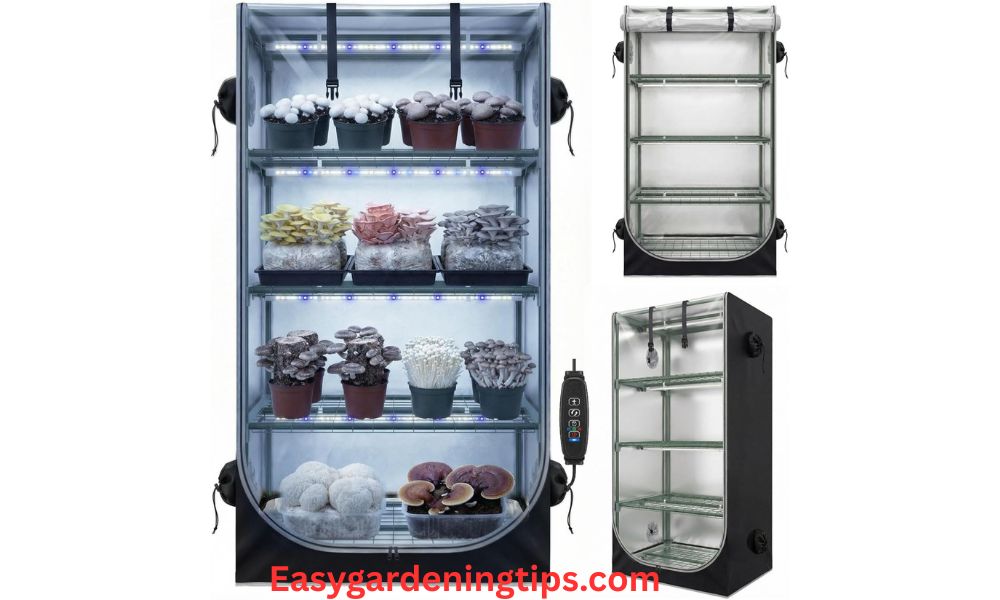
If you’ve never grown plants indoors before, you might wonder whether you actually need a grow tent. After all, can’t you just place a grow light above a few plants in a spare room?
While that’s certainly possible, you’ll have much less control over the growing environment. A grow tent solves many of the common challenges indoor gardeners face by creating a dedicated space where light, temperature, humidity, and airflow are easier to manage.
For most beginners and hobby growers, the answer is simple: yes, a grow tent is usually worth the investment.
Better Control Over the Growing Environment
Plants perform best when environmental conditions remain consistent.
Without a grow tent, room temperatures can fluctuate throughout the day, humidity levels may vary, and air circulation is often uneven. These changes can stress plants and slow their growth.
A grow tent creates an enclosed space where you can maintain a much more stable environment by controlling:
- Temperature
- Humidity
- Airflow
- Light intensity
- Light schedule
- CO₂ levels (if used)
The more stable these conditions are, the easier it becomes to grow healthy plants.
Makes Grow Lights More Efficient
One of the biggest advantages of a grow tent is its reflective interior.
Instead of allowing light to spread throughout an entire room, the reflective Mylar lining redirects it back toward your plants. This means more of the light you pay for is actually used for photosynthesis rather than being wasted.
As a result, plants receive more even light coverage, and you may achieve better growth without upgrading to a more powerful lighting system.
Protects Plants from Outside Conditions
Growing indoors doesn’t completely eliminate environmental problems.
Open rooms can still expose plants to dust, household pests, pets, accidental damage, drafts, and sudden temperature changes.
A grow tent acts as a protective enclosure that helps isolate your plants from many of these outside influences. It also makes it easier to keep your growing area clean and organized.
Helps Manage Heat and Humidity
Every grow light generates some amount of heat, and plants naturally release moisture into the air through transpiration.
Without proper environmental control, heat and humidity can quickly build up, creating conditions that encourage mold, mildew, and plant diseases.
A grow tent is designed to work with exhaust fans, intake vents, humidifiers, dehumidifiers, and other climate-control equipment, making it much easier to maintain the right conditions throughout the growing cycle.
I’ll cover humidity, temperature, ventilation, CO₂, and VPD in more detail later in this guide.
Reduces Light Leaks
Plants rely on consistent light and dark periods to grow properly.
A quality grow tent helps keep your grow lights inside while blocking unwanted outside light from entering during scheduled dark periods. This creates a more predictable lighting environment and also prevents bright grow lights from illuminating the rest of your home.
Helps Contain Odors
Some indoor plants produce little to no noticeable odor, while others can generate stronger smells as they mature.
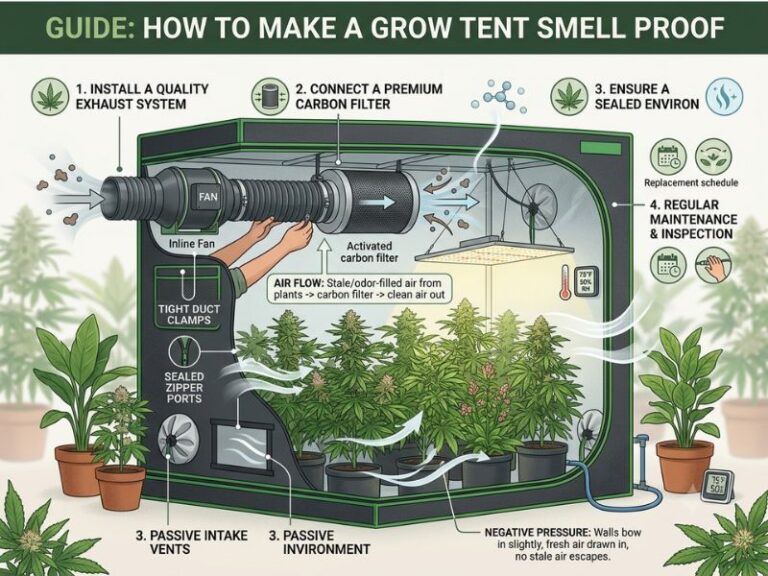
Because a grow tent is enclosed, it’s much easier to connect an inline fan and carbon filter that remove odors before air leaves the tent. While no system is perfect, a properly sealed grow tent with an effective carbon filter can significantly reduce odors.
Suitable for Small Spaces
Not everyone has a dedicated grow room.
One of the biggest advantages of grow tents is their flexibility. They’re available in a variety of sizes, making them suitable for apartments, spare bedrooms, basements, garages, closets, and other compact indoor spaces.
Whether you’re growing a handful of herbs or building a larger indoor garden, there’s usually a tent size that fits your available space.
Is a Grow Tent Worth It?
For most indoor gardeners, a grow tent offers far more than just a place to keep plants.
It provides:
- Better environmental control
- More efficient use of grow lights
- Improved airflow and ventilation
- Easier temperature and humidity management
- Better protection from pests and contaminants
- Cleaner, more organized growing space
- Greater flexibility for year-round gardening
If your goal is to grow healthy plants consistently, a grow tent is one of the best investments you can make. It simplifies many aspects of indoor gardening and creates an environment that’s much easier to manage than growing in an open room.
In the next section, I’ll explore the many different ways grow tents are used—from starting seedlings and growing vegetables to supporting hydroponic systems and tropical houseplants.
What Are Grow Tents Used For?
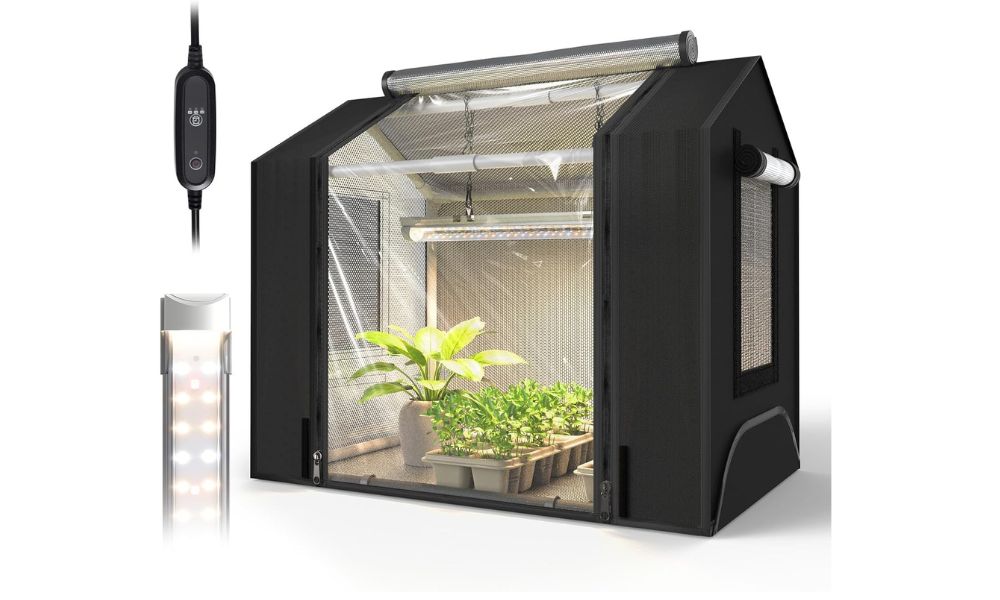
Although many people associate grow tents with a single type of plant, they’re actually designed for a wide variety of indoor gardening applications. Their main purpose is to provide a controlled environment where plants can grow regardless of the season or outdoor weather.
Whether you’re starting seeds in early spring or harvesting fresh herbs in the middle of winter, a grow tent gives you the ability to recreate the conditions plants need to thrive.
Here are some of the most common ways people use grow tents.
Growing Vegetables Indoors
One of the most popular uses for a grow tent is growing vegetables year-round.
Because you control the light, temperature, and humidity, you don’t have to wait for the outdoor growing season. Many gardeners use grow tents to produce fresh vegetables even during the colder months.
Common vegetables grown in grow tents include:
- Lettuce
- Spinach
- Kale
- Tomatoes
- Peppers
- Cucumbers
- Green onions
Smaller vegetables and leafy greens are especially well-suited for indoor growing because they require less space and mature relatively quickly.
Growing Herbs
Fresh herbs are another excellent choice for grow tents.
Many herbs stay compact, grow quickly, and don’t require large containers, making them perfect for beginners or gardeners with limited space.
Popular choices include:
- Basil
- Mint
- Parsley
- Cilantro
- Oregano
- Thyme
- Rosemary
- Chives
With the right lighting schedule, you can harvest many herbs continuously throughout the year.
Starting Seeds and Seedlings
Many gardeners use grow tents before the outdoor growing season even begins.
Instead of waiting for warmer weather, you can start seeds indoors several weeks earlier under controlled conditions. Once the weather improves, healthy seedlings can be transplanted into outdoor beds or containers.
Using a grow tent for seed starting offers several advantages:
- Faster germination
- Consistent temperatures
- Better humidity control
- Stronger seedlings
- Protection from unexpected cold weather
Growing Houseplants and Tropical Plants
Not every house provides enough natural sunlight for tropical plants.
A grow tent can supply the consistent light and humidity that many tropical species prefer, helping them produce healthier foliage and more vigorous growth.
Indoor gardeners often use grow tents for plants such as:
- Monstera
- Philodendron
- Alocasia
- Anthurium
- Calathea
- Bird of Paradise
- Orchids
For collectors with rare or sensitive plants, a grow tent can create a much more stable environment than an ordinary room.
Hydroponic Gardening
Grow tents are also widely used for hydroponic systems.
Since hydroponics relies on carefully controlling light, temperature, humidity, and water quality, an enclosed growing space makes managing the system much easier.
Depending on your setup, a grow tent can accommodate:
- Deep Water Culture (DWC)
- Nutrient Film Technique (NFT)
- Drip systems
- Ebb and Flow systems
- Coco coir growing
- Rockwool-based systems
The tent itself doesn’t make a system hydroponic—rather, it provides the ideal environment for hydroponic equipment to operate efficiently.
Propagating Plants
Grow tents are useful for more than growing mature plants.
Many gardeners use them to root cuttings, propagate houseplants, or establish young plants before moving them into larger containers.
Because propagation often requires warm temperatures and higher humidity, a grow tent makes it easier to maintain the stable conditions needed for successful root development.
Growing Plants Year-Round
Perhaps the biggest advantage of a grow tent is that it removes seasonal limitations.
Instead of depending on spring, summer, or favorable weather, you can continue growing indoors throughout the year. This is especially beneficial if you live in regions with long winters, extreme heat, or unpredictable climates.
By controlling the indoor environment, you can create a consistent growing season whenever you need it.
Can You Grow Almost Any Plant in a Grow Tent?
In many cases, yes.
As long as you provide the right combination of light, temperature, humidity, nutrients, and growing space, a grow tent can support a wide range of plants. The key is choosing a tent that’s appropriately sized and adjusting the environment to match your plants’ specific needs.
Whether you’re interested in growing herbs on a kitchen shelf, producing fresh vegetables for your family, cultivating tropical houseplants, or building a hydroponic garden, a grow tent provides the flexibility to support all of these goals.
Next, let’s look at what grow tents are made of and how each component contributes to creating a durable, lightproof, and efficient indoor growing environment.
What Are Grow Tents Made Of?
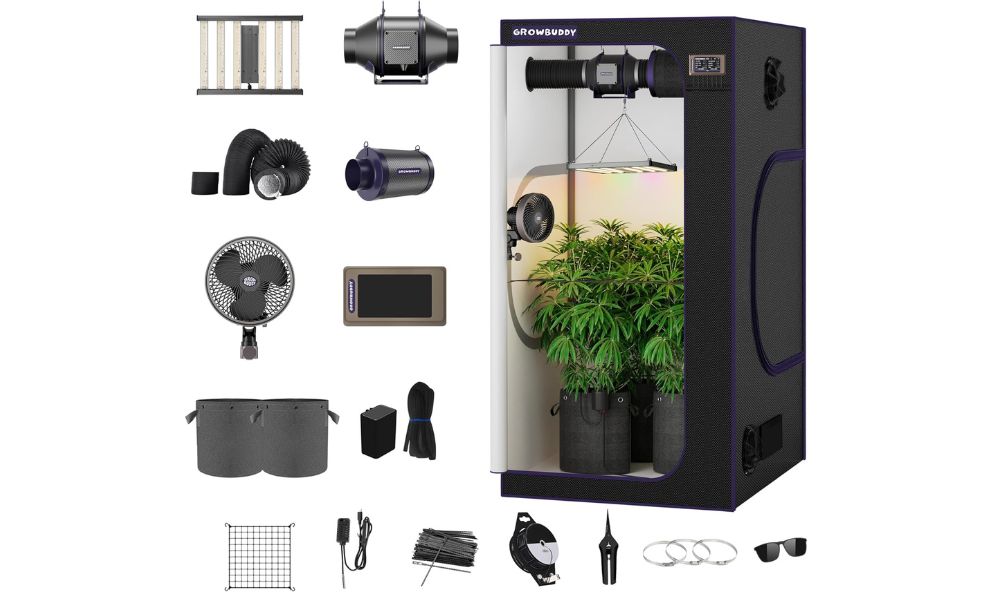
At first glance, a grow tent may seem like a simple fabric enclosure. However, a quality grow tent is made from several specialized components that work together to create a durable, lightproof, and highly efficient growing environment.
From the metal frame that supports your equipment to the reflective interior that maximizes light output, every part serves a specific purpose. Understanding these materials can also help you choose a better grow tent when you’re ready to buy one.
Metal Frame
The frame is the backbone of a grow tent.
Most quality grow tents use powder-coated steel poles connected with heavy-duty plastic or metal corner pieces. The frame is designed to support not only the tent itself but also the weight of grow lights, inline fans, carbon filters, and other equipment suspended from the ceiling bars.
Premium models often support over 100 pounds (45 kg) of hanging equipment, while commercial-grade tents may support significantly more.
When comparing grow tents, pay attention to the frame diameter and maximum weight capacity, especially if you plan to install multiple grow lights or large ventilation systems.
Outer Fabric
The exterior of a grow tent is typically made from heavy-duty Oxford fabric or polyester canvas.
This material provides several important benefits:
- Blocks outside light from entering
- Prevents grow light from leaking out
- Resists tearing and everyday wear
- Helps maintain a stable internal environment
You’ll often see fabric ratings such as 600D, 1680D, or 2000D. The “D” stands for Denier, a measurement of fabric thickness and durability.
In general:
- 600D is suitable for most home gardeners.
- 1680D is thicker, stronger, and offers better durability and light blocking.
- Higher denier fabrics are usually found on premium grow tents.
While thicker fabric generally improves durability, the overall build quality—including stitching and zipper construction—is just as important.
Reflective Mylar Interior
The inside of a grow tent is lined with highly reflective Mylar.
Instead of absorbing light, Mylar reflects it back toward your plants, helping improve light distribution and reduce wasted energy.
Many premium tents use diamond-pattern Mylar, which scatters reflected light more evenly across the growing area. This helps eliminate dark spots and allows plants to receive more consistent light from multiple angles.
A high-quality reflective interior can noticeably improve the efficiency of your grow lights without increasing electricity consumption.
Heavy-Duty Zippers
Zippers might seem like a small detail, but they’re one of the most important parts of a grow tent.
Quality grow tents use large, durable zippers that create a tight seal when closed. This helps:
- Prevent light leaks
- Keep unwanted pests out
- Improve odor control
- Maintain stable temperature and humidity
Cheap zippers often become the first point of failure, so it’s worth investing in a tent with well-made, smooth-operating zippers.
Ventilation and Cable Ports
Every grow tent includes multiple openings that allow equipment to connect with the outside environment.
These typically include:
- Exhaust ports
- Intake ports
- Electrical cable ports
- Adjustable duct openings
Most ports feature double drawstrings or sleeves that tighten around ducting, reducing unwanted air leaks while keeping the interior lightproof.
The number and placement of these ports vary depending on the tent’s size and design.
Roof Support Bars
Across the top of the frame are reinforced support bars designed to hold your equipment.
These bars commonly support:
- LED grow lights
- Inline exhaust fans
- Carbon filters
- Rope ratchets
- Drying racks
- Trellis systems
A strong roof frame is especially important if you’re planning a larger indoor garden with heavier equipment.
Waterproof Floor Tray
Nearly every modern grow tent includes a removable waterproof floor tray.
This tray catches:
- Water spills
- Nutrient runoff
- Loose soil
- Plant debris
It not only protects your floor but also makes routine cleaning much easier. Most trays can be removed, rinsed, and reinstalled in just a few minutes.
Observation Windows and Access Doors
Some grow tents also include clear viewing windows that let you inspect your plants without opening the main door.
Opening the tent frequently can cause sudden changes in temperature and humidity. Observation windows help reduce these fluctuations while allowing quick visual inspections.
Larger tents may also include multiple doors, making it easier to access plants from different sides for watering, pruning, or maintenance.
Putting It All Together
Although each component has its own job, they work together as a complete system.
- The steel frame provides strength and supports equipment.
- The outer fabric blocks light and protects the growing environment.
- The reflective Mylar interior maximizes lighting efficiency.
- The zippers and ports keep the tent sealed while allowing ventilation and electrical connections.
- The support bars hold lights, fans, and filters.
- The waterproof floor tray simplifies cleanup and protects your flooring.
Choosing a grow tent made from quality materials will not only improve durability but also make it easier to maintain stable growing conditions for years to come.
In the next section, we’ll look at hydroponic grow tents, how they differ from standard setups, and whether you need a special tent for hydroponic gardening.
What Is a Hydroponic Grow Tent?
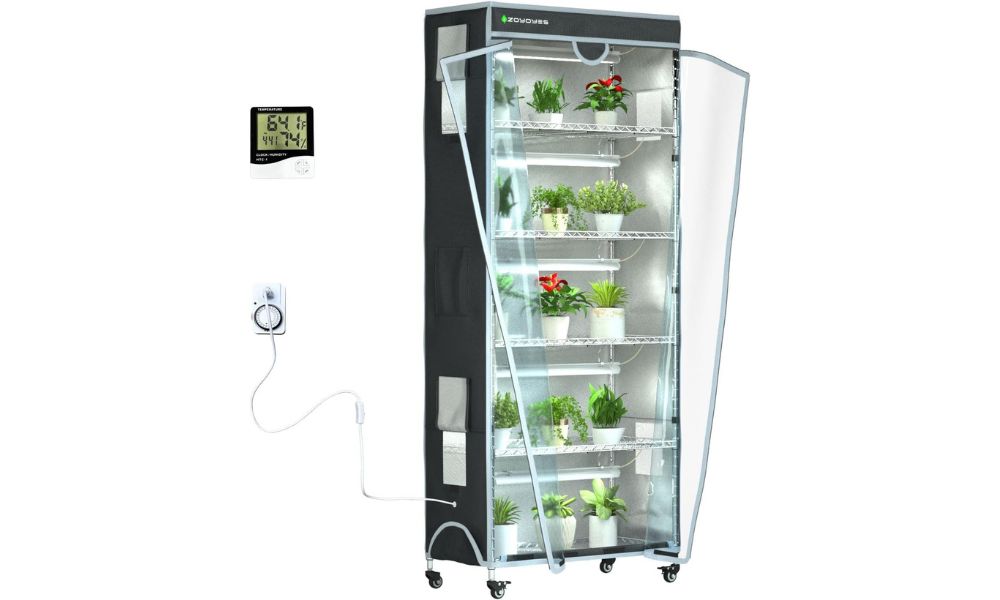
A hydroponic grow tent isn’t a special type of grow tent. It’s simply a standard grow tent that’s equipped with a hydroponic growing system instead of traditional soil.
The tent itself performs the same job—creating a controlled environment for your plants. The main difference lies in how the plants receive water and nutrients.
In a soil-based setup, plants grow in potting soil or coco coir. In a hydroponic setup, roots are supplied with a nutrient-rich water solution, allowing plants to absorb nutrients more efficiently.
Common hydroponic systems used inside grow tents include:
- Deep Water Culture (DWC)
- Nutrient Film Technique (NFT)
- Ebb and Flow
- Drip Systems
- Kratky Method
Besides the hydroponic system itself, you’ll also need equipment such as a nutrient reservoir, water pump, air pump, air stones, and pH/EC meters.
One reason grow tents are so popular for hydroponics is that they make environmental control much easier. Since hydroponic plants often grow faster and are more sensitive to temperature and humidity changes, maintaining stable conditions is essential.
If you’re planning to build a hydroponic garden, you don’t need a “hydroponic grow tent.” Instead, choose a quality grow tent with enough space for your plants, reservoir, and equipment.
In the next section, we’ll look at another important concept many beginners overlook—the lung room, and why it plays a major role in maintaining a healthy grow tent environment.
What Is a Lung Room?
A lung room is the room that surrounds your grow tent. While most beginners focus only on what’s happening inside the tent, the environment outside the tent is just as important.
Think of the lung room as the “air source” for your grow tent. Every time your exhaust fan removes warm, humid air from the tent, fresh air is pulled in from the surrounding room. If that room is too hot, too cold, too humid, or poorly ventilated, those conditions will eventually affect the environment inside your grow tent.
For example:
- A hot lung room makes it harder to keep your grow tent cool.
- A humid lung room can cause excess humidity inside the tent.
- A cold lung room may lower the tent’s temperature too much.
- Poor airflow in the room reduces ventilation efficiency.
Ideally, your lung room should be clean, well-ventilated, and kept within a comfortable temperature and humidity range. Many indoor gardeners place their grow tents in spare bedrooms, basements, garages, or dedicated grow rooms, then control the conditions in both the room and the tent.
Simply put, your grow tent can only perform as well as the room supplying it with fresh air. Maintaining a healthy lung room makes it much easier to control temperature, humidity, and overall plant health inside the tent.
Next, let’s look at the essential equipment you’ll need to build a complete grow tent setup.
Main Components of a Grow Tent Setup
A grow tent alone isn’t enough to grow healthy plants. Think of it as the foundation of your indoor garden. To create the right growing environment, you’ll also need a few essential pieces of equipment.
The exact setup depends on what you’re growing and your budget, but most indoor gardens use the following components.
Grow Lights
Grow lights provide the artificial sunlight your plants need for photosynthesis. Modern full-spectrum LED grow lights are the most popular choice because they’re energy-efficient, generate less heat, and support every stage of plant growth.
Ventilation System
A proper ventilation system keeps fresh air moving through the tent while removing excess heat and humidity. Most setups use an inline exhaust fan, ducting, and intake vents to maintain healthy air exchange.
Inline Fan
The inline fan is the heart of your ventilation system. It pulls stale air out of the tent and helps regulate temperature, humidity, and airflow.
Carbon Filter
A carbon filter connects to the inline fan and removes odors from the exhaust air. It also helps trap dust and airborne particles before the air leaves the tent.
Oscillating Fans
Small oscillating fans keep air circulating around your plants. Good airflow strengthens stems, reduces moisture buildup, and lowers the risk of mold and mildew.
Thermometer & Hygrometer
Monitoring temperature and humidity is essential for healthy plant growth. A digital thermometer-hygrometer lets you track both values so you can make adjustments when needed.
Humidifier
If the air inside your tent becomes too dry, a humidifier can raise humidity to the proper level, especially during seedling and vegetative growth.
Dehumidifier
In humid environments, a dehumidifier removes excess moisture from the air, helping prevent mold, mildew, and other humidity-related problems.
Heater
If your grow space gets too cold, especially during winter or nighttime, a small heater can help maintain a stable temperature inside the tent.
Air Conditioner
In warmer climates, an air conditioner may be necessary to keep temperatures within the ideal range, particularly when using powerful grow lights.
Growing Medium
Plants need a medium to support their roots. Common options include potting soil, coco coir, rockwool, clay pebbles, and other hydroponic media.
Pots or Containers
Fabric pots, plastic pots, and hydroponic containers all work well. Choose the size based on your plants and available grow space.
Timer
A timer automatically turns your grow lights—and sometimes other equipment—on and off according to a set sched
With the right combination of equipment, your grow tent becomes a fully controlled growing environment where you can provide plants with everything they need to thrive.
Choosing the Right Grow Tent Size
One of the biggest mistakes beginners make is buying a grow tent that’s either too small or much larger than they actually need.
The right size depends on several factors, including how many plants you want to grow, the mature size of those plants, your lighting setup, and the amount of space available in your home.
Here are the most common grow tent sizes and what they’re best suited for.
2×2 Grow Tent
A 2×2 grow tent is ideal for beginners or anyone with limited space. It’s perfect for growing a few herbs, leafy greens, seedlings, or one to two medium-sized plants.
2×4 Grow Tent
A 2×4 grow tent offers more growing space while still fitting comfortably in apartments, closets, or spare rooms. It’s a great option for growing vegetables, herbs, or several medium-sized plants.
3×3 Grow Tent
A 3×3 grow tent provides a balanced mix of growing space and efficiency. It’s one of the most popular choices for home gardeners because it offers enough room for multiple plants without taking up too much floor space.
4×4 Grow Tent
A 4×4 grow tent is designed for larger indoor gardens. It provides enough space for more plants, larger containers, and higher-powered lighting systems, making it a popular choice for experienced growers.
Larger Grow Tents
If you’re planning a large indoor garden, tents are also available in sizes such as 5×5, 4×8, 8×8 feet. and even 10x10 grwo tents. These models offer significantly more growing space but require stronger lighting, better ventilation, and more environmental control.
Other Factors to Consider
Before choosing a grow tent, ask yourself:
- How many plants do you plan to grow?
- How large will those plants become?
- How much floor space do you have?
- What size grow lights will you use?
- Will you need room for fans, filters, or hydroponic equipment?
Buying a slightly larger tent than you currently need can give you more flexibility as your indoor garden grows. However, avoid choosing a tent that’s unnecessarily large, as it may increase equipment costs and make environmental control more difficult.
If you’re still unsure which size is right for you, check out our detailed guide on How Big of a Grow Tent Do You Need?, where we compare tent sizes based on plant count, lighting, and available space.
Next, let’s look at the basic steps for setting up a grow tent and getting your indoor garden ready for planting.
Setting Up a Grow Tent (Overview)
Setting up a grow tent is easier than many beginners expect. Most modern grow tents are designed for quick assembly, and you can usually have the basic structure ready in under an hour.
The process starts by choosing the right location. Pick a spot with enough floor space, access to electrical outlets, and good airflow. If possible, place the tent in a clean room where temperature and humidity are relatively stable.
Next, assemble the metal frame and pull the tent fabric over it. Once the tent is standing, install your grow light, inline fan, carbon filter, and any other equipment you’ll be using.
After that, arrange your pots or hydroponic system inside the tent, connect your ventilation, and organize cables neatly to keep the space safe and clutter-free.
Before adding plants, run the entire system for a day or two. This allows you to check that the temperature, humidity, lighting schedule, and airflow are all working as expected.
A basic grow tent setup usually follows these steps:
- Choose the right location.
- Assemble the frame and tent.
- Install the grow lights.
- Set up the ventilation system.
- Add fans and environmental controls.
- Place your pots or hydroponic system.
- Test the environment before introducing plants.
This is just a high-level overview. Each step involves its own best practices, especially when it comes to lighting, ventilation, and equipment placement.
If you’d like detailed, step-by-step instructions, check out these guides:
- How to Set Up a Grow Tent
- How to Build a Grow Tent
- DIY Grow Tent: Build Your Own Indoor Grow Space
Now that your grow tent is assembled, the next step is learning how to manage the environment inside it—starting with temperature, humidity, ventilation, CO₂, and VPD.
Managing the Grow Tent Environment
Building a grow tent is only half the job. The real key to healthy plant growth is maintaining the right environment inside it.
Plants respond to changes in temperature, humidity, airflow, and light every day. Even the best grow lights can’t compensate for poor environmental conditions. That’s why successful indoor gardeners spend just as much time monitoring their growing environment as they do caring for their plants.
Below is an overview of the five most important environmental factors you’ll need to manage.
Temperature
Temperature directly affects plant growth, water uptake, and photosynthesis. If it’s too hot, plants may become stressed and lose moisture quickly. If it’s too cold, growth can slow significantly.
Your goal is to maintain a stable temperature during both the day and night. Depending on your setup, you may need an inline fan, heater, or air conditioner to keep conditions within the ideal range.
Learn more:
- How to Cool a Grow Tent
- How to Heat a Grow Tent
- How to Keep a Grow Tent Warm at Night
Humidity
Humidity determines how much moisture is present in the air. Different growth stages require different humidity levels, so keeping it balanced is essential.
If humidity is too high, mold and mildew can develop. If it’s too low, plants may lose water faster than they can absorb it.
Learn more:
- How to Increase Humidity in a Grow Tent
- How to Lower Humidity in a Grow Tent
- How to Control Humidity in a Grow Tent
- How to Lower Humidity Without a Dehumidifier
Ventilation
Fresh air is essential for healthy plants.
A good ventilation system removes warm, humid air while bringing fresh air into the tent. Proper airflow also strengthens stems and helps prevent mold, pests, and stagnant air.
Learn more:
- Do I Need to Exhaust My Grow Tent Outside?
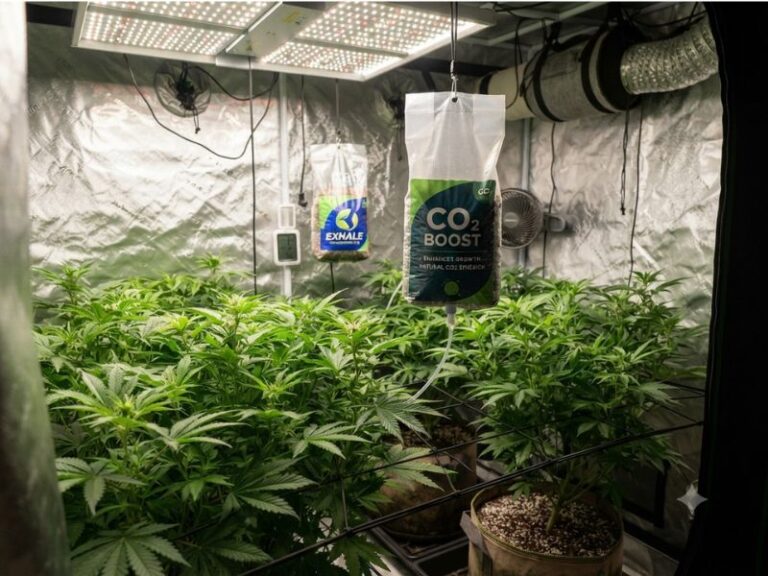
CO₂
Plants use carbon dioxide during photosynthesis. In most home grow tents, fresh air provides enough CO₂ for healthy growth.
However, larger or sealed grow rooms may benefit from supplemental CO₂—but only after lighting, temperature, and humidity are already optimized.
Learn more:
- How to Add CO₂ to a Grow Tent
- When to Add CO₂ to a Grow Tent
VPD (Vapor Pressure Deficit)
VPD measures the relationship between temperature and humidity. It helps determine how efficiently plants absorb and release water.
Although it may sound technical, understanding VPD can help you fine-tune your growing environment and improve overall plant health.
Learn more:
- What Is VPD in a Grow Tent?
- How to Lower VPD in a Grow Tent
- How to Raise VPD in a Grow Tent
Mastering these environmental factors will make it much easier to grow healthy plants consistently. Instead of constantly reacting to problems, you’ll be able to create stable conditions that encourage strong growth from seedling to harvest.
Common Beginner Mistakes to Avoid
Every indoor gardener makes mistakes, especially when starting out. Fortunately, most grow tent problems aren’t caused by expensive equipment—they’re caused by simple oversights that are easy to fix once you know what to look for.
Avoiding these common mistakes will save you time, money, and frustration while helping your plants grow in a healthier environment.
Choosing the Wrong Tent Size
Many beginners underestimate how much space plants and equipment require.
A tent that seems large enough today may quickly become overcrowded once you add grow lights, fans, filters, and mature plants. Choose a size that gives you a little room to grow rather than the smallest tent possible.
Ignoring Ventilation
Fresh air is just as important as light.
Without proper ventilation, heat and humidity build up inside the tent, increasing the risk of mold, mildew, and weak plant growth. Even a small grow tent should have adequate air exchange and circulation.
Using the Wrong Light Height
Placing grow lights too close can stress or burn plants, while hanging them too high reduces light intensity.
Always follow the manufacturer’s recommended hanging distance and adjust the lights as your plants grow.
Overwatering Plants
Overwatering is one of the most common mistakes among beginners.
Watering too frequently can reduce oxygen around the roots and increase the risk of root rot. Instead of watering on a fixed schedule, check the growing medium and water only when needed.
Neglecting Temperature and Humidity
Many new growers install equipment but rarely monitor environmental conditions.
Using a thermometer and hygrometer helps you catch problems early and maintain a stable growing environment.
Overcrowding the Tent
Trying to fit too many plants into a small space restricts airflow and blocks light from reaching lower leaves.
Giving plants enough room improves air circulation, simplifies maintenance, and often results in healthier growth.
Forgetting Routine Cleaning
A dirty grow tent can attract pests, encourage mold, and reduce airflow.
Removing dead leaves, cleaning spills, and inspecting equipment regularly helps prevent many common issues before they become serious.
Trying to Perfect Everything at Once
Many beginners constantly adjust lighting, temperature, humidity, and watering in an attempt to create the “perfect” environment.
In reality, plants prefer stability. Small, gradual adjustments are usually far more effective than making frequent, dramatic changes.
By avoiding these mistakes and focusing on consistency, you’ll build a healthier indoor growing environment and gain confidence much faster.
Frequently Asked Questions
Do grow tents keep the smell in?
Grow tents can significantly reduce odors when they’re properly sealed and paired with an inline fan and carbon filter. On their own, however, grow tents aren’t completely odor-proof.
Can you grow vegetables in a grow tent?
Yes. Grow tents are excellent for growing vegetables such as lettuce, tomatoes, peppers, spinach, kale, and many other edible crops year-round.
Can you use a grow tent for hydroponics?
Absolutely. Most hydroponic systems can be installed inside a standard grow tent, provided there’s enough room for the plants and equipment.
Can beginners use a grow tent?
Yes. Grow tents are designed for gardeners of all experience levels. Many beginner-friendly models are easy to assemble and require only basic equipment to get started.
How long do grow tents last?
A quality grow tent can last for many years with proper care. Its lifespan depends on the build quality, frequency of use, and how well it’s maintained.
Conclusion
A grow tent is much more than a simple enclosure—it’s the foundation of a successful indoor garden. By giving you control over light, temperature, humidity, airflow, and ventilation, it creates a stable environment where plants can thrive regardless of the season.
Whether you’re growing herbs, vegetables, tropical houseplants, seedlings, or using a hydroponic system, choosing the right grow tent and understanding how it works will make indoor gardening easier and more rewarding.
In this guide, we’ve covered the fundamentals, from understanding what a grow tent is and how it works to selecting the right size, setting it up, managing the growing environment, and avoiding common beginner mistakes. While this overview gives you a solid starting point, each topic can be explored in much greater detail.
If you’re ready to take the next step, browse our in-depth guides on grow tent setup, humidity control, temperature management, ventilation, CO₂, VPD, maintenance, and troubleshooting. Together, they’ll help you build the knowledge needed to create a healthier, more productive indoor growing space.

I’m Maya L. Greenwood, a lifelong plant lover who believes anyone can grow something beautiful with the right guidance. After years of testing soil mixes, pruning methods, irrigation tricks, and pest-safe solutions, I started EasyGardenTips.com to turn hard-won lessons into step-by-step advice. From seed starting and container gardens to composting and seasonal checklists, my goal is to make gardening simple, sustainable, and fun.