10 Best Fan for Grow Tent: Inline, Exhaust, Intake & Oscillating
Choosing the best fan for grow tent use requires understanding that air exchange and internal air movement are separate jobs. An enclosed tent can trap heat, humidity, odors, and stale air, but removing that air is only part of the solution. Plants also need steady circulation around and below the canopy to reduce stagnant pockets and create a more uniform environment.
An inline duct fan normally serves as the primary exhaust. It pulls warm, humid air through a duct system and, when odor control is needed, through an activated-carbon filter. A clip or oscillating fan performs a different role: it moves air across the leaves and through dense foliage without replacing the air inside the tent.
For a higher-capacity six-inch exhaust setup, my primary recommendation is the Hon&Guan 469 CFM 6-Inch Inline Duct Fan. Its listing combines an EC motor, variable-speed control, 469 CFM of rated airflow, and IP44 protection. For internal circulation, the VIVOSUN AeroWave E9 Oscillating Clip Fan offers automated movement, multiple speeds, and a grow-tent-focused mounting design.
I reviewed five ducted fans and five circulation fans to cover the best inline fan for grow tent ventilation as well as the best circulation fan for grow tent canopy management. Because marketplace specifications are not always consistent, I treat airflow, noise, and power figures as manufacturer or seller claims—not independent laboratory measurements.
10 Best Fan for Grow Tent: Inline, Exhaust, Intake & Oscillating
| Image | Product Name | Check Price |
|---|---|---|
Best Choice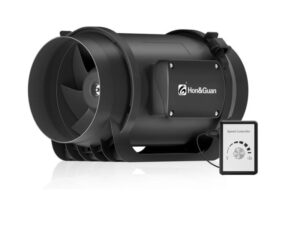 | Hon&Guan 469 CFM 6-Inch Inline Duct Fan | Check Price |
Second Best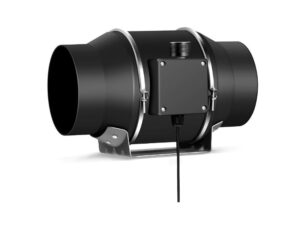 | MicroMall Quiet 6-Inch 405 CFM Inline Duct Fan | Check Price |
Third Choice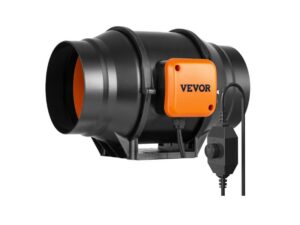 | VEVOR 400 CFM 6-Inch Inline Duct Fan | Check Price |
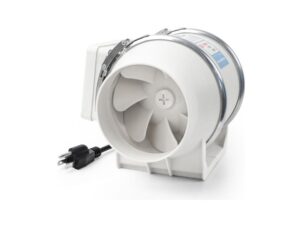 | Voltset 4-Inch 280 CFM Inline Duct Fan | Check Price |
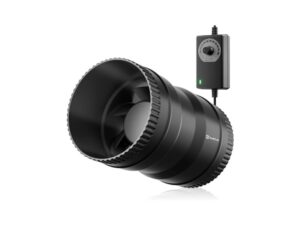 | Hon&Guan 130 CFM 4-Inch Inline Booster Fan | Check Price |
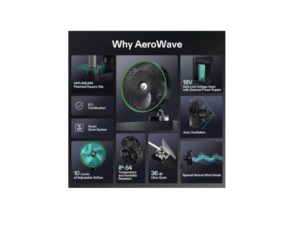 | VIVOSUN AeroWave E9 9-Inch Oscillating Clip Fan | Check Price |
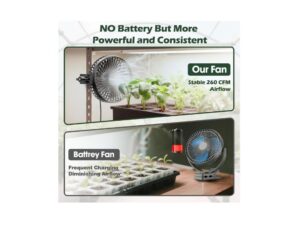 | Tonree 5.5-Inch Grow Tent Clip Fans, Pack of 2 | Check Price |
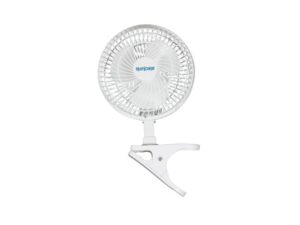 | Hurricane Classic 6-Inch Clip Fan | Check Price |
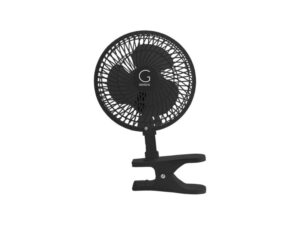 | Genesis 6-Inch Convertible Clip and Tabletop Fan | Check Price |
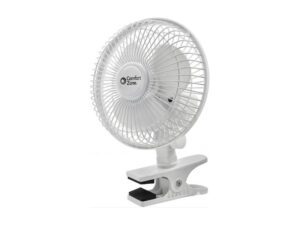 | Comfort Zone CZ6C 6-Inch Clip Fan | Check Price |
Best Inline, Exhaust, and Intake Fans for Grow Tents

An inline fan can function as an exhaust fan, an active intake fan, or a duct booster, depending on its design and position. However, these roles are not interchangeable in every system. A main exhaust fan must overcome resistance from a carbon filter, ducting, bends, and exhaust ports, while an intake or booster fan may operate in a less restrictive airflow path.
The following five products cover several possible setups, from a six-inch filtered exhaust system to a small active intake. The best exhaust fan for grow tent use should have enough reserve capacity to maintain airflow after restrictions are added. The best intake fan for grow tent use may be smaller because the exhaust should generally remain stronger to maintain slight negative pressure.
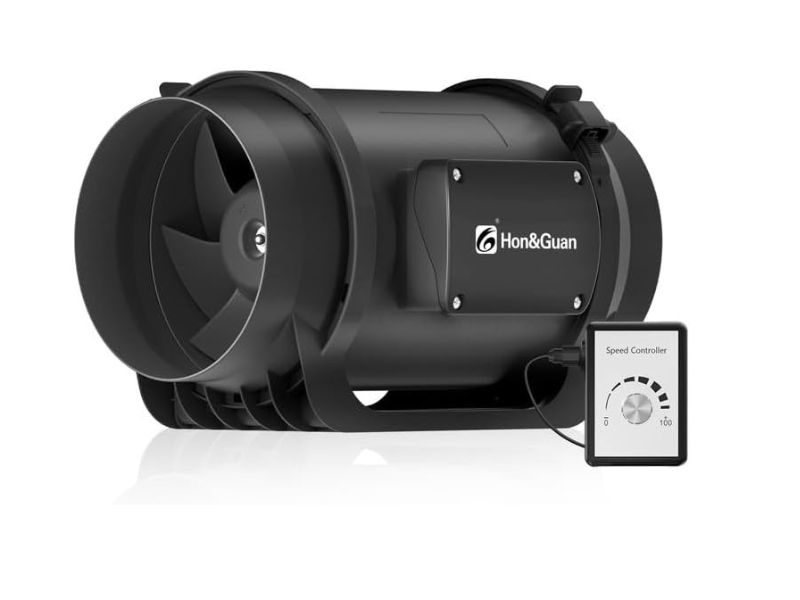
1. Hon&Guan 469 CFM 6-Inch Inline Duct Fan
Key features
- 469 CFM listed airflow
- Six-inch duct connection
- EC motor
- Variable-speed controller
- Mixed-flow design
- 4,300 RPM listed maximum speed
- IP44 protection
- Removable duct ends
- 4.5-star Amazon rating at research time
The Hon&Guan 469 CFM model is the inline fan I would consider first for a medium or larger grow-tent exhaust system. It uses a six-inch duct connection, an EC motor, a mixed-flow design, and an included variable-speed controller.
Amazon currently lists the fan at 469 CFM, 4,300 RPM, 77 watts, and 55 dB. The same listing identifies an operating-temperature range of -4°F to 140°F and an IP44-rated junction-box design. At the time of research, the listing showed approximately 4.5 stars from 213 ratings.
The combination of six-inch ducting and 469 CFM gives this fan useful airflow reserve. A carbon filter, flexible ducting, and bends will reduce installed airflow, so starting above the bare minimum can allow the fan to run below full speed while still maintaining the desired environment.
The variable-speed controller is particularly useful in a grow tent. Maximum airflow may be needed during hot conditions, but continuous full-speed operation can produce unnecessary noise and excessive negative pressure when the room is cooler. Reducing the speed allows the system to balance temperature, humidity, odor containment, and sound.
Its EC motor is another practical advantage. Electronic commutation allows controlled operation across a broad speed range, although the actual energy savings depend on operating speed and system resistance.
There is one specification issue worth noting. The main product bullets state a 77-watt rating, while Amazon’s separate “Important Information” area has displayed 110 watts. That conflict should be verified on the product label or current documentation before using either figure for an exact operating-cost calculation.
The fan’s plastic housing and removable duct ends should simplify installation and cleaning, but plastic construction may not feel as substantial as a heavy metal housing. It also requires enough space for the body, controller cable, duct collars, filter, and suspension straps.
What I like
- Provides significant airflow reserve for filtered systems
- Variable control makes environmental adjustment easier
- Six-inch ducting can move substantial air without the velocity of a smaller duct
- IP44 protection is more suitable for a humid environment than an unrated general-purpose fan
What to consider
- The listing contains conflicting wattage information
- The 55 dB claim is higher than some competing low-speed noise claims
- It may be physically excessive for a very small tent
- Maximum free-air CFM will not equal installed airflow through a carbon filter
I would use this fan as the primary exhaust in a system where six-inch ducting, a matching filter, and adequate hanging space are available. It offers more useful reserve than the smaller booster models, but the final speed should be set according to actual temperature, humidity, and tent pressure.
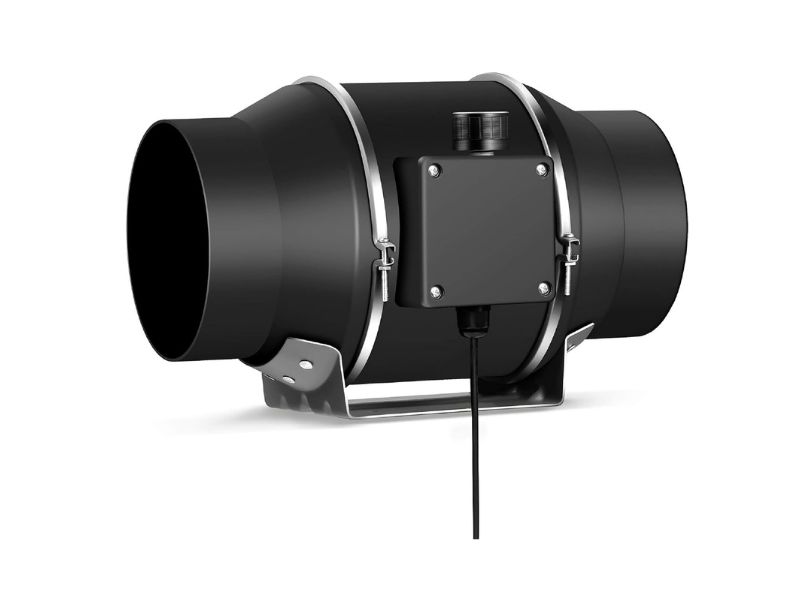
2. MicroMall Quiet 6-Inch 405 CFM Inline Duct Fan
Key features
- Six-inch duct connection
- 405 CFM listed airflow
- EC motor
- 0–100% speed controller
- 60-watt listed power
- 3,000 RPM
- 31 dB seller-stated noise
- 4.6-star Amazon rating at research time
The MicroMall listing presents this model as a six-inch, 405 CFM fan with an EC motor and a 0–100% variable-speed controller. It is a slightly lower-airflow alternative to the Hon&Guan 469 CFM model and may appeal to buyers who place more emphasis on low-speed noise.
Amazon lists 405 CFM, 3,000 RPM, 60 watts, and a 31 dB noise level. The product page showed approximately 4.6 stars from 99 ratings at the time of research.
A rated 405 CFM is enough on paper for many medium grow tents, including systems using six-inch ducting and a carbon filter. The actual result depends on the filter’s pressure drop, the length and condition of the duct, the number of bends, and the exhaust opening.
The 0–100% controller is valuable because a grow-tent exhaust fan rarely needs to remain at one fixed speed throughout every season and growth stage. A lower setting can reduce sound and negative pressure, while a higher setting provides reserve when heat or humidity rises.
The claimed 31 dB figure needs context. Product noise measurements can vary according to distance, speed, duct configuration, mounting method, and room acoustics. The listing’s enhanced content specifically describes 31 dB operation, but it should not be assumed that the fan produces 31 dB at maximum speed in every installation.
What I like
- Broad speed adjustment
- Competitive airflow for a six-inch system
- Lower listed noise than several alternatives
- EC motor configuration
- Strong rating average, although the review sample is relatively small
What to consider
- The page contains inconsistent MicroMall and Toolazy branding
- The 31 dB figure lacks complete test-condition information
- The listing’s “app” control field appears inconsistent with its physical controller description
- It has fewer customer ratings than several competing products
I consider this a promising best inline duct fan for grow tent candidate when controlled, quieter operation is more important than obtaining the highest maximum airflow. The branding inconsistency prevents me from treating it as a completely straightforward purchase, so the delivered model should be checked carefully.
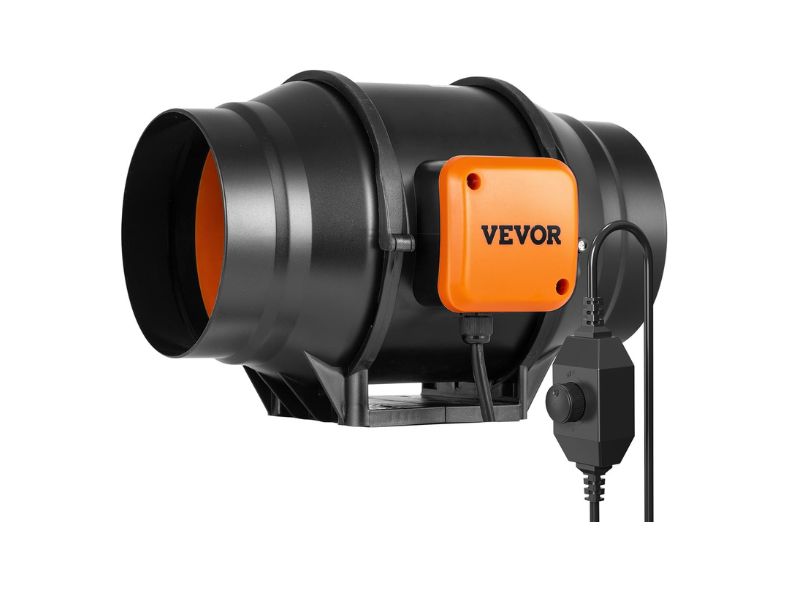
3. VEVOR 400 CFM 6-Inch Inline Duct Fan
Key features
- Six-inch duct connection
- 400 CFM listed airflow
- AC motor
- 60-watt listed consumption
- Variable-speed controller
- Grow-tent and hydroponic ventilation positioning
- 4.3-star Amazon rating at research time
The VEVOR six-inch inline fan is a conventional AC-motor alternative rated at 400 CFM. It includes a variable-speed controller and targets grow tents, hydroponic spaces, ventilation systems, and duct-boosting applications.
The current Amazon listing identifies a six-inch connection, 400 CFM of airflow, a 60-watt AC motor, and variable-speed control. It showed approximately 4.3 stars from 262 ratings during my research.
A 400 CFM rating places the VEVOR close to the MicroMall model in raw airflow. The important difference is motor type. The VEVOR uses an AC motor, while the Hon&Guan and MicroMall listings specify EC motors. That does not automatically make the VEVOR unsuitable, but EC designs generally offer more refined variable-speed operation, while a conventional AC design may appeal to buyers who want a simpler system.
The included controller still provides useful adjustment. A four-by-four tent, for example, may not require 400 CFM after installation, particularly when ambient conditions are mild. Reducing fan speed can lower air noise and prevent severe inward tent-wall movement.
VEVOR also provides more marketplace history than some less-established listings. Its rating is lower than MicroMall’s average, but the sample is larger. Ratings alone should not determine the decision, yet a broader review base can reveal more recurring installation and reliability patterns.
For a filtered exhaust system, I would pair this fan with a six-inch carbon filter rated for at least the installed airflow target. Restricting a 400 CFM fan with a small or heavily loaded filter can reduce performance and increase noise.
The housing is relatively compact and intended for inline installation, but vibration isolation remains important. Hanging the fan with straps or using rubber isolation between the bracket and mounting surface can prevent motor vibration from transferring into the tent frame or wall.
What I like
- Clear 400 CFM and 60-watt listing specifications
- Included speed control
- Broad application range
- Larger rating sample than the MicroMall model
- Practical capacity for many six-inch exhaust systems
What to consider
- AC motor rather than EC
- Exact installed noise depends heavily on the mounting and duct system
- The fan still needs airflow headroom for filters and bends
- Maximum speed may be unnecessary for smaller tents
I would consider the VEVOR when I want a straightforward six-inch exhaust fan with a controller and do not need an EC motor. Its raw specifications are suitable for many medium systems, but installation quality will determine whether it operates quietly and efficiently.
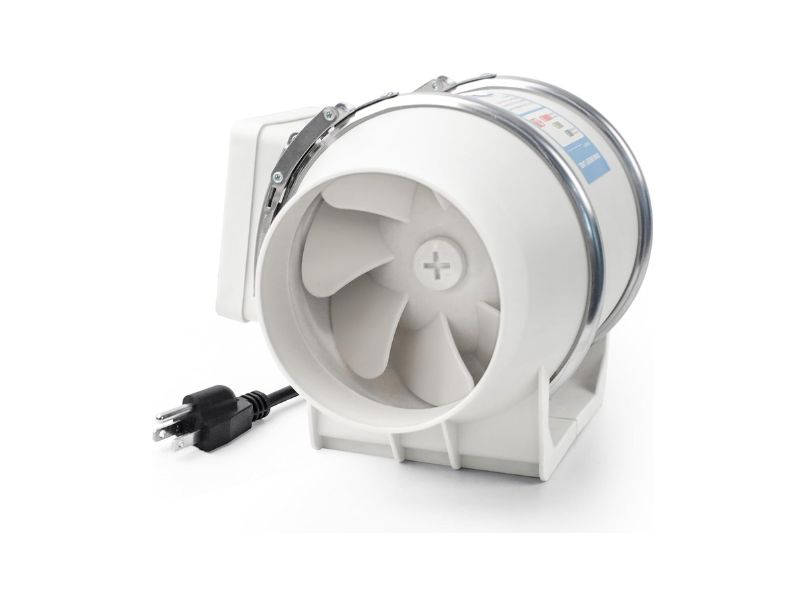
4. Voltset 4-Inch 280 CFM Inline Duct Fan
Key features
- Four-inch duct connection
- 280 CFM listed airflow
- Brushless motor listing
- 2,200 RPM
- 50 watts
- 30 dB seller-stated noise
- One listed power level
- 4.4-star Amazon rating at research time
The Voltset is a compact four-inch inline fan with a relatively high listed airflow of 280 CFM. It can be used as an exhaust fan or active intake where the tent, carbon filter, and duct ports are designed around a four-inch system.
Amazon lists the fan at 280 CFM, 2,200 RPM, 50 watts, and 30 dB. Its product-details table identifies a brushless motor but only one power level. At the time of research, the listing showed approximately 4.4 stars from 357 ratings.
The compact duct size is both an advantage and a limitation. Four-inch components require less installation space, which can be helpful in two-by-two, two-by-four, and other compact tents. However, moving high airflow through a smaller duct raises air velocity, which can produce more noticeable rushing noise.
The single listed power level also limits environmental control. A fan capable of 280 CFM may move more air than a small tent needs, but without true variable-speed control, the user has fewer ways to reduce negative pressure and noise. I would not connect an arbitrary third-party speed controller unless the manufacturer confirms compatibility with the fan’s motor and electronics.
Its 30 dB claim should be treated cautiously for the same reason as other marketplace noise claims. Test distance, ducting, fan load, and installation method are not fully standardized across listings.
When used with a carbon filter, I would choose a four-inch filter with a suitable airflow rating and minimize the duct length. A dense filter and several bends can consume much of the fan’s available pressure capacity.
The listing describes the unit as suitable for grow tents, bathrooms, hydroponics, kitchens, and other ventilation applications. That broad positioning can be convenient, but it means the design is not necessarily optimized exclusively for grow-tent controllers or smart environmental systems.
What I like
- High listed airflow from a compact four-inch body
- Suitable for tents with four-inch duct ports
- Smaller and easier to position than a six-inch system
- Brushless-motor listing
- Substantial customer-rating sample
What to consider
- No clearly documented variable-speed range
- High duct velocity may create air noise
- A four-inch carbon filter can significantly reduce installed airflow
- It may be oversized for a small tent if speed cannot be reduced
- Noise and airflow figures are seller claims
The Voltset is most attractive when installation space is limited and a strong four-inch fan is required. It is less flexible than a properly controlled EC model, so sizing the system correctly is particularly important.
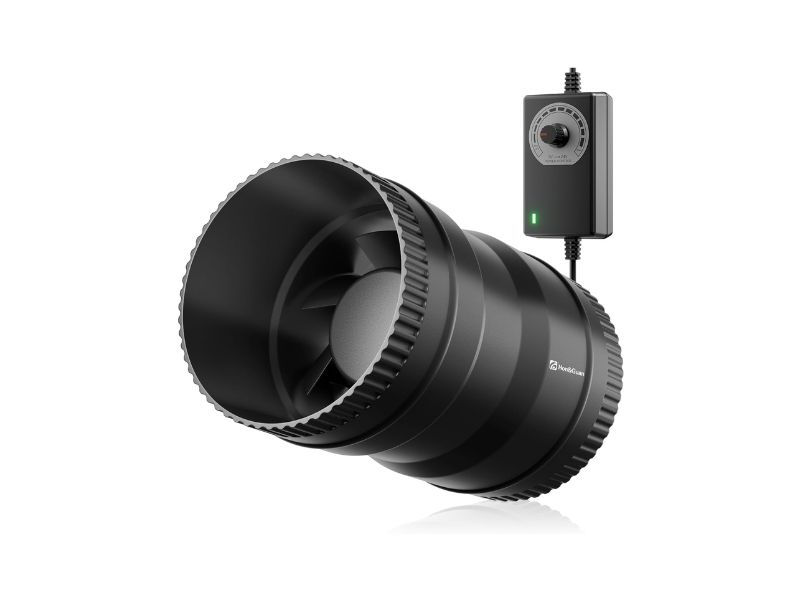
5. Hon&Guan 130 CFM 4-Inch Inline Booster Fan
Key features
- Four-inch duct size
- 130 CFM listed airflow
- Six-watt maximum consumption
- 4,500 RPM
- Included speed controller
- Compact booster design
- 4.3-star rating from nearly 3,000 Amazon ratings
The Hon&Guan 130 CFM model is a smaller, low-power inline booster fan. It should not be treated as a direct substitute for the higher-capacity mixed-flow fans above, particularly when the system includes a dense carbon filter.
Amazon lists 130 CFM, 4,500 RPM, six watts of maximum power consumption, and an included speed controller. The listing showed approximately 4.3 stars from 2,988 ratings during research, giving it one of the largest customer samples in the inline group.
Its six-watt power figure is exceptionally low compared with the 50- to 77-watt models reviewed above. That makes it attractive for continuous supplemental airflow, but low consumption also reflects a substantially smaller airflow and pressure capability.
I see three sensible roles for this fan:
- An active intake fan in a small tent
- A booster in a short, relatively unrestricted duct
- A basic exhaust fan in a very small enclosure without a restrictive filter
It is less convincing as the main exhaust for a carbon-filtered system. Booster fans are generally intended to assist existing airflow rather than overcome major static pressure. Once a filter, long flexible duct, and several bends are added, the actual airflow may be far below the 130 CFM free-air rating.
The included speed controller allows the user to reduce intake airflow and preserve negative pressure. If an active intake moves as much air as—or more air than—the exhaust, unfiltered odor may escape through seams and passive openings.
The 4,500 RPM figure may sound high, but RPM alone does not determine useful airflow or pressure. Blade design, housing geometry, motor power, and system resistance all matter.
What I like
- Very low listed power use
- Compact and simple to install
- Controller included
- Large customer-review base
- Useful for active intake or supplementary airflow
What to consider
- Limited airflow compared with full-size exhaust fans
- Likely to lose substantial performance against a carbon filter
- High RPM does not mean high static-pressure capability
- May be inadequate for warm, densely planted, or heavily filtered tents
I would use this model primarily as an intake or booster rather than as the core of an odor-control system. It can be a practical component, but its role needs to match its lower airflow and power.
Best Circulation, Clip, and Oscillating Fans for Grow Tents
Circulation fans do not replace the exhaust system. Their purpose is to move air through the canopy, around the lower leaves, and into corners where warm or humid pockets can form.
University greenhouse guidance notes that horizontal airflow helps create more uniform temperatures and reduces cold spots where condensation may develop. Moving air can also reduce moisture around plant surfaces, although excessive wind can increase plant water loss and create stress.
The best clip fan for grow tent use should attach securely to the frame without sliding as the fan angle changes. The best oscillating clip fan for grow tent use should distribute air across a wider area without repeatedly hitting the tent wall, leaves, or equipment.
6. VIVOSUN AeroWave E9 9-Inch Oscillating Clip Fan, Pack of 2
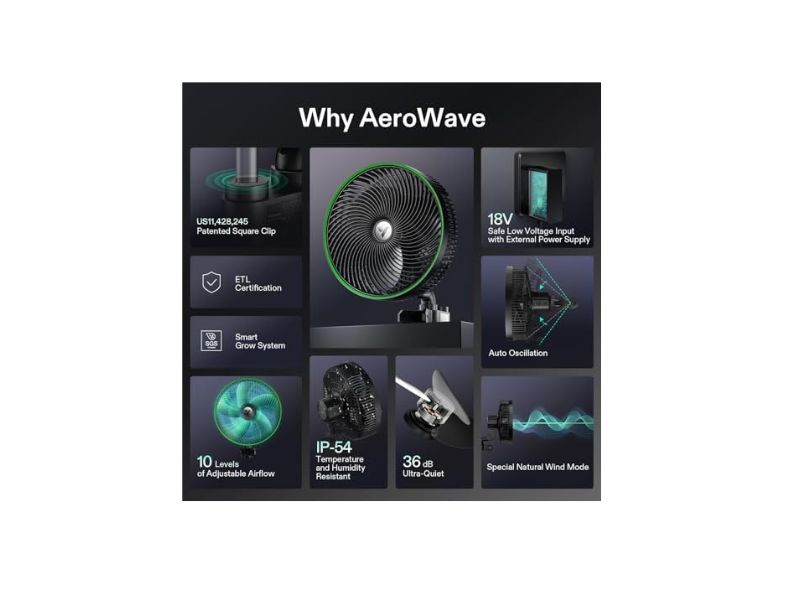
Key features
- Two nine-inch fans in the linked package
- 580 CFM official listed airflow per E9 model
- EC motor
- 36 dB(A)
- 18 watts
- IP54 protection
- Automatic horizontal oscillation
- Manual vertical adjustment
- Five standalone speeds or 10 app-connected speeds
- GrowHub compatibility
The VIVOSUN AeroWave E9 is the most grow-tent-specific circulation product in this comparison. The linked Amazon variant is a two-pack of nine-inch oscillating fans with EC motors, multi-speed control, weather resistance, and optional integration with VIVOSUN’s GrowHub controllers.
The official AeroWave guide lists the E9 at 580 CFM, 36 dB(A), 18 watts, and IP54. Amazon describes 80-degree horizontal automatic oscillation, 80-degree manual vertical adjustment, 10 speeds when connected to the app, and five speeds without app control. The linked listing showed approximately 4.3 stars from 3,210 ratings, although that rating may aggregate multiple AeroWave variants.
The square clamp design is intended to attach to round or square poles, and the rubber contact surface helps reduce slipping and frame damage. This is more suitable for a tent than a conventional desk-fan clip that was designed around flat shelves.
Automatic oscillation is the central advantage. A fixed fan sends continuous air toward one section of the canopy, while an oscillating unit spreads airflow across a broader path. That can reduce concentrated wind exposure and cover more plants with one mounting point.
The linked two-pack also supports a two-level arrangement: one fan can move air across the top canopy, while the other circulates air through the lower branches. This is particularly useful in a dense four-by-four or five-by-five tent.
IP54 does not make the fan submersible or safe for direct spraying, but it provides a documented level of dust and splash protection that general-purpose clip fans often lack.
Smart control adds convenience but also complexity. GrowHub compatibility can coordinate timers and speed settings, yet buyers who do not use the VIVOSUN system may not obtain full value from those features.
What I like
- Designed specifically for grow-tent frames
- Broad speed range
- Automatic oscillation
- Documented IP54 protection
- Two fans support upper- and lower-canopy circulation
- EC motors and smart-control compatibility
What to consider
- The linked product is a two-pack, which may cost more than a single fan
- Nine-inch fans occupy significant canopy space
- Amazon ratings may combine several variants
- The listing and manufacturer materials have shown minor oscillation-angle differences
- Maximum speed may be too strong at close range
I would choose the AeroWave E9 when I want automated, distributed airflow and have enough tent space for two nine-inch fans. It is the most complete circulation system here, but small tents may be better served by a more compact product.
7. Tonree 5.5-Inch Grow Tent Clip Fans, Pack of 2
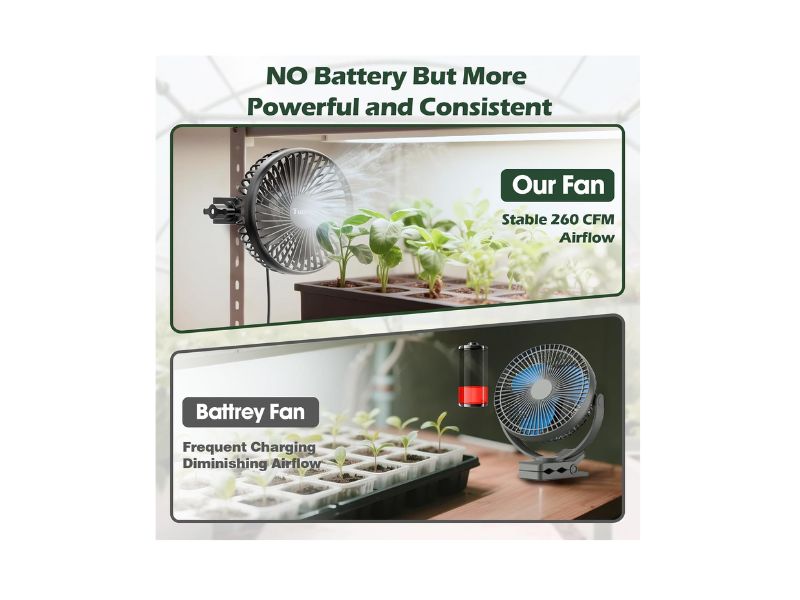
Key features
- Two 5.5-inch fans
- Brushless motors
- Three speed settings
- 360-degree manual positioning
- Non-slip clamps
- Nine-foot cords
- Five-watt listing
- 40 dB listing
- 4.2-star rating at research time
The Tonree package includes two 5.5-inch clip fans with brushless motors, three speed settings, 360-degree manual positioning, non-slip clamps, and nine-foot cords.
Amazon lists five watts, 3,700 RPM, 40 dB, and 520 CFM. The linked two-pack showed approximately 4.2 stars from 178 ratings at research time.
The 520 CFM figure deserves caution. The listing does not make it sufficiently clear whether that number applies to each fan, the two-fan package, or a particular testing method. For two compact 5.5-inch, five-watt fans, the claim should not be compared directly with the independently documented 580 CFM specification of a nine-inch VIVOSUN E9.
The practical value is the two-fan format. One fan can be placed above the canopy and aimed across the upper leaves, while the second can be mounted lower to reduce stagnant air around stems, containers, and dense interior foliage.
The 360-degree adjustment refers to manual positioning rather than automatic oscillation. Once positioned, each fan sends air in a fixed direction. I would angle them so their airflow paths overlap gently rather than point both fans directly at one plant.
Brushless motors are well suited to compact circulation equipment because they can provide controlled operation without brush wear. However, the long-term reliability of this specific product cannot be established from listing specifications alone.
The nine-foot cord provides more placement flexibility than many small desk fans. That can reduce dependence on extension cords inside the tent, although cables should still be secured away from irrigation lines and moving fan heads.
What I like
- Two fans support multiple circulation zones
- Compact size
- Long cords
- Manual positioning flexibility
- Three speeds
- Grow-tent-focused clamp design
What to consider
- The 520 CFM claim is ambiguous
- No confirmed automatic oscillation
- Smaller rating sample
- “Waterproof” marketplace wording does not provide a clear IP certification
- Fixed airflow may require periodic repositioning
I would consider this package for a small or medium tent that needs two compact circulation points without the cost or size of two nine-inch oscillating fans. I would not use the 520 CFM claim as the main buying reason.
8. Hurricane Classic 6-Inch Clip Fan
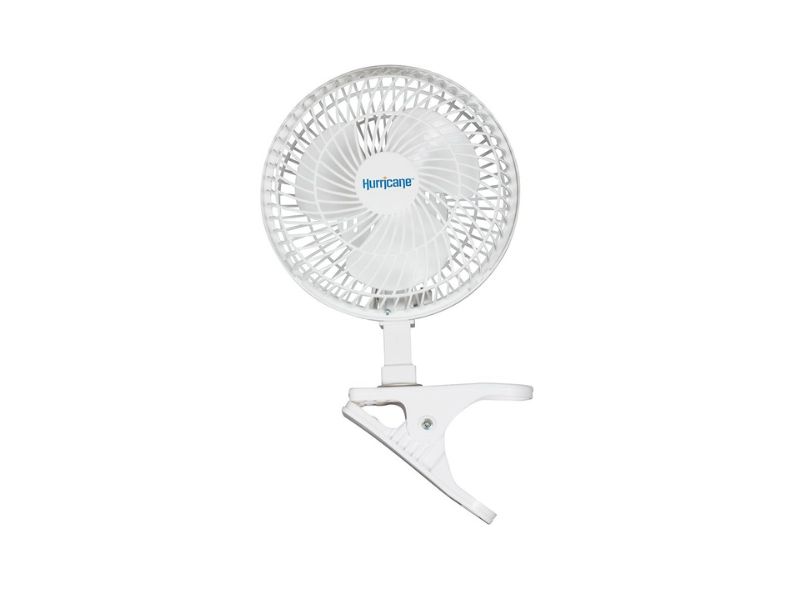
Key features
- Six-inch clip fan
- Two speeds
- Adjustable tilt
- 306 CFM at high speed
- 2,350 RPM
- 14-watt listing
- Wide spring clamp
- 4.4-star Amazon rating from a large review sample
The Hurricane Classic is a general-purpose six-inch clip fan with two speeds and adjustable tilt. It lacks automatic oscillation, but it has a long marketplace history and a published high-speed airflow specification.
Hurricane lists 306 CFM and 2,350 RPM at high speed. Amazon identifies a 14-watt motor, a wide two-inch clamp, and approximately 4.4 stars from 8,491 ratings at research time.
The wide clamp is useful for shelves and some tent supports, but it was not designed specifically around every grow-tent pole. A round fabric-covered pole may not provide the same grip as a flat shelf. I would test the clamp at the intended angle and verify that the fan cannot rotate downward as the motor vibrates.
Its fixed airflow makes it suitable for a targeted location such as a lower-canopy corner, an intake area, or a humid dead zone. It is less effective than an oscillating model for distributing air across a broad canopy from one position.
The 306 CFM rating is substantial for a compact fan, but circulation-fan CFM should not be compared directly with inline-fan CFM. This product moves unrestricted air inside the tent; it is not designed to pull air through ducting or a carbon filter.
The two-speed control is simple but less precise than the five- or ten-level VIVOSUN system. High may be too aggressive when mounted close to young plants, while low may be sufficient for constant circulation.
The product is ETL certified according to the Amazon listing, but no grow-tent-specific IP moisture rating is stated. It should be kept away from direct spray, condensation drips, and irrigation spills.
What I like
- Large customer-review history
- Published airflow and RPM
- Simple controls
- Strong clamp
- Compact design
- Useful for targeted circulation
What to consider
- No automatic oscillation
- No stated IP moisture rating
- Fixed airflow may strike one plant continuously
- Clamp stability depends on the pole or mounting surface
- Only two speed choices
The Hurricane is a practical fixed circulation fan when simplicity matters. I would use it as one part of a multi-fan layout rather than expect a single unit to cover an entire large canopy.
9. Genesis 6-Inch Convertible Clip and Tabletop Fan
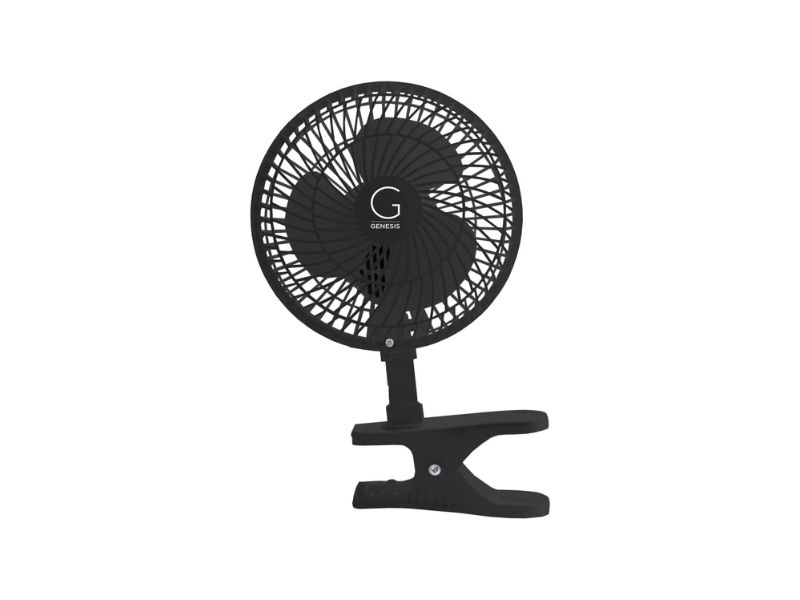
Key features
- Six-inch fan
- Clip and tabletop configurations
- Two speeds
- Adjustable fan head
- Compact footprint
- 4.6-star Amazon rating from more than 15,000 ratings
The Genesis fan can operate as either a clip-on unit or a small tabletop fan. That flexibility makes it useful when a tent lacks an appropriate pole position or when airflow is needed below the canopy near the floor.
Amazon lists two quiet speed settings and a fully adjustable fan head. The product showed approximately 4.6 stars from 15,112 ratings during research, giving it the largest rating sample in this article.
The tabletop base is its clearest advantage over a dedicated pole fan. It can be placed beneath a raised canopy and angled upward through the lower branches. It can also be clipped to a shelf or support when floor space is limited.
Like the Hurricane, it is a fixed-direction fan. It does not automatically sweep across the canopy. That is not always a problem: multiple small fixed fans can create a stable circulation pattern when positioned carefully.
The lack of a clearly published CFM rating makes quantitative comparison difficult. I would evaluate it as a compact personal fan with extensive customer history rather than assume it equals the airflow of the Hurricane or VIVOSUN models.
The product is marketed for homes, offices, and dorms rather than specifically for humid grow tents. It does not have a stated IP water-resistance rating. The motor, switch, plug, and tabletop base should remain dry.
Its two-speed control provides basic adjustment. For seedlings or plants close to the fan, the lower setting may prevent excessive leaf movement. The goal is gentle, visible movement across the canopy—not leaves being held in a constant, forceful stream.
What I like
- Can be clipped or placed on a flat surface
- Very large review sample
- Simple operation
- Useful below the canopy
- Compact and easy to reposition
What to consider
- No automatic oscillation
- No clearly published CFM
- No documented grow-tent moisture rating
- General-purpose clamp may not fit every pole securely
- Two speeds provide limited control
I would choose the Genesis when mounting versatility matters more than automated movement. It is particularly useful as a lower-canopy fan where a tabletop base is easier to position than a pole clip.
10. Comfort Zone CZ6C 6-Inch Clip Fan
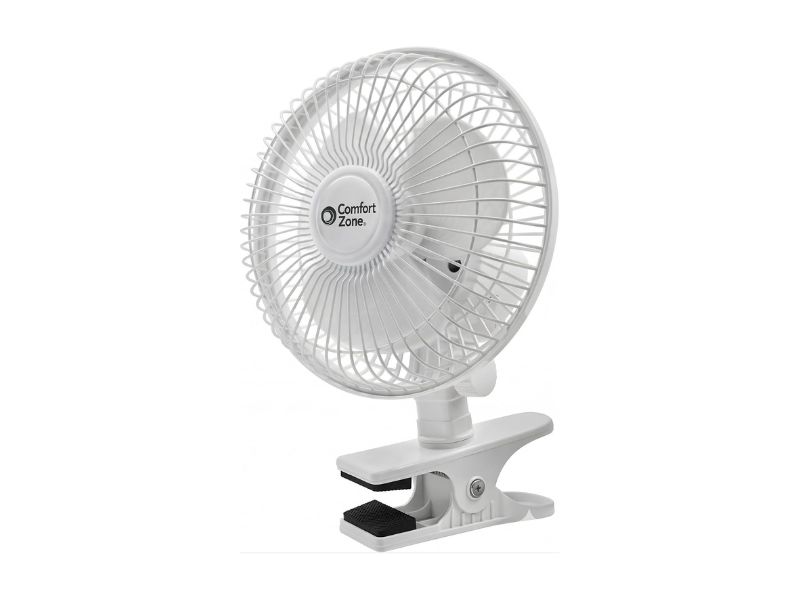
Key features
- Six-inch clip fan
- Two speed settings
- Adjustable tilt
- 360-degree manual rotation
- 6.53 ft/sec listed air velocity
- Protective grille
- Large customer-rating sample
The Comfort Zone CZ6C is another general-purpose six-inch clip fan with two speeds, adjustable tilt, and 360-degree manual rotation.
Amazon lists an airflow velocity of 6.53 feet per second and showed approximately 4.2 stars from 10,656 ratings during research. The listing emphasizes quiet indoor operation and a strong clamp.
Air velocity is not the same measurement as CFM. Feet per second describes how quickly air moves at a measuring point, while CFM represents the volume of air moved per minute. The 6.53 ft/sec figure therefore cannot be inserted directly into a CFM comparison.
The fan’s adjustable head provides good directional control. It can be aimed toward a corner, below the canopy, or across an intake opening. However, the 360-degree wording refers to manual rotation, not powered oscillation.
The protective grille and compact body are appropriate for indoor use, but the product is not specifically designed around wet horticultural environments. I would keep it away from humidifier discharge, foliar spray, irrigation lines, and places where condensation can drip onto the motor.
Its two-speed design is adequate for targeted circulation. Because the airflow remains fixed, the fan should be angled so it produces indirect movement rather than a concentrated stream against one plant.
The large customer sample provides more long-term marketplace feedback than newer grow-tent-specific products, but most reviews are likely based on home and office use rather than constant operation in a warm, humid tent.
What I like
- Simple and inexpensive design
- Easy directional adjustment
- Strong review history
- Compact enough for small tents
- Useful for a specific dead zone or lower-canopy area
What to consider
- No automatic oscillation
- Air velocity is not directly comparable to CFM
- No grow-tent-specific IP rating
- Fixed airflow requires careful placement
- Customer reviews largely reflect general indoor use
The Comfort Zone is suitable as a supplemental fixed fan. It is not as sophisticated as the VIVOSUN, but it can provide useful circulation when mounted securely and protected from moisture.
Grow Tent Fan Comparison Table
| Product | Primary Role | Size | Listed Output | Control or Movement | Motor | Amazon Rating at Research Time |
| Hon&Guan 469 CFM | Exhaust | 6 in. | 469 CFM | Variable speed | EC | 4.5/5, 213 ratings |
| MicroMall | Exhaust | 6 in. | 405 CFM | 0–100% control | EC | 4.6/5, 99 ratings |
| VEVOR | Exhaust | 6 in. | 400 CFM | Variable speed | AC | 4.3/5, 262 ratings |
| Voltset | Exhaust or intake | 4 in. | 280 CFM | One listed power level | Brushless listing | 4.4/5, 357 ratings |
| Hon&Guan Booster | Intake or booster | 4 in. | 130 CFM | Speed controller | Not clearly specified | 4.3/5, 2,988 ratings |
| VIVOSUN AeroWave E9, two-pack | Circulation | 9 in. | 580 CFM per E9 specification | Automatic oscillation | EC | 4.3/5, 3,210 ratings* |
| Tonree, two-pack | Circulation | 5.5 in. | 520 CFM listing claim | Manual 360° positioning | Brushless | 4.2/5, 178 ratings |
| Hurricane Classic | Circulation | 6 in. | 306 CFM | Fixed tilt, two speeds | AC-type | 4.4/5, 8,491 ratings |
| Genesis Convertible | Circulation | 6 in. | Not clearly published | Fixed, two speeds | Not clearly specified | 4.6/5, 15,112 ratings |
| Comfort Zone CZ6C | Circulation | 6 in. | 6.53 ft/sec velocity | Fixed, two speeds | Not clearly specified | 4.2/5, 10,656 ratings |
*The VIVOSUN rating may aggregate multiple AeroWave options or variants. Amazon ratings, review totals, prices, and availability can change. The inline ratings were checked from the current linked listings. The circulation ratings came from the respective current listings.
How I Researched These Fans
I compared current Amazon listing data, manufacturer specifications where available, motor design, rated airflow, speed adjustment, power consumption, noise claims, mounting method, moisture protection, and customer-rating volume.
I did not treat seller-stated airflow or noise figures as independent laboratory measurements. Test conditions can vary significantly. A fan measured without a filter or duct can produce a higher airflow figure than the same fan connected to a carbon filter, long flexible duct, and several bends.
I also checked listings for internal consistency. That process identified several issues:
- The Hon&Guan 469 CFM page displays conflicting wattage figures.
- The MicroMall page includes Toolazy branding in its enhanced content.
- The Tonree two-pack’s 520 CFM figure is not clearly defined as per-fan or combined airflow.
- VIVOSUN specifications and variant descriptions have shown minor differences in oscillation-angle wording.
- General-purpose fans often lack moisture-protection ratings relevant to grow-tent use.
These issues do not automatically make a product unsuitable. They mean buyers should confirm the exact model, controller, pack size, and product label after delivery.
My recommendations are based on the fan’s intended role within a complete system. I do not rank a circulation fan against an inline exhaust fan as though they perform the same task.
Why a Grow Tent Needs Different Types of Fans
A complete airflow system may include an inline fan, exhaust fan, intake fan, and one or more circulation fans.
Inline fan
An inline fan is installed within a duct path. It can move air out of the tent, pull air through a filter, push air into the tent, or assist another ventilation system.
The phrase describes where the fan is installed—not necessarily its exact purpose.
Exhaust fan
An exhaust fan removes air from the tent. It is normally positioned near the top because warm air accumulates above the canopy.
The exhaust system helps remove:
- Heat from lighting and equipment
- Moisture released through plant transpiration and evaporation
- Stale air
- Odors when paired with a carbon filter
- Excess pressure inside the enclosure
VIVOSUN’s installation guidance places the exhaust and filter near the upper part of the tent and recommends sealed duct connections.
Intake fan
An intake fan actively pushes replacement air into the tent. Small tents often use passive intake vents instead, allowing the exhaust fan to draw replacement air through open lower ports.
Active intake may be useful when passive openings are too small, the intake path is long, or the tent walls collapse excessively. The intake should generally move less air than the exhaust so the tent maintains slight negative pressure.
Negative pressure is visible when the walls pull inward slightly. Severe collapse indicates excessive restriction or exhaust strength, while outward-bulging walls indicate positive pressure.
Circulation fan
A circulation fan moves air inside the tent without exchanging it with the surrounding room.
Its functions include:
- Mixing warm and cool air
- Reducing humid dead zones
- Moving air through dense foliage
- Creating more uniform leaf conditions
- Helping reduce condensation-prone cold spots
Greenhouse guidance from UMass links horizontal airflow with more uniform temperatures and fewer condensation zones.
Clip fan
A clip fan saves floor space by attaching to a tent pole, shelf, or frame member. The clamp must remain secure at the selected angle.
A clip fan may be fixed or oscillating. “Clip” describes the mounting system, not the airflow pattern.
Oscillating fan
An oscillating fan automatically changes direction, spreading air across a wider path. This can reduce the risk of continuously exposing one plant to a strong stream.
Oscillation also introduces additional moving parts. The fan must have enough clearance to complete its sweep without hitting leaves, fabric, lights, or support poles.
Inline booster fan
A booster fan assists airflow through a duct. It is often compact and energy efficient, but it may have less pressure capability than a mixed-flow exhaust fan.
A booster is most suitable for:
- Active intake
- Short duct runs
- Supplemental airflow
- Low-resistance ventilation
It should not automatically be selected for a dense carbon-filter system based only on free-air CFM.
How to Calculate the Correct Grow-Tent Fan Size
Fan sizing begins with tent volume, but volume is only the starting point.
Step 1: Calculate tent volume
Use:
Tent volume = Length × Width × Height
For a 4 × 4 × 6.5-foot tent:
4 × 4 × 6.5 = 104 cubic feet
Step 2: Choose an air-exchange target
A simple starting point is one complete air exchange per minute:
Base CFM = Tent volume ÷ 1 minute
For the 104-cubic-foot tent:
Base CFM = 104
This does not mean every 4 × 4 tent requires exactly 104 CFM. The correct exchange rate depends on:
- Light heat
- Room temperature
- Ambient humidity
- Plant density
- Watering volume
- CO2 strategy
- Filter resistance
- Duct configuration
A tent in a cool, dry room may need less airflow than an identical tent in a warm, humid room.
Step 3: Add system resistance
The fan’s published CFM may be a free-air rating. Installed airflow drops as resistance increases.
Common restrictions include:
- Carbon filter
- Flexible ducting
- Long duct runs
- Sharp bends
- Duct reducers
- Backdraft dampers
- Silencers
- Restrictive intake vents
- Dirty prefilters
AC Infinity notes that duct bends reduce fan CFM and recommends straightening the duct path and eliminating unnecessary bends.
VIVOSUN’s sizing guide applies substantial adjustment factors for filters, ducting, and lighting. Those percentages are useful as conservative manufacturer guidance, but they should not be treated as universal engineering constants for every filter or tent.
A practical approach is to buy controlled capacity above the minimum and then adjust the fan according to measured conditions.
For example, a 104-cubic-foot tent may be paired with a 200–400 CFM controlled fan when the system includes a filter and ducting. The final operating speed may be well below maximum.
Step 4: Match the fan, filter, and duct
The fan, filter, and duct should ideally use the same diameter.
A six-inch fan connected to a four-inch filter through a reducer creates additional velocity and resistance. The smallest component may become the system’s limiting point.
Check:
- Filter flange diameter
- Filter maximum airflow
- Fan diameter
- Duct diameter
- Exhaust-port diameter
- Available hanging space
Step 5: Verify the environment
No sizing formula replaces measurement.
After installation, monitor:
- Canopy temperature
- Relative humidity
- Odor leakage
- Tent-wall movement
- Condensation
- Fan noise
- Plant response
Increase airflow when heat or humidity remains above the desired range. Reduce it when the tent collapses severely, noise is excessive, or environmental conditions remain stable at a lower setting.
Grow-Tent Fan Size Reference Table
| Tent Size | Tent Volume | Base CFM at One Exchange per Minute | Common Inline Duct Size | Circulation Starting Point |
| 2 × 2 × 4 ft | 16 cu. ft. | 16 CFM | 4 in. | One compact clip fan |
| 2 × 4 × 5 ft | 40 cu. ft. | 40 CFM | 4 in. | One or two small clip fans |
| 3 × 3 × 6 ft | 54 cu. ft. | 54 CFM | 4 or 6 in. | One oscillating fan |
| 4 × 4 × 6.5 ft | 104 cu. ft. | 104 CFM | 6 in. | One large or two compact fans |
| 5 × 5 × 6.5 ft | 162.5 cu. ft. | 163 CFM | 6 in. | Multiple circulation points |
| 4 × 8 × 7 ft | 224 cu. ft. | 224 CFM | 6 or 8 in. | Multiple upper and lower fans |
These figures are base calculations before filter, duct, heat, and intake restrictions are added.
How to Choose the Best Fan for a Grow Tent
Identify the fan’s role first
Do not begin with CFM. Begin with the task.
Choose an inline fan when the system needs:
- Exhaust
- Filtered odor control
- Active intake
- Duct boosting
Choose a circulation fan when the system needs:
- Canopy movement
- Lower-leaf airflow
- Temperature mixing
- Dead-zone reduction
Most complete tents need both categories.
Understand CFM and static pressure
CFM, or cubic feet per minute, measures airflow volume.
Static pressure represents the resistance the fan must overcome. A fan can have a high free-air CFM but perform poorly when connected to a dense filter.
A useful exhaust fan needs both airflow and pressure capability. Unfortunately, many marketplace listings provide CFM without a complete fan curve, making direct comparison difficult.
Four-inch vs. six-inch inline fans
A four-inch system is compact and may be appropriate for smaller tents. Its components are lighter, and the duct ports require less space.
A six-inch system provides more cross-sectional area. It can move higher airflow at a lower velocity than a small duct, potentially reducing air-rush noise.
Choose four-inch equipment when:
- The tent is small
- Duct ports are four inches
- The duct path is short
- Heat and humidity loads are moderate
Choose six-inch equipment when:
- A carbon filter is required
- The tent is medium or large
- The duct run is longer
- More reserve capacity is needed
- Lower-speed operation is preferred
EC vs. AC motors
An EC motor uses electronic commutation and often provides efficient variable-speed operation. The Hon&Guan 469, MicroMall, and VIVOSUN E9 listings specify EC motors.
An AC motor is a conventional alternative. The VEVOR listing specifies AC operation. It may offer a simpler design, but speed-control behavior and energy use can differ from an EC system.
Motor type should be evaluated alongside:
- Wattage
- Controller range
- Noise
- Airflow
- Warranty
- Application
- Purchase cost
Fixed vs. variable speed
A fixed-speed exhaust fan works at one output unless controlled externally. That can be adequate when the fan is closely matched to the system.
Variable speed is more flexible. It allows the user to:
- Reduce noise
- Preserve negative pressure
- Adjust for seasonal temperature
- Respond to humidity
- Reduce unnecessary energy use
- Maintain airflow as a filter loads
The controller must be designed for the motor. An incompatible aftermarket controller can cause humming, overheating, or unstable operation.
Fixed vs. oscillating circulation
A fixed fan is useful for a specific dead zone. It is simple and has fewer moving parts.
An oscillating fan covers a wider area and reduces continuous direct exposure. It is particularly useful above a broad canopy.
Fixed fans work well when multiple units are arranged to create a circulation loop. Oscillating fans can provide wider coverage from fewer mounting points.
Clamp and pole compatibility
Check:
- Maximum clamp opening
- Pole diameter
- Round or square frame compatibility
- Rubber grip
- Fan weight
- Cable reach
- Oscillation clearance
A clamp that works on a desk may rotate on a narrow fabric-covered tent pole. Test the fan at maximum tilt and speed before leaving it unattended.
Moisture protection
An IP rating provides defined information about dust and water protection.
The VIVOSUN E9 has an IP54 rating, while the Hon&Guan 469 listing identifies IP44 protection. General-purpose Hurricane, Genesis, and Comfort Zone fans do not state comparable grow-tent protection.
Even a rated fan should not be sprayed directly. Keep plugs, controllers, connectors, and power strips away from water.
Noise
Fan noise can come from several sources:
- Motor
- Blade movement
- Air rushing through duct
- Carbon-filter turbulence
- Flexible-duct vibration
- Bracket vibration
- Clip vibration
- Controller hum
A low dB claim does not guarantee a quiet installation. Test distance and speed matter, and a restricted duct can create more noise than the fan motor.
How Fans Affect Temperature, Humidity, VPD, CO2, and Odor
Temperature
An exhaust fan removes warm tent air and replaces it with room air.
It can only cool the tent effectively when the incoming air is cooler than the air being exhausted. A fan cannot reduce the tent below the intake-air temperature without another cooling method.
High-output lights, drivers, dehumidifiers, and pumps can add heat. Moving drivers outside the tent may reduce the load on the exhaust system.
Humidity
Plants release water vapor through transpiration, and exposed growing media adds evaporation.
Exhaust ventilation can reduce humidity when the replacement air contains less moisture. If the surrounding room is equally humid, increasing tent airflow may have limited effect unless the room itself is dehumidified.
Internal circulation does not remove moisture from the room, but it helps reduce localized humid pockets around leaves.
VPD
Vapor pressure deficit, or VPD, describes the difference between the amount of moisture the air could hold at saturation and the amount it currently holds.
Fans influence VPD indirectly through temperature and humidity. Air movement also thins the still boundary layer around leaves, affecting the transfer of heat, water vapor, and CO2. Michigan State University notes that a thick boundary layer can reduce these exchanges, while University of California guidance explains that increasing airflow can reduce boundary-layer resistance—up to the point where excessive wind creates stress.
CO2
Plants use carbon dioxide during photosynthesis. In a normally ventilated tent without supplemental CO2, fresh-air exchange helps replenish the ambient CO2 consumed by the plants.
A circulation fan only moves existing air. It does not bring new CO2 into a sealed tent.
Condensation and disease pressure
Moving air helps reduce cold, stagnant areas where condensation can form. UMass guidance links horizontal airflow with more uniform temperatures and less moisture on plant surfaces.
Fans do not cure mold or plant disease. They support environmental management alongside sanitation, correct watering, spacing, temperature control, and humidity control.
Odor
A circulation fan does not remove odor.
Odor control normally requires:
- An activated-carbon filter
- Compatible exhaust airflow
- Sealed duct connections
- Slight negative pressure
- An appropriate filter residence time
- A clean prefilter
VIVOSUN recommends positioning the filter near the top of the tent and connecting it to the exhaust path so warm, odorous air is filtered before leaving the system.
Grow-Tent Fan Placement and Installation
Position the exhaust high
Warm air rises, so the exhaust and carbon filter are generally placed near the tent ceiling.
A typical path is:
Carbon filter → inline fan → duct → room exhaust point
The airflow arrow on the fan should point away from the filter and toward the exhaust destination.
Keep the duct short and straight
Every bend adds resistance. Flexible duct should be extended enough to reduce internal corrugation without being stretched under tension.
Avoid:
- Crushed duct
- Tight 90-degree bends
- Unnecessary loops
- Multiple reducers
- Loose connections
- Long unsupported sections
Seal joints with proper clamps and ventilation tape. VIVOSUN recommends creating airtight fan and filter connections.
Pulling vs. pushing through a carbon filter
The most common arrangement pulls air through the filter. This allows the filter’s fabric prefilter to catch larger particles before air reaches the carbon bed and fan.
Pushing air through a filter can save space or move the filter outside the tent. However, the fan receives unfiltered air first, which may allow dust to accumulate inside the housing.
Both configurations can work when:
- The filter supports the direction
- Connections are sealed
- Fan and filter ratings are compatible
- The system maintains negative pressure
Position the intake low
Fresh intake air usually enters through a lower port on the opposite side from the exhaust.
This creates a diagonal path through the tent rather than allowing fresh air to enter and immediately leave through a nearby exhaust.
Open enough passive-intake area to prevent severe wall collapse. Add an active intake only when passive openings cannot supply adequate air.
Maintain negative pressure
The exhaust should move slightly more air than the intake.
Signs of appropriate negative pressure include:
- Tent walls pull inward gently
- Odor remains contained
- Air enters through designated vents
- Doors do not become extremely difficult to open
Signs of excessive negative pressure include:
- Severe wall collapse
- Frame strain
- Restricted exhaust airflow
- Loud intake whistling
- Reduced usable tent space
Position circulation fans at different levels
A dense canopy may need more than one circulation point.
Place one fan:
- Slightly above or beside the canopy
- Aimed across the plants rather than directly downward
- Far enough away to avoid constant leaf distortion
Place another fan:
- Below the canopy
- Aimed through stems and containers
- Away from loose substrate and standing water
Leaves should move gently. They should not fold, whip, or remain pressed in one direction.
Check oscillation clearance
Run the oscillating fan through its complete range before leaving it unattended.
Confirm that it cannot contact:
- Tent walls
- Leaves
- Trellis netting
- Lights
- Power cables
- Irrigation tubes
- Other fans
Protect electrical connections
Keep plugs and controllers away from spills and humidifier output. Secure cords so water cannot follow them directly into an electrical connection.
Do not rely on marketing words such as “waterproof” without checking the documented protection rating and instructions.
Example Fan Setups by Tent Size
2 × 2 grow tent
A typical starting setup may include:
- One controlled four-inch exhaust fan
- Passive lower intake
- One compact clip fan
- Optional four-inch carbon filter
The Hon&Guan 130 CFM booster could serve as intake or basic exhaust in a lightly restricted system, but a stronger mixed-flow fan is preferable when using a dense carbon filter.
2 × 4 grow tent
A practical setup may include:
- Four-inch controlled exhaust
- Matching carbon filter
- One fan above the canopy
- One small fixed fan below the canopy
The Voltset provides strong listed four-inch airflow, but its limited speed adjustment needs to suit the actual tent load.
3 × 3 grow tent
Consider:
- A controlled four- or six-inch exhaust
- Carbon filter
- One oscillating circulation fan
- Passive intake
A six-inch fan can be run below full speed, potentially reducing noise while preserving reserve capacity.
4 × 4 grow tent
A common arrangement is:
- Six-inch inline exhaust
- Six-inch carbon filter
- One larger oscillating fan or two compact fans
- Passive intake or a small controlled active intake
The Hon&Guan 469, MicroMall 405, and VEVOR 400 all have sufficient listed capacity to be considered, but the final setting should be based on measured conditions.
5 × 5 grow tent
A useful starting configuration may include:
- Higher-capacity six-inch exhaust
- Matching filter
- Multiple circulation fans
- Upper- and lower-canopy airflow
- Active intake only if passive vents are insufficient
The linked VIVOSUN E9 two-pack suits this type of multi-level circulation arrangement.
4 × 8 grow tent
A larger canopy commonly needs:
- High-capacity six- or eight-inch exhaust
- Appropriately sized filter
- Several circulation fans
- Separate upper and lower airflow zones
- Careful duct routing
- Environmental monitoring at multiple points
One small clip fan will not create uniform circulation across an eight-foot canopy.
How to Reduce Grow-Tent Fan Noise
Start by separating motor noise from airflow noise.
Reduce fan speed
An oversized controlled fan can often operate more quietly at partial speed than a small fan running continuously at maximum output.
Isolate vibration
Suspend inline fans with straps or use vibration-isolating mounts. Prevent hard plastic or metal housings from resting directly on the tent frame.
For clip fans, add rubber contact protection and tighten adjustment knobs.
Improve ducting
Air rushing through a narrow, crushed, or sharply bent duct can be louder than the motor.
Use:
- Larger duct where practical
- Smooth routing
- Minimal bends
- Properly sized reducers
- Insulated ducting where appropriate
- A silencer for severe exhaust noise
Clean the system
Dust on fan blades can create imbalance. A dirty filter increases resistance and forces the fan to work at a higher setting.
Relocate equipment
An inline fan can sometimes be mounted outside the tent, reducing internal motor noise and preserving growing space. The duct connections must remain sealed.
Common Grow-Tent Fan Mistakes
Using only a circulation fan
A clip fan moves air inside the tent but does not replace stale air or control filtered exhaust.
Using only an exhaust fan
Air exchange does not guarantee uniform airflow through a dense canopy. Interior dead zones may remain.
Buying only by maximum CFM
Free-air CFM does not show how the fan performs through a filter and duct system.
Ignoring filter resistance
An undersized or dirty carbon filter can become the greatest restriction in the system.
Using a booster as a high-pressure exhaust fan
A compact booster may work well for intake but lose too much airflow through a dense filter.
Creating excessive negative pressure
More suction is not always better. Severe wall collapse reduces tent space and signals a restricted intake.
Blowing directly at one plant
Continuous strong airflow can increase localized drying and mechanical stress. Use lower speed, greater distance, indirect aiming, or oscillation.
Placing fans only above the canopy
Dense foliage may trap humid air below. Lower circulation can be necessary as plants mature.
Trusting every marketplace specification
Conflicting brand names, wattage figures, and airflow claims should be verified before purchase.
Ignoring electrical protection
General-purpose clip fans are not automatically suitable for direct exposure to moisture. Keep electrical equipment dry and follow the manufacturer’s operating limits.
Fan Maintenance and Replacement
Disconnect power before cleaning or adjusting a fan.
Inline-fan maintenance
Inspect:
- Duct connections
- Hanging straps
- Controller cables
- Fan housing
- Intake grille
- Motor sound
- Vibration
- Filter prefilter
Remove dust from accessible fan surfaces according to the manufacturer’s instructions. Do not open a sealed motor housing unless the manual permits service.
Carbon-filter maintenance
Clean or replace the fabric prefilter as required. A clogged prefilter increases resistance and reduces airflow.
Carbon filters gradually lose odor-adsorption capacity. Replacement timing depends on humidity, contaminant load, operating hours, and filter quality.
Circulation-fan maintenance
Dust accumulates on blades and grilles, reducing performance and potentially creating imbalance.
Check:
- Clamp grip
- Tilt mechanism
- Oscillation movement
- Cable condition
- Blade clearance
- Unusual bearing noise
- Heat at the plug or controller
Replacement signs
Replace or stop using a fan if it develops:
- Damaged wiring
- Burned smell
- Intermittent starting
- Severe bearing noise
- Excessive vibration
- Cracked housing
- Overheating
- Unstable oscillation
- A clamp that cannot hold the fan securely
Do not continue operating damaged electrical equipment in a humid tent.
Frequently Asked Questions
What is the best fan for grow tent use?
The best setup normally combines an inline exhaust fan with one or more circulation fans.
For a higher-capacity six-inch exhaust, I would start with the Hon&Guan 469 CFM model. For automated canopy circulation, the VIVOSUN AeroWave E9 provides oscillation, multiple speeds, and IP54 protection.
The correct products still depend on tent size, filter resistance, duct routing, and available mounting space.
Do I need both an inline fan and a circulation fan?
Most enclosed grow tents benefit from both.
The inline fan exchanges air and can pull odors through a carbon filter. The circulation fan moves air around leaves and through the canopy.
One cannot fully replace the other. A clip fan does not exhaust heat or humidity, while an exhaust fan may leave stagnant areas inside dense foliage.
What is the best inline fan for grow tent ventilation?
For a medium filtered system, the Hon&Guan 469 CFM model offers a useful combination of six-inch ducting, variable speed, an EC motor, and airflow reserve.
The MicroMall 405 CFM fan is another option when low-speed noise and broad control are priorities. Buyers should verify its inconsistent branding before ordering.
What is the best inline duct fan for grow tent use with a carbon filter?
A six-inch mixed-flow or EC inline fan is generally more suitable than a small booster when the system includes a restrictive carbon filter.
The fan should have capacity above the calculated base CFM, and the filter should match the fan’s duct diameter and intended airflow.
What is the best exhaust fan for grow tent odor control?
The exhaust fan should maintain slight negative pressure while pulling air through a compatible activated-carbon filter.
The Hon&Guan 469, MicroMall 405, and VEVOR 400 are all possible six-inch options. The filter, seals, duct path, and operating speed are as important as the fan itself.
What is the best intake fan for grow tent airflow?
The Hon&Guan 130 CFM booster is a practical active-intake candidate for a small system because it includes speed control and uses little power.
The intake should generally run below the exhaust airflow so odor-laden air does not escape through unfiltered openings.
What is the best circulation fan for grow tent plants?
The VIVOSUN AeroWave E9 is the most specialized circulation product reviewed here. It offers automatic oscillation, multiple speeds, IP54 protection, and a clamp designed for tent frames.
For a simpler fixed setup, the Hurricane, Genesis, or Comfort Zone fans may be sufficient.
What is the best clip fan for grow tent poles?
The VIVOSUN AeroWave E9 uses a purpose-built clamp for round or square supports. The Tonree two-pack also uses grow-tent-focused non-slip clamps.
General-purpose desk-fan clips may work, but their stability should be tested on the actual fabric-covered pole.
What is the best oscillating clip fan for grow tent use?
The VIVOSUN AeroWave E9 is the only linked circulation product in this comparison with clearly documented automatic oscillation.
It provides wider canopy coverage than a fixed fan, but the nine-inch size needs adequate clearance.
How many CFM do I need for a grow tent?
Start by multiplying length, width, and height to calculate tent volume.
For one exchange per minute, the volume equals the base CFM. Then add capacity for the filter, ducting, bends, lighting heat, and environmental conditions.
A controlled fan with reserve capacity is usually more flexible than a fixed fan sized exactly to the theoretical minimum.
Is a four-inch or six-inch inline fan better?
A four-inch fan is compact and may be adequate for a small tent with a short duct.
A six-inch fan provides more airflow capacity and usually works better with medium tents, larger carbon filters, and longer ducts. It may also operate more quietly when reduced below maximum speed.
Does a carbon filter reduce airflow?
Yes. Air must pass through the prefilter and carbon bed, creating resistance.
The exact reduction depends on filter construction, size, condition, and airflow. A dirty or undersized filter causes a larger pressure drop.
Should the intake fan be smaller than the exhaust fan?
Usually, yes.
Keeping exhaust airflow stronger than intake airflow creates negative pressure, helping direct odors through the filter instead of allowing them to escape through seams.
Speed controllers provide a more precise balance than relying only on fan diameter.
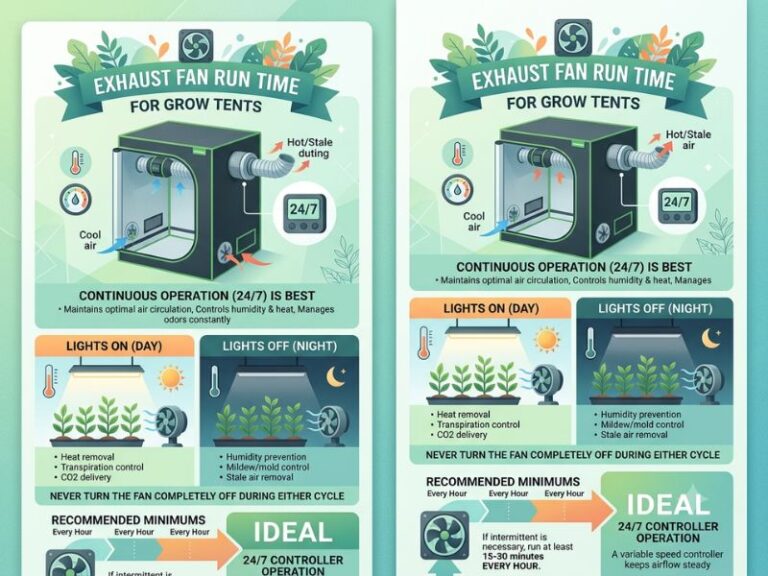
Should grow-tent fans run continuously?
Circulation fans are commonly operated for long periods to prevent stagnant air, but the correct schedule depends on the crop and environment.
Exhaust fans may run continuously at a low setting or respond to temperature and humidity controls. The environment should remain stable during both light and dark periods.
Where should circulation fans be positioned?
Place airflow across the canopy rather than directly at one plant.
Dense tents may benefit from one fan above or beside the canopy and another below it. Avoid aiming fans directly at the growing medium if they scatter substrate or dry containers unevenly.
Can too much airflow damage plants?
Excessive direct airflow can increase water loss and cause physical stress.
Leaves should move gently. Curling, edge drying, persistent leaning, and vigorous flapping suggest that the fan is too close or too strong.
Do fans reduce humidity?
An exhaust fan can reduce humidity when it replaces moist tent air with drier room air.
A circulation fan does not remove water vapor, but it reduces localized humid pockets and moves moisture away from leaf surfaces.
How can I make my grow-tent fans quieter?
Reduce speed, isolate vibration, straighten the duct, use correctly sized components, clean the fan, and avoid narrow reducers.
A larger controlled fan operating below maximum speed may be quieter than a small fan working at full output.
What does negative pressure look like in a grow tent?
The fabric walls pull inward slightly while the exhaust is operating.
If the tent collapses severely, increase passive-intake area or reduce exhaust speed. If the walls bulge outward, intake airflow may be too high or exhaust airflow too low.
How often should grow-tent fans be cleaned?
Inspect them regularly and clean visible dust before it forms a heavy layer.
The schedule depends on room dust, filter condition, operating hours, and humidity. Disconnect power and follow the product’s cleaning instructions.
Conclusion
Selecting the best fan for grow tent use starts with deciding whether the system needs exhaust ventilation, active intake, internal circulation, or a combination of all three.
For a higher-capacity six-inch exhaust system, the Hon&Guan 469 CFM Inline Duct Fan provides an EC motor, variable control, and useful airflow reserve. The MicroMall 405 CFM Fan and VEVOR 400 CFM Fan are alternative six-inch choices.
The Voltset 280 CFM Fan suits compact four-inch systems, while the Hon&Guan 130 CFM Booster is better positioned for active intake or supplementary airflow.
For canopy circulation, the VIVOSUN AeroWave E9 Two-Pack offers automated oscillation and grow-tent-specific controls. The Tonree Two-Pack provides two compact fixed fans, while the Hurricane, Genesis, and Comfort Zone models provide simpler targeted airflow.
Calculate tent volume, account for filter and duct resistance, and confirm the motor, controller, clamp, moisture rating, and product variant before purchasing. A balanced exhaust-and-circulation system is more effective than choosing one powerful fan and expecting it to perform every airflow task.

I’m Maya L. Greenwood, a lifelong plant lover who believes anyone can grow something beautiful with the right guidance. After years of testing soil mixes, pruning methods, irrigation tricks, and pest-safe solutions, I started EasyGardenTips.com to turn hard-won lessons into step-by-step advice. From seed starting and container gardens to composting and seasonal checklists, my goal is to make gardening simple, sustainable, and fun.