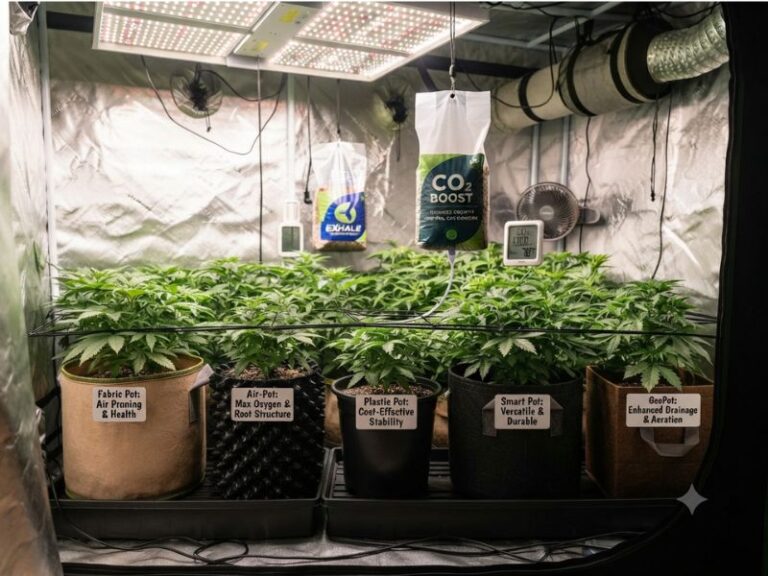
Best CO2 Bags for Grow Tent: 5 Reliable Generators for Plants
Adding carbon dioxide to a grow tent sounds simple: hang a bag above the canopy and let the plants use the gas released by the living substrate. In practice, passive CO₂ supplementation only works effectively when lighting, temperature, airflow, nutrition, irrigation, and tent ventilation are already under control.
The best CO2 bags for grow tent use should match the volume of the enclosure, activate reliably, release gas consistently, and remain easy to position without blocking lights or ventilation equipment. Larger bags are not automatically better. A compact tent may benefit more from a smaller generator positioned correctly than from an oversized bag whose output is immediately removed by the exhaust system.
My primary recommendation is the ExHale Homegrown CO2 Original Grow Bag. It has one of the most established buyer histories in this product category and is designed for small to medium indoor grow spaces. Its passive mycelium-based system needs no tank, regulator, electricity, flame, or fermentation bottle.
The ExHale Homegrown CO2 365 is a more convenient self-activated alternative. The CO2BAG M two-pack suits growers who prefer two compact generators, while the ExHale XL is intended for larger spaces. Myco Labs CO2 Boost 2.0 provides another self-activated option with an extended claimed production period.
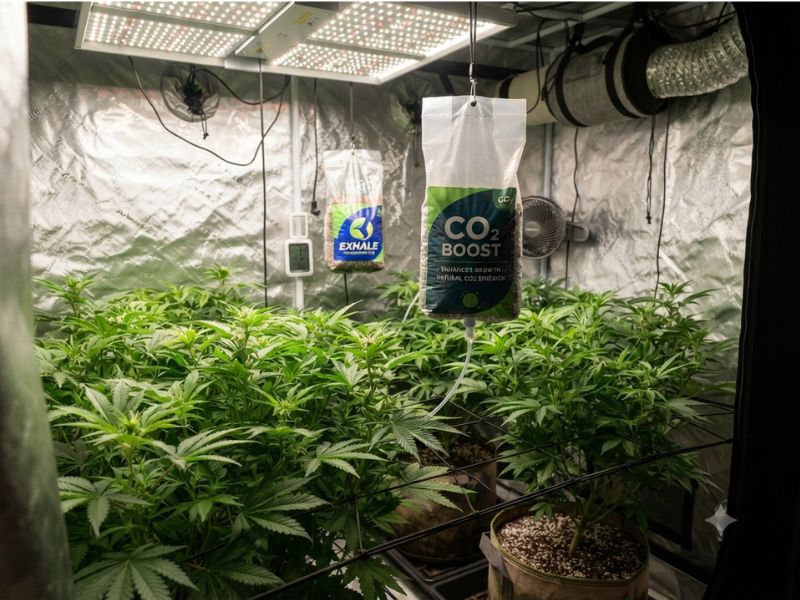
CO₂ bags are not precision injection systems. They cannot maintain a chosen concentration as accurately as a cylinder, regulator, controller, and solenoid. Their main advantages are simplicity, low maintenance, and the absence of compressed-gas equipment.
5 Best CO2 Bags for Grow Tent Use
| Image | Product Name | Check Price |
|---|---|---|
Best Choice | ExHale Homegrown CO2 Original Grow Bag | Check Price |
Second Best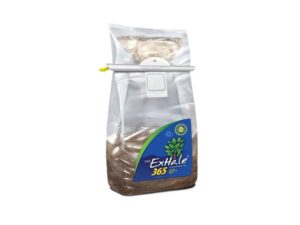 | ExHale Homegrown CO2 365 Self-Activated Bag | Check Price |
Third Choice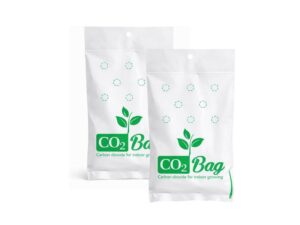 | CO2BAG M Natural CO₂ Generator 2-Pack | Check Price |
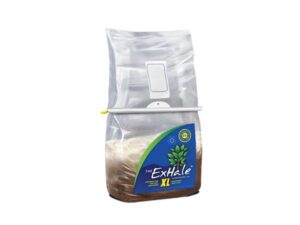 | ExHale Homegrown CO2 XL Grow Bag | Check Price |
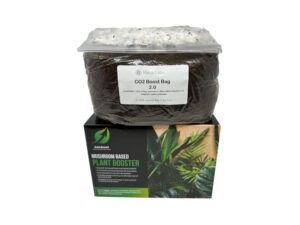 | Myco Labs CO2 Boost Self-Activated Mushroom Grow Bag 2.0 | Check Price |
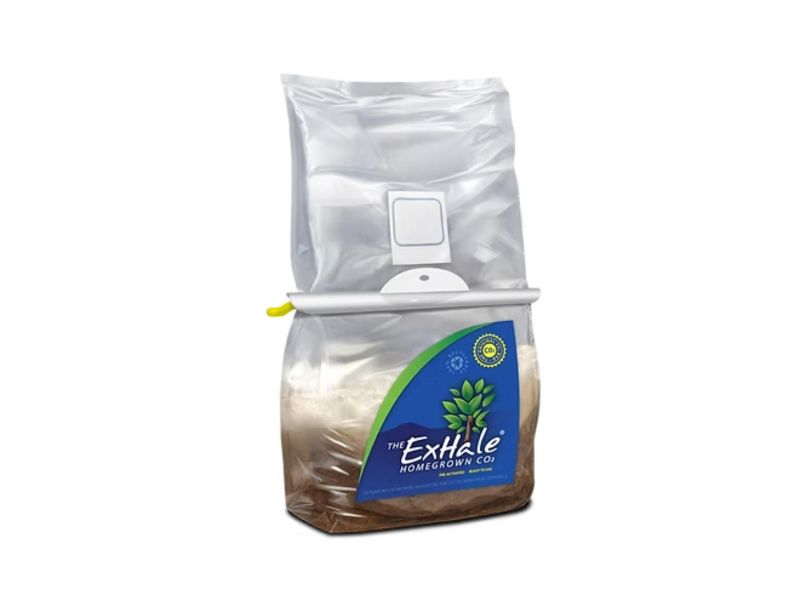
1. ExHale Homegrown CO2 Original Grow Bag
Key Features
- Mycelium-based passive CO₂ generation
- Approximately four-pound product class
- Designed for small to medium grow spaces
- Commonly associated with approximately 4×4 coverage
- Several months of peak CO₂ production
- Requires no electricity
- Requires no heat or combustion
- Integrated hanging design
- Suitable for vegetative and flowering environments
- Maintenance-free after correct setup
The ExHale Original is the most established product in this comparison. It uses living mycelium growing through a prepared substrate to release carbon dioxide gradually into the surrounding air.
Unlike a self-activated bag, the Original generally arrives with biological activity already underway. That can reduce the waiting period before meaningful production, although freshness and storage conditions become important. A bag that has spent too long in a hot warehouse or has reached an advanced stage of colonization may have less useful production time remaining.
The manufacturer positions the Original for approximately a 4×4-foot or 128-cubic-foot space. That coverage should be treated as a general sizing guide rather than a guaranteed concentration. Actual performance depends heavily on tent temperature, bag age, exhaust frequency, circulation, canopy size, and how much fresh room air enters the enclosure.
The bag should remain sealed. Its filter patch allows gas exchange while helping protect the biological material inside. Opening or cutting the bag early can contaminate the substrate and alter the intended CO₂ release.
Place it above or slightly beside the plant canopy without allowing it to touch a hot LED driver, grow-light heat sink, heater, or wet humidifier outlet. Gentle circulation can help mix the released gas through the canopy.
The Original is most appropriate for growers who want a proven passive bag and do not need exact digital control. It is less suitable for a tent with an exhaust fan running continuously at high speed because much of the additional CO₂ may leave the enclosure before the plants use it.
What I Like
- Established product history
- No electricity or compressed tank
- Simple hanging installation
- Appropriate for common personal grow tents
- No daily mixing or refilling
- Quiet and heat-free operation
- Works through vegetative and flowering stages
What I Do Not Like
- Output cannot be precisely controlled
- Remaining lifespan depends on freshness
- Continuous exhaust can remove the released gas
- No built-in indication of actual ppm
- Biological activity may vary between bags
- Requires a separate CO₂ monitor for verification
The ExHale Original is the strongest general-purpose choice for growers who want passive supplementation with minimal setup. It is best used in a well-managed tent where ventilation can be coordinated with the lighting period rather than operated at maximum speed continuously.
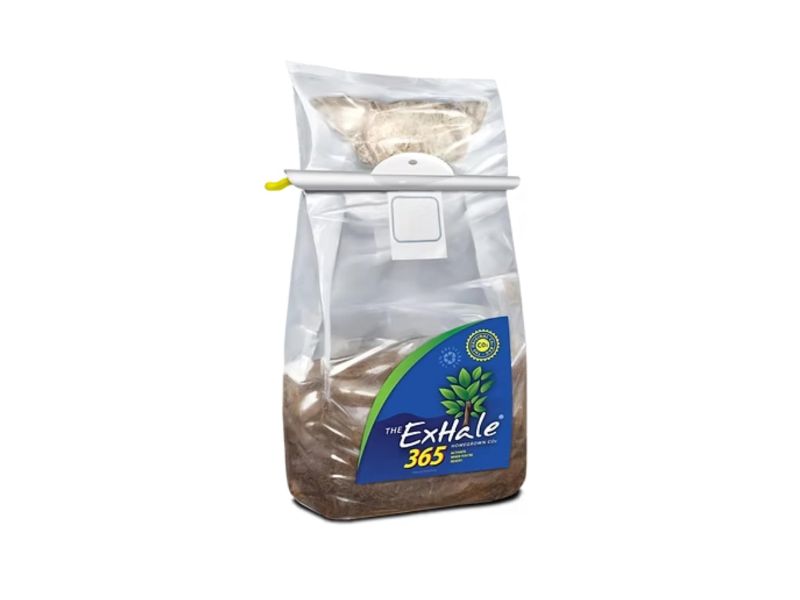
2. ExHale Homegrown CO2 365 Self-Activated Bag
Key Features
- Self-activated mycelium system
- Designed around approximately 4×4 coverage
- Marketed for an extended service period
- Approximately six months of peak production
- Activation chamber integrated into the bag
- No electricity or external heat
- Built-in hanger or separation seal
- Passive continuous release
- Suitable for small grow rooms and tents
- Requires little maintenance after activation
The ExHale 365 is closely related to the Original but is designed to be activated by the user. The biological material and substrate remain separated until the bag is prepared for use.
This structure can provide more control over when the production cycle begins. It is useful when purchasing a bag before the grow tent is ready or when the supplementation period needs to align with a new cultivation cycle.
Activation normally involves moving the inoculated material into the prepared substrate and mixing it according to the supplied directions. The mycelium then needs time to colonize the material before reaching stronger CO₂ production.
The 365 is therefore not an instant-response product. Growers should activate it before they expect peak demand rather than waiting until plants are already under high-intensity light.
Like the Original, it is commonly positioned for a small tent around 4×4 feet. The actual concentration should be verified rather than assumed from the coverage statement.
The bag should hang above the canopy but below areas exposed to excessive heat. It should also remain where air can move around the filter patch. Do not press the bag tightly against the tent wall or bury it behind a large carbon filter.
A self-activated bag is useful when freshness and cycle timing matter. The trade-off is that incorrect activation, inadequate mixing, or unsuitable temperatures may delay colonization.
What I Like
- User controls when activation begins
- Long potential service period
- No tank, regulator, or electricity
- Compact enough for personal grow tents
- Simple ongoing maintenance
- Convenient integrated hanging method
- Better storage flexibility before activation
What I Do Not Like
- Requires an activation period
- Output may begin gradually
- Incorrect preparation can delay performance
- Cannot maintain an exact programmed ppm
- Exhaust timing strongly affects usefulness
- Actual output should be checked with a meter
The ExHale 365 is a practical alternative to the Original when the grower wants to start the biological cycle at a chosen time. It is particularly suitable for planning supplementation around a complete indoor growing cycle.
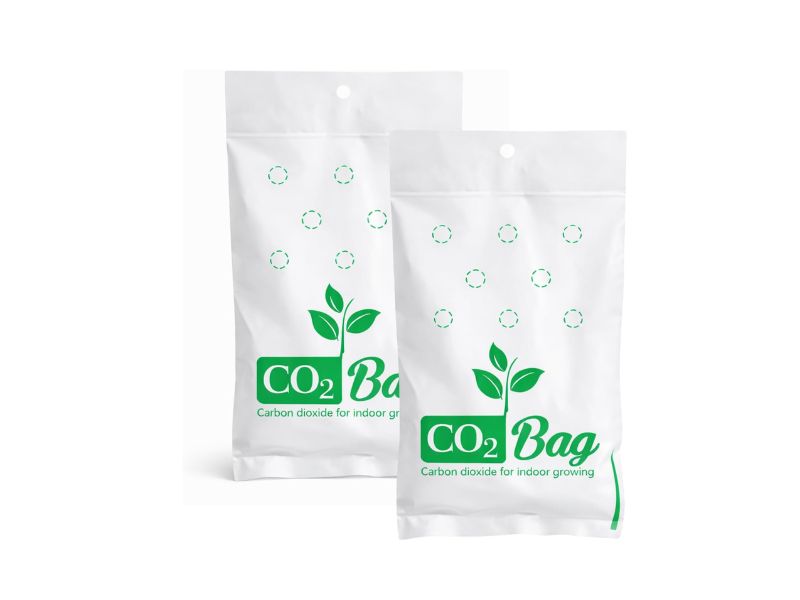
3. CO2BAG M Natural CO₂ Generator 2-Pack
Key Features
- Two compact CO₂ generator bags
- Natural passive production
- Designed for indoor growing spaces
- No electrical power
- No compressed-gas tank
- Compact hanging format
- Can be distributed across separate canopy zones
- Low-maintenance operation
- Appropriate for small or divided tents
- Flexible placement compared with one large bag
The CO2BAG M two-pack provides a different layout advantage: two smaller generators can be positioned in separate areas of the tent.
This can be useful in a rectangular enclosure, a tent divided into two lighting zones, or a setup where one large bag would interfere with a central grow light or carbon filter. One bag can hang toward each side, allowing circulation fans to mix the output across the canopy.
The manufacturer positions the M model for relatively compact indoor growing spaces. Because this listing includes two bags, the pair can be used together in one larger enclosure or separated between two smaller tents.
Using two bags does not guarantee twice the canopy concentration. Ventilation, leakage, room CO₂, temperature, and biological activity continue to determine the measured result.
Compact bags are easier to hang, but they can also dry or cool more quickly when positioned directly in strong airflow. Avoid placing them immediately in front of an exhaust intake or circulation fan.
The two-pack format can also support staggered activation if allowed by the current instructions. Starting the second unit later may extend the overall period during which at least one bag is producing actively. Activation and storage directions should be followed exactly.
What I Like
- Two-bag format provides flexible placement
- Suitable for divided canopy zones
- No electrical or compressed-gas components
- Compact physical size
- Can be shared between two small tents
- Low-maintenance passive operation
- Useful where ceiling space is restricted
What I Do Not Like
- Two bags require two hanging positions
- Actual coverage depends on ventilation
- Production cannot be adjusted electronically
- Smaller generators may be less suitable for large tents
- Output variation is possible
- Monitoring equipment remains necessary
The CO2BAG M two-pack is best for growers who value placement flexibility. It is a useful alternative to one large generator in rectangular tents or spaces with crowded overhead equipment.
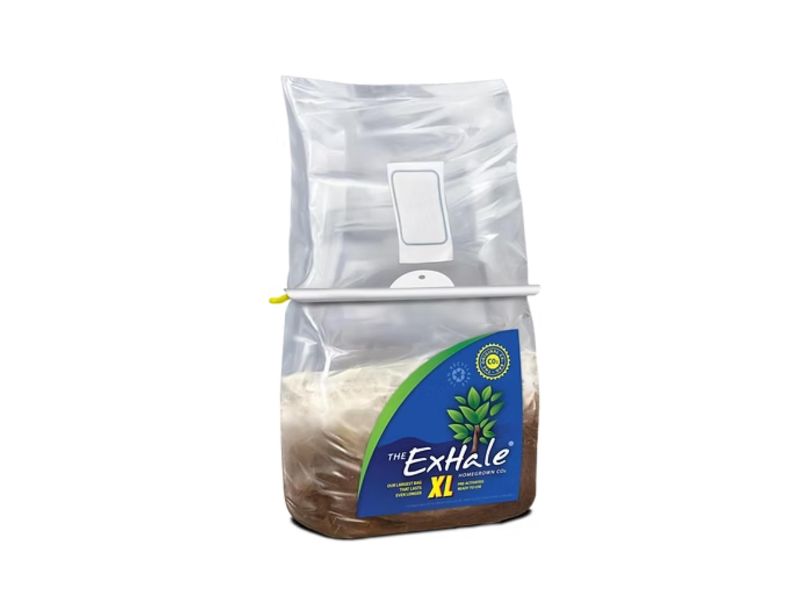
4. ExHale Homegrown CO2 XL Grow Bag
Key Features
- Larger mycelium and substrate volume
- Designed for medium to larger grow spaces
- Rated around 288 cubic feet
- Commonly associated with approximately 6×6 coverage
- Passive CO₂ production
- Approximately six months of expected production
- No electricity or heat
- Integrated hanging seal
- Suitable for larger canopies
- Requires no compressed tank or regulator
The ExHale XL is intended for growers whose enclosure is too large for the Original or 365 models. Its increased biological mass is designed to produce more carbon dioxide across a larger volume.
The product is commonly rated for approximately 288 cubic feet, which corresponds to a 6×6 footprint with an eight-foot height. That does not mean it will maintain a specific concentration in every room of that size.
A large grow tent usually has stronger lighting, more heat, and a higher-capacity exhaust system. These factors can reduce the practical advantage of a passive bag. If an exhaust fan replaces the complete tent volume several times per minute, the added CO₂ may be removed almost immediately.
The XL is therefore most useful in spaces with controlled ventilation cycles, relatively low leakage, and a measurable need for supplementation. It may also suit a sealed or semi-sealed grow room better than a small tent with constant high-speed exhaust.
Its larger weight requires a secure hanging point. Do not attach it to a weak fabric loop or overloaded support bar. The bag should hang where it cannot fall onto plants, lamps, electrical equipment, or irrigation lines.
The XL should not be selected merely because it is the largest model. An oversized passive generator in a small enclosure offers less control than an appropriately sized bag combined with a meter.
What I Like
- Designed for larger spaces
- More biological material than standard models
- No cylinder or regulator
- Long passive service period
- Simple operation after installation
- Useful for large canopies
- No heat, flame, or pump noise
What I Do Not Like
- Physically heavier
- Requires a secure support point
- Higher-output exhaust can waste the CO₂
- Less appropriate for small tents
- Cannot turn off during the dark period
- Actual ppm remains dependent on room conditions
The ExHale XL is the appropriate option for a larger grow room or tent where the standard bag is undersized. It should be selected based on measured enclosure volume and ventilation behavior rather than canopy size alone.
5. Myco Labs CO2 Boost Self-Activated Mushroom Grow Bag 2.0
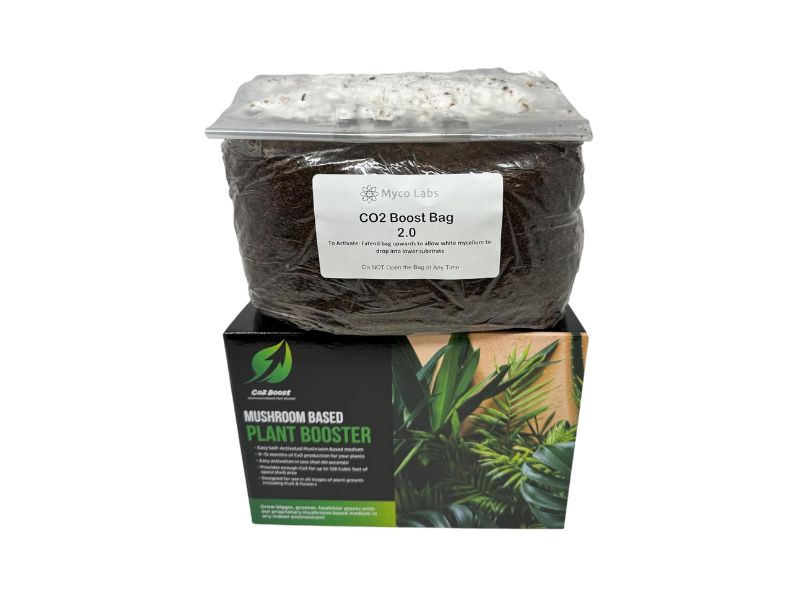
Key Features
- Approximately five-pound self-activated bag
- Designed around small to medium indoor grow areas
- Commonly positioned for approximately 4×4 tents
- Claimed extended CO₂ production period
- Activation takes about one minute
- No electricity or tank
- Mycelium-based biological generator
- Intended to remain non-fruiting during the main production phase
- May produce edible mushrooms near the end of its lifecycle
- Suitable for several indoor plants
The Myco Labs CO2 Boost 2.0 is another self-activated biological generator. It uses a prepared mushroom culture and substrate intended to release CO₂ over an extended period before eventually fruiting.
The bag is activated by combining the colonized material with the substrate according to the supplied instructions. This gives the grower control over the start of the cycle and reduces dependence on how long the product has already been active before delivery.
Myco Labs positions the bag for approximately a 4×4 grow tent and several plants. It also advertises a longer production period than many standard six-month bags.
Long advertised duration should be treated cautiously. Biological production is not perfectly flat from the first day to the last. Output can rise during colonization, reach a stronger phase, and then decline as the substrate becomes depleted.
The possibility of harvesting mushrooms later is unusual, but the bag should not be opened or altered during the intended CO₂ phase. Fruiting conditions for mushrooms also differ from ideal conditions for many indoor plants, so the final mushroom result may vary.
This product is suitable for growers who want a competitively sized self-activated bag and are comfortable working with a newer product that has a smaller buyer history than the leading ExHale models.
What I Like
- Fast self-activation process
- Extended claimed service period
- No pump, tank, or regulator
- Designed for common grow-tent sizes
- Compact and easy to position
- Low ongoing maintenance
- Potential mushroom harvest at end of lifecycle
What I Do Not Like
- Smaller established buyer history
- Biological output can vary
- Long duration does not guarantee constant production
- Mushroom fruiting is not assured
- Actual concentration must be measured
- Ventilation can remove the generated gas
The Myco Labs CO2 Boost 2.0 is a relevant alternative for growers who prioritize an extended self-activated cycle. It offers useful specifications but should be evaluated with a CO₂ meter rather than relying only on the stated coverage and lifespan.
CO₂ Bag Comparison Table
| Product | Activation Type | Approximate Intended Space | Production Period | Pack Format | Main Advantage | Main Limitation |
| ExHale Original | Pre-activated biological bag | Around 4×4 or 128 cu. ft. | Several months | One bag | Established and simple | Freshness affects lifespan |
| ExHale 365 | Self-activated biological bag | Around 4×4 or 128 cu. ft. | Extended cycle with peak period | One bag | Activation timing control | Delayed ramp-up |
| CO2BAG M | Natural passive generator | Compact indoor spaces | Model-dependent | Two bags | Flexible two-zone placement | Lower single-bag capacity |
| ExHale XL | Larger biological bag | Around 6×6 or 288 cu. ft. | Around six months | One large bag | Larger-space coverage | Heavy and easily wasted by exhaust |
| Myco Labs CO2 Boost 2.0 | Self-activated mushroom bag | Around 4×4 | Extended claimed cycle | One bag | Long service period | Smaller established history |
How CO₂ Bags Work
Most passive CO₂ bags contain a prepared organic substrate and living fungal mycelium. As the mycelium consumes the substrate, cellular respiration releases carbon dioxide.
The process requires:
- Active living mycelium
- Suitable temperature
- Correct moisture inside the sealed bag
- Gas exchange through the filter patch
- Time for colonization
- Remaining nutrients within the substrate
The output is not controlled electronically. Production may vary according to temperature, bag age, colonization stage, contamination, storage conditions, and substrate condition.
Unlike a compressed-gas system, a passive bag does not allow the user to select a target ppm or stop injection during the dark cycle. It produces continuously while the biological culture remains active.
Are CO₂ Bags Worth Using in a Grow Tent?
CO₂ bags can be useful when:
- The tent has high-intensity lighting
- Plant nutrition and irrigation are already stable
- Temperature and humidity are controlled
- Ventilation does not immediately remove all added gas
- The bag is correctly sized
- A CO₂ meter confirms a measurable increase
- The grower wants a low-maintenance system
They may offer little practical benefit when:
- The exhaust fan runs continuously at high speed
- The tent has major air leaks
- Light intensity is already low
- Plants are stressed by heat or root problems
- The room naturally has adequate CO₂
- The canopy is small
- No meter is used to verify performance
Adding CO₂ cannot compensate for inadequate light, poor nutrition, root disease, incorrect irrigation, or unsuitable temperature.
Why Ventilation Can Make CO₂ Bags Ineffective
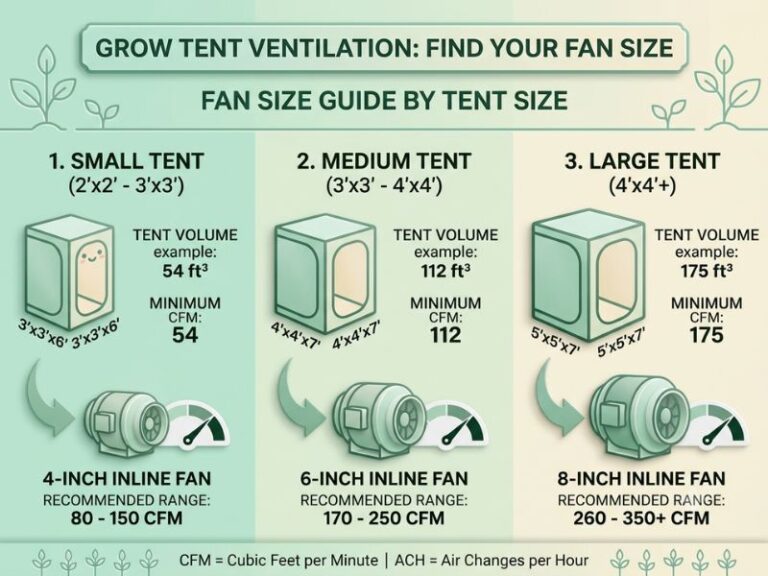
A grow-tent exhaust system removes heat, humidity, odors, and carbon dioxide at the same time.
Consider a 4×4×6.5-foot tent:
4 × 4 × 6.5 = 104 cubic feet
A 200 CFM exhaust fan can theoretically replace that entire air volume almost twice per minute before filter and duct losses are considered.
A passive bag cannot maintain a large concentration increase when the complete enclosure is continually emptied and refilled.
Possible strategies include:
- Operating the exhaust fan at the lowest effective speed
- Using temperature-based fan control
- Coordinating ventilation cycles
- Improving room temperature so less exhaust is required
- Placing the bag near the circulation path
- Monitoring ppm during normal operation
- Avoiding unnecessary negative pressure
Do not disable necessary ventilation merely to retain CO₂. Heat, humidity, and human safety remain more important than supplementation.
How to Select the Correct Bag Size
Calculate the tent volume:
Length × width × height = cubic feet
Examples:
- 2×2×5 feet = 20 cubic feet
- 2×4×6 feet = 48 cubic feet
- 3×3×6 feet = 54 cubic feet
- 4×4×6.5 feet = 104 cubic feet
- 5×5×6.5 feet = 162.5 cubic feet
- 6×6×8 feet = 288 cubic feet
A bag marketed for 128 cubic feet may be physically suitable for a 4×4 tent with a common height. However, ventilation and leakage often matter more than the static volume.
Use a larger bag only when:
- The space is larger
- The ventilation is controlled
- The canopy is substantial
- The meter shows the smaller bag is insufficient
- The lighting can support higher photosynthetic demand
Correct CO₂ Bag Placement
CO₂ is denser than ordinary air, but it will not remain in a perfectly separated layer inside a tent with fans, heat, convection, and ventilation.
A practical position is:
- Above or slightly beside the canopy
- Away from excessive heat
- Clear of direct humidifier mist
- Near gentle circulation
- Away from the immediate exhaust intake
- Securely supported
- Accessible for inspection
- Not touching the grow light
Do not place the bag on the wet tent floor. Water, nutrient runoff, pests, and physical damage can affect the packaging.
Do not hang a heavy XL bag from a weak light cord or plastic clip. Use a secure support bar and appropriate hanger.
Why a CO₂ Meter Is Necessary
Without measurement, the grower cannot tell whether the bag:
- Has activated
- Is releasing a useful amount
- Is overwhelmed by ventilation
- Is oversized for the enclosure
- Has reached the end of its productive phase
- Is being positioned effectively
- Produces different readings during fan cycles
Place the monitor near canopy height rather than directly beside the bag. A sensor positioned inches from the filter patch may show a high local reading that does not represent the complete grow space.
Record readings under several conditions:
- Lights on, exhaust low
- Lights on, exhaust high
- Circulation fans operating
- Door closed
- Door recently opened
- Different times during the bag lifecycle
The meter should be calibrated according to its instructions.
Matching CO₂ With Light Intensity
Plants use CO₂ during photosynthesis, so enrichment is most relevant when the lights are on.
A passive bag releases gas continuously, including during the dark period. The grower cannot prevent this, but the greatest practical benefit is expected when the canopy receives enough usable light.
CO₂ supplementation is less likely to produce a meaningful response under weak lighting because photon availability remains the primary limitation.
Before adding a bag, confirm:
- The grow light covers the entire canopy
- PPFD is appropriate for the plant stage
- The fixture can be dimmed
- Heat is controlled
- Plants are not showing light stress
- Irrigation demand can be met
- Nutrient supply is stable
More light and CO₂ can increase plant demand for water and nutrients. Environmental improvements should be introduced gradually.
Temperature, Humidity, and Biological Activity
The bag itself contains living organisms. Extremely cold conditions may slow biological activity, while excessive heat can damage the culture or shorten its useful life.
Avoid positioning the bag:
- Against a hot LED driver
- Above a heater
- Beside a high-temperature discharge
- Directly in cold intake air
- In continuous humidifier spray
- Against wet tent fabric
Grow-tent temperature also affects how plants respond to CO₂. Supplementation should not be used as an excuse to allow unsafe or uncontrolled heat.
When to Activate a Self-Activated Bag
Self-activated bags need time to colonize and reach stronger production.
Activate the bag:
- Before the period of highest plant demand
- Before the canopy fully fills the tent
- According to the manufacturer’s estimated ramp-up time
- Only when the grow space will be ready
- After confirming the bag is within its storage period
Do not open the sterile bag. Activation normally occurs by mixing separated internal materials while the package remains sealed.
Label the bag with:
- Activation date
- Expected peak window
- Tent location
- Initial meter readings
- Replacement target date
Signs a CO₂ Bag May Be Near the End of Its Life
Possible signs include:
- Lower meter readings under the same conditions
- Fully colonized or depleted-looking substrate
- Significant drying
- Mushroom fruiting in a bag designed to fruit near the end
- Reduced response after ventilation variables are ruled out
- Reaching the manufacturer’s expected lifecycle
Appearance alone cannot confirm output. A bag may look fully colonized and still produce gas, or it may appear active while releasing less than expected.
Use meter trends rather than color alone.
CO₂ Safety in Grow Rooms
Carbon dioxide cannot be detected reliably by smell or sight.
Use practical precautions:
- Install a dependable CO₂ monitor
- Keep the surrounding room ventilated
- Do not sleep in a tightly sealed enrichment room
- Avoid disabling essential ventilation
- Keep children and pets away from the grow area
- Follow the product instructions
- Never open or consume the substrate unless the manufacturer specifically permits it
- Leave the room if a high-level alarm activates
- Investigate headaches, dizziness, unusual fatigue, or shortness of breath immediately
- Do not combine passive bags with an uncontrolled gas-cylinder system
Passive bags usually produce much less gas than compressed cylinders, but safe monitoring remains necessary in small enclosed rooms.
Common CO₂ Bag Mistakes
Selecting a bag without measuring tent volume
Footprint alone does not include height.
Expecting precise ppm control
A passive biological generator cannot match a regulated tank system.
Running the exhaust fan continuously at maximum speed
The added CO₂ may leave the tent immediately.
Hanging the bag directly beside the exhaust port
This sends the released gas toward the filter instead of the canopy.
Placing the meter beside the bag
The reading may represent one concentrated pocket rather than the entire tent.
Adding CO₂ before correcting basic problems
Weak lighting, poor roots, overwatering, or excessive temperature will continue to limit growth.
Opening the bag
Opening can contaminate or damage the biological system.
Ignoring activation time
Self-activated bags may need weeks to reach stronger output.
Buying the largest model automatically
Oversizing provides less control and may waste money.
Relying on advertised yield increases
Actual results depend on the complete growing environment.
Frequently Asked Questions
What are the best CO₂ bags for grow tents?
The ExHale Homegrown CO2 Original Grow Bag is my primary recommendation because it has an established history, simple installation, and a size suited to many personal grow tents.
The ExHale 365 is better when activation timing matters, while the ExHale XL is intended for larger spaces.
Do CO₂ bags actually work?
They can release measurable carbon dioxide when the biological culture is healthy and the bag is used correctly.
Their practical benefit depends on tent leakage, exhaust frequency, placement, lighting, and plant demand. A CO₂ meter is required to determine whether the increase is meaningful.
How many CO₂ bags do I need for a 4×4 tent?
One standard bag marketed for approximately 128 cubic feet is a common starting point.
Do not automatically add several bags. Install one, measure canopy-level CO₂ under normal operating conditions, and only increase capacity when the readings and environment justify it.
Where should a CO₂ bag hang?
Hang it securely above or slightly beside the canopy, away from direct exhaust suction, excessive heat, and humidifier spray.
Gentle air circulation should distribute the gas through the tent.
Can I put a CO₂ bag on the floor?
It is not the preferred location.
The floor exposes the bag to water, nutrients, pests, and damage. Hanging it also allows released gas to enter the canopy circulation path more effectively.
Should the exhaust fan be turned off?
Do not switch off essential ventilation if doing so causes excessive heat, humidity, or unsafe conditions.
A temperature-controlled or lower-speed exhaust strategy may retain more CO₂ while maintaining acceptable environmental conditions.
Do CO₂ bags work with an inline fan?
They can, but a high-speed continuously operating fan may remove much of the released gas.
Measure the concentration with the fan operating normally before deciding whether the bag is useful.
How long does a CO₂ bag last?
Depending on the product, many bags are marketed for several months, with a shorter period of strongest output.
Temperature, freshness, activation, storage, and biological variation affect actual lifespan.
Is ExHale Original or ExHale 365 better?
Choose the Original when you want a bag that is already biologically active.
Choose the 365 when you want to control when activation begins and can allow time for colonization.
Is an XL CO₂ bag better?
It is better only for a larger space or a setup where a standard bag cannot produce a measurable increase.
An XL bag is heavier, costs more, and remains vulnerable to CO₂ loss through exhaust ventilation.
Can CO₂ bags replace a tank system?
No. A tank system with a regulator, solenoid, monitor, and controller provides much more precise concentration control.
Bags are simpler and lower maintenance but less predictable.
Do plants need extra CO₂ at night?
Photosynthesis depends on light, so supplementation is primarily relevant during the lighting period.
Passive bags continue producing at night because they cannot be switched off.
Can a CO₂ bag cause too much CO₂?
A passive bag normally releases gas slowly, but accumulation is still possible in a very small or poorly ventilated enclosure.
Use a monitor and maintain safe room ventilation.
Can I open the bag to increase output?
No. Opening the bag can contaminate the substrate, disrupt moisture balance, and shorten its useful life.
Use the product only as directed.
Does a CO₂ bag need a circulation fan?
Gentle circulation helps distribute gas around the canopy.
Avoid blowing a strong fan directly onto the bag or immediately toward the exhaust port.
When should I replace a CO₂ bag?
Replace it when meter readings consistently decline under unchanged conditions, the expected production period has passed, or the manufacturer’s end-of-life indicators appear.
Conclusion
Choosing the best CO2 bags for grow tent use requires more than selecting the largest package. The correct product must match the enclosure volume, ventilation pattern, canopy size, and length of the growing cycle.
My primary recommendation is the ExHale Homegrown CO2 Original Grow Bag. It is a straightforward passive generator suited to many small and medium indoor grow spaces.
The ExHale Homegrown CO2 365 provides better control over the activation date. The CO2BAG M Natural CO₂ Generator 2-Pack is useful when two compact bags can be distributed across separate canopy zones.
For larger spaces, the ExHale Homegrown CO2 XL provides increased biological capacity. The Myco Labs CO2 Boost 2.0 is an alternative self-activated bag with an extended claimed production cycle.
Whichever product you select, verify its effect with a canopy-level CO₂ monitor. A bag that cannot create a measurable increase under normal exhaust conditions is unlikely to provide meaningful value. Lighting, root health, irrigation, temperature, and airflow should be optimized before passive CO₂ supplementation is added.

I’m Maya L. Greenwood, a lifelong plant lover who believes anyone can grow something beautiful with the right guidance. After years of testing soil mixes, pruning methods, irrigation tricks, and pest-safe solutions, I started EasyGardenTips.com to turn hard-won lessons into step-by-step advice. From seed starting and container gardens to composting and seasonal checklists, my goal is to make gardening simple, sustainable, and fun.