Best Grow Tent for 6 Plants: Build a Roomy, Manageable Indoor Garden
Finding the best grow tent for 6 plants is mostly a question of usable space. Six containers may physically fit inside a compact tent, but the real challenge begins after the plants develop wider canopies and you add a grow light, circulation fans, ducting, a carbon filter, environmental sensors, and watering equipment.
For most growers planning to keep six medium-sized plants through a full indoor growing cycle, a 5×5 grow tent is the most balanced starting point. A 60 × 60-inch floor provides 25 square feet, giving six plants considerably more breathing room than a crowded 4×4 without requiring the long footprint of a 4×8.
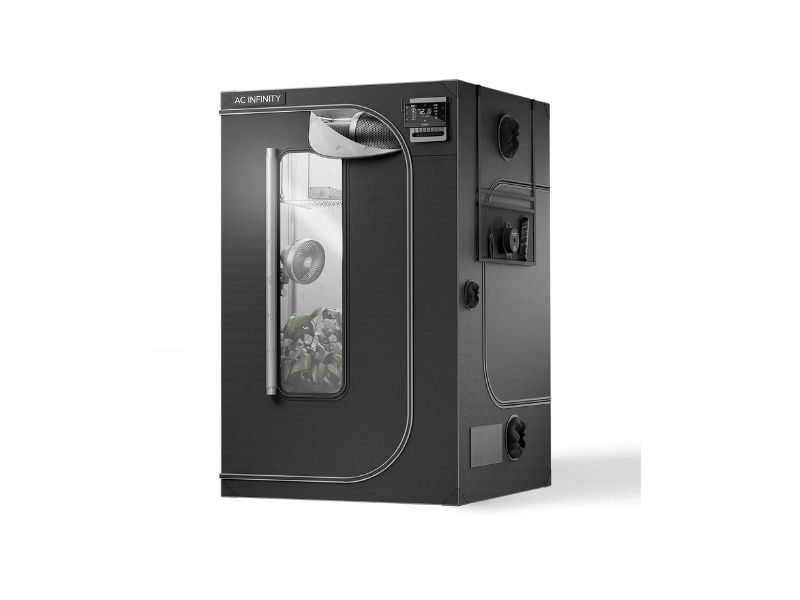
My first recommendation is the AC Infinity CLOUDLAB 866 5×5 Grow Tent. Its 60 × 60 × 80-inch enclosure combines 2000D reflective canvas, 1-inch-class poles, a large viewing window, and an exterior controller mounting area. It is particularly appealing if you want to build a clean, integrated indoor environment around six plants rather than simply buy an empty fabric enclosure.
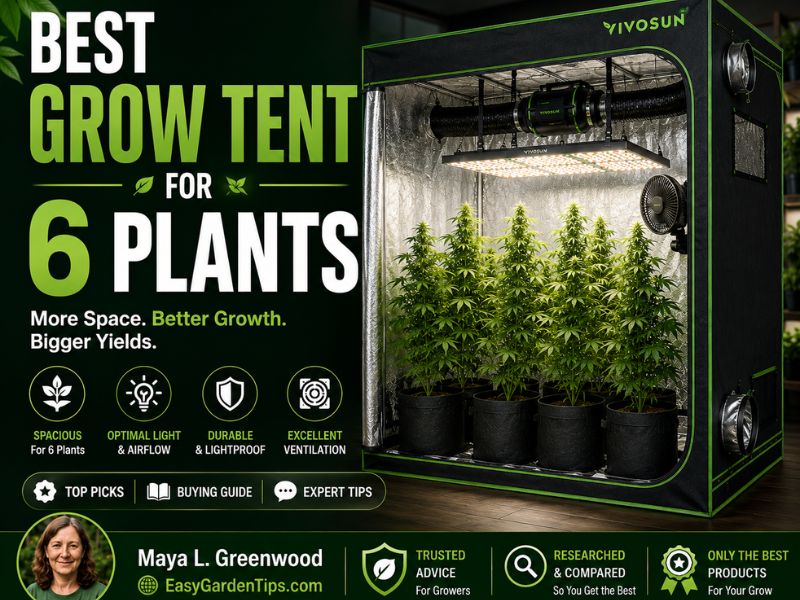
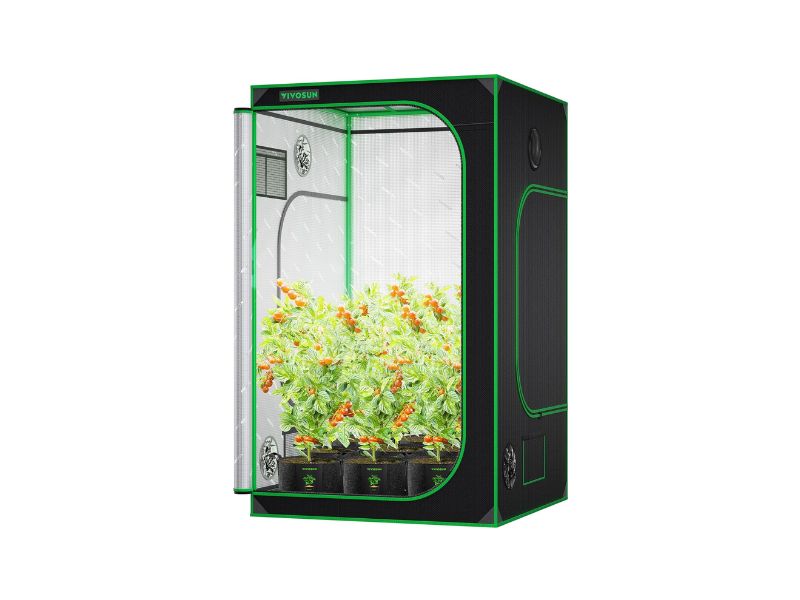
The VIVOSUN S558 5×5 Grow Tent is another strong choice. It uses the same useful 60 × 60 × 80-inch footprint, provides multiple access points, a removable floor tray, reflective Mylar interior, and a steel frame designed to support the equipment normally used in a larger indoor garden.
Spider Farmer’s 5×5 tent completes the list with a 1680D Oxford exterior, reinforced steel poles, controller-friendly organization, and a large observation window. It works especially well when you want enough floor space for six plants but still prefer a conventional square tent that can fit in a bedroom, basement, or dedicated indoor garden room.
The three products below were selected for six-plant usability, construction quality, equipment compatibility, and strong customer confidence. More importantly, each gives six plants enough room to grow without treating the manufacturer’s maximum plant count as a target.
3 Best Grow Tents for 6 Plants
| Image | Product Name | Check Price |
|---|---|---|
Best Choice | AC Infinity CLOUDLAB 866 5×5 Grow Tent | Check Price |
Second Best | VIVOSUN S558 5×5 Grow Tent | Check Price |
Third Choice | Spider Farmer 5×5 Grow Tent | Check Price |
For six plants, I prefer a 5×5 over a packed 4×4 because the additional nine square feet provide useful room around the canopy. That extra space can improve access, simplify airflow, and reduce the need to stack every piece of equipment directly around the containers.
1. AC Infinity CLOUDLAB 866 5×5 Grow Tent
Key Features
- 60 × 60 × 80-inch dimensions
- Heavy 2000D reflective canvas
- Thick 1-inch-class steel poles
- Large zippered viewing window
- Exterior controller mounting plate
- Multiple duct and cable openings
The CLOUDLAB 866 takes first place because it combines a very useful six-plant footprint with thoughtful equipment integration.
At 5×5, the tent provides 25 square feet of floor space. That is enough to arrange six medium plants without automatically forcing the foliage into one tightly packed mass. The 80-inch height also leaves practical room above the containers for the light fixture, hanging hardware, and ventilation equipment.
AC Infinity uses 2000D Mylar-lined canvas and thick poles, while the exterior controller plate makes it easier to keep environmental controls accessible outside the humid growing space. The large observation window is useful for quick checks without opening the main door.
For six plants, the biggest advantage is not any single specification. It is how easily the tent can become an organized system. Lighting, exhaust, circulation, sensors, and controller cables can all be incorporated without turning the floor into a tangle of equipment.
What I Like
- Excellent 5×5 footprint for six medium plants
- Heavy canvas and substantial frame
- Good controller and cable organization
- Plenty of vertical room for overhead equipment
What I Do Not Like
- Requires a genuine 5×5 area plus access space
- More elaborate than a very basic indoor setup needs
For growers planning a long-term six-plant environment, the CLOUDLAB 866 offers the strongest combination of usable space, structure, and equipment-friendly design.
2. VIVOSUN S558 5×5 Grow Tent
Key Features
- 60 × 60 × 80-inch size
- Reflective Mylar interior
- Waterproof Oxford-style exterior
- Steel frame and top support bars
- Multiple access doors
- Observation window
- Removable floor tray
The VIVOSUN S558 is a straightforward 5×5 that gives six plants plenty of usable floor space without requiring a more complex smart-tent ecosystem.
Its 60 × 60 × 80-inch enclosure uses reflective Mylar walls, a steel frame, multiple openings for ventilation and electrical equipment, a viewing window, and a removable tray for easier cleanup. VIVOSUN also specifies substantial top-bar support for hanging equipment such as lighting, filtration, and ventilation components.
The multiple-door layout becomes particularly useful with six plants. A full canopy can make rear containers difficult to reach from one front opening, so being able to approach the plants from more than one direction can make watering, pruning, inspection, and equipment adjustments easier.
The main tradeoff is that the standard S558 uses a less heavy-duty fabric specification than some premium 2000D tents. That does not prevent it from functioning as a practical enclosure, but buyers prioritizing maximum fabric thickness may prefer the AC Infinity or a heavier PRO-style model.
What I Like
- Spacious 5×5 layout
- Multiple access points help with six plants
- Removable tray simplifies cleanup
- Straightforward design without unnecessary complexity
What I Do Not Like
- Fabric is lighter than some premium competitors
- Less integrated controller organization than the CLOUDLAB
The S558 is a sensible option for someone who wants a proven, roomy 5×5 enclosure and plans to choose the lighting, fan, filter, and controllers separately.
3. Spider Farmer 5×5 Grow Tent
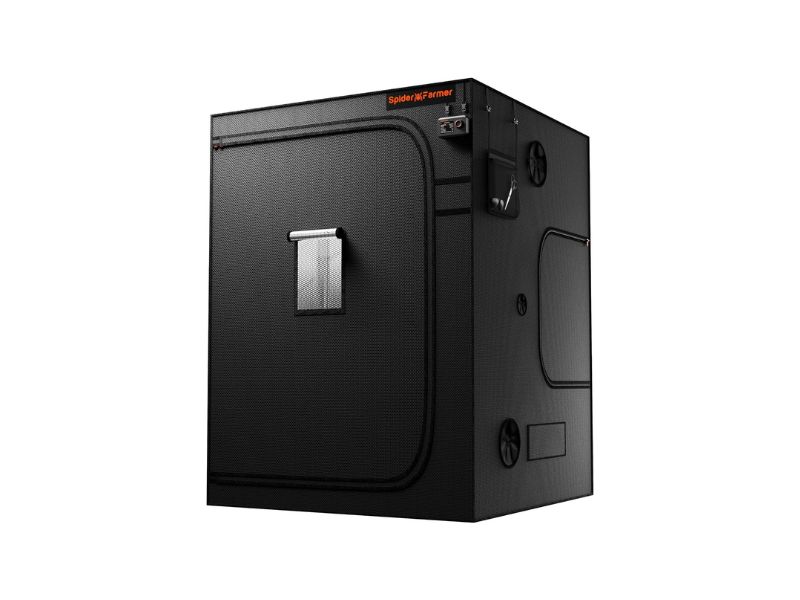
Key Features
- 60 × 60 × 80-inch dimensions
- 1680D Oxford canvas
- Reflective Mylar interior
- Reinforced steel poles
- Large observation window
- Controller hanging area
- Removable waterproof floor tray
Spider Farmer’s 5×5 offers a good middle ground between a basic enclosure and a highly integrated tent.
The current design uses 1680D tear-resistant Oxford fabric, a reflective interior, reinforced poles, a large viewing window, tool storage, and an exterior area for organizing compatible controls. Spider Farmer specifies a frame capable of handling substantial hanging equipment, which is important once a 5×5 light and ventilation system are installed.
Six plants fit naturally within this footprint, particularly when containers are spaced deliberately instead of being clustered in the center. The 80-inch height also leaves enough vertical flexibility for most medium-sized indoor crops.
Its biggest limitation is that it does not have the same 2000D fabric specification as the AC Infinity. On the other hand, 1680D remains substantial for normal indoor use, and overall tent quality depends on more than the denier number alone.
What I Like
- Comfortable six-plant footprint
- Heavy 1680D material
- Good viewing and equipment organization
- Strong frame for a complete 5×5 setup
What I Do Not Like
- Not as heavy as a 2000D tent
- A full six-plant canopy can still make center access difficult
The Spider Farmer is a strong choice if you want a well-equipped 5×5 platform with enough space for six plants and good flexibility for future lighting and ventilation upgrades.
Grow Tent Comparison for 6 Plants
| Product | Size | Canvas | Height | Main Strength | Main Limitation |
| AC Infinity CLOUDLAB 866 | 5×5 | 2000D | 80 in. | Excellent equipment integration | Requires substantial room |
| VIVOSUN S558 | 5×5 | Heavy Oxford/Mylar construction | 80 in. | Spacious, accessible layout | Lighter fabric than premium options |
| Spider Farmer 5×5 | 5×5 | 1680D | 80 in. | Strong balance of construction and organization | Less heavy than 2000D models |
All three use essentially the same useful 5×5×80-inch format, so the decision comes down largely to construction priorities, access, and how much equipment organization you want built into the tent.
What Size Grow Tent Is Best for 6 Plants?
For six medium plants, 5×5 is the size I would start with.
A 4×4 can work under certain conditions, but it becomes significantly tighter once plants mature. A 5×5 gives you enough extra room to space the containers more naturally and create airflow around the outer edges of the canopy.
4×4 Grow Tent
A 4×4 contains:
16 square feet
Divided between six plants, that averages only about 2.67 square feet per plant.
That can work for six compact plants, especially if you deliberately keep their canopies small.
The difficulty comes when you add:
- Containers
- Drain trays
- Circulation fans
- Humidification equipment
- Irrigation lines
- Trellis supports
The available floor area disappears quickly.
A 4×4 therefore makes more sense when the six plants will remain compact or when minimizing the overall room footprint matters more than having generous working space.
5×5 Grow Tent
A 5×5 provides:
25 square feet
Divided evenly among six plants, that works out to a little over four square feet per plant.
The plants will not occupy perfectly equal squares, but the calculation shows why a 5×5 feels substantially less crowded.
The additional area makes it easier to:
- Separate containers
- Maintain airflow
- Reach individual plants
- Position fans
- Use larger pots
- Keep equipment away from the canopy
This is the sweet spot for most six-plant setups.
4×8 Grow Tent
A 4×8 offers 32 square feet.
That is excellent for six large plants and makes access easier because the rectangular layout can place plants in two rows.
The drawback is room shape.
An 8-foot-long tent requires a dedicated wall or growing area. Lighting also needs to cover the longer rectangular canopy evenly.
For most home setups, the square 5×5 is easier to integrate.
Why a 5×5 Works So Well for Six Plants
A 5×5 is large enough to avoid obvious overcrowding but still compact enough to operate as one environmental zone.
You can use:
- One appropriately sized lighting system
- One main exhaust system
- One environmental controller
- Several circulation fans
- One shared humidity strategy
That is usually simpler than dividing six plants between multiple smaller tents.
A 5×5 also has enough room to stagger six plants instead of forcing them into rigid rows.
One practical arrangement is:
| Plant 1 | Plant 2 | Plant 3 |
| Plant 4 | Plant 5 | Plant 6 |
The exact spacing will depend on container diameter and canopy size, but a two-row layout gives each plant a clear starting position.
How Much Space Does Each Plant Need?
There is no universal plant-space number.
Six small herbs and six large fruiting plants have completely different requirements.
Consider the plant’s mature canopy, not only the pot.
Before choosing the tent, estimate:
- Mature plant width
- Container diameter
- Expected height
- Whether branches will be trained outward
- Whether you will use a trellis
- Floor space required by equipment
If each plant is expected to develop a canopy around two feet across, a 5×5 is much more realistic than a 4×4.
If the species remains naturally compact, the same 5×5 may feel extremely spacious.
How Tall Should a Grow Tent for 6 Plants Be?
The selected tents all use an 80-inch height, and that is a good general-purpose target for a six-plant setup.
Height gets consumed faster than many first-time growers expect.
The full 80 inches must accommodate:
- Plant containers
- Plant height
- Light fixture
- Hanging hardware
- Light-to-canopy clearance
- Carbon filter
- Ducting
- Inline fan when mounted overhead
A 12-inch container plus overhead equipment can easily remove two feet or more from the theoretical height.
Is 72 Inches Enough?
It can work with compact plants.
But if the plants stretch more than expected, a 72-inch tent gives you less room to raise the light.
For a new six-plant setup where flexibility matters, I would choose 80 inches when the room allows it.
What to Look for When Buying a Six-Plant Grow Tent
Strong Frame
A 5×5 tent often carries more hanging equipment than a smaller enclosure.
The frame may support:
- Large LED fixture
- Carbon filter
- Inline fan
- Ducting
- Sensors
- Circulation equipment
Do not focus only on the fabric.
A substantial steel frame is equally important.
Reflective Interior
Reflective Mylar helps redirect light that would otherwise strike the tent walls.
It does not increase the electrical power of the grow light, but it helps keep stray light inside the useful growing area.
All three selected tents use reflective interior surfaces.
Light Control
Check:
- Zippers
- Stitching
- Duct ports
- Cable openings
- Observation windows
- Door flaps
Those areas are more likely to leak light than the middle of a heavy fabric panel.
A thicker canvas can help, but good closure design matters just as much.
Multiple Access Doors
This becomes much more important with six plants than with one or two.
Once the front row develops a broad canopy, reaching the rear plants can become difficult.
A side door can save you from leaning across several containers during watering or inspection.
Removable Floor Tray
Water spills happen.
A removable waterproof tray creates another barrier between the containers and the tent floor and makes cleanup much easier.
Both VIVOSUN and Spider Farmer explicitly include removable floor trays in their current 5×5 designs.
Duct and Cable Ports
A useful 5×5 tent should have enough openings for:
- Exhaust
- Intake
- Electrical cables
- Controller sensors
- Optional external equipment
The port location matters almost as much as the number.
A poorly positioned exhaust port can force awkward duct bends that reduce airflow and consume vertical space.
Does Canvas Denier Matter?
Yes, but it should not be the only buying factor.
The AC Infinity uses 2000D material, while Spider Farmer uses 1680D and VIVOSUN’s standard S558 uses a lighter Oxford-style construction.
A heavier fabric can improve:
- Tear resistance
- Structure
- Light blocking
- Long-term durability
But a grow tent is an assembly.
Excellent canvas cannot compensate for poor:
- Zippers
- Stitching
- Corner joints
- Poles
- Port closures
For normal indoor use, I would rather buy a well-built 1680D tent than a poorly assembled tent that advertises a larger number.
What Grow Light Works for Six Plants in a 5×5?
Choose the light according to the 5×5 canopy, not the number six.
The mature plants may eventually merge into one continuous canopy. At that stage, uniform coverage becomes more important than whether there are exactly six stems emerging from six containers.
Consider:
- Recommended flowering/fruiting coverage
- PPFD distribution
- Fixture dimensions
- Dimming control
- Heat output
- Hanging clearance
A physically larger bar-style LED is often useful in a 5×5 because the diodes are spread across more of the canopy.
A board-style fixture can also work if it is designed to provide adequate edge-to-edge coverage.
Avoid a Strong Center Hotspot
Six plants usually occupy most of a 5×5.
A light that is extremely intense in the center but weak around the perimeter can create uneven growth.
Uniformity matters because the plants near the tent walls should not receive dramatically less usable light than those in the middle.
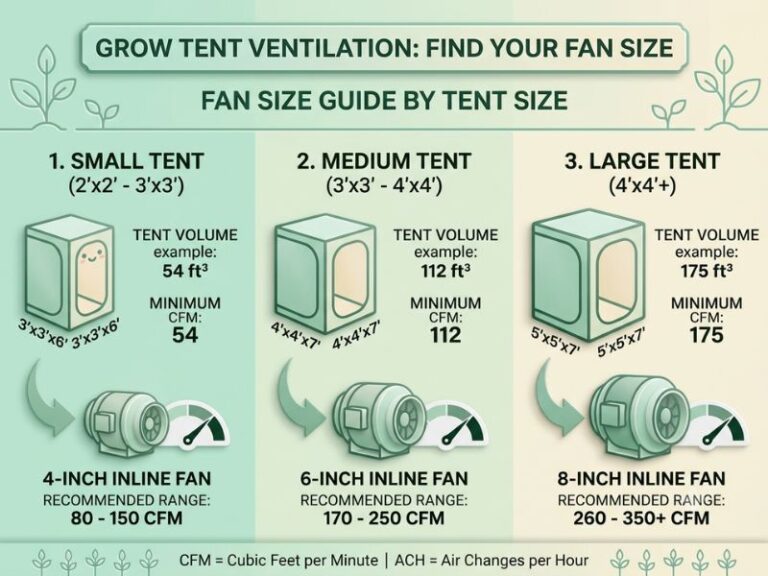
What Size Inline Fan Works for a 5×5 Grow Tent?
Start by considering tent volume.
A 5 × 5 × 6.67-foot tent contains roughly 167 cubic feet of air.
That does not mean a 167-CFM fan is automatically ideal.
Real airflow is reduced by:
- Carbon filter resistance
- Duct length
- Duct bends
- Intake restriction
- Fan speed settings
A larger variable-speed inline fan often makes more sense than a smaller fan running continuously at maximum output.
The goal is controlled air exchange—not simply the highest possible CFM.
Carbon Filter or No Carbon Filter?
A carbon filter is useful when odor control is necessary for the plant species being grown.
It is not automatically required because there are six plants.
If you use one, remember that the filter:
- Adds resistance to airflow
- Adds overhead weight
- Uses vertical space
- Needs to match the fan and duct diameter
This is another reason a strong 5×5 frame and 80-inch height are useful.
Internal Air Circulation
Six plants can create a dense canopy.
An exhaust fan replaces tent air, but it does not guarantee good movement between leaves.
Internal circulation helps reduce:
- Stagnant air
- Local humidity pockets
- Hot spots
You may need airflow above and below the canopy once the plants mature.
Avoid blasting one plant continuously with a powerful fan.
The goal is gentle movement across the growing area.
How to Arrange Six Plants in a 5×5
Start with two rows of three rather than clustering all six pots together.
Leave some room around the outside perimeter.
That provides space for:
- Air movement
- Watering
- Inspecting lower leaves
- Cleaning
- Sensor placement
As the plants expand, their canopies can grow into the gaps.
Keep Similar Plants Together
A six-plant canopy is easier to light when the plants have similar heights and growth habits.
If one plant becomes dramatically taller, you may have to choose between placing the light too close to that plant or too far from the shorter five.
Consistent canopy height makes lighting much easier.
Temperature and Humidity With Six Plants
Six mature plants can release considerably more moisture into the air than six seedlings.
As leaf area increases, transpiration increases the humidity load inside the tent.
That means environmental requirements change through the growth cycle.
You may need to adjust:
- Exhaust speed
- Circulation
- Humidification
- Dehumidification
- Surrounding-room climate
Place the primary temperature and humidity sensor near canopy level rather than on the floor.
Keep it away from direct fan airflow and humidifier mist so the reading represents the general plant environment.
The Room Outside the Tent Matters
A grow tent does not operate independently of the room containing it.
If the surrounding bedroom is already hot, the tent’s intake air will also be warm.
If the basement is extremely humid, pulling more basement air through the tent may not solve a humidity problem.
Consider the entire room when choosing a location.
A 5×5 tent also needs more than a 60 × 60-inch patch of floor.
Leave room for:
- Opening doors
- Ducting
- Electrical equipment
- Walking
- Maintenance
Common Mistakes When Buying a Grow Tent for 6 Plants
Choosing by Pot Count Alone
Six pots fitting on the floor does not mean six mature plants will fit comfortably.
Buying a 4×4 Without Considering Mature Canopy
A 4×4 can work, but six medium plants can quickly consume its 16 square feet.
Buying an Oversized Tent Without Matching the Light
A larger tent requires a light capable of covering the larger canopy.
Ignoring Height
Overhead ventilation equipment and lights consume vertical room quickly.
Buying by Canvas Thickness Alone
Frame, access, zippers, ports, and stitching are equally important.
Forgetting Side Access
Six mature plants can make the center and rear of the tent difficult to reach.
Using Too Much Floor Equipment
Humidifiers, fans, reservoirs, and drainage trays can reduce usable plant area.
Hanging Everything From One Crossbar
Distribute the load across the tent frame.
Blocking Intake Openings
Containers placed directly against lower vents can reduce airflow.
Ignoring the Surrounding Room
The tent cannot remain cool and dry if its intake environment is already excessively hot or humid.
Treating Manufacturer Plant Capacity as a Goal
A tent rated for a large number of small plants may be far more comfortable with fewer mature plants.
Frequently Asked Questions
1. What is the best grow tent for 6 plants?
The AC Infinity CLOUDLAB 866 is my first choice for six medium plants because its 5×5×80-inch layout combines generous floor space with strong equipment integration.
VIVOSUN S558 and Spider Farmer 5×5 are also strong alternatives when you prefer a simpler enclosure or a different balance of canvas, access, and frame design.
2. What size grow tent do I need for 6 plants?
A 5×5 grow tent is the best general-purpose size for six medium plants.
A 4×4 can work for compact plants, while a 4×8 is more comfortable for larger canopies. The 5×5 provides a useful middle ground between plant space and overall room footprint.
3. Can 6 plants fit in a 4×4 grow tent?
Yes, but six medium plants can make a 4×4 crowded once their canopies develop.
A 4×4 provides 16 square feet, or an average of about 2.67 square feet per plant. Containers and equipment reduce that usable area further.
4. Is a 5×5 grow tent good for 6 plants?
Yes. A 5×5 is one of the most practical sizes for six medium plants.
Its 25-square-foot floor leaves considerably more room for spacing, circulation, maintenance, and equipment than a 4×4.
5. Is a 4×8 grow tent too big for 6 plants?
No. A 4×8 can be excellent for six large plants, but it requires much more room and a longer lighting footprint.
For a typical home indoor garden, a 5×5 is easier to place and manage as one square canopy.
6. How much space does each plant get in a 5×5?
Dividing 25 square feet among six plants gives an average of a little over four square feet per plant.
The plants will not occupy perfect equal squares, but this provides a useful reference for understanding why a 5×5 is comfortable for six medium canopies.
7. How tall should a grow tent for six plants be?
Around 80 inches is an excellent general-purpose height.
That leaves room for containers, plant growth, light clearance, and overhead ventilation equipment. All three selected tents use an approximately 80-inch height.
8. Is a 72-inch tent tall enough for six plants?
It can be, but an 80-inch tent gives you more flexibility.
The additional height becomes useful when large containers, tall plants, a carbon filter, ducting, and the light fixture all compete for vertical space.
9. What size LED light should I use in a 5×5?
Choose a fixture specifically capable of providing suitable intensity and uniform coverage across the intended 5×5 canopy.
Plant count alone is not enough to size the light. Six small plants and six mature plants can require dramatically different coverage.
10. What size inline fan should I use for a 5×5 tent?
Choose based on tent volume, heat load, carbon-filter resistance, and ducting rather than using one rigid CFM number.
A variable-speed fan gives you more flexibility because airflow requirements change with temperature, humidity, and plant size.
11. Do six plants need a carbon filter?
Not automatically. A carbon filter is useful when odor control is necessary.
If you add one, account for the filter’s airflow resistance, hanging weight, and overhead space when choosing the fan and planning the tent layout.
12. How many circulation fans do I need in a 5×5?
Use enough circulation to eliminate stagnant areas across and below the canopy rather than targeting a specific number of fans.
As six plants develop dense foliage, adding airflow at more than one height can help maintain more even conditions.
13. Is 2000D canvas necessary?
No, although it is a useful heavy-duty feature.
The AC Infinity uses 2000D material, while Spider Farmer uses 1680D. Overall quality also depends on the poles, zippers, seams, access doors, and port construction.
14. How should I arrange 6 plants in a 5×5 tent?
Two rows of three is a simple starting layout.
Leave some space between containers and around the perimeter so air can circulate and you can reach the plants for watering and inspection.
15. Is a 5×5 better than a 4×4 for six plants?
For six medium plants, yes. A 5×5 provides nine additional square feet of floor area.
The 4×4 is more compact, but the 5×5 gives the canopy, containers, and circulation equipment much more breathing room.
16. Can I put a 5×5 grow tent in a bedroom?
Yes, if the room has enough floor space, ceiling height, ventilation, electrical capacity, and climate control.
Remember that the enclosure needs additional space for doors, ducting, equipment, and maintenance access beyond its 60 × 60-inch footprint.
17. Is a basement a good place for a six-plant grow tent?
It can be, especially when the basement has useful floor space and stable temperatures.
However, naturally humid basements may increase the dehumidification load once six mature plants begin releasing significant moisture.
18. Should I buy a tent larger than I currently need?
A modest amount of extra room is useful, but oversizing the tent also increases lighting, ventilation, and floor-space requirements.
For six medium plants, a 5×5 already provides a good amount of flexibility without automatically moving into a much larger rectangular grow area.
Conclusion
The best grow tent for 6 plants should provide enough space for mature canopies, not merely enough floor area to hold six containers.
For most indoor gardeners, a 5×5×80-inch tent strikes the best balance. Its 25-square-foot footprint gives six medium plants room to spread while still leaving space for airflow, watering access, circulation equipment, and environmental sensors.
The AC Infinity CLOUDLAB 866 is my primary recommendation. Its heavy 2000D construction, substantial frame, controller-friendly design, and 5×5 footprint make it especially useful for a permanent indoor setup.
VIVOSUN S558 is a strong alternative if you want a straightforward 5×5 with multiple access points, reflective Mylar, and a removable floor tray. Spider Farmer’s 5×5 provides another well-balanced option with 1680D fabric, reinforced poles, and useful controller and viewing features.
A 4×4 can still work for six compact plants, while a 4×8 offers more breathing room for very large canopies. For a typical six-plant home garden, however, the 5×5 is easier to light, ventilate, organize, and fit into a dedicated room.
Before ordering, measure the surrounding space as well as the tent. Account for the light, inline fan, carbon filter, containers, ducting, and door clearance.
Give six plants enough room from the beginning, and the entire indoor setup becomes easier to manage as the canopy fills in.

I’m Maya L. Greenwood, a lifelong plant lover who believes anyone can grow something beautiful with the right guidance. After years of testing soil mixes, pruning methods, irrigation tricks, and pest-safe solutions, I started EasyGardenTips.com to turn hard-won lessons into step-by-step advice. From seed starting and container gardens to composting and seasonal checklists, my goal is to make gardening simple, sustainable, and fun.