Best Grow Tent for Autoflower: 3 Tents That Make Fast Cycles
Finding the best grow tent for autoflower plants is less about buying the biggest enclosure you can fit in the room and more about matching the tent to the number of plants, expected canopy size, lighting footprint, and ventilation system.
Autoflower plants usually complete their life cycle relatively quickly and often remain more compact than large photoperiod plants, so an excessively tall or oversized enclosure is not always necessary. At the same time, choosing a tent that is too small can create problems once containers, foliage, circulation fans, ducting, and environmental equipment begin competing for space.
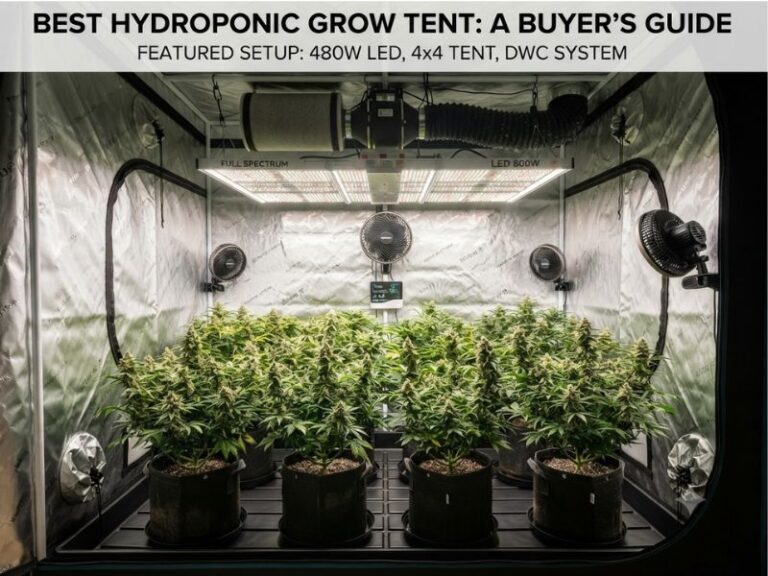
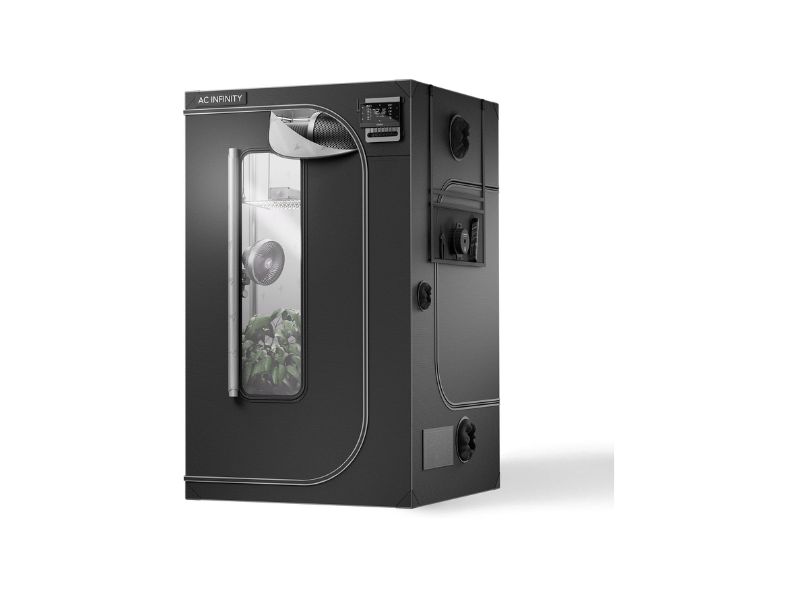
For most growers who want enough flexibility for several autoflowers, my first recommendation is the AC Infinity CLOUDLAB 844 4×4 Grow Tent. Its 48 × 48 × 80-inch enclosure uses 2000D reflective canvas, thick steel poles, multiple duct openings, side access, and an exterior controller mounting system. Amazon currently shows especially strong customer feedback for this model, which helped move it to the top of this list.
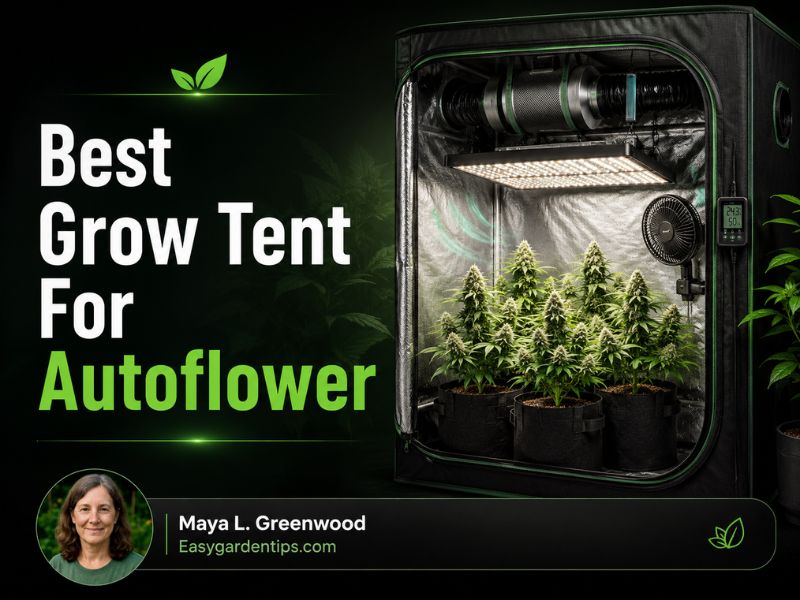
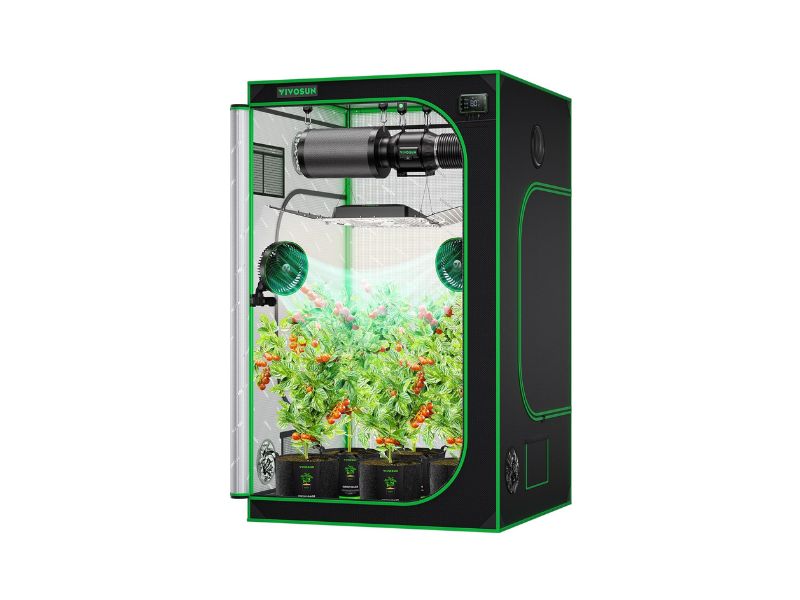
The VIVOSUN S448 4×4 Grow Tent is another strong option if you want a simpler tent with a long customer-feedback history. It also measures 48 × 48 × 80 inches and includes reflective interior material, steel framing, multiple access points, an observation window, and a removable floor tray.
Spider Farmer’s current 4×4 tent rounds out the list with 1680D Oxford canvas, reinforced poles, an enlarged viewing window, cable pass-through features, and a controller hanging area. Its combination of a proven 4×4 footprint and organized equipment layout makes it particularly useful when you want room for several plants without stepping up to a 5×5.
3 Grow Tents That Work Well for Autoflower Plants
| Image | Product Name | Check Price |
|---|---|---|
Best Choice | AC Infinity CLOUDLAB 844 4×4 Grow Tent | Check Price |
Second Best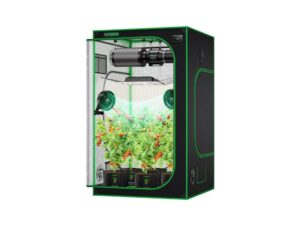 | VIVOSUN S448 4×4 Grow Tent | Check Price |
Third Choice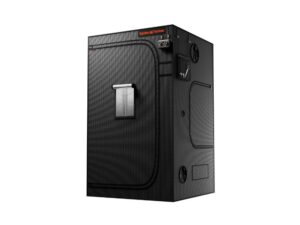 | Spider Farmer 4×4 Grow Tent | Check Price |
All three products use a 4×4 footprint because that size gives autoflower growers substantial flexibility.
You can run fewer plants with generous spacing or use more of the floor area with compact containers. More importantly, a 4×4 gives you room to manage airflow and equipment rather than treating every square inch as plant space.
1. AC Infinity CLOUDLAB 844 4×4 Grow Tent
Key Features
- 48 × 48 × 80-inch dimensions
- 2000D reflective canvas
- Thick 1-inch-class steel poles
- Controller mounting plate
- Multiple duct ports
- Side access doors
- Large viewing window
The CLOUDLAB 844 takes first place because it is designed around environmental control as much as plant containment.
The 4×4 floor provides 16 square feet of usable growing area, while the 80-inch height gives enough room for containers, plant structure, an LED fixture, hanging hardware, and overhead ventilation equipment. AC Infinity also includes an exterior controller mounting plate with cable pass-through capability, which is useful when temperature, humidity, fan speed, or other equipment is controlled from outside the tent.
The 2000D fabric and strong frame make the enclosure feel substantial, but access is just as important. Autoflowers can develop quickly, and a tent that becomes difficult to reach into can make watering, inspection, and fan adjustment unnecessarily frustrating.
What I Like
- Strong 4×4 layout for flexible plant counts
- Heavy canvas and sturdy poles
- Excellent equipment organization
- Good side access
What I Do Not Like
- Larger than necessary for one or two small plants
- Premium construction may be unnecessary for a basic setup
For someone who wants one tent that can support multiple autoflower cycles and leave room for future equipment upgrades, the CLOUDLAB 844 is the strongest all-around option.
2. VIVOSUN S448 4×4 Grow Tent
Key Features
- 48 × 48 × 80-inch dimensions
- Reflective Mylar interior
- Oxford-style outer fabric
- Robust steel frame
- Multiple doors and equipment ports
- Observation window
- Removable floor tray
The VIVOSUN S448 takes the second position because it combines a practical 4×4 layout with an unusually established customer-feedback history.
Amazon’s current listing describes reinforced reflective walls, metal poles, multiple access doors, ventilation openings, an observation window, and a removable floor tray. The top support structure is designed to hold the kind of lighting and ventilation equipment normally used inside an indoor grow tent.
For autoflower growers, its main advantage is simplicity. You get enough floor area to space several pots apart while still leaving corners or perimeter space for fans, sensors, and watering access.
The fabric specification is not as heavy as the 2000D CLOUDLAB, but overall tent performance also depends on seams, zippers, pole strength, and how well the ports close.
What I Like
- Spacious and easy-to-understand 4×4 layout
- Strong customer-feedback history
- Useful multiple-door access
- Removable tray helps with spills and cleanup
What I Do Not Like
- Lighter fabric construction than some premium tents
- Controller organization is less integrated than AC Infinity
The S448 is a good fit when you want a straightforward 4×4 enclosure and prefer to choose the fan, light, controller, and other equipment independently.
3. Spider Farmer 4×4 Grow Tent
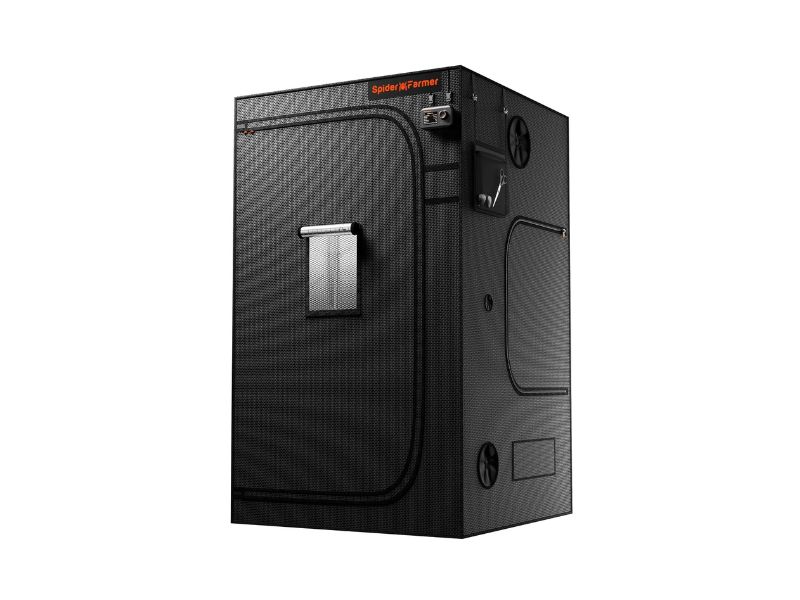
Key Features
- 48 × 48 × 80-inch size
- 1680D Oxford canvas
- Diamond reflective interior
- Reinforced steel poles
- Enlarged observation window
- Cable pass-through
- Controller mounting area
- Waterproof floor tray
Spider Farmer’s 4×4 is the most equipment-organized alternative to the CLOUDLAB in this group.
The current model uses 1680D waterproof Oxford material, reflective interior lining, reinforced poles, controller hooks, cable routing, a large viewing window, and a removable tray. Amazon currently shows strong customer feedback for the listing as well.
The 4×4 floor makes it easy to adapt the setup to different autoflower plant counts. Instead of filling the entire tent immediately, you can leave space between containers and let the canopy develop naturally.
The main compromise is that 1680D is lighter than the CLOUDLAB’s 2000D material, although it is still substantial for normal indoor use.
What I Like
- Strong overall construction
- Useful controller and cable features
- Excellent viewing access
- Comfortable size for multiple compact plants
What I Do Not Like
- Canvas is lighter than the CLOUDLAB
- Full 4×4 footprint may be excessive for a very small autoflower setup
The Spider Farmer is a practical third choice when you want strong construction and modern equipment organization without giving up the familiar 4×4 format.
Autoflower Grow Tent Comparison
| Product | Tent Size | Canvas | Height | Main Strength | Main Limitation |
| AC Infinity CLOUDLAB 844 | 4×4 | 2000D | 80 in. | Strong construction and controller integration | More tent than very small grows need |
| VIVOSUN S448 | 4×4 | Oxford/Mylar construction | 80 in. | Simple layout with extensive customer history | Lighter canvas |
| Spider Farmer 4×4 | 4×4 | 1680D | 80 in. | Strong equipment organization | Not as heavy as 2000D canvas |
All three provide essentially the same overall growing volume, so the biggest differences are material construction, access, frame design, and environmental-equipment organization.
What Size Grow Tent Is Best for Autoflower Plants?
There is no single tent size that is correct for every autoflower setup.
The best size depends mainly on:
- Number of plants
- Container size
- Mature canopy width
- Lighting footprint
- Circulation equipment
- Available room
Because autoflowers often remain relatively compact, smaller tents can work extremely well when plant count is limited.
2×2 Grow Tent
A 2×2 provides only four square feet.
That makes it appropriate for a very compact indoor setup.
It can work well when you are growing one or perhaps a couple of small plants and want to minimize:
- Floor space
- Lighting requirements
- Fan size
- Equipment cost
The downside is that almost everything competes for the same four square feet.
A circulation fan, humidifier, drainage tray, or large pot can quickly make the interior feel crowded.
A 2×2 is therefore best when compactness is the priority.
2×4 Grow Tent
A 2×4 gives eight square feet.
The rectangular shape works particularly well when the tent needs to sit against a bedroom or basement wall.
You can arrange plants in a single row and reach them easily from the front.
A 2×4 also pairs naturally with rectangular LED fixtures.
Choose this size when you want more room than a 2×2 but do not have enough depth for a square 3×3 or 4×4.
3×3 Grow Tent
A 3×3 provides nine square feet.
This is an excellent middle-ground size for a smaller autoflower garden.
Its square canopy is easy to illuminate, and the additional depth gives you more flexibility with plant placement than a narrow 2×4.
The main limitation is access.
Once multiple plants fill the entire 3×3 floor, reaching the rear containers may become difficult.
4×4 Grow Tent
A 4×4 provides 16 square feet.
This is why it is the main size represented in the recommendations above.
The enclosure is large enough to handle several plants while leaving room around the canopy for airflow and maintenance.
AC Infinity’s current CLOUDLAB 844 listing, for example, describes the 48 × 48 × 80-inch model around a four-plant capacity in 5-gallon containers, illustrating how much usable plant and equipment room exists in this footprint.
You do not have to fill every available plant position.
For autoflowers, running fewer plants with extra spacing can make the tent significantly easier to manage.
How Many Autoflowers Fit in a Grow Tent?
Plant count depends heavily on container size and mature canopy.
There is a major difference between asking:
“Can these pots physically fit?”
and:
“Can these plants remain accessible after their canopies develop?”
A plant needs room not only for its container but also for:
- Leaves
- Branches
- Airflow
- Watering access
- Inspection
- Light distribution
That is why manufacturer plant-capacity numbers should be treated as approximate planning guidance rather than a target.
In a 2×2
A small number of compact plants makes the most sense.
Trying to maximize plant count leaves very little maintenance space.
In a 2×4
The long rectangular floor works well for a row of plants.
This layout is especially convenient when each container can be accessed from the front.
In a 3×3
The square floor supports several compact canopies but can become crowded around the back corners.
In a 4×4
You have much more flexibility.
You can use a simple quadrant arrangement or space smaller containers more evenly across the floor.
For growers who have not yet decided exactly how many autoflowers they want to run in future cycles, the 4×4 is the most adaptable choice.
Is a 4×4 Grow Tent Too Big for Autoflowers?
No, but it can be larger than necessary for a very small setup.
A 4×4 becomes worthwhile when you value:
- Better access
- More airflow space
- Larger lighting options
- Room for environmental equipment
- Flexibility between grow cycles
A common mistake is assuming unused floor space is wasted.
It is not.
Empty perimeter space can make it easier to circulate air, reach containers, inspect lower foliage, and keep electrical equipment away from water.
You can also start with fewer plants and use more of the floor later without buying another enclosure.
Why Autoflowers Do Not Require a Special Tent
There is no special tent technology that only works for autoflowering plants.
The physical requirements are largely the same:
- Reflective interior
- Controlled light
- Strong frame
- Ventilation openings
- Electrical access
- Adequate height
- Good zipper construction
What changes is how you use the available space.
Autoflowers are often selected for compact indoor gardens because their growth habit can make them easier to fit into smaller environments.
That means tent sizing can often be more conservative than it would be for plants intentionally grown into very large canopies.
How Tall Should an Autoflower Grow Tent Be?
Height is often less critical for autoflowers than for very tall indoor plants, but extra vertical room remains useful.
A tent’s advertised height is not the same as usable plant height.
The enclosure also has to fit:
- Plant container
- Plant itself
- LED fixture
- Light hangers
- Required light-to-canopy clearance
- Carbon filter
- Inline fan or ducting
The three tents reviewed here are all approximately 80 inches tall, which provides plenty of flexibility for overhead equipment.
Is 60 Inches Enough?
For a compact setup, it can be.
A shorter tent makes sense when the plants remain low and the lighting system has a thin profile.
The problem is reduced adjustment room.
If the plant becomes taller than expected, you have fewer options for moving the fixture upward.
Is 72 Inches Better?
For many small-to-medium indoor tents, 72 inches is a useful compromise.
It provides more equipment clearance without making the enclosure unusually tall.
Why I Like 80 Inches
An 80-inch tent gives you insurance.
You may never need all of the height, but extra clearance makes it easier to:
- Raise the light
- Mount a filter
- Route ducting overhead
- Keep electrical devices away from the floor
That flexibility is valuable over multiple grow cycles.
Grow Tent Canvas: Does Thickness Matter?
Canvas is responsible for several jobs.
It helps:
- Contain light
- Separate the grow environment from the room
- Support temperature and humidity control
- Resist tearing during repeated use
The CLOUDLAB 844 uses 2000D material, while Spider Farmer specifies 1680D for its current 4×4 model.
A higher denier can indicate a more substantial fabric, but do not use that number as the only quality measurement.
Also inspect:
- Zipper construction
- Stitching
- Corner reinforcement
- Duct-port closures
- Viewing-window covers
Many real-world light leaks occur around seams and openings rather than through the middle of the canvas.
Does Reflective Mylar Help?
Reflective interior material helps redirect light that reaches the walls back toward the growing area.
It does not create additional wattage.
Think of it as improving the way existing light is managed.
All three tents reviewed here use reflective interior surfaces as part of their construction.
This becomes useful around the edges of a canopy where some light would otherwise hit a dark room wall and be absorbed.
Does Light Leakage Matter for Autoflowers?
Autoflowers are less dependent on changing day length to initiate flowering than photoperiod-sensitive plants.
That means a tiny pinhole is generally not the same cultivation issue it can be in a strict photoperiod environment.
However, good light sealing still matters.
A properly sealed grow tent helps:
- Keep bright grow light out of the room
- Maintain a controlled environment
- Prevent external room light from complicating schedules
- Improve privacy
- Keep the enclosure functioning as intended
You should therefore still look for good zippers, covered seams, and well-designed cable ports.
Why Frame Strength Matters
A grow tent frame may hold much more than the fabric.
Overhead equipment can include:
- LED grow light
- Carbon filter
- Inline fan
- Ducting
- Sensors
- Circulation fan
The AC Infinity CLOUDLAB 844 uses thick 1-inch-class steel poles, while Spider Farmer specifies reinforced steel poles and substantial hanging capacity for its current 4×4 design.
Even when a frame has a high load rating, distribute heavy equipment across multiple support bars rather than concentrating everything in one location.
What Grow Light Works Best in an Autoflower Tent?
Match the light to the canopy footprint, not simply the fact that the plants are autoflowers.
A 2×2 canopy and a 4×4 canopy require completely different fixture coverage.
Important factors include:
- Recommended footprint
- PPFD distribution
- Dimming capability
- Fixture dimensions
- Heat output
- Hanging height
Uniformity is particularly important when several plants share one enclosure.
If the fixture creates one strong hotspot in the middle and weak edges, the center plants may receive very different conditions from those near the walls.
Bar Light vs Board Light
Both can work.
Bar-Style LED
Bar fixtures distribute the light source across several long rails.
Advantages can include:
- Wide physical coverage
- Good canopy uniformity
- Better edge distribution
They pair naturally with larger 3×3 and 4×4 tents.
Board-Style LED
Board fixtures concentrate diodes into fewer panels.
They can be:
- Compact
- Easy to hang
- Simple to adjust
A properly sized board fixture can still provide excellent coverage.
The correct decision depends on the actual light map rather than fixture appearance.
Why Dimming Is Useful With Autoflowers
Plants do not need identical light intensity throughout every stage of their development.
A dimmable fixture gives you more flexibility without constantly changing equipment.
It also helps control:
- Heat
- Electrical consumption
- Light intensity at the canopy
This can be particularly useful when the tent is intentionally larger than the current plant canopy.
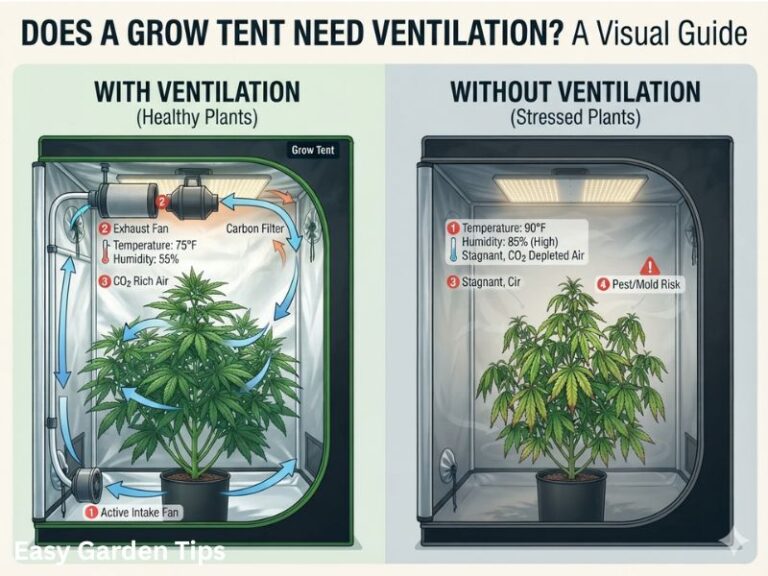
Ventilation for an Autoflower Grow Tent
Ventilation controls much more than temperature.
It also influences:
- Humidity
- Fresh-air exchange
- Negative pressure
- Odor management
- Overall environmental stability
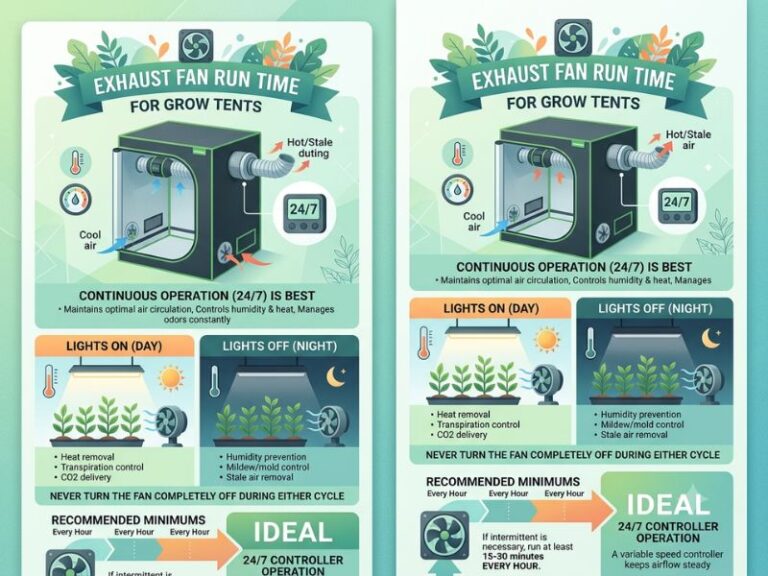
A typical setup uses an inline fan connected to one of the tent’s upper duct ports.
All three recommended tents include multiple openings designed for ventilation and electrical equipment.
What Size Inline Fan Do You Need?
Start with the tent’s cubic volume.
For example, a 4 × 4 × 6.67-foot tent contains roughly 107 cubic feet.
That does not mean a 107-CFM fan is automatically sufficient.
Real airflow can decrease because of:
- Carbon filter resistance
- Duct bends
- Long duct runs
- Intake restrictions
A variable-speed inline fan is particularly useful because you can adjust airflow rather than running full power continuously.
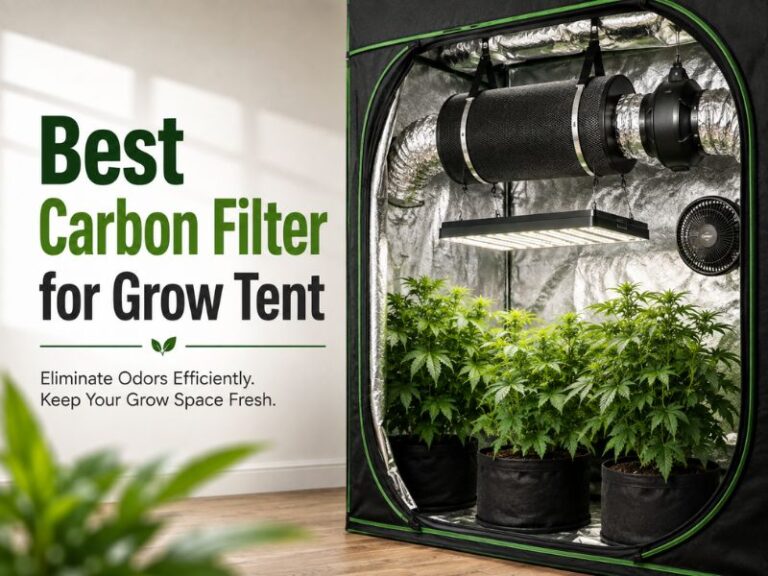
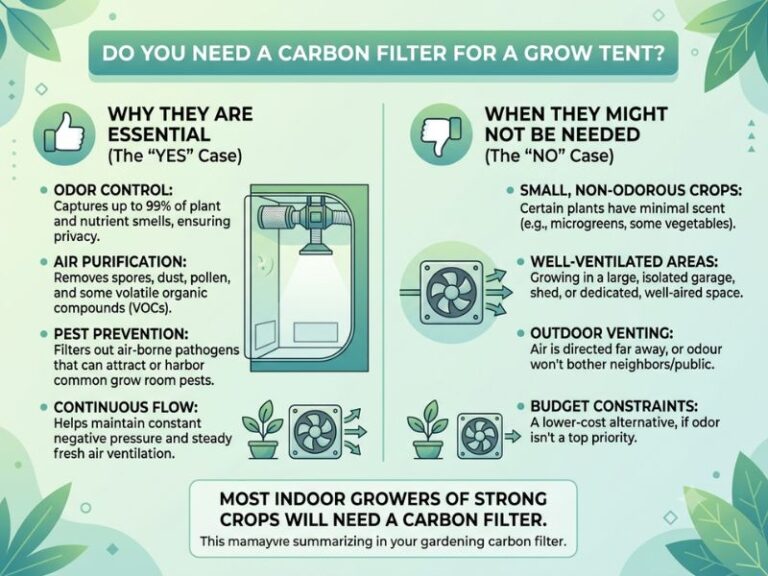
Do Autoflower Tents Need a Carbon Filter?
Not because the plants are autoflowers specifically.
A carbon filter is used when odor control is needed.
The filter becomes part of the exhaust system and adds resistance to airflow.
It also consumes overhead space and adds weight to the frame.
If odor control is not required for the crop you are growing, there is no reason to install a carbon filter solely because the tent contains autoflowering plants.
Internal Air Circulation Matters Too
An exhaust fan changes the air inside the enclosure.
It does not guarantee good airflow between leaves.
A small oscillating or clip fan helps prevent stagnant areas.
The goal is gentle movement across the canopy.
Avoid aiming one strong fan directly at the same leaves continuously.
As multiple plants expand and overlap, you may need airflow both above and beneath the canopy.
Temperature and Humidity Control
The best tent cannot compensate for poor environmental management.
Temperature and relative humidity depend partly on the surrounding room.
If the room feeding the tent with intake air is hot and humid, the tent will be difficult to keep cool and dry.
Likewise, if the room is extremely dry, the tent may require humidification during early plant development.
Place your main sensor close to canopy level rather than on the floor.
Keep it away from:
- Direct fan airflow
- Humidifier mist
- Tent walls
- Exhaust openings
That gives you a more representative reading.
Why Plant Count Changes Humidity
As plant leaf area increases, more water moves from the plants into the surrounding air through transpiration.
A tent containing several mature plants can therefore behave very differently from the same enclosure containing seedlings.
You may find that a ventilation setting that worked early in the cycle is no longer adequate later.
This is one reason buying a tent with good duct access matters.
Where Should You Put the Grow Tent?
Good indoor locations can include:
- Spare bedroom
- Basement
- Climate-controlled garage
- Dedicated garden room
The tent dimensions are only the beginning.
You also need room for:
- Opening doors
- Ducting
- Electrical cords
- Watering
- Walking around the enclosure
A 48 × 48-inch tent requires more than an exact 48 × 48-inch corner.
Is a Bedroom Good for an Autoflower Tent?
It can be, provided you account for the complete system.
Consider:
- Fan noise
- Heat
- Humidity
- Floor space
- Electrical load
- Ventilation ducting
A 4×4 tent occupies 16 square feet before access space is included.
For a small bedroom, a 2×4 or 3×3 may be more practical.
Is a Basement Better?
A basement often provides more room and may stay cooler than an upstairs bedroom.
However, many basements also have elevated humidity.
The environment needs to be evaluated rather than assuming the location is ideal.
A naturally humid basement can increase the dehumidification work needed as the plant canopy develops.
How to Arrange Plants in a 4×4 Autoflower Tent
Avoid clustering every container in the middle.
Spread the plants so each canopy has room to expand.
For four plants, a simple arrangement is:
| Plant 1 | Plant 2 |
| Plant 3 | Plant 4 |
For different plant counts, use the same principle: distribute containers evenly and preserve maintenance paths where possible.
The exact geometry matters less than preventing one side of the canopy from becoming overcrowded.
Leave Space Around Tent Walls
A few inches of perimeter space can improve:
- Air movement
- Inspection
- Watering access
- Fan placement
Branches pressed continuously against tent walls are harder to inspect and can reduce airflow around the outer canopy.
Extra room is not wasted room.
Container Size Changes Everything
A tent that feels spacious with small pots can become crowded with large containers.
Before ordering a tent, check the actual diameter of the containers you expect to use.
Do not rely only on gallon capacity.
Two containers with the same nominal volume can have very different widths and heights.
Container height also reduces vertical plant space.
Removable Floor Trays Are Worth Having
Watering indoors inevitably creates occasional spills.
A removable tray helps contain minor runoff and makes cleanup easier.
Both the VIVOSUN and Spider Farmer models discussed here include removable floor trays in their current Amazon configurations.
The tray is not a substitute for proper drainage, but it adds another useful protective layer.
Observation Windows: Useful or Unnecessary?
An observation window is convenient for quick checks.
You can confirm:
- Lights are working
- Fans are moving
- Plants are upright
- Nothing obvious has failed
without opening the main door.
All three reviewed models include viewing access in their current designs.
You will still need to open the tent regularly for proper plant inspection.
Common Mistakes When Buying an Autoflower Grow Tent
Buying Only for the Current Plant Count
Think about future cycles.
A slightly larger tent can provide much more flexibility.
Buying the Largest Tent Possible
Bigger is not automatically better.
Larger tents need larger lighting footprints and occupy more room.
Ignoring Height
The light and exhaust equipment reduce usable plant height.
Choosing by Canvas Thickness Alone
Poles, zippers, access, and ports matter just as much.
Forgetting Equipment Space
Fans, sensors, humidifiers, and drainage equipment all consume room.
Maximizing Plant Count
More plants do not automatically create a better or easier indoor garden.
Crowding can make watering and airflow harder.
Blocking Passive Intakes
Keep containers and equipment away from lower air openings.
Putting the Sensor in the Wrong Place
A sensor directly in front of a fan or humidifier can provide misleading readings.
Ignoring the Room Outside the Tent
The enclosure depends on the surrounding room for intake air and heat management.
Buying a Light Before Choosing the Tent
Choose the canopy footprint first, then match the fixture to it.
Frequently Asked Questions
1. What is the best grow tent for autoflower plants?
AC Infinity CLOUDLAB 844 is my first choice for growers who want a flexible 4×4 autoflower setup with strong construction and good environmental-equipment integration.
Its 48 × 48 × 80-inch dimensions, 2000D reflective canvas, thick poles, controller plate, side access, and multiple duct ports make it adaptable to different plant counts and equipment layouts.
2. What size grow tent is best for autoflowers?
A 3×3 or 4×4 is a versatile choice for several plants, while a 2×2 or 2×4 can work well for smaller setups.
Choose based on mature canopy size rather than simply the number of containers you can place on the floor.
3. Is a 2×2 tent good for autoflowers?
Yes, particularly when floor space is limited and you are keeping the plant count low.
The main limitation is equipment room. Four square feet fills quickly once containers, foliage, fans, and watering access are considered.
4. Is a 2×4 grow tent good for autoflowers?
Yes. A 2×4 is particularly useful when you want a compact rectangular tent that can sit against a wall.
Its eight-square-foot floor provides more flexibility than a 2×2 while remaining easier to fit into many bedrooms and small indoor spaces than a 4×4.
5. Is a 3×3 tent enough for autoflowers?
Yes. A 3×3 provides nine square feet and can be an excellent middle-sized autoflower tent.
It is large enough for several compact plants but still easier to light and fit into a room than a larger 4×4.
6. Is a 4×4 too big for autoflowers?
No. A 4×4 is useful when you want flexibility, better access, and room for several plants or environmental equipment.
It may be unnecessary if you only plan to grow one very small plant, but unused space can make airflow and maintenance easier.
7. How tall should an autoflower grow tent be?
Around 60–80 inches can work depending on plant size and equipment, with 72–80 inches providing more flexibility.
The tent also needs room for the container, light fixture, hanging hardware, and ventilation equipment, so usable plant height is always less than the advertised enclosure height.
8. Are 80-inch grow tents worth it for autoflowers?
Yes, especially if you want room to mount lighting and filtration overhead.
All three reviewed 4×4 tents are approximately 80 inches high, which provides useful adjustment space even when the plants themselves remain relatively compact.
9. Does an autoflower grow tent need to be completely lightproof?
Good light control is still desirable, even though autoflowers are less dependent on changing day length to initiate flowering.
A properly sealed tent also keeps powerful grow light out of the surrounding room and makes the internal environment easier to manage.
10. Is 2000D canvas necessary?
No. It is a useful heavy-duty feature, but a well-built 1680D or other quality tent can also work very well.
The CLOUDLAB uses 2000D material while Spider Farmer’s current 4×4 uses 1680D. Frame strength, stitching, zippers, and port design are also important.
11. What type of grow light works best in an autoflower tent?
Choose a fixture that provides suitable, reasonably uniform coverage across the actual canopy footprint.
A 4×4 tent needs a substantially different lighting solution from a 2×2. Fixture dimensions, PPFD distribution, dimming, heat, and hanging distance all matter.
12. Do autoflowers need a ventilation fan?
An indoor grow tent generally benefits from controlled air exchange to manage temperature, humidity, and fresh air.
The exact fan size depends on tent volume, lighting heat, ducting, filters, and the surrounding room rather than the plant being autoflowering specifically.
13. Do autoflowers need a carbon filter?
Not specifically. A carbon filter is used when odor control is necessary.
It adds airflow resistance and overhead weight, so include it only when the growing environment benefits from filtration rather than assuming every tent automatically requires one.
14. How many circulation fans should I put in an autoflower tent?
Use enough gentle airflow to prevent stagnant areas rather than following a rigid fan count.
A small canopy may need one circulation fan, while a larger multi-plant canopy may benefit from airflow at more than one height.
15. Where should the temperature and humidity sensor go?
Place the main sensor near canopy height and away from direct fan airflow or humidifier mist.
The goal is to measure the environment the leaves are actually experiencing rather than an unusually cool, dry, or humid pocket inside the tent.
16. Is AC Infinity better than VIVOSUN for autoflowers?
AC Infinity offers heavier construction and stronger controller integration in the specific models compared here, while VIVOSUN offers a straightforward 4×4 design with an exceptionally established customer-feedback history.
Either can work well. The better choice depends on whether you prioritize integrated environmental controls or a simpler enclosure.
17. Is Spider Farmer good for an autoflower grow tent?
Yes. Its current 4×4 tent provides a useful combination of 1680D fabric, reinforced poles, controller organization, viewing access, and a removable floor tray.
The 4×4 footprint is flexible enough for several compact plants without forcing every container tightly together.
18. Should I buy a larger grow tent than I currently need?
A little extra room can be useful, but dramatically oversizing the tent can increase lighting and floor-space requirements.
If you expect the number or size of plants to increase in future cycles, moving one size up can save you from replacing the enclosure later.
Conclusion
Choosing the best grow tent for autoflower plants starts with deciding how much canopy you actually want to manage.
A very small setup can work well in a 2×2 or 2×4, while a 3×3 offers a useful middle ground. For growers who want room for several plants, better access, and enough space for fans and environmental equipment, a 4×4 is the most flexible option.
The AC Infinity CLOUDLAB 844 is my primary recommendation. Its 48 × 48 × 80-inch dimensions, heavy 2000D canvas, thick frame, side access, controller mounting plate, and extensive duct-port layout create an enclosure that can adapt to multiple indoor growing configurations.
VIVOSUN S448 is the strongest alternative if you want a simpler 4×4 with a long customer-feedback history, multiple access points, reflective walls, and a removable floor tray.
Spider Farmer’s 4×4 completes the group with 1680D construction, reinforced poles, organized cable routing, and practical viewing and controller features.
Do not choose the tent by plant count alone. Measure the containers, estimate the mature canopy, account for the grow light and ventilation equipment, and leave enough space to reach every plant.
For most growers who want a tent they will not immediately outgrow, 4×4×80 inches provides an excellent balance of canopy room, equipment clearance, and long-term flexibility.

I’m Maya L. Greenwood, a lifelong plant lover who believes anyone can grow something beautiful with the right guidance. After years of testing soil mixes, pruning methods, irrigation tricks, and pest-safe solutions, I started EasyGardenTips.com to turn hard-won lessons into step-by-step advice. From seed starting and container gardens to composting and seasonal checklists, my goal is to make gardening simple, sustainable, and fun.