Best AC for Grow Tent: 5 Portable and Mini-Split Options
The best AC for grow tent temperature control is usually a dual-hose inverter portable air conditioner placed in the surrounding lung room. This arrangement keeps the hot exhaust hose, condensate water, and bulky AC cabinet outside the tent while allowing the tent intake to pull in conditioned air.
My top portable pick is the Midea Duo 14,000 BTU Smart Inverter Portable AC. It provides 12,000 BTU under the stricter SACC rating, uses an inverter compressor, and combines its intake and exhaust paths in a dual-hose-in-hose design. Midea lists it for spaces up to 550 square feet and supports cooling, dehumidification, fan operation, app control, and voice assistants.
A portable AC is not always the strongest long-term solution. Growers operating several tents, powerful lights, or a sealed grow room may get better efficiency and temperature stability from a ductless mini-split. Renters and seasonal growers may prefer a portable model that can be moved and installed without permanent HVAC equipment.
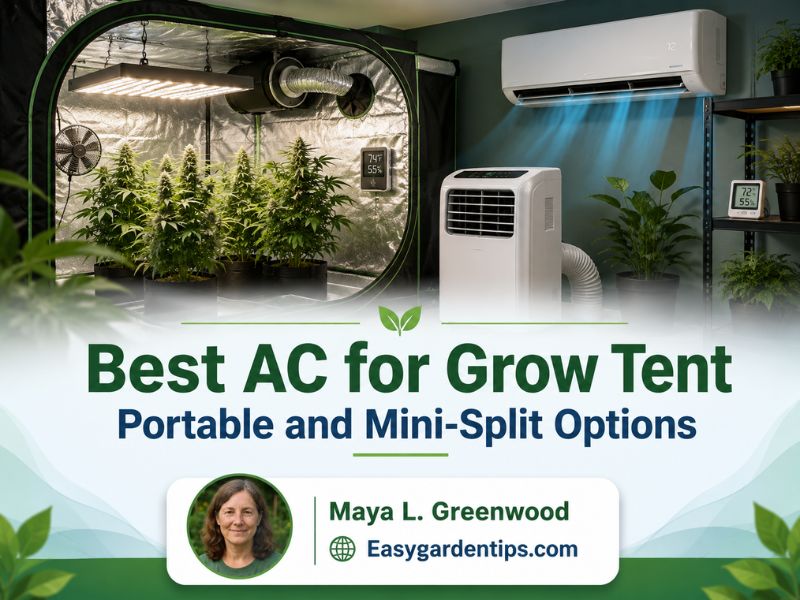
This guide reviews five air conditioners for different grow-room sizes, installation limits, and budgets. It also explains SACC versus ASHRAE ratings, dual-hose performance, BTU sizing, exhaust installation, condensate drainage, electricity costs, humidity changes, and safe equipment placement.
5 Best Portable AC for Grow Tents
| Image | Product Name | Check Price |
|---|---|---|
Best Choice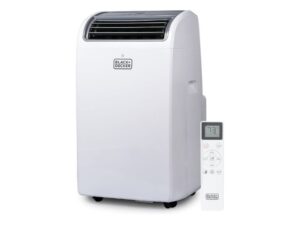 | BLACK+DECKER Smart 14,000 BTU Portable AC | Check Price |
Second Best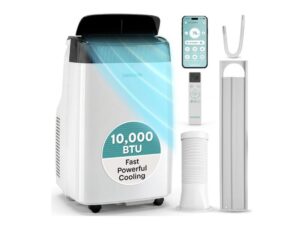 | SereneLife 10,000 BTU Wi-Fi Portable AC | Check Price |
Third Choice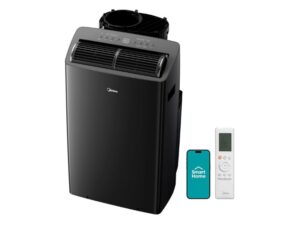 | Midea Duo 14,000 BTU Smart Inverter Portable AC | Check Price |
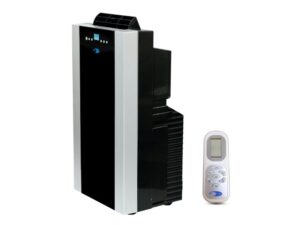 | Whynter ARC-14S Dual-Hose Portable AC | Check Price |
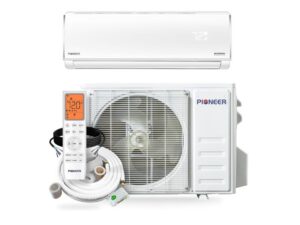 | Pioneer Diamante Pro 12,000 BTU Mini-Split | Check Price |
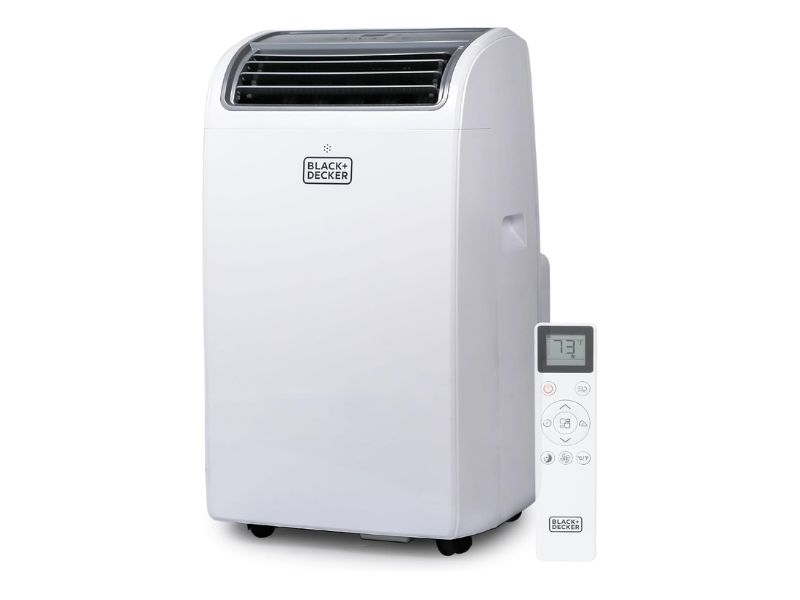
1. BLACK+DECKER Smart 14,000 BTU Portable AC — Best Easy-to-Use Option
Key Specifications
- Cooling capacity: 14,000 BTU ASHRAE
- SACC cooling capacity: Approximately 10,200 BTU
- AC type: Single-hose portable air conditioner
- Operating modes: Cooling, fan and dehumidifying
- Smart control: Available on selected current variation
- Timer: 24 hours
- Sleep mode: Yes
- Remote control: Included
- Window kit: Included
- Airflow design: Single exhaust hose
- Recommended placement: Lung room
- Best setup: Small or medium conditioned room
The BLACK+DECKER portable AC is a practical choice for buyers who want simple setup, familiar controls, and strong availability. The selected listing provides 14,000 BTU under the ASHRAE rating and approximately 10,200 BTU SACC.
Its single-hose design is easier to install than the separate dual hoses on the Whynter. You connect one exhaust duct to the rear of the unit, install the window panel, and seal the surrounding gaps.
That convenience comes with an efficiency tradeoff. A single-hose AC uses room air to cool its condenser and then sends that heated air outside. The room becomes slightly depressurized, encouraging unconditioned air to enter through cracks and openings.
This can be noticeable in a grow room with several tent ducts, cable ports, or a poorly sealed door. The unit may cool the area near its outlet while continuously pulling warmer air into the room.
The BLACK+DECKER still works well when the lung room is reasonably sealed and the heat load is moderate. It offers cooling, fan, and dehumidifier functions, allowing one appliance to address high room temperature and some excess moisture.
The 24-hour timer can coordinate the unit with the light schedule. Sleep mode is less important for plants, but its automatic temperature behavior may reduce unnecessary nighttime compressor operation in a mixed-use room.
Controls and installation are easier to understand than on many advanced inverter products. This makes it suitable for growers who prioritize simple operation over maximum portable-AC efficiency.
The unit should stay outside the tent. Its cabinet occupies significant floor space, the exhaust hose becomes hot, and the cold outlet air can create a severe localized temperature drop if aimed directly at plants.
Drainage depends on room humidity and mode. Cooling mode may evaporate much of the condensate through the exhaust, while dehumidifier mode can require frequent manual or continuous drainage.
Pros
- Strong SACC capacity
- Straightforward installation
- Widely available
- Cooling, fan and dehumidifier modes
- Remote and timer controls
- Selected variations provide smart features
- Easier hose setup than a dual-hose unit
Cons
- Single-hose negative pressure
- Less efficient than dual-hose inverter models
- Can pull hot or humid replacement air into the room
- Compressor cycling may cause wider temperature changes
- Requires window sealing and condensate planning
- Not intended for placement inside the tent
Who Should Buy It?
The BLACK+DECKER is a sensible option for growers who need a familiar portable AC for a small or medium lung room and value easy installation more than dual-hose efficiency.
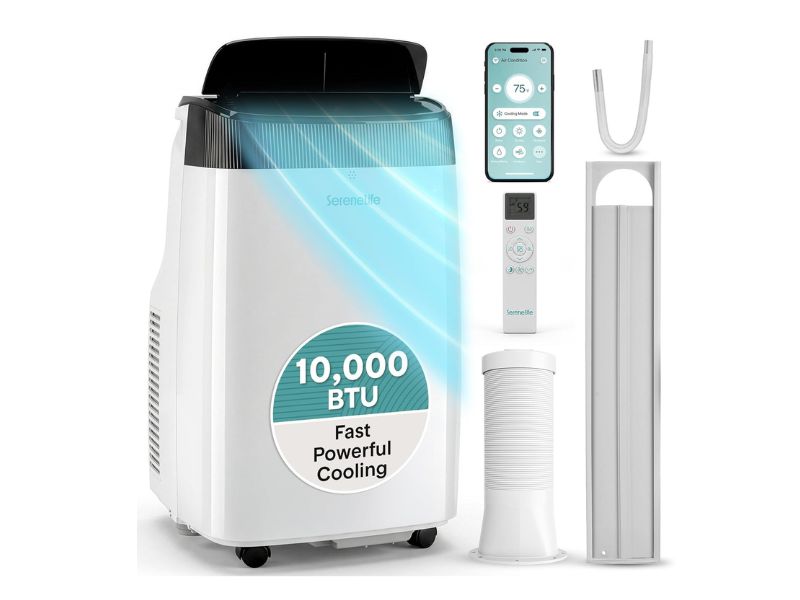
2. SereneLife 10,000 BTU Wi-Fi Portable AC — Best Budget Smart Option
Key Specifications
- Advertised cooling capacity: 10,000 BTU
- AC type: Single-hose portable air conditioner
- Operating modes: Cooling, fan and dehumidifying
- Smart control: Wi-Fi app
- Timer: Up to 24 hours
- Remote control: Included
- Window kit: Included
- Fan speeds: Model dependent
- Drainage: Self-evaporation plus drain outlet
- Recommended placement: Small lung room
- Rating caution: Confirm DOE/SACC capacity on selected variation
The SereneLife Wi-Fi portable AC offers smart scheduling and basic three-in-one operation at a lower price than the Midea Duo. The current Amazon listing advertises 10,000 BTU, Wi-Fi control, cooling, fan, dehumidifier functions, a 24-hour timer, and coverage up to 450 square feet.
Capacity details need careful checking because SereneLife sells several similar 10,000 BTU models. The manufacturer’s SLPAC105W, for example, is rated at 10,000 BTU ASHRAE but only 5,500 BTU DOE, with recommended coverage around 300 square feet, 1,150-watt cooling consumption, 57 dBA noise, and moisture removal around 1.2 liters per hour.
This difference shows why buyers should verify the exact model number and DOE or SACC rating displayed on the Amazon variation before ordering. The large 10,000 BTU marketing number may not describe real-world portable cooling capacity.
For a small grow-room lung room, the unit can still be useful. Wi-Fi access lets you create schedules around the light cycle and adjust the temperature without entering the room. Dry mode can remove some moisture during hot, humid conditions.
The compact cabinet and caster wheels make it easier to reposition than a mini-split or oversized premium portable AC. It is appropriate for renters, seasonal use, and smaller setups that do not justify permanent HVAC installation.
Its single-hose design has the same negative-pressure limitation as the BLACK+DECKER. The room needs good sealing, and the exhaust hose should be kept short and routed directly outside.
Noise may also be noticeable. The official SLPAC105W specification lists 57 dBA, which is louder than many premium inverter models.
The SereneLife should not be selected solely from its square-foot claim. A room with a high-wattage light and poor insulation may need more capacity than a larger normal bedroom.
Pros
- Lower purchase price
- Wi-Fi and remote control
- Cooling, fan and dry modes
- 24-hour timer
- Portable design
- Suitable for small lung rooms
- Window kit included
Cons
- Single-hose design
- Exact DOE/SACC rating varies by model
- Product variations can create specification confusion
- Louder than many inverter units
- Lower real-world capacity than the 10,000 BTU headline may suggest
- Limited for high-output grow rooms
Who Should Buy It?
The SereneLife is best for a small tent setup located in a compact lung room with a moderate heat load. Confirm the exact model number, SACC rating, app features, and room-size claim before purchasing.
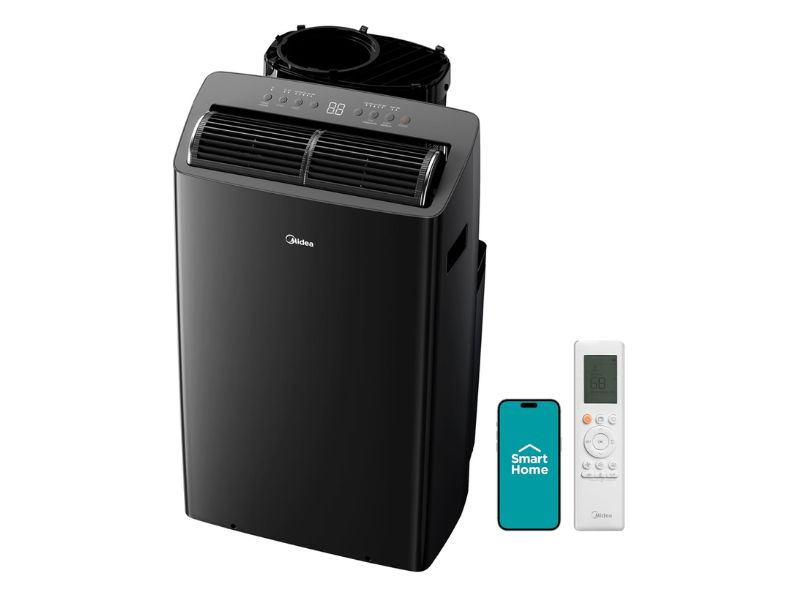
3. Midea Duo 14,000 BTU Smart Inverter Portable AC — Best Overall
Key Specifications
- Cooling capacity: 14,000 BTU ASHRAE
- SACC cooling capacity: 12,000 BTU
- AC type: Portable inverter air conditioner
- Hose system: Integrated dual-hose-in-hose design
- Recommended room size: Up to 550 sq. ft.
- Operating modes: Cooling, fan and dehumidification
- Heating: Included on this selected variation
- Smart control: Midea SmartHome app
- Voice control: Alexa and Google Assistant
- Compressor: Variable-speed inverter
- Window installation kit: Included
- Recommended placement: Lung room
The Midea Duo ranks first because it combines high portable-AC capacity with inverter control and an efficient dual-hose layout. Those features address two common portable AC weaknesses: large temperature swings and conditioned air being pulled out of the room for condenser cooling.
The selected Amazon variation is rated at 14,000 BTU under the ASHRAE method and 12,000 BTU SACC. Midea markets it for spaces up to 550 square feet. It also provides heat-pump heating, which may be useful in a grow room that becomes cold during winter or after the lights switch off.
Its hose-in-hose design contains separate intake and exhaust air channels inside one large assembly. The condenser can draw outdoor air, absorb heat from the refrigerant, and send that heated air back outside without consuming as much conditioned room air as a traditional single-hose unit.
That design is especially useful in a grow-room lung room. A single-hose AC can create negative pressure that encourages hot air to enter through door gaps, wall penetrations, and tent vents. The Midea Duo cannot eliminate every leak, but its air path reduces one major source of infiltration.
The inverter compressor is another strong advantage. A fixed-speed compressor normally turns on at full output and shuts down after reaching the thermostat target. The inverter can vary compressor speed to better match the current cooling load. That can produce steadier temperatures as lights, fans, and dehumidifiers cycle.
Smart controls let you schedule cooling around the grow-light cycle. You could set a lower room target before the lights switch on, allow the system to ramp up as the room heat load rises, and reduce cooling after lights-off. App access also makes it easier to check the AC without repeatedly entering the grow room.
The unit is still large and heavy. It needs a suitable window or wall opening, floor space, and enough clearance around its air intake. The hose should remain as short and straight as possible because a long, sharply bent exhaust path can retain heat and restrict airflow.
Condensate requirements depend on room humidity and operating mode. Self-evaporation can expel part of the collected moisture through the exhaust, but continuous drainage may still be necessary in a humid grow room or when using dedicated dry mode.
Pros
- High 12,000 BTU SACC capacity
- Inverter compressor
- Integrated dual-hose airflow
- App and voice control
- Cooling, fan and dehumidifier modes
- Selected model also provides heating
- Better temperature stability than many fixed-speed units
Cons
- Large and heavy
- Premium portable-AC price
- Thick hose assembly requires window space
- Can still need continuous drainage in humid conditions
- Takes up valuable lung-room floor space
Who Should Buy It?
The Midea Duo is best for growers who need flexible but powerful lung-room cooling for a 4×4, 5×5, several smaller tents, or a medium sealed room. It is also a strong choice for renters who cannot install a permanent mini-split.
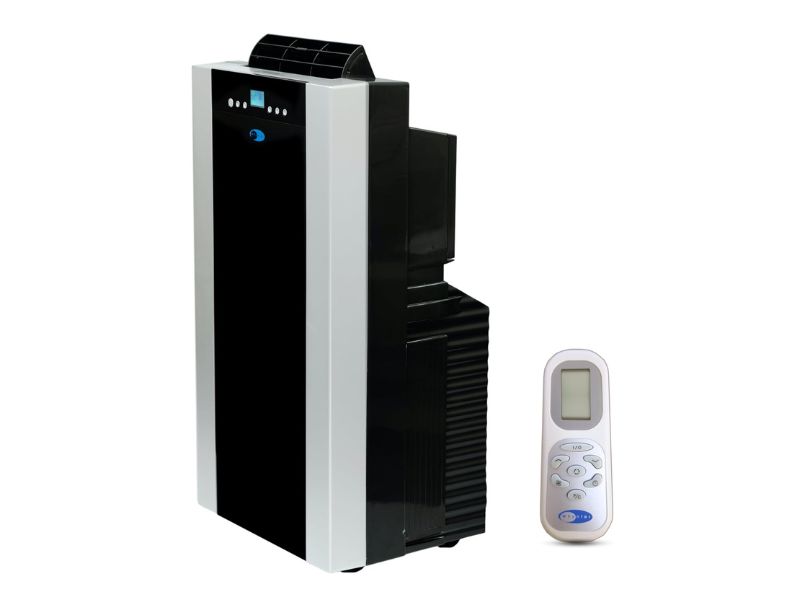
4. Whynter ARC-14S Dual-Hose Portable AC — Best Dual-Hose Value
Key Specifications
- Cooling capacity: 14,000 BTU ASHRAE
- SACC cooling capacity: 9,500 BTU
- AC type: Fixed-speed portable air conditioner
- Hose system: Separate dual hoses
- Recommended room size: Up to 500 sq. ft.
- Dehumidification capacity: Up to 71 pints per day
- Fan speeds: Three
- Maximum power consumption: 1,300W
- Noise rating: Below 51 dBA on low; below 56 dBA on high
- Filters: Washable pre-filter and activated-carbon filter
- Maximum hose length: 60 inches
- Window kit: Included
- Recommended placement: Lung room
The Whynter ARC-14S is a long-running dual-hose model with fewer connected features than the Midea Duo. It remains relevant because it provides separate intake and exhaust hoses, a strong 9,500 BTU SACC rating, and a relatively straightforward control system.
Whynter lists the ARC-14S at 14,000 BTU ASHRAE and 9,500 BTU SACC, with coverage up to 500 square feet. Its maximum power consumption is 1,300 watts, and its dehumidifier can remove up to 71 pints of water per day under the manufacturer’s test conditions.
One hose draws outdoor air into the condenser section, while the other expels heated condenser air. The cooled room air circulates separately through the evaporator. This arrangement reduces the negative-pressure problem associated with basic single-hose portable ACs.
The ARC-14S uses a fixed-speed compressor rather than an inverter. It usually operates at full compressor output until the thermostat target is reached, then cycles off. The resulting temperature pattern may be less smooth than the Midea Duo, especially when the unit is oversized for the room.
It is still a strong option for a medium lung room with a consistent heat load. Grow lights produce predictable heat during their operating schedule, allowing the thermostat to cycle the compressor while circulation fans distribute cooled air around the room.
The included activated-carbon filter can help reduce some odors and airborne contaminants entering the AC. It should not be confused with a grow-tent carbon filter designed for high-volume odor control. The washable pre-filter needs regular cleaning because dust restricts airflow and reduces cooling performance.
Noise is moderate for a full-size portable AC. Whynter lists below 51 dBA on low and below 56 dBA on high. The compressor, fans, and hose airflow will still be clearly audible in a bedroom or office adjoining the grow room.
The two separate hoses take more window space than a single-hose system. Installation also needs careful sealing around the panel. Gaps can allow hot outdoor air to re-enter the lung room and reduce the benefit of the dual-hose design.
The unit has no drain pump. Gravity drainage requires a drain point below the outlet, while a separate condensate pump may be needed when water must travel upward.
Pros
- True dual-hose system
- Good 9,500 BTU SACC capacity
- Lower price than many inverter dual-hose units
- Strong dehumidifier mode
- Activated-carbon and washable filters
- Three fan speeds
- Established model with widely available parts
Cons
- Fixed-speed compressor
- No Wi-Fi or app control
- Separate hoses create a bulky installation
- No built-in condensate pump
- Heavy and fairly noisy
- Less efficient temperature modulation than an inverter
Who Should Buy It?
The ARC-14S suits growers who want dependable dual-hose cooling without paying for advanced smart controls. It works well in a medium lung room serving one large tent or several compact tents.
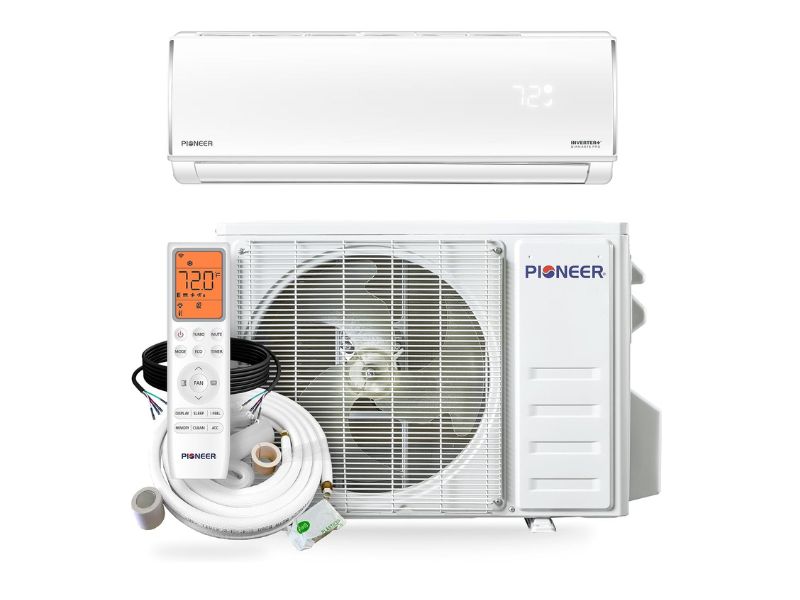
5. Pioneer Diamante Pro 12,000 BTU Mini-Split — Best Permanent Grow-Room AC
Key Specifications
- Cooling capacity: 12,000 BTU/h
- Heating capacity: 12,000 BTU/h
- AC type: Ductless mini-split heat pump
- Compressor: Variable-speed DC inverter
- Efficiency: 20 SEER2
- EER2: 11.2
- HSPF2: 9.5
- Voltage: 115V on linked variation
- Refrigerant: R454B
- Line-set kit: 16 ft.
- Indoor installation: High-wall mounted
- Outdoor condenser: Required
- Condensate drainage: Gravity drain from indoor head
- Recommended placement: Permanent lung room or sealed grow room
The Pioneer Diamante Pro is the strongest long-term choice for a dedicated grow room. It separates the evaporator and condenser into indoor and outdoor units, so there is no large portable exhaust hose releasing heat inside the room.
The linked 12,000 BTU model uses a variable-speed inverter compressor and carries a 20 SEER2 efficiency rating. Pioneer also offers 115V and 208/230V variations, so buyers need to select the version that matches the available electrical circuit.
A mini-split is normally more efficient and quieter indoors than a comparable portable AC. The compressor sits outside, leaving only the indoor fan and refrigerant coil in the grow room. This can make a major difference in a workspace, bedroom-adjacent room, or commercial-style setup that operates continuously.
The wall-mounted head also preserves floor space. Cool air can be directed across the lung room instead of being blocked by plant containers, tents, reservoirs, or storage equipment.
Inverter operation is valuable under a changing grow-room load. The system can increase output when lights switch on and reduce compressor speed as the room approaches the thermostat setting. Variable-speed systems are designed to modulate output rather than relying only on full-power cycling.
The Diamante Pro also provides heating. This can eliminate the need for a separate portable heater during cold weather, though the grow-room load and local winter conditions still need to match the system’s heating capability.
Installation is its biggest drawback. A mini-split requires a wall penetration, secure mounting, condensate routing, refrigerant-line connections, and an outdoor condenser location. The line set normally needs correct flaring, vacuum evacuation, leak testing, and electrical work. Local rules may require a licensed HVAC technician or electrician.
Condensate must flow continuously from the indoor head. A gravity drain should slope downward without traps that hold water. A condensate pump may be needed when gravity drainage is impossible.
A mini-split is also permanent. It is not the easiest option for renters or growers who expect to move the setup frequently.
Pros
- High long-term efficiency
- Quiet indoor operation
- Variable-speed inverter compressor
- No portable exhaust hose
- Preserves floor space
- Cooling and heating
- Stable performance for continuous grow-room loads
- Good option for sealed rooms and multiple tents
Cons
- Highest installation cost
- Permanent wall and outdoor installation
- Refrigerant and electrical work may require professionals
- Condensate line must be planned carefully
- Less suitable for renters
- More difficult to relocate
Who Should Buy It?
The Diamante Pro is ideal for a permanent grow room, several tents in one conditioned room, or a sealed setup with a predictable year-round heat load. It offers better long-term operating characteristics than most portable ACs when professional installation is practical.
Quick Comparison of the 5 Best Grow Tent ACs
| Product | AC Type | Cooling Capacity | Hose Design | Smart Control | Best Use | Price Level |
| Midea Duo | Inverter portable | 12,000 BTU SACC | Integrated dual hose | Yes | Best overall lung-room cooling | Premium |
| Whynter ARC-14S | Fixed-speed portable | 9,500 BTU SACC | Separate dual hose | No | Dual-hose value | Mid-range |
| Pioneer Diamante Pro | Inverter mini-split | 12,000 BTU | No portable hose | Model/controller dependent | Permanent grow room | Premium |
| BLACK+DECKER Smart Portable AC | Fixed-speed portable | About 10,200 BTU SACC | Single hose | Selected variation | Easy general setup | Mid-range |
| SereneLife Wi-Fi AC | Fixed-speed portable | Check exact SACC variation | Single hose | Yes | Small budget lung room | Budget |
Dual-hose portable models generally retain conditioned room air more effectively than single-hose units. A mini-split removes the portable hose problem completely by placing its compressor and condenser outside.
The capacity figures are not directly interchangeable. Portable ACs should be compared using SACC or DOE ratings whenever available. The mini-split’s rated 12,000 BTU capacity is measured under a different equipment standard.
How I Selected the Best Air Conditioners for Grow Tents
I compared each AC based on its real-world cooling rating, compressor design, air-hose configuration, energy use, noise, dehumidification, drainage, controls, installation demands, and suitability for a lung room.
The cooling capacity printed in large text on a portable AC box can be misleading. Many units show both an older ASHRAE rating and a lower DOE or SACC rating. The SACC number accounts more closely for heat transfer, duct losses, and the way portable units operate under representative conditions, making it the more useful figure for comparing portable models.
Hose design also received significant weight. A single-hose portable AC sends conditioned indoor air through its condenser and exhausts it outside. That creates negative pressure, which can draw warm outdoor or adjacent-room air through gaps. Dual-hose units separate condenser intake and exhaust airflow, helping the room retain more of the air it has already cooled.
I also considered temperature stability. Inverter compressors can reduce output as the room approaches the set temperature instead of repeatedly operating at full power and shutting down. This can reduce large temperature swings and improve part-load efficiency.
Room-size claims were treated as basic residential guidance rather than guaranteed grow-room capacity. Grow lights, dehumidifiers, pumps, direct sunlight, poor insulation, and high outdoor temperatures can create a much larger heat load than a normal bedroom of the same size.
What Is the Best AC for Grow Tent Use?
The best AC for grow tent use depends on whether the installation is temporary or permanent.
A dual-hose inverter portable AC is the best flexible option for most renters and home growers. It can cool the lung room without permanent refrigerant work, and its inverter compressor can match changing heat loads more smoothly.
A ductless mini-split is the better permanent choice. It usually offers quieter indoor operation, improved efficiency, no portable exhaust hose, and better temperature stability for a sealed grow room or multiple tents.
Single-hose portable ACs remain useful when budget and simple installation matter most. They work better in a well-sealed lung room than in a drafty space.
The AC should normally cool the surrounding room rather than sit inside the tent. Direct installation inside a small tent creates several problems:
- The cabinet consumes growing space.
- The exhaust hose becomes hot.
- Condensate water sits near electrical equipment.
- Cold outlet air may hit plants directly.
- The thermostat may read the cold discharge air instead of the canopy environment.
A separate temperature sensor should be placed inside the tent near canopy height. Compare that reading with the AC thermostat and adjust the lung-room setting until the plants experience the desired temperature.
Why Does a Grow Tent Need Air Conditioning?
Every electrical device inside or near the grow space eventually adds heat.
A 500-watt grow light consumes 500 watts of electrical power. Some energy initially leaves the fixture as visible light, but once it is absorbed by plants, walls, and other surfaces, it becomes heat inside the room.
Other heat sources may include:
- Light drivers
- Dehumidifiers
- Water pumps
- Air pumps
- Circulation fans
- Heaters
- CO₂ equipment
- Sunlight through windows
- Hot outdoor intake air
A dehumidifier can create a particularly large cooling burden because it removes moisture and releases both compressor heat and condensation-related heat back into the room.
High temperatures can increase plant water loss and disrupt flowering or fruit development in temperature-sensitive crops. University of Minnesota Extension notes that excessive day and nighttime temperatures can contribute to flower abortion in several vegetables, though the exact threshold varies by species.
Air conditioning removes heat and usually removes moisture at the same time. That can improve a hot, humid grow room but may create overly dry conditions for seedlings and young plants.
What Temperature Should a Grow Tent Be?
There is no single temperature that suits every plant. Crop species, humidity, light intensity, airflow, root temperature, and growth stage all affect the ideal range.
Temperature for Seedlings
Many seedlings grow well with air temperatures around 68°F to 77°F, though crop-specific germination and growth requirements vary.
Avoid aiming cold AC air directly at young plants. Small seedlings can lose moisture quickly and may experience colder leaf temperatures than the general room reading.
University of Minnesota Extension advises keeping seed-starting air temperatures above 60°F and providing adequate warmth, especially when bottom heat is used.
Temperature for Vegetative Growth
A working range near 68°F to 80°F suits many common indoor crops.
High-light plants may tolerate the warmer end when humidity and airflow are appropriate. Cool-season greens may prefer lower temperatures.
Measure the air at canopy level rather than on the floor. Warm air rises, and the top of the tent may be several degrees hotter than the lower area.
Temperature for Flowering and Fruiting Plants
Many flowering and fruiting crops are managed near 65°F to 78°F, but the correct range depends on the species.
Dense flowers and fruiting canopies need consistent airflow. Cooling the room without circulating air may leave hot, humid pockets inside the foliage.
Lights-On vs Lights-Off Temperature
The cooling requirement often falls sharply after the grow light switches off.
A smart schedule can raise the AC target or place the system in fan mode during the dark cycle. Running full cooling overnight may create an unnecessary temperature drop and increase relative humidity.
Monitor at least one complete 24-hour cycle before finalizing the thermostat schedule.
What Size AC Do You Need for a Grow Tent?
Do not size the AC using the tent’s floor area alone.
The AC normally cools the lung room, so start with the room’s length and width. Then account for the electrical heat load, insulation, windows, outdoor temperature, and number of tents.
Estimate the Equipment Heat Load
A useful approximation is:
Electrical watts × 3.412 = BTU per hour
A 500-watt grow light adds roughly:
500 × 3.412 = 1,706 BTU/h
A 500-watt dehumidifier can add another approximate 1,706 BTU/h of electrical heat, plus the heat released as water vapor condenses.
A room with two 500-watt lights, a dehumidifier, fans, and pumps can create several thousand BTU per hour before outdoor heat gain is included.
2×2 or 2×4 Tent
A small tent may not need a dedicated large AC when the surrounding room is already conditioned.
A compact portable AC can cool the lung room if it becomes hot, but good airflow and sensible light scheduling may solve mild heat problems more efficiently.
3×3 or 4×4 Tent
A 5,000- to 8,000 BTU SACC portable model may be sufficient for a small lung room with one efficient LED fixture.
Move toward 9,000 to 12,000 SACC when the room is poorly insulated, exposed to direct sun, or also contains a dehumidifier.
5×5 Tent
A high-output 5×5 light can create a substantial cooling load.
A 9,500- to 12,000 BTU SACC portable AC may be appropriate for the lung room, depending on room size and outdoor conditions.
8×8 or Larger Tent
Large tents should be treated as dedicated conditioned rooms.
A 12,000 BTU mini-split may work for a moderate load, but high-wattage equipment can require 18,000 BTU or more. A proper HVAC load calculation is safer than selecting capacity from the tent dimensions.
Multiple Tents
Add the heat load from every light, dehumidifier, pump, fan, and other device in the room.
Also account for future expansion. An AC that barely manages one tent may run continuously after a second tent is added.
Oversizing is not always the answer. ENERGY STAR warns that an oversized room AC can cool the air before removing enough humidity, leading to reduced efficiency and a cool but damp environment.
ASHRAE BTU vs SACC BTU
Portable air conditioners often display two cooling ratings.
ASHRAE Rating
The ASHRAE number comes from an older laboratory method that measures the unit’s cooling output under controlled conditions.
It does not fully account for the heat radiated by the exhaust hose, air leakage, and negative-pressure losses that occur during real portable-AC operation.
DOE or SACC Rating
The DOE’s SACC method adjusts portable-AC capacity to better represent real-world performance. DOE procedures account for portable-unit operating characteristics and distinguish between single-duct, dual-duct, and variable-speed equipment.
A product advertised as 14,000 BTU ASHRAE may provide only 9,500 or 10,000 BTU SACC.
Use SACC when comparing one portable AC with another. Do not compare a portable unit’s ASHRAE number directly with a mini-split’s rated capacity and assume equal performance.
Dual-Hose vs Single-Hose Portable AC
Dual-Hose Portable AC
A dual-hose AC uses one path to bring outdoor air into the condenser and another to send heated condenser air outside.
Benefits include:
- Less conditioned room air exhausted outdoors
- Reduced negative pressure
- Less hot-air infiltration
- Better performance in a sealed lung room
- Improved suitability for larger heat loads
The drawbacks are a bulkier window kit and more ducting.
Single-Hose Portable AC
A single-hose unit draws air from the room, passes part of it through the condenser, and exhausts it outside.
Benefits include:
- Lower purchase price
- Simpler window installation
- One hose to position
- Easier availability
The main problem is negative pressure. Replacement air enters through door gaps, tent openings, wall cracks, or other leaks.
Which Is Better for a Grow Tent?
A dual-hose design is the preferred portable option for a grow-room lung room.
A single-hose model can still work when the room is small, reasonably sealed, and the cooling load is moderate. Seal the window kit carefully and avoid unnecessary air gaps.
Portable AC vs Mini-Split for a Grow Tent
Portable AC Advantages
- Lower initial installation cost
- Suitable for renters
- Moveable between rooms
- Window kit usually included
- No permanent refrigerant installation
- Easy seasonal removal
Portable AC Disadvantages
- Lower efficiency than many mini-splits
- Compressor noise remains indoors
- Uses floor space
- Hot exhaust hose radiates heat
- Window panel can leak
- Condensate management may be inconvenient
Mini-Split Advantages
- Quiet indoor operation
- High efficiency
- Inverter temperature control
- No portable duct
- Preserves floor space
- Suitable for sealed rooms
- Often provides heating and cooling
Mini-Split Disadvantages
- Higher upfront cost
- Permanent wall penetration
- Outdoor condenser required
- Electrical work
- Condensate line installation
- Refrigerant work may require a licensed professional
Choose a portable AC for a temporary or rental setup. Choose a mini-split for a permanent room with a predictable year-round load.
Should the AC Go Inside or Outside the Grow Tent?
A portable AC should normally remain outside the tent.
Problems With Inside-Tent Placement
The cold air outlet may cause:
- Cold leaf surfaces
- Dry plant edges
- Uneven canopy temperature
- Condensation near the outlet
- Incorrect thermostat readings
The hot exhaust hose can also return heat to the tent before the air leaves the room.
The AC cabinet may sit close to water trays, humidifiers, power strips, and tent fabric. These are avoidable risks.
Benefits of Lung-Room Placement
Placing the AC outside provides:
- More equipment clearance
- Easier window venting
- Simpler drainage
- Better filter access
- More even air mixing
- One cooling source for several tents
Position the tent intake where it can draw cooled room air. Do not place the AC outlet directly against the intake because the tent may receive a concentrated stream of very cold air.
How to Set Up a Portable AC for a Grow Tent
- Measure the entire lung room.
- List the wattage of all grow equipment.
- Estimate the room’s basic and equipment heat load.
- Choose the AC using its SACC rating.
- Place the unit near a suitable window or exterior wall.
- Install the window panel securely.
- Seal gaps around the panel.
- Keep the exhaust hose short and straight.
- Arrange a safe condensate drain.
- Direct cooled air across the room.
- Place the tent intake in the conditioned area.
- Install a separate thermometer at canopy height.
- Set a moderate initial temperature.
- Test the system through the full lights-on cycle.
- Inspect the filter, hose and drain regularly.
Avoid connecting a high-power portable AC to a lightweight extension cord. Follow the manufacturer’s electrical instructions and use an outlet that can safely support the unit’s amperage.
How to Vent Portable AC Exhaust Properly
The exhaust must leave the lung room completely.
Suitable methods include:
- Window installation kit
- Sliding-door panel
- Properly installed exterior wall vent
- Dedicated portable-AC vent opening
Do not exhaust hot air into:
- The grow tent
- The same lung room
- A closed closet
- An unventilated attic
- Another indoor room
Keep the hose within the manufacturer’s maximum length. Avoid crushing it behind furniture or creating several sharp bends.
The hose surface can become hot. Insulating it with a material approved for the application may reduce heat radiating back into the room, but do not cover air intakes or violate the manual’s clearance requirements.
Seal the window panel so outdoor air cannot flow around it. Poor sealing can make a powerful AC behave like a much smaller unit.
How to Manage AC Condensate Water
Air conditioners remove water as humid air passes over the cold evaporator coil.
The moisture may be:
- Re-evaporated into the hot exhaust stream
- Stored in an internal tank
- Released through a gravity drain
- Pumped to a higher drain point
Self-evaporation works best in moderate humidity. A grow room containing plants, reservoirs, and frequent watering may create more condensate than the AC can exhaust automatically.
Continuous gravity drainage is reliable when the hose slopes downward to a floor drain or low container.
A condensate pump is needed when water must move upward to a sink or window.
Keep drain hoses and containers away from power strips, plugs, grow-light drivers, and other electrical equipment. Test the drainage system before leaving the AC unattended.
How Air Conditioning Affects Grow Tent Humidity
An AC removes moisture while cooling, but the final relative humidity depends on temperature and the amount of water remaining in the air.
Cooling can raise the relative-humidity percentage even as the AC removes some water. Cooler air reaches saturation more easily than warm air.
An oversized AC may satisfy the temperature setting quickly and shut down before removing enough humidity. ENERGY STAR identifies this as a reason oversized room ACs can leave spaces cool but damp.
Monitor both temperature and humidity inside the tent.
Possible combinations include:
- Hot and humid: AC plus dehumidification may be needed.
- Hot and dry: AC may worsen dryness; humidification may be needed.
- Cool and humid: A dehumidifier may be more appropriate than more cooling.
- Cool and dry: Reduce cooling and humidification losses.
Avoid running an AC, heater, humidifier and dehumidifier against each other. Use coordinated targets and schedules.
How Much Electricity Does a Grow Tent AC Use?
Use this formula:
Watts ÷ 1,000 × operating hours × electricity rate × 30
At an electricity rate of $0.16 per kWh:
900W AC Running Eight Hours Daily
0.9 × 8 × $0.16 × 30 = $34.56 per month
1,150W AC Running Eight Hours Daily
1.15 × 8 × $0.16 × 30 = $44.16 per month
1,300W AC Running Eight Hours Daily
1.3 × 8 × $0.16 × 30 = $49.92 per month
1,300W AC Running 12 Hours Daily
1.3 × 12 × $0.16 × 30 = $74.88 per month
These examples assume the listed wattage is drawn continuously. A thermostat-controlled compressor cycles, and an inverter reduces output under partial load, so actual costs can be lower.
Costs rise when:
- The room is poorly insulated
- The exhaust panel leaks
- The hose is long or bent
- Filters are dirty
- The thermostat is set unnecessarily low
- Lights run during the hottest hours
- A dehumidifier adds heat
- Doors remain open
Important Features to Consider Before Buying
SACC Cooling Capacity
Use SACC rather than the larger ASHRAE number when comparing portable units.
Inverter Compressor
An inverter can adjust compressor speed to maintain a steadier temperature and reduce full-power cycling.
Dual-Hose Design
Dual hoses reduce the amount of conditioned room air used for condenser cooling.
Adjustable Thermostat
A precise thermostat helps prevent overcooling and reduces electricity use.
Continuous Drainage
Continuous drainage is important in humid grow rooms or when the AC runs unattended.
Dehumidifier Mode
Dry mode can control warm, humid conditions, though it may not replace a dedicated dehumidifier under a large moisture load.
Auto Restart
Auto restart can restore operation after a power interruption. Confirm that the unit also restores the previous mode and temperature.
App and Schedule Control
Smart controls help coordinate cooling with the light cycle and allow remote monitoring.
Fan Speeds and Swing
Multiple fan speeds and oscillating louvers distribute cool air across the lung room.
Noise Level
Portable compressors remain indoors. Check both low- and high-speed noise ratings.
Washable Filter
A dirty filter restricts airflow and reduces cooling. The filter should be easy to remove and clean.
Window-Kit Compatibility
Confirm that the kit fits the window type and opening dimensions.
Electrical Requirements
Check voltage, amperage, plug type, and circuit capacity. Large ACs may need a dedicated circuit.
Warranty and Support
Confirm that the Amazon seller is authorized and that the warranty applies to the selected variation.
Common Grow Tent AC Mistakes
Avoid these errors:
- Sizing the AC only from tent floor area
- Ignoring equipment wattage
- Comparing ASHRAE and SACC numbers as if they were equal
- Placing a portable AC inside a small tent
- Exhausting hot air into the same room
- Using a long or crushed hose
- Leaving the window panel unsealed
- Ignoring condensate drainage
- Aiming cold air directly at plants
- Placing the temperature sensor beside the AC outlet
- Overloading an extension cord
- Running heating and cooling at the same time
- Ignoring humidity changes
- Failing to clean the filter
- Buying an oversized unit that short-cycles
- Buying an undersized unit that runs continuously
How to Reduce Grow Tent Cooling Costs
Run grow lights during cooler nighttime hours when practical.
Move detachable light drivers outside the tent. Their heat still enters the lung room unless moved outside that room, but removing them from the enclosure can reduce the direct tent load.
Other useful steps include:
- Insulate the lung room
- Shade sun-exposed windows
- Seal the portable-AC window panel
- Keep exhaust hoses short
- Use a dual-hose portable AC
- Choose an inverter compressor
- Clean filters regularly
- Reduce unnecessary exhaust airflow
- Use efficient LED lighting
- Improve room air circulation
- Set a realistic temperature
- Avoid leaving room doors open
The lowest thermostat setting is not automatically the best one. Each degree of unnecessary cooling increases compressor runtime.
Final Buying Recommendations
The Midea Duo 14,000 BTU Smart Inverter Portable AC is the best overall portable option. Its 12,000 BTU SACC capacity, inverter compressor, dual-hose-in-hose system, and app controls make it well suited to medium grow-room lung rooms.
The Whynter ARC-14S is the better value for buyers who want a true dual-hose unit without paying for inverter technology or smart controls.
The Pioneer Diamante Pro 12,000 BTU Mini-Split is the strongest long-term choice for a permanent grow room. It offers efficient inverter operation, quiet indoor cooling, heating, and no portable exhaust hose.
The BLACK+DECKER Smart Portable AC is easier to install and operate, though its single-hose design is less efficient in a leaky room.
The SereneLife 10,000 BTU Wi-Fi Portable AC is the budget smart option for a small lung room. Check the exact DOE or SACC capacity because SereneLife specifications can vary significantly between similar Amazon variations.
Conclusion
The Midea Duo 14,000 BTU Smart Inverter Portable AC is my choice for the best AC for grow tent lung-room cooling. Its inverter compressor and dual-hose airflow provide a better balance of capacity, temperature stability, and portable installation than most traditional single-hose units.
The Whynter ARC-14S offers a simpler dual-hose alternative, while the Pioneer Diamante Pro is better for a permanent grow room with a year-round cooling load. Single-hose BLACK+DECKER and SereneLife units can work in smaller, well-sealed lung rooms when budget or easy setup matters most.
Size the AC for the entire room and total equipment heat load—not only the tent dimensions. Compare portable models using SACC capacity, exhaust all hot air outside, and create a reliable condensate-drainage plan.
Place a separate temperature and humidity sensor at canopy level. This shows what the plants experience instead of relying only on the AC thermostat across the room.
A properly installed AC should maintain stable conditions without running continuously, overcooling the dark cycle, or creating condensation around electrical equipment.

I’m Maya L. Greenwood, a lifelong plant lover who believes anyone can grow something beautiful with the right guidance. After years of testing soil mixes, pruning methods, irrigation tricks, and pest-safe solutions, I started EasyGardenTips.com to turn hard-won lessons into step-by-step advice. From seed starting and container gardens to composting and seasonal checklists, my goal is to make gardening simple, sustainable, and fun.