Best Humidifier for Grow Tent: 5 Top Picks and Buying Guide
The best humidifier for grow tent should do more than produce visible mist. It needs enough output for the tent, a tank that does not require constant refilling, and controls that prevent humidity from climbing too high. A separate sensor or probe is also valuable because the humidity near the machine may differ from the conditions around the plant canopy.
My top choice for most dedicated grow-tent setups is the AC Infinity CLOUDFORGE T3 Plant Humidifier. It was designed specifically for growing environments rather than bedrooms. Its 4.5-liter tank, external sensor probe, VPD and humidity triggers, 10 output levels, automatic shutoff, and extendable mist hose make it easier to control moisture without placing the complete unit directly beside the plants. AC Infinity rates it for up to 45 hours of operation with an output of up to 8.11 fluid ounces per hour.
The T3 is not the only practical choice. A small tent may need a simpler and less expensive humidifier. A large grow area may need a 15-liter model with much stronger mist production. Some growers may prefer app control, voice commands, or a household humidifier that can also manage the surrounding lung room.
In this guide, I review five humidifiers for different tent sizes and budgets. I also explain humidity targets, tank sizing, cool mist versus warm mist, sensor placement, water quality, cleaning, electricity use, and common setup mistakes.
5 Best Humidifiers for Grow Tents
| Image | Product Name | Check Price |
|---|---|---|
Best Choice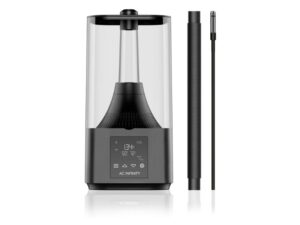 | AC Infinity CLOUDFORGE T3 Plant Humidifier— Best Overall | Check Price |
Second Best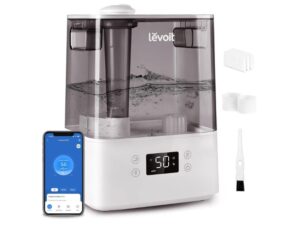 | Levoit Classic 300S Smart Humidifier — Best Smart Humidifier | Check Price |
Third Choice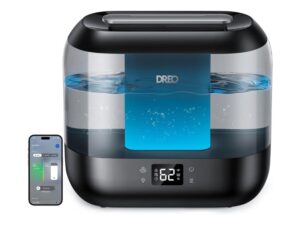 | Dreo HM311S Smart Humidifier — Best for Small Grow Tents | Check Price |
 | AC Infinity CLOUDFORGE T7 Plant Humidifier— Best for Large Grow Tents | Check Price |
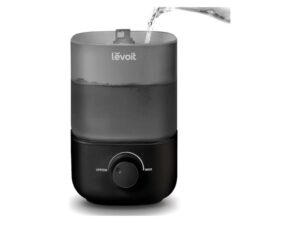 | Levoit Classic 160 Cool Mist Humidifier — Best Budget Option | Check Price |
1. AC Infinity CLOUDFORGE T3 Plant Humidifier— Best Overall
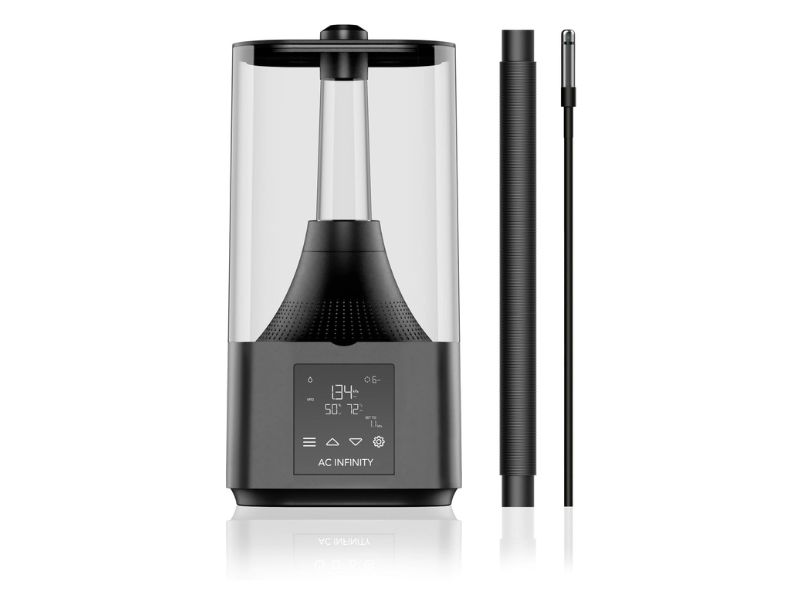
The AC Infinity CLOUDFORGE T3 is my first choice because it is built around plant-environment control instead of personal comfort. Standard bedroom humidifiers usually measure humidity at the machine. The T3 includes a corded sensor probe that can be positioned closer to the plant canopy.
That difference matters inside a grow tent. The air next to a mist outlet may be much more humid than the air between leaves, near the intake, or on the opposite side of the enclosure. A moveable probe gives the controller more useful information.
The T3 supports both relative-humidity and VPD triggers. VPD, or vapor pressure deficit, considers the relationship between temperature and humidity. It can provide more useful environmental guidance than humidity alone when you understand how to use it.
You can select up to 10 mist-output levels. That makes the unit easier to fine-tune for different conditions. A young seedling area may need only a low level, while a larger vegetative canopy with strong exhaust airflow may need more output.
Its 4.5-liter tank provides up to 45 hours of runtime under the manufacturer’s stated conditions. Maximum output is listed at 8.11 fluid ounces per hour, which is about 240 milliliters per hour. The unit draws 24 watts and operates at a listed noise level of 38 dBA.
The extendable hose is one of its best grow-tent features. It reaches more than four feet, allowing the machine to remain outside the tent while the mist enters through a duct opening. This saves floor space and keeps the water tank farther from electrical equipment.
The onboard controller provides timers, humidity triggers, VPD triggers, auto-start memory, and a display that can be turned off during the dark cycle. Connecting it to a compatible UIS controller unlocks more schedules, climate automation, alerts, and app-based control.
The main drawback is the cleaning process. Like any ultrasonic humidifier, mineral buildup can develop when hard water is used. The narrow body also requires more careful cleaning than a wide, open household tank.
Its 4.5-liter capacity is suitable for many 2×4, 3×3, and 4×4 setups, but a very dry room or strong exhaust fan can empty the tank faster than the maximum runtime suggests.
Key Specifications
- Tank capacity: 4.5 liters
- Maximum runtime: Up to 45 hours
- Maximum output: 8.11 fl. oz. per hour
- Power consumption: 24 watts
- Noise rating: 38 dBA
- Control levels: Up to 10
- Sensor: External corded probe
- Programs: Humidity, VPD, timer and cycle controls
- Mist delivery: Extendable hose
- Auto shutoff: Yes
- Dimensions: 6.76 × 6.76 × 14.03 inches
Pros
- Designed specifically for grow tents
- External humidity and temperature probe
- Humidity and VPD automation
- Ten mist-output levels
- Extendable hose saves tent space
- Automatic restart and low-water shutoff
- Compatible with the AC Infinity UIS ecosystem
Cons
- Smaller tank than the T7
- Advanced app functions may require a compatible UIS controller
- Ultrasonic operation can create white dust with hard water
- Mist hose needs regular inspection and cleaning
Who Should Buy It?
Choose the CLOUDFORGE T3 if you want precise grow-tent controls and a sensor that can be placed at canopy level. It is best suited to small and medium tents, including many 2×4, 3×3, and 4×4 setups.
2. Levoit Classic 300S Smart Humidifier — Best Smart Humidifier
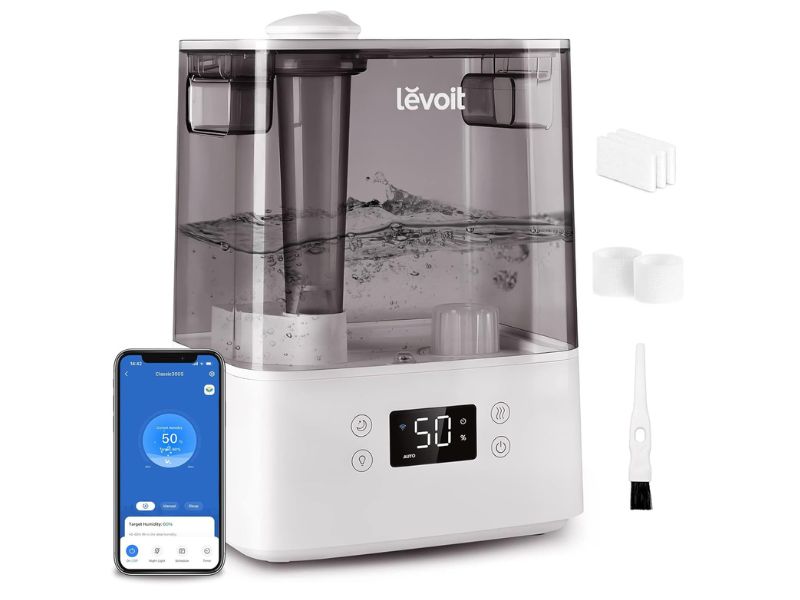
The Levoit Classic 300S is a strong option for growers who want easy app control without committing to one grow-equipment ecosystem.
It uses the VeSync app for remote monitoring, mist adjustment, timers, schedules, and target-humidity settings. It also works with Alexa and Google Assistant. These features are useful when the grow space is in a basement, spare room, garage, or another area that is not checked constantly.
The 6-liter top-fill tank provides up to 60 hours of runtime on the lowest setting. Levoit lists a maximum output of around 300 milliliters per hour and effective room coverage between 215 and 505 square feet. It draws only 26 watts and operates at no more than 30 dB under the manufacturer’s stated conditions.
Its built-in humidistat lets Auto Mode adjust output to maintain the selected humidity level. This reduces the risk of leaving a manual humidifier running at full power for too long.
The top-fill tank is wide enough to reach inside for cleaning. That is a major advantage over models with narrow openings or tanks that must be turned upside down for refilling.
The Classic 300S works well in a lung room. If the tent continuously pulls air from the surrounding room, controlling that room’s humidity can create a more consistent tent environment. One 300S may also serve several small tents located in the same conditioned space.
Its weakness is sensor placement. The humidity sensor is inside the machine, so it measures conditions near the humidifier rather than directly at canopy level. Warm grow lights, dry intake air, and mist direction can create a difference between the machine’s reading and a separate hygrometer.
Place an independent sensor inside the tent and compare the readings. You may need to set the humidifier slightly higher or lower to achieve the intended canopy humidity.
The unit includes an aroma tray, but I would not use fragrance oils inside a grow tent. Plain distilled or purified water is the better choice because oils can leave residue on equipment and plants.
Key Specifications
- Tank capacity: 6 liters
- Maximum runtime: Up to 60 hours on low
- Maximum mist output: Approximately 300 mL/h
- Power consumption: 26 watts
- Noise level: Up to 30 dB
- Effective range: 215–505 sq. ft.
- Control: Touch, VeSync app and voice
- Auto humidity mode: Yes
- Mist levels: Low, medium, high and auto
- Nozzle: 360-degree
- Warranty: Two-year limited warranty
Pros
- Large 6-liter tank
- Up to 60 hours of runtime
- App, schedule and voice controls
- Adjustable target humidity
- Quiet operation
- Easy top-fill design
- Wide tank opening simplifies cleaning
Cons
- Internal sensor does not measure canopy conditions directly
- No grow-tent mist hose
- Takes up more floor space than the T3
- Hard water may produce white mineral dust
Who Should Buy It?
The Classic 300S suits growers who want app-based control for a tent or lung room. It is especially useful when long runtime, easy refilling, and low noise matter more than VPD integration.
3. Dreo HM311S Smart Humidifier — Best for Small Grow Tents
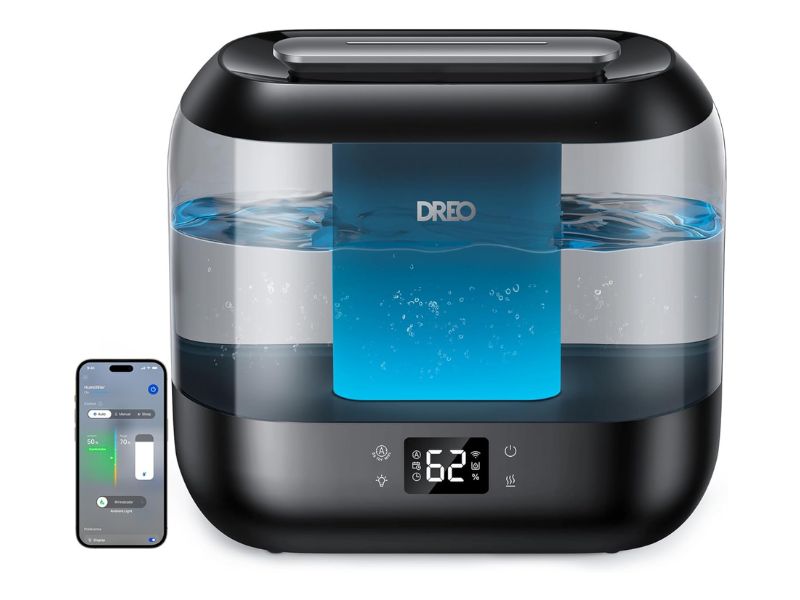
The Dreo HM311S combines a compact footprint with smart controls, making it a good choice for 2×2, 2×4, and lightly loaded 3×3 grow tents.
Its 4-liter tank is smaller than the 6-liter Levoit tank, but the complete machine measures only about 5.51 inches deep, 11.02 inches wide, and 10.16 inches high. That makes it easier to place on a shelf, outside a tent intake, or in a corner where floor space is limited.
Dreo lists a 300-square-foot effective range, 26-watt power draw, three mist levels, a 28 dB noise rating, and app, touch, and voice control. The top-fill tank provides around 32 to 36 hours of runtime depending on the listing, mist setting, and room conditions.
Auto Mode adjusts mist output in response to the built-in humidity sensor. The Dreo app also allows you to set timers, mist levels, lighting, and schedules. Alexa and Google Assistant support add basic voice control.
The nozzle can tilt approximately 30 degrees, helping you direct mist toward the tent intake or open air above the plants. Avoid pointing it directly at leaves. Visible droplets on foliage mean the mist is not dispersing fully before reaching the canopy.
The HM311S is easy to refill and has a modular design that makes cleaning less frustrating. Independent testing of the closely related non-smart HM311 praised its cleaning access and long runtime, though it found the unit less powerful than larger competitors.
Its size is also its limitation. A 4-liter tank and modest output may struggle when a powerful exhaust fan continuously removes humid air. It may also run near full output in a dry winter room.
For small tents, that lower output can be beneficial. A high-output humidifier can overshoot the target quickly when placed inside a compact enclosure.
Dreo recommends purified or distilled water to reduce scale and white dust. Its support information also advises changing the water regularly and descaling the unit.
Key Specifications
- Tank capacity: 4 liters
- Runtime: Approximately 32–36 hours
- Power consumption: 26 watts
- Noise level: 28 dB
- Effective range: Up to 300 sq. ft.
- Mist levels: Three
- Control: App, touch and voice
- Nozzle: 30-degree tilting
- Auto humidity mode: Yes
- Auto shutoff: Yes
- Dimensions: 5.51 × 11.02 × 10.16 inches
Pros
- Compact footprint
- App and voice control
- Automatic humidity adjustment
- Quiet operation
- Easy top-fill design
- Three mist levels
- Good capacity for small tents
Cons
- Less suitable for large tents
- Built-in sensor remains close to the humidifier
- No external grow-tent probe
- No hose for targeted mist delivery
- Hard tap water can create white dust
Who Should Buy It?
The Dreo HM311S is a practical fit for small tents, propagation setups, apartments, and growers who want smart control without buying a larger humidifier.
4. AC Infinity CLOUDFORGE T7 Plant Humidifier— Best for Large Grow Tents
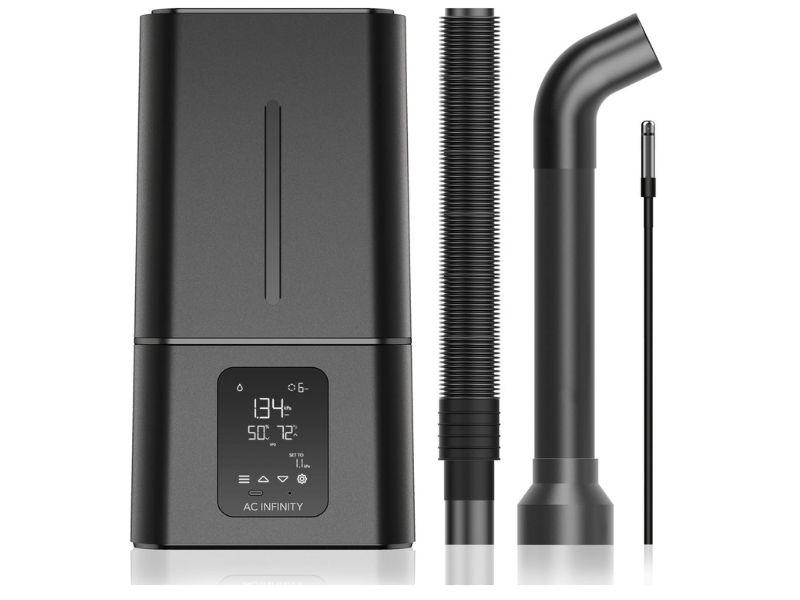
The AC Infinity CLOUDFORGE T7 is the high-capacity option in this guide. Its 15-liter tank and strong output make it better suited to large tents, dry climates, fast exhaust systems, grow rooms, and multiple-tent lung rooms.
AC Infinity lists a maximum output of 43.95 fluid ounces per hour, which is approximately 1,300 milliliters per hour. That is more than five times the stated output of the smaller T3.
The T7 can run for up to 30 hours, draws 100 watts, and operates at a listed 46 dBA. Its operating humidity range is 30% to 85% RH.
The lower runtime compared with the T3 may look surprising given the larger tank. The reason is its much higher potential output. At a low setting, runtime can be longer than it would be at maximum production, but room conditions and controller activity will determine real performance.
Like the T3, it includes a corded temperature and humidity probe, humidity triggers, VPD controls, timers, auto-start memory, and low-water shutoff. Compatible UIS controllers add app access, environmental charts, schedules, alerts, and more advanced coordination with fans and other equipment.
The T7 includes two mist-distribution options. An elbow nozzle directs a high volume of mist toward one area, while a five-way nozzle spreads moisture in multiple directions. This is useful in a wide room, but the five-way head may create condensation if it is placed too close to tent walls or equipment.
Its size requires planning. The unit is about 20.5 inches tall and weighs more once the 15-liter tank is filled. Placing it outside the tent and routing mist through a duct opening is often the cleaner setup.
The 100-watt draw is still modest compared with grow lights and dehumidifiers, but it is significantly higher than the 24- to 26-watt compact models.
Do not buy the T7 only because it has the largest tank. In a small tent, its high output may create wet walls, leaf condensation, and rapid humidity swings.
Key Specifications
- Tank capacity: 15 liters
- Maximum runtime: Up to 30 hours
- Maximum output: 43.95 fl. oz. per hour
- Power consumption: 100 watts
- Noise level: 46 dBA
- Control levels: Up to 10
- Sensor: External corded probe
- Programs: Humidity, VPD, timer and cycle modes
- Nozzles: Directional elbow and five-way head
- Auto shutoff: Yes
- Dimensions: 9.52 × 10.23 × 20.51 inches
Pros
- Very high mist output
- Large 15-liter tank
- External sensor probe
- VPD and humidity triggers
- Multiple mist-distribution options
- UIS controller compatibility
- Suitable for large tents and lung rooms
Cons
- Too powerful for many small tents
- Larger and heavier than other choices
- Higher noise and power consumption
- Costs more than compact humidifiers
- Requires careful mist placement to prevent condensation
Who Should Buy It?
Choose the T7 for large grow tents, multiple tents, high-output exhaust systems, or extremely dry environments. It is not the best match for a lightly planted 2×2 or 3×3 tent.
5. Levoit Classic 160 Cool Mist Humidifier — Best Budget Option
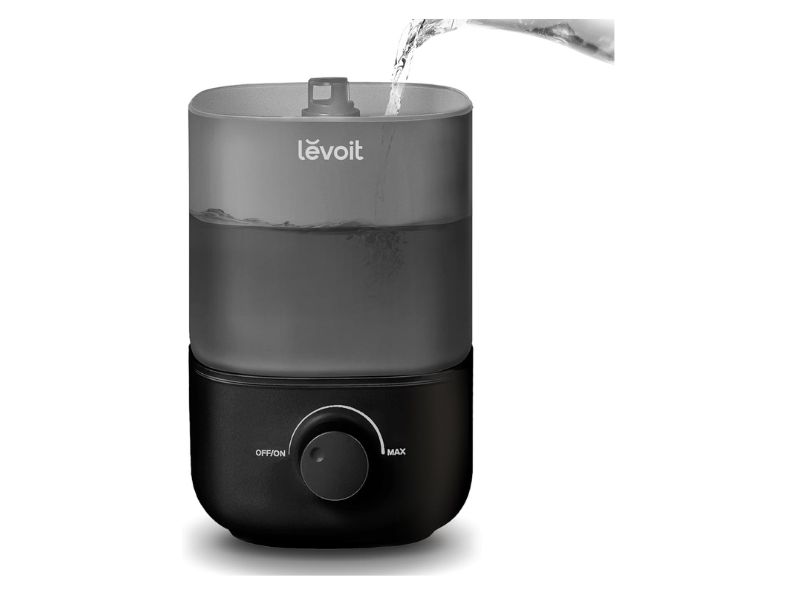
The Levoit Classic 160 is the simplest and most affordable model in this roundup. It does not include Wi-Fi, a humidistat, VPD controls, or an external probe. It focuses on quiet cool-mist production, easy cleaning, and manual operation.
The 2.5-liter tank runs for up to 25 hours on its lowest setting and around 11 hours at maximum output. Levoit lists an adjustable output range of approximately 100 to 190 milliliters per hour. The unit operates below 28 dB and weighs only 2.16 pounds when empty.
A single dial controls the mist level. The 360-degree nozzle allows you to aim the mist toward an open area or tent intake.
The wide top opening makes refilling and wiping the tank easy. Simple controls also mean there are fewer settings to configure and no app connection to maintain.
Its automatic shutoff activates when the water level becomes too low. This protects the unit if the tank empties while you are away.
The main drawback is the absence of automatic humidity control. The Classic 160 will continue producing mist at the selected level until it is turned off or runs out of water.
A separate humidity controller can solve that problem. Connect the humidifier through a compatible plug-in controller that switches power based on a probe inside the tent. Confirm that the humidifier automatically resumes operation after power is restored before relying on this arrangement.
You can also use a timer, but a humidity controller responds to actual conditions and provides better protection from overshooting.
The Classic 160 works best for seedlings, clones, propagation areas, and small tents with mild humidity problems. Its output may not keep up with a large exhaust fan or a dry 4×4 room.
Use distilled or purified water. Levoit notes that hard water can create white dust in ultrasonic models and recommends regular cleaning to prevent mineral buildup.
Key Specifications
- Tank capacity: 2.5 liters
- Runtime: Up to 25 hours on low
- Maximum runtime on high: Approximately 11 hours
- Mist output: Approximately 100–190 mL/h
- Mist type: Ultrasonic cool mist
- Noise level: Below 28 dB
- Control: Manual dial
- Nozzle: 360-degree
- Auto shutoff: Yes
- Dimensions: 6.38 × 7.12 × 10.14 inches
- Warranty: Two-year limited warranty
Pros
- Affordable
- Compact and lightweight
- Quiet operation
- Easy to fill and clean
- Adjustable manual output
- Automatic low-water shutoff
- Good for seedlings and small tents
Cons
- No built-in humidistat
- No app or scheduling
- No external sensor
- Small tank
- Limited output for large tents
- May require a separate humidity controller
Who Should Buy It?
The Classic 160 suits growers who want a basic humidifier for a small tent or propagation area. It is also a good option when you already own a plug-in humidity controller.
How I Selected the Best Humidifiers for Grow Tents
I compared each humidifier based on its tank capacity, mist output, automatic humidity control, sensor design, runtime, noise, cleaning access, physical size, safety features, and overall value.
Grow-tent performance received more attention than advertised room coverage. A room coverage number does not account for exhaust-fan speed, tent leaks, plant count, temperature, or how dry the surrounding air is.
Models with an adjustable humidistat or external probe ranked higher because they can react to real humidity conditions. Manual humidifiers can still work, but they require a separate controller, timer, or regular monitoring to prevent excessive moisture.
I also considered water quality and maintenance. Ultrasonic humidifiers can disperse minerals from tap water into the air, creating white dust on tent walls, leaves, fans, and grow lights. The EPA recommends distilled water as one way to reduce mineral dispersal, while the CDC advises emptying humidifiers daily and cleaning them according to the manufacturer’s instructions.
What Is the Best Humidifier for Grow Tent Use?
A cool-mist ultrasonic humidifier with adjustable output, automatic shutoff, and humidity-based control is the best general choice for most grow tents.
Dedicated plant humidifiers offer several advantages over normal room models. They may include external probes, mist hoses, VPD controls, dark-cycle-friendly displays, and integration with ventilation equipment.
The tank should be large enough to last through a complete light or dark period without refilling. A 2.5- to 4.5-liter tank may be enough for a small tent, while a 6- to 15-liter unit is more practical for larger spaces or dry environments.
Do not choose based only on advertised square-foot coverage. A 300-square-foot bedroom and a 16-square-foot grow tent behave differently. The tent may have stronger ventilation, higher temperatures, more air exchange, and concentrated plant transpiration.
The best model is one that reaches the target without running constantly or creating wet surfaces.
Why Grow Tents Need Humidity Control
Plants lose water through transpiration. Their roots replace that water, but very dry air can increase moisture loss and stress young plants with small root systems.
Grow lights may raise air and leaf temperature. Exhaust fans continuously remove humid air and replace it with drier room air. Winter heating and air conditioning can also lower the surrounding humidity.
Low humidity may contribute to:
- Rapid drying of growing media
- Curled or dry leaf edges
- Wilting
- Increased watering demand
- Slow seedling or cutting establishment
- Greater environmental stress
Many common houseplants perform well near 50% to 60% relative humidity, though the ideal level varies by species, temperature, and growth stage.
A humidifier should correct dry conditions, not create a permanently wet enclosure. Excessive moisture can support mold, mildew, condensation, and equipment corrosion.
What Humidity Level Should a Grow Tent Have?
Humidity needs vary by plant species. Use the following ranges as starting points, then adjust for plant response, temperature, airflow, and disease risk.
Humidity for Seeds and Seedlings
Many seedlings perform well around 60% to 70% RH because their root systems are still developing.
Start near the lower end if airflow is limited or surfaces remain wet. Constantly saturated air can encourage damping-off and fungal growth.
Humidity for Clones and Cuttings
Fresh cuttings may need 65% to 75% RH because they cannot absorb much water until roots develop.
A propagation dome can maintain this local humidity more efficiently than humidifying a complete tent. Gradually vent the dome and lower humidity as roots form.
Humidity for Vegetative Growth
A common starting range is 50% to 65% RH.
Larger plants release more water through transpiration, so the humidifier may run less often as the canopy develops. Air circulation becomes more important because humidity can collect between overlapping leaves.
Humidity for Flowering Plants
Many flowering crops are managed closer to 40% to 55% RH, especially when flowers are dense and susceptible to mold.
A humidifier may not be needed during late flowering. In some setups, the challenge changes from adding moisture to removing it.
Humidity During Lights-Off Hours
Relative humidity usually rises when the lights turn off and air temperature falls.
Schedule the humidifier carefully during the dark period. A unit that is necessary during the warm light cycle may create condensation at night.
Monitor a full 24-hour cycle before leaving the system unattended.
What Size Humidifier Do You Need?
Tent size alone does not determine humidifier capacity.
Consider:
- Starting room humidity
- Tent temperature
- Exhaust-fan speed
- Number and size of plants
- Growth stage
- Air leaks
- Mist-output rating
- Tank size
- Desired refill interval
2×2 Grow Tent
A manual 2.5-liter humidifier may be sufficient for seedlings or a lightly ventilated tent.
Use a low mist setting and an independent humidity sensor. Small enclosures can become too wet quickly.
2×4 Grow Tent
A 4- to 4.5-liter unit is a practical starting point. An external probe or automatic humidistat reduces the need for constant adjustment.
3×3 Grow Tent
A 4- to 6-liter humidifier usually provides enough capacity for moderate conditions. Strong exhaust airflow may require higher mist output.
4×4 Grow Tent
Look for a 4.5- to 6-liter tank with automatic control. A high-output model may be useful in an extremely dry room, but it should have several adjustable mist levels.
5×5 and Larger Tents
A large-capacity plant humidifier or lung-room system is usually more practical. The 15-liter class reduces refill frequency and provides more output reserve.
Cool Mist vs Warm Mist Humidifiers
Cool Mist Humidifiers
Cool mist is the best default for grow tents.
It adds moisture without intentionally heating the water and generally uses less electricity than warm mist. Most compact grow-tent models use ultrasonic cool-mist technology.
Cool mist also reduces burn risk near plants, plastic tent walls, pets, and people.
Warm Mist Humidifiers
Warm-mist models heat water before releasing moisture.
They can add unwanted heat to an already warm grow tent and often consume significantly more power. For example, the Levoit LV600S uses up to 280 watts when operating its warm-mist system, while many cool-mist models in this guide use around 24 to 26 watts.
Warm mist may help in a very cold grow room, but a proper heater and cool-mist humidifier provide more independent control.
Which Type Is Better?
Choose cool mist unless the environment has a specific heating requirement.
It is easier to integrate with temperature control and creates less risk of raising the tent beyond its target temperature.
Ultrasonic vs Evaporative Humidifiers
Ultrasonic Humidifiers
Ultrasonic units use a vibrating plate to create fine mist.
They are compact, quiet, efficient, and capable of producing visible moisture quickly. Most grow-tent humidifiers use this system.
Their main drawback is mineral dispersal. Tap water minerals can enter the air and settle as white dust.
Evaporative Humidifiers
Evaporative models draw air through a wet wick or filter.
They generally produce less white dust because many minerals remain in the wick. Their output also decreases naturally as humidity rises, reducing the chance of severe over-humidification.
The disadvantages include fan noise, larger physical size, and ongoing wick-replacement costs.
Which Technology Works Better?
Ultrasonic humidifiers fit most small and medium tents because they are compact and easy to automate.
An evaporative humidifier may be a better lung-room option when distilled water is too expensive or local tap water is very hard.
Should the Humidifier Go Inside or Outside the Grow Tent?
Placing It Inside the Tent
Inside placement raises humidity quickly and wastes less mist.
It also uses valuable floor space and places a water-filled appliance near lights, cables, fans, and power connections.
Keep the unit on a stable waterproof tray and maintain space around its air intake.
Placing It Outside the Tent
Outside placement makes refilling and cleaning easier. It also keeps most water away from the tent’s electrical equipment.
A mist hose can send moisture through an intake opening. A standard room humidifier can condition the lung room so the tent pulls in already-humidified air.
The system may need more output because it is controlling a larger area.
Best Placement Strategy
Use outside placement when the humidifier includes a hose or when tent floor space is limited.
Inside placement can work for a compact unit if mist does not contact leaves, lights, sensors, tent walls, or electrical connections.
How to Set Up a Humidifier in a Grow Tent
Place the humidifier on a stable, level, waterproof surface.
Keep it away from power strips, extension-cord connections, grow-light drivers, and standing water.
Fill the tank with distilled or purified water according to the manufacturer’s instructions. Do not add nutrients, pesticides, fragrance oils, or other grow-room products to the water.
Position the nozzle or hose so the mist enters open air rather than hitting one plant directly.
Place the humidity probe at canopy level. Run circulation fans gently to mix the air, but do not aim a powerful fan directly into the mist outlet.
Start with a low output setting. Monitor temperature and humidity for a complete light and dark cycle.
Look for:
- Wet leaves
- Condensation
- Water on tent walls
- Mineral residue
- Large humidity swings
- Rapid tank depletion
Increase output gradually only when the measured humidity remains below the target.
Where Should You Place the Humidity Sensor?
Place the main humidity sensor near canopy height in an area that represents the plants’ normal environment.
Avoid placing it:
- Directly in the mist stream
- Against a wet leaf
- Above moist growing media
- Beside the tent intake
- In direct grow-light heat
- Immediately next to an exhaust outlet
A sensor in the direct mist stream may shut the humidifier off while the rest of the tent remains dry. A sensor near the exhaust or intake may produce the opposite problem.
Use two sensors in a large tent—one near the center and another near the outer canopy. Compare them to find airflow or moisture-distribution problems.
Why Is My Grow Tent Still Too Dry?
The humidifier may be too small for the rate of air exchange.
A strong exhaust fan can remove moisture as quickly as the humidifier produces it. Lowering the fan speed may help when temperature and air-quality conditions allow.
Other causes include:
- Empty water tank
- Low mist setting
- Blocked mist outlet
- Mineral buildup
- Incorrect sensor placement
- Open tent vents
- Extremely dry lung-room air
- Humidifier placed outside the intake airflow
- High grow-light temperature
- Faulty humidity sensor
Do not immediately buy a larger unit. First, inspect the tent for unnecessary air leaks and confirm the current humidifier is producing its rated mist.
Why Is the Humidifier Making the Tent Too Wet?
The unit may be oversized, set too high, or controlled by a sensor in the wrong location.
Humidity may also rise sharply after lights-off because the temperature drops.
Reduce the mist output and move the sensor away from dry intake air. Improve circulation so moisture does not collect in one corner.
Use automatic humidity control instead of continuous operation.
Stop or sharply reduce humidification if you see:
- Wet tent walls
- Water droplets on leaves
- Damp electrical equipment
- Condensation on grow lights
- Persistent musty odor
White Dust From Grow Tent Humidifiers
White dust is usually made of minerals carried into the air by an ultrasonic humidifier.
It may settle on:
- Leaves
- Grow-light surfaces
- Fan blades
- Carbon-filter covers
- Tent walls
- Sensors
The EPA notes that ultrasonic and impeller humidifiers can disperse tap-water minerals and recommends watching for visible white dust. Distilled water reduces this problem.
White dust can reduce light transmission when it coats LED lenses or protective covers. It also creates unnecessary residue on plant surfaces.
Clean affected equipment only after switching it off and following the manufacturer’s instructions.
Can You Use Tap Water in a Grow Tent Humidifier?
You can use tap water only when the humidifier manufacturer permits it, but it may increase mineral scale and white dust.
Hard water creates more residue than soft water.
Better options include:
- Distilled water
- Demineralized water
- Reverse-osmosis water
- Manufacturer-approved filtered water
Distilled water contains fewer dissolved minerals, helping reduce scale and airborne residue. Levoit and Dreo both recommend purified or distilled water for their ultrasonic models.
Water quality does not remove the need for cleaning. Distilled water can still become contaminated after entering an unclean tank.
How Much Electricity Does a Grow Tent Humidifier Use?
Use this formula:
Watts ÷ 1,000 × daily operating hours × electricity rate × 30
At an electricity price of $0.16 per kWh:
A 24-watt humidifier running 12 hours daily costs:
0.024 × 12 × $0.16 × 30 = $1.38 per month
A 26-watt unit running continuously costs:
0.026 × 24 × $0.16 × 30 = $3.00 per month
A 100-watt large humidifier running 12 hours daily costs:
0.1 × 12 × $0.16 × 30 = $5.76 per month
Actual cost depends on mist level and how often automatic control switches the unit on.
Warm-mist humidifiers consume much more electricity because they heat the water.
Important Features to Consider Before Buying
Tank Capacity
A larger tank reduces refill frequency but increases the unit’s size and filled weight.
Choose enough capacity to operate through the longest unattended period.
Mist Output
Compare mist output in milliliters or fluid ounces per hour.
High output matters in large or highly ventilated tents. Low adjustable output is equally important in small tents.
Built-In Humidistat
A humidistat switches or adjusts the unit based on measured humidity.
Check its reading against an independent hygrometer.
External Humidity Sensor
An external probe provides better control because it can measure conditions near the canopy.
This is one of the strongest reasons to buy a dedicated plant humidifier.
Top-Fill Design
Top-fill tanks are easier to refill and usually easier to clean.
A wide opening should allow you to reach the internal surfaces.
Adjustable Mist Levels
Multiple levels prevent an oversized unit from operating at maximum output in a small space.
Directional Nozzle or Hose
A nozzle adjusts the mist direction. A hose allows the machine to remain outside the tent.
Avoid long sagging hose sections where water can collect.
Auto Shutoff
Low-water shutoff protects the humidifier when the tank empties.
Auto Restart
Auto restart is important after a power failure or when using an external controller.
Confirm the unit resumes its previous mist setting after power returns.
Smart App Control
App control can provide schedules, alerts, humidity history, and remote adjustment.
It should support good environmental control rather than replace a correctly positioned sensor.
Noise Level
Most ultrasonic humidifiers are quiet, though high-output models may produce more fan, vibration, bubbling, or dripping noise.
Cleaning Access
Avoid tanks with narrow corners that cannot be wiped easily.
Simple disassembly saves time and encourages regular maintenance.
Warranty and Support
Buy from an authorized seller and confirm the warranty applies to the exact Amazon listing.
Common Grow Tent Humidifier Mistakes
Do not choose a humidifier only by its advertised room size.
Other common mistakes include:
- Pointing mist directly at leaves
- Running continuously without a humidistat
- Placing the sensor inside the mist stream
- Using hard tap water
- Ignoring white dust
- Letting old water remain in the tank
- Adding essential oils to the water
- Placing the unit beneath a grow light
- Allowing mist to reach electrical equipment
- Ignoring nighttime humidity
- Blocking the air intake
- Using too much output in a small tent
- Failing to inspect hoses for standing water
- Assuming visible mist means the complete tent is humidified
How to Clean and Maintain a Grow Tent Humidifier
Unplug the humidifier before cleaning.
Empty unused water daily when possible. The CDC recommends emptying portable humidifiers every day, cleaning them regularly, and allowing them to air-dry after cleaning.
Follow the manufacturer’s instructions for descaling and disinfecting.
General maintenance includes:
- Rinsing the tank
- Wiping internal surfaces
- Cleaning the ultrasonic plate gently
- Removing mineral scale
- Washing or replacing filters
- Cleaning mist hoses and nozzles
- Inspecting seals
- Drying the unit before storage
Do not mix cleaning chemicals. Rinse all cleaned parts thoroughly before refilling.
Is It Safe to Leave a Humidifier Running Overnight?
A humidifier can run overnight when it has automatic shutoff, stable placement, clean water, and suitable humidity control.
Before leaving it unattended, confirm:
- The tank does not leak
- The unit sits on a waterproof tray
- Electrical connections are elevated
- The mist does not contact equipment
- The humidity target is set correctly
- The sensor is at canopy level
- Airflow is adequate
- The dark-period humidity has been tested
A timer alone may not protect against a temperature-related nighttime humidity spike. A humidistat or environmental controller provides better control.
Humidifier vs Exhaust Fan for Grow Tent Humidity
A humidifier adds moisture. An exhaust fan removes tent air and replaces it with air from the surrounding room.
Running both at high output can waste water and electricity. The humidifier produces mist while the exhaust fan immediately removes it.
Balance the systems by using:
- Variable fan speed
- Temperature and humidity triggers
- A conditioned lung room
- Lower exhaust speed when safe
- Scheduled environmental changes
- Coordinated grow controllers
Do not stop ventilation completely just to increase humidity. Plants still need suitable air exchange, temperature control, and circulation.
Final Buying Recommendations
For a typical dedicated grow tent, the AC Infinity CLOUDFORGE T3 offers the best balance of output, tank capacity, external sensing, VPD control, and targeted mist delivery. Its hose also makes outside-tent placement easier.
Choose the Levoit Classic 300S when you want a large tank, quiet operation, straightforward app control, and an easy-to-clean top-fill design. It is a strong choice for controlling a lung room.
The Dreo HM311S is better for a small tent or apartment setup. It provides smart control in a compact body without the output of a large grow-room machine.
The AC Infinity CLOUDFORGE T7 is designed for larger tents, several connected tents, or extremely dry spaces. Its high output requires careful control and sensor placement.
Choose the Levoit Classic 160 when budget and simplicity matter most. Pairing it with a separate humidity controller makes it much more suitable for unattended grow-tent use.
Conclusion
The AC Infinity CLOUDFORGE T3 is my overall choice for the best humidifier for grow tent use because it combines an external probe, plant-focused controls, adjustable output, and a targeted mist hose.
A smaller manual humidifier can be enough for seedlings and compact tents. Large tents and dry lung rooms may require a bigger tank and stronger output. Smart household humidifiers also work well when you need app control and long runtime.
Match the humidifier to the tent size, exhaust rate, plant stage, and starting humidity. Use distilled or purified water, position the sensor at canopy level, and clean the tank regularly.
Most importantly, increase humidity gradually. The goal is stable moisture in the air—not wet leaves, condensation, or mist collecting around electrical equipment.

I’m Maya L. Greenwood, a lifelong plant lover who believes anyone can grow something beautiful with the right guidance. After years of testing soil mixes, pruning methods, irrigation tricks, and pest-safe solutions, I started EasyGardenTips.com to turn hard-won lessons into step-by-step advice. From seed starting and container gardens to composting and seasonal checklists, my goal is to make gardening simple, sustainable, and fun.