What Size Grow Tent Should You Buy? Complete Beginner’s Guide
Choosing the right grow tent size is one of the most important decisions you’ll make when setting up an indoor garden. A tent that’s too small can quickly become overcrowded, restrict airflow, and leave little room for essential equipment. On the other hand, a tent that’s larger than you need can cost more to buy, light, and maintain.
The good news is that finding the right size isn’t as complicated as it might seem. Once you understand how factors like plant count, plant size, available space, and equipment affect your setup, selecting the best grow tent becomes much easier.
Many beginners make the mistake of choosing a tent based only on the number of plants they plan to grow. However, your plants aren’t the only things that need space. Grow lights, inline fans, carbon filters, ducting, oscillating fans, and even the distance between your lights and plant canopy all play a role in determining the ideal tent size.
Grow tents are available in a wide range of sizes—from compact 2×2 grow tent for herbs and seedlings to large commercial tents capable of supporting dozens of plants. According to the U.S. Department of Agriculture (USDA), environmental factors such as light, temperature, humidity, and air circulation are among the key conditions affecting healthy plant growth. Choosing an appropriately sized grow tent makes it much easier to manage all of these factors consistently.
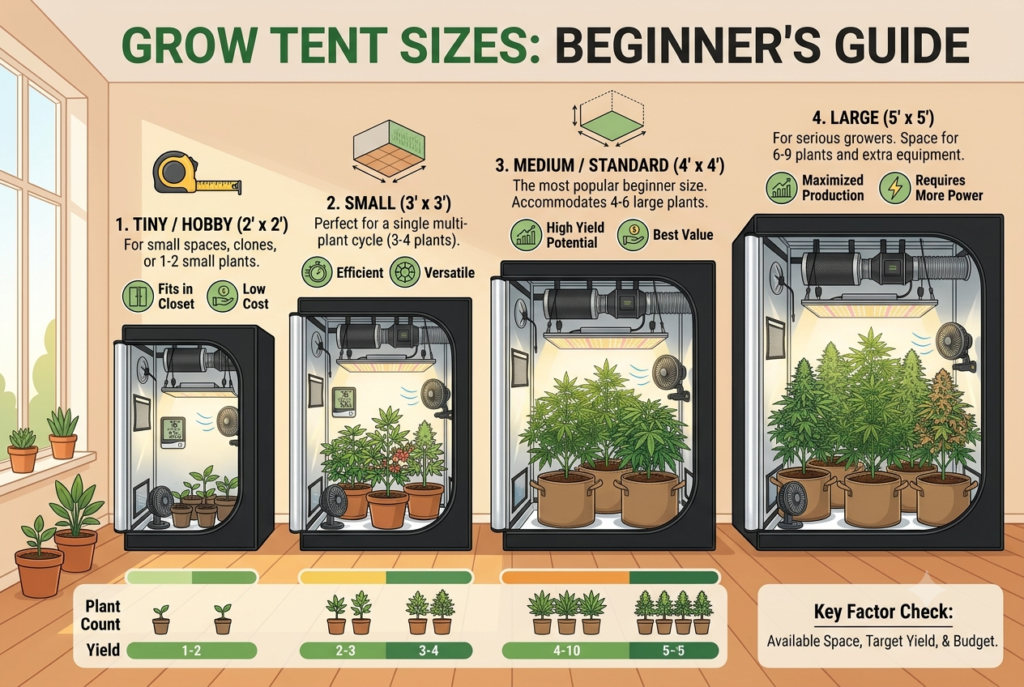
In this guide, you’ll learn exactly what size grow tent you need based on your growing goals. I’ll compare standard grow tent sizes, explain how many plants each one can accommodate, discuss tent height, dimensions, and floor space, and help you choose the best size for your available room and equipment. By the end, you’ll know how to select a grow tent that gives both your plants—and your equipment—the space they need to thrive.
What Determines the Right Grow Tent Size?
There’s no single grow tent size that’s perfect for everyone. The right choice depends on your growing goals, available space, and the equipment you plan to use.
Before comparing tent dimensions, consider these four key factors.
Number of Plants
The more plants you grow, the more floor space you’ll need. However, plant count alone shouldn’t determine your tent size. Different plants grow at different rates, and their mature size can vary significantly.
If you think you’ll expand your indoor garden in the future, it’s often worth choosing a tent that’s slightly larger than your current needs.
Plant Size
A tent that comfortably fits several small herbs may only have room for one or two large vegetable plants.
Consider both the width and height of your plants at maturity. Larger plants need more spacing for healthy airflow, easier maintenance, and proper light coverage.
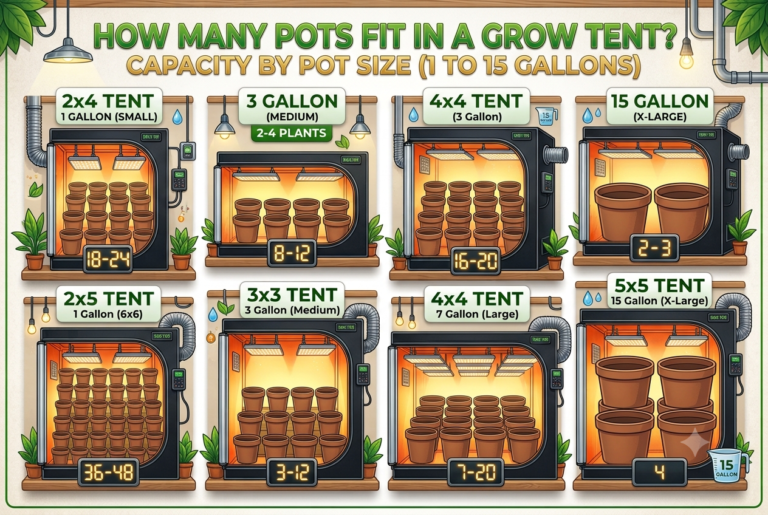
Read More : how many plants fit in a grow tent
Available Space
Measure the area where you plan to place your grow tent before buying one.
Common locations include:
- Spare bedrooms
- Closets
- Basements
- Garages
- Utility rooms
Remember to leave enough clearance around the tent so you can open the doors, access your plants, and perform routine maintenance.
Equipment Space
Your plants aren’t the only things that need room inside a grow tent.
You’ll also need space for equipment such as:
- LED grow lights
- Inline exhaust fan
- Carbon filter
- Ducting
- Oscillating fans
- Humidifier or dehumidifier
- Pots or hydroponic reservoirs
A tent that barely fits your plants may not leave enough room for proper airflow or essential equipment.
When choosing a grow tent size, think about your entire setup, not just your plant count. Considering all four of these factors will help you select a tent that’s easier to manage today and flexible enough to support your indoor garden as it grows.
Standard Grow Tent Sizes Explained
Grow tents come in several standard sizes, each designed for different growing needs. While you can find custom and commercial options, most home gardeners choose one of the sizes below.
The best grow tent isn’t necessarily the biggest one. It’s the one that provides enough room for your plants, equipment, and future growth without wasting space or increasing unnecessary costs.
| Grow Tent Size | Best For | Typical Plant Capacity |
| 2×2 ft | Herbs, seedlings, small indoor gardens | 1 to 2 plants |
| 2×4 ft | Vegetables, herbs, beginner setups | 2 to 4 plants |
| 3×3 ft | Home gardeners, mixed crops | 3 to 5 plants |
| 4×4 ft | Larger indoor gardens | 4 to 8 plants |
| 5×5 ft | Experienced growers | 6 to 10 plants |
| 4×8 ft | High-yield home gardens | 8 to 16 plants |
| 8×8 ft | Commercial or large-scale growing | 16+ plants |
Note: The actual number of plants depends on the plant species, container size, training techniques, and how much space you want each plant to have.
2×2 Grow Tent
A 2×2 grow tent measures 2 feet by 2 feet, giving you 4 square feet of growing space. It’s an excellent choice for beginners, apartment dwellers, or anyone growing herbs, leafy greens, or a couple of small plants.
2×4 Grow Tent
A 2×4 grow tent doubles the floor space of a 2×2 while maintaining a narrow footprint. It’s one of the most practical options for home growers because it offers enough room for multiple plants without requiring a large room.
3×3 Grow Tent
A 3×3 grow tent provides 9 square feet of growing space, making it one of the most versatile sizes available. It offers a good balance between plant capacity, lighting efficiency, and ease of maintenance.
4×4 Grow Tent
A 4×4 grow tent is one of the most popular choices for serious hobby growers. With 16 square feet of floor space, it can support larger plants, bigger containers, and more powerful lighting systems.
5×5 Grow Tent
A 5×5 tent is designed for gardeners who want higher yields or plan to grow multiple large plants. Because of its larger footprint, it also requires stronger lighting and a more capable ventilation system.
4×8 and Larger Grow Tents
If you’re growing a large number of plants or building a dedicated indoor garden, a 4×8, 10×10, or 8×8 grow tent may be a better fit. These larger tents provide plenty of room but also require more equipment, electricity, and environmental management.
In the next section, we’ll answer one of the most common questions beginners ask: What size grow tent do I need for a specific number of plants?
What Size Grow Tent Do I Need for X Plants?
One of the most common questions new indoor gardeners ask is, “What size grow tent do I need?” While the answer depends on the type of plants you’re growing and how much space you want to give them, plant count is a good place to start.
The recommendations below assume you’re using standard-sized containers and leaving enough room for proper airflow, lighting, and maintenance.
What Size Grow Tent for 1 Plant?
If you’re growing a single plant, a 2×2 grow tent is usually the best choice. It provides enough room for one medium to large plant while leaving space for lighting and ventilation equipment.
If you expect the plant to grow very large or plan to add another plant later, consider a 2×4 tent instead.
What Size Grow Tent for 2 Plants?
A 2×4 grow tent is ideal for two plants. It offers enough space for healthy growth, better airflow, and easier access when watering or pruning.
Some compact plants can fit inside a 2×2 tent, but a 2×4 gives you much more flexibility.
Read More: best grow tent for 2 plants
What Size Grow Tent for 3 Plants?
For three plants, a 3×3 grow tent is usually the best option. It provides enough floor space to prevent overcrowding while allowing your grow lights to cover the canopy evenly.
What Size Grow Tent for 4 Plants?
A 4×4 grow tent is the most common recommendation for four medium-sized plants. It offers plenty of room for containers, equipment, and good air circulation.
If you’re growing smaller plants, a 3×3 tent may also work, but a 4×4 is generally the safer long-term choice.
Read More: Best Grow Tent for 4 Plants: Give Every Plant Room to Grow
What Size Grow Tent for 5 to 6 Plants?
A 5×5 grow tent is well suited for five or six plants. It provides additional growing space while making it easier to manage lighting, airflow, and maintenance.
Read More: Best Grow Tent for 6 Plants: Build a Roomy, Manageable Indoor Garden
What Size Grow Tent for 7 to 10 Plants?
For seven to ten plants, you’ll typically need a 4×8 or 5×5 grow tent, depending on the size of your plants and containers.
If your plants are large or require extra spacing, a 4×8 tent usually offers a more comfortable layout.
What Size Grow Tent for 10 to 20 Plants?
Growing ten to twenty plants requires a much larger setup. Most gardeners choose an 8×8, 8×10, or another commercial-sized grow tent to provide enough room for plants and equipment.
Keep in mind that larger tents also require more powerful lighting and ventilation systems.
What Size Grow Tent for Autoflowers?
Autoflowering plants are generally smaller than many photoperiod plants, so they can often be grown closer together.
As a general guideline:
- 1 to 2 autoflowers: 2×2 tent
- 2 to 4 autoflowers: 2×4 tent
- 4 to 6 autoflowers: 3×3 or 4×4 tent
- 6 to 8 autoflowers: 5×5 tent
However, the exact number depends on the strain, container size, and whether you use plant training techniques.
These recommendations provide a good starting point, but plant count is only one part of the equation. Tent height is just as important, especially when growing taller plants or using powerful LED grow lights.
Read More: Best Grow Tent for Autoflower: 3 Tents That Make Fast Cycles
Grow Tent Height Explained
Floor space is important, but so is height. Many beginners focus only on the tent’s width and length, then realize there’s not enough vertical space for their plants, grow lights, and hanging equipment.
Choosing the right tent height helps prevent cramped conditions and gives your plants room to grow naturally.
How Tall Should a Grow Tent Be?
Most home grow tents are available in heights ranging from 48 inches (4 ft) to 80 inches (6 ft 8 in).
Here’s a general guideline:
- 48 inches (4 ft): Suitable for seedlings, herbs, and other compact plants.
- 60 inches (5 ft): Good for small to medium-sized plants.
- 72 inches (6 ft): A popular choice for most home gardens.
- 80 inches or taller: Best for larger plants or growers using high-powered LED lights.
If you have enough ceiling clearance, it’s usually better to choose a taller tent. Extra height gives you more flexibility and makes it easier to manage your setup.
Why Tent Height Matters
The usable height inside a grow tent is less than its advertised height because several items take up vertical space.
These include:
- Plant containers
- Mature plant height
- LED grow lights
- Rope ratchets or hangers
- Safe distance between the lights and the plant canopy
For example, a tent that’s 72 inches tall may provide only about 50 to 55 inches of usable growing space after accounting for pots and lighting equipment.
Don’t Forget Ceiling Height
Before buying a grow tent, measure the height of the room where you plan to place it.
Make sure there’s enough clearance not only for the tent itself but also for assembling it and installing lights, ducting, and ventilation equipment.
If you’re using a basement or closet, double-check the ceiling height before choosing a taller model.
Selecting the right height from the beginning will save you from many common setup problems and give your plants the room they need to grow comfortably.
Next, I’ll explain the dimensions of common grow tent sizes, including how big a 4×4 grow tent really is and how to convert its size into square meters.
Common Grow Tent Dimensions
Grow tent sizes are usually listed in feet, such as 2×2, 3×3, or 4×4. The first number represents the tent’s length, while the second represents its width.
If you’re more familiar with metric measurements, converting these dimensions can make it easier to visualize how much space a tent actually occupies.
Here’s a comparison of some of the most common grow tent sizes.
| Grow Tent Size | Dimensions (Feet) | Dimensions (Inches) | Dimensions (Centimeters) | Floor Space |
| 2×2 | 2 ft × 2 ft | 24 × 24 in | 61 × 61 cm | 0.37 m² |
| 2×4 | 2 ft × 4 ft | 24 × 48 in | 61 × 122 cm | 0.74 m² |
| 3×3 | 3 ft × 3 ft | 36 × 36 in | 91 × 91 cm | 0.84 m² |
| 4×4 | 4 ft × 4 ft | 48 × 48 in | 122 × 122 cm | 1.49 m² |
| 5×5 | 5 ft × 5 ft | 60 × 60 in | 152 × 152 cm | 2.32 m² |
How Big Is a 4×4 Grow Tent?
A 4×4 grow tent measures:
- 4 ft × 4 ft
- 48 × 48 inches
- 122 × 122 centimeters
This gives you 16 square feet or approximately 1.49 square meters of growing space.
Because it offers a good balance of space and efficiency, it’s one of the most popular grow tent sizes for home gardeners.
How Many Square Meters Is a 4×4 Grow Tent?
A standard 4×4 grow tent provides approximately 1.49 square meters of floor space.
Here’s a quick reference for other common sizes:
| Grow Tent Size | Floor Space (m²) |
| 2×2 | 0.37 |
| 2×4 | 0.74 |
| 3×3 | 0.84 |
| 4×4 | 1.49 |
| 5×5 | 2.32 |
Knowing both imperial and metric measurements can make it easier to compare grow tents, especially if manufacturers list dimensions in different units.
Next, I’ll discuss the biggest grow tents available and help you decide whether a large grow tent is actually worth buying.
What’s the Biggest Grow Tent Available?
If standard grow tents aren’t large enough for your needs, there are plenty of bigger options available. Many manufacturers offer oversized tents designed for serious hobbyists, commercial growers, research facilities, and large indoor gardens.
Some of the largest commonly available grow tent sizes include:
| Grow Tent Size | Best For |
| 5×10 ft | Large home gardens |
| 8×4 ft | High-yield indoor growing |
| 8×8 ft | Dedicated grow rooms |
| 8×10 ft | Commercial-scale setups |
| 10×10 ft | Professional growing operations |
Some manufacturers even produce custom-sized grow tents that are larger than 10×10 feet, although these are far less common and often made to order.
Do You Need a Large Grow Tent?
For most home gardeners, probably not.
Larger grow tents require:
- More powerful grow lights
- Larger inline fans
- Bigger carbon filters
- Increased electricity usage
- More time for maintenance
- Better temperature and humidity control
Unless you’re planning to grow a large number of plants, a standard 2×4, 3×3, or 4×4 grow tent is usually a more practical and cost-effective choice.
Bigger Isn’t Always Better
A larger grow tent gives you more room to work, but it also creates more space that must be properly lit and ventilated.
If your equipment isn’t powerful enough for the size of the tent, you may end up with uneven lighting, poor airflow, and inconsistent growing conditions.
Instead of buying the biggest tent you can afford, choose one that matches your current growing goals and the equipment you’re willing to invest in.
Next, I’ll help you choose the best grow tent size based on what you plan to grow, whether that’s herbs, vegetables, seedlings, houseplants, or a hydroponic system.
Recommended Grow Tent Size by Growing Goal
The best grow tent size depends not only on how many plants you have but also on what you’re growing. Different plants require different amounts of space, and some growing methods need extra room for equipment.
Use the table below as a general guide.
| Growing Goal | Recommended Grow Tent |
| Herbs | 2×2 ft |
| Seedlings | 2×2 ft or 2×4 ft |
| Leafy greens | 2×4 ft |
| Vegetables | 3×3 ft or 4×4 ft |
| Houseplants | 3×3 ft |
| Tropical plants | 4×4 ft |
| Hydroponic system | 4×4 ft or larger |
| Large indoor garden | 5×5 ft or 4×8 ft |
Best Size for Herbs
If you’re growing basil, parsley, mint, cilantro, or other herbs, a 2×2 grow tent is usually more than enough. Herbs stay relatively compact and don’t require much floor space.
Best Size for Seedlings
A 2×2 or 2×4 grow tent works well for starting seeds and raising seedlings. These tents provide enough room for seed trays while remaining easy to heat and manage.
Best Size for Vegetables
Vegetables such as tomatoes, peppers, cucumbers, and eggplants grow much larger than herbs. A 3×3 or 4×4 grow tent gives them enough room to develop without becoming overcrowded.
Best Size for Houseplants
Many indoor plant collectors prefer a 3×3 grow tent because it offers enough space for several medium-sized houseplants while still fitting comfortably inside most homes.
Best Size for Hydroponics
Hydroponic systems require extra room for reservoirs, pumps, tubing, and other equipment. For this reason, a 4×4 grow tent is often the minimum practical size, although larger systems may benefit from a 5×5 or 4×8 tent.
Choosing a grow tent based on your growing goals helps ensure you have enough room not only for your plants but also for the equipment needed to keep them healthy.
Grow Tent Size vs. LED Grow Light
Choosing the right grow tent is only part of the equation. Your grow light should also match the size of your tent.
A light that’s too small may leave parts of the canopy underlit, while one that’s too powerful can waste electricity and generate unnecessary heat.
The table below provides general recommendations for full-spectrum LED grow lights.
| Grow Tent Size | Recommended LED Power* |
| 2×2 ft | 100 to 200 watts |
| 2×4 ft | 200 to 320 watts |
| 3×3 ft | 300 to 450 watts |
| 4×4 ft | 480 to 650 watts |
| 5×5 ft | 650 to 800 watts |
| 4×8 ft | 800 to 1,200 watts |
*Actual wattage depends on the efficiency of the LED fixture, the type of plants you’re growing, and the growth stage.
Why Light Coverage Matters
Every grow light is designed to cover a specific area. Matching the light to your tent size helps ensure all plants receive even illumination.
For example:
- A 2×2 tent works well with a compact LED fixture.
- A 3×3 tent typically requires a medium-sized LED.
- A 4×4 tent often performs best with a higher-output LED or multiple fixtures.
Before buying a grow light, check the manufacturer’s recommended coverage area instead of relying on wattage alone.
A properly matched lighting system improves plant growth, reduces dark spots, and helps you make the most of your indoor garden.
Next, I’ll cover some of the most common grow tent sizing mistakes and show you how to avoid them before making your purchase.
Common Grow Tent Sizing Mistakes
Choosing the wrong grow tent size can lead to poor airflow, limited working space, and unnecessary expenses. Fortunately, these mistakes are easy to avoid if you plan ahead.
Here are the most common sizing mistakes beginners make.
Buying a Tent That’s Too Small
Many people choose the smallest tent that fits their current plant count. As the plants mature and equipment is installed, the tent quickly becomes overcrowded.
If your budget and available space allow, buying one size larger often provides a more comfortable growing environment.
Ignoring Tent Height
Floor space isn’t the only thing that matters. A short tent may not leave enough room for plant containers, mature plants, hanging lights, and the required distance between the lights and the canopy.
Always check both the footprint and the height before purchasing.
Forgetting About Equipment
Your grow tent needs space for more than just plants.
Equipment such as grow lights, inline fans, carbon filters, ducting, oscillating fans, and humidifiers all take up valuable room. Make sure your tent can accommodate everything without restricting airflow.
Buying a Tent That’s Too Large
A larger tent isn’t always a better investment.
Oversized tents require stronger lighting, larger ventilation systems, and more electricity to maintain the ideal environment. If you don’t plan to use the extra space, you’re simply increasing your costs.
Not Leaving Room to Work
You’ll need enough space to water plants, inspect leaves, prune branches, and clean the tent.
A setup that’s packed from wall to wall may maximize plant count, but it also makes routine maintenance much more difficult.
Quick Grow Tent Size Checklist
If you’re still unsure which size to choose, use this simple checklist before making your decision.
✅ How many plants do you want to grow?
✅ How large will those plants become?
✅ How much floor space do you have available?
✅ Do you have enough ceiling height?
✅ How much room will your lights and ventilation equipment require?
✅ Do you plan to expand your indoor garden in the future?
If you can confidently answer these questions, you’ll have a much easier time selecting the right grow tent for your needs.
Conclusion
Choosing the right grow tent size is about more than just fitting a certain number of plants. You also need to consider plant size, tent height, available space, lighting, ventilation, and the equipment that will share the growing area.
For most beginners, a 2×2, 2×4, or 3×3 grow tent offers plenty of room to learn and grow. If you’re planning a larger indoor garden or expect to expand in the future, a 4×4 or 5×5 tent may be a better long-term investment.
Take a few minutes to measure your available space, think about your growing goals, and choose a tent that gives both your plants and your equipment enough room to perform at their best. Starting with the right size will make every other part of your indoor gardening journey much easier.

I’m Maya L. Greenwood, a lifelong plant lover who believes anyone can grow something beautiful with the right guidance. After years of testing soil mixes, pruning methods, irrigation tricks, and pest-safe solutions, I started EasyGardenTips.com to turn hard-won lessons into step-by-step advice. From seed starting and container gardens to composting and seasonal checklists, my goal is to make gardening simple, sustainable, and fun.