7 Best Dehumidifiers for Grow Tents: Reviews and Buying Guide
Finding the best dehumidifier for grow tent humidity control starts with matching the machine’s moisture-removal capacity to your plants, tent size, ventilation system, and surrounding room. A small thermoelectric unit may help inside a lightly planted 2×2 tent, but a mature canopy, hydroponic reservoir, or humid flowering environment normally needs a compressor-based dehumidifier with an adjustable humidistat and continuous drainage.
My top overall choice is the Midea Cube 35-Pint Smart Dehumidifier. It combines 35-pint daily moisture removal, smart control, a large-capacity bucket design, and continuous drainage in a relatively compact form.
Midea lists it for spaces up to 3,500 square feet, though grow-tent performance depends more on plant transpiration, ventilation, ambient humidity, and temperature than a residential coverage number. Independent testing has also found the Cube design highly effective at moisture removal and relatively efficient for its capacity.
This guide reviews seven options for different situations, including small tents, larger grow rooms, smart monitoring, quiet operation, energy efficiency, and low-cost moisture control. After the product reviews, you will learn how to choose the correct pint capacity, where to place the unit, how continuous drainage works, how much electricity a dehumidifier may use, and why humidity often rises after the lights turn off.
7 Best Dehumidifiers for Grow Tents at a Glance
| Image | Product Name | Check Price |
|---|---|---|
Best Choice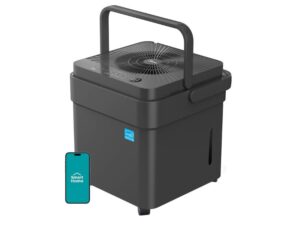 | Midea Cube 35-Pint Smart Dehumidifier — Best Overall | Check Price |
Second Best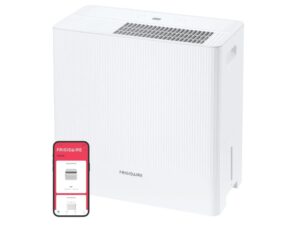 | Frigidaire 50-Pint Dehumidifier With Built-In Pump — Best for Large Grow Tents | Check Price |
Third Choice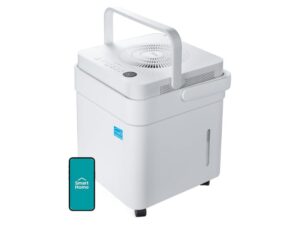 | Midea Cube 20-Pint Smart Dehumidifier — Best for Small Grow Tents | Check Price |
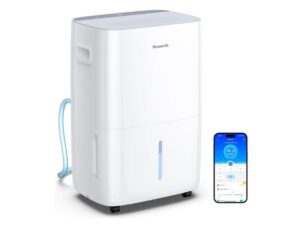 | GoveeLife H7151 Smart 50-Pint Dehumidifier — Best Smart Dehumidifier | Check Price |
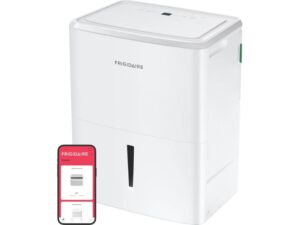 | Frigidaire 22-Pint Wi-Fi Dehumidifier — Best Quiet Option | Check Price |
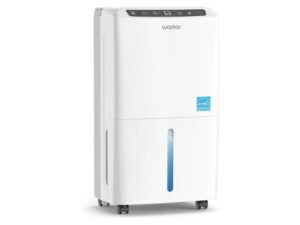 | Waykar 34-Pint ENERGY STAR Dehumidifier — Best Energy-Efficient Option | Check Price |
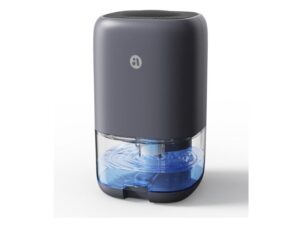 | TABYIK 35-Ounce Mini Dehumidifier — Best Budget Option | Check Price |
How I Selected the Best Dehumidifiers for Grow Tents
I compared each dehumidifier based on its stated moisture-removal capacity, control range, drainage options, physical size, smart features, noise output, energy certification, warranty, and suitability for an indoor growing environment.
A grow tent creates a different moisture load from a normal bedroom or basement. Plants continuously release water through transpiration, wet growing media evaporates moisture, and open reservoirs can increase humidity further. The unit must respond to this ongoing moisture production instead of only drying a room once.
Continuous drainage received extra weight because manually emptying a bucket several times a day is inconvenient and can leave the tent unprotected if the tank fills while you are away. Auto restart, auto defrost, washable filters, and adjustable humidistats were also important.
I did not rank products only by their advertised square-foot coverage. Those numbers are created for residential environments and do not directly account for plant count, watering volume, exhaust rate, canopy density, or nighttime temperature drops.
Pint ratings also require context. The U.S. Department of Energy defines dehumidifier capacity as the amount of water removed per day under standardized temperature and relative-humidity conditions. Real removal rates change when the grow space is cooler, drier, more ventilated, or producing moisture faster than the test environment.
7 Best Dehumidifiers for Grow Tents Reviewed
1. Midea Cube 35-Pint Smart Dehumidifier — Best Overall
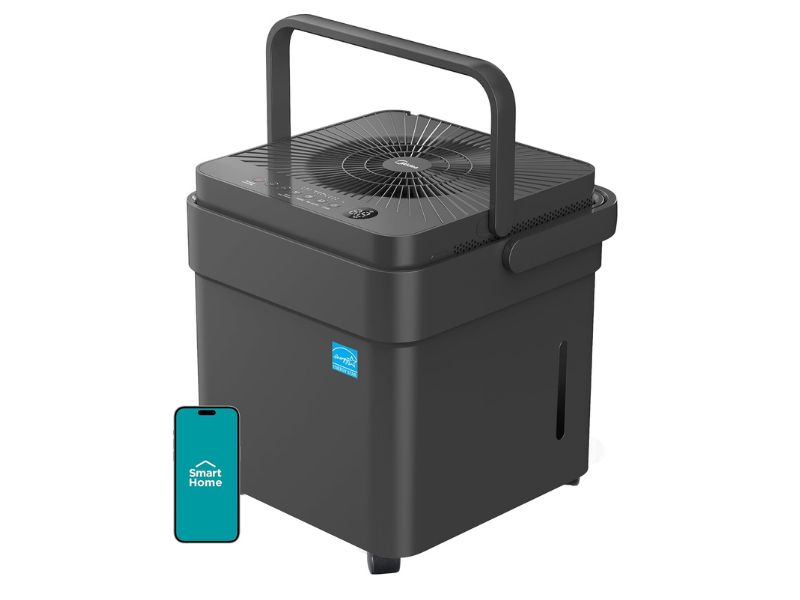
The Midea Cube 35-Pint is the most balanced option in this roundup. It has enough moisture-removal capacity for many medium grow tents, multiple tents located in one lung room, or a heavily planted 4×4 or 5×5 setup.
Midea rates the unit to remove 35 pints of moisture per day and cover residential spaces up to 3,500 square feet. It supports smart control, wheels, adjustable humidity, and continuous gravity drainage through an included hose. The official specifications list dimensions of approximately 14.45 inches deep, 14.76 inches wide, and 14.57 inches high in its compact position.
The Cube design is different from a conventional upright dehumidifier. Its compressor section can sit higher on the expandable water bucket during operation and nest inside the bucket for storage. The large reservoir allows longer operation before manual emptying, though a full tank can become heavy.
This design is useful when continuous drainage is unavailable. If you do have a floor drain, sink, or suitable collection point below the outlet, connecting the hose removes the need to monitor the bucket.
The SmartHome app provides remote control and humidity monitoring. That can help when the grow space is located in a basement, garage, spare room, or another area that you do not check constantly.
Independent testing has been favorable. Dehumidifier Buyers Guide reported that the Midea Cube delivered the strongest moisture-removal performance among the high-capacity units in its comparison and paired that performance with good energy efficiency. RTINGS measured the MAD35S1QWT at approximately 52.2 dBA on its highest fan setting and 50.4 dBA on low, which is audible but reasonable for a compressor dehumidifier.
One issue to consider is humidity-sensor placement. A dehumidifier’s internal sensor measures the air entering the machine, not necessarily the humidity at canopy level. Warm, dry air leaving the unit can also influence nearby readings. Use a separate calibrated hygrometer near the plant canopy rather than relying on one display.
The 35-pint capacity can be excessive for a tiny propagation tent, but the adjustable target and cycling operation make it more versatile than its capacity suggests.
Key specifications
- Rated capacity: 35 pints per day
- Stated residential coverage: Up to 3,500 sq. ft.
- Drainage: Large bucket or continuous gravity drain
- Smart control: Yes
- Adjustable humidity: Yes
- Auto shutoff: Yes
- Auto restart: Yes
- Wheels: Yes
- Warranty: One year
- Dimensions: Approximately 14.45 x 14.76 x 14.57 inches
- Weight: Approximately 39.6 pounds
Pros
- Strong moisture-removal performance
- Large water reservoir
- Continuous drainage included
- App-based monitoring and control
- Compact storage design
- Suitable for medium tents and lung rooms
- Good balance of capacity and energy use
Cons
- Full bucket can be heavy
- Internal humidity reading may differ from canopy-level humidity
- More capacity than most tiny tents need
- One-year warranty is shorter than some competing coverage
Who should buy it?
The Midea Cube 35-Pint suits growers using a 4×4, 5×5, or similarly moisture-intensive setup. It also makes sense for a lung room serving more than one small tent.
2. Frigidaire 50-Pint Dehumidifier With Built-In Pump — Best for Large Grow Tents
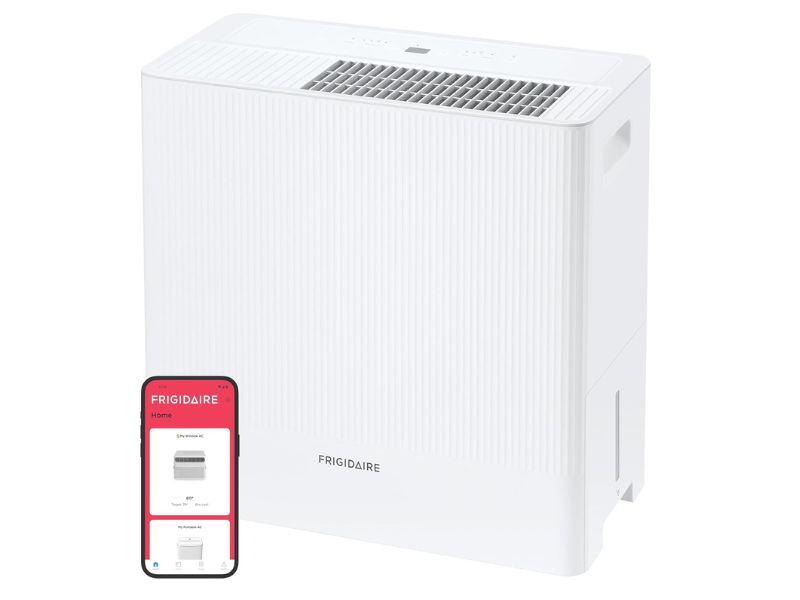
The Frigidaire 50-Pint model is built for high moisture loads and flexible drainage. It is a stronger fit for large tents, multiple tents, hydroponic systems, dense flowering canopies, and grow rooms where gravity drainage is difficult.
The built-in pump is its most valuable feature. A normal gravity hose must run continuously downhill. A pump-equipped unit can move collected water upward into a sink or through another suitable drain route, subject to the manufacturer’s installation limits.
Frigidaire provides three drainage options: the removable bucket, continuous gravity drainage, and pumped drainage. The current model also includes Wi-Fi connectivity, app control, custom humidity adjustment, automatic shutoff, a washable filter, and low-temperature operation down to 41°F. It is ENERGY STAR certified.
A 50-pint dehumidifier can recover faster after watering, reservoir changes, or nighttime humidity spikes than a small unit. Faster recovery does not mean it must run continuously. Once the target is reached, the humidistat cycles the compressor.
This capacity produces more heat than a mini or 20-pint machine. Dehumidification is not a cooling process. The unit condenses water and then releases heat from both the refrigeration cycle and its electrical components back into the room.
Inside a sealed tent, that added heat may raise canopy temperature noticeably. For most large setups, placing the Frigidaire in the lung room is more practical. The exhaust system can then exchange air between the tent and the conditioned surrounding room.
The pump also adds complexity. It introduces another component that requires cleaning and can eventually fail. A gravity drain is usually simpler when one is available.
The unit weighs about 42 pounds, so it is portable on its casters but not something most users will want to lift frequently. Frigidaire provides a one-year parts and labor warranty for the current model. (Frigidaire)
Key specifications
- Rated capacity: 50 pints per day
- Drainage: Bucket, gravity hose, or built-in pump
- Smart control: Wi-Fi and app support
- ENERGY STAR certified: Yes
- Low-temperature operation: Down to 41°F
- Auto shutoff: Yes
- Washable filter: Yes
- Weight: Approximately 42 pounds
- Warranty: One year
Pros
- High moisture-removal capacity
- Built-in pump handles difficult drain locations
- Three drainage methods
- Wi-Fi control
- ENERGY STAR certification
- Suitable for large or heavily planted spaces
- Washable filter
Cons
- More expensive than basic gravity-drain models
- Produces more heat than smaller units
- Pump adds maintenance and another possible failure point
- Takes up significant tent floor space
Who should buy it?
This Frigidaire is better suited to 8×8, 10×10, multi-tent rooms, or smaller setups with unusually high moisture production. It is especially useful when the drain point sits above the dehumidifier.
3. Midea Cube 20-Pint Smart Dehumidifier — Best for Small Grow Tents
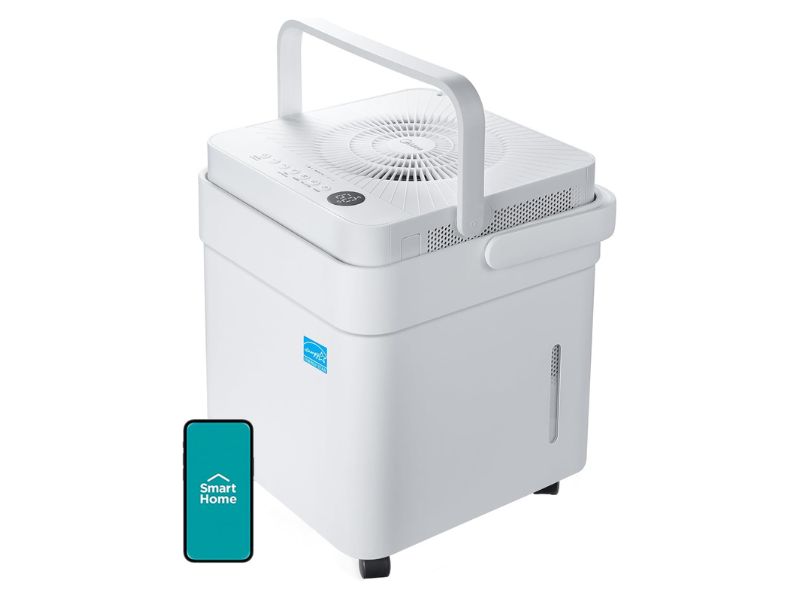
The Midea Cube 20-Pint offers compressor-level moisture removal in a smaller-capacity format. It is a practical match for 2×4, 3×3, and moderate 4×4 environments where a full-size 35- or 50-pint machine would occupy too much space or cycle for very short periods.
Midea lists a 20-pint daily capacity, residential coverage up to 1,500 square feet, a 35% to 85% humidity adjustment range, smart app control, and a 3.2-gallon removable bucket. It also supports continuous drainage with an included hose.
The oversized tank is one of its biggest advantages. Many small compressor dehumidifiers have modest buckets that fill quickly. The Cube design can run longer between emptying sessions when continuous drainage is unavailable.
The 20-pint capacity gives it far more practical value than a tiny thermoelectric unit in a planted tent. It can respond to watering events, nighttime humidity increases, and moisture from a moderate canopy without taking the electrical and heat penalty of a 50-pint model.
Independent testing measured a 262-watt power draw at 50% relative humidity and found it to be one of the strongest-performing small dehumidifiers tested. The same review found its built-in hygrometer reading remained within approximately 1% of the reference measurement during testing.
The machine is still fairly heavy at roughly 33 pounds. “Small” refers to its capacity class and compact design, not a lightweight tabletop form.
Inside a 2×2 tent, it may take up too much valuable floor area. In that case, place it in the surrounding room and use the tent’s exhaust fan to exchange air. It becomes more suitable inside a 3×3 or 4×4 if plant containers and reservoirs leave enough clearance around the air intake.
Do not place it directly against reflective tent fabric. The air intake and outlet need open space to prevent recirculation and overheating.
Key specifications
- Rated capacity: 20 pints per day
- Stated residential coverage: Up to 1,500 sq. ft.
- Humidity setting: 35% to 85%
- Bucket capacity: Approximately 3.2 gallons
- Drainage: Bucket or gravity hose
- Smart control: Yes
- ENERGY STAR certified: Yes
- Auto shutoff: Yes
- Weight: Approximately 33 pounds
- Warranty: One year
Pros
- Strong performance for a small-capacity compressor unit
- Large bucket
- Continuous drainage included
- Smart monitoring and control
- Lower power draw than larger compressors
- Accurate humidistat in independent testing
- Useful for medium and small setups
Cons
- Too large for many 2×2 tent interiors
- Heavier than its compact appearance suggests
- Still adds heat to the grow space
- One-year warranty
Who should buy it?
The 20-Pint Cube suits growers who need real compressor performance without moving to a 35- or 50-pint machine. It is most practical in a small lung room, 3×3 tent, 4×4 tent, or lightly planted 5×5.
4. GoveeLife H7151 Smart 50-Pint Dehumidifier — Best Smart Dehumidifier
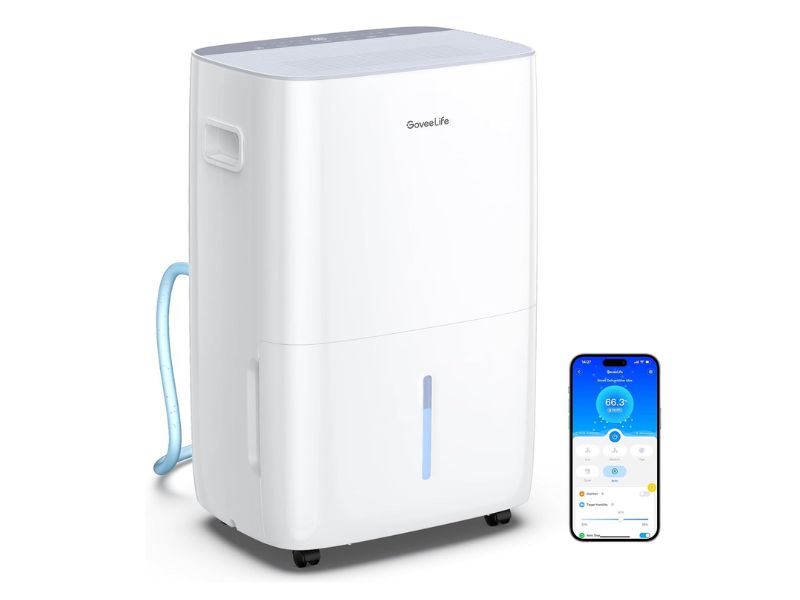
The GoveeLife H7151 focuses heavily on remote monitoring and automation. It supports app, touch, and voice controls, making it suitable for growers who want to check or adjust humidity without entering the grow room.
The Amazon listing identifies a 50-pint DOE capacity, coverage up to 4,500 square feet, a two-gallon tank, three fan speeds, auto defrost, auto restart, auto shutoff, and continuous drainage. It supports Alexa, Google Assistant, IFTTT, Bluetooth, and 2.4 GHz Wi-Fi.
Its Auto Mode lets you choose a target between 30% and 80% in 5% steps. The machine cycles based on the selected target. It also has a continuous high-output Laundry Drying Mode, which can be useful for pulling humidity down quickly after heavy watering.
The app provides schedules, remote controls, and full-bucket alerts. Growers already using Govee temperature and humidity sensors may find the ecosystem easy to manage from one interface.
Continuous drainage is available with the included hose or a compatible garden hose. The drain route must slope downward because the standard H7151 does not have a built-in pump. The manual also recommends keeping the hose short, free of kinks, and below the drain outlet.
Performance is strong, but the internal hygrometer deserves attention. Independent testing found that its humidity reading could run about 5% to 7% higher than the reference measurement. That does not prevent moisture removal, but it can cause the unit to operate longer than expected when Auto Mode relies only on its built-in sensor.
Pair it with a separate calibrated hygrometer at canopy level. You can then adjust the machine’s target to account for any consistent offset.
The H7151 carries a 12-month limited warranty and lifetime technical support according to its manual.
Key specifications
- Rated capacity: 50 pints per day under DOE conditions
- Stated residential coverage: Up to 4,500 sq. ft.
- Tank: Approximately 2 gallons
- Humidity setting: 30% to 80%
- Fan speeds: Three
- Drainage: Bucket or gravity hose
- App control: Yes
- Voice control: Alexa and Google Assistant
- IFTTT support: Yes
- Auto defrost and restart: Yes
- Warranty: 12 months
Pros
- Strong smart-home integration
- App schedules and remote adjustment
- Full-bucket notifications
- High moisture-removal capacity
- Three fan speeds
- Auto restart and auto defrost
- Continuous drainage included
Cons
- Built-in humidity reading may require calibration against another sensor
- Gravity drainage only on the H7151
- Large unit for use inside a tent
- Requires 2.4 GHz Wi-Fi for full connectivity
- Higher power draw than smaller machines
Who should buy it?
The H7151 fits smart-home users, remote grow spaces, large tents, and lung rooms where app alerts and scheduling matter as much as raw moisture removal.
5. Frigidaire 22-Pint Wi-Fi Dehumidifier — Best Quiet Option
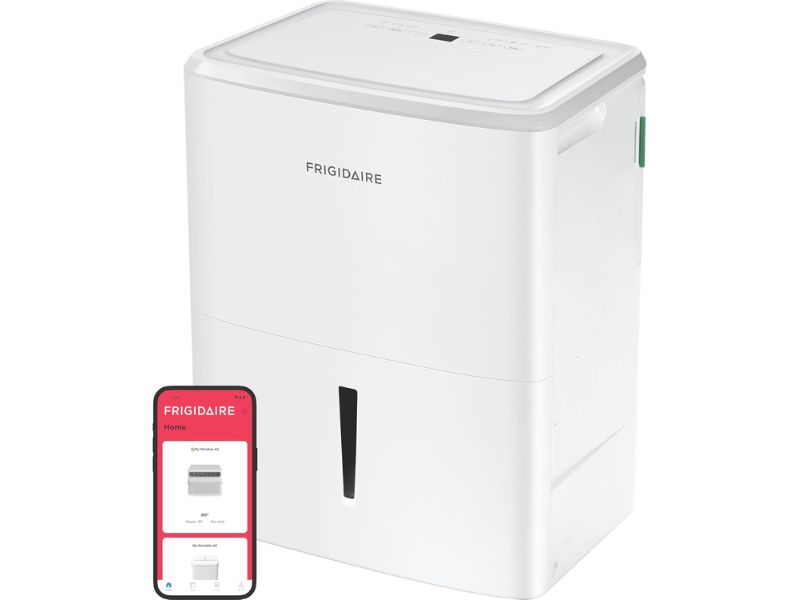
The Frigidaire 22-Pint Wi-Fi model is a good fit for growers who need compressor performance but want to limit fan and compressor noise near a bedroom, office, or shared living area.
Frigidaire lists the current 22-pint model at approximately 43 dBA, with three fan speeds, Wi-Fi connectivity, ENERGY STAR certification, custom humidity control, automatic shutoff, and a washable filter.
A 43 dBA rating is quiet for a compressor dehumidifier, though the perceived sound will depend on fan speed, floor construction, nearby walls, and vibration. Thin tent poles or hollow floors can amplify low-frequency compressor noise.
Place the unit on a firm, level surface. A rubber appliance mat can reduce vibration transfer, but it must not block the intake or cause the machine to sit unevenly.
The 22-pint capacity is appropriate for a small or moderate grow setup. It offers much stronger extraction than a thermoelectric mini model while using less space and power than a 50-pint unit.
Wi-Fi control makes it possible to change settings from outside the grow room. That reduces the need to open the tent or disturb a dark cycle just to inspect the dehumidifier.
The unit supports continuous drainage, but verify whether a hose is included with the specific Amazon package. Product bundles can change, and some listings require a separately purchased hose.
Its lower capacity means recovery may be slower after a major humidity spike. A dense 5×5 canopy, large hydroponic reservoir, or multi-tent lung room may exceed what a 22-pint unit can manage efficiently.
Key specifications
- Rated capacity: 22 pints per day
- Noise rating: Approximately 43 dBA
- Fan speeds: Three
- Smart control: Wi-Fi
- ENERGY STAR certified: Yes
- Humidity adjustment: Yes
- Drainage: Bucket or continuous drain connection
- Auto shutoff: Yes
- Washable filter: Yes
Pros
- Lower stated noise than many full-size models
- Compressor-based moisture removal
- Wi-Fi control
- Three fan speeds
- ENERGY STAR certified
- Suitable for small and moderate grow environments
- Washable filter
Cons
- Lower capacity than 35- or 50-pint units
- May struggle with a dense large canopy
- Compressor vibration can still be noticeable
- Drain hose inclusion may vary by listing
Who should buy it?
This model suits apartment growers, bedroom-adjacent tents, home offices, and moderate 2×4, 3×3, or 4×4 setups where noise is a major concern.
6. Waykar 34-Pint ENERGY STAR Dehumidifier — Best Energy-Efficient Option
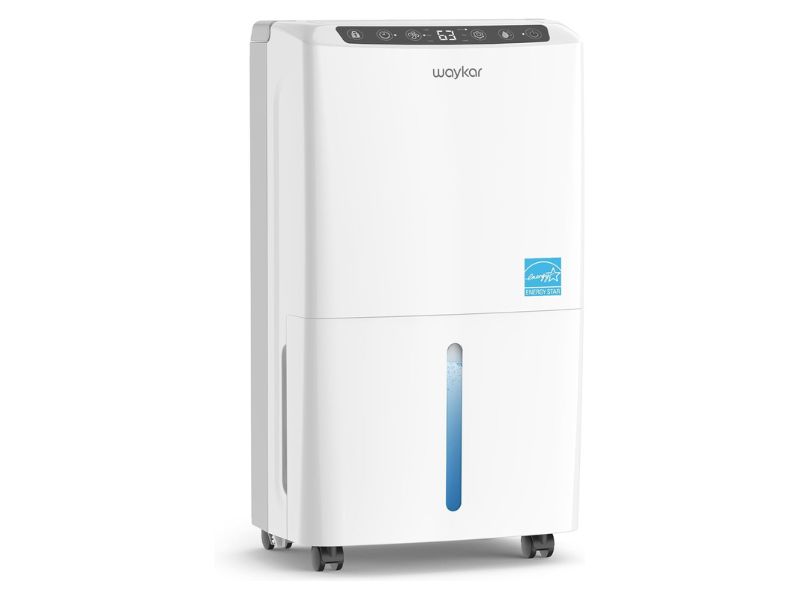
The Waykar 34-Pint model targets users who need medium-capacity moisture removal without the electrical demand of a large 50-pint appliance.
Waykar identifies this model as a 2025 ENERGY STAR Most Efficient unit. It is rated to remove up to 34 pints per day under 95°F and 90% relative-humidity conditions, cover residential spaces up to 2,000 square feet, and adjust humidity from 30% to 80%. (Waykar)
The official specifications list a 0.6-gallon tank, gravity drainage, auto defrost, dimensions of approximately 10.7 by 8.15 by 19.29 inches, and a weight around 24.25 pounds. Its relatively narrow footprint is useful when floor space is limited.
The 34-pint number needs careful interpretation because Waykar presents it at warm, very humid conditions. It should not be directly compared with a 35-pint DOE rating unless both capacities use the same testing method.
This does not make the unit ineffective. It simply means buyers should avoid comparing the largest number printed on two product listings without checking the test conditions.
Its auto-defrost function can help protect performance in cooler rooms. Compressor dehumidifiers lose efficiency as temperatures fall because moisture can freeze on the evaporator coil.
The small 0.6-gallon bucket will fill much faster than the large reservoir on a Midea Cube. Continuous drainage is strongly preferred for a grow tent with regular moisture production.
Waykar provides a 30-day return period, one-year warranty, an optional second-year extension, and lifetime technical support according to its product page.
Key specifications
- Rated capacity: 34 pints per day at 95°F and 90% RH
- Stated residential coverage: Up to 2,000 sq. ft.
- Humidity setting: 30% to 80%
- Tank capacity: Approximately 0.6 gallons
- Drainage: Bucket or gravity hose
- Auto defrost: Yes
- ENERGY STAR recognition: 2025 Most Efficient
- Dimensions: Approximately 10.7 x 8.15 x 19.29 inches
- Weight: Approximately 24.25 pounds
Pros
- ENERGY STAR Most Efficient recognition
- Narrow footprint
- Adjustable humidistat
- Continuous gravity drainage
- Auto defrost
- Lighter than many medium-capacity units
- Broad humidity setting range
Cons
- Capacity is stated at warm, highly humid conditions
- Small water tank
- No built-in drain pump
- Less established independent testing than some larger brands
Who should buy it?
The Waykar suits growers who need a medium-capacity compressor unit, want lower energy consumption, and can connect a continuous gravity drain.
7. TABYIK 35-Ounce Mini Dehumidifier — Best Budget Option
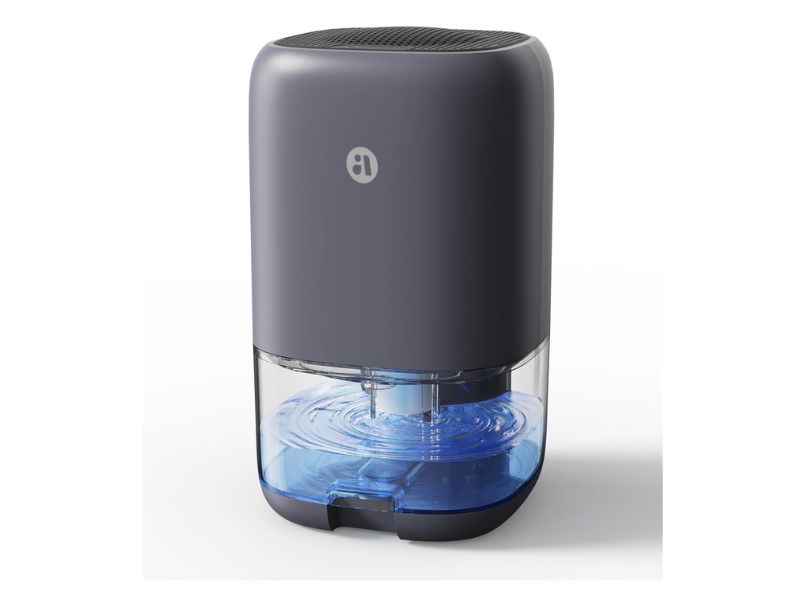
The TABYIK 35-Ounce is a compact thermoelectric dehumidifier intended for very small spaces. It costs less and uses less energy than a compressor unit, but its moisture-removal capacity is also much lower.
TABYIK markets the unit for spaces up to 280 square feet. It uses semiconductor cooling, includes a 35-ounce tank, and automatically shuts off when the reservoir is full. The brand states that it can collect around 11 ounces of water per day under warm, highly humid test conditions. (Tabyik-tec)
This type of dehumidifier can be useful in a propagation cabinet, clone area, storage enclosure, or lightly planted 2×2 tent. It may also help reduce localized condensation when the room is only slightly above the desired humidity.
It is not an equal substitute for a 20-, 35-, or 50-pint compressor model. Eleven ounces is less than one pint per day. A compressor machine rated at 20 pints can remove many times more moisture under its specified conditions.
The TABYIK is quiet because it has no compressor. Manufacturer information for the same DH-CS01 design identifies an operating level around 28 dB and automatic shutoff protection.
The small reservoir requires manual emptying, and the unit does not offer standard continuous drainage. It also lacks a true adjustable humidistat that can maintain a precise target.
For a mature flowering canopy, humid climate, hydroponic reservoir, or 4×4 tent with several large plants, the TABYIK is likely to run continuously without bringing humidity under control.
Key specifications
- Technology: Thermoelectric semiconductor
- Tank capacity: 35 ounces
- Stated coverage: Up to 280 sq. ft.
- Maximum stated collection: Around 11 ounces per day under warm, humid conditions
- Noise: Approximately 28 dB
- Auto shutoff: Yes
- Continuous drain: No
- Adjustable humidistat: No
Pros
- Low purchase price
- Quiet operation
- Compact and lightweight
- Low electrical consumption
- Automatic shutoff
- Easy to move
Cons
- Very limited moisture-removal capacity
- No continuous drain
- No precise humidity target
- Small tank
- Not suitable for a heavily planted 4×4 or larger tent
Who should buy it?
The TABYIK works best for tiny enclosures, seedlings, propagation areas, or mild humidity problems. It should not be selected for a high-moisture flowering tent simply because its stated coverage number looks large.
What Is the Best Dehumidifier for Grow Tent Use?
The best dehumidifier for a grow tent is a unit that can remove moisture faster than the plants, growing media, and reservoirs add it during the most humid part of the cycle.
For a lightly planted 2×2 tent, a mini thermoelectric unit may provide enough support when the surrounding room is already dry. A planted 3×3 or 4×4 generally benefits more from a 20- to 35-pint compressor unit.
Large tents, multiple tents, and high-transpiration environments may require 35 to 50 pints per day or more. A unit installed in a shared lung room may need to manage the moisture produced by every connected tent.
The essential features are:
- Adjustable humidistat
- Continuous drainage
- Auto shutoff
- Auto restart
- Auto defrost
- Washable filter
- Adequate airflow clearance
- Capacity stated under a recognized test condition
- Appropriate electrical certification
- Manageable heat and noise
A built-in pump is valuable only when the drain point is above the machine. Gravity drainage is simpler, quieter, and easier to maintain when the hose can run downhill.
Why Grow Tents Need Humidity Control
Plants release water vapor through microscopic openings in their leaves. This process, called transpiration, moves moisture from the root zone into the air.
Water also evaporates from soil, coco coir, hydroponic reservoirs, wet trays, and exposed runoff. The moisture accumulates quickly inside reflective tent walls when ventilation is limited.
High humidity can keep leaf surfaces and dense plant tissue wet for longer periods. Penn State Extension notes that improved air circulation and reduced relative humidity inhibit gray mold, or Botrytis, activity. Ventilation and early-day humidity reduction are also important parts of greenhouse disease control.
Excess humidity may contribute to:
- Condensation on tent walls
- Powdery mildew
- Gray mold
- Bud or flower rot
- Algae on wet surfaces
- Slow drying of growing media
- Musty odors
- Fungus gnat activity
- Corrosion on equipment
- Water collecting near electrical connections
Oklahoma State University recommends ventilation and horizontal airflow to lower humidity and keep greenhouse surfaces dry. A dehumidifier can support those measures, but it should not replace air movement and sanitation.
What Humidity Level Should a Grow Tent Have?
There is no universal humidity target for every plant. Species, growth stage, temperature, airflow, leaf density, and disease sensitivity all matter.
Use the ranges below as practical starting points and confirm the requirements of the crop you are growing.
Humidity for Seedlings
Many seedlings and newly rooted cuttings prefer higher humidity because their small root systems cannot replace water as quickly as established plants.
A starting range around 60% to 70% relative humidity is common for young plants. Delicate cuttings may initially require more, followed by a gradual reduction as roots establish.
Do not keep seedlings permanently wet. Stagnant air and saturated surfaces can encourage damping-off and other fungal problems.
Humidity for Vegetative Growth
A range around 50% to 60% RH works for many established indoor plants during vegetative growth.
Oklahoma State University notes that many common houseplants prosper around 50% to 60% relative humidity. Species adapted to dry or tropical environments may need different conditions.
Dense foliage needs consistent circulation. A sensor in open air may show 55% while humidity between overlapping leaves is much higher.
Humidity for Flowering Plants
Dense flowers trap moisture more easily than open foliage. A starting range around 40% to 50% RH is often used for flowering and fruiting plants that are vulnerable to fungal disease.
The safest level depends on flower density, temperature, genetics, airflow, and local disease pressure.
Lower is not always better. Excessively dry air can increase water loss and plant stress. Aim for control and consistency rather than chasing the lowest possible reading.
Humidity During Lights-Off Periods
Relative humidity often rises after the grow light switches off.
The cooler air can hold less water vapor, and plant surfaces cool quickly. The same amount of moisture in the air then produces a higher relative-humidity reading.
At the same time, the dehumidifier may become less efficient if the room temperature falls significantly.
Measure humidity during both light and dark periods. A system that maintains 50% during the day may climb above 65% at night.
Starting the dehumidifier shortly before lights-off or placing it in an automatic humidity mode can reduce that spike.
What Size Dehumidifier Do You Need for a Grow Tent?
Tent dimensions provide only the starting point.
Also consider:
- Number of plants
- Total leaf area
- Plant growth stage
- Watering volume
- Open reservoirs
- Hydroponic systems
- Room temperature
- Outside humidity
- Tent exhaust rate
- Whether the room is sealed
- How low you need the RH
- Drainage availability
2×2 Grow Tent
A 2×2 contains only four square feet of floor area.
A thermoelectric unit may help when the tent contains seedlings, small herbs, or one lightly watered plant and the lung room is already controlled.
A mature, heavily watered plant can still overwhelm a mini unit. A compact compressor dehumidifier outside the tent may be more effective.
2×4 Grow Tent
A 2×4 provides eight square feet and can hold a meaningful canopy.
A small compressor model around 20 pints is a safer starting point when humidity is consistently high. A mini unit may only be enough for propagation or mild seasonal moisture.
3×3 Grow Tent
A 3×3 has nine square feet.
A 20-pint compressor dehumidifier can work for many moderate setups. Move toward 30 or 35 pints if the room is humid, the canopy is dense, or the tent contains a hydroponic reservoir.
4×4 Grow Tent
A 4×4 covers 16 square feet.
A 20- to 35-pint unit is a practical range for many 4×4 setups. The lower end suits moderate plant counts and controlled rooms. The upper end offers faster recovery and more reserve capacity.
5×5 Grow Tent
A 5×5 provides 25 square feet and can support a larger canopy.
A 35-pint machine may be adequate in a conditioned lung room. A 50-pint model provides more reserve for dense plants, humid climates, or larger watering volumes.
8×8 and 10×10 Grow Tents
Large tents can produce several gallons of moisture over time.
A 50-pint residential dehumidifier may be the starting point rather than the final solution. Commercial or ducted equipment may be more appropriate when the room is sealed or contains a high-density canopy.
Multiple-Tent Grow Room
Calculate the moisture load of the entire room, not each tent separately.
If every tent exhausts into the same lung room, one centralized unit may be simpler than placing a small dehumidifier inside every tent.
Use multiple sensors to identify wet zones and confirm that air circulates between the tents and dehumidifier.
Understanding Dehumidifier Pint Ratings
Pints per day describe the amount of water a machine removes under specified test conditions.
The rating does not mean the machine will always collect that exact amount in your grow room.
Removal slows when:
- The room is cooler
- Starting humidity is lower
- Airflow is restricted
- The filter is dirty
- The coil begins to frost
- The humidistat cycles the compressor
- The tent receives constant humid outside air
Removal increases when the air is warm and heavily saturated.
Two products may advertise similar capacities but use different test conditions. One may list a DOE rating at 65°F and 60% RH, while another highlights output at 95°F and 90% RH.
Compare like with like. A large number measured under hotter and wetter conditions does not automatically indicate a stronger machine in a normal grow room. DOE standards normalize capacity to specified temperature and humidity so models can be compared more consistently.
Slight oversizing is useful because the unit can recover quickly and cycle off. Extreme oversizing can create short cycles, larger temperature swings, unnecessary cost, and poor use of limited floor space.
Compressor vs Thermoelectric Dehumidifier
Compressor Dehumidifiers
A compressor dehumidifier pulls humid air across a cold evaporator coil.
Water condenses onto the coil and drains into a bucket or hose. The air then passes over a warmer condenser coil before returning to the room.
Advantages include:
- High moisture-removal capacity
- Adjustable humidity control
- Continuous drainage
- Better performance in medium and large spaces
- Faster recovery after watering
- Greater suitability for mature canopies
Disadvantages include:
- Compressor and fan noise
- Higher power consumption
- More heat
- Larger physical size
- Reduced efficiency in cool conditions
Thermoelectric Dehumidifiers
A thermoelectric unit uses a Peltier cooling element rather than a refrigerant compressor.
Advantages include:
- Quiet operation
- Compact design
- Low power use
- Low purchase price
- Easy placement in small spaces
Disadvantages include:
- Very low daily moisture removal
- Small tanks
- Limited humidity control
- Poor performance in larger tents
- Slow response to heavy moisture loads
Which Type Is Better for a Grow Tent?
Choose a compressor dehumidifier for most planted 3×3, 4×4, 5×5, and larger tents.
A thermoelectric model is best reserved for propagation cabinets, dry storage, lightly planted tiny tents, or minor humidity correction.
Should the Dehumidifier Go Inside or Outside the Grow Tent?
Placing It Inside the Tent
Inside placement gives the machine direct access to humid air.
Benefits include:
- Faster response
- Direct moisture removal
- Less dependence on room air exchange
- Simple humidity targeting
Drawbacks include:
- Lost floor space
- Added heat near plants
- Strong dry air blowing on one section
- Noise and vibration inside the enclosure
- Electrical equipment closer to water
- Restricted air intake
Inside placement works best when the tent is large enough to maintain the manufacturer’s required clearances.
Placing It Outside the Tent
The dehumidifier can control the surrounding lung room while the tent exhaust and intake exchange air with that room.
Benefits include:
- More plant space
- Easier bucket access
- Safer drainage
- Less direct heat on the canopy
- Easier filter maintenance
- One unit can support several tents
Drawbacks include:
- The complete room must be controlled
- Open doors and windows add moisture
- Poor tent airflow may limit effectiveness
- The unit may need more capacity
Best Placement Strategy
For a 2×2 or 2×4, outside placement is usually more practical.
A 3×3 or 4×4 may support either arrangement, depending on plant layout and unit dimensions.
For 5×5 and larger tents, inside placement becomes physically easier, but a lung-room installation still provides better access and heat management.
Multiple tents normally benefit from one properly sized centralized unit unless their environments require different humidity targets.
Continuous Drainage vs Water Tank
A dehumidifier can collect water in a removable bucket or send it through a hose.
Manual Bucket Drainage
Bucket drainage requires no plumbing.
It is suitable when:
- The machine runs occasionally
- You check it every day
- No drain is nearby
- The moisture load is modest
The main problem is unattended operation. Once the tank fills, the machine shuts off and humidity begins climbing.
Gravity Drainage
Gravity drainage sends water through a hose to a lower location.
Possible drain points include:
- Floor drain
- Low sink
- Shower drain
- Condensate collection container
- Suitable wastewater line
The hose must slope downward continuously. Flat sections, upward loops, and kinks can trap water and stop drainage.
Pump Drainage
A pump moves water upward or over a longer route.
Use it when:
- The sink is higher than the unit
- No floor drain is available
- Water must pass through a window
- Gravity routing is impossible
Pumps require more cleaning and add another mechanical component. Use gravity whenever the layout allows it.
How Much Electricity Does a Grow Tent Dehumidifier Use?
Use this formula:
Wattage ÷ 1,000 × daily operating hours × electricity rate × 30
The compressor does not always run for every hour the machine is switched on. Actual cost depends on its duty cycle.
At an electricity rate of $0.16 per kWh:
200-Watt Unit Running 12 Hours Daily
0.2 × 12 × $0.16 × 30 = $11.52 per month
350-Watt Unit Running 12 Hours Daily
0.35 × 12 × $0.16 × 30 = $20.16 per month
500-Watt Unit Running 12 Hours Daily
0.5 × 12 × $0.16 × 30 = $28.80 per month
500-Watt Unit Running Continuously
0.5 × 24 × $0.16 × 30 = $57.60 per month
Real cost may be lower because the compressor cycles off after reaching the target. It may be higher if the surrounding room constantly introduces new moisture.
An inexpensive undersized unit can cost more to operate over time if it runs continuously without achieving the target. A larger efficient unit may remove the same amount of water faster and spend more time switched off.
How Much Heat Does a Dehumidifier Add?
A dehumidifier releases heat from its electrical consumption and refrigeration cycle.
The outgoing air normally feels warmer than the incoming air.
Inside a small tent, that temperature increase can be significant. The result may be:
- Higher canopy temperature
- Faster water consumption
- Increased exhaust-fan operation
- Lower relative humidity partly caused by heat
- Greater air-conditioning demand
A separate air conditioner may need to remove the added heat in a sealed grow room.
Placing the dehumidifier outside the tent does not make the heat disappear. It moves the heat into the lung room, where it is usually easier to manage.
DOE building research notes that dehumidifiers reject refrigerant-cycle heat back into the conditioned space, which can create a negative cooling effect even when the unit removes moisture efficiently.
Important Features to Consider Before Buying
Moisture-Removal Capacity
Choose enough capacity for the peak moisture period, not only the average daytime reading.
Nighttime humidity, watering events, and late-stage canopy density often produce the highest load.
Built-In Humidistat
A humidistat allows the unit to cycle around a target.
Check its accuracy against a separate hygrometer. A consistent 5% offset can be managed by adjusting the setting.
Continuous Drainage
Continuous drainage is one of the most valuable grow-room features.
Confirm:
- Hose size
- Hose inclusion
- Outlet position
- Maximum length
- Required slope
- Leak protection
Drain Pump
A pump is useful for upward drainage.
It is not necessary when a floor drain or lower collection point is nearby.
Auto Shutoff
The machine should stop when the bucket is full or incorrectly installed.
This reduces overflow risk.
Auto Restart
Auto restart restores operation after a power interruption.
Check whether the machine also remembers the previous target and fan setting.
Automatic Defrost
Defrost mode prevents ice from blocking the evaporator coil in cooler conditions.
Performance still falls as temperature drops, even with defrost.
Fan Speeds
Multiple speeds let you balance moisture removal and noise.
High speed improves airflow. Low speed may be better during quiet periods after the room has reached its target.
Noise Level
Check decibel ratings and independent measurements.
Noise quality also matters. A steady fan sound may be easier to tolerate than rattling or compressor vibration.
Energy Efficiency
Look for ENERGY STAR certification and compare capacity under the same test conditions.
Efficiency is especially important when the machine operates daily.
Washable Filter
The filter protects the coil from dust and debris.
A dirty filter reduces airflow and moisture removal.
Portability
Casters and handles help when cleaning or rearranging the grow space.
Remember that a full water bucket adds considerable weight.
Smart Controls
Useful smart functions include:
- Remote power
- Humidity history
- Target adjustment
- Scheduling
- Full-bucket alerts
- Temperature alerts
- Voice control
Smart features do not compensate for inadequate extraction capacity.
Warranty and Support
Check:
- Warranty duration
- Authorized seller requirements
- Return shipping
- Replacement parts
- Customer support contact
- Registration requirements
How to Set Up a Dehumidifier in a Grow Tent
First, measure the tent and surrounding room. Record temperature and humidity during both light and dark periods.
Place the unit upright on a level, dry surface. If it was transported on its side, follow the manufacturer’s waiting period before switching it on.
Maintain the required clearance around the intake and outlet. Do not press it against reflective fabric, plant containers, nutrient bottles, or a tent wall.
Connect the drain hose securely. Run it downhill to the drain without loops or kinks. Test it by operating the unit and checking every connection for leaks.
Place a separate hygrometer at canopy height. Do not position it:
- Directly in the dry exhaust air
- Against wet soil
- Over a reservoir
- Beside the tent intake
- In direct contact with leaves
Set a moderate initial target. Allow the machine several hours to stabilize the environment before making large adjustments.
Run circulation fans to mix the air. Without circulation, dry air may remain near the dehumidifier while humid pockets develop inside the canopy.
Check nighttime conditions. Adjust the target, fan speed, or schedule if humidity climbs sharply after lights-off.
Clean the filter according to the manual and inspect the drain hose regularly.
Where Should You Place the Humidity Sensor?
Place the primary sensor near the center of the canopy, shaded from direct radiant heat and away from strong fan airflow.
A second sensor near the tent’s lower area can show how conditions change vertically.
For a large or dense canopy, use sensors:
- Above the canopy
- Inside or beside dense foliage
- Near the air intake
- Near the exhaust side
Compare the readings to identify stagnant zones.
Do not place the only sensor beside the dehumidifier. The machine’s warm, dry outlet air can make the room appear drier than the plants experience.
Calibrate inexpensive hygrometers or compare them against a trusted reference. Two unverified sensors can differ by several percentage points.
Why Is My Grow Tent Still Humid With a Dehumidifier?
The Unit Is Undersized
The plants may release moisture faster than the machine removes it.
Move to a larger compressor model or reduce the moisture entering the space.
The Tank Is Full
A full bucket activates auto shutoff.
Connect continuous drainage or empty it more often.
The Hose Is Blocked
A kink, upward loop, clogged adapter, or submerged hose end can stop gravity drainage.
The Filter Is Dirty
Restricted airflow reduces coil performance.
Clean and dry the filter before reinstalling it.
The Intake Is Blocked
Tent fabric, containers, or walls may obstruct the air path.
Air Circulation Is Poor
The dehumidifier may repeatedly process air from one corner while humid air remains trapped between plants.
Outside Air Is Humid
A strong exhaust fan can continuously pull moist outdoor or basement air into the tent.
You may need to dehumidify the lung room.
Plants Are Producing More Moisture
Humidity rises as plant size and leaf area increase.
A unit that worked during early vegetation may become inadequate later.
The Room Is Too Cool
Compressor dehumidifiers remove less moisture in cool environments and may enter defrost mode frequently.
The Humidistat Is Inaccurate
Compare the internal reading with a calibrated canopy sensor.
The Compressor Is Not Running
A fan may operate even when the compressor is delayed, defrosting, or faulty.
Listen for the compressor and check the manual’s troubleshooting section.
Common Grow Tent Dehumidifier Mistakes
A common mistake is buying a thermoelectric unit based only on its square-foot claim. Always check actual daily water-removal capacity.
Other mistakes include:
- Blocking the intake
- Aiming hot exhaust directly at plants
- Placing the unit beside an open reservoir
- Ignoring the heat it produces
- Allowing the bucket to fill overnight
- Routing the hose uphill
- Using an ungrounded extension cord
- Placing power connections on the floor
- Setting humidity too low
- Measuring only near the tent wall
- Ignoring dark-period humidity
- Failing to clean the filter
- Choosing a pump when gravity drainage is available
- Running a mini unit continuously in a high-moisture tent
- Trusting one uncalibrated sensor
The dehumidifier should be part of a complete humidity-control system that includes ventilation, circulation, temperature control, careful watering, and sanitation.
Signs Your Grow Tent Humidity Is Too High
Possible signs include:
- Condensation on walls or ducts
- Water droplets on leaves
- Musty odor
- Powdery growth on foliage
- Gray or brown mold on flowers
- Slow-drying growing media
- Algae on trays or reservoirs
- Rust or corrosion
- Fungus gnats
- High nighttime readings
- Wet areas inside dense foliage
High humidity does not guarantee disease, but it creates conditions that support many fungal problems. Penn State Extension notes that Botrytis activity is reduced by better circulation and lower relative humidity.
Signs Humidity Is Too Low
Possible signs include:
- Dry or curled leaf edges
- Rapid wilting
- Plants using water unusually quickly
- Slow seedling development
- Very dry growing media
- Leaf tips becoming crisp
- Increased irrigation demand
- Reduced vigor
These symptoms can also come from heat, root damage, excessive fertilizer, or strong airflow. Check the complete environment before blaming humidity alone.
Dehumidifier vs Exhaust Fan for Grow Tent Humidity
An exhaust fan removes humid air from the tent and replaces it with air from the surrounding room.
This works well when the incoming air is cooler and drier than the tent air.
A dehumidifier removes water from the air without requiring the complete air volume to be replaced.
Use exhaust alone when:
- The lung room is dry
- Outdoor humidity is low
- Heat removal is also needed
- The tent is not sealed
Use a dehumidifier when:
- Incoming air is already humid
- Nighttime humidity remains high
- The room is sealed
- Several tents exhaust into one space
- Odor control limits ventilation
- Temperature is acceptable but moisture is not
Many setups use both. The exhaust controls heat and gas exchange, while the dehumidifier lowers moisture in the surrounding room.
Can You Use an Air Conditioner Instead?
An air conditioner removes some moisture as it cools the air.
It may provide enough dehumidification when the cooling load is high and the compressor runs for long periods.
An air conditioner becomes less effective for humidity control when:
- The room is already cool
- It cycles off quickly
- Nighttime temperatures are low
- The moisture load remains high without much heat
- The unit is oversized
A dedicated dehumidifier can continue removing moisture without trying to cool the room.
Using both may be necessary in a sealed, high-output grow room. The dehumidifier adds heat, and the air conditioner removes that heat.
How to Clean and Maintain a Grow Tent Dehumidifier
Turn the machine off and unplug it before cleaning.
Empty the bucket and wash it with mild soap and water. Rinse thoroughly and allow it to dry.
Remove the filter and follow the manufacturer’s instructions. Some filters can be vacuumed, while others can be washed and fully dried.
Clean dust from:
- Air intake
- Air outlet
- Casters
- Control panel
- Drain connection
- Exterior grille
Inspect the hose for:
- Algae
- Mold
- Kinks
- Cracks
- Loose fittings
- Standing water
Do not spray water into the appliance or use it without the filter.
Test the bucket float and auto-shutoff function periodically.
Keep the unit upright during operation and storage.
Is It Safe to Leave a Dehumidifier Running All Night?
A properly installed dehumidifier can run overnight when the manufacturer allows continuous operation.
Before leaving it unattended, confirm that:
- The outlet is grounded
- The circuit can support the load
- The power cord is undamaged
- The filter is clean
- Air clearances are maintained
- The bucket shutoff works
- The drain hose does not leak
- The hose outlet cannot overflow
- Water cannot reach electrical connections
- The unit is not covered by tent fabric
- The manufacturer permits continuous use
Avoid lightweight extension cords and overloaded power strips.
A continuous gravity drain or tested pump system is safer for unattended use than relying on a small bucket.
Final Buying Checklist
Before purchasing, confirm the following:
- The daily pint rating and its test conditions
- Tent and lung-room size
- Peak nighttime humidity
- Plant count and canopy density
- Soil, coco, or hydroponic setup
- Available floor space
- Inside or outside placement
- Gravity drain or pump requirement
- Target humidity range
- Noise tolerance
- Expected electrical use
- Heat-management capacity
- Auto restart after power failure
- Auto defrost for cool rooms
- Filter accessibility
- Hose inclusion
- Electrical certification
- Warranty and authorized seller status
Choose based on the complete growing environment rather than a residential square-foot claim.
Conclusion
Selecting the best dehumidifier for grow tent humidity control requires more than comparing tank sizes or advertised room coverage. The correct unit must remove moisture faster than the plants and growing system produce it, especially during watering events and the lights-off period.
Small propagation tents may need only limited moisture removal. Established canopies, hydroponic reservoirs, larger tents, and humid lung rooms usually need a compressor-based unit with an adjustable humidistat and continuous drainage.
Measure humidity at canopy level, check both daytime and nighttime conditions, and leave enough airflow clearance around the machine. Account for the heat and electricity a dehumidifier adds, and use ventilation and circulation fans to prevent damp pockets inside the canopy.
A properly sized dehumidifier should maintain a stable target without running endlessly, overheating the tent, or filling its tank several times a day. Matching capacity, drainage, placement, and controls to the real moisture load will produce more consistent humidity and reduce the conditions that support mold, mildew, and condensation.

I’m Maya L. Greenwood, a lifelong plant lover who believes anyone can grow something beautiful with the right guidance. After years of testing soil mixes, pruning methods, irrigation tricks, and pest-safe solutions, I started EasyGardenTips.com to turn hard-won lessons into step-by-step advice. From seed starting and container gardens to composting and seasonal checklists, my goal is to make gardening simple, sustainable, and fun.