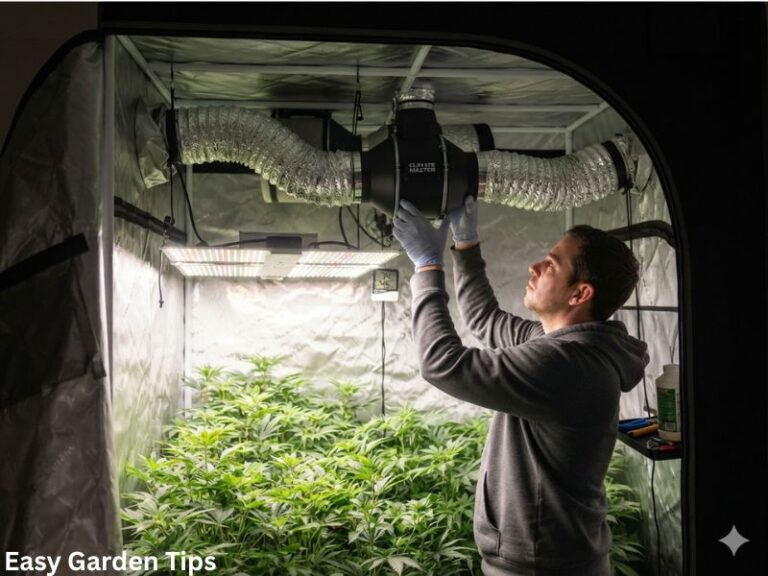
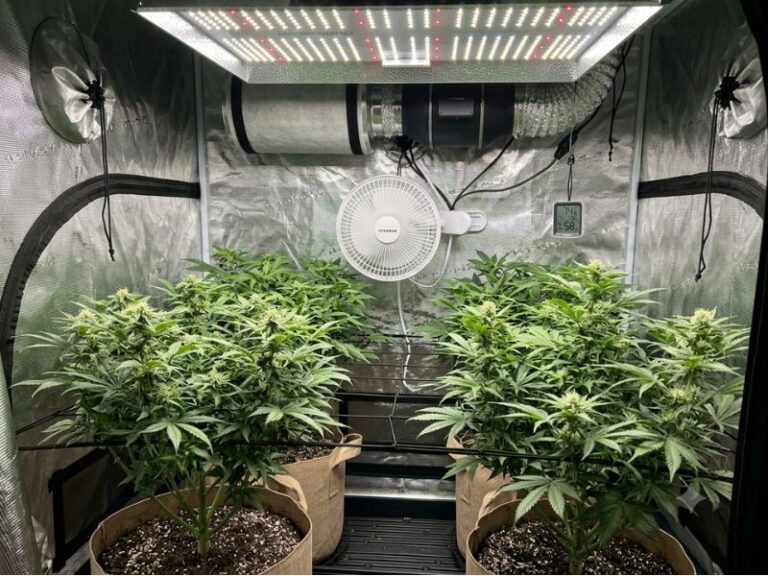
15 Best Grow Lights for a 4×4 Tent: Inexpensive Led Grow Light
Finding the best grow light for 4×4 tent setups is not simply a matter of choosing the fixture with the highest advertised wattage.
A good 4×4 grow light must distribute usable light across the canopy, provide a suitable spectrum for every growth stage, and deliver enough intensity without creating an extreme hotspot in the center of the tent.
Heat output, dimming control, efficiency, fixture size, and long-term reliability also matter, especially when the light may run for 12 to 18 hours each day.
My top recommendation for most growers is the MARS HYDRO TS3000 420W LED Grow Light. Its full-spectrum output, adjustable dimming, and 420-watt power draw make it suitable for seedlings, vegetative plants, and flowering crops in a 4×4 grow tent.
The single-board design is also easier to install than many large multi-bar fixtures, making it a practical choice for beginners and growers who prefer a straightforward setup.
MARS HYDRO lists the TS3000 for 4×4-foot flowering coverage and up to 5×5-foot vegetative coverage. The current model has a listed PPE of 2.7 µmol/J, a PPF of approximately 1,210 µmol/s, a 50,000-hour rated lifespan, and a five-year warranty.
Manual dimming is included, while app-based brightness control requires an optional iConnectu controller that is sold separately.
The TS3000 may not suit every growing style. Its board-style design can produce stronger intensity near the center than at the outer edges, so hanging height and canopy training need careful adjustment.
Some growers may prefer a wider bar-style fixture for more uniform corner coverage, while others may need a lower-cost option with fewer controls.
Growers searching for the best inexpensive LED grow light for 4×4 tent use may accept lower output, simpler components, or reduced smart functionality to keep the initial cost down. Premium buyers may prioritize higher-grade diodes, stronger edge-to-edge PPFD distribution, detachable drivers, or advanced environmental-controller compatibility.
In this guide, I will compare 10 popular options to help you find the best LED grow light for 4×4 tent cultivation. Each review will examine actual power consumption, realistic coverage, spectrum, PPFD distribution, dimming, temperature management, construction quality, warranty, and overall value.
After the reviews, I will explain how much wattage a 4×4 space needs, how to understand PPFD maps, how high to hang the fixture, and how to estimate monthly electricity costs.
The best light for a 4×4 grow tent should fit your canopy, environment, and budget. This guide will help you compare the most important features, avoid misleading wattage claims, and select a fixture that can support your plants throughout the complete growing cycle.
Best LED Grow Light for 4×4 Tent at a Glance
| Image | Product Name | Check Price |
|---|---|---|
Best Choice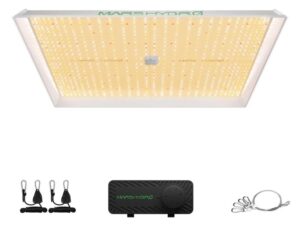 | MARS HYDRO TS3000 – Best Inexpensive LED Grow Light for 4×4 Tent | Check Price |
Second Best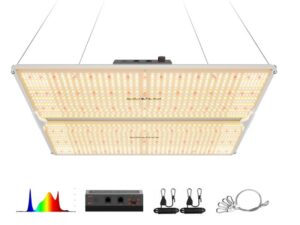 | Spider Farmer SF4000 450W LED Grow Light for 4×4 Grow Tent | Check Price |
Third Choice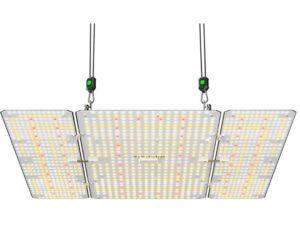 | VIVOSUN LumaLight 400W LED Grow Light | Check Price |
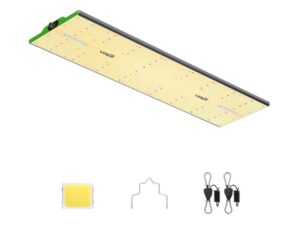 | VIPARSPECTRA P4000 450W LED Grow Light | Check Price |
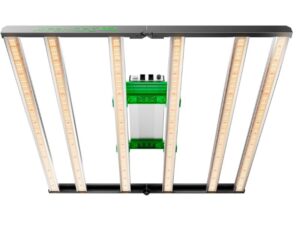 | MARS HYDRO FC-4800 EVO LED Grow Light | Check Price |
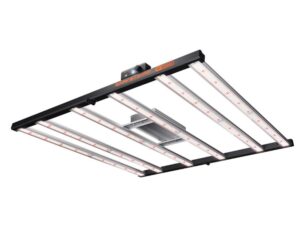 | Spider Farmer G5000 480W LED Grow Light | Check Price |
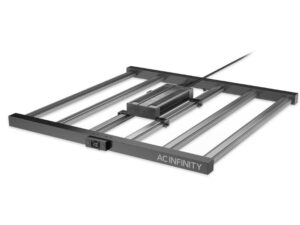 | AC Infinity IONFRAME EVO6 500W LED Grow Light | Check Price |
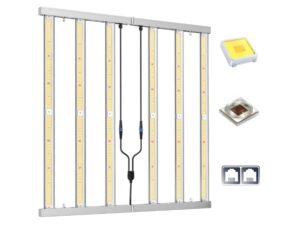 | VIPARSPECTRA KS5000 500W LED Grow Light | Check Price |
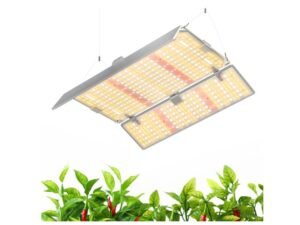 | Barrina BU2000 200W LED Grow Light | Check Price |
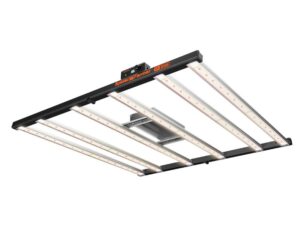 | Spider Farmer SE5000 480W LED Grow Light | Check Price |
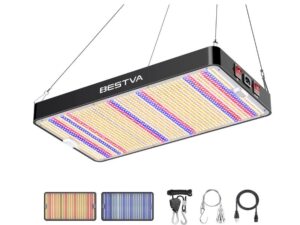 | BESTVA DC3000 300W LED Grow Light | Check Price |
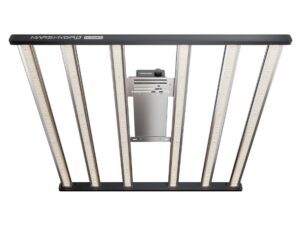 | MARS HYDRO FC-E4800 480W LED Grow Light | Check Price |
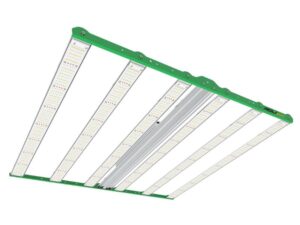 | RDJ Bouns TF7200 720W LED Grow Light | Check Price |
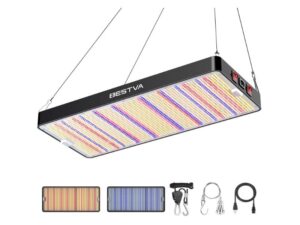 | BESTVA DC4000 400W LED Grow Light | Check Price |
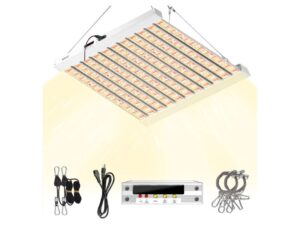 | SZHLUX 500W LED Grow Light | Check Price |
How I Selected the Best LED Grow Lights for a 4×4 Tent
I did not rank these lights only by advertised wattage. A powerful fixture can still perform poorly if most of its output is concentrated in the center of the tent.
I focused on realistic 4×4 coverage, power consumption, fixture dimensions, spectrum, dimming control, heat management, build quality, smart features, warranty, and overall value.
Light distribution was especially important. A 4×4 tent covers 16 square feet, so the corners and outer canopy need enough usable light. Bar-style fixtures often perform well here because the diodes are spread across a larger frame.
I also considered the difference between total electrical consumption and useful plant light. Watts measure the electricity used by the fixture, not the amount of photosynthetically useful light reaching the plants. PPFD is a more useful measurement because it describes the amount of PAR reaching a surface.
The ranking also reflects different users. Some growers need the strongest fixture they can fit inside a tent. Others need a reliable, dimmable light that does not place unnecessary pressure on their electrical system or ventilation equipment.
15 Best Grow Lights for a 4×4 Tent Reviewed
1. MARS HYDRO TS3000 – Best Inexpensive LED Grow Light for 4×4 Tent
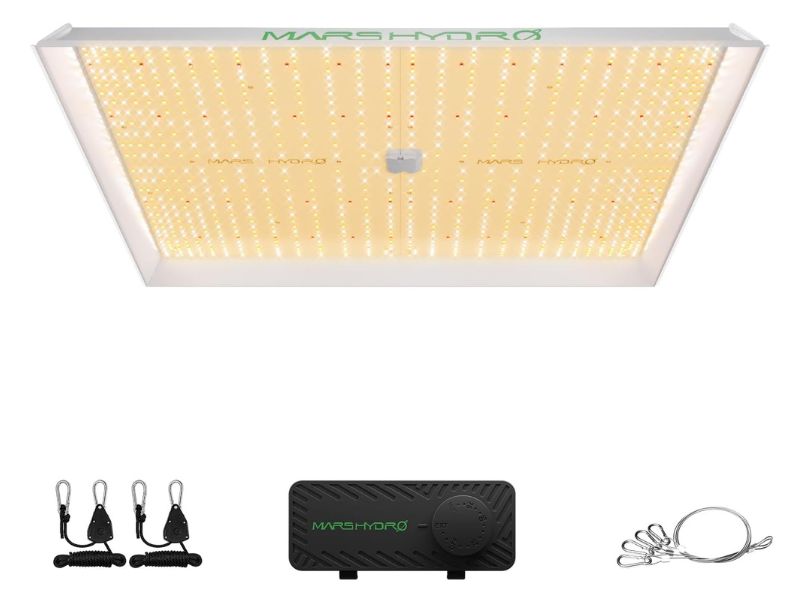
Key Specifications
- Actual power draw: 420W
- Fixture type: Board-style LED with reflector hood
- LED count: 1,016
- Recommended flowering coverage: 4×4 ft
- Maximum vegetative coverage: 5×5 ft
- Spectrum: Full spectrum
- Dimming: Yes
- Daisy-chain control: Yes
- Cooling: Fanless passive cooling
- Safety certification: ETL
The MARS HYDRO TS3000 is a straightforward option for growers who want one fixture for a complete 4×4 tent without assembling a multi-bar frame. Its 420-watt draw provides about 26 watts per square foot across a 4×4 area, making it suitable for many full-cycle indoor gardens.
Its board-style design keeps installation simple. You can hang the complete fixture using the included hardware, connect it to a timer, and adjust the dimmer as the plants move from seedlings to mature growth. The white reflector hood helps direct outward light toward the growing area.
Light distribution is its main limitation. The diodes are concentrated on one central panel, so plants directly beneath the fixture may receive more intensity than plants near the tent walls. Raising the fixture improves the spread but also reduces the overall intensity reaching the canopy.
The 420-watt output should be sufficient for vegetables, herbs, vegetative plants, and moderately dense flowering canopies. Growers trying to maximize every square inch of a high-light 4×4 canopy may prefer a wider 480- or 500-watt bar fixture.
The current Amazon listing identifies the TS3000 as a 420-watt, dimmable, daisy-chain-compatible fixture with 4×4 to 5×5 coverage.
Pros
- Simple single-piece installation
- Suitable output for many 4×4 tents
- Manual dimming
- Full-cycle spectrum
- Fanless operation
- Competitive price
Cons
- Brighter center than outer corners
- Less uniform than a wide bar fixture
- Heat is concentrated around one main board
- Limited smart functions without extra equipment
Who Should Buy It?
The TS3000 is a good fit for beginners and value-focused growers who want simple controls, adequate 4×4 output, and minimal assembly.
2. Spider Farmer SF4000 450W LED Grow Light for 4×4 Grow Tent
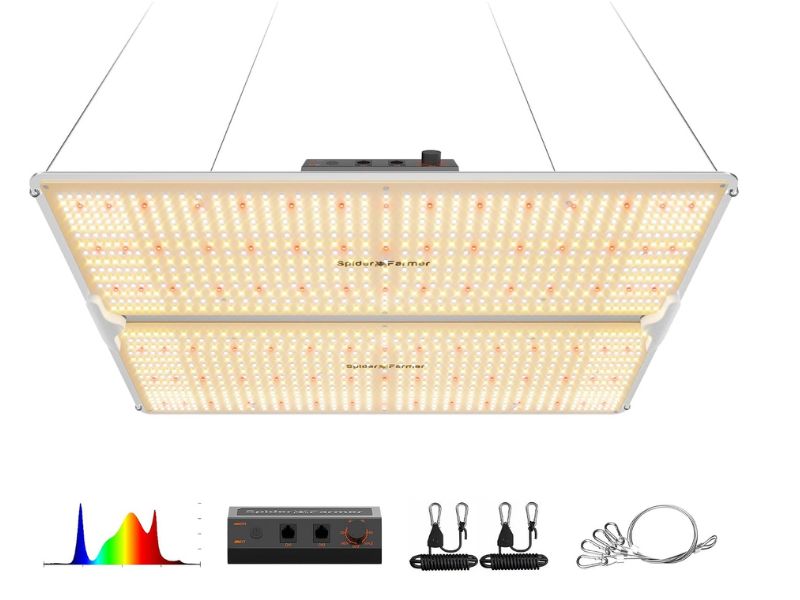
Key Specifications
- Actual power draw: 450W
- Fixture type: Board-style LED
- Recommended coverage: 4×4 ft
- System efficacy: 2.7 µmol/J
- Spectrum: 3000K, 5000K, 660nm and 760nm IR
- Dimming: Yes
- Daisy-chain control: Yes
- Controller compatibility: GGS-compatible
- Cooling: Fanless passive cooling
- Warranty: Five years
The Spider Farmer SF4000 provides slightly more power than many entry-level 4×4 board lights. Its 450-watt draw works out to roughly 28 watts per square foot, giving it more intensity headroom than a typical 400- or 420-watt fixture.
The light comes as one main board, which makes it easier to install than a folding or multi-piece bar fixture. Its compact footprint also leaves additional ceiling space for a carbon filter, exhaust ducting, cables, and circulation equipment.
Spider Farmer has adjusted the diode layout to improve outer-area coverage, but the SF4000 still behaves like a board-style light. The center receives the strongest intensity, while the outer corners depend heavily on hanging height, reflective tent walls, and canopy training.
Its spectrum combines warm white, cool white, deep red, and infrared wavelengths for full-cycle growing. The dimmer lets you reduce output for seedlings and young plants instead of raising the fixture excessively.
The GGS-compatible control connection adds upgrade potential for growers who want scheduled dimming or coordinated control later. Buyers who only need manual operation can use the onboard dimmer.
The current listing rates the SF4000 at 450 watts, 2.7 µmol/J system efficacy, 4×4 coverage, and a five-year warranty.
Pros
- Strong 450-watt output
- Easy to hang
- Compact fixture size
- Manual dimming and controller compatibility
- Silent fanless operation
- Five-year warranty
Cons
- Less uniform than bar-style models
- Can create a strong central hotspot
- Driver and diode heat stay concentrated
- Needs a level canopy for the best results
Who Should Buy It?
Choose the SF4000 if you want a powerful, compact board light and prefer simple installation over maximum edge-to-edge uniformity.
3. VIVOSUN LumaLight 400W LED Grow Light
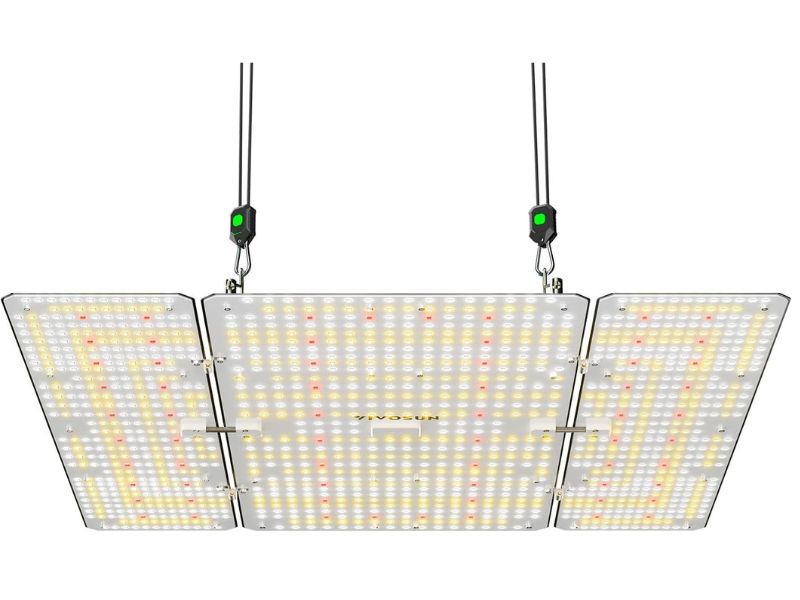
Key Specifications
- Actual power draw: 400W
- Fixture type: Square board-style LED
- Recommended coverage: 4×4 ft
- Maximum listed coverage: 5×5 ft
- System efficacy: Up to 2.9 µmol/J
- Spectrum: Full spectrum
- Dimming range: 25% to 100%
- Smart control: Compatible VIVOSUN GrowHub required
- Cooling: Fanless
- After-sales coverage: Five years
The VIVOSUN LumaLight 400W is one of the more affordable smart-compatible options for a 4×4 tent. It offers manual dimming from 25% to 100%, and compatible GrowHub equipment can add centralized scheduling and environmental control.
At 400 watts, the fixture delivers about 25 watts per square foot in a 4×4 space. This should be enough for herbs, vegetables, vegetative plants, and moderate full-cycle gardens. It has less reserve power than the 480- to 500-watt bar lights in this list.
Its square board design is compact and easy to install. That shape also concentrates more of the intensity near the middle of the tent. Plants at the outer edges may receive less usable light, particularly when the fixture is mounted close to the canopy.
The LumaLight makes the most sense for growers already using VIVOSUN ventilation, sensors, or GrowHub controls. The integrated ecosystem can manage lighting alongside other tent equipment instead of requiring separate timers and controllers.
The current Amazon information identifies this ASIN as the 400-watt LumaLight model for 4×4 or 5×5 applications. Related current listing data specifies up to 2.9 µmol/J efficacy, 25%–100% dimming, fanless operation, and five-year service coverage.
Pros
- Affordable 4×4 option
- GrowHub compatibility
- Manual dimming
- Quiet fanless design
- Lower electricity use than 480- to 500-watt models
- Easy installation
Cons
- Limited power reserve for dense flowering
- Board design produces less uniform corner coverage
- Smart functions require compatible equipment
- Maximum 5×5 claims are better suited to lower-intensity growth
Who Should Buy It?
The LumaLight 400W suits budget-conscious growers, moderate canopies, and users who already own VIVOSUN smart-growing equipment.
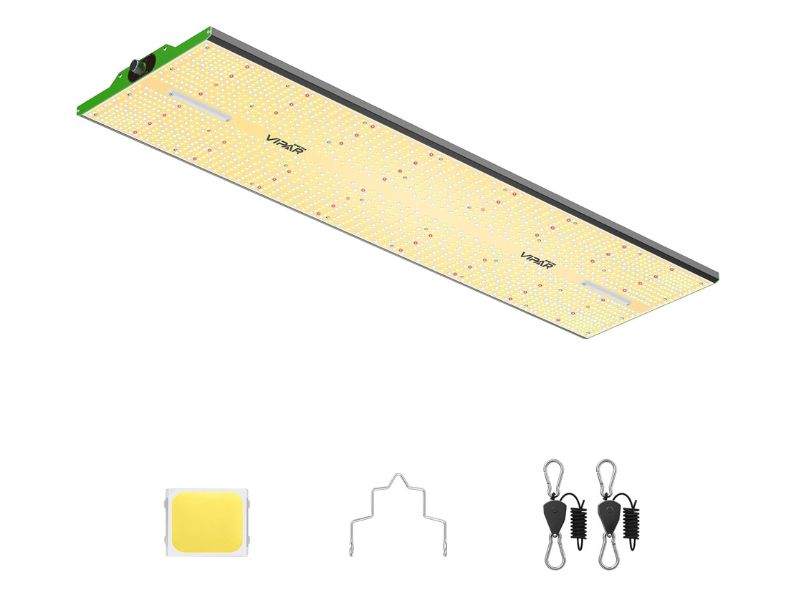
4. VIPARSPECTRA P4000 450W LED Grow Light
Key Specifications
- Actual power draw: 450W
- Fixture type: Long board-style LED
- Vegetative coverage: Approximately 5×4 ft
- Flowering coverage: Approximately 5×3 ft
- LED spectrum: 3000K, 5000K, 660nm and 730nm IR
- LED count: 1,960
- Dimming: Yes
- Cooling: Fanless aluminum heatsink
- Voltage: 120V
- Control type: Manual dimmer
The VIPARSPECTRA P4000 has a longer rectangular shape than most square 4×4 board lights. That format spreads light well from side to side, making it particularly useful for rectangular plant arrangements.
The fixture consumes 450 watts and includes warm-white, cool-white, deep-red, and infrared diodes. Its listed flowering footprint is approximately 5×3 feet rather than a perfectly square 4×4 area. It can still work inside a 4×4 tent, but its orientation and hanging height need careful adjustment.
Growers placing plants in two long rows may find the shape especially practical. In a square canopy, the areas near the shorter ends of the fixture may receive less intensity than the central length.
The P4000 uses a manual dimmer, so output can be lowered during seedling and early vegetative stages. Its large aluminum heatsink removes the need for cooling fans, keeping operation quiet.
This is an older board-style design compared with the KS5000 and other wide bar fixtures. It remains useful when available at a competitive price, but buyers focused on the most even square-canopy coverage may prefer a true 4×4 bar frame.
Amazon lists the P4000 at 450 watts with 5×4 vegetative and 5×3 flowering coverage. Its spectrum includes 3000K, 5000K, 660nm red, and 730nm infrared diodes.
Pros
- Strong 450-watt output
- Long shape works well over rectangular layouts
- Full-cycle spectrum
- Manual dimming
- Silent passive cooling
- Easy plug-and-play installation
Cons
- Not shaped specifically for a square 4×4 canopy
- Lower uniformity than a six-bar fixture
- No integrated smart controls
- Large centerboard still concentrates heat
Who Should Buy It?
The P4000 works best for growers using rectangular plant layouts or those who find it at a lower price than comparable 450-watt fixtures.
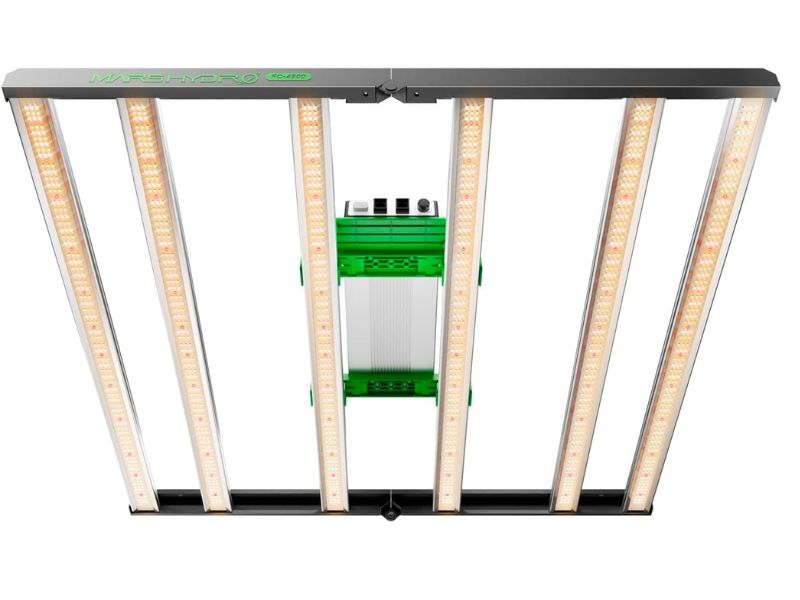
5. MARS HYDRO FC-4800 EVO LED Grow Light
Key Specifications
- Current listed power draw: 300W
- Fixture type: Folding bar-style LED
- Diodes: Samsung LM301H EVO
- Core coverage: 3×3 ft
- Maximum coverage: 4×4 ft
- Overall fixture efficacy: 2.85 µmol/J
- Diode-level efficacy: 3.14 µmol/J
- Spectrum: 2800–3000K, 4800–5000K and 650–665nm
- Dimming: Yes
- Smart control: Optional iConnectu controller required
This product requires careful attention because the current Amazon listing does not describe a 480-watt fixture. It currently identifies the FC-4800 EVO variation as a 300-watt model with a 3×3 core cultivation area and 4×4 maximum coverage.
The Samsung LM301H EVO diodes and 2.85 µmol/J listed fixture efficacy make it an efficient light for its wattage. Its folding bar design should also distribute light more evenly than a compact 300-watt board.
The limitation is total output. Three hundred watts across a 4×4 tent equals only 18.75 watts per square foot. That may work for seedlings, vegetative growth, leafy vegetables, low-light plants, or a partially occupied tent. It is not the strongest choice for an intensive full-canopy 4×4 flowering setup.
Its 3×3 core rating is more realistic for high-intensity use. Growers using it in a 4×4 tent should expect lower intensity near the walls unless the plants occupy only the central area.
Smart scheduling, sunrise and sunset dimming, and remote app functions require the separately purchased iConnectu controller. Manual dimming remains available without it.
The current Amazon listing describes a 300-watt FC-4800 EVO with 3×3 core and 4×4 maximum coverage, Samsung LM301H EVO diodes, and 2.85 µmol/J overall efficacy.
Pros
- Efficient Samsung LM301H EVO diodes
- Folding bar design
- Better distribution than most 300-watt boards
- Manual dimming
- Optional smart control
- Suitable for a central 3×3 canopy
Cons
- Current listing is only 300W
- Maximum 4×4 coverage is not the same as strong 4×4 flowering coverage
- Limited output for a dense canopy
- Smart controller costs extra
- Product naming may confuse buyers expecting 480W
Who Should Buy It?
Choose this model for a 3×3 core canopy, vegetative 4×4 use, or a lightly occupied tent. Confirm the wattage shown on the Amazon page before ordering.
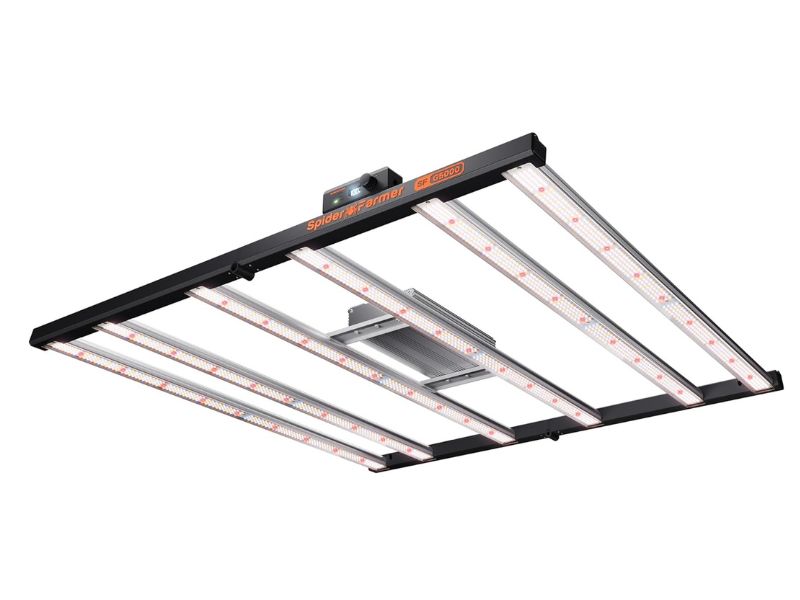
6. Spider Farmer G5000 480W LED Grow Light
Key Specifications
- Actual power draw: 480W
- Fixture type: Extended bar-style LED
- Diode count: 1,680
- Recommended coverage: 4×4 ft
- System efficacy: 2.8 µmol/J
- Spectrum: 3200–4200K, 4800–5000K and 660–665nm
- Dimming range: 10% to 100%
- Daisy-chain capacity: Up to 60 lights
- Smart control: Spider Farmer app
- Warranty: Five years
The Spider Farmer G5000 is designed specifically around a 4×4 canopy. Its extended light bars distribute the 1,680 diodes over a much larger area than the SF4000 board, improving intensity along the edges of the tent.
The 480-watt draw provides 30 watts per square foot. This is a useful level for a full-cycle 4×4 setup because it offers more headroom than 400- and 420-watt lights without moving into the heat and electricity demands of a 700-watt fixture.
Its dimmer covers 10% to 100%, making it easier to use the same fixture for seedlings, vegetative plants, and mature canopies. Multiple lights can also be linked for unified dimming in a larger growing room.
Current app control supports remote brightness adjustment, schedules, and sunrise or sunset simulation. Growers who do not need connected features can still use the physical dimmer.
The G-series prioritizes value, so it may not use the same premium diode package found in more expensive fixtures. Its broad frame, output, and control options still make it one of the better-balanced products in the supplied list.
Spider Farmer lists the G5000 at 480 watts, 1,680 diodes, 2.8 µmol/J, 4×4 coverage, app control, and a five-year warranty.
Pros
- Designed for full 4×4 coverage
- Strong 480-watt output
- Wide edge-to-edge distribution
- App and manual controls
- Broad dimming range
- Five-year warranty
Cons
- Large fixture requires careful installation
- More expensive than board lights
- App setup may be unnecessary for basic users
- Takes up significant overhead space
Who Should Buy It?
The G5000 is suitable for growers who want a well-matched 480-watt bar light with smart functions and broad 4×4 canopy coverage.
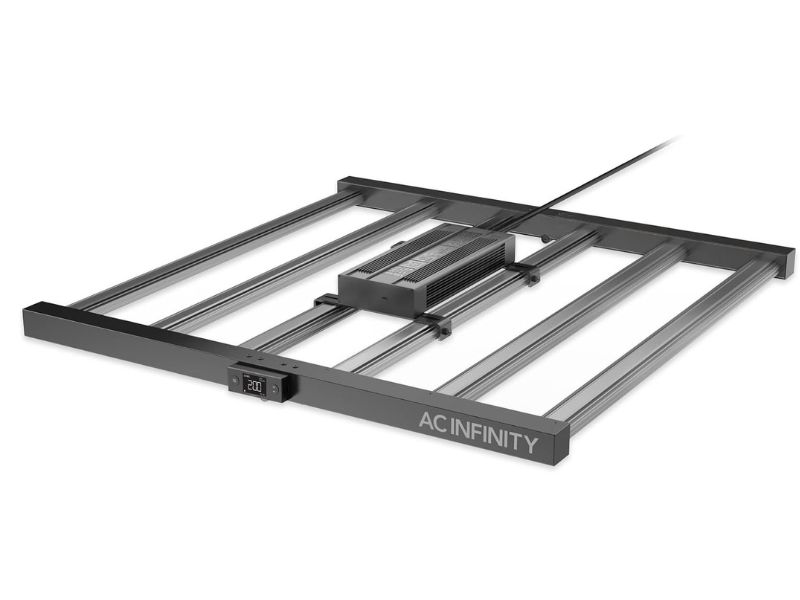
7. AC Infinity IONFRAME EVO6 500W LED Grow Light
Key Specifications
- Actual power draw: 500W
- Fixture type: Six-bar LED frame
- Diodes: Samsung LM301H EVO
- Diode count: 1,680
- Vegetative coverage: 5×5 ft
- Flowering coverage: 4×4 ft
- Brightness levels: 10
- Schedule controller: Included
- Wi-Fi app compatibility: Requires compatible UIS controller
- Driver: Removable
- Safety and protection: ETL certified and IP65 rated
- Warranty: Two years
The AC Infinity IONFRAME EVO6 is one of the most complete premium fixtures in the list. Its six-bar frame, Samsung LM301H EVO diodes, removable driver, and included schedule controller are designed for growers who want both strong lighting and structured automation.
The 500-watt draw provides about 31 watts per square foot in a 4×4 tent. Its wide 32-inch frame spreads the diodes over most of the canopy, helping reduce the strong center hotspot commonly seen under board-style fixtures.
The included controller offers 10 brightness settings, daily scheduling, and gradual sunrise and sunset dimming. Advanced Wi-Fi control and integration with fans, humidifiers, and other UIS equipment require a compatible Controller 69-series device.
The removable driver can be mounted away from the fixture to reduce the amount of driver heat released directly above the canopy. Its IP65-rated construction is another advantage in humid grow environments.
This fixture costs more than most budget models. The extra expense is easier to justify when the buyer plans to use AC Infinity’s wider environmental-control ecosystem.
The listing identifies the EVO6 as a 500-watt, 1,680-diode, Samsung LM301H EVO fixture with 4×4 flowering coverage, 10 brightness levels, a removable driver, ETL certification, and IP65 protection.
Pros
- Premium Samsung LM301H EVO diodes
- Excellent 4×4 distribution
- Schedule controller included
- Removable driver
- IP65 and ETL-rated design
- Strong ecosystem integration
Cons
- Premium price
- Full Wi-Fi functionality requires another controller
- Large and heavier than board fixtures
- Two-year warranty is shorter than some competitors
Who Should Buy It?
The EVO6 is ideal for growers who value smart automation, build quality, even coverage, and compatibility with a complete AC Infinity grow system.
8. VIPARSPECTRA KS5000 500W LED Grow Light
Key Specifications
- Actual power draw: 500W ±3%
- Fixture type: Six-bar LED frame
- Diodes: Samsung LM301H and Osram 660nm
- Diode count: 1,260
- Vegetative coverage: 4×4 ft
- Flowering coverage: 4×4 ft
- Diode-level photon efficiency: Up to 3.10 µmol/J
- Dimming: Yes
- Daisy chaining: Yes
- Driver: Mean Well
- Cooling: Passive bar-style cooling
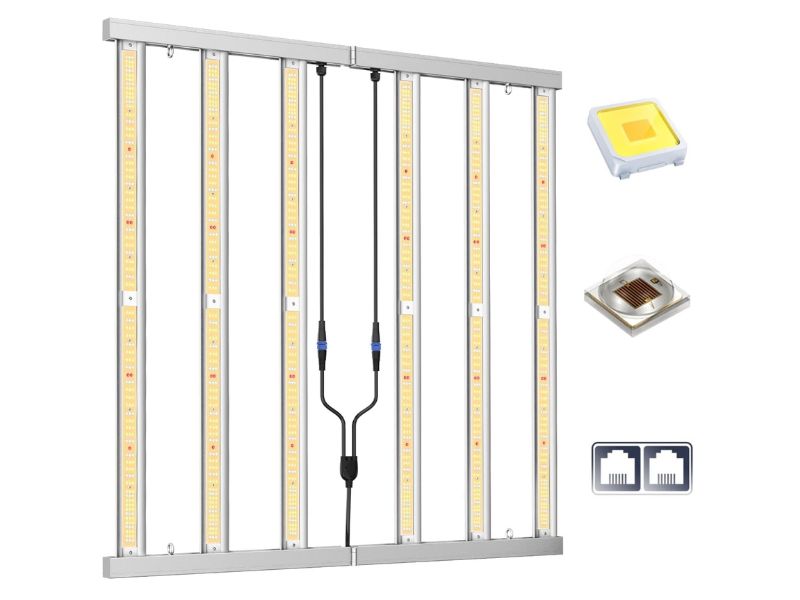
The VIPARSPECTRA KS5000 is built around a square 4×4 footprint. Its six light bars spread 500 watts across most of the canopy, producing more balanced corner and edge coverage than a small central board.
It uses Samsung LM301H white diodes alongside Osram 660nm red diodes. The combination supports full-cycle growing, while the Mean Well driver adds a recognizable component from an established power-supply manufacturer.
At 500 watts, the KS5000 provides about 31 watts per square foot. This gives it enough output for demanding canopies while leaving room to reduce intensity during early growth.
The large open frame allows air to move between the bars and around the canopy. Its remotely positionable driver can also help manage heat inside the tent.
The KS5000 focuses more on lighting performance than advanced app functions. It includes dimming and daisy-chain support but does not offer the same integrated automation experience as the AC Infinity EVO6.
VIPARSPECTRA specifies 500 watts, 1,260 Samsung and Osram diodes, full 4×4 vegetative and flowering coverage, and a six-bar design.
Pros
- Strong 500-watt output
- Wide six-bar distribution
- Samsung and Osram diodes
- Mean Well driver
- Dimmable and daisy-chain capable
- Good full-canopy coverage
Cons
- Limited integrated smart control
- Large frame requires ceiling planning
- Availability and pricing can fluctuate
- More assembly than a board fixture
Who Should Buy It?
The KS5000 suits growers who prioritize light uniformity and proven components over advanced app-based automation.
9. Barrina BU2000 200W LED Grow Light
Key Specifications
- Actual power draw: 200W
- Fixture type: Adjustable two-panel LED board
- Diode count: 816
- Spectrum: 3000K, 5000K, 660nm and 730nm IR
- Dimming: Yes
- Panel angle: Adjustable
- Maximum central PPFD claim: 1,600
- Cooling: Fanless
- Daisy-chain dimming: Yes
- Included hardware: Chains, hooks and control cable
The Barrina BU2000 is marketed as a 4×4 grow light, but its 200-watt power draw makes it a light-duty option for that tent size.
Across 16 square feet, it provides only 12.5 watts per square foot. That can support seedlings, herbs, leafy vegetables, propagation, vegetative growth, or a small central canopy. It is not my first choice for a dense, high-light flowering canopy that occupies the complete 4×4 floor.
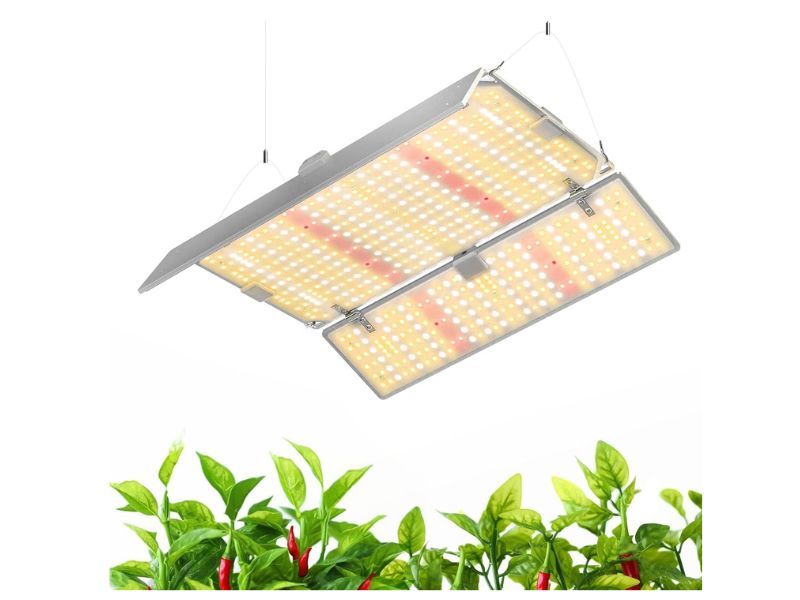
The adjustable dual panels are its most useful feature. Opening them creates a broader flood pattern, while angling them inward concentrates more intensity in the center. Barrina states that setting the panels at a 60-degree angle can raise central efficiency by more than 25%.
The listed maximum central PPFD of 1,600 should not be interpreted as average 4×4 intensity. A high reading directly under the center does not mean the corners receive comparable light.
Its fanless design is quiet, and the 200-watt draw is easier to manage in a warm room. The lower power also reduces monthly operating costs compared with 480- to 500-watt fixtures.
Amazon identifies the BU2000 as a 200-watt adjustable panel with 816 LEDs, dimming, and a 3000K, 5000K, 660nm, and 730nm spectrum.
Pros
- Low purchase price
- Adjustable panel angle
- Quiet operation
- Low electricity and heat output
- Useful for seedlings and vegetative growth
- Dimmable
Cons
- Only 200W
- Not suitable for intensive full-canopy 4×4 flowering
- High central PPFD does not represent edge performance
- No advanced controller or app
Who Should Buy It?
The BU2000 is best for seedlings, herbs, leafy vegetables, and growers using only part of a 4×4 tent.
10. Spider Farmer SE5000 480W LED Grow Light
Key Specifications
- Actual power draw: 480W
- Fixture type: Six-bar LED frame
- Recommended coverage: 4×4 ft
- System efficacy: 2.9 µmol/J
- Listed PPF: Approximately 1,420 µmol/s
- Spectrum: 2800–3200K, white and 660–665nm red
- Dimming: Yes
- Smart app control: Yes
- Driver: Detachable
- Dimensions: Approximately 33.6 × 33.6 × 3 inches
- Warranty: Five years
The Spider Farmer SE5000 is a premium alternative to the G5000. Both draw 480 watts and cover a 4×4 tent, but the SE5000 offers higher listed system efficacy and a more premium position within Spider Farmer’s lineup.
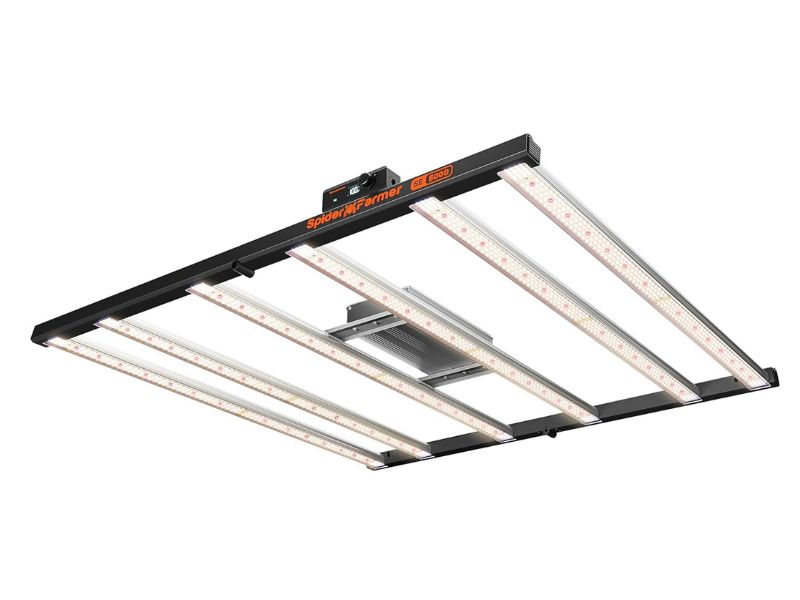
Its six-bar frame measures roughly 33.6 inches square, placing the diodes over most of the canopy. This reduces extreme center intensity and provides stronger light to plants near the walls.
The 480-watt output supplies 30 watts per square foot, which is a practical amount for a complete 4×4 cycle. The dimmer allows lower settings for seedlings and young vegetative plants.
Current app control adds remote dimming, scheduling, and other automated functions. The detachable driver can be mounted away from the main fixture to reduce concentrated heat above the canopy.
The SE5000 usually costs more than the G5000. The additional expense makes sense for buyers who value the higher 2.9 µmol/J listed efficacy, premium series design, and current sale price. Value-focused growers may find the G5000 more economical.
The current listing confirms this ASIN as the SE5000 480W model with 4×4 coverage, app control, approximately 33.6-inch-square dimensions, and a five-year warranty. Spider Farmer lists 2.9 µmol/J efficacy and about 1,420 µmol/s PPF.
Pros
- Strong 480-watt output
- Excellent bar-style uniformity
- High listed efficacy
- App and manual dimming
- Detachable driver
- Five-year warranty
Cons
- More expensive than the G5000
- Large overhead footprint
- Smart functions may not be needed by every grower
- Requires more installation planning than a board
Who Should Buy It?
The SE5000 is best for buyers who want a premium Spider Farmer 4×4 fixture and are willing to pay more for higher listed efficiency and refined bar-style coverage.
11. BESTVA DC3000 300W LED Grow Light
Key Specifications
- Actual power draw: 300W
- Fixture type: Enclosed board with active cooling fans
- Diode count: 1,620
- Core coverage: 3×3 ft
- Maximum coverage: 4×4 ft
- Spectrum: 3000K, 5000K, 460nm and 660nm
- Control modes: Vegetative and bloom switches
- Cooling: Multiple internal fans and aluminum radiators
- Daisy-chain support: Up to three units
- Service coverage: Three years
- Return period: 90 days
The supplied BESTVA link currently leads to the DC3000, not the DC1000 shown in the URL text. The current model consumes 300 watts and is primarily designed for a 3×3 growing area.
Its maximum 4×4 claim is better suited to herbs, leafy vegetables, vegetative growth, and lightly occupied tents. A 300-watt fixture provides only 18.75 watts per square foot across a complete 4×4 canopy.
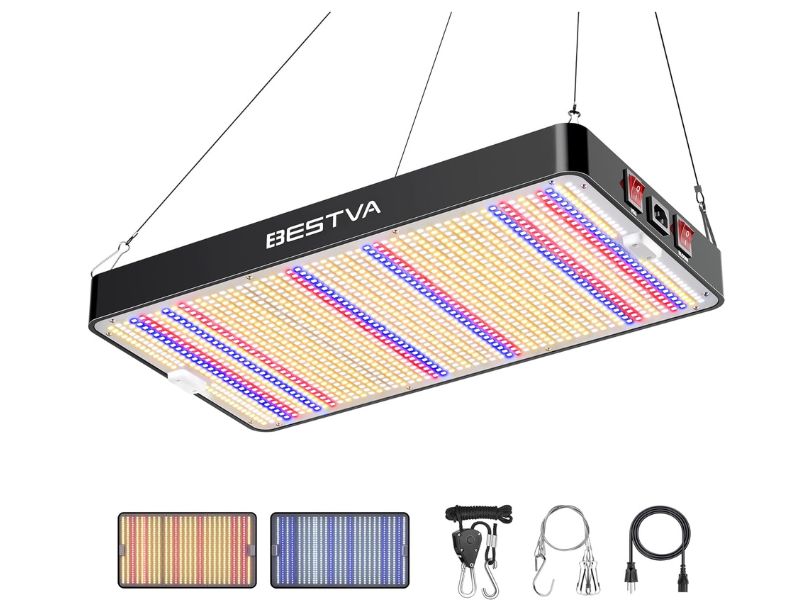
The DC3000 uses separate vegetative and bloom modes instead of a smooth dimming knob. This older control style is easy to understand, but it provides less precise intensity adjustment than the continuous dimmers on modern bar fixtures.
Internal cooling fans move heat away from the diode board. They also add noise and create moving parts that may require maintenance or replacement over time.
Its enclosed shape and active cooling make it different from most current fanless quantum boards. Buyers who prefer separate growth-stage switches may find the design familiar, while growers prioritizing silent operation may prefer a passive fixture.
Amazon lists the DC3000 at 300 watts with 1,620 LEDs, 3×3 ideal coverage, 4×4 maximum coverage, vegetative and bloom modes, active cooling fans, and three-year service.
Pros
- Affordable
- Separate vegetative and bloom modes
- Full-spectrum diode mix
- Active cooling
- Suitable for a 3×3 core canopy
- Three-year service period
Cons
- Only 300W for a 4×4 tent
- No smooth dimming knob
- Cooling fans produce noise
- Less even coverage than a wide bar light
- URL and current product title may cause confusion
Who Should Buy It?
The DC3000 is better for a 3×3 space or light-duty 4×4 use than for an intensive full-canopy flowering setup.
12. MARS HYDRO FC-E4800 480W LED Grow Light
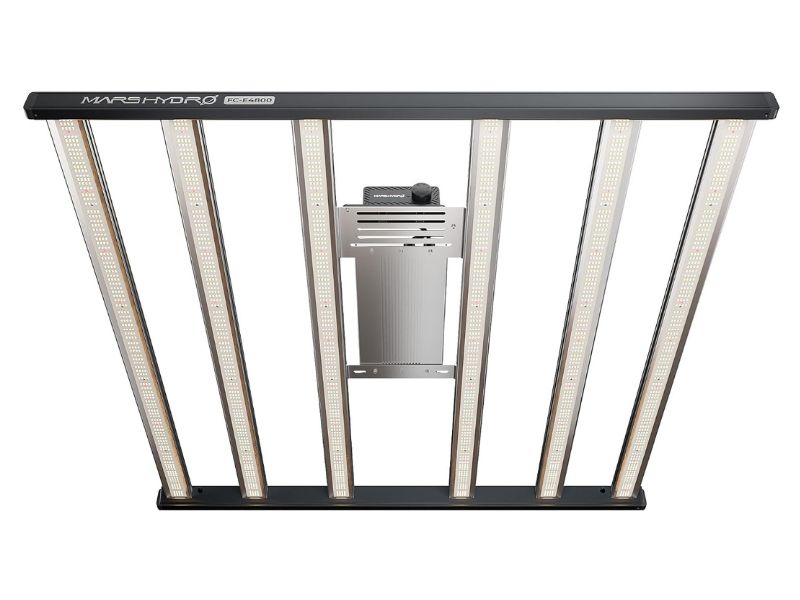
Key Specifications
- Actual power draw: 480W
- Fixture type: Multi-bar LED frame
- Diodes: Bridgelux 2835 and Osram 660nm
- Listed diode count: 2,052
- Core coverage: 3×3 ft
- Maximum coverage: 4×4 ft
- System efficacy: 2.8 µmol/J
- Listed PPF: 1,344 µmol/s
- Dimming: Yes
- Driver: Removable
- Certifications: ETL, CE, UKCA and RoHS
The MARS HYDRO FC-E4800 is one of the stronger value-focused bar fixtures in the supplied list. It combines a 480-watt draw with Bridgelux white diodes, Osram red diodes, and a frame designed to distribute light across a 4×4 area.
The fixture supplies 30 watts per square foot in a 4×4 tent. Its 3×3 core rating indicates the area receiving the strongest intensity, while the outer portion extends coverage to 4×4.
The bar layout reduces the center hotspot associated with board lights. Open spaces between the bars also allow better airflow around the fixture and canopy.
Its removable driver can be placed outside the tent when the supplied cable and installation instructions allow it. This can move some driver heat away from the plants, though the growing room still needs to manage the total heat produced.
The FC-E series uses Bridgelux components to deliver strong performance at a lower price than the Samsung-based FC series. It requires some assembly, so setup takes longer than hanging a single board.
The Amazon listing specifies 480 watts, 2.8 µmol/J, 1,344 µmol/s PPF, 3×3 core coverage, 4×4 maximum coverage, a removable design, and several safety certifications.
Pros
- Well-matched 480W output
- Even bar-style distribution
- Bridgelux and Osram diodes
- Detachable driver
- Good value for a full-size fixture
- Several listed certifications
Cons
- Assembly required
- Strongest core is 3×3 rather than the full 4×4
- Smart control may depend on the current variation or added controller
- Large frame takes up ceiling space
Who Should Buy It?
The FC-E4800 fits growers who want strong 4×4 bar-light performance without paying the higher price of premium Samsung-based fixtures.
13. RDJ Bouns TF7200 720W LED Grow Light
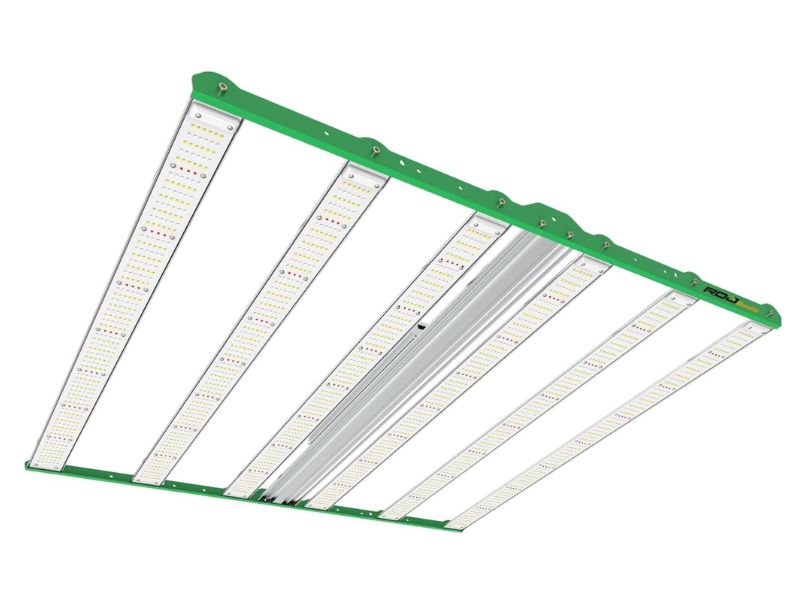
Key Specifications
- Actual power draw: 720W
- Fixture type: Six-bar LED frame
- Diodes: LM281B+ and EPI 660nm
- Diode count: 2,556
- Flowering coverage: 4×4 ft
- Vegetative coverage: 5×5 ft
- Listed efficacy: Approximately 2.6–2.8 µmol/J
- Dimming: 0% to 100%
- Daisy-chain ports: RJ11/RJ12
- Input voltage: 100–277V
- Driver: Remotely mountable
- Warranty: Five years
The RDJ Bouns TF7200 is the most powerful fixture in this selection. Its 720-watt draw provides 45 watts per square foot in a 4×4 tent, which is far more than many growers need at full power.
The large 44-inch-square frame nearly fills a 4×4 ceiling. This can provide strong edge coverage, but it also leaves limited space for filters, ducting, and other overhead equipment.
Dimming is essential. At 100%, the fixture may produce excessive intensity and heat for plants grown without advanced environmental control. It makes more sense to operate it below full power in a 4×4 tent or use the complete output in a larger 5×5 vegetative area.
The removable driver can be positioned outside the tent to reduce heat concentrated around the canopy. Its aluminum frame uses passive cooling, eliminating fan noise and fan-failure risk.
RDJ supports controller-based dimming through its RJ ports, including compatibility with certain third-party systems when the proper adapter is used.
The current listing specifies 720 watts, six bars, 2,556 diodes, 4×4 flowering and 5×5 vegetative coverage, 0%–100% dimming, and a five-year warranty.
Pros
- Very high total output
- Broad 44-inch-square coverage
- Full dimming range
- Removable driver
- Passive cooling
- Controller and daisy-chain support
Cons
- Excessive at full power for many 4×4 setups
- High electricity use
- Adds significant heat
- Large frame may interfere with other equipment
- Less established brand than major competitors
Who Should Buy It?
The TF7200 is best for experienced growers who understand light intensity, heat management, dimming, and environmental control.
14. BESTVA DC4000 400W LED Grow Light
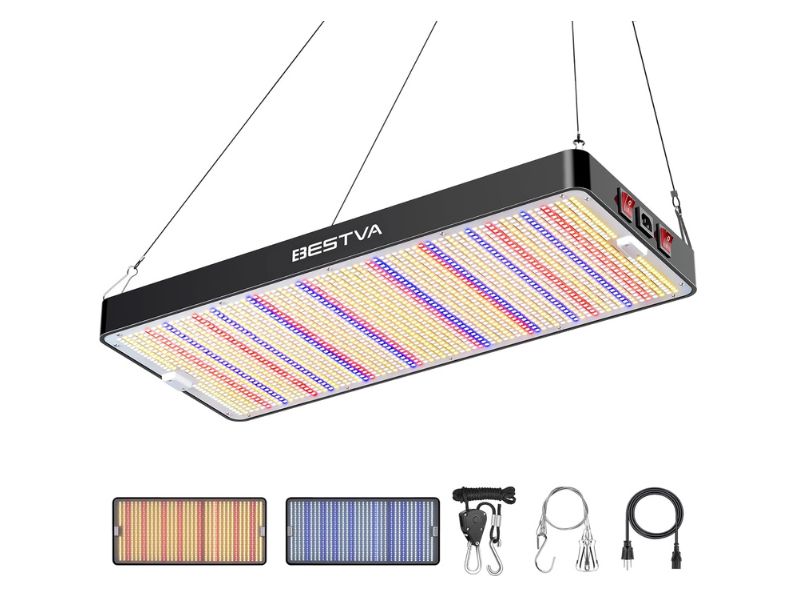
Key Specifications
- Actual power draw: 400W
- Fixture type: Enclosed board with active cooling
- Diode count: 2,304
- Recommended coverage: 4×4 ft
- Maximum vegetative coverage: 5×5 ft
- Spectrum: 3000K, 5000K, 460nm and 660nm
- Control modes: Vegetative and bloom switches
- Cooling: Multiple fans and aluminum radiators
- Dimming: No continuous dimmer listed
- Fixture weight: Approximately 7.5 pounds
The BESTVA DC4000 is the larger 400-watt version of the DC3000. Its output is more suitable for a 4×4 tent, though its design differs from modern dimmable bar lights.
The light uses separate vegetative and bloom switches. Growers can operate one mode during early growth and activate both for the complete spectrum. This system is simple but lacks the precise control of a 10%–100% dimmer.
Its 400-watt draw works out to 25 watts per square foot. This may support moderate 4×4 growth, herbs, vegetables, and flowering plants, though edge uniformity depends on hanging height and plant placement.
Multiple internal fans cool the enclosed fixture. This keeps the housing temperature under control but adds noise and mechanical parts. Dust can also accumulate around fan openings in a grow environment.
The central board produces stronger intensity directly beneath the fixture. It does not provide the same broad distribution as a 33- or 44-inch bar frame.
Amazon identifies the current DC4000 as a 400-watt fixture with 2,304 LEDs, 4×4 recommended coverage, 5×5 maximum coverage, vegetative and bloom switches, and active cooling fans.
Pros
- More appropriate for 4×4 use than the DC3000
- Full-spectrum diode mix
- Separate growth-stage modes
- Active heat removal
- Lightweight for its output
- Simple operation
Cons
- No smooth dimming control
- Cooling fans create noise
- Board design has weaker edges
- Older design than modern bar fixtures
- Less automation support
Who Should Buy It?
The DC4000 is suitable for budget growers who prefer separate vegetative and bloom switches and do not mind active cooling fans.
15. SZHLUX 500W LED Grow Light
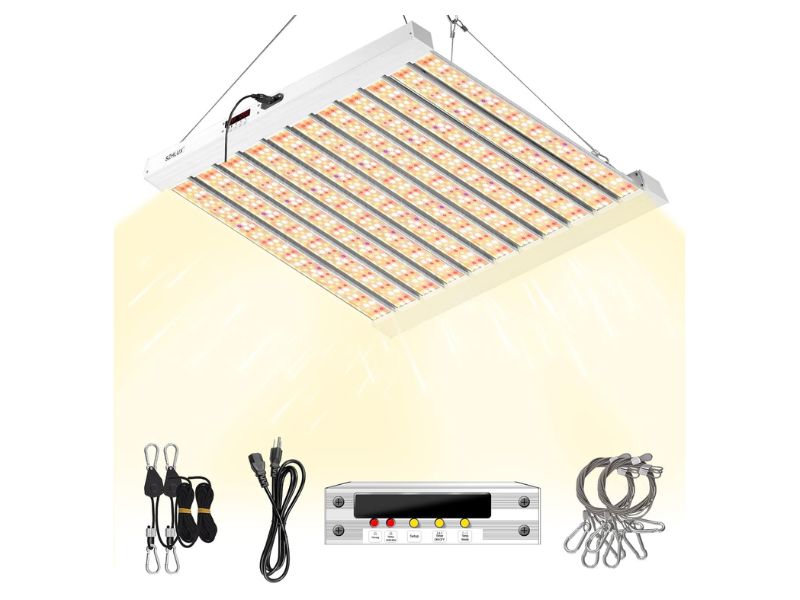
Key Specifications
- Actual power draw: 500W
- Fixture type: Multi-bar LED
- Diode count: 1,056
- Flowering coverage: 4×4 ft
- Vegetative coverage: 5×5 ft
- System efficacy: 2.7 µmol/J
- Spectrum: 3000K, 5000K, 395nm UV, 660nm and 760nm IR
- Timer: Integrated
- Temperature sensor: Integrated
- Thermal protection: Automatic output reduction and shutdown
- Cooling: Fanless aluminum frame
- Weight: Approximately 14.1 pounds
The SZHLUX 500W stands out because it includes an onboard timer and temperature-based protection. Most grow lights require a separate outlet timer and rely on the grower or an external controller to respond to excess heat.
The temperature system automatically reduces the number of active bars as temperatures rise. The listing states that all eight sections operate under normal conditions, fewer remain active at higher temperatures, and the fixture shuts down around 96°F.
This safety feature may protect the light and plants during a ventilation failure, but it should not replace a properly sized exhaust system. A tent regularly reaching the protection threshold has an environmental problem that needs correction.
At 500 watts, the fixture supplies about 31 watts per square foot. Its multi-bar design spreads light more evenly than a compact board, and the fanless aluminum frame keeps operation quiet.
The spectrum includes white, red, ultraviolet, and infrared diodes. UV and IR should be treated as supplemental features rather than the main reason to select the fixture.
The current listing specifies 500 watts, 1,056 diodes, 2.7 µmol/J, 4×4 flowering coverage, 5×5 vegetative coverage, an integrated timer, temperature protection, and a fanless design.
Pros
- Suitable 500-watt output
- Integrated timer
- Temperature-based protection
- Wide multi-bar distribution
- Fanless operation
- Full-spectrum output with UV and IR
Cons
- Temperature protection reduces output rather than fixing tent heat
- Less established support network than major brands
- Built-in controls may be less flexible than a dedicated grow controller
- Large fixture requires installation space
- Detailed warranty terms are not clear on the current listing
Who Should Buy It?
The SZHLUX 500W suits growers who want a reasonably priced bar-style 4×4 light with an integrated timer and extra heat-protection features.
Quick Comparison of the 10 Best Grow Lights
| Product | Style | Wattage | 4×4 Flowering Suitability | Dimming | Smart Control | Price Level |
| Spider Farmer G5000 | Bar | 480W | Excellent | Yes | Yes | Mid-range |
| Spider Farmer SE5000 | Bar | 480W | Excellent | Yes | Yes | Premium |
| AC Infinity IONFRAME EVO6 | Bar | 500W | Excellent | Yes | Yes, with UIS system | Premium |
| VIPARSPECTRA KS5000 | Bar | 500W | Excellent | Yes | Limited | Mid-range to premium |
| MARS HYDRO FC-E4800 | Bar | 480W | Very good | Yes | Optional controller | Mid-range |
| SZHLUX 500W | Bar | 500W | Very good | Yes | Built-in timer and temperature control | Budget to mid-range |
| Spider Farmer SF4000 | Board | 450W | Good | Yes | Controller compatible | Mid-range |
| MARS HYDRO TS3000 | Board | 420W | Good | Yes | Optional controller | Budget to mid-range |
| VIVOSUN LumaLight 400W | Board | 400W | Moderate to good | Yes | Yes, with GrowHub | Budget |
| VIPARSPECTRA P4000 | Board | 450W | Good with careful positioning | Yes | No | Budget to mid-range |
The bar-style models provide the strongest edge-to-edge coverage for a fully occupied 4×4 canopy. Board-style fixtures are generally easier to install and cost less, but they may produce higher intensity in the center and weaker light near the tent corners.
The wattage shown represents approximate actual power consumption rather than the large model numbers sometimes used in product names. Price levels are relative and may change based on Amazon discounts, coupons, and availability.
What Is the Best Light for a 4×4 Grow Tent?
The best light for 4×4 grow tent use is usually a dimmable full-spectrum LED fixture drawing roughly 450 to 500 watts, with a frame large enough to distribute light across the canopy.
A bar-style fixture is the best general choice when you plan to fill most of the tent. The diodes are distributed over multiple bars, so the outer canopy receives more light and the center is less likely to become an extreme hotspot.
A board-style light remains a practical choice when budget, simple installation, or limited ceiling equipment is more important. You may need to hang it higher to improve the spread.
The fixture should provide:
- Full-cycle white and red spectrum
- Manual dimming
- Reliable passive cooling
- A published PPFD map
- Realistic 4×4 flowering coverage
- A useful warranty
- Electrical certification for your market
- Enough hanging hardware for safe adjustment
Do not select a fixture only because its product name contains a large number. Names such as “4000,” “5000,” or “6000” often do not equal actual watts.
Check the true wall draw in the technical specifications.
How Much Wattage Does a 4×4 Grow Tent Need?
A 4×4 tent has 16 square feet of floor area.
For efficient modern LEDs, 400 to 500 actual watts is a practical range for many full-cycle setups. High-light plants and dense flowering can benefit from the upper end, while seedlings, herbs, leafy greens, and lightly occupied tents may need much less.
Oklahoma State University Extension notes that plant requirements and grow-space size determine the required power, and gives 25 watts per square foot as a starting recommendation for high-light plants. That equals 400 watts across a 16-square-foot tent. The same source recommends using PPFD rather than treating watts as the only performance measurement.
Wattage for Seedlings
Seedlings do not need the full output of a 400- to 500-watt fixture.
Use the dimmer, raise the fixture, or use a smaller propagation light. Young plants can suffer from light stress if a powerful fixture is placed too close at full output.
Starting around 20% to 40% power is common with a large 4×4 fixture, but the correct level depends on the light, hanging height, plant species, and environment.
Watch for compact healthy growth rather than chasing the highest possible intensity.
Wattage for Vegetative Growth
A 4×4 vegetative canopy may use around 250 to 400 watts from an efficient fixture.
The lower end can support smaller plants or a partially filled tent. Increase the output as the canopy expands and begins to occupy the complete growing area.
You should not waste electricity illuminating empty floor space. Match the dimmer setting and hanging height to the current canopy size.
Wattage for Flowering and Fruiting
A fully occupied high-light flowering or fruiting canopy often benefits from 400 to 500 efficient LED watts in a 4×4 tent.
A 600-watt fixture can provide additional intensity, but it also raises electricity use, heat, and the risk of over-lighting.
The best setting is the one that supplies sufficient PPFD without creating bleaching, excessive leaf temperature, or environmental stress.
Can a Grow Light Be Too Powerful?
Yes.
A fixture can deliver more light than the plants can use under the existing temperature, humidity, nutrition, carbon dioxide, and watering conditions.
Excess light can cause pale upper leaves, bleaching, upward curling, dry edges, or stalled growth.
A strong dimmable light is useful because you do not need to operate it at full power. Buying extra capacity is reasonable only when you are prepared to measure and manage it.
Understanding PPFD for a 4×4 Grow Tent
PPFD stands for Photosynthetic Photon Flux Density. It measures the amount of photosynthetically active light reaching a square meter each second.
PPFD is more useful than lumens because lumens describe brightness as perceived by human eyes. It is also more useful than watts because watts measure electrical use rather than usable light reaching the plant.
Iowa State University Extension describes PPFD as one of the most useful measurements for indoor plant-light intensity and recommends measuring it at foliage level.
Oklahoma State University Extension gives 400 to 800 µmol/m²/s as a broad range for improved plant growth, while also noting that the ideal level depends on the species and other conditions.
A PPFD map shows readings across several points under a fixture. Look at:
- Average PPFD
- Lowest corner measurements
- Highest center measurement
- Hanging height used for the test
- Size of the measured area
- Whether reflective tent walls were included
A high center reading is not enough. A grow light can show an impressive maximum number while providing weak corners.
The goal is a useful average with manageable variation across the complete canopy.
How Much Coverage Does a 4×4 Grow Light Really Provide?
Manufacturers often list separate vegetative and flowering coverage.
Vegetative coverage can be larger because plants generally need less light during that stage. A light listed for 5×5 vegetative coverage may only be recommended for 4×4 flowering coverage.
Real coverage also changes with:
- Hanging height
- Dimmer setting
- Tent-wall reflectivity
- Plant height
- Canopy density
- Fixture dimensions
- Environmental conditions
Raising the fixture spreads the light over a wider area but reduces intensity. Lowering it increases intensity over a smaller area and can create a hotspot.
A fixture that nearly fills the 4×4 ceiling usually distributes light more evenly than a small board mounted in the center.
Best Spectrum for a 4×4 Grow Tent
A balanced full-spectrum white LED is the most practical choice for a complete growth cycle.
University of Minnesota Extension notes that mixed or balanced white light can support plants through multiple growth stages. Blue-rich or mixed light supports seedlings and leafy growth, while red or mixed light supports bud and flower formation.
Most current grow lights combine:
- Warm white diodes
- Cool white diodes
- Deep red around 660nm
- Sometimes far-red around 730nm
- Occasionally UV or infrared channels
Blue light supports compact vegetative growth and leaf development. Red light plays an important role in photosynthesis and reproductive growth.
Far-red and UV can be useful tools, but they are not required for every successful indoor garden. A reliable broad-spectrum fixture with strong distribution is more important than a long list of supplemental wavelengths.
Bar-Style vs Board-Style Grow Lights
Bar-Style LED Grow Lights
Bar lights spread the diodes over several long rails.
This creates:
- Better edge coverage
- Fewer extreme center hotspots
- More even canopy intensity
- Improved airflow between bars
- Better performance across wide trained plants
The main disadvantages are size, assembly time, and price.
A large bar fixture can also interfere with filters, ducting, and ceiling-mounted circulation equipment if the tent is not planned properly.
Board-Style LED Grow Lights
Board lights mount many diodes on one or two compact panels.
They are usually:
- Easier to install
- Less expensive
- More compact
- Simple to move between tents
The main weakness is distribution. The center may receive much more light than the outer canopy.
You can reduce this problem by hanging the board higher, using reflective walls, keeping the canopy level, and avoiding dense plants in the corners.
Which Design Is Better?
A bar-style fixture is my preferred option for a fully occupied 4×4 tent.
A board light is still a sensible choice for beginners, budget setups, or growers using only the center of the tent.
How High Should a Grow Light Be Above Plants?
There is no universal hanging height for every fixture.
Start with the manufacturer’s recommendation, then adjust using plant response and PPFD measurements.
A practical starting approach is:
- Seedlings: Higher fixture position and low dimmer setting
- Vegetative plants: Moderate height and output
- Flowering plants: Lower or stronger setting after gradual adjustment
Many powerful 4×4 LEDs begin around 18 to 30 inches above young plants at reduced power. Mature canopies may use a closer distance, but fixture-specific instructions should take priority.
Light intensity drops as distance increases. UNH Extension explains that moving a fixture farther from the plant can greatly increase the operating time needed to achieve the same daily light exposure.
Adjust one variable at a time. Do not lower the light and increase the dimmer sharply on the same day.
How to Set Up a Grow Light in a 4×4 Tent
Begin by assembling the light on a clean, dry surface. Follow the manufacturer’s instructions and confirm that every locking clip, screw, cable, and connector is secure.
Attach the supplied rope ratchets to the tent’s strongest upper support bars. Check the tent’s hanging-weight limit before adding the light, carbon filter, fan, and ducting.
Center the fixture above the intended canopy. A bar light should sit square with the tent walls so its outer bars provide similar coverage on each side.
If the driver is removable, decide whether to mount it on the fixture or outside the tent. External mounting can reduce heat inside the tent but requires safe cable routing.
Set the light at a conservative height and dimmer level. Turn it on and check:
- Canopy coverage
- Cable temperature
- Driver temperature
- Tent temperature
- Air movement
- Dark or weak corners
Connect the light to a reliable timer or supported controller. Keep electrical connections above floor level and away from water containers, humidifiers, and runoff.
Recheck the hanging height every few days as plants grow.
How Much Electricity Does a 4×4 Grow Light Use?
Use this formula:
Wattage ÷ 1,000 × operating hours per day × electricity rate × 30
If electricity costs $0.16 per kilowatt-hour:
400W Light Running 18 Hours
0.4 × 18 × $0.16 × 30 = $34.56 per month
480W Light Running 18 Hours
0.48 × 18 × $0.16 × 30 = $41.47 per month
500W Light Running 12 Hours
0.5 × 12 × $0.16 × 30 = $28.80 per month
600W Light Running 12 Hours
0.6 × 12 × $0.16 × 30 = $34.56 per month
These estimates cover the grow light only. The exhaust fan, circulation fans, humidifier, dehumidifier, heater, air conditioner, pumps, and controllers increase the total operating cost.
Running a dimmable 500-watt light at 60% uses roughly 300 watts, though exact consumption should be checked with a wall-power meter.
Heat and Ventilation Requirements
LED grow lights are more efficient than many older technologies, but they still produce heat.
A 500-watt fixture adds roughly 500 watts of heat to the growing environment once the light energy is absorbed by the plants, tent, and surrounding surfaces.
Your ventilation system must remove that heat while maintaining appropriate humidity and fresh-air exchange.
A 4×4 tent commonly uses:
- Inline exhaust fan
- Carbon filter when odor control is needed
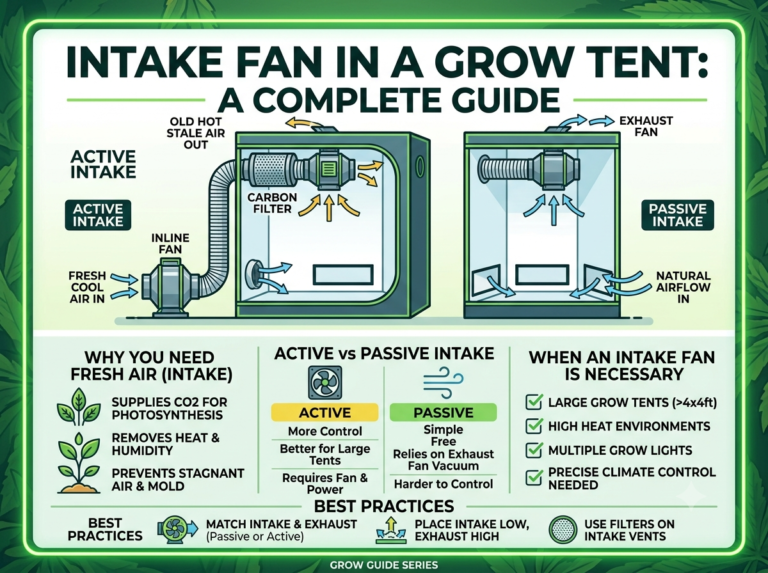
- Passive or powered intake
- One or more circulation fans
- Temperature and humidity monitor
The exact fan size depends on the room temperature, duct length, filter resistance, climate, and fixture wattage.
Mounting a detachable driver outside the tent can reduce heat inside the enclosure, but the room still receives the driver’s heat.
Do not point a strong circulation fan directly at one plant continuously. Aim for gentle movement across the whole canopy.
Important Features to Consider Before Buying
Actual Power Draw
Ignore equivalent-wattage marketing and look for actual wall consumption.
A product called “4000W” may use only a few hundred watts. Actual power determines electricity demand and gives you a better basis for comparing fixtures.
Light Efficiency
Fixture efficacy is expressed in µmol/J.
It describes the amount of photosynthetic photon output produced for each joule of electricity.
Higher efficiency can reduce operating costs or provide more light from the same wattage, but only when the specification is accurate and measured consistently.
PPFD Uniformity
Check the entire map, not just the maximum center number.
A slightly lower peak with stronger edges may be more useful than an extreme center reading with dark corners.
Full-Spectrum Output
A balanced white and red spectrum works for seedlings, vegetative growth, flowering, herbs, and many fruiting plants.
Separate UV, far-red, or adjustable spectrum channels are optional advanced features.
Dimming Control
A dimmer is essential on a powerful 4×4 fixture.
It reduces electricity use, heat, and light stress when plants are young or environmental conditions are poor.
Diode and Driver Quality
Diodes and drivers affect efficiency, heat, reliability, and long-term output.
A good fixture also needs proper spacing, thermal management, wiring, connectors, and protective construction. Brand-name diodes alone do not guarantee a high-quality light.
Heat Management
Look for a large heatsink, open bar design, detachable driver, and clear installation guidance.
A fanless light is quieter and has fewer moving parts, but it still needs airflow around the fixture.
Safety Certification
Check for relevant electrical certifications such as ETL, UL, CE, RoHS, or other approvals for your region.
Certification does not remove the need for proper wiring, dry conditions, grounded outlets, and correctly rated timers.
Smart Controls
App control can provide:
- Scheduling
- Remote dimming
- Sunrise and sunset modes
- Environmental triggers
- Alerts
- Grow-stage programs
Basic manual dimming and a reliable timer may be enough for many users.
Warranty and Support
A long warranty is valuable only when the manufacturer provides accessible support and replacement parts.
Check:
- Warranty length
- Who pays return shipping
- Local service availability
- Proof-of-purchase requirements
- Whether Amazon purchases are covered
Best Inexpensive LED Grow Light for a 4×4 Tent: What to Expect
The best budget light should still provide honest wattage, dimming, safe electrical construction, full-spectrum output, and a clear warranty.
A less expensive fixture may have:
- Lower fixture efficacy
- Fewer diodes
- Basic manual controls
- Shorter cables
- Less uniform PPFD
- A smaller heatsink
- More concentrated output
- Limited app integration
Do not sacrifice basic electrical safety to save a small amount of money.
The VIVOSUN LumaLight 400W is the best inexpensive full-cycle option in this roundup. The Mars Hydro TS3000 is another strong budget choice if you prefer a simple board and manual dimmer.
The Barrina BU2000 costs less, but its 200-watt draw makes it better for seedlings, vegetative growth, and lightly occupied tents than demanding full-canopy flowering.
One Large Grow Light vs Two Smaller Lights
One large fixture provides simpler wiring, one dimmer, one timer, and fewer hanging points.
Two smaller fixtures give you more flexibility. You can:
- Illuminate only part of the tent
- Adjust each side separately
- Position lights over plants of different heights
- Continue using one light if the other fails
- Expand the setup gradually
Two fixtures also create more cables, drivers, and hanging hardware. The combined price may exceed the cost of one properly sized bar light.
For a permanent full 4×4 canopy, one 450- to 500-watt bar fixture is usually the cleaner setup.
Two lights make more sense when plants are divided into separate zones or when you already own one smaller fixture.
Common Mistakes When Choosing a 4×4 Grow Light
The first mistake is trusting the model name instead of checking actual wattage.
The second is believing vegetative coverage equals flowering coverage. A light advertised for 5×5 vegetation may only provide enough intensity for a 4×4 flowering canopy.
Another common mistake is focusing on maximum PPFD while ignoring average and corner readings.
Some growers also buy a fixture that fills the entire tent ceiling without planning space for the filter, exhaust fan, ducting, sensors, and circulation fans.
Other mistakes include:
- Running full power over seedlings
- Hanging the fixture too close
- Ignoring leaf temperature
- Using undersized timers or extension cords
- Placing electrical connections on the floor
- Clearing ventilation space around the fixture
- Buying a non-dimmable high-power light
- Assuming more watts always produce better results
Signs Your Grow Light Is Too Strong
Light stress commonly appears first at the top of the canopy.
Possible signs include:
- Pale or bleached upper leaves
- Upward-curling leaf edges
- Dry leaf margins
- Unusually compact or stalled top growth
- Excessively warm canopy
- Damage limited to areas directly below the light
Reduce the dimmer setting or raise the fixture. Check temperature, humidity, watering, and nutrients as well, since several problems can produce similar symptoms.
Make gradual adjustments and monitor new growth.
Signs Your Grow Light Is Too Weak
Plants receiving too little light may show:
- Long spaces between nodes
- Thin stems
- Leaning toward the light
- Slow growth
- Small leaves
- Weak flowering or fruiting
- Poor growth near the tent edges
Increase intensity gradually, lower the fixture within the manufacturer’s safe range, or improve coverage.
Do not try to fix a weak 200-watt fixture over a full 4×4 canopy simply by placing it extremely close. This creates a small intense zone while the outer canopy remains underlit.
How Long Should a Grow Light Run?
The correct photoperiod depends on the plant species and growth goal.
University of Minnesota Extension recommends 16 to 18 hours for many seedlings, 12 to 14 hours for hydroponic lettuce and herbs, and 14 to 16 hours for many flowering houseplants.
A timer provides consistency and prevents accidental 24-hour operation.
Plants need a suitable dark period. Continuous light is not automatically better and may interfere with the normal growth responses of some species.
The total daily light depends on both intensity and duration. A lower PPFD for more hours can sometimes provide a similar daily light integral to a higher PPFD for fewer hours.
How Long Do LED Grow Lights Last?
Many manufacturers rate LED fixtures around 50,000 operating hours, but the light does not remain at full output for the entire period.
Diodes slowly lose output over time. Drivers, connectors, dimmers, and cables may also fail before the LEDs reach their theoretical lifespan.
Service life is affected by:
- Operating temperature
- Driver quality
- Dust buildup
- Moisture
- Electrical surges
- Hours used each day
- Running continuously at maximum power
Good airflow and a clean fixture help protect the electronics.
A five-year warranty is reassuring, but check the exact claim process before buying.
How to Clean and Maintain a Grow Light
Turn the light off and unplug it before cleaning.
Allow the driver and heatsink to cool fully.
Use a dry microfiber cloth or soft brush to remove dust. Compressed air can be used carefully, but avoid forcing dust deeper into electrical components.
Do not spray cleaner directly onto the fixture.
Inspect:
- Power cable
- Plug
- Dimming cable
- Driver connections
- Hanging hardware
- Rope ratchets
- Frame joints
Tighten loose hanging equipment before switching the light back on.
Keep humidifier mist away from the fixture and avoid allowing condensation to form on electrical parts.
Are Cheap Grow Lights Safe?
Price alone does not determine safety, but unknown fixtures with exaggerated specifications deserve caution.
Check for:
- Real company contact information
- Electrical certification
- Grounded power cable
- Heat-resistant wiring
- Proper strain relief
- Clear warranty
- Published actual wattage
- Installation instructions
- Verified seller information
Use the light with a correctly grounded outlet and a timer rated for the electrical load.
Avoid thin household extension cords. Do not connect more daisy-chained lights than the manufacturer allows.
A grow tent contains fabric, plastic, water, heat, and electrical equipment in a small area. Safe installation is as important as light output.
Final Buying Recommendations
For the best combination of coverage, power, smart control, and value, choose the Spider Farmer G5000 480W.
For a premium Spider Farmer fixture, the Spider Farmer SE5000 provides broad bar-style coverage and strong full-cycle performance.
For the most integrated smart-tent system, choose the AC Infinity IONFRAME EVO6.
For strong value and efficient bar-style coverage, the Mars Hydro FC-E4800 is one of the best alternatives.
For beginners who prefer a simple board light, the Mars Hydro TS3000 is easy to install and operate.
For a lower-cost smart option, choose the VIVOSUN LumaLight 400W.
Conclusion
The Spider Farmer G5000 480W is my choice for the best grow light for 4×4 tent setups. Its 480-watt output, wide bar-style frame, detachable driver, dimming, and app control create a strong balance between coverage, flexibility, and cost.
The AC Infinity IONFRAME EVO6 is the better option for a fully automated smart system. The Spider Farmer SE5000 suits buyers looking for a more premium Spider Farmer fixture, while theMars Hydro FC-E4800 offers excellent bar-style value.
Budget-focused growers can consider the VIVOSUN LumaLight 400W or Mars Hydro TS3000. Both provide practical 4×4 coverage without reaching premium prices.
Before buying, compare actual wattage, fixture dimensions, PPFD distribution, dimming range, heat output, warranty, and smart-control requirements. The best LED grow light for 4×4 tent use is not simply the strongest model. It is the fixture that provides balanced light across your canopy while staying within your electrical, ventilation, and budget limits.

I’m Maya L. Greenwood, a lifelong plant lover who believes anyone can grow something beautiful with the right guidance. After years of testing soil mixes, pruning methods, irrigation tricks, and pest-safe solutions, I started EasyGardenTips.com to turn hard-won lessons into step-by-step advice. From seed starting and container gardens to composting and seasonal checklists, my goal is to make gardening simple, sustainable, and fun.