How to Grow Vegetables in Raised Beds: Soil, Planting, and Care
To grow vegetables in raised beds, choose a sunny location, fill the bed with fertile, well-draining soil, plant vegetables at the correct spacing, and provide consistent water and nutrients throughout the growing season. A raised bed approximately 4 feet wide and 8–12 inches deep is a practical starting point for many vegetables when it sits on suitable, open garden soil.
Raised beds make vegetable gardening easier to organize because you can control the growing medium, reduce soil compaction, and manage weeds within a defined area. They are especially useful where existing soil is compacted, poorly drained, or difficult to cultivate.
However, successful raised-bed gardening involves more than filling a box with soil. Vegetable roots need adequate growing space, and plants require suitable sunlight, moisture, fertility, and airflow.
Choosing the right crops matters, too. Lettuce, radishes, carrots, beans, cucumbers, peppers, and tomatoes can all grow in raised beds, but their space and temperature requirements differ.
In this article, I explain how to set up a raised vegetable bed, choose the soil mixture, plant seeds and transplants, and care for crops through harvest. I also cover vegetable spacing, watering, fertilizing, trellising, seasonal planting, and common problems that beginners should avoid.
How to Grow Vegetables in Raised Beds: 10 Essential Steps
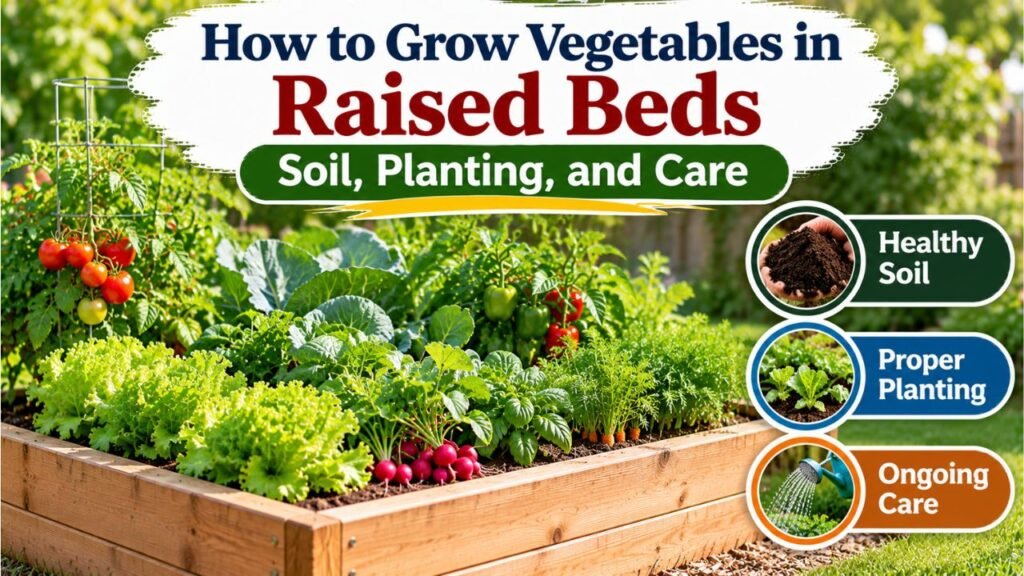
The most reliable approach is to start with a manageable raised bed, choose crops suited to your climate, and maintain good soil moisture and plant spacing throughout the season.
Follow these ten steps to establish a productive vegetable garden.
Step 1: Choose a Location With Enough Sunlight
Most vegetables grow best in an area receiving at least 6–8 hours of direct sunlight per day.
This is particularly important for fruiting vegetables, including:
- Tomatoes
- Peppers
- Cucumbers
- Squash
- Eggplants
- Beans
Leafy vegetables such as lettuce, spinach, kale, and Swiss chard may grow with approximately 4–6 hours of direct sunlight, although growth and yield depend on the season and climate.
According to the University of Minnesota Extension’s raised-bed gardening guide, tomatoes, peppers, and eggplants need at least 6–8 hours of sunlight, while some leafy vegetables can tolerate more shade.
Before placing the bed, observe the location throughout the day.
Check for shade from buildings, fences, and trees.
Also, consider whether the location provides convenient access to water.
A raised bed positioned far from a hose or water source can be difficult to maintain during hot weather.
Step 2: Choose the Right Raised-Bed Size
A raised bed should be narrow enough to reach the center without stepping onto the growing soil.
For most home gardeners, a width of approximately 3–4 feet is practical when both sides are accessible.
If you can reach the bed from only one side, a width around 2 feet is usually more convenient.
Common raised-bed sizes include:
| Raised-Bed Size | Growing Area | Suitable Use |
| 2 × 4 feet | 8 sq. ft. | Herbs and compact vegetables |
| 3 × 6 feet | 18 sq. ft. | Small vegetable gardens |
| 4 × 4 feet | 16 sq. ft. | Beginner gardening |
| 4 × 8 feet | 32 sq. ft. | Mixed vegetable planting |
| 4 × 10 feet | 40 sq. ft. | Larger mixed-crop gardens |
A 4 × 8-foot raised bed is a popular starting option because it provides room for several crops while remaining accessible from both sides.
Leave approximately 2–3 feet between beds for walking, watering, harvesting, and using garden tools. Wider paths may be necessary for wheelbarrows or mobility equipment.
How Deep Should a Raised Vegetable Bed Be?
The required depth depends on the crops and whether their roots can grow into the ground beneath the bed.
For raised beds installed directly over suitable native soil, approximately 8–12 inches of additional growing medium can work for many vegetables because roots can continue growing into the underlying soil.
For raised beds on concrete or another hard surface, plants depend entirely on the soil inside the bed.
The University of Maryland Extension recommends at least:
- 8 inches for leafy greens, beans, and cucumbers
- 12–24 inches for tomatoes, peppers, and squash
Deeper beds can provide additional root space and moisture storage, but they also require more soil and may cost more to fill.
Step 3: Build or Install the Raised Bed
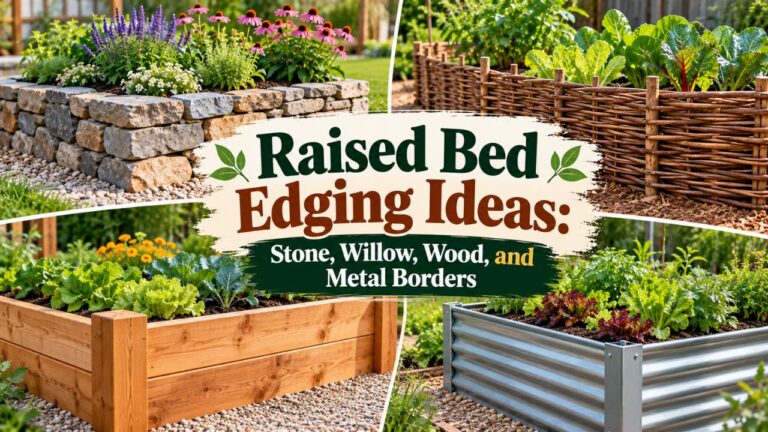
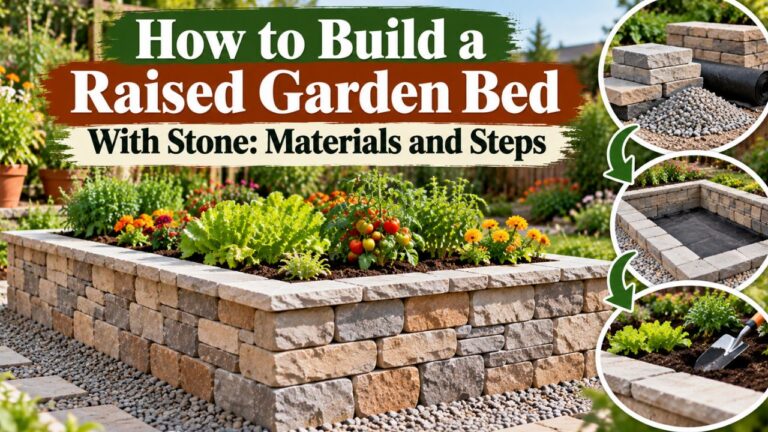
You can use a purchased raised-bed kit or build a frame from suitable materials.
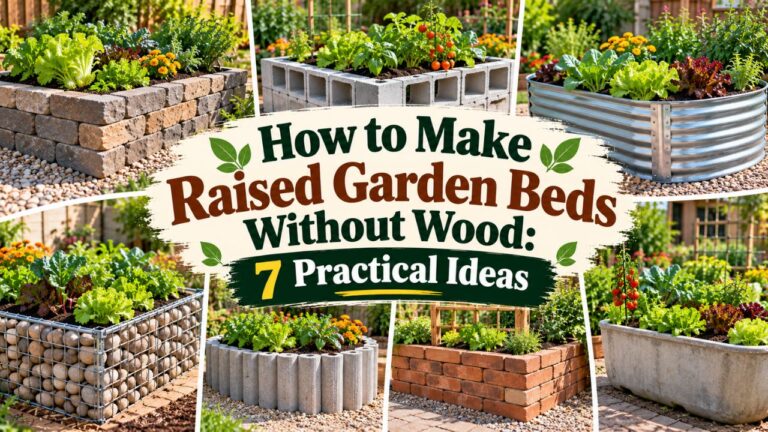
Common options include:
- Cedar
- Redwood
- Other outdoor-suitable lumber
- Galvanized steel
- Stone
- Concrete blocks
- Garden-grade composite materials
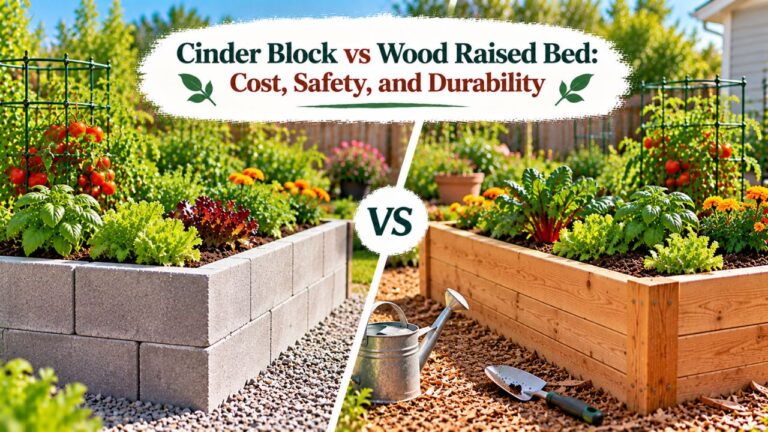
Wooden beds are easy to customize, while metal beds can provide long-lasting structures when properly manufactured and maintained.
Choose materials appropriate for growing edible plants.
Avoid old painted lumber, railroad ties, or reclaimed construction materials with unknown chemical treatments.
If using pressure-treated wood, check its specific treatment and current university extension guidance rather than assuming every treated product has the same safety profile.
Should Raised Beds Have Bottoms?
Most raised beds placed directly on suitable garden soil do not need a solid bottom.
Leaving the bottom open allows roots and water to move between the raised-bed soil and the ground underneath.
If the bed sits on pavement, concrete, or a raised platform, it needs an appropriate drainage system.
Do not create a watertight container that traps excess water around vegetable roots.
Step 4: Fill the Bed With Suitable Soil
Healthy soil is one of the most important factors in growing vegetables successfully.
The ideal growing medium should:
- Hold useful moisture
- Drain excess water
- Provide adequate root space
- Contain suitable organic matter
- Supply nutrients
- Support soil microorganisms
For raised beds over native ground, a practical mixture often contains approximately 50–67% quality topsoil and 33–50% finished plant-based compost by volume, depending on the starting materials.
The University of Minnesota Extension recommends roughly one-half to two-thirds topsoil combined with one-third to one-half plant-based compost for many raised beds.
However, this is not a universal formula.
The best mixture depends on the texture and fertility of the materials.
Can You Fill a Raised Bed With Potting Mix?
Some commercially prepared raised-bed mixes contain soilless ingredients and are suitable when used according to their instructions.
However, ordinary lightweight potting mix may dry out quickly when used as the entire growing medium in a large open-bottom raised bed.
For beds on hard surfaces, the University of Maryland Extension provides a different approach involving compost and suitable soilless growing media.
Match the mixture to the bed’s construction rather than using the same recipe everywhere.
Should You Use Only Compost?
Generally, avoid filling an entire raised bed with pure compost.
Too much compost can contribute excessive nutrients, soluble salts, and moisture-management problems.
A balanced growing medium is usually more reliable.
Step 5: Choose Vegetables for Your Growing Season
Vegetables have different temperature requirements.
Some prefer cool spring or fall conditions.
Others need warm soil and frost-free weather.
Cool-season vegetables include:
- Lettuce
- Spinach
- Peas
- Radishes
- Carrots
- Kale
- Beets
- Broccoli
Warm-season vegetables include:
- Tomatoes
- Peppers
- Cucumbers
- Bush beans
- Pole beans
- Squash
- Eggplants
- Okra
Choose vegetables you enjoy eating and that fit the available space.
For a first raised bed, start with three or four crops rather than trying to grow every vegetable at once.
Step 6: Plant Seeds or Transplants Correctly
Some vegetables are especially well suited to direct seeding.
Examples include:
- Carrots
- Radishes
- Peas
- Beans
- Beets
- Spinach
Others are frequently started indoors or purchased as transplants.
Examples include:
- Tomatoes
- Peppers
- Eggplants
- Broccoli
Always follow the variety’s recommended planting depth and spacing.
When transplanting seedlings, handle the roots carefully and water after planting.
Plants started indoors should generally be hardened off before being placed outdoors.
Step 7: Water the Raised Bed Consistently
Raised beds often dry out faster than surrounding garden soil.
This is especially true for tall beds, shallow beds, and beds surrounded by hot pavement.
Water according to the moisture needs of the crops.
The soil should remain adequately moist in the root zone without staying waterlogged.
Check moisture beneath the surface rather than relying only on the appearance of the topsoil.
Step 8: Apply Mulch and Manage Fertility
Once seedlings are established, spread suitable organic mulch around the plants.
Examples include:
- Weed-free straw
- Shredded leaves
- Finished compost
- Suitable untreated organic mulch
Mulch can reduce evaporation, suppress weeds, and moderate soil temperature.
Keep mulch away from tender plant stems.
Apply fertilizer based on the crops and soil test results rather than using the same fertilizer amount for every vegetable.
Step 9: Install Supports and Monitor Plants
Climbing vegetables and large fruiting plants may need support.
Install trellises, stakes, or cages early.
Check plants regularly for:
- Insects
- Leaf damage
- Disease symptoms
- Moisture stress
- Nutrient problems
- Overcrowding
Early identification makes many garden problems easier to manage.
Step 10: Harvest Regularly and Replant When Appropriate
Harvest vegetables when they reach the desired size and maturity.
Some crops produce more over time when harvested regularly.
For example, frequent picking of suitable bean and cucumber varieties can help maintain production while plants remain healthy.
After removing a finished crop, you may be able to plant another vegetable suited to the remaining season.
Key Takeaway: A productive raised bed depends on suitable sunlight, soil, crop selection, spacing, water, and regular maintenance. Start small and expand after learning how the plants perform.
What Are the Best Vegetables to Grow in Raised Beds?
Raised beds can support most common garden vegetables when they provide enough root space, sunlight, and water.
However, some crops are easier for beginners than others.
Best Beginner-Friendly Raised-Bed Vegetables
| Vegetable | Preferred Season | Planting Method | Growing Consideration |
| Radishes | Cool | Direct seed | Quick-growing root crop |
| Leaf lettuce | Cool | Seed or transplant | Suitable for repeated small harvests |
| Spinach | Cool | Direct seed | Germination can suffer in hot weather |
| Carrots | Cool to moderate | Direct seed | Need loose, deep soil |
| Bush beans | Warm | Direct seed | Compact growth without a tall trellis |
| Peas | Cool | Direct seed | Tall varieties need support |
| Beets | Cool to moderate | Direct seed | Thin crowded seedlings |
| Swiss chard | Cool to warm | Seed or transplant | Leaves can be harvested over time |
| Cucumbers | Warm | Seed or transplant | Vining types benefit from a trellis |
| Peppers | Warm | Usually transplant | Need warmth and sunlight |
| Tomatoes | Warm | Usually transplant | Require spacing and support |
| Kale | Cool | Seed or transplant | Suitable for spring and fall |
Radishes
Radishes are among the easiest vegetables to grow in a raised bed.
They germinate relatively quickly and often mature in approximately 25–35 days under favorable conditions.
They are useful for learning how to sow seeds, maintain moisture, and thin seedlings.
Lettuce
Leaf lettuce is well suited to small raised-bed spaces.
It grows best during cooler weather.
You can harvest outer leaves from suitable varieties while allowing the center to continue growing.
Carrots
Carrots benefit from loose, relatively stone-free soil.
Avoid compacted growing media or large woody debris in the root zone.
Keep the soil surface consistently moist during germination.
Bush Beans
Bush beans are practical for warm-season raised beds.
They usually do not require tall supports.
Direct-seed them after the danger of frost has passed and the soil is sufficiently warm.
Cucumbers
Cucumbers can grow well in raised beds when given adequate moisture and sunlight.
Vining types benefit from a sturdy trellis.
Compact or bush varieties may be preferable when space is limited.
Tomatoes
Tomatoes are productive raised-bed vegetables, but their mature size is often underestimated.
An indeterminate tomato can grow several feet tall and require substantial support.
Choose a variety suited to your space.
Peppers
Peppers can grow successfully in fertile raised-bed soil.
They prefer warm weather and adequate sunlight.
Avoid planting them outdoors before temperatures are suitable.
Which Vegetables Are Harder to Grow in Small Beds?
Large pumpkins, sprawling winter squash, and some melons may require more room than a small raised bed can conveniently provide.
Sweet corn also presents challenges because reliable pollination usually requires an appropriately sized group of plants rather than only one or two stalks.
These crops are possible in larger growing systems, but they are not always the most efficient choices for a beginner’s 4 × 4-foot bed.
Key Takeaway: Start with radishes, lettuce, bush beans, carrots, or leafy greens. Add tomatoes, cucumbers, and peppers as you become more comfortable managing larger plants.
How to Plan Vegetable Spacing in Raised Beds
Plant spacing should be based on the mature size of the vegetable, not the size of the seed or transplant.
A small tomato seedling may eventually become several feet wide.
Planting too many vegetables close together can reduce airflow and create competition for nutrients, sunlight, and water.
Raised-Bed Vegetable Spacing Chart
| Vegetable | Approximate Final Plant Spacing |
| Radishes | 2–3 inches |
| Carrots | 2–3 inches |
| Leaf lettuce | 4–6 inches for small leaf harvests |
| Head lettuce | 8–12 inches, depending on variety |
| Spinach | 3–6 inches |
| Beets | 3–4 inches |
| Bush beans | 3–6 inches |
| Kale | 12–18 inches for mature plants |
| Peppers | 18–24 inches |
| Trellised cucumbers | 12–18 inches for many varieties |
| Indeterminate tomatoes | 24–36 inches or according to training method |
| Zucchini | Often 24–48 inches or more |
These are approximate home-garden planning ranges.
Always check the seed packet or variety description.
The University of Maryland Extension’s outdoor seed-sowing guide explains that intensive planting may allow some closer spacing, but excessive crowding can reduce airflow and productivity.
What Is Square-Foot Gardening?
Square-foot gardening divides a raised bed into 12 × 12-inch sections.
Each square is planted according to the crop’s spacing requirements.
This can make a small garden easier to organize.
However, not every vegetable fits into one square.
Large tomatoes, zucchini, and spreading crops need more growing space.
Should You Plant Vegetables in Rows?
Rows are simple to organize and maintain.
They are particularly useful for:
- Carrots
- Radishes
- Beans
- Peas
- Spinach
In raised beds, you can also plant in staggered arrangements to use space efficiently.
The important factor is maintaining suitable spacing between mature plants.
Can You Plant Vegetables Close Together?
Some crops can be grown more closely when harvested young.
For example, baby lettuce and certain leafy greens can be harvested before reaching full mature size.
However, vegetables grown for mature roots or fruits generally need more space.
Avoid copying dense planting diagrams without considering plant size and growing conditions.
Key Takeaway: Use plant spacing as a guide to the mature crop. Dense planting can save space, but excessive crowding may reduce the harvest.
How Much Soil Do You Need for a Raised Vegetable Bed?
Before buying soil, calculate the volume required.
For a rectangular raised bed:
Soil Volume (Cubic Feet) = Length × Width × Depth
Use feet for all three measurements.
If the bed depth is measured in inches, divide it by 12 before multiplying.
Example: 4 × 8 Raised Bed, 12 Inches Deep
The dimensions are:
- Length: 8 feet
- Width: 4 feet
- Depth: 12 inches, or 1 foot
Calculation:
8 × 4 × 1 = 32 cubic feet
One cubic yard contains 27 cubic feet.
Therefore:
32 ÷ 27 = approximately 1.19 cubic yards
You would need about 32 cubic feet of soil to fill the entire bed to its 12-inch height.
However, it is often practical to leave some space below the top edge for watering and mulch.
Actual soil requirements may also change as the mixture settles.
Soil Volume for Common Raised Beds
| Bed Size | Depth | Approximate Soil Volume |
| 2 × 4 ft | 12 in. | 8 cu. ft. |
| 3 × 6 ft | 12 in. | 18 cu. ft. |
| 4 × 4 ft | 12 in. | 16 cu. ft. |
| 4 × 6 ft | 12 in. | 24 cu. ft. |
| 4 × 8 ft | 12 in. | 32 cu. ft. |
| 4 × 8 ft | 18 in. | 48 cu. ft. |
| 4 × 10 ft | 12 in. | 40 cu. ft. |
These calculations assume a rectangular bed filled uniformly to the stated depth.
Should You Fill the Bottom With Logs or Branches?
Some gardeners use woody material in deep raised beds to reduce the amount of purchased soil.
This resembles a form of hügelkultur.
However, large woody pieces can settle as they decay and create uneven growing conditions.
They also reduce the immediate volume of fine growing medium available to roots.
For ordinary shallow raised beds, use suitable growing soil throughout the main root zone.
For very tall beds, any lower filler should be selected carefully and should not compromise drainage, stability, or the growing depth required by the crops.
Key Takeaway: Calculate soil volume before purchasing materials. A 4 × 8-foot bed filled to 12 inches requires approximately 32 cubic feet of soil.
How to Plant Seeds and Transplants in Raised Beds
Direct seeding and transplanting are both useful methods.
The correct choice depends on the crop and growing season.
Direct Seeding
Direct sowing is particularly suitable for vegetables that grow well when planted in their final location.
Common examples include carrots, radishes, peas, beans, and spinach.
To plant seeds:
- Remove weeds and large soil clumps.
- Prepare a level, reasonably fine soil surface.
- Make planting holes or shallow furrows.
- Place seeds at the recommended depth.
- Cover gently with soil.
- Water without washing seeds away.
- Keep the seedbed moist until germination.
- Thin seedlings to the appropriate spacing.
Many seeds are planted approximately two to three times as deep as their diameter.
However, the seed packet should take priority, especially for small seeds with specific light requirements.
Transplanting Vegetables
Tomatoes, peppers, and eggplants are often planted as young transplants.
Before planting outdoors, gradually acclimate indoor-grown seedlings to outdoor conditions.
This process is called hardening off.
To transplant:
- Water the seedling before planting if needed.
- Dig a hole suitable for its root system.
- Remove the plant carefully from its container.
- Set it at the appropriate planting depth.
- Backfill with soil.
- Firm gently around the roots.
- Water thoroughly.
Many vegetables should be planted at approximately their original growing depth.
Tomatoes are an important exception because healthy tomato stems can form additional roots when buried.
Follow crop-specific guidance.
Can You Mix Seeds and Transplants in One Bed?
Yes.
For example, you can plant a tomato transplant and sow suitable compact vegetables in nearby areas.
However, consider how large the tomato will become.
Short-term companion plantings may need to be harvested before the tomato begins shading them.
Key Takeaway: Direct-seed crops that tolerate planting in their final position, and transplant vegetables that benefit from an early start. Protect roots and follow crop-specific planting depths.
How Often Should You Water Vegetables in Raised Beds?
Raised-bed vegetables need enough water to keep the active root zone moist, but a fixed daily schedule is not suitable for every garden.
The correct amount depends on weather, plant size, soil texture, mulch, and bed depth.
How Much Water Do Vegetables Need?
A common starting guideline for established vegetables is approximately 1 inch of combined rainfall and irrigation per week.
According to the University of Minnesota Extension’s hot-weather gardening guide, this is approximately 20 gallons of water for a 4 × 8-foot raised bed.
However, the guideline is not a fixed prescription.
Hot weather, large plants, sandy soil, and shallow beds may increase water demand.
Cool, rainy conditions may reduce the need for irrigation.
How Can You Tell if the Bed Needs Water?
Check the soil beneath the surface.
For established vegetables, examine the moisture several inches down in the root zone.
If the soil is dry at that depth, watering may be needed.
If it is already wet, additional watering may be unnecessary.
A soil moisture meter can be useful, but it should not replace direct observation of the plants and growing conditions.
Best Watering Methods
| Watering Method | Advantage | Limitation |
| Watering can | Precise control for small beds | Labor-intensive |
| Garden hose with gentle nozzle | Flexible and inexpensive | Requires attention |
| Soaker hose | Applies water near soil level | Distribution can vary |
| Drip irrigation | Targets root zones efficiently | Requires setup and maintenance |
| Overhead sprinkler | Covers multiple beds | Wets foliage and can waste water |
Drip irrigation and soaker hoses are often useful for raised beds because they apply water near the soil surface.
This can reduce unnecessary leaf wetting.
When Is the Best Time to Water?
Early morning is often a practical choice.
It allows plants to take up moisture before the hottest part of the day.
However, a severely dry plant should be watered when necessary rather than waiting until the next morning.
How Should You Water Newly Planted Seeds?
Keep the soil at seed depth consistently moist during germination.
Newly sown seeds may need gentle, relatively frequent watering.
After seedlings develop stronger roots, gradually transition to deeper watering.
Signs of Overwatering
Possible symptoms include:
- Persistently saturated soil
- Yellowing leaves
- Weak growth
- Root problems
- Wilting despite wet soil
However, these symptoms can have other causes.
Check the root-zone conditions before adjusting watering.
Key Takeaway: Use approximately 1 inch of water per week as an initial reference, then adjust according to actual soil moisture, weather, and crop needs.
How to Fertilize Vegetables in Raised Beds
Vegetables need essential nutrients to develop roots, leaves, flowers, and fruit.
However, fertilization should respond to actual soil conditions rather than a universal feeding schedule.
Start With a Soil Test
A soil test can help identify:
- Soil pH
- Phosphorus levels
- Potassium levels
- Organic matter
- Recommended amendments
Many vegetables grow well when soil pH is approximately 6.2–6.8.
However, a slightly higher pH may also be suitable in some raised-bed soils.
Do not automatically add lime or sulfur without checking the soil.
Does Compost Provide Enough Fertilizer?
Finished compost contributes nutrients and organic matter.
However, its nutrient content varies.
Some compost-rich beds may already contain substantial phosphorus and potassium.
Adding more compost or manure every season can create imbalances.
The University of Minnesota Extension cautions that repeated heavy compost applications can increase phosphorus and soluble salt levels.
What Do NPK Numbers Mean?
Fertilizer labels commonly show three numbers representing:
- N — Nitrogen: Important for leafy growth and protein formation.
- P — Phosphorus: Supports energy transfer, roots, and reproductive development.
- K — Potassium: Supports water regulation and many plant functions.
Different vegetables have different requirements.
Leafy vegetables may respond to nitrogen availability differently from tomatoes or peppers.
When Should You Fertilize?
Base fertilization on:
- Soil test recommendations
- Crop requirements
- Plant growth
- Fertilizer type
- Manufacturer application instructions
Some vegetables benefit from additional nutrients during active growth.
Others may require little supplemental fertilizer in fertile soil.
Avoid applying concentrated fertilizer directly against tender stems or roots.
Can Too Much Fertilizer Hurt Vegetables?
Yes.
Excess nutrients and soluble salts may damage roots or reduce growth.
Too much nitrogen may encourage excessive leafy growth in some fruiting vegetables.
More fertilizer does not automatically produce more vegetables.
Key Takeaway: Use soil testing and crop requirements to guide fertilization. Avoid assuming that every raised bed needs heavy compost or fertilizer applications each season.
How to Mulch Vegetables in Raised Beds
Mulch protects the soil surface and helps manage moisture and weeds.
It is especially useful in raised beds that dry rapidly during hot weather.
Best Mulch Materials
Common options include:
- Weed-free straw
- Shredded leaves
- Finished compost
- Untreated, suitable organic mulch
Coarse wood chips can work around established plants but may be inconvenient in beds that are frequently direct-seeded.
How Much Mulch Should You Apply?
For many established vegetables, approximately 1–3 inches of appropriate organic mulch is a practical range.
The ideal depth depends on the mulch texture, crop size, and conditions.
Use thinner layers around small plants.
Keep mulch away from tender stems and crowns.
When Should You Mulch?
In spring, wait until the soil has warmed sufficiently for warm-season vegetables.
A thick mulch layer may slow additional warming.
During summer, mulch can help reduce evaporation.
In fall, it can protect empty soil after crops have been harvested.
Can You Place Mulch Over Newly Planted Seeds?
Avoid burying small seeds under thick straw or wood chips.
Keep the planting row clear until seedlings emerge.
Once plants are established, apply mulch around them.
Key Takeaway: Mulch can reduce watering needs and weed growth, but use a suitable depth and keep young seedlings and plant stems clear.
How to Grow More Vegetables in a Small Raised Bed
A small raised bed can be productive when plants are selected and arranged carefully.
However, productivity should not come at the expense of airflow, adequate rooting space, or sunlight.
Grow Climbing Vegetables Vertically
Trellises can help support:
- Cucumbers
- Pole beans
- Peas
- Selected small squash varieties
Place taller structures where they will not unnecessarily shade shorter crops.
In many Northern Hemisphere gardens, the northern edge is a useful starting location.
Anchor trellises securely because mature vines and wind create significant loads.
Use Succession Planting
Succession planting means growing another crop after an earlier one is harvested or sowing small batches at intervals.
For example:
- Grow radishes in early spring.
- Harvest them.
- Replant the space with a crop suited to the next season.
You can also sow small batches of lettuce or radishes during favorable weather to spread out the harvest.
Choose Compact Varieties
Look for seed descriptions such as:
- Bush
- Dwarf
- Patio
- Compact
- Determinate
These terms can indicate plants with more manageable growth habits.
However, always check mature dimensions.
A compact variety may still need significant space.
Harvest Leafy Vegetables Regularly
Some leafy crops allow repeated harvesting of outer leaves.
Examples include certain varieties of:
- Lettuce
- Kale
- Swiss chard
Do not remove so much foliage that the plant cannot continue growing.
Avoid Growing Too Many Large Plants
One mature zucchini plant can occupy substantial space.
A large indeterminate tomato can also shade neighboring vegetables.
A few well-spaced, healthy plants may produce better results than a crowded bed filled with too many varieties.
Key Takeaway: Vertical growing, compact varieties, and succession planting can improve space efficiency without requiring plants to be overcrowded.
Example Planting Plan for a 4 × 8-Foot Raised Bed
A 4 × 8-foot bed provides 32 square feet of growing area.
That is enough for a useful beginner vegetable garden.
However, crop combinations should match the season.
Early Spring Planting
In a climate with cool spring conditions, a simple planting plan could include:
| Bed Area | Crop | Reason |
| North edge with trellis | Climbing peas | Uses vertical space |
| Central section | Leaf lettuce | Suitable for cool weather |
| Southern section | Radishes | Quick harvest |
Follow variety-specific spacing.
Peas and radishes can be harvested before the warmest part of the season.
Summer Planting
After spring crops finish, you can replant suitable areas with warm-season vegetables.
A possible summer plan includes:
- One trellised cucumber near an edge
- A small planting of bush beans
- A few basil plants where spacing permits
This is only an example.
The exact layout must allow for the mature size of the cucumber and beans.
Do not plant all three crops at maximum density.
Fall Planting
After warm-season crops finish, possible cool-season options include:
- Spinach
- Lettuce
- Radishes
- Arugula
- Kale
Choose varieties that can mature before damaging cold weather, or use suitable season-extension protection.
Can You Grow Tomatoes in a 4 × 8-Foot Bed?
Yes.
A 4 × 8-foot bed can support tomatoes when they have adequate space and support.
However, do not assume four or more large indeterminate tomatoes will grow well alongside many additional full-size vegetables.
For a beginner, one or two appropriately spaced tomato plants combined with a limited number of compatible smaller crops may be easier to manage.
Key Takeaway: Use the bed differently across spring, summer, and fall. Plan around the mature size of each crop and avoid overcrowding.
How to Protect Raised-Bed Vegetables From Pests and Diseases
Raised beds can make gardening easier to manage, but they do not eliminate insects, diseases, or animal damage.
Regular inspection is important.
Common Raised-Bed Pests
Possible pests include:
- Aphids
- Caterpillars
- Flea beetles
- Squash bugs
- Cucumber beetles
- Slugs
- Snails
- Rabbits
- Deer
The relevant pests depend on the crop and region.
Inspect Plants Regularly
Check the upper and lower surfaces of leaves.
Look for:
- Chewed foliage
- Insect colonies
- Eggs
- Discoloration
- Wilted stems
- Unusual spots
- Damaged fruit
Correct identification is important before choosing a treatment.
Use Row Covers When Appropriate
Lightweight row covers can protect young plants from some insects and weather conditions.
However, covers must be properly secured.
Some fruiting vegetables require insect pollination, so row covers may need to be removed or managed appropriately during flowering.
The University of Maryland Extension’s vegetable garden protection guide explains that row covers can protect plants when installed early but can also trap pests if they are already present.
Improve Air Circulation
Avoid excessive plant density.
Support climbing crops properly.
Keep plants from forming an excessively dense canopy.
Better air circulation can help reduce conditions favorable to certain foliar diseases.
Use Crop Rotation When Practical
Growing crops from different plant families in successive years can help manage some pests and diseases.
For example, tomatoes, peppers, eggplants, and potatoes belong to the nightshade family.
A rotation plan should account for related crops.
However, crop rotation is less effective against some long-lived soilborne problems and may be difficult in a very small garden.
Do Not Use Pesticides Without Identifying the Problem
Not every damaged leaf requires pesticide treatment.
Some insects are beneficial.
Others can be removed manually or managed with physical barriers.
When a pesticide is necessary, choose a product labeled for the specific crop and pest, and follow all instructions and harvest restrictions.
Key Takeaway: Inspect plants frequently, maintain suitable spacing, identify pests accurately, and use targeted management rather than treating every problem the same way.
How to Harvest Vegetables From Raised Beds
Harvesting at the right stage improves quality and can influence continued production.
Different vegetables have different harvest requirements.
Leafy Greens
Harvest leaves when they reach a suitable size.
Some varieties allow repeated outer-leaf harvesting.
Others are grown for a single mature head.
Avoid cutting the growing point if you want the plant to continue producing leaves.
Radishes
Harvest radishes when roots reach the size recommended for the variety.
Leaving them in the soil too long can affect texture and flavor.
Carrots
Check the expected mature root size and days to harvest.
Loosen the soil carefully when removing roots if necessary.
Avoid pulling excessively hard if the soil is compacted.
Beans
Harvest snap beans while pods are tender and appropriate for the variety.
Regular harvesting can encourage continued production on healthy plants.
Cucumbers
Pick cucumbers at the recommended size.
Oversized cucumbers may become less desirable in texture and quality.
Regular harvesting is useful for many varieties.
Tomatoes
Harvest when the fruit reaches an appropriate ripeness stage.
Tomatoes can sometimes be harvested at the mature-green or breaker stage and allowed to ripen indoors.
The best method depends on weather, variety, and intended use.
Peppers
Peppers can be harvested at different color stages depending on the variety.
Some are commonly picked green, while others develop their characteristic flavor and color as they mature.
Harvesting Tips
- Use clean, suitable tools.
- Avoid damaging nearby stems.
- Handle vegetables gently.
- Harvest during cooler parts of the day when practical.
- Remove spoiled produce promptly.
- Follow food-safety practices when washing and storing vegetables.
Key Takeaway: Harvest crops according to their maturity and variety. Regular picking can improve quality and support continued production in suitable crops.
How to Maintain Raised Beds Through Spring, Summer, Fall, and Winter
Raised beds require different care during different seasons.
A seasonal routine helps maintain soil quality and plant productivity.
Spring: Prepare and Plant
In spring:
- Remove unwanted weeds.
- Check soil levels and structure.
- Add finished compost if needed.
- Test soil when appropriate.
- Plant cool-season crops.
- Prepare supports for climbing vegetables.
- Wait for suitable temperatures before planting warm-season crops.
Do not work soil when it is excessively wet.
Summer: Water and Harvest
During summer:
- Check moisture frequently.
- Maintain mulch.
- Harvest vegetables regularly.
- Inspect for pests and disease.
- Support growing plants.
- Fertilize when needed.
- Remove weeds before they produce seeds.
Hot weather may require more frequent watering.
Fall: Replant or Protect Soil
As summer crops finish:
- Harvest remaining produce.
- Remove diseased plant material.
- Compost suitable healthy residue.
- Plant fall crops where the climate permits.
- Sow cover crops when timing allows.
- Add mulch to empty beds.
- Inspect raised-bed frames.
Winter: Protect and Plan
In cold regions, winter preparation may include:
- Protecting overwintering vegetables
- Maintaining mulch
- Draining irrigation lines
- Inspecting bed drainage
- Repairing structural problems
- Planning the next growing season
In mild-winter regions, raised beds may remain productive with cool-season vegetables.
Key Takeaway: Spring is the main establishment season in many climates, summer requires active maintenance, and fall or winter preparation protects soil for future crops.
Common Problems When Growing Vegetables in Raised Beds
Even a well-designed raised bed can experience problems.
Many are related to water, soil quality, temperature, or plant spacing.
Raised-Bed Vegetable Troubleshooting
| Problem | Possible Cause | What to Check |
| Plants grow slowly | Cool soil, low fertility, limited sunlight | Temperature, soil test, light |
| Leaves turn yellow | Nutrient deficiency, excess water, root stress | Soil moisture and fertility |
| Plants wilt during hot weather | Water stress or root problems | Root-zone moisture |
| Seeds fail to germinate | Incorrect depth, temperature, or moisture | Seed packet and soil conditions |
| Vegetables stay small | Crowding or root restriction | Spacing and soil depth |
| Tomato plants produce few fruits | Heat, pollination, nutrients, or sunlight | Weather and growing conditions |
| Cucumber leaves develop spots | Disease, pests, or environmental stress | Leaf symptoms and airflow |
| Soil dries rapidly | Shallow bed, heat, or poor moisture retention | Mulch and watering method |
| Bed stays waterlogged | Drainage problems | Bed bottom and soil mixture |
| Soil settles substantially | Organic matter decomposition or inadequate fill | Soil depth and material composition |
Why Are My Raised-Bed Vegetables Not Growing?
Possible reasons include:
- Insufficient sunlight
- Poor soil structure
- Incorrect planting time
- Overcrowding
- Inconsistent watering
- Nutrient imbalances
- Root damage
- Disease or pest pressure
Start by checking sunlight and soil moisture.
These are common and relatively easy conditions to evaluate.
If problems continue, a soil test may help.
Why Does My Raised-Bed Soil Dry Out So Quickly?
Raised beds may dry rapidly because their sides are exposed and their growing medium drains freely.
To improve moisture management:
- Apply suitable mulch.
- Water deeply when needed.
- Check soil moisture regularly.
- Use drip irrigation.
- Maintain appropriate organic matter.
- Avoid excessively shallow growing beds for large crops.
However, do not correct every dry-soil problem by adding more compost.
Very high organic matter mixtures can sometimes become difficult to rewet after drying.
Why Are My Plants Yellowing?
Yellow leaves can result from several causes.
These include nitrogen deficiency, overwatering, root damage, disease, and natural leaf aging.
Check the pattern of yellowing and the soil conditions.
Do not automatically apply nitrogen fertilizer without evaluating other possibilities.
Why Is My Raised Bed Producing Fewer Vegetables Than Expected?
A low harvest may result from inadequate sunlight, poor pollination, heat stress, overcrowding, water stress, or unsuitable varieties.
Some fruiting vegetables produce flowers but fail to set fruit during extreme temperatures.
The correct solution depends on the cause.
Key Takeaway: Diagnose problems using plant symptoms, soil moisture, sunlight, weather, and crop requirements before changing fertilizer or watering practices.
Common Raised-Bed Vegetable Gardening Mistakes to Avoid
Several common mistakes can make raised-bed gardening more difficult than necessary.
1. Building the Bed Too Wide
If you cannot reach the center, you may end up stepping on the growing soil.
This causes compaction.
Keep the bed narrow enough for comfortable access.
2. Choosing a Shady Location
Fruiting vegetables generally need substantial sunlight.
Choose crops that fit the available light rather than expecting sun-loving vegetables to perform well in deep shade.
3. Using Poor-Quality Soil
Very sandy, dense clay, or unsuitable growing media can cause moisture and root problems.
Use a suitable raised-bed mixture.
4. Filling the Bed With Only Compost
Excess compost can create nutrient and moisture-management problems.
Use a balanced growing medium.
5. Planting Too Many Vegetables
Overcrowding increases competition and can reduce airflow.
Plan around mature plant sizes.
6. Watering on a Fixed Schedule Without Checking Soil
Weather and plant demand change throughout the season.
Check root-zone moisture rather than automatically watering the same amount every day.
7. Overfertilizing
Excess fertilizer may damage plants and contribute to nutrient imbalances.
Use soil testing and crop requirements.
8. Forgetting Trellis Support
Cucumbers, pole beans, and indeterminate tomatoes may need suitable structures.
Install them early.
9. Applying Thick Mulch Over Newly Sown Seeds
Small seedlings may struggle to emerge.
Keep seed rows clear until plants establish.
10. Ignoring Drainage
Raised beds can still become waterlogged.
This is especially important for beds on concrete or with enclosed bottoms.
11. Planting at the Wrong Time
Warm-season seeds may rot in cold soil.
Cool-season vegetables may struggle during extreme summer heat.
Match crops to the planting season.
12. Neglecting Fall Soil Protection
Leaving empty beds completely bare increases exposure to erosion and weather.
Use appropriate organic mulch or cover crops.
Key Takeaway: The most important mistakes to avoid are poor sunlight, unsuitable soil, overcrowding, inconsistent moisture, and unnecessary fertilizer applications.
A Simple First-Year Raised-Bed Vegetable Gardening Plan
If you have never grown vegetables in a raised bed, begin with a manageable project.
First Month: Set Up the Garden
During the first month:
- Choose a sunny location.
- Install a suitable raised bed.
- Fill it with quality growing soil.
- Test or evaluate soil conditions.
- Choose a few vegetables suited to the season.
- Prepare the planting layout.
- Install irrigation or arrange convenient watering.
- Plant seeds and transplants.
Do not rush warm-season crops outdoors before conditions are suitable.
Following Weeks: Establish the Plants
After planting:
- Keep seedbeds moist during germination.
- Water transplants appropriately.
- Thin crowded seedlings.
- Remove weeds.
- Monitor plant growth.
- Install or check supports.
- Apply mulch when appropriate.
Young seedlings need regular observation.
Midseason: Maintain and Harvest
As plants mature:
- Check root-zone moisture.
- Maintain plant spacing.
- Harvest suitable crops.
- Monitor for pests.
- Replace damaged ties or supports.
- Fertilize according to actual needs.
- Record crop performance.
End of Season: Prepare for the Next Crop
After harvesting:
- Remove problematic plant material.
- Compost healthy residue.
- Replant when the season allows.
- Add finished compost if needed.
- Protect exposed soil.
- Record what worked.
What Should a Beginner Grow First?
For a cool-season garden, I recommend starting with radishes, leaf lettuce, and peas.
For warm-season planting, bush beans and a suitable compact cucumber variety are manageable choices.
If you want tomatoes or peppers, add only as many plants as the bed can comfortably accommodate.
Key Takeaway: Start with a few manageable crops and learn their watering, spacing, and harvesting needs before expanding into a larger garden.
Conclusion
Learning how to grow vegetables in raised beds begins with choosing a sunny location, providing a suitable growing medium, and selecting crops that match your space and climate.
A raised bed approximately 3–4 feet wide is convenient for many gardeners because it allows easy access without stepping on the soil. When the bed is installed over suitable native ground, roots can continue growing beneath the frame. Beds placed on hard surfaces require enough contained soil depth and reliable drainage.
Healthy vegetables also depend on suitable planting times, proper spacing, consistent moisture, and balanced nutrients.
For beginners, radishes, lettuce, beans, carrots, and leafy greens are practical starting crops. Tomatoes, cucumbers, and peppers can also grow well when provided with enough space and support.
Use mulch to help conserve soil moisture, monitor plants for problems, and harvest vegetables at the appropriate stage. As each crop finishes, consider succession planting or seasonal soil protection.
For a first garden, I recommend starting with one 4 × 8-foot raised bed and a small selection of vegetables. This provides enough space to learn soil management, watering, planting, and harvesting without making the project unnecessarily complicated.
FAQs About How to Grow Vegetables in Raised Beds
What vegetables grow best in raised beds?
Many vegetables grow well in raised beds, including lettuce, carrots, radishes, spinach, beans, peas, cucumbers, tomatoes, peppers, and kale. The best choices depend on sunlight, soil depth, planting season, and available space. Compact varieties are particularly useful for smaller beds.
How deep should a raised bed be for vegetables?
For raised beds installed over suitable open garden soil, approximately 8–12 inches of added growing medium can support many vegetables because roots can extend below the bed. For beds on concrete or other hard surfaces, leafy greens may need at least 8 inches, while tomatoes, peppers, and squash may need approximately 12–24 inches.
What is the best soil mixture for raised-bed vegetables?
For many open-bottom raised beds, a mixture containing approximately one-half to two-thirds quality topsoil and one-third to one-half finished plant-based compost is a practical starting point. However, the best blend depends on the materials and existing soil. Avoid excessive compost and ensure the mixture drains well.
How often should raised-bed vegetables be watered?
Water whenever necessary to keep the root zone adequately moist. Approximately 1 inch of combined rainfall and irrigation per week is a common starting guideline for established vegetables, but hot weather, shallow beds, and large plants may require more. Check the soil rather than relying on a fixed schedule.
Can you grow tomatoes and cucumbers together in a raised bed?
Yes, when the bed provides enough space, sunlight, water, and nutrients. Both crops can become large, so overcrowding is a concern. Use a suitable cucumber trellis and provide appropriate tomato support. In a small bed, choose compact varieties or limit the number of plants.
Do raised beds need fertilizer every year?
Not necessarily. Fertilizer needs depend on soil fertility, crop selection, previous amendments, and plant growth. Compost contributes nutrients, but repeated heavy applications can create imbalances. Use soil testing and crop-specific recommendations to determine whether additional fertilizer is necessary.
Can you grow vegetables in raised beds all year?
In some mild-winter regions, vegetables can grow in raised beds throughout much of the year. In colder climates, winter production is more limited and may require cold frames, row covers, or other protection. Cool-season crops such as spinach, kale, and lettuce are suitable for fall and some winter growing systems.

I’m Maya L. Greenwood, a lifelong plant lover who believes anyone can grow something beautiful with the right guidance. After years of testing soil mixes, pruning methods, irrigation tricks, and pest-safe solutions, I started EasyGardenTips.com to turn hard-won lessons into step-by-step advice. From seed starting and container gardens to composting and seasonal checklists, my goal is to make gardening simple, sustainable, and fun.