Do Metal Raised Beds Rust? Steel Types, Signs, and Prevention
Yes, metal raised beds made from steel can eventually rust, but high-quality galvanized or coated steel beds are designed to resist corrosion for many years. The protective coating prevents moisture and oxygen from reaching the underlying steel. Rust becomes more likely when that coating wears away, gets damaged, or faces prolonged exposure to corrosive soil conditions.
Metal raised garden beds are popular because they do not rot like wood, resist insect damage, and require relatively little maintenance. However, rust resistance varies considerably between different types of metal and protective finishes.
A galvanized steel bed may remain structurally sound for decades under favorable conditions, while an untreated steel bed can develop visible rust much sooner. Soil acidity, moisture, coastal salt exposure, metal thickness, and the quality of the protective coating all influence durability.
Understanding these differences helps you choose suitable materials and avoid premature deterioration.
In this article, I explain why metal raised beds rust, how galvanized and other coated metals resist corrosion, and which materials last longest. I also cover early warning signs, practical rust prevention methods, safe vegetable gardening considerations, and what to do when an existing bed starts deteriorating.
Do Galvanized Metal Raised Beds Rust?
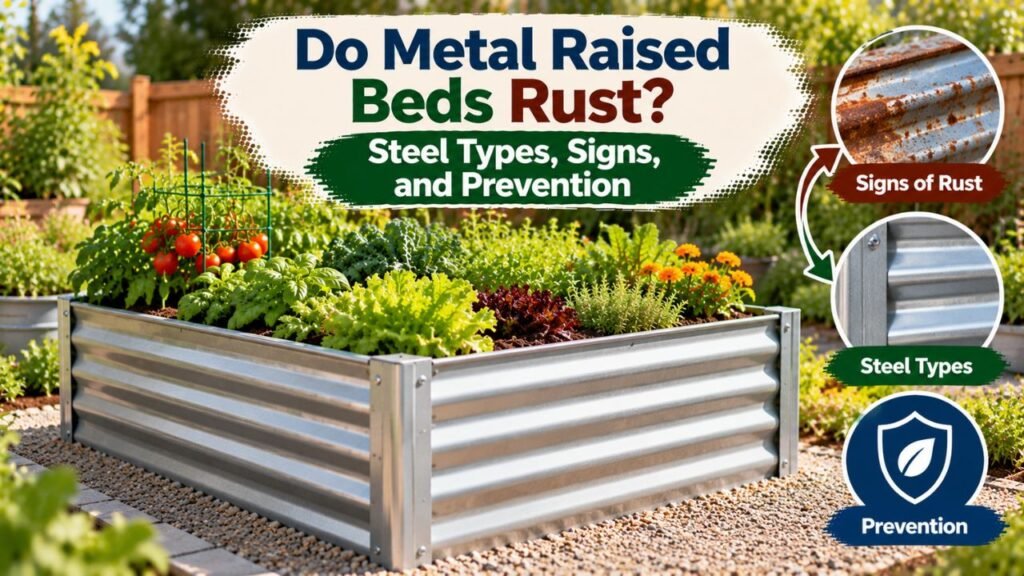
Galvanized metal raised beds are rust-resistant, not completely rustproof. Their steel panels have a protective zinc coating that helps prevent the underlying metal from developing iron rust.
Galvanization protects steel in two important ways.
First, the coating acts as a barrier between the steel and its environment. This reduces direct contact with moisture and oxygen.
Second, zinc provides sacrificial protection. When a small area of steel becomes exposed, nearby zinc can corrode preferentially, helping protect the underlying steel.
However, this protection is not unlimited.
As the coating gradually deteriorates, the steel becomes more vulnerable to corrosion. Rust may eventually appear, particularly along damaged edges, poorly protected joints, and areas exposed to persistent moisture.
Why Galvanized Steel Lasts Longer Than Ordinary Steel
Uncoated carbon steel reacts with oxygen and moisture, producing iron oxide commonly recognized as reddish-brown rust.
Galvanized steel has an additional protective layer that slows this process.
As long as the zinc coating provides adequate protection, the underlying steel is less likely to corrode.
The coating’s durability depends on its thickness, manufacturing quality, and the surrounding conditions.
For raised beds, soil contact creates an especially important exposure because the interior surfaces may remain moist for extended periods.
Can a Galvanized Raised Bed Rust After Being Scratched?
Yes, but a small scratch does not necessarily cause immediate rusting.
The remaining zinc around minor exposed areas can continue providing some corrosion protection.
However, deeper scratches, large damaged areas, or worn coatings may expose enough steel for rust to develop.
Cut edges and drilled holes may also require attention, especially when the original coating does not adequately protect them.
Inspect damage before it expands.
Why do metal raised beds rust over time?
Metal raised beds rust when corrosion protection becomes inadequate and steel is exposed to conditions that support oxidation.
Several environmental and construction factors influence how quickly this happens.
Prolonged Exposure to Moisture
Moisture is a major contributor to steel corrosion.
Raised beds routinely receive water from irrigation, rainfall, and surrounding soil.
The lower edges of the panels may remain damp longer than the upper portions.
Corrosion risk increases when water collects around:
- Bottom seams and overlapping panels
- Bolts and fastening points
- Damaged coating areas
- Metal surfaces buried in wet soil
- Joints with trapped debris and moisture
The problem is not simply that the bed gets wet.
A properly protected metal panel can tolerate ordinary rainfall and irrigation. Persistent moisture becomes more concerning when the coating is damaged or environmental conditions accelerate its deterioration.
Acidic Garden Soil
Soil pH can influence corrosion of the zinc coating on galvanized steel.
More acidic conditions may increase the rate at which the protective layer deteriorates.
According to the American Galvanizers Association’s guidance on galvanized steel in soil, soil moisture, pH, and chloride concentration are major factors affecting corrosion performance.
This is particularly relevant to raised beds used for plants requiring strongly acidic soil.
However, not every mildly acidic garden soil causes rapid corrosion.
The actual effect depends on the combined soil conditions and coating specifications.
Salt Exposure and Coastal Environments
Metal beds located near the coast may experience additional corrosion pressure from salt-containing moisture.
Chlorides can contribute to faster deterioration of protective coatings.
Similar concerns may occur where saline irrigation water or contaminated runoff regularly contacts the panels.
Ordinary inland gardens generally face different exposure conditions from coastal properties.
A corrosion-resistant coating selected for one environment may not perform equally well in another.
Damaged Paint or Protective Coatings
Some metal raised beds have powder-coated or painted surfaces that provide additional protection.
If the finish is scratched, chipped, or improperly applied, moisture can reach the underlying metal.
Damage may begin around assembly points, corners, or exposed edges.
Poor coating adhesion can also allow moisture to spread underneath the finish, eventually producing bubbling or peeling.
Low-Quality Metal and Thin Panels
Material quality influences how a raised bed handles long-term corrosion.
Thin steel panels have less material available before corrosion causes perforation or structural weakness.
However, thickness alone does not determine durability.
A properly coated thinner panel may outperform a thicker panel with inadequate corrosion protection under certain conditions.
Coating quality, steel specifications, construction details, and environmental exposure all matter.
Which Types of Metal Raised Beds Rust?
Not every metal behaves the same way when exposed to moisture.
Some metals develop reddish-brown iron rust, while others form different corrosion products.
Understanding the material helps you evaluate long-term maintenance requirements.
| Metal Raised Bed Material | Rust Resistance | Main Consideration |
| Untreated carbon steel | Low | Can rust readily when exposed to moisture |
| Galvanized steel | High while coating remains protective | Zinc coating gradually wears under corrosive conditions |
| Aluminum-zinc coated steel | Generally high | Performance depends on alloy coating and exposure |
| Powder-coated steel | Depends on the underlying steel and coating | Scratches and peeling can expose steel |
| Stainless steel | High | Certain environments can cause staining or localized corrosion |
| Aluminum | Does not develop iron rust | Can oxidize or corrode in certain conditions |
| Weathering steel | Designed to form surface rust | Persistent soil moisture can prevent stable protective weathering |
Galvanized Steel Raised Beds
Galvanized steel is a common material for prefabricated metal garden beds.
Its zinc coating provides corrosion resistance while the steel supplies structural strength.
This combination makes it practical for garden beds exposed to irrigation and outdoor weather.
However, galvanized steel is not automatically immune to corrosion.
Coating thickness, soil conditions, and construction quality determine long-term performance.
Aluminum-Zinc Coated Steel Raised Beds
Some manufacturers use steel with an aluminum-zinc alloy coating.
These coatings are often marketed under names such as Aluzinc or Galvalume, depending on the product and manufacturing system.
They are designed to provide corrosion protection through the coating’s combined properties.
Under suitable conditions, some aluminum-zinc coatings can outperform conventional zinc coatings.
However, results depend on the particular coating composition and exposure environment.
Do not assume that every aluminum-zinc product lasts longer than every galvanized product, especially in continuously damp soil contact.
Powder-Coated Metal Raised Beds
Powder coating creates a protective finish over the metal surface.
It can improve appearance and help reduce direct environmental exposure.
However, the underlying material still matters.
A powder-coated galvanized steel bed has a different protective system from a powder-coated plain carbon steel bed.
When the coating becomes damaged, the plain steel underneath may rust more readily.
Check whether the manufacturer’s product combines powder coating with galvanization or another corrosion-resistant treatment.
Stainless Steel Raised Beds
Stainless steel contains alloying elements, particularly chromium, that help create a protective surface film.
It provides strong corrosion resistance in many outdoor environments.
However, stainless steel is not completely immune to corrosion.
Certain chloride-rich conditions, poorly maintained crevices, or unsuitable material grades can contribute to localized corrosion.
Stainless steel is also generally more expensive than standard galvanized steel.
Aluminum Raised Beds
Aluminum does not develop the familiar reddish-brown iron rust because it does not contain iron as its main structural component.
Instead, aluminum naturally forms an oxide layer that can help protect its surface.
This makes it attractive for outdoor applications.
However, aluminum can still experience other forms of corrosion, especially in unfavorable chemical or salt-rich environments.
The metal’s thickness, alloy, and construction design also determine its suitability for holding garden soil.
How Long Do Metal Raised Beds Last Before Rusting?
Well-made galvanized steel raised beds can remain usable for many years, and favorable conditions may allow them to last for decades.
However, there is no universal lifespan that applies to every metal raised bed.
The University of Minnesota Extension’s raised bed gardening guidance identifies galvanized steel as a highly rust-resistant material that can last for upward of 50 years under suitable conditions.
That figure should not be treated as a guarantee for every commercial garden bed.
The performance of an individual bed depends on its material and environment.
Factors That Affect Metal Raised Bed Lifespan
The most important considerations include:
- Metal thickness: Thicker panels may provide greater structural tolerance before corrosion causes failure.
- Coating quality: A durable and properly applied protective coating can significantly reduce corrosion.
- Soil conditions: Moisture, acidity, and dissolved salts influence deterioration.
- Installation quality: Poorly protected joints and damaged panel edges create vulnerable areas.
- Local climate: Coastal exposure, humidity, and frequent wet conditions may affect longevity.
- Maintenance: Cleaning, inspection, and timely repairs can help prevent localized damage from spreading.
A bed installed in well-drained garden soil may experience different corrosion conditions from one sitting in persistently saturated soil.
Does Surface Rust Mean the Raised Bed Is Worn Out?
Not necessarily.
Small surface rust spots do not always indicate severe structural damage.
The more important questions are whether the corrosion is spreading, whether the steel has become thinner, and whether the panel still supports the soil safely.
Rust around a superficial scratch is different from deep corrosion that has produced holes or weakened a structural joint.
Inspect the affected area before deciding whether repair or replacement is necessary.
How to Prevent Rust in Metal Raised Garden Beds
Rust prevention begins with selecting a suitable product and maintaining its protective surfaces.
Most metal raised beds do not require complicated maintenance.
A few practical precautions can help reduce unnecessary corrosion.
1. Choose Metal Beds With Suitable Protective Coatings
Look for products with clearly identified materials and coating specifications.
Galvanized steel and suitable aluminum-zinc coated steel are common options.
A reputable manufacturer should provide information about panel construction, protective finishes, and warranty coverage.
Avoid choosing a bed solely because its appearance resembles galvanized steel.
A silver-colored surface does not prove that it has an adequate protective coating.
2. Protect Scratched and Exposed Metal Edges
Inspect the panels during assembly.
Pay attention to cuts, drilled holes, damaged corners, and other exposed areas.
If the manufacturer’s instructions recommend a protective repair coating, use a product compatible with the original finish.
For galvanized steel, some repairs may require an appropriate zinc-rich coating.
Confirm that the product is suitable for the exposure conditions and use near an edible garden.
Do not apply random paints, industrial chemicals, or rust treatments directly against vegetable-growing soil.
3. Prevent Water From Collecting Around the Panels
Raised beds should allow excess irrigation and rainfall to drain.
Avoid placing an impermeable plastic sheet across the entire bottom of an open-bottom bed.
Water trapped against metal surfaces can increase corrosion pressure and create poor growing conditions.
For elevated planters with solid bottoms, provide suitable drainage openings.
Keep exterior seams and lower edges clear of accumulated debris when practical.
4. Use Suitable Soil and Monitor Acidity
Most common vegetables grow best in soil that is mildly acidic to near neutral, although requirements vary by crop.
Extremely acidic growing media can be more aggressive toward zinc coatings.
If you are growing acid-loving plants that require unusually low soil pH, consider whether a galvanized bed is the most appropriate material.
A suitable liner or another bed material may be preferable.
Avoid adding lime simply to protect the metal without checking the actual needs of the plants and soil.
5. Consider a Sidewall Liner When Appropriate
A liner can reduce direct contact between the metal panels and garden soil.
However, liners are not mandatory for every galvanized steel raised bed.
If using one, choose a durable material suitable for the intended garden application.
Install it so that water cannot become permanently trapped between the liner and metal panels.
Keep the bottom open for drainage in an ordinary open-bottom raised bed.
6. Use Compatible Fasteners and Hardware
Bolts, nuts, brackets, and joining hardware are common places to inspect for rust.
Choose the fastener types recommended by the bed manufacturer.
Mixing certain dissimilar metals in the presence of moisture can contribute to galvanic corrosion.
Do not replace supplied hardware with random fasteners simply because they fit the holes.
7. Inspect the Raised Bed Every Growing Season
Check the frame periodically, particularly after periods of heavy rain or at the end of the growing season.
Look for:
- Chipped or peeling coatings
- Reddish-brown rust spots
- Loose or rusted fasteners
- Soft or weakened panel connections
- Holes near the soil line
- Bowing or deformation
Early maintenance is generally easier than repairing substantial corrosion after the frame has weakened.
How to Tell if a Metal Raised Bed Is Rusting
Not every change in a metal panel’s appearance indicates damaging iron rust.
Galvanized surfaces can develop different stains and corrosion products.
Reddish-Brown Rust
Orange or reddish-brown marks may indicate iron corrosion.
Look closely to determine whether the rust originates from the steel panel itself or from a nearby fastener or other metal object.
Rust stains can sometimes transfer from unprotected hardware onto otherwise intact galvanized panels.
Persistent corrosion coming from exposed steel deserves closer inspection.
White or Gray Powdery Deposits
Galvanized steel may develop whitish deposits from reactions involving its zinc coating.
These are sometimes casually called white rust, although different zinc corrosion products have distinct technical classifications.
Light deposits do not necessarily indicate that the underlying steel is rusting.
However, heavy or persistent deposits may suggest unfavorable moisture exposure and loss of protective coating material.
Avoid aggressive cleaning that unnecessarily removes the remaining zinc coating.
Peeling or Bubbling Paint
Paint blistering can indicate moisture getting underneath a coating.
It may also result from poor surface preparation or coating incompatibility.
If the coating separates from the steel, inspect the exposed area for rust.
Repair the finish according to the manufacturer’s instructions.
Rust Holes and Weak Panels
Perforations, deep pitting, and severely thinned metal indicate more advanced deterioration.
These problems are particularly concerning along the bottom of a raised bed, where the soil pushes outward against the panels.
A structurally weakened panel should be replaced rather than covered with decorative paint.
What to Do if Your Metal Raised Bed Is Already Rusting
The appropriate response depends on the extent of corrosion and the material involved.
Small localized defects may be repairable.
Extensive corrosion may require replacing the affected panels or the entire bed.
Step 1: Identify the Source of the Rust
Inspect the surrounding hardware, panel edges, and joints.
Determine whether the stain comes from:
- Exposed steel
- A corroded bolt
- Damaged protective coating
- Rust transferred from another object
- Advanced corrosion beneath the surface finish
Cleaning a stain without addressing its source may allow the problem to return.
Step 2: Assess the Damage
Look for pitting, holes, loose connections, and panel deformation.
If the steel remains structurally sound, a localized coating repair may be possible.
However, significant metal loss requires more attention.
A raised bed wall must remain strong enough to resist the pressure of the soil it contains.
Step 3: Clean the Affected Area Carefully
For minor, repairable corrosion, follow the manufacturer’s surface preparation instructions.
Remove loose dirt and debris without unnecessarily damaging the surrounding protective finish.
If mechanical cleaning is recommended, use appropriate tools and protective equipment.
Avoid aggressive grinding or sanding of coated materials when the coating composition is unknown.
Keep metal particles, paint debris, and cleaning chemicals out of vegetable-growing soil.
Step 4: Apply a Compatible Protective Coating
Where permitted, repair exposed areas using a coating recommended for the metal and its original protective finish.
The surface should be properly prepared and dry before application.
Allow the coating to cure according to its instructions before exposing it to soil or water.
A generic rust-resistant paint may not be compatible with every galvanized or aluminum-zinc coating.
Step 5: Replace Severely Corroded Panels
If rust has created holes, extensive pitting, or weakened joints, replacement is usually a more dependable option.
Some modular metal raised beds allow individual panels to be changed.
Use compatible replacement parts and fasteners.
If the entire frame is deteriorating, replacing the bed may be more practical than repeatedly repairing damaged sections.
Are Rusty Metal Raised Beds Safe for Growing Vegetables?
A small amount of ordinary iron rust on a raised bed frame does not automatically make the vegetables unsafe to eat.
Iron oxide is different from contamination involving hazardous industrial coatings or unknown chemical residues.
However, rusty metal should not be treated as universally harmless.
The underlying material, coating history, and severity of deterioration matter.
Is Galvanized Steel Safe for Vegetable Gardens?
Modern galvanized steel raised beds are generally considered suitable for vegetable gardening under ordinary soil conditions.
The zinc coating can gradually weather, and some zinc may enter nearby soil.
Zinc is an essential plant micronutrient, but excessive concentrations can harm plants.
Highly acidic soil can increase zinc release from galvanized coatings.
For edible gardening, choose products from manufacturers that disclose suitable material and coating information.
Avoid using unidentified industrial scrap metal, old painted roofing panels, or heavily corroded containers with an uncertain history.
Does Rust Contaminate Raised Bed Soil?
Small amounts of iron oxide from ordinary steel corrosion do not necessarily create a meaningful contamination problem.
However, rusting material may also have other coatings or residues that require evaluation.
For example, reclaimed metal could contain old paint, chemical contamination, or unknown surface treatments.
Do not assume that an unknown metal panel is food-safe simply because its visible rust contains iron.
If contamination is suspected, seek appropriate material information or soil testing.
Should You Replace a Bed That Has Rust Spots?
Not every rusty bed needs immediate replacement.
Minor surface corrosion may be manageable if the frame remains strong and the material is otherwise suitable.
Replacement becomes more important when corrosion creates sharp holes, weakens structural connections, or causes panels to bow or separate.
The condition of the complete bed matters more than the appearance of a few isolated rust stains.
Are Metal Raised Beds Better Than Wood for Rust and Rot Resistance?
Metal and wooden raised beds have different deterioration problems.
Steel is vulnerable to corrosion, while wood can decay through prolonged exposure to moisture and wood-destroying organisms.
| Feature | Metal Raised Bed | Wooden Raised Bed |
| Main deterioration concern | Corrosion of susceptible metal | Rot and biological decay |
| Resistance to insects | Generally not affected by wood-destroying insects | Depends on wood species and treatment |
| Protective treatments | Galvanization, alloy coatings, paint | Wood preservatives and suitable finishes |
| Maintenance | Inspect coatings, joints, and fasteners | Inspect rot, joints, and fasteners |
| Structural lifespan | Depends on material and corrosion conditions | Depends on wood species and moisture |
| Replacement options | Individual panels on some kits | Individual boards on many designs |
Galvanized steel can be a useful choice for gardeners who want to avoid replacing decayed lumber.
However, the material should still be selected according to soil conditions, climate, and budget.
Naturally decay-resistant wood may also provide many years of service, particularly with good construction and drainage.
Neither material is permanently maintenance-free.
How to Choose a Metal Raised Bed That Resists Rust
If long-term corrosion resistance is your priority, evaluate the product’s material specifications before purchasing.
Focus on the construction rather than the advertised lifespan alone.
Check the Metal and Coating Type
Look for a clear identification of the material.
A product description should distinguish between galvanized steel, aluminum-zinc coated steel, stainless steel, and aluminum.
If the bed is painted or powder-coated, check what protective treatment exists underneath the decorative finish.
Consider Soil and Climate Conditions
For a typical inland vegetable garden, a well-made galvanized steel bed is often a practical choice.
If the site is near saltwater or experiences unusually corrosive conditions, additional material considerations may be necessary.
Beds intended for highly acidic soil also deserve careful material selection.
Inspect Panel Thickness and Structural Design
Thin sheet-metal panels may need corrugations, support rods, or cross-bracing to resist the outward pressure of soil.
Check that the bed’s height and dimensions are supported by its frame design.
A durable coating does not compensate for a structurally weak panel.
Review Fasteners and Edge Protection
Look for properly finished edges and compatible assembly hardware.
Exposed cut surfaces should receive protection where required by the manufacturer.
Rounded or covered edges also help reduce the risk of cuts while gardening.
Evaluate Warranty Coverage
Some manufacturers offer warranties covering certain material and manufacturing defects.
Read the conditions carefully.
Corrosion coverage may be limited by exposure conditions, installation methods, or damage to the protective finish.
A long warranty does not necessarily guarantee that all forms of rust are covered.
Conclusion
So, do metal raised beds rust? Yes, steel beds can eventually rust, but galvanized and properly coated metal beds are designed to resist corrosion for a long time.
Galvanized steel is a practical option for many vegetable gardens because its zinc coating protects the underlying steel. Aluminum-zinc coated steel, stainless steel, and aluminum offer additional alternatives with different corrosion characteristics.
The most important factors affecting durability are coating quality, moisture exposure, soil acidity, salt exposure, and structural design.
To help a metal raised bed last longer, choose suitable materials, protect damaged coatings, maintain drainage, and inspect the frame periodically.
A few small rust spots do not necessarily mean the bed is finished. However, deep corrosion, holes, and weakened panels should be addressed before they compromise the structure.
For most home vegetable gardens, a well-constructed galvanized steel raised bed remains a practical, durable choice when its material and coating are appropriate for the growing conditions.
FAQs About Do Metal Raised Beds Rust
Will Galvanized Raised Beds Eventually Rust?
Yes. Galvanized steel can eventually develop rust if its protective zinc coating becomes depleted or sufficiently damaged.
However, properly coated galvanized raised beds can resist corrosion for many years under favorable conditions.
Their lifespan depends on soil conditions, coating quality, material thickness, and maintenance.
Do Metal Raised Beds Rust Faster in the Rain?
Frequent moisture exposure can contribute to corrosion, especially when water remains trapped against damaged coatings or joints.
Ordinary rainfall does not necessarily cause rapid rusting in a properly protected galvanized bed.
Good drainage and suitable protective coatings help reduce the risk.
Can You Paint a Metal Raised Bed to Prevent Rust?
Yes. A compatible protective coating can help reduce corrosion when properly applied.
However, the paint must be appropriate for the underlying metal and its exposure conditions.
For galvanized steel, follow the manufacturer’s preparation and coating recommendations. Use products suitable for application near garden soil.
Do Aluminum Raised Garden Beds Rust?
No. Aluminum does not produce iron rust because it is not an iron-based metal.
However, aluminum can oxidize or experience other corrosion under certain conditions.
Choose suitable aluminum alloys and construction methods for long-term outdoor garden use.
Why Is My New Metal Raised Bed Developing White Spots?
White or gray deposits on galvanized panels may be zinc corrosion products associated with moisture exposure.
These deposits are different from reddish-brown iron rust.
Light surface deposits do not always indicate structural damage, but extensive or persistent buildup should be evaluated according to the manufacturer’s guidance.
Can I Grow Vegetables in a Raised Bed With Surface Rust?
Yes, minor ordinary iron rust does not automatically make a vegetable bed unsuitable.
However, inspect the metal for structural damage and consider whether the panels contain unknown coatings or contaminants.
Avoid using severely corroded or unidentified reclaimed metal for edible gardening.

I’m Maya L. Greenwood, a lifelong plant lover who believes anyone can grow something beautiful with the right guidance. After years of testing soil mixes, pruning methods, irrigation tricks, and pest-safe solutions, I started EasyGardenTips.com to turn hard-won lessons into step-by-step advice. From seed starting and container gardens to composting and seasonal checklists, my goal is to make gardening simple, sustainable, and fun.