Do Metal Raised Beds Get Too Hot? Temperatures and Plant Care
Metal raised beds can become very hot to the touch in direct sunlight, but they don’t automatically overheat the soil or damage plant roots. Most properly maintained galvanized steel raised beds can support healthy vegetables, herbs, and flowers during summer. Problems are more likely when the beds are shallow, exposed to intense afternoon sunlight, or allowed to dry out excessively.
Metal conducts heat more readily than wood, so its surface temperature can rise quickly on sunny days. However, the metal wall and the growing soil don’t necessarily reach the same temperature. Soil moisture, planting depth, bed dimensions, and surrounding surfaces all influence how warm the root zone becomes.
Gardeners in hot states such as Arizona, Texas, and Florida may need to manage irrigation and sun exposure more carefully, particularly during prolonged heat waves.
In this article, I explain how metal raised beds affect soil temperature, whether galvanized steel gets hotter than wood, and which growing conditions increase overheating risks. I also cover practical ways to keep raised beds cooler, protect vegetable roots, recognize heat stress, and choose suitable metal beds for hot climates.
Do Metal Raised Beds Get Too Hot in Full Sun?
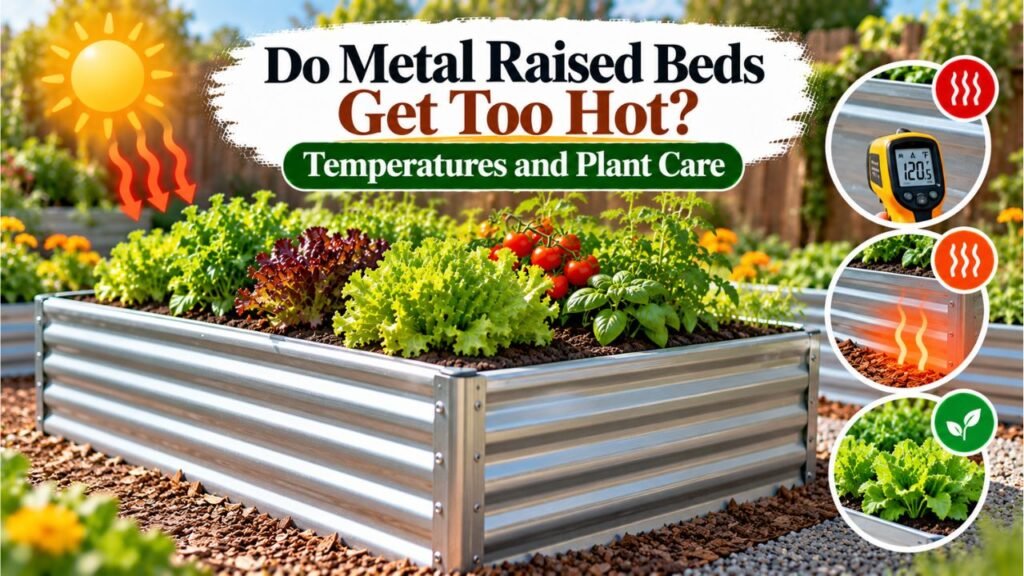
Metal raised beds can absorb considerable heat in full sun, but the entire soil volume doesn’t necessarily become dangerously hot. The biggest temperature changes often occur around exposed metal surfaces and the surrounding soil near those walls.
The temperature difference depends on several factors, including the metal’s finish, the bed’s dimensions, and how much moisture remains in the soil.
Why Metal Raised Bed Walls Get Hot
Metal conducts heat efficiently.
When direct sunlight strikes a galvanized steel panel, the exposed surface absorbs part of that solar energy.
The panel can warm quickly, especially during clear summer afternoons.
Some of that heat transfers toward the growing medium, while some is released to the surrounding air.
The amount absorbed depends partly on the panel’s color and surface finish.
Dark, low-reflectance surfaces generally absorb more sunlight than light-colored, reflective surfaces.
However, a hot exterior panel doesn’t establish the temperature several inches inside the soil.
Does the Soil Inside a Metal Bed Get Just as Hot?
Not necessarily.
Soil behaves differently from thin sheet metal because it contains mineral particles, organic matter, air spaces, and moisture.
These materials affect how heat moves and is stored.
A moist, relatively deep growing medium can moderate rapid temperature changes.
Soil closer to the metal walls may respond more quickly to outside heating than soil near the center.
The actual difference varies with soil composition, water content, bed dimensions, and weather.
A metal panel that feels uncomfortable to touch doesn’t prove that the roots in the middle of the bed are overheating.
Key Takeaway: Judge the growing conditions by measuring soil temperature and moisture near the roots, not by touching the metal frame.
What Makes Metal Raised Beds Overheat in Summer?
Metal bed overheating is rarely caused by the frame material alone.
Several environmental and design factors determine whether the growing medium experiences excessive heat.
Intense Afternoon Sunlight
South- and west-facing metal panels can receive strong sunlight, particularly during summer.
In hot climates, prolonged afternoon exposure may increase temperatures along the sun-facing walls.
The topsoil also absorbs direct sunlight independently of the metal frame.
For this reason, changing the frame material alone doesn’t eliminate summer heat problems.
The amount of shade, soil cover, and moisture can make a substantial difference.
Dark-Colored Metal Panels
Dark metal finishes generally absorb more incoming solar radiation than lighter finishes under comparable conditions.
A dark gray or black raised bed may therefore develop a hotter exterior surface than an otherwise similar white or light-colored bed.
However, the resulting soil temperature difference isn’t fixed.
Panel reflectivity, sun exposure, soil depth, and moisture all influence the outcome.
A light finish can be useful in very hot locations, but color alone shouldn’t determine the entire bed design.
Shallow or Narrow Raised Beds
A narrow raised bed has more exposed wall area relative to its soil volume than a wider bed of comparable height.
This gives the surrounding environment greater influence over the growing medium.
Shallow beds also contain less soil to buffer changing temperatures and store moisture.
However, taller raised beds aren’t automatically cooler.
Their exposed sides can increase drying, especially in windy or hot conditions.
The best design provides adequate rooting volume without creating unnecessary moisture-management problems.
Dry Raised Bed Soil
Dry soil can become a more difficult growing environment during hot weather.
When moisture is limited, plants cannot replace water lost through transpiration as effectively.
Evaporation from the soil surface also decreases as available moisture is depleted.
This reduces evaporative cooling.
A dry metal raised bed exposed to intense sunlight may therefore experience greater plant stress than a similar bed maintained at suitable moisture levels.
Metal Beds Installed on Concrete or Pavers
Concrete, asphalt, and other hard surfaces can absorb and reflect substantial solar energy.
A metal raised bed placed on a hot patio may receive additional heat from the surrounding surface.
If the bed has a closed bottom, roots also cannot extend into cooler or moister native soil beneath it.
The University of Maryland Extension’s raised bed gardening guidance explains that raised beds on hard surfaces can experience additional stress from absorbed and reflected sunlight and heat.
The guidance also recommends adequate growing depth and careful moisture monitoring for beds placed over pavement.
Metal vs. Wood Raised Beds: Which Gets Hotter?
Metal and wood respond differently to sunlight because their thermal properties differ.
Metal transfers heat relatively quickly, while wood provides greater resistance to heat flow through the walls.
However, neither material guarantees cool growing soil during summer.
| Feature | Metal raised beds | Wood raised beds |
| Heat conduction | Relatively high | Relatively low |
| Surface heating in direct sun | Can heat rapidly | Generally transfers heat more slowly |
| Heat movement through walls | Faster | Slower |
| Soil temperature | Depends on depth, moisture, color, and exposure | Depends on depth, moisture, and exposure |
| Summer drying | Can be significant in exposed beds | Can also be significant |
| Early spring warming | Raised soil warms relatively quickly | Raised soil also warms relatively quickly |
| Hot-climate suitability | Good with appropriate management | Good with appropriate management |
Does Wood Keep Raised Bed Soil Cooler?
Wood can reduce the rate of heat transfer through the sidewalls.
This may help moderate temperature changes immediately adjacent to the frame.
However, sunlight striking the soil surface can still warm a wooden bed substantially.
Wooden raised beds also dry faster than many in-ground gardens because the growing soil is elevated and more exposed.
The difference in soil temperature between metal and wood isn’t necessarily large enough to determine plant health by itself.
Soil volume, mulch, irrigation, and location often deserve more attention.
Do Galvanized Steel Raised Beds Retain Heat Overnight?
Metal panels can lose heat relatively quickly when the surrounding air cools.
However, the soil inside the bed releases stored heat more gradually.
The actual overnight soil temperature depends on soil moisture, depth, evening air temperature, and local weather.
A metal bed doesn’t necessarily stay hotter than a wooden bed all night simply because its walls were hot in the afternoon.
Metal beds can also experience substantial temperature changes during cool nights.
How to Keep Metal Raised Beds Cool in Summer
Reducing unnecessary heat stress involves controlling soil moisture, sunlight exposure, and the amount of heat absorbed by the growing environment.
The following methods can help maintain better root-zone conditions.
1. Add Organic Mulch Over the Soil
Mulching is one of the most useful ways to protect raised bed soil during summer.
A suitable organic mulch reduces direct sunlight reaching the soil surface and helps slow moisture loss.
Common choices include:
- Clean straw.
- Shredded leaves.
- Suitable untreated wood chips.
- Other clean organic gardening mulches.
A layer approximately 2–3 inches deep is a common starting point for many established vegetable beds, although the appropriate thickness depends on the material and plants.
Keep mulch away from direct contact with stems and crowns.
For small seedlings, use a lighter application until the plants become established.
Mulch protects the soil surface regardless of whether the frame is made from metal or wood.
2. Water the Raised Bed at the Right Time
Water management is especially important during prolonged hot weather.
Early morning watering is often preferable because it replenishes soil moisture before the hottest part of the day.
Water thoroughly enough to moisten the active root zone, but avoid keeping the soil permanently saturated.
According to the University of Minnesota Extension’s raised bed gardening guide, raised beds tend to dry faster than ordinary garden soil, and taller raised beds may need more frequent watering.
To manage moisture:
- Check the soil below the surface.
- Water when the root zone begins drying beyond the crop’s preferred level.
- Apply water slowly so it can soak into the growing medium.
- Allow excess water to drain.
- Recheck moisture during extended hot spells.
Don’t follow a rigid daily watering schedule without checking the soil.
Overwatering can reduce oxygen around roots and create problems that resemble heat stress.
3. Install Drip Irrigation or Soaker Hoses
Drip irrigation delivers water near plant roots without unnecessarily wetting the surrounding garden.
It can help maintain consistent moisture during hot weather.
A typical raised bed setup may include:
- A suitable water supply.
- Filter and pressure regulator when required.
- Drip tubing or soaker hoses.
- Appropriate connectors.
- An optional irrigation timer.
Position the irrigation lines to cover the planted areas rather than directing all water toward one end of the bed.
Check that water reaches the active root zone.
Automatic systems still require occasional inspection because clogged emitters or leaking connections can leave plants under- or overwatered.
4. Use Temporary Shade During Extreme Heat
Temporary shade can help reduce solar exposure during unusually hot weather.
Shade cloth is particularly useful for leafy greens and young plants that struggle in intense afternoon sunlight.
Install it above the plants using a suitable frame.
Make sure the fabric doesn’t rest heavily on delicate stems or trap excessive heat around foliage.
Keep airflow available.
Shade shouldn’t automatically cover the bed throughout the growing season.
Tomatoes, peppers, and other sun-loving plants still need adequate light for healthy growth and fruit production.
Use temporary protection according to crop requirements and weather conditions.
5. Choose Light-Colored Metal Raised Beds
If you’re buying a new metal bed for a particularly hot location, consider a lighter-colored finish.
White, beige, light gray, and other relatively reflective finishes may reduce solar absorption at the frame surface.
This can help limit one source of heat transfer.
However, not all light-colored products have identical reflectivity.
The actual finish and coating properties matter.
Avoid repainting a galvanized bed with an unidentified coating.
If refinishing is necessary, choose a product compatible with the metal and suitable for the intended garden application.
6. Maintain Adequate Soil Depth and Rooting Space
A bed with sufficient soil volume provides more room for root development and moisture storage.
For many open-bottom vegetable beds, approximately 12 inches of added growing soil can be a practical starting point, provided roots can enter suitable native ground beneath it.
Some crops and planting situations benefit from greater depth.
A closed-bottom elevated planter needs enough internal growing medium for the full root system.
Don’t choose an excessively shallow metal bed simply to reduce soil costs.
At the same time, making a bed much taller than necessary can increase the amount of exposed wall and irrigation demand.
7. Keep Metal Beds Away From Excessively Hot Surfaces
Whenever practical, position metal raised beds on suitable garden soil rather than directly on asphalt or heat-absorbing pavement.
An open-bottom design allows roots to extend into the ground where conditions permit.
If patio installation is necessary:
- Provide adequate growing depth.
- Ensure water has a clear drainage route.
- Monitor soil moisture more frequently.
- Avoid areas exposed to unnecessary reflected heat.
- Consider suitable temporary shade during extreme weather.
Don’t seal the bottom with impermeable plastic unless the planter has a separate, properly designed drainage system.
How to Tell if Soil in a Metal Raised Bed Is Too Hot
A hot frame doesn’t necessarily mean the roots are experiencing damaging temperatures.
The most reliable approach is to examine actual soil conditions.
Measure Soil Temperature With a Thermometer
Use a suitable soil thermometer to compare temperatures in different areas.
For a practical home garden check:
- Insert the thermometer into the soil near the root zone.
- Measure near the sun-facing metal wall without touching the metal.
- Take another reading near the center of the bed.
- Compare both readings at the same depth.
- Repeat in the morning and late afternoon.
- Record soil moisture and weather conditions alongside the readings.
For shallow-rooted seedlings, measure within the upper growing layer.
For established plants, also check deeper in the root zone.
This helps distinguish a warm surface from conditions affecting the main root system.
There is no single dangerous soil temperature that applies to every vegetable.
The appropriate range depends on crop species, growth stage, moisture conditions, and exposure duration.
Look for Signs of Plant Heat Stress
Possible heat-related symptoms include:
- Leaves wilting during the hottest part of the day.
- Leaf edges becoming dry or scorched.
- Slow growth during prolonged hot weather.
- Flowers dropping before producing fruit.
- Reduced germination of cool-season seeds.
- Soil drying unusually quickly.
- Young plants struggling near exposed sidewalls.
These symptoms don’t prove the metal frame is responsible.
High air temperature, inadequate water, root damage, and other growing problems can produce similar effects.
Determine Whether Wilting Comes From Heat or Dry Soil
Check the moisture around the root system before watering.
If the soil is dry, insufficient moisture may be contributing to the problem.
If it remains adequately moist, plants may be experiencing temporary heat-related water stress.
Some plants wilt during intense afternoon heat and recover as conditions cool.
However, plants that remain wilted after sunset or fail to recover overnight need closer inspection.
Check the roots, drainage, irrigation system, and signs of disease.
Avoid automatically adding more water to saturated soil.
Which Plants Are Most Sensitive to Hot Metal Raised Beds?
Different crops respond differently to warm growing conditions.
Some vegetables benefit from warm soil, while others struggle during prolonged summer heat.
Lettuce, Spinach, and Other Cool-Season Crops
Lettuce, spinach, and many other cool-season vegetables generally perform better under moderate temperatures.
Excessive heat may contribute to premature flowering, commonly called bolting.
Bolting can reduce leaf quality and shorten the useful harvest period.
In very hot climates, these crops may perform better during spring, fall, or another cooler growing season.
Temporary afternoon shade can also help in suitable conditions.
However, even a shaded metal bed may become too warm for certain cool-season crops during midsummer.
Tomatoes, Peppers, and Other Warm-Season Vegetables
Tomatoes and peppers generally prefer warmer growing conditions than lettuce or spinach.
They can grow successfully in metal raised beds.
However, prolonged extreme heat can affect flowering, fruit development, and water balance.
A tomato plant experiencing blossom drop during a heat wave isn’t necessarily suffering because the metal walls are hot.
High air temperatures and plant stress may be more important.
Maintain consistent soil moisture and provide suitable heat protection when necessary.
Herbs and Drought-Tolerant Plants
Different herbs have different moisture preferences.
Basil generally appreciates warm growing conditions and adequate moisture.
Rosemary and certain Mediterranean herbs prefer well-drained soil and may tolerate drier conditions once established.
However, drought tolerance doesn’t mean a plant is immune to extreme root-zone temperatures.
Select plants based on their specific environmental requirements rather than assuming all herbs prefer identical growing conditions.
Are Metal Raised Beds Better in Spring Than Summer?
One advantage of raised beds is that their soil often warms earlier in spring compared with surrounding in-ground soil.
This can help gardeners establish certain crops earlier under suitable conditions.
However, that advantage isn’t exclusive to metal frames.
Early Soil Warming in Spring
Raised soil is more exposed to surrounding air and sunlight.
As spring temperatures rise, the elevated growing area may warm sooner than nearby ground.
This can be helpful for seed germination and root activity when the soil reaches the crop’s preferred temperature range.
However, warm daytime temperatures don’t eliminate the risk of overnight frost.
A metal raised bed doesn’t provide dependable frost protection by itself.
Managing Summer Heat
During summer, the same exposed growing environment can increase moisture loss.
This is why raised beds require different care throughout the year.
In cooler weather, earlier soil warming may be desirable.
During prolonged hot weather, keeping soil moisture stable and limiting excessive heating becomes more important.
The goal isn’t to keep the soil cool all year.
It is to maintain conditions appropriate for the plants being grown.
How to Choose Metal Raised Beds for Hot Climates
A suitable metal bed can work well in a hot climate, but some designs are easier to manage than others.
Consider more than the appearance of the frame.
Look for a Suitable Width and Growing Volume
A bed approximately 3–4 feet wide can provide useful growing space while allowing access from both sides.
Adequate width also provides more soil volume relative to the exposed sidewall area than an extremely narrow bed of similar height.
However, choose dimensions based on the plants and available space.
A bed against a fence may need to be narrower so the gardener can reach the entire planting area.
Consider the Frame Finish
A light-colored, durable exterior finish may reduce the amount of solar radiation absorbed by the panels.
Check whether the product is intended for outdoor garden use.
Avoid repurposed metal with unknown coatings.
Choose metal edges that are rolled, covered, or otherwise finished to reduce the risk of cuts.
The exterior surface may still become uncomfortable to touch during intense sunlight.
Check Whether the Bed Has an Open Bottom
For installation directly on suitable garden soil, an open-bottom design is generally practical.
It allows roots to enter the underlying ground and provides a drainage pathway.
For installation on a patio or another hard surface, the bed may need a different drainage arrangement.
Confirm the intended installation method before purchasing.
Think About Irrigation Before Installation
A metal bed located far from a convenient water source may be difficult to maintain during summer.
Plan how you will deliver water to the root zone.
For multiple beds, drip irrigation may be more convenient than carrying water by hand.
Choose a layout that allows you to check moisture, inspect plants, and maintain the irrigation system without stepping into the growing soil.
Mistakes That Can Make Metal Raised Beds Too Hot
Some gardening habits can increase heat stress even when the bed itself is suitable.
Leaving the Soil Surface Bare During Summer
Bare soil absorbs direct sunlight and may dry rapidly.
Mulch helps protect the surface while reducing evaporation.
Choose a suitable material for the crop and climate.
Allowing the Root Zone to Dry Completely
Plants need adequate moisture to maintain normal growth and regulate water loss.
Dry conditions can make heat stress more severe.
Monitor moisture below the surface instead of waiting until plants become badly wilted.
Using Black Plastic as Permanent Summer Mulch
Black plastic mulch can absorb solar radiation and warm the soil.
This may be useful in certain growing situations, particularly during cooler weather.
However, it may be unsuitable when the goal is to limit soil heating during extreme summer conditions.
Choose the mulch according to seasonal needs.
Using Excessive Shade
Shade can reduce sunlight exposure, but too much shade may limit growth and fruit production.
Tomatoes, peppers, and other full-sun crops still need substantial light.
Use shade strategically rather than covering every metal bed continuously.
Adding Gravel to Cool the Soil
A thick gravel layer at the bottom isn’t an effective general solution for preventing raised bed overheating.
It can reduce the volume available for growing soil and doesn’t replace proper drainage.
Use a suitable soil mixture and ensure excess water can leave the bed.
Conclusion
So, do metal raised beds get too hot for vegetables and flowers? They can develop hot exterior surfaces and may contribute to warmer soil conditions near the edges, but they don’t automatically overheat plant roots.
Soil temperature depends on more than frame material. Sun exposure, growing depth, moisture, mulch, and surrounding surfaces all influence the conditions plants experience.
For most gardeners, galvanized steel raised beds can work well throughout the growing season with appropriate irrigation and soil management.
In particularly hot climates, light-colored panels, organic mulch, adequate soil volume, and temporary shade for sensitive crops can help reduce excessive heat stress.
I recommend checking root-zone temperature and moisture before making major changes to the bed. A hot metal panel alone isn’t enough evidence that the growing medium is unsuitable.
The most dependable approach is to maintain healthy, adequately moist soil and adjust sun exposure according to the plants being grown.
FAQs About Do Metal Raised Beds Get Too Hot
Can Metal Raised Beds Burn Plant Roots?
They can contribute to excessive root-zone heating under unfavorable conditions, particularly in shallow, dry beds exposed to intense sunlight.
However, a hot metal wall doesn’t automatically mean the roots are being damaged. Actual root-zone temperature and exposure duration determine the risk.
Do Black Metal Raised Beds Get Hotter Than White Ones?
Black and other dark surfaces generally absorb more solar radiation than light-colored surfaces under comparable conditions.
A black metal panel may therefore become hotter than a white one. However, soil temperature differences depend on additional factors, including moisture, bed dimensions, and sunlight exposure.
Should You Insulate Metal Raised Garden Beds?
Insulation isn’t necessary for every metal raised bed.
In unusually hot locations, suitable external shading or insulation may reduce heat transfer through exposed walls. Any added material should be compatible with outdoor use and must not block drainage or trap moisture.
Mulch and proper irrigation are generally simpler first steps.
Do Galvanized Raised Beds Need More Water Than Wooden Beds?
Not necessarily. Metal and wooden raised beds can have similar watering needs when their soil volume, growing medium, sunlight, and planting conditions are comparable.
However, exposed raised beds often dry faster than in-ground gardens. Water according to actual soil moisture rather than frame material alone.
Can You Grow Tomatoes in Metal Raised Beds During Summer?
Yes. Tomatoes can grow successfully in properly maintained metal raised beds.
Provide adequate growing depth, full sun appropriate to the climate, suitable soil, and consistent moisture. During severe heat, consider temporary protection while maintaining sufficient light and airflow.
Do Metal Raised Beds Heat Up Faster in Spring?
Metal panels can respond quickly to sunlight, and raised bed soil often warms earlier in spring than surrounding ground.
However, the amount of soil warming depends on moisture, depth, weather, and sunlight. Metal frames alone don’t guarantee faster plant growth or protection from frost.
Should You Put Metal Raised Beds in the Shade?
Not automatically. The correct location depends on what you’re growing.
Full-sun vegetables generally need substantial direct sunlight. Cool-season greens may benefit from some afternoon shade during hot weather.
Choose the location based on plant requirements, and manage heat through appropriate watering, mulch, and temporary protection where needed.

I’m Maya L. Greenwood, a lifelong plant lover who believes anyone can grow something beautiful with the right guidance. After years of testing soil mixes, pruning methods, irrigation tricks, and pest-safe solutions, I started EasyGardenTips.com to turn hard-won lessons into step-by-step advice. From seed starting and container gardens to composting and seasonal checklists, my goal is to make gardening simple, sustainable, and fun.