5 Best Grow Lights for Indoor Herb Garden: Top Picks and Guide
This guide compares all five picks, explains what their timers, spectrum settings, clamps, dimming controls, and flexible arms mean in daily use, and covers setup, placement, maintenance, safety, and common mistakes. The goal is to help a beginner match a light to the number of herbs, available space, and amount of attention the garden will receive. When comparing best grow lights for indoor herb garden, I look at how each option fits a real buying need, where it performs well, and which trade-offs matter.
My first choice is Qicodu Grow Lights Indoor Compact Full-Spectrum Grow Light. Choosing the best grow lights for indoor herb garden setups can be surprisingly difficult. A small countertop planter needs different coverage, positioning, and scheduling than a shelf full of basil, mint, or cilantro, so the right choice depends on more than brightness alone.
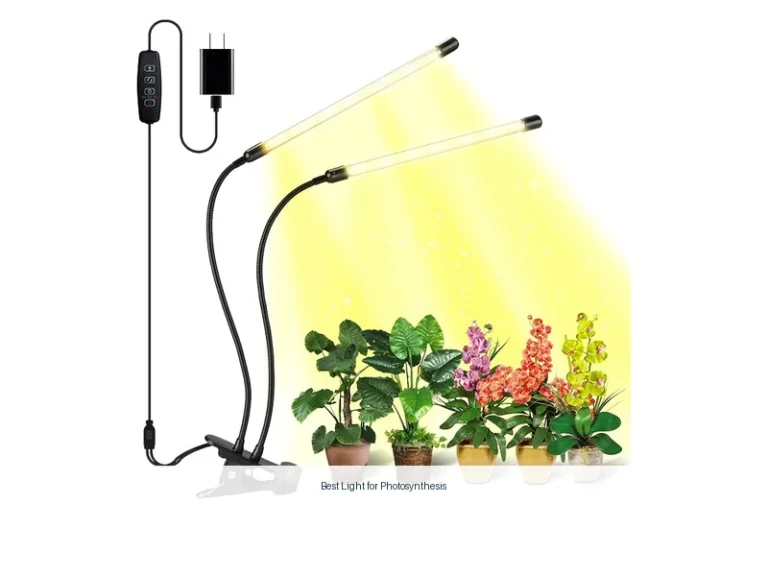
My second choice is Miracle-Gro Grow Light 10W Flexible Two-Head LED. The 4-, 8-, or 12-hour timer and sturdy clip also make it a convenient option for a dark corner or two smaller herb containers.
My third choice is GooingTop 6000K Full-Spectrum Indoor Plant Growing Lamp. GooingTop Grow Light 6000K Full Spectrum Indoor Plant Growing Lamp earns my third-choice position for its strong customer-feedback record, soft 6000K light, flexible gooseneck, and low 10-watt power draw. It is a straightforward fit for small tabletop plants, especially when a reading-friendly white light matters.
Below, I compare the selected best grow lights for indoor herb garden options, explain the strengths and trade-offs of each one, and cover the buying factors plus practical setup, use, compatibility, maintenance, longevity, safety, troubleshooting, storage, and common mistakes that matter before choosing.
Best Grow Lights for Indoor Herb Garden
I selected these products for their direct relevance to small indoor herbs, useful positioning and scheduling controls, clearly stated light characteristics, and available customer-feedback evidence. The group also includes several distinct designs and brands, making it easier to compare compact height-adjustable lights, dual-head lamps, and clamp-mounted options without claiming hands-on testing.
| # | Image | Product | Price on Amazon |
|---|---|---|---|
| 1 |  |
Qicodu Grow Lights Indoor Compact Full-Spectrum Grow Light | Check Price |
| 2 |  |
Miracle-Gro Grow Light 10W Flexible Two-Head LED | Check Price |
| 3 |  |
GooingTop 6000K Full-Spectrum Indoor Plant Growing Lamp | Check Price |
| 4 |  |
LEOTER Upgraded 80-LED Full-Spectrum Grow Light | Check Price |
| 5 |  |
EWPJDK 6500K Full-Spectrum 84-LED Clip Grow Light | Check Price |
Qicodu Grow Lights Indoor Compact Full-Spectrum Grow Light
Qicodu is the most adaptable choice here for a modest herb setup. Its full-spectrum range of 380nm–800nm is intended to support small herbs and foliage, while the adjustable 8- to 26-inch height gives you room to raise the lamp as plants grow. That matters on a countertop, where a fixed light can quickly become too close to leaves or fail to cover a taller pot.
The touch control offers 10 brightness levels from 10% to 100%. A new seedling can receive gentler light, while a mature basil or parsley plant can receive a stronger setting without forcing every plant into the same intensity. The automatic 3-, 9-, or 12-hour schedule is also useful for maintaining a routine during workdays or short trips.
This is a compact, single-pack solution rather than a large garden fixture. It is best suited to a few small containers, not a deep rack or several wide planters. Buyers should also position the telescoping arm so the light reaches the foliage evenly, rather than relying on the highest brightness from one side.
Pros
- Adjustable 8- to 26-inch height suits changing plant sizes.
- 10 dimming levels allow more careful light adjustment.
- Automatic 3-, 9-, or 12-hour cycles support consistent scheduling.
- Full-spectrum 380nm–800nm output fits herbs, succulents, and foliage.
Cons
- Single compact light is not intended for a large herb collection.
- One arm may provide limited coverage for wide or crowded planters.
My Opinion
Qicodu is my top overall pick because it offers the most useful combination of height control, dimming, and scheduling in a small format. It makes the most sense for beginners who want one adjustable light for a few tabletop herbs.
Miracle-Gro Grow Light 10W Flexible Two-Head LED
The Miracle-Gro model stands out when one lamp needs to serve two plants or illuminate different parts of a small arrangement. Its two 360-degree flexible goosenecks can be aimed independently, allowing one head to face a taller herb and the other to reach a neighboring pot. That flexibility is more practical than a single fixed beam when containers are not identical in height.
Selectable Seedling, Vegetative, and Flowering modes give the controls a growth-stage focus. For an herb gardener, the seedling and vegetative settings are likely to be the most relevant, while the flowering mode may appeal to anyone growing flowering plants alongside herbs. The 4-, 8-, and 12-hour automatic timer helps create a repeatable routine without manually switching the lamp each day.
The non-slip clip attaches to desks, shelves, or tabletops up to 2.5 inches thick. Check that measurement before buying, particularly if the intended shelf has a thick front edge or an unusual profile. With a 10-watt LED design, this is a compact supplemental lamp, not a replacement for a high-output fixture covering a large indoor garden.
Pros
- Two independently positionable heads can cover separate plants.
- Three selectable modes correspond to different growth stages.
- Automatic 4-, 8-, or 12-hour timer reduces daily maintenance.
- Clip fits surfaces up to 2.5 inches thick.
Cons
- Clip compatibility depends on the thickness and shape of the mounting surface.
- 10-watt output and small heads are better for compact areas than broad shelves.
My Opinion
Miracle-Gro is the strongest alternative for anyone who values two-head positioning and simple stage-based controls. It ranks second because its clip and compact output require closer attention to mounting space and coverage.
GooingTop 6000K Full-Spectrum Indoor Plant Growing Lamp
GooingTop takes a simple, tabletop-friendly approach. Its 6000K white light uses 74 white LEDs and 10 red LEDs, with a stated color rendering index of 95 and flicker-free operation. The result is a bright white appearance that can feel more natural in a living space than a strongly colored red-and-blue lamp, and it can double as a comfortable reading light according to the supplied product information.
The flexible gooseneck and strong clamp let you aim the lamp around the foliage instead of placing the entire planter directly beneath it. Power can come through USB or an AC power plug, which gives you more placement flexibility near a desk or shelf. The 4-, 8-, and 12-hour timer runs on a 24-hour cycle from the time it is set, so the start time should be chosen deliberately.
At about 10 watts, GooingTop is aimed at small houseplants and compact herb containers. It is not the best match for a wide garden or multiple dense pots because a single spotlight has a limited area of useful coverage. The product includes a stated 365-day warranty and 24-hour customer service, which adds useful ownership support for buyers who want a clear service path.
Pros
- 6000K white light is visually comfortable for indoor rooms.
- Flexible gooseneck and clamp make directional placement easy.
- USB or AC power supports different tabletop arrangements.
- 4-, 8-, and 12-hour timer options are straightforward to use.
- Stated 365-day warranty provides additional ownership reassurance.
Cons
- Single lamp is best for small plants and limited coverage.
- Timer operation follows a 24-hour cycle from the selected start time.
My Opinion
GooingTop is a sensible third choice for buyers who prefer clean white light, a simple clamp, and a long customer-feedback history. It is especially appealing for one or two small pots rather than a crowded herb station.
LEOTER Upgraded 80-LED Full-Spectrum Grow Light
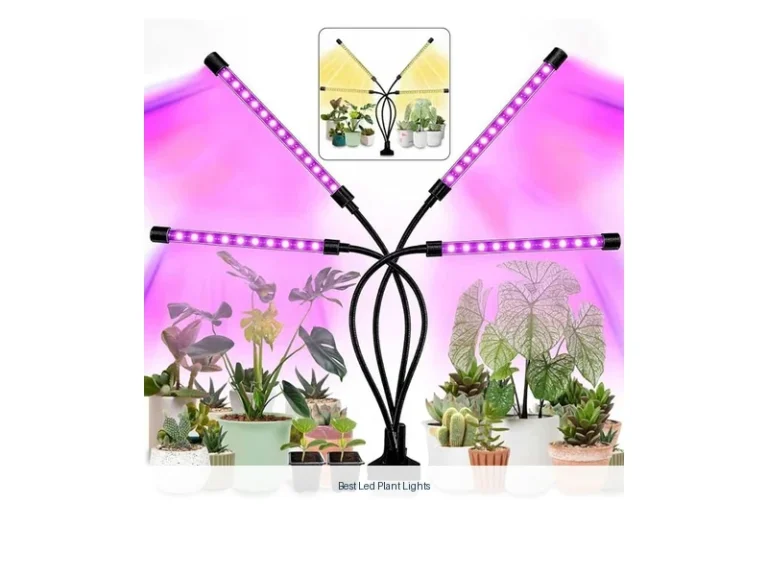
LEOTER offers a more feature-heavy lamp for buyers who want several lighting options in one compact fixture. Its 80 LEDs combine red, blue, yellow, and white diodes, with full-spectrum, red-and-blue, and other selectable modes intended for different stages of plant growth. For herbs, the full-spectrum setting is the most natural starting point, while the additional modes give experienced owners more control over how the lamp looks and operates.
The four-head arrangement can spread light across more than one small pot, and each head uses a 360-degree flexible gooseneck. The included metal clamp and USB connector, along with an AC adapter, support placement in an office, kitchen, or plant shelf. Ten dimming levels make it possible to reduce intensity when the lamp sits close to leaves or increase it when the plants are farther away.
Its circular memory timer uses 3-, 9-, or 12-hour settings and can repeat the schedule automatically. The timer needs to be reset if the grow light loses power, so it is worth checking the schedule after an outage or unplugging. An aviation-grade heat sink and temperature-control unit are intended to help dissipate heat, but sensible spacing around the fixture remains important.
Pros
- Four flexible heads can distribute light across several small plants.
- Full-spectrum and red-blue modes offer different lighting choices.
- 10 dimming levels help accommodate varying distances.
- USB connection and included adapter add installation flexibility.
- Heat-dissipation design addresses warmth around the LED fixture.
Cons
- Timer settings need to be reset after the light loses power.
- Multiple controls may feel less simple to beginners than a single-mode lamp.
My Opinion
LEOTER is a strong choice for a small multi-pot arrangement where broad directional coverage matters. Its extra modes are useful, but buyers seeking the simplest possible setup may prefer Qicodu or GooingTop.
EWPJDK 6500K Full-Spectrum 84-LED Clip Grow Light
EWPJDK uses 74 white LEDs and 10 red LEDs to produce a 6500K full-spectrum lamp that resembles bright midday daylight. That white-light appearance works well in a kitchen, office, or living room, while the red diodes add a spectrum option beyond a standard household bulb. The lamp is listed for indoor plants, flowers, and herbs, making it a flexible choice for a small mixed collection.
Three lighting modes—white, red, and white plus red—let you change the lamp according to the plant’s stage and the surrounding environment. Ten intensity levels are available as well, so the light can be softened when the fixture is close to leaves. Its thickened flexible gooseneck and non-slip clamp help keep the beam aimed at the plant instead of gradually drooping away from it.
The automatic 3-, 9-, or 12-hour timer repeats at the same time each day as long as continuous power is supplied. That last condition is important: unplugging the light or switching off its power source can interrupt the automatic routine. At approximately 10 watts, EWPJDK is best viewed as a focused lamp for a few small plants, not a fixture for an expansive indoor growing shelf.
Pros
- 6500K white light gives the room a daylight-like appearance.
- White, red, and combined modes provide useful flexibility.
- 10 dimming levels help prevent an overly harsh setting.
- Non-slip clamp and flexible gooseneck support stable positioning.
- Low approximately 10-watt draw suits compact indoor setups.
Cons
- Automatic timing depends on continuous power.
- One focused lamp may not evenly cover a wide collection.
My Opinion
EWPJDK is a capable value-oriented option for a single shelf position or a few nearby pots. It ranks fifth mainly because its coverage is more limited and its timer depends on uninterrupted power, not because it lacks useful controls.
How I Selected These Grow Lights for an Indoor Herb Garden
The selection focused on the needs implied by the topic: compact indoor placement, enough control for herbs at different sizes, and features that make daily care more consistent. I compared each product’s stated spectrum, power approach, head or arm design, timer choices, dimming range, mounting method, and intended plant scale. I also considered customer-feedback volume and rating information where supplied, while treating those signals as context rather than proof of identical results in every home.
Most useful selection takeaway: A grow light is more practical when its position and schedule can be adjusted to the actual planter. Height, arm flexibility, timer behavior, and coverage often matter just as much as the label on the spectrum.
The ranking favors versatility for small herbs first, then ease of use and fit. Qicodu leads because its telescoping height and 10 brightness levels address common tabletop changes. Miracle-Gro follows with excellent two-head direction control, while GooingTop benefits from a simple white-light format and substantial customer-feedback history. LEOTER and EWPJDK remain worthwhile alternatives for buyers who value multi-head coverage or a daylight-style 6500K lamp.
Customer ratings and customer-feedback volume can show how much buyer feedback is available, but they cannot determine whether a lamp is correctly positioned in a particular room. Treat the light’s controls and physical fit as just as important as its marketplace score.
How to Choose Grow Lights for an Indoor Herb Garden
Start with the number of pots and the space between them, then choose the light that can cover that area without forcing the fixture against the leaves. For the best grow lights for indoor herb garden use, practical control usually matters more than chasing the most complicated spectrum description.
- Match coverage to the planter: One head suits a small pot; multiple heads help separate containers.
- Check mounting space: Measure shelf or desk thickness before choosing a clamp.
- Prioritize a repeatable schedule: Confirm the timer duration and whether it requires continuous power.
- Use dimming when available: Brightness control helps accommodate seedlings, mature foliage, and changing distance.
- Plan for growth: An adjustable arm or height range can extend the useful life of the setup.
Coverage and Light Placement
Herbs grow in a cluster, but their leaves do not always reach the same height. A single narrow beam can brighten the center while leaving outer leaves shaded. Dual-head or four-head designs can distribute light more evenly, while a height-adjustable arm can keep the source aligned as stems rise. Place the lamp so the main foliage receives light from above or slightly to the side, rather than aiming it into a wall.
Do not judge coverage only by how bright the room looks. A lamp may appear bright to your eyes while the outer pot receives much less useful light. Start with the smallest practical group of pots beneath the fixture, then expand only if the leaves remain evenly illuminated and the arms can be positioned without crowding.
Understanding Spectrum Labels
Full-spectrum language generally signals a broader blend intended to resemble daylight, while 6000K or 6500K describes the appearance and color temperature of white light. Red and blue settings can offer additional control, but a beginner does not need to change modes constantly. A consistent, appropriately positioned setting is usually easier to manage than frequent adjustments made without observing the plant.
White light also makes it easier to inspect leaf color, soil surface, and new growth. Red-and-blue light can look more colored and may be less comfortable in a living area. Choose the appearance you can tolerate using regularly, especially if the lamp will sit beside a desk or in a kitchen.
Timer Behavior and Daily Routine
Automatic timers are valuable because irregular lighting can make indoor care harder to predict. The products here use different schedules, including 3-, 4-, 8-, 9-, and 12-hour choices. Select one schedule and observe the plants rather than changing it every day. A timer that repeats only while power remains connected should stay plugged into a reliable outlet or adapter.
Set the start time when you are present so you can confirm that the lamp turns on and off as expected. If the light loses power, check whether the timer retained its setting. LEOTER specifically states that its timer needs resetting after power loss, while EWPJDK’s automatic cycle depends on continuous power.
Choosing Between Clamp, Clip, and Adjustable-Height Designs
A clamp-mounted lamp is convenient when a desk, shelf, or countertop has a firm edge. Measure the edge and avoid placing the clamp where it can be bumped by a hand, watering can, or cabinet door. A non-slip pad can help stabilize the fixture, but it does not make an unsuitable or unstable surface safe.
An adjustable-height design is more forgiving when the planter changes over time. Qicodu’s telescoping range is particularly useful for this purpose. Flexible goosenecks are convenient for directing light around leaves, but they should be bent gradually and left in a position that does not pull the clamp sideways.
How to Set Up a Grow Light for Herbs
For most small indoor herb arrangements, place the light above the foliage, secure the clamp or base, and begin at a moderate brightness rather than maximum output. The best grow lights for indoor herb garden use still need a sensible distance and a consistent schedule; a strong lamp positioned poorly can leave some leaves shaded or create unnecessary heat near the plant.
- Choose a stable surface close to a reliable power source.
- Attach the clamp fully or extend the height-adjustable arm before positioning the pot.
- Center the light over the foliage, leaving enough room for new growth.
- Begin with a moderate brightness and use the timer that best matches your daily routine.
- Check the plant after several days and adjust distance or intensity gradually.
Starting Seedlings and Small Sprouts
Young seedlings are small and easy to overshadow with a large nearby lamp. Use dimming when available and keep the light close enough to prevent weak, stretched growth without pressing the fixture against the leaves. A flexible head can be angled toward the tray, but make sure the entire group—not just the tallest sprout—receives illumination.
As stems and leaves expand, raise the light or redirect the heads. Sudden large changes are less useful than small adjustments based on the plant’s appearance. Avoid using a timer schedule that you cannot maintain consistently, since the routine should be easy to continue after the initial excitement of planting.
Using the Light With a Sunny Window
A window can provide useful ambient daylight, but its intensity changes with season, weather, direction, and nearby buildings. A grow light can supplement that light rather than compete with it. Position the lamp to fill the darker side of the plant, or move the pot farther from the glass if the natural and artificial light together create an awkward setup.
Watch for uneven growth toward the window. Rotating the planter occasionally can help the herbs develop more evenly, but do not rotate so often that the light schedule or plant location becomes difficult to track.
Daily Operation and Plant Observation
Once the timer is set, spend a few minutes each week checking leaf color, new growth, and the firmness of the fixture. A lamp is only one part of indoor herb care. Watering, drainage, air movement, pot size, and the quality of the growing medium can limit results even when the light is positioned well.
Signs the Position Needs Adjustment
- Long, weak stems may indicate that the plant is reaching for more usable light.
- One side growing more strongly can mean the beam is not centered.
- Leaves pressed against or touching a warm fixture need more distance.
- Outer pots staying noticeably darker may require a second head or a smaller grouping.
- A timer that does not turn on may need power, schedule, or memory checking.
These signs are not a substitute for a plant-specific diagnosis, but they are useful prompts to inspect the setup. Change one factor at a time when possible. Moving the lamp, changing the timer, and repotting on the same day makes it difficult to know which adjustment helped.
Cleaning, Heat, and Long-Term Ownership
Dust on LED surfaces can reduce the amount of light reaching the plant and can make a small fixture look dull. Unplug the lamp before cleaning, then wipe accessible surfaces with a soft, dry cloth. Keep water, mist, and spilled soil away from the power connection, adapter, USB plug, and control area.
LED fixtures generally create less heat than many older bulb types, but they should still have room around the lamp for air circulation. Do not cover the light with fabric, place it against curtains, or trap the adapter beneath wet containers. A heat sink or temperature-control design can help manage warmth, but it does not remove the need for sensible ventilation.
Protecting Flexible Arms and Power Connections
Goosenecks should be repositioned deliberately rather than repeatedly twisted back and forth. Support the lamp head while making a large change, and avoid using the cable as a handle. Keep the power cord routed away from watering paths and areas where it can be caught when moving a pot.
When storing a lamp, clean away dust and let the fixture dry completely. Store the arm in a relaxed position instead of sharply folding it. If a model uses a memory timer, expect to check the schedule after storage or any interruption to power.
Compatibility with Different Herb Setups
For one small basil, mint, or parsley pot, a single-head clamp lamp can be enough if the beam is centered. Two nearby pots may benefit from a dual-head design, while a row of small containers is more likely to need four adjustable heads or separate lamps. Crowding too many plants beneath one compact fixture can create uneven growth even when the center appears bright.
Countertops and Kitchen Shelves
Check splash risk before placing any electrical grow light near a sink. A shelf with a thick edge may not accept every clamp, and a cabinet above the plants can limit how high an arm can extend. Measure the available width, depth, and vertical clearance before ordering, then compare those measurements with the product’s stated mounting or height details.
Desks and Office Corners
White-light fixtures such as the GooingTop and EWPJDK models may blend more easily into an office than strongly colored lighting. Keep the beam aimed at the plants so it does not shine directly into your eyes or a nearby monitor. The timer can preserve a routine without requiring the lamp to remain on during every work task.
Common Mistakes to Avoid with Indoor Herb Grow Lights
Most disappointing results come from a mismatch between the lamp and the setup rather than from one missing feature. Avoid treating a small decorative lamp as if it can cover a large rack, and do not assume that maximum brightness is automatically the correct setting.
- Do not place all the pots at the edge of a narrow beam.
- Do not ignore clamp thickness limits or attach the lamp to an unstable surface.
- Do not block ventilation with cloth, foliage, or storage items.
- Do not unplug a timer-based lamp without checking whether its schedule will reset.
- Do not make several major lighting and watering changes at once.
- Do not aim the brightest setting directly at delicate new leaves without monitoring them.
- Do not assume a daylight color temperature alone proves sufficient coverage.
Safety reminder: Keep water away from plugs and adapters, secure the fixture before leaving it unattended, and inspect cords periodically for damage.
Troubleshooting Timer and Positioning Problems
The Light Does Not Turn On
Confirm that the outlet, USB source, or adapter is supplying power, then check the control setting. If the product uses a repeating timer, verify that the schedule was not cleared after unplugging or an outage. Reset the cycle while the light is powered and observe one complete on-and-off transition if possible.
The Plants Look Uneven
Recenter the lamp and reduce the number of containers beneath it if the outer plants remain dim. A flexible head can be aimed toward a shaded side, while a four-head design may allow each pot to receive more direct coverage. If the collection has outgrown the fixture, adding another small lamp may be more effective than increasing brightness indefinitely.
The Fixture Keeps Moving
Recheck the clamp, surface thickness, and cord tension. A cable pulling sideways can make a secure lamp appear loose. Move the clamp to a flatter, stronger section of the shelf and reposition the gooseneck gradually. Never compensate for an unstable mount by placing heavy objects on or around the fixture.
FAQS About Best Grow Lights for Indoor Herb Garden
How many hours should an indoor herb grow light run?
The products in this selection offer automatic schedules ranging from 3 to 12 hours, depending on the model. A beginner should choose a consistent setting that fits the room and observe the plants, adjusting brightness, distance, or duration gradually instead of changing everything at once.
Are full-spectrum lights suitable for basil and other herbs?
Yes, the full-spectrum settings listed for these products are intended for indoor plants including herbs. Position and coverage still matter: a full-spectrum lamp aimed at only one corner of a wide planter will not illuminate the entire group evenly.
Is 6000K or 6500K better for indoor herbs?
Both are daylight-style white-light color temperatures. The difference between the GooingTop 6000K and EWPJDK 6500K models should not be treated as the only buying factor. Coverage, mounting stability, timer behavior, and dimming controls may have a greater effect on everyday usability.
Can one clip-on grow light cover several herb pots?
It depends on the spacing and the lamp design. A single-head lamp is generally better for one small pot or a tight pair, while dual-head or four-head models can direct light to separate containers. If the pots are wide or spread apart, one compact fixture may leave the outer foliage underlit.
Should a grow light be above the herbs or beside them?
Above the foliage is usually the most even starting position. A slight side angle can help fill a shaded area, particularly when using a flexible gooseneck, but a strongly side-mounted light may encourage uneven growth if it is not adjusted as the plant develops.
Do grow light timers keep working after unplugging?
Not always. LEOTER states that its timer needs to be reset after the light loses power, and EWPJDK’s automatic cycle requires continuous power. Check each model’s timer behavior and confirm the schedule after an outage or storage period.
Final Thoughts
For shoppers comparing the best grow lights for indoor herb garden use, Qicodu Grow Lights Indoor is my top pick for adjustable height, dimming, and compact everyday control. Miracle-Gro Grow Light is the best alternative for two independently directed heads, while GooingTop 6000K Full Spectrum Indoor Plant Growing Lamp suits buyers who prefer simple white light and a straightforward tabletop clamp. Choose based on coverage, mounting space, timer behavior, and the number of herbs you actually plan to grow.

I’m Maya L. Greenwood, a lifelong plant lover who believes anyone can grow something beautiful with the right guidance. After years of testing soil mixes, pruning methods, irrigation tricks, and pest-safe solutions, I started EasyGardenTips.com to turn hard-won lessons into step-by-step advice. From seed starting and container gardens to composting and seasonal checklists, my goal is to make gardening simple, sustainable, and fun.