5 Best Light for Photosynthesis: Product Practical Practical
Finding the best light for photosynthesis means balancing spectrum, brightness, coverage, adjustability, and the size of the growing area. A small desk plant needs a very different setup from a shelf of herbs or a full indoor garden, so the most expensive-looking option is not automatically the most suitable.
My first choice is bseah Grow Light Plant Lights. Its full-spectrum LED, adjustable gooseneck, and 3/9/12-hour scheduling make it especially practical for beginners who want consistent daily lighting without complicated equipment.
My second choice is Juhefa Plant Grow Light 48LED White Red 6000K Full Spectrum. The 6000K white-and-red LED mix, five brightness levels, 360-degree goosenecks, and 4/8/12-hour timer suit small plants, seedlings, herbs, and decorative indoor specimens.
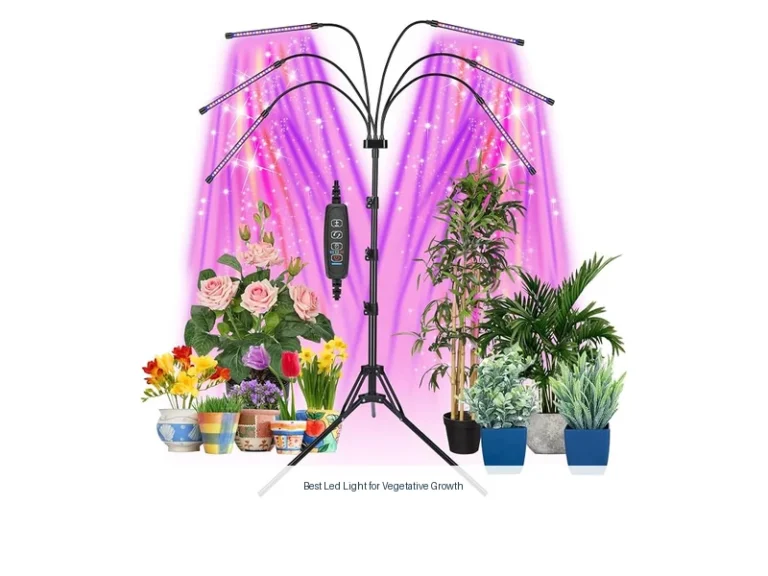
My third choice is LBW Grow Light. LBW Grow Light with Stand earns my third-choice recommendation for buyers who need more height and a freestanding format. Its adjustable tripod reaches from 15 to 48 inches, while the full-spectrum 390nm–730nm output and 30-watt power draw make it a stronger fit for taller or larger plants than compact desk lamps.
This guide compares all five options by control, coverage, mounting style, spectrum, and ownership practicality. It also explains how to position a lamp, choose a schedule, avoid common setup mistakes, and match a light to the plant area instead of relying on marketing terms alone.
Best Light for Photosynthesis
I selected these products for their direct relevance to indoor plant growth, the usefulness of their published specifications, and the amount of available customer-feedback evidence. The list also includes compact tabletop lights, a stand-mounted model, and a higher-output panel so different growing situations are represented.
| # | Image | Product | Price on Amazon |
|---|---|---|---|
| 1 |  |
bseah Grow Light Plant Lights | Check Price |
| 2 |  |
Juhefa Plant Grow Light 48LED White Red 6000K Full Spectrum | Check Price |
| 3 |  |
LBW Grow Light | Check Price |
| 4 |  |
VIVOSUN Lumalight 200W LED Grow Light | Check Price |
| 5 |  |
Kullsinss 3.5in Small Grow Lights | Check Price |
bseah Grow Light Plant Lights
The bseah is a strong all-around choice for someone who wants a controlled lighting routine without building a large growing system. Its full-spectrum LED uses a yellow-and-white combination intended to support several stages of plant development, including germination, vegetative growth, flowering, and fruiting. That broad purpose makes it easier to use one lamp as a houseplant changes over time.
Ten dimmable levels are more useful than a simple on-or-off switch. A lower setting can be a gentler starting point for a plant that has been growing in shade, while higher settings can help when foliage is farther from the lamp. The three switch modes also give the user some control over the character of the light rather than forcing one fixed output.
The automatic timer is a particularly practical advantage. It can repeat a 3-, 9-, or 12-hour cycle as long as the lamp remains connected to power, helping maintain a routine when the owner is away. The metal gooseneck and nonslip mat should make aiming the lamp easier, although a flexible arm still needs occasional repositioning as a plant grows. A USB connector also gives placement flexibility, but buyers should plan for a suitable powered USB source.
Pros
- Ten brightness levels and three light modes
- Automatic repeating 3/9/12-hour timer
- Full-spectrum output for multiple growth stages
- Adjustable metal gooseneck with nonslip support
Cons
- USB power requires a compatible power source
- Compact design is better suited to individual plants than broad coverage
- Timer operation depends on continuous power
My Opinion
This is the most balanced pick for ordinary indoor plant owners. Its control range, timer, and stable gooseneck offer more day-to-day convenience than a basic lamp, provided the intended growing area is modest.
Juhefa Plant Grow Light 48LED White Red 6000K Full Spectrum
Juhefa’s 48-LED lamp takes a slightly different approach by pairing 40 white LEDs with eight red LEDs for a crisp 6000K daylight appearance. That makes the lamp less visually harsh than some strongly colored grow lights, and its stated uses cover flowers, herbs, peppermint, succulents, bonsai, and seed starting. The 95 CRI rating is also useful for people who want to see plant color accurately or use the lamp near a workspace.
Five brightness settings provide enough adjustment for basic changes in plant distance and growth stage, though they offer less fine control than the bseah’s ten levels. The timer provides 4-, 8-, and 12-hour cycles on a 24-hour pattern. Once activated, brightness can be changed without cancelling the schedule, which is a helpful detail for owners who want to fine-tune output during the day.
Two bendable arms can twist through 360 degrees and hold their positions, allowing light to be aimed across a plant instead of shining from one fixed point. The 77-inch USB cable gives it useful reach on a desk, shelf, or plant stand. As with other USB lamps, the buyer needs a dependable power source, and the relatively small format is best for a limited group of plants rather than a large collection.
Pros
- White-and-red 6000K LED arrangement
- Five brightness levels and independent timer adjustment
- Flexible 360-degree gooseneck arms
- Long 77-inch USB cable and 95 CRI
Cons
- Five settings provide less precision than ten-level controls
- USB format may require a separate power adapter
- Coverage is limited compared with a freestanding panel
My Opinion
This is a sensible alternative for shelves, desks, and small plant groupings where appearance matters. The daylight-style output and flexible arms make it approachable, while the timer adds useful consistency for busy owners.
LBW Grow Light
The main reason to consider the LBW is its stand. Instead of attaching a small lamp to a pot or shelf, the adjustable tripod can extend from 15 to 48 inches, making it easier to place the light above taller plants. That added height also gives the buyer more freedom to change the setup as foliage develops. The gooseneck can then be angled toward the canopy.
Its stated full-spectrum range runs from 390nm to 730nm and combines white, red, and blue LEDs, with white color temperatures of 3500K and 6500K. That combination is intended to cover seedling, germination, vegetative, and flowering stages. For a mixed collection, a broader spectrum can be more convenient than buying separate lights for each phase.
LBW lists a 30-watt power draw and compares the output with a 150-watt HPS or HID lamp. The meaningful takeaway for a household grower is that the LED format is intended to provide useful plant illumination with lower electricity use than those older high-wattage technologies. Assembly is described as a quick process involving the tripod, gooseneck, and light. The included 12 months of servicing and 30-day satisfaction or return policy add useful ownership support, although coverage still depends on the seller’s terms.
Pros
- Tripod height adjusts from 15 to 48 inches
- Full-spectrum 390nm–730nm output
- Suitable for taller plants and floor placement
- 30-watt power draw and stated 50,000-hour LED lifespan
Cons
- Tripod requires more floor or shelf space than a compact lamp
- Less convenient for very small tabletop plants
- Higher height does not automatically mean broader effective coverage
My Opinion
This is the best fit among the first three for a tall plant, balcony seed-starting area, or floor-standing arrangement. Choose it for reach and placement flexibility rather than assuming the stand alone guarantees strong coverage across many plants.
VIVOSUN Lumalight 200W LED Grow Light
The VIVOSUN LumaLight is the most substantial option in this group and is aimed at buyers who need high-intensity illumination across a larger growing area. Its spectrum combines white, blue, red, and far-red LEDs at 3000K, 5000K, 660nm, and 730nm. That mix is intended to support growth from seedlings through harvest while also helping flowering and yields.
Its diode layout is described as producing uniform PPFD across the coverage area. In practical terms, even distribution matters because plants at the edge of a growing space can otherwise receive noticeably less light than those directly beneath the center. Buyers should still match the lamp to the actual area and hanging height rather than treating the 200-watt label as a universal coverage guarantee.
Control is a major part of the appeal. A four-level dimming knob ranges from 25% to 100%, and the light can work with the Vivosun GrowHub and mobile app, sold separately, for scheduling and remote monitoring. Advanced thermal management is intended to control heat, while the stated Q90 flux maintenance rate reaches up to 36,000 hours. IP65 waterproof and dustproof construction offers extra protection in humid environments, but careful installation and normal electrical safety remain important.
Pros
- 200-watt LED format for higher-intensity growing
- White, blue, red, and far-red spectrum
- Four-level dimming from 25% to 100%
- Optional GrowHub and app compatibility
- IP65 waterproof and dustproof construction
Cons
- May be excessive for one small houseplant
- Smart controls require the separately sold GrowHub
- Requires more thoughtful placement and heat management than desk lamps
My Opinion
The LumaLight is the specialist choice for a larger, more serious indoor growing area. Its intensity, spectrum, controls, and environmental protection are compelling, but smaller plant collections may be better served by a simpler lamp.
Kullsinss 3.5in Small Grow Lights
Kullsinss focuses on stability and compact styling. The detachable base supports two installation methods: a pot can sit on the base, or the light can be inserted into soil. That flexibility is useful on desks, tabletops, and plant shelves where a tripod would be awkward. The small halo-style head is intended for individual plants or a close group rather than a broad growing room.
Its 48 LEDs are specified to provide wavelengths from 380nm to 760nm, covering the full range claimed for the product. The height adjusts from 6.5 to 26 inches, so the lamp can start close to a small plant and move higher as the plant grows. Extending the pole may also cover a larger area, although the light’s compact dimensions still place practical limits on how many plants it can serve effectively.
A controller provides five dimming levels, three spectrum modes—white, warm white, and red with all lights on—and 3/9/12-hour automatic timing. Those controls are useful for matching the visual appearance and brightness to a room while maintaining a repeatable schedule. The manufacturer also describes heat dissipation intended to protect indoor plants. Buyers should keep the lamp stable, avoid crowding the head with foliage, and use the base or soil insertion method that best suits the pot.
Pros
- Detachable base with two installation methods
- Height adjusts from 6.5 to 26 inches
- Five brightness levels and three spectrum modes
- Automatic 3/9/12-hour timer
Cons
- Small head is not intended for broad plant coverage
- Shorter maximum height than the LBW stand
- Close placement requires regular adjustment as foliage expands
My Opinion
This is a neat choice for a single small plant, bonsai, or decorative shelf. Its base and compact pole solve common placement problems, but buyers with several mature plants should choose a wider or stronger fixture.
How I Selected These Lights for Photosynthesis
The selection centers on practical factors that affect indoor plant lighting: spectrum, brightness control, timer functions, physical reach, mounting style, stated power, and environmental protection. I also considered whether each product serves a distinct buyer rather than including five nearly identical desk lamps.
Customer-feedback volume and ratings supplied for these products provide an additional indication of market familiarity. They do not prove that every plant will respond identically, and they cannot replace matching the lamp to the crop, distance, and room. Still, products with substantial buyer activity offer more context than an obscure option with no meaningful usage history.
Selection takeaway: A useful plant light is not defined by spectrum alone. The controls, distance from the leaves, coverage area, and ability to maintain a repeatable schedule can matter just as much in everyday use.
The ranking also reflects intended scale. The bseah leads because it balances control and simplicity, Juhefa follows with flexible small-space coverage, and LBW moves into third for its taller stand. VIVOSUN is technically more substantial but ranks fourth because its power and size are unnecessary for many casual indoor growers. Kullsinss rounds out the list as a compact option for a single plant or shelf.
Important limitation: Published wattage, wavelength ranges, and timer settings are useful comparison points, but they do not by themselves reveal the exact light intensity a plant receives at every distance.
How to Choose the Best Light for Photosynthesis
Start by identifying the plants, the available space, and how much natural light reaches the leaves. Then choose a lamp with enough adjustability to remain useful as the plants grow. A compact USB fixture may be ideal for one pothos or herb pot, while a stand or panel is more practical for taller plants and multiple containers.
- Match coverage to the number and size of plants.
- Prefer adjustable brightness when plant distance will change.
- Use a timer if you want a consistent daily schedule.
- Check whether the lamp needs USB power, a separate adapter, or a dedicated control hub.
- Consider heat, moisture, stability, and cleaning access before installation.
Spectrum and color appearance
Full-spectrum wording generally indicates that the light includes a broad range intended to resemble useful portions of daylight. White LEDs can look more natural in a living space, while red and blue diodes can add wavelengths associated with plant growth. Far-red output appears in the VIVOSUN specification, while the smaller lamps use combinations of white, yellow, red, and blue.
Color appearance is a practical consideration, not just a cosmetic one. A 6000K daylight-style lamp may be easier to live with near a desk, and Juhefa’s stated CRI of 95 can help foliage and flowers look more natural. However, a pleasant-looking lamp still needs to be close enough and powerful enough for the plant area.
Brightness, distance, and coverage
Light intensity falls as the fixture moves farther from the leaves. A lamp that works well six inches above a small plant may be inadequate several feet away. Adjustable poles and goosenecks help maintain a useful distance, but they do not create additional output.
Think in terms of the canopy, not only the pot. If a plant has leaves spreading widely, aim the fixture so the outer foliage is not left in deep shade. For multiple pots, check whether the light head or panel can cover the whole group. Rotating plants occasionally can also help distribute exposure more evenly when the fixture is compact.
Timers and daily consistency
Timers reduce the chance of forgetting the light or leaving it on continuously. The products here offer cycles from three to twelve hours, although the exact options differ. A short cycle may supplement a bright window, while a longer cycle can provide more regular support in a darker room.
Keep the lamp connected to continuous power when automatic memory depends on an uninterrupted supply. After setting the timer, observe whether the cycle begins at the desired time. A repeating schedule is only useful when it fits the household routine and gives the plant a predictable day-and-night pattern.
Mounting and stability
Choose a gooseneck when you want quick directional adjustment around a single pot. Choose a base or soil stake when shelf stability is the main concern. A tripod is more suitable for tall plants and floor placement, but it occupies more room and may be easier to bump.
Keep cords away from watering paths and avoid placing a lightweight lamp where a leaf, pet, or passing hand can pull it over. For soil-inserted fixtures, make sure the pole is secure without damaging major roots. A stable light maintains a more consistent distance and reduces the need for daily correction.
How to Set Up a Plant Light
Begin with a clean, stable location near the plants and a power source that matches the lamp’s connector. Assemble the stand or extend the pole before plugging anything in. Position the light so it illuminates the leaves rather than shining mostly onto the pot or wall.
- Place the plant where it will remain easy to water and observe.
- Secure the base, tripod, or soil stake.
- Aim the light toward the main leaf area.
- Start with a moderate brightness or a lower setting if the plant came from shade.
- Set the timer and check the automatic cycle the next day.
- Move the lamp gradually as the plant grows.
Starting a new plant under artificial light
Plants moved from a dim room into stronger illumination may need a gradual transition. Begin with a lower brightness or greater distance, then increase exposure carefully while watching the leaves. This approach is especially sensible when moving a plant from a windowless area to a high-output fixture such as the VIVOSUN.
Watch the new growth rather than making a decision after a few hours. Pale, bleached, curled, or crispy foliage can indicate excessive exposure, heat, or another growing problem. Stretching toward the lamp can indicate that the plant is not receiving enough useful light or that the fixture is positioned too far away.
How Long Should a Grow Light Run?
There is no single schedule that suits every plant, room, and amount of natural sunlight. Use the lamp as a supplement when a plant already receives window light, and use a longer consistent cycle when the room is significantly darker. The built-in timer choices make it easier to test a routine without manually switching the lamp every day.
Plants also need a dark period. Running a lamp continuously is not a reliable shortcut to healthier growth and may create unnecessary heat or electricity use. Pick one schedule, observe growth and leaf condition for a couple of weeks, and make modest changes rather than changing brightness and timing simultaneously.
Adjusting for the season
Winter window light may be weaker or shorter, so a timer can help maintain consistency. In summer, a plant near a bright window may need less artificial light. Keep an eye on heat near glass and avoid assuming that the same distance works year-round.
How to Clean and Maintain a Grow Light
Dust on a light head can reduce the amount of illumination reaching the leaves. Unplug the fixture before cleaning, then use a soft, dry cloth to remove dust from accessible surfaces. If the product is rated for moisture resistance, that does not mean it should be sprayed while connected to power.
- Inspect cords and connectors for damage before each season of heavier use.
- Keep leaves from pressing against hot or enclosed components.
- Clear dust from ventilation areas when the design includes them.
- Keep USB connections dry and away from runoff.
- Recheck goosenecks, poles, and tripods when the plant becomes top-heavy.
LED lifespan claims describe expected component performance, not a promise that every part will operate forever. Heat, moisture, unstable power, and physical strain can shorten ownership life. The VIVOSUN’s IP65 construction offers more protection for humid environments, but sensible placement and cleaning are still worthwhile.
Safety and Compatibility Tips
Confirm the connector and power arrangement before buying. Several compact products use USB connectors, so the lamp may need a suitable powered USB outlet or adapter. Keep electrical connections away from watering, misting, and fertilizer spills, even when the lamp itself is built for indoor plant use.
Do not rely on a timer to solve an unstable setup. The light should remain secure, the cable should have enough slack, and the fixture should not rest directly against wet foliage. For high-humidity areas, the VIVOSUN’s stated IP65 protection is an advantage, but it does not remove the need for safe installation.
Common Mistakes to Avoid
Most disappointing results come from mismatching the lamp to the space rather than choosing the wrong spectrum label. A compact fixture placed too far away, a bright panel used without adjustment, or a timer set incorrectly can all reduce the benefit of an otherwise capable product.
- Do not judge coverage by wattage alone.
- Do not place a small lamp so far away that the leaves receive only weak illumination.
- Do not leave the light on around the clock.
- Do not ignore heat, leaf bleaching, curling, or crispy edges.
- Do not let water run onto USB connections or power components.
- Do not assume a timer works after unplugging the lamp without checking its settings.
- Do not crowd several plants under a narrow beam and expect equal growth.
Practical Ownership Tips
Keep the instruction details and power components together so timer behavior is easier to troubleshoot later. Mark the preferred pole height or gooseneck angle if the fixture is moved for watering. Small notes about brightness, schedule, and plant response can reveal whether a change actually helped.
As foliage expands, inspect shaded areas underneath and around the sides of the plant. Repositioning the light slightly may be enough, but a growing canopy can eventually exceed the useful area of a compact fixture. Planning for that change is cheaper and easier than waiting until the plant has already stretched badly.
When to replace or upgrade
An upgrade may be justified when the plant collection grows beyond the original coverage, when the stand no longer reaches the canopy, or when the owner needs remote scheduling. The VIVOSUN’s optional GrowHub compatibility is relevant for people who want app-based control, while a simple timer-equipped desk lamp remains more sensible for a single plant.
FAQS About Best Light for Photosynthesis
What type of light is best for photosynthesis?
A broad-spectrum LED is a practical indoor choice because it can provide multiple wavelengths associated with plant growth while using relatively little power. The useful result depends on intensity, distance, coverage, and schedule as well as spectrum.
Is a full-spectrum LED good for photosynthesis?
Yes, a full-spectrum LED can support indoor plant growth when it delivers suitable light to the leaves. Full-spectrum labeling alone does not indicate how much usable light reaches the plant, so placement and coverage remain important.
How close should the best light for photosynthesis be to plants?
The correct distance varies with the fixture’s output and the plant’s tolerance. Start conservatively, observe the leaves, and adjust gradually. Compact lamps generally need to remain closer than a higher-output panel.
Can one grow light support every stage of plant growth?
Many full-spectrum lamps are intended for seedlings, vegetative growth, flowering, and fruiting. A model with dimming and multiple modes is easier to adapt across stages, although large fruiting plants may need more coverage and intensity than small houseplants.
Are grow-light timers necessary?
A timer is not mandatory, but it makes a consistent schedule much easier. Automatic cycles are particularly useful for owners who are away during the day or who tend to forget manual switching.
What is the best light for photosynthesis in a small apartment?
A compact USB lamp with a stable base, gooseneck, or small stand is usually the easiest fit. The bseah, Juhefa, and Kullsinss options are better suited to desks and shelves than a 200-watt panel intended for a larger growing area.
Final Thoughts
The best light for photosynthesis depends on the plant area and the control you actually need. bseah Grow Light Plant Lights is the strongest overall choice, Juhefa Plant Grow Light is a flexible small-space alternative, and LBW Grow Light with Stand is the better pick for taller plants. Choose VIVOSUN for a larger, higher-intensity setup and Kullsinss for a compact single-plant arrangement.

I’m Maya L. Greenwood, a lifelong plant lover who believes anyone can grow something beautiful with the right guidance. After years of testing soil mixes, pruning methods, irrigation tricks, and pest-safe solutions, I started EasyGardenTips.com to turn hard-won lessons into step-by-step advice. From seed starting and container gardens to composting and seasonal checklists, my goal is to make gardening simple, sustainable, and fun.