5 Best T8 Bulbs for Growing Plants: Compared With Buying Guide
Choosing the best t8 bulbs for growing plants is harder than choosing an ordinary shop-light tube. You need to match the bulb length, fixture compatibility, light spectrum, coverage area, and installation method to the plants you actually want to grow.
My first choice is GT-Lite LED 48 Inch T8 Bulb Plant Grow Light. Its Type A+B design works with compatible electronic instant-start and rapid-start ballasts, while the 17-watt draw and low heat output make it practical for indoor shelves and seed-starting areas.
My second choice is Barrina 2FT T8 LED Grow Light Full Spectrum Plant Growing. The six-light kit uses 144 watts total, links up to 10 lights, and includes installation supplies for plant shelves, tents, hydroponic rooms, and other small growing spaces.
My third choice is GE Grow Lights. GE Grow Lights takes third place because its 48-inch tubes provide a stated 34 PPF output and an advanced red-light spectrum suited to flowering and fruiting plants. The lower customer-feedback sample and narrower 25,000-hour lifespan claim keep it behind the first two options, but its white appearance and straightforward replacement-bulb format remain appealing.
This guide compares all five options, explains the compatibility and sizing details that matter, and covers setup, positioning, maintenance, safety, and common mistakes. The goal is to help a beginner choose a dependable light without mistaking a long feature list for a complete growing solution.
Best T8 Bulbs for Growing Plants
I selected these products for their direct relevance to indoor plant growth, useful spectrum and output information, practical fixture or linking details, and available customer-feedback evidence when supplied. I also included more than one format and brand so the comparison reflects different shelf sizes, installation preferences, and budgets rather than a single type of setup.
| # | Image | Product | Price on Amazon |
|---|---|---|---|
| 1 |  |
GT-Lite LED 48 Inch T8 Bulb Plant Grow Light | Check Price |
| 2 |  |
Barrina 2FT T8 LED Grow Light Full Spectrum Plant Growing | Check Price |
| 3 |  |
GE Grow Lights | Check Price |
| 4 |  |
Barrina T8 Grow Lights | Check Price |
| 5 |  |
Barrina T8 Grow Lights 2FT 5000K White Full Spectrum Plant | Check Price |
GT-Lite LED 48 Inch T8 Bulb Plant Grow Light
The GT-Lite is the strongest all-around match for a traditional 48-inch fluorescent fixture. Its full-spectrum red and blue output is intended to support plants through seeding, budding, and flowering, so a grower does not need to change light types as a plant matures. The white fixture-friendly format also makes it less visually harsh than purple grow lights in a living area.
Its most useful practical feature is Type A+B compatibility. That means it can work with compatible electronic instant-start and rapid-start ballasts, while Type A operation uses the existing ballast and Type B setups generally require ballast-bypass wiring. Buyers should verify the actual fixture and installation instructions before connecting anything; “all compatible” does not mean every ballast or socket is automatically safe.
At 17 watts, the bulb is described as equivalent to a 32-watt fluorescent while producing less heat. That can help reduce unnecessary electricity use and keep leaves and growing media from drying as quickly. A 120-degree beam angle spreads light across a shelf rather than concentrating it into a narrow spot. The rated 30,000-hour life and two-year warranty add useful ownership reassurance, although plant performance will still depend on distance, timing, and the number of tubes used.
Pros
- Full-spectrum red and blue output for multiple growth stages
- Type A+B compatibility with suitable electronic fixtures
- 17-watt operation, low heat, and a stated 30,000-hour life
- 120-degree beam angle and two-year warranty
Cons
- Compatibility still needs to be confirmed at the ballast and fixture level
- A single tube may not provide enough coverage for dense or fruiting plants
My Opinion
This is the most balanced choice for someone replacing 48-inch tubes and wanting flexible installation. It is especially attractive for seed trays, leafy greens, and mixed indoor plants, provided the fixture compatibility is checked first.
Barrina 2FT T8 LED Grow Light Full Spectrum Plant Growing
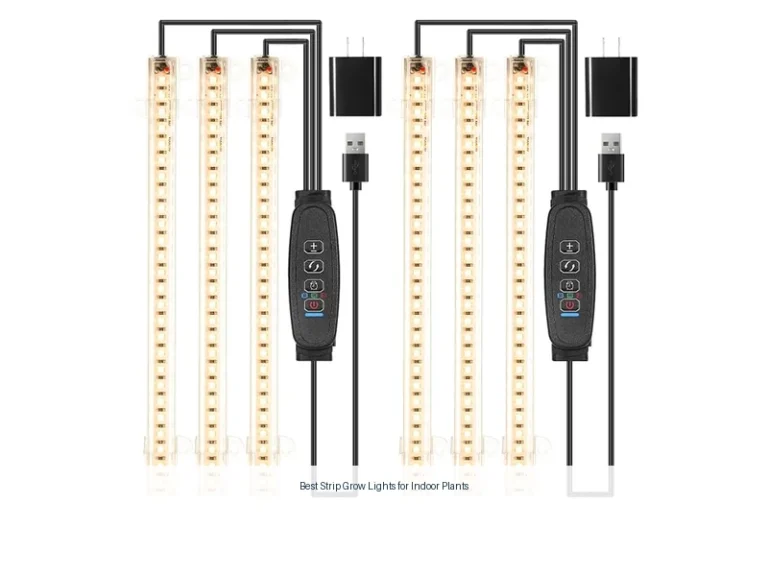
Barrina’s two-foot six-pack is a convenient option when a full 48-inch tube would be too long for the available shelf. Six short lights can be arranged over several tiers or grouped over one compact tray, making the kit easier to adapt to apartment shelving, propagation racks, and narrow cabinets. The full-spectrum sunlight replacement is intended for seeding, growth, and general indoor plant use.
The kit’s stated electrical total is 144 watts across 576 LEDs, and the company says the lights can replace much higher-wattage general plant lighting. The aluminum housing helps move heat away from the LED chips, while the V-shaped reflector can increase light efficiency by a stated 17 to 20 percent. Those details may help produce a more useful spread, but the actual result will still depend on mounting height and plant density.
Installation is approachable for a beginner because the package includes tape, clips, and cable ties. Up to 10 lights can be linked in a series, which reduces cord clutter on a long shelf. One important ownership detail is the second-generation connector change: the newer version is compatible with Barrina GM Series cords, and mixing old and new products requires the newer male-female connector cables. That is worth checking before ordering extra cords or expanding the system.
Pros
- Compact two-foot format suits narrow shelves and multi-tier racks
- Six-light kit with linkable series installation
- Full-spectrum output, aluminum housing, and reflector design
- Includes clips, tape, and cable ties for mounting
Cons
- Connector generations may not mix without the correct cable
- The stated 144-watt total is substantial for a small shelf
My Opinion
This is the best fit for flexible shelf layouts and buyers who value a ready-to-mount kit. It offers strong expansion potential, but plan the cord arrangement and confirm connector compatibility before combining it with older Barrina lights.
GE Grow Lights
GE takes a more specialized approach with a 48-inch T8 bulb aimed at flowers and fruit. Its stated 34 PPF output is a useful specification for buyers who want more than a general “daylight” label, and the advanced red-light spectrum is specifically positioned for fruiting or flowering stages. Tomatoes, peppers, cucumbers, herbs, flowers, and fruit trees are among the suggested applications.
Although the light provides red and blue wavelengths, it appears white to the human eye rather than purple. That makes it more comfortable in a kitchen, sunroom, or living space where the fixture is visible. GE also recommends installing the bulbs in existing 48-inch shop-light tube fixtures, placing seedling trays about six inches above the plants, and running the light for 12 hours per day.
The main limitation is the relatively small supplied customer-feedback sample compared with the Barrina options, and the rating data provided is more modest. The stated lifespan is up to 25,000 hours, shorter than GT-Lite’s listed 30,000 hours, though still substantial for regular indoor use. Buyers should also remember that a replacement tube does not automatically solve ballast issues; the existing fixture must be suitable for the bulb, and the six-inch guidance is a starting point rather than a universal distance for every crop.
Pros
- Stated 34 PPF output provides useful performance context
- Advanced red spectrum supports flowering and fruiting plants
- White appearance is more comfortable in occupied rooms
- Simple 48-inch replacement format for compatible shop lights
Cons
- Provided customer-feedback evidence is limited
- 25,000-hour lifespan is shorter than the GT-Lite claim
- Fixture and ballast compatibility must be confirmed
My Opinion
GE is a sensible choice when flowers and fruit are the priority and you want a white-looking tube with a stated PPF figure. It is less compelling for buyers seeking the broadest compatibility or the strongest evidence base in this comparison.
Barrina T8 Grow Lights
This three-foot Barrina kit fills the middle ground between compact two-foot lights and full-length 48-inch tubes. Each six-pack is useful for shelves or benches that have more room than a small propagation rack but do not accommodate a standard four-foot fixture. The 5000K white full-spectrum output is presented as suitable for seeding, growth, and bloom.
The kit uses 864 LEDs and a stated 180-watt total consumption. Barrina says its V-shaped reflector can improve light efficiency by 17 to 20 percent, while the aluminum shell helps dissipate heat. The reflector is particularly helpful when the lights are mounted above a flat plant canopy because it directs more of the output downward instead of allowing as much light to spread sideways.
There is also a practical installation advantage: the package includes three power cords with on/off switches, connecting cords, small connectors, clips, tape, and cable ties. Up to eight lights can be linked in a series. That makes the kit suitable for a growing rack where several strips need to run together, although the 180-watt total should be considered when planning electrical load and ventilation. As with the other newer Barrina kits, buyers combining products should verify the GM Series cord and connector generation.
Pros
- Three-foot length fits medium-size shelves and benches
- 5000K white full-spectrum output for multiple growth stages
- V-shaped reflector and aluminum housing support efficient light use
- Includes several cords, connectors, and mounting accessories
Cons
- Higher total power use than the two-foot version
- Series linking is limited to up to eight lights
- Connector compatibility matters when mixing generations
My Opinion
This is the most practical Barrina format for a medium-width rack. It gives a neat, expandable installation, but its larger electrical load makes it better suited to a deliberate growing station than a single casual houseplant.
Barrina T8 Grow Lights 2FT 5000K White Full Spectrum Plant
The second two-foot Barrina option is a good choice for a buyer who wants a daylight-white appearance and a straightforward modular kit. Its 5000K full-spectrum output is intended for seedlings, vegetative growth, and blooming, which makes it useful for a mixed shelf rather than a single crop with a narrowly defined lighting requirement.
Six lights use 144 watts in total and contain 576 LEDs. The package can link up to 10 strips, allowing a grower to spread the lights across multiple levels or place several over one dense tray. The V-shaped reflector is stated to increase light efficiency by 17 to 20 percent, and the aluminum body helps with heat dissipation. These features support a more directed shelf setup, but they do not replace the need to keep the lights close enough to the canopy.
Included power cords with on/off switches make everyday use simpler, while clips, tape, and cable ties provide several mounting approaches. The main ownership concern is the same connector update found in the other newer Barrina models. It is compatible with Barrina GM Series cords, but an older and newer system may need new male-female connector cables. Also, a six-light package may be more equipment than needed for one small tray, so measure the shelf and plan the layout before buying.
Pros
- 5000K white full-spectrum light is comfortable in living spaces
- Two-foot size works well on compact shelves
- Up to 10 lights can be linked in a series
- Mounting hardware and switched power cords are included
Cons
- Six lights may exceed the needs of a very small collection
- Older Barrina accessories may require updated connector cables
- 144 watts total should be planned for in the growing area
My Opinion
This is a strong value-oriented format for a small rack that may expand later. Choose it over the three-foot version when shelf depth is limited, and choose it over a single replacement tube when modular placement matters more than using an existing fixture.
How I Selected These T8 Grow Lights
The comparison prioritizes products that directly provide plant-oriented T8 lighting rather than ordinary household tubes. I considered spectrum descriptions, stated output information, energy use, heat management, lifespan, installation method, fixture compatibility, included hardware, and the amount of customer-feedback evidence supplied for each listing. The best t8 bulbs for growing plants also need to fit the grower’s physical space, so the list includes two-foot, three-foot, and 48-inch choices.
Compatibility is not a minor detail. A bulb can have an appropriate spectrum and still be a poor purchase if its ballast, socket, connector, or power arrangement does not match the intended fixture.
Rank order reflects the balance of those factors, not just a single rating or one impressive specification. GT-Lite leads because it combines 48-inch usefulness with Type A+B compatibility, low stated wattage, long life, and a warranty. Barrina’s compact kits follow because they offer strong installation flexibility and substantial customer-feedback evidence, while GE earns a place for its useful PPF information and flowering-oriented spectrum.
Light coverage is a system decision. The bulb, mounting height, reflector, daily schedule, and number of tubes all affect whether plants receive useful illumination.
How to Choose T8 Bulbs for Growing Plants
Start with the shelf or fixture rather than the marketing language. Measure the available length, identify whether you are replacing fluorescent tubes or building a new LED strip system, and then match the light intensity and coverage to the plants. The best t8 bulbs for growing plants are not identical for every home setup.
- Match the bulb length to the fixture or shelf before comparing spectrum.
- Confirm ballast, socket, cord, and connector compatibility.
- Prefer full-spectrum or clearly described plant-oriented output for mixed crops.
- Use stated wattage and coverage details to plan electricity and heat.
- Choose linkable kits when the growing rack may expand later.
Length and coverage
Two-foot lights suit narrow shelves, propagation trays, and compact cabinets. Three-foot models make better use of medium benches, while 48-inch tubes cover standard shop-light fixtures and longer seedling trays. A longer tube is not automatically stronger for every situation; it may simply spread light over a larger area. Measure the canopy and consider whether the ends of the tray will sit directly beneath the illuminated section.
Spectrum and plant stage
Full-spectrum language generally signals a broader mixture intended to resemble usable daylight for indoor growth. Red-heavy output can be attractive for flowering and fruiting, while a balanced white appearance is easier to live with in rooms where people spend time. Spectrum alone does not determine success. A suitable schedule, adequate moisture, nutrients, airflow, and appropriate distance remain essential.
Output information
PPF is useful because it describes the amount of photosynthetic light produced per second, but it does not tell you the intensity at the leaves. Distance and coverage still matter. A listed PPF figure for one tube cannot be compared casually with a total wattage for an entire six-light kit. When specifications are incomplete, treat the product as a supplemental or general-purpose option and plan to observe plant growth rather than assuming a guaranteed result.
Fixture and Connector Compatibility
Before installation, identify the type of fixture or power system you have. A replacement tube may rely on an existing electronic ballast, while a linkable strip kit generally uses its own power cords and connectors. These are different installation paths, and accessories from one path should not be assumed to work with the other.
Ballast questions
GT-Lite’s Type A+B description offers flexibility with compatible electronic instant-start and rapid-start ballasts. Even so, read the bulb and fixture instructions together. If a setup requires bypassing a ballast, that work involves mains electricity and should be performed only by someone qualified to do it safely. Turning off a wall switch is not the same as confirming that wiring is de-energized.
Barrina cord generations
The Barrina listings identify compatibility with GM Series cords and warn that newer and older products may need new male-female connector cables when combined. This matters if you already own several lights and plan to add more. Check the connector shape, included cable type, and product generation before assuming a new six-pack will plug directly into an older installation.
How to Set Up T8 Grow Lights
Begin by mounting the lights securely above the plant canopy and arranging them so the useful beam reaches the entire tray. Clips, tape, and cable ties can simplify installation, but the mounting method should hold the light firmly and keep cords away from water. Avoid letting a light hang where leaves can touch hot or energized components.
Start with the product’s stated guidance when available. GE suggests placing seedling trays about six inches below its 48-inch bulbs and running them for 12 hours per day. That is a useful starting point, not a universal rule. Seedlings, leafy greens, mature houseplants, and flowering crops can respond differently, so watch for stretched stems, pale leaves, bleaching, or excessive dryness.
Use a timer if the kit does not include one. A consistent daily schedule is usually easier for plants than irregular manual switching. Keep the light parallel to the tray and raise it as the canopy grows. For a wide shelf, overlapping coverage from several shorter lights can be more effective than placing one tube down the center and leaving the edges dim.
Using Light Efficiently
Reflective surfaces around the sides and back of a rack can help keep stray light near the plants, but they should not block ventilation. The Barrina V-shaped reflector is intended to improve light efficiency, while its aluminum housing helps move heat away from the LEDs. These design details are helpful, yet efficient use still depends on keeping the lights close enough to the canopy without creating heat or bleaching problems.
Group plants with similar light needs whenever possible. Seedlings and leafy greens can share a shelf more easily than a shade-tolerant houseplant and a fruiting tomato. If one plant grows much taller, it can intercept light from shorter plants. Rearranging trays periodically can make exposure more even, especially under a single central tube.
Track changes over several days rather than changing the setup every few hours. New growth, stem length, leaf color, and moisture loss provide more useful clues than a single visual check. A plant that stretches toward the light may need greater intensity or a closer position, while leaf bleaching or unusually rapid drying may indicate excessive exposure or heat.
Power, Heat, and Safety
LED T8 products generally use less energy than the fluorescent or general-purpose lighting they replace, but a six-light system can still create a meaningful electrical load. Barrina lists 144 watts for its two-foot six-light kits and 180 watts for the three-foot version. Use a suitable outlet and avoid overloading a power strip with other high-draw equipment.
Keep water, misting bottles, and nutrient solution away from power cords and connections. Create a drip loop where appropriate so liquid cannot run directly toward an outlet. Do not use damaged cords, cracked housings, loose connectors, or tape as a substitute for proper electrical repair.
Low heat output is beneficial because it can reduce stress on leaves and slow moisture loss, but “low heat” does not mean “no heat.” Leave space around the fixture’s housing, avoid covering the light with fabric, and provide gentle airflow in a dense rack. If a connector or housing becomes unusually hot, disconnect the system and investigate before continuing.
Maintenance and Cleaning
Dust on the tube, reflector, or aluminum housing can reduce the amount of light reaching the leaves. Disconnect the light from power, allow it to cool, and wipe the exterior with a soft, dry or lightly damp cloth according to the manufacturer’s instructions. Never spray cleaner directly onto the fixture or connectors.
Inspect mounting clips and cable ties periodically. A rack may shift as trays are watered and moved, and a loose fixture can fall onto plants or pull on a connector. Check for yellowing, cracking, frayed insulation, flickering, or intermittent connections. These signs are reasons to stop using the light until the cause is clear.
Keep a simple replacement note with the installation date and any warranty information. GT-Lite lists a two-year warranty, while the supplied product information gives stated lifespans of up to 30,000 hours for GT-Lite, 25,000 hours for GE, and long-life LED operation for the Barrina kits without a supplied hour figure. Those numbers are useful planning references, not a promise that every tube will perform identically in every environment.
Common Mistakes to Avoid
Most disappointing indoor-lighting results come from mismatched expectations or installation details rather than from the spectrum label alone. Avoid treating a bulb as a complete growing system, especially when the crop needs strong, even coverage.
- Buying a 48-inch tube when the shelf or fixture only supports two or three feet.
- Assuming every T8 LED bulb works with every ballast.
- Mixing old and new Barrina connectors without checking the required cable.
- Placing the light too far above seedlings and then increasing exposure excessively.
- Using one tube for a broad canopy that clearly needs multiple lights.
- Running lights continuously instead of giving plants a consistent dark period.
- Ignoring water near cords, connectors, outlets, or power strips.
Never force a connector or wire an unfamiliar ballast arrangement by guesswork. Confirm the instructions first, and use qualified electrical help when the installation requires mains wiring.
When to Add or Replace a Light
Add another tube when the plant canopy extends beyond the illuminated area, growth becomes noticeably uneven from one side to the other, or taller plants shade everything underneath. More lights can improve coverage, but they also increase power use and may require better airflow. Linkable Barrina kits are convenient for expansion, though the maximum series count differs between the two-foot and three-foot models.
Replacement timing should be based on condition and plant performance as well as the stated lifespan. Flickering, dark sections, damaged insulation, a failing connector, or a noticeable decline in usable light are practical warning signs. If the light still works but plants are stretching, first check distance, schedule, and coverage before assuming the LEDs have failed.
Best Uses for Each Size
Two-foot lights
Two-foot models are best for narrow bookcase shelves, seed-starting trays, small herb gardens, and compact propagation areas. Their modular layout also makes it easier to illuminate two separate shelves rather than one long bench.
Three-foot lights
Three-foot lights suit medium racks and worktables where two feet leaves unused space but four feet is too long. They are a practical compromise for growers who want a wider canopy without committing to a standard shop-light length.
48-inch tubes
Four-foot tubes make sense when an existing shop-light fixture or long seedling tray already determines the layout. They provide a clean, continuous span, but buyers should be especially careful with ballast compatibility and installation requirements.
FAQS About Best T8 Bulbs for Growing Plants
Are T8 LED bulbs suitable for growing plants indoors?
Yes, plant-oriented T8 LED bulbs can support indoor growth when they provide suitable spectrum, adequate coverage, and a consistent schedule. The number of tubes and their distance from the canopy matter as much as the label.
What T8 length is best for a plant shelf?
Choose two feet for narrow shelves, three feet for medium benches, and 48 inches for standard shop-light fixtures or long trays. Measure the usable shelf length before ordering.
Can a T8 grow bulb use an existing fluorescent fixture?
Some can, but compatibility depends on the ballast and bulb design. GT-Lite identifies Type A+B compatibility with suitable electronic fixtures, while every installation should still be checked against the product instructions.
Are 5000K T8 grow lights good for seedlings?
A 5000K white full-spectrum light can be a practical choice for seedlings and general indoor growth. Keep the fixture close enough to prevent stretching and adjust it as the plants grow.
How many T8 bulbs are needed for indoor plants?
There is no single number for every crop. Start with the canopy size and the light’s coverage, then add tubes when the edges remain dim or plants grow unevenly. Fruiting plants often need more coverage than a small tray of seedlings.
Should T8 grow lights run all day?
No. Plants generally benefit from a regular dark period. GE’s supplied guidance suggests 12 hours per day for seedling trays, which is a reasonable starting schedule to adjust according to the crop and its response.
Final Thoughts
For the best t8 bulbs for growing plants, I would choose the GT-Lite LED 48 Inch T8 Bulb Plant Grow Light for its balance of compatibility, low heat, lifespan, and full-spectrum use. The Barrina 2FT T8 LED Grow Light is the more flexible compact-kit alternative, while GE Grow Lights is the better specialist pick for buyers focused on flowering and fruiting in a 48-inch fixture.

I’m Maya L. Greenwood, a lifelong plant lover who believes anyone can grow something beautiful with the right guidance. After years of testing soil mixes, pruning methods, irrigation tricks, and pest-safe solutions, I started EasyGardenTips.com to turn hard-won lessons into step-by-step advice. From seed starting and container gardens to composting and seasonal checklists, my goal is to make gardening simple, sustainable, and fun.