Why Is Raised Bed Soil Different? Mix, Texture, and Drainage
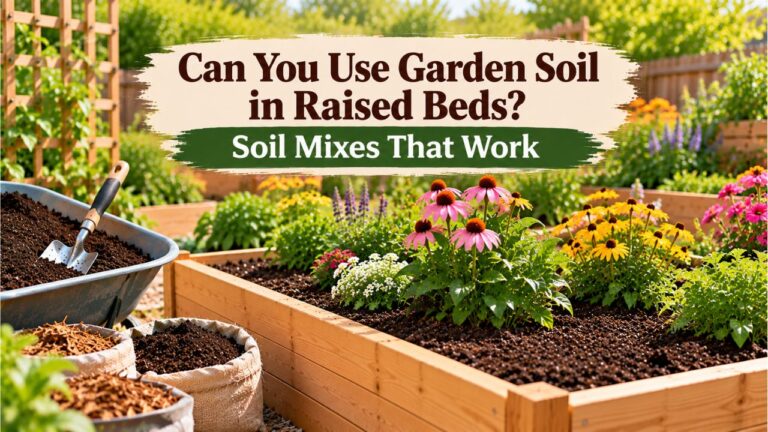
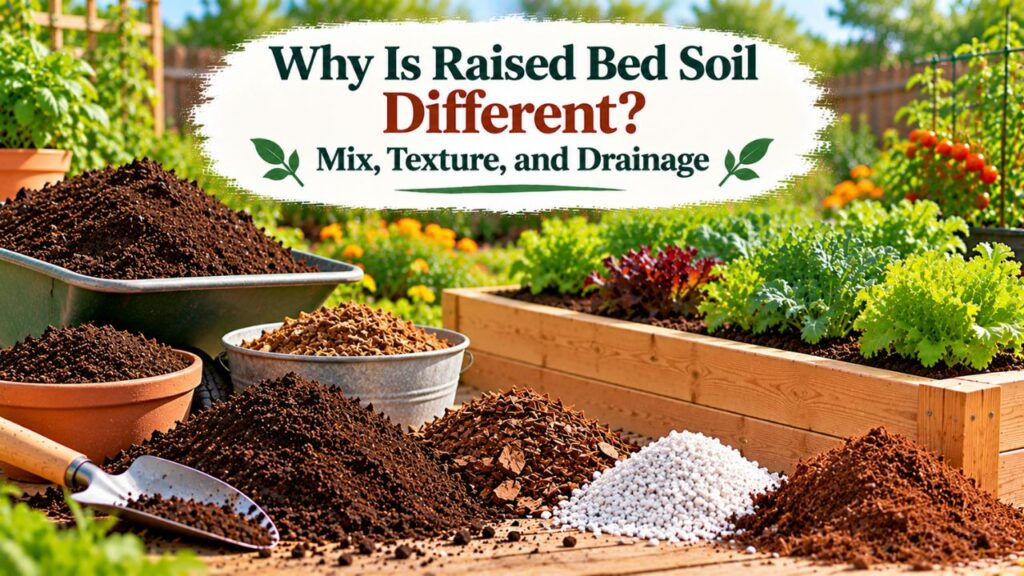
Raised bed soil is different because it is usually blended to provide a loose, well-draining growing medium that retains enough moisture and nutrients for plants growing above ground level. Unlike ordinary garden soil, a typical raised bed mix combines mineral soil with compost and sometimes other materials to improve root development and soil structure.
However, not every product labeled “raised bed soil” contains the same ingredients. Some mixes are mostly topsoil and compost, while others contain large amounts of peat moss, coconut coir, or processed wood materials.
The difference matters because raised beds have their own growing conditions. Their elevated position can improve drainage and allow soil to warm earlier in spring, but it may also increase moisture loss during hot weather.
Using an unsuitable mixture can lead to compaction, excessive settling, nutrient imbalances, or frequent watering problems.
Understanding what separates raised bed soil from regular garden soil and potting mix makes choosing the right growing medium much easier.
Why Is Raised Bed Soil Different From Regular Garden Soil?
The main difference between raised bed soil and regular garden soil is how the growing medium is selected, prepared, and managed.
Natural garden soil develops over time through the interaction of minerals, organic matter, water, air, and living organisms.
Raised bed soil is often a prepared mixture intended to provide suitable growing conditions within a defined, elevated space.
It isn’t a completely different category of soil with unique nutrients or minerals. Instead, its composition is adjusted to meet the needs of the raised bed.
Raised Bed Soil Is Usually Looser
A good raised bed mix has a crumbly texture that allows roots to move through the soil without encountering excessive resistance.
Ordinary garden soil may become dense after years of foot traffic, construction, or repeated disturbance.
Raised beds typically have designated walking paths, so gardeners can reach plants without stepping directly on the growing area.
This helps preserve soil structure.
However, raised bed soil isn’t automatically loose simply because it comes from a labeled bag.
A poorly formulated mix containing excessive clay or fine particles can still become compacted.
Raised Bed Soil Balances Drainage and Moisture
Raised bed soil should allow excess water to move away from roots while retaining sufficient moisture between watering sessions.
Good drainage depends on the spaces between soil particles, often called soil pores.
Larger pores allow water to move through and provide air for roots.
Smaller pores retain water that plants can absorb.
A well-structured growing medium contains a useful balance of both.
Heavy garden soil may contain fewer connected large pores when compacted, making drainage slower.
A suitable raised bed mixture aims to reduce that problem without allowing the soil to dry excessively.
Raised Bed Soil Often Contains Added Organic Matter
Many raised bed mixes contain finished compost or other organic materials.
Compost can improve soil aggregation, contribute nutrients, and support moisture retention.
However, more compost isn’t always better.
Mixtures containing excessive organic material may shrink as the materials decompose, require more frequent watering, or develop nutrient imbalances.
The most suitable composition depends on the type of raised bed and the properties of the ingredients.
What Makes Raised Bed Soil Ingredients Different?
The ingredients in raised bed soil determine much of its physical behavior.
Some products resemble improved natural topsoil, while others behave more like soilless container growing media.
Understanding the ingredients is more useful than relying on the product name.
Mineral Topsoil Provides Structure and Stability
Mineral topsoil contains sand, silt, and clay particles.
These particles influence water movement, nutrient retention, and the stability of the growing medium.
A suitable loamy topsoil provides a useful balance between drainage and moisture storage.
Mineral soil also tends to maintain its volume more consistently over time than a growing medium made almost entirely from decomposable organic materials.
According to Rutgers Cooperative Extension’s guidance on soil for raised beds, combining suitable mineral soil with clean, finished compost can provide a productive long-term growing medium.
This approach is particularly useful for permanent raised beds that sit directly on the ground.
Finished Compost Adds Organic Matter
Finished compost is another common ingredient.
It consists of organic materials that have decomposed into a more stable form.
Depending on the original soil, compost can help:
- Improve the structure of dense soil.
- Increase moisture retention in sandy soil.
- Support the formation of soil aggregates.
- Provide some plant nutrients.
- Increase organic matter content.
The amount needed depends on the soil’s existing properties.
For example, good-quality loam may require less compost than a low-organic-matter soil.
Compost should be mature and suitable for horticultural use.
Unfinished compost and fresh manure are not equivalent substitutes.
Peat Moss and Coconut Coir Affect Water Retention
Some commercial raised bed mixes contain sphagnum peat moss or coconut coir.
These materials help create a lightweight growing medium and influence how water is stored and released.
Peat moss can retain considerable moisture once properly hydrated, but it may become difficult to rewet after drying severely.
Coconut coir also holds moisture, although its properties vary depending on processing and product quality.
Neither material provides the same long-term mineral structure as natural topsoil.
They can be useful ingredients, but they aren’t essential in every raised bed mixture.
Perlite and Other Aeration Materials Create Pore Space
Perlite is a lightweight, expanded volcanic material frequently used in potting mixes.
It helps maintain air spaces within lightweight growing media.
Some raised bed products contain perlite or similar amendments.
However, a permanent open-bottom raised bed containing suitable loamy soil generally does not require perlite simply because it is elevated.
The need for aeration amendments depends on soil texture and the overall mixture.
Raised Bed Soil vs. Garden Soil vs. Potting Mix
These growing media can look similar, but they are often intended for different uses.
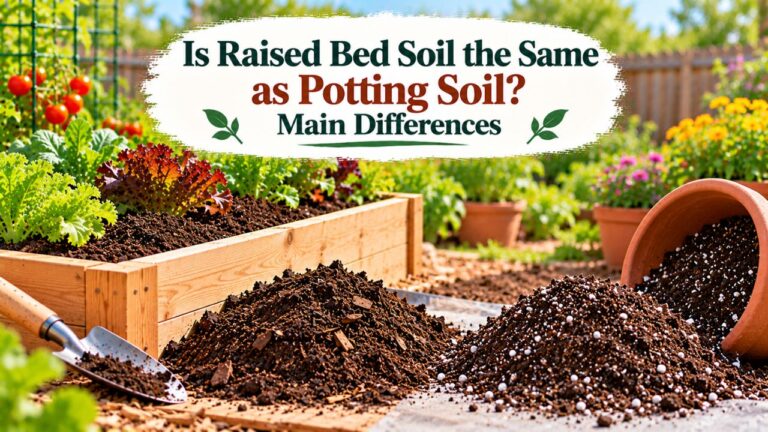
| Feature | Raised Bed Soil | Garden Soil | Potting Mix |
| Typical ingredients | Topsoil, compost, other amendments | Natural mineral soil or commercial garden blend | Peat, coir, bark, perlite, and other lightweight materials |
| Texture | Intended to be loose and workable | Varies from sandy to heavy clay | Usually lightweight |
| Drainage | Designed for a balanced root zone | Depends on soil texture and structure | Designed for container drainage |
| Moisture retention | Depends on mineral and organic balance | Depends on texture and organic matter | Depends on formulation |
| Best application | Raised garden beds | In-ground gardening and suitable open-bottom beds | Pots, planters, and containers |
| Long-term volume stability | Usually better with substantial mineral soil | Generally stable when well-structured | Organic ingredients may decompose and settle |
These are general differences, not fixed specifications for every packaged product.
Why Potting Mix Is Different From Raised Bed Soil
Potting mix is designed primarily for containers with limited rooting space and drainage openings.
Many products contain little or no natural mineral soil.
Instead, they rely on materials such as peat, coir, composted bark, and perlite to maintain suitable air and water conditions.
This makes potting mix useful for traditional flower pots and many elevated planters.
However, filling a large permanent raised bed entirely with lightweight potting mix can be expensive and may require more frequent moisture and fertility management.
For an open-bottom raised garden bed, a mineral-soil-based mixture is often more suitable over the long term.
Why Bagged Garden Soil May Not Work the Same Way
Products labeled “garden soil” vary widely.
Some contain topsoil mixed with compost, while others consist largely of processed organic materials.
A bagged garden soil product may be intended for mixing into existing ground rather than filling an entire raised bed.
Read the ingredient list and application instructions before purchasing.
The words “garden soil” do not automatically mean the product contains substantial mineral topsoil.
Why Does Raised Bed Soil Drain Differently?
Raised beds often provide better drainage than poorly drained, ground-level garden areas.
However, the difference comes from both the growing medium and the raised bed’s physical design.
Raised Beds Place the Root Zone Above Surrounding Ground
An open-bottom raised bed increases the elevation of the planting surface.
This gives roots additional growing space above the original ground level.
When the underlying soil and raised bed mixture allow water to move freely, the elevated root zone can remain better aerated after rainfall.
The improvement is particularly helpful where the surrounding ground becomes temporarily saturated.
However, raising the soil does not automatically correct severe drainage problems.
If water cannot leave the bottom of the bed, the growing medium may still become waterlogged.
Raised Bed Soil Can Dry Faster
Improved drainage has a tradeoff.
Raised beds often lose moisture faster than traditional in-ground gardens because the elevated soil is more exposed to surrounding air and temperature changes.
Lightweight, organic-heavy mixes may dry particularly quickly.
This means raised bed soil should not simply drain as fast as possible.
It must also retain sufficient water for plant roots.
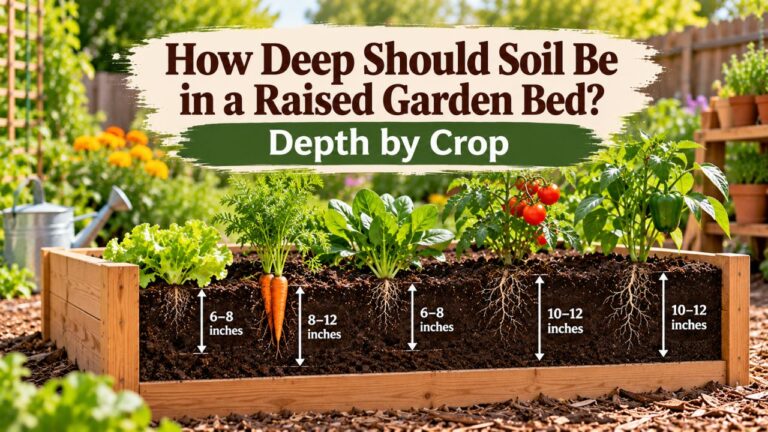
Organic mulch, appropriate soil depth, and consistent irrigation can help manage moisture loss.
Soil Layers Can Interfere With Water Movement
Placing very different soil materials in separate layers can affect drainage.
For example, adding a dense layer of clay-rich garden soil beneath a lightweight growing mix may create an abrupt change in how water moves through the bed.
Where clean native soil is suitable, blending the new material into the upper portion of the existing soil can improve the transition between layers.
Avoid assuming that a gravel layer beneath the growing medium will automatically improve drainage.
A suitable soil mixture and a functioning drainage path are more important.
Is Raised Bed Soil More Nutrient-Rich Than Regular Soil?
Not necessarily.
Raised bed soil may contain additional compost or fertilizer, but its nutrient content depends on the ingredients.
Healthy natural garden soil can already contain enough nutrients to support vegetables, herbs, and flowers.
Similarly, a packaged raised bed mix may contain limited available nutrients, particularly when it is made primarily from peat, coir, or other low-nutrient materials.
Compost Does Not Guarantee Balanced Fertility
Compost supplies organic matter and varying amounts of nutrients.
However, the nutrient concentrations depend on the materials used to produce it.
Some composts contain substantial phosphorus or soluble salts.
Adding more compost without considering the existing soil can lead to excessive nutrient levels.
For this reason, a soil test is more useful than assuming that a darker or more compost-rich mixture is automatically more fertile.
Some Raised Bed Mixes Contain Added Fertilizer
Commercial products may contain starter fertilizers or slow-release nutrients.
Check the label to determine whether nutrients are included.
If fertilizer has already been added, applying another fertilizer immediately may be unnecessary.
Over time, growing vegetables remove nutrients from the soil, and some nutrients may move out of the root zone with drainage water.
Fertilizer needs should reflect soil-test results, crop requirements, and the product’s existing nutrient content.
What Is the Best Soil Mixture for a Raised Bed?
For many permanent, open-bottom raised beds, combining suitable mineral topsoil with finished compost provides a productive growing medium.
The exact ratio depends on the original soil.
The University of Minnesota Extension’s raised-bed gardening recommendations suggest a mixture containing approximately one-half to two-thirds topsoil and one-third to one-half plant-based compost.
These proportions are general starting points rather than requirements for every soil.
Example of a Mineral-Soil-Based Raised Bed Mix
A practical starting mixture for suitable, clean topsoil is:
- Two parts mineral topsoil
- One part finished compost
This provides approximately 67% topsoil and 33% compost by volume before mixing.
For example, a 30-cubic-foot mixture would contain approximately 20 cubic feet of topsoil and 10 cubic feet of compost.
Actual proportions should be adjusted when the soil already contains substantial organic matter.
A soil test can help determine whether additional nutrients are needed.
Does Every Raised Bed Need the Same Soil Mixture?
No. The raised bed’s construction and location determine what type of growing medium works best.
Open-bottom raised beds: Suitable native soil or mineral topsoil amended with compost can provide a stable growing environment. Roots may also extend into the ground beneath the bed.
Raised beds on concrete: These need sufficient rooting depth and a reliable drainage system. A lighter, well-aerated growing medium may be preferable, especially when the bed has an enclosed bottom.
Elevated planters with solid bottoms: These behave more like large containers. A container-appropriate mix and effective drainage openings are especially important.
Existing raised beds: If the soil is healthy and drains properly, complete replacement may be unnecessary. Adding suitable material to restore settled soil levels may be sufficient.
A product labeled “raised bed soil” is not guaranteed to work equally well in every design.
How to Tell Whether Raised Bed Soil Is Good Quality
The quality of a growing medium depends on more than its appearance or brand name.
Before purchasing a large amount, check its composition and physical condition.
Check the Ingredient List
Look for a clear description of the growing medium.
For permanent open-bottom beds, useful ingredients may include mineral topsoil, loam, and finished compost.
If the product consists almost entirely of bark, peat, and other lightweight materials, consider whether it is suitable for the intended application.
Do not assume that more ingredients make a mixture better.
A straightforward mineral soil and compost blend may work well without additional amendments.
Examine the Soil Texture
Good raised bed soil should feel reasonably loose and workable when slightly moist.
It should not contain excessive trash, large hard clumps, or substantial undecomposed woody material.
Some small stones and natural soil aggregates are normal in mineral topsoil.
A simple hand check can identify obvious problems:
- Take a small amount of moist soil.
- Gently squeeze it in your hand.
- Open your hand and examine the structure.
- Press the soil lightly with a finger.
A suitable loamy soil often forms a weak clump that breaks apart with gentle pressure.
Very sandy soil may fall apart immediately, while heavily compacted clay may remain sticky and dense.
This test provides a general impression, not a laboratory measurement of soil quality.
Check How the Soil Handles Water
A good growing medium should absorb water without remaining saturated for an extended period.
If possible, examine a sample after watering.
Watch for water that runs across the surface without soaking in or soil that stays excessively wet.
These conditions may indicate moisture-management problems.
However, a sample’s behavior in a small container does not perfectly predict drainage in an open-bottom raised bed.
Consider Soil Testing
For bulk soil purchases, ask whether the supplier provides recent soil-test information.
Testing can help identify pH, nutrient concentrations, and other properties.
If the soil’s source is uncertain, contamination testing may also be appropriate before growing edible crops.
This is especially important when using soil from construction sites, older urban properties, or areas with a history of industrial activity.
Why Does Raised Bed Soil Change Over Time?
Raised bed soil can settle, lose organic matter, or become compacted after repeated growing seasons.
These changes are normal to some extent, but the rate depends on the original mixture and maintenance.
Organic Ingredients Gradually Decompose
Compost, bark, and other organic ingredients continue changing as microorganisms break down the material.
As decomposition progresses, the soil may lose some volume.
A mixture containing a large proportion of decomposable material can settle more noticeably than one containing substantial mineral soil.
This is one reason mineral-based mixes are often preferred for permanent raised beds.
Soil Structure Changes With Watering and Weather
Repeated wetting and drying can affect soil aggregates and pore spaces.
Heavy rainfall, irrigation, and physical disturbance may also contribute to surface crusting or compaction.
Avoid walking on the growing area and working the soil while it is saturated.
Mulch can help protect the soil surface from direct rainfall and excessive drying.
Soil Nutrients Need Periodic Attention
Vegetables remove nutrients during growth and harvest.
The soil may need fertilizer or other amendments over time, depending on crop requirements and test results.
However, replacing the entire growing medium every year is usually unnecessary.
Maintaining soil structure, monitoring fertility, and replenishing settled material can keep a permanent raised bed productive.
Conclusion
Understanding why is raised bed soil different comes down to its intended growing conditions, composition, and physical structure.
A suitable raised bed mix is designed to support roots in an elevated growing area while balancing drainage, moisture retention, aeration, and long-term stability.
Unlike ordinary garden soil, it may contain carefully selected amounts of mineral topsoil and finished compost. Unlike potting mix, a permanent raised bed mixture often benefits from substantial mineral soil content.
However, the label alone doesn’t guarantee quality.
For most permanent, open-bottom raised beds, clean loamy topsoil combined with an appropriate amount of finished compost is a sensible choice.
The best growing medium is one that suits the bed’s design, maintains good soil structure, and provides the conditions needed for healthy plant growth.
FAQs About Why Is Raised Bed Soil Different
Can You Use Regular Garden Soil Instead of Raised Bed Soil?
Yes. Clean, well-structured garden soil can be used in raised beds, especially when they sit directly on the ground. If the soil is heavy or low in organic matter, suitable compost may help improve its condition.
Is Raised Bed Soil the Same as Potting Soil?
No, not necessarily. Potting mixes are primarily designed for containers and often contain lightweight organic materials. Many raised bed mixes contain mineral topsoil and compost, although commercial formulations vary.
Why Does Raised Bed Soil Dry Out So Quickly?
Raised bed soil may dry quickly because the elevated growing area is exposed to more air and temperature changes. Lightweight, organic-heavy mixes can also lose moisture rapidly. Mulching and consistent irrigation can help.
Can You Use Raised Bed Soil in Pots?
Some raised bed mixes can work in large planters, but dense, mineral-heavy mixes may drain poorly in small containers. A growing medium formulated for container use is generally more suitable for standard flower pots.
Why Does Raised Bed Soil Sink After Filling?
Fresh raised bed soil often settles as loose particles rearrange after watering. Organic ingredients can also decompose and lose volume. Some settling is expected, but excessive sinking may indicate an overly organic growing mixture.
Does Raised Bed Soil Need Perlite?
Not always. A well-structured mixture of suitable topsoil and compost may provide adequate drainage and aeration without perlite. Lightweight mixes used in elevated planters may benefit from additional aeration materials.
Should You Replace Raised Bed Soil Every Year?
No. Healthy raised bed soil generally does not require annual replacement. Maintain it by checking nutrient levels, preventing compaction, adding appropriate amendments when needed, and replenishing settled material.

I’m Maya L. Greenwood, a lifelong plant lover who believes anyone can grow something beautiful with the right guidance. After years of testing soil mixes, pruning methods, irrigation tricks, and pest-safe solutions, I started EasyGardenTips.com to turn hard-won lessons into step-by-step advice. From seed starting and container gardens to composting and seasonal checklists, my goal is to make gardening simple, sustainable, and fun.