Is Raised Bed Soil the Same as Garden Soil? Uses and Differences
No, raised bed soil is not always the same as garden soil, although both can contain similar ingredients and support the same plants. Raised bed soil is typically prepared or formulated to provide suitable drainage, moisture retention, and root growth in elevated planting areas. Garden soil usually refers to mineral soil found in the ground or a commercial product intended for in-ground gardening.
The distinction matters because a raised garden bed has different growing conditions depending on its depth, drainage, and underlying surface. A shallow wooden bed installed over healthy ground may perform well with ordinary garden soil and finished compost. An elevated planter with a solid bottom often needs a lighter growing medium.
Commercial product labels can make the difference even less obvious. Some raised bed mixes contain actual topsoil, while others consist largely of compost, bark, coir, and other organic materials.
Understanding the ingredients and intended uses helps prevent poor drainage, excessive drying, and unnecessary soil expenses.
This guide compares both soil types, explains when they can be used interchangeably, and identifies suitable growing mixtures for different raised garden beds.
Is Raised Bed Soil the Same as Garden Soil in Practice?
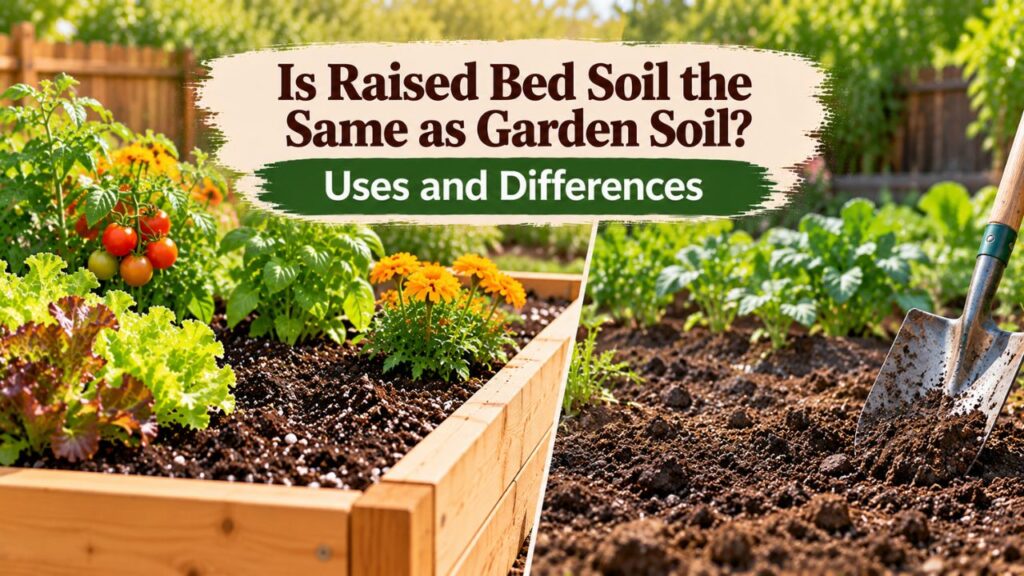
Raised bed soil and garden soil can be very similar, but their composition is not necessarily identical.
The main difference is usually how the growing medium is prepared and where it is intended to be used.
Garden soil commonly contains natural mineral particles such as sand, silt, and clay, along with organic matter and living organisms.
Raised bed soil may contain those same materials but is often blended with additional compost or other components to create a workable planting medium.
However, neither term guarantees a standardized recipe. Commercial manufacturers use different ingredients, and some bagged products labeled “raised bed soil” contain little or no mineral topsoil.
Raised Bed Soil vs. Garden Soil Comparison
| Feature | Raised Bed Soil | Garden Soil |
| Main purpose | Growing plants in raised garden beds | Growing plants in ground-level gardens |
| Typical ingredients | Topsoil, compost, or formulated growing media | Mineral soil with varying organic matter |
| Texture | Usually selected for a loose, workable structure | Depends on natural soil composition |
| Drainage | Depends on the mix and bed construction | Depends on texture, structure, and ground conditions |
| Moisture retention | Adjusted through ingredient selection | Influenced by soil texture and organic matter |
| Nutrients | May contain compost and added fertilizer | Depends on natural fertility and amendments |
| Cost | Bagged specialty mixes may cost more | Existing suitable garden soil may be available without purchase |
| Best application | Raised beds and certain elevated planters | In-ground gardens and open-bottom raised beds |
These differences describe common uses rather than fixed characteristics.
A well-maintained garden soil can have better drainage and structure than a poorly formulated commercial raised bed mix.
Likewise, raised bed soil is not automatically more fertile or better for vegetable growth simply because it carries a specialized label.
What Is Raised Bed Soil Made Of Compared With Garden Soil?
The ingredients are one of the easiest ways to understand the distinction.
Both growing media can contain mineral soil and organic matter, but their proportions vary considerably.
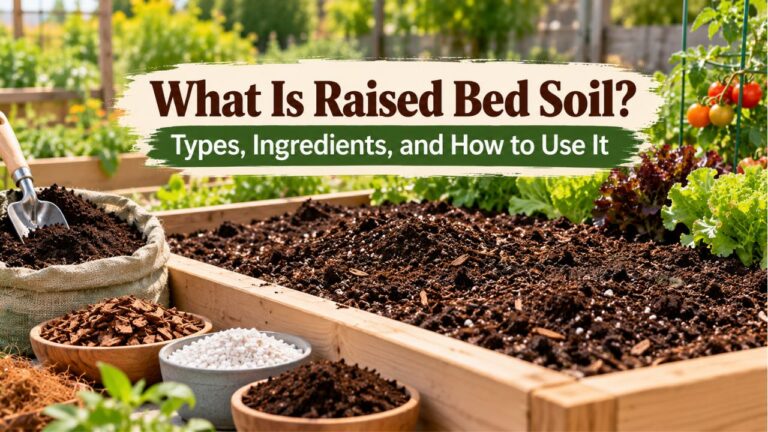
Ingredients in Traditional Raised Bed Soil
A conventional raised bed soil mixture commonly contains:
- Loamy topsoil: Provides mineral structure, moisture storage, and nutrient-holding capacity.
- Finished compost: Adds decomposed organic matter and contributes nutrients.
- Optional amendments: May include selected materials to adjust water retention or aeration.
- Fertilizer: Sometimes included in commercial products to supplement plant nutrients.
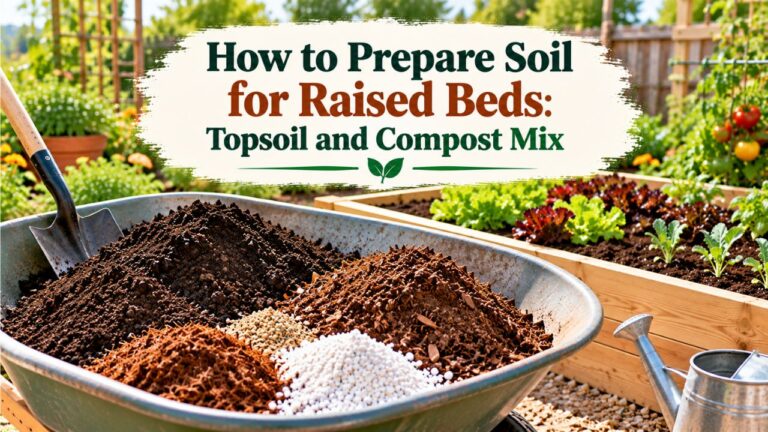
A practical soil-based blend often contains approximately two parts topsoil and one part finished compost by volume.
The University of Minnesota Extension’s raised bed gardening guidance recommends a mixture containing roughly one-half to two-thirds topsoil and one-third to one-half plant-based compost.
This provides a useful starting range for a traditional raised vegetable bed.
The appropriate composition still depends on the quality of the topsoil and compost.
If the purchased topsoil already contains substantial compost, adding more may be unnecessary.
Ingredients in Natural Garden Soil
Natural garden soil consists mainly of mineral particles formed through geological and biological processes.
These include three particle-size groups:
- Sand: Relatively large particles that contribute to drainage and aeration.
- Silt: Intermediate-sized particles that influence water retention and soil texture.
- Clay: Very fine particles that can hold water and nutrient ions.
Garden soil also contains varying amounts of organic matter, microorganisms, water, and air.
The proportions of sand, silt, and clay determine its texture.
For example, sandy garden soil generally drains more rapidly than clay-rich soil.
Loamy garden soil contains a useful balance of particle sizes and is often easier to manage for vegetable gardening.
The soil’s structure, organic matter content, and compaction history also affect how well it supports plants.
Why Commercial Raised Bed Mixes May Contain Different Materials
Some bagged products labeled as raised bed soil do not contain traditional mineral topsoil.
Instead, their ingredients may include:
- Coconut coir
- Peat moss
- Composted bark
- Wood fiber
- Plant-based compost
- Perlite or other mineral amendments
These ingredients are common in lightweight growing media.
Such products may be useful in certain raised planters, but their watering and fertilizer requirements can differ from those of mineral-soil-based mixtures.
Read the ingredient list before assuming that a bag of raised bed soil is simply garden soil with added compost.
Raised Bed Soil vs. Garden Soil for Drainage and Moisture
Drainage and water retention are important differences to consider when selecting soil for a raised bed.
Plants need both moisture and air around their roots.
A growing medium that remains saturated for too long can limit oxygen availability. One that dries rapidly may require frequent irrigation.
How Raised Bed Soil Handles Water
A properly prepared raised bed mixture should allow excess water to drain while retaining enough moisture for plant roots.
Mineral soil contributes to moisture storage, while appropriately used compost helps maintain soil structure and water management.
However, raised beds may dry faster than surrounding garden ground because their elevated sides expose more of the growing area to heat and air.
The problem can be more noticeable in shallow elevated planters with limited soil volume.
A commercial mix containing large amounts of coarse organic materials may also need a different watering schedule than a traditional topsoil-and-compost blend.
How Regular Garden Soil Handles Water
Garden soil drainage depends heavily on its texture, structure, and underlying conditions.
Sandy soil usually allows water to move through relatively quickly.
Clay-rich soil often retains more water, although well-structured clay can still support healthy plant growth.
Compaction can reduce water infiltration and the amount of air available to roots, regardless of soil texture.
If the native soil drains properly and has a workable structure, it can be suitable for raised bed gardening without major changes.
Is Raised Bed Soil Always Better Draining?
No. A commercial raised bed mix is not guaranteed to drain better than ordinary garden soil.
Drainage depends on the ingredients, compaction, soil depth, and whether water can leave the planting area.
For example, a raised bed placed on compacted ground may experience drainage restrictions beneath the new soil layer.
An elevated planter with blocked drainage outlets can remain waterlogged even when filled with a loose growing medium.
Choosing the right soil helps, but the bed’s construction and underlying surface matter too.
Can You Use Regular Garden Soil in a Raised Bed?
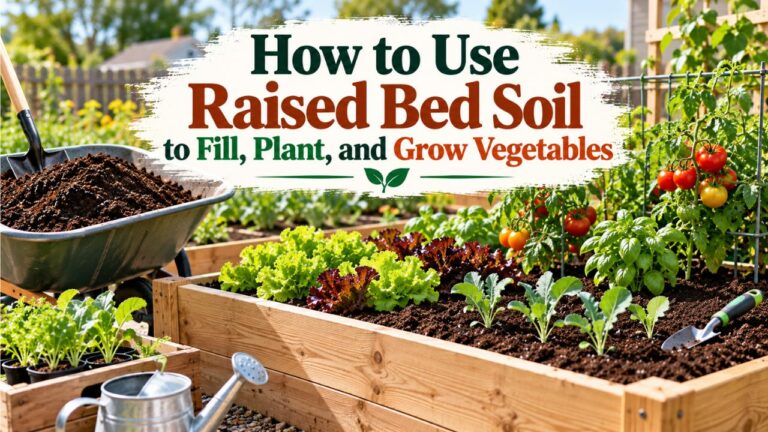
Yes, regular garden soil can be used in raised beds when it is suitable for growing plants and free from known contamination.
In many cases, there is no need to replace healthy existing soil with an expensive commercial mixture.
The most important consideration is whether the garden soil provides appropriate rooting conditions.
Using Garden Soil in an Open-Bottom Raised Bed
An open-bottom raised bed is one of the best situations for reusing suitable garden soil.
Because the frame sits directly on the ground, plant roots can extend below the added growing medium.
This gives plants access to a larger rooting area than the frame depth alone provides.
If the native soil is healthy, loose, and well-drained, it can remain part of the growing environment.
The University of Maryland Extension’s raised bed vegetable gardening guide recommends adding a 2–4-inch layer of compost to suitable existing garden soil and incorporating it into the upper 4 inches as one way to prepare an established garden area for raised beds.
This approach improves the growing area without requiring complete soil replacement.
Using Garden Soil With Heavy Clay Content
Clay-rich garden soil can be used in raised beds, but its condition matters.
Clay soil contains fine mineral particles that retain water and nutrients.
However, heavily compacted clay may restrict water movement and root development.
If the soil is safe for gardening, carefully loosening the underlying ground can improve its physical condition.
A layer of quality loamy soil and finished compost may also provide a more workable planting zone.
Avoid working clay soil when it is saturated, since doing so can damage its structure.
Adding small amounts of sand is not a dependable solution for every clay soil problem.
Using Garden Soil With High Sand Content
Sandy garden soil can also be used in raised beds.
Its main challenge is often limited moisture retention.
Plants may require more frequent watering, particularly during hot weather.
Appropriate compost additions can improve water management, while organic mulch can reduce evaporation from the surface.
There is no need to replace all the sandy soil if it otherwise supports healthy plant growth.
Can You Use Bagged Garden Soil Instead of Raised Bed Soil?
Yes, some bagged garden soil products can be used in raised beds.
However, check the ingredients and application instructions before purchasing.
The term “garden soil” on a package does not always mean the product consists primarily of natural mineral soil.
Some bagged garden soil products contain composted organic materials and other amendments rather than a large proportion of mineral topsoil.
When Bagged Garden Soil Works Well
Bagged garden soil may be suitable when:
- The product is intended for in-ground gardening.
- It contains appropriate mineral soil and organic matter.
- The texture is loose and workable.
- Drainage is suitable for the bed’s design.
- The product does not contain excessive fertilizer or immature organic material.
A product intended to be mixed into existing ground may not be suitable for filling an enclosed elevated planter by itself.
Check whether the manufacturer recommends using it alone or combining it with existing soil.
When a Raised Bed Mix May Be More Convenient
A premixed raised bed product can be useful when starting a small garden without access to suitable topsoil or compost.
It may save the time required to measure and mix separate ingredients.
However, convenience does not guarantee superior performance.
Compare the actual contents and cost per cubic foot rather than relying only on the product name.
For larger raised beds, purchasing a quality bulk topsoil-and-compost mixture may be more economical.
Raised Bed Soil vs. Garden Soil for Different Garden Setups
The most appropriate growing medium depends on how the raised bed is constructed.
An open-bottom wooden bed, a waist-high planter, and a concrete-based garden bed do not necessarily have identical soil requirements.
Raised Beds Directly on Natural Ground
For an ordinary open-bottom raised bed, quality garden soil with suitable compost amendments is often sufficient.
The plants can grow into the native soil below the frame.
A traditional topsoil-and-compost mixture is especially useful when the existing ground has poor structure or limited organic matter.
Before adding new material, check the native soil’s condition.
Raised Beds on Concrete or Paved Surfaces
A raised bed on concrete has a restricted rooting depth because roots cannot enter the ground below.
University of Maryland Extension recommends equal parts finished compost and soilless growing medium as one option for beds installed on hard surfaces.
For beds at least 16 inches deep, its guidance allows topsoil to make up as much as 20% of the mixture by volume.
The growing depth should match the intended plants, and excess water must have an effective drainage route.
Using dense garden soil alone may create avoidable moisture and compaction problems in this type of structure.
Waist-High Raised Beds With Legs
A waist-high planter supported by legs functions more like a large container than a traditional ground-level garden.
The growing medium must support the entire root system within a limited space.
A container-appropriate mixture containing materials such as coir, composted bark, and other suitable components may be more practical than heavy mineral garden soil.
Weight is also important.
The supporting legs and planter base must safely carry the growing medium when wet.
Raised Beds Over Poor or Potentially Contaminated Ground
Raised beds can help gardeners establish planting areas where native soil is unsuitable.
However, a contaminated site requires more than simply adding several inches of clean soil.
The growing area may need verified clean material, appropriate separation from contaminated ground, and measures to prevent contaminated soil or dust from entering the bed.
If the site’s history raises concerns, arrange suitable soil testing and follow local extension or environmental health guidance.
How to Turn Regular Garden Soil Into Raised Bed Soil
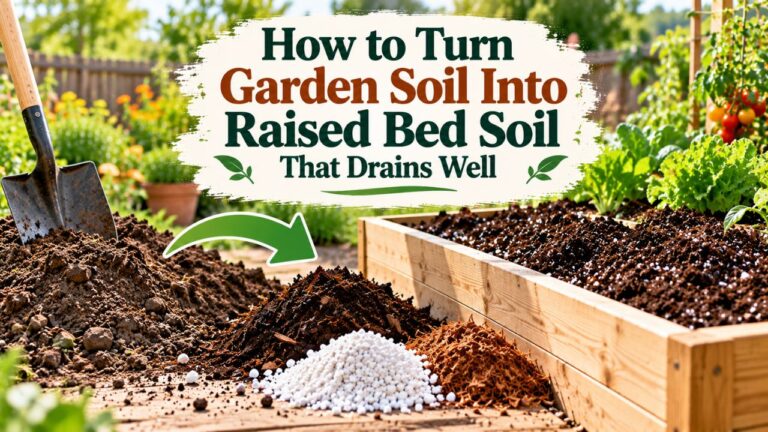
Suitable garden soil can often be improved for raised bed use by adding finished compost and preparing the planting area properly.
The process depends on the existing soil rather than following one fixed recipe for every garden.
Step 1: Check the Existing Garden Soil
Inspect the soil for compaction, drainage problems, debris, and signs of unsuitable material.
If you are growing vegetables, consider testing the soil for pH and nutrients before applying fertilizers.
Where contamination is possible, request appropriate laboratory analysis.
Do not use soil from an unknown or potentially contaminated source simply because it looks dark and fertile.
Step 2: Choose Mature Compost
Select fully decomposed compost suitable for the intended crops.
Finished compost generally has an earthy smell and a relatively uniform appearance.
Avoid using large quantities of raw organic waste or unfinished compost directly in the root zone.
Fresh materials can continue decomposing after planting and may temporarily interfere with nutrient availability.
Step 3: Decide How Much Compost to Add
If you are creating a new raised bed mixture from purchased topsoil, a useful starting ratio is:
2 parts quality topsoil + 1 part finished compost
For example:
- 10 cubic feet of topsoil
- 5 cubic feet of finished compost
- Approximately 15 cubic feet of combined ingredients before settling
These proportions are measured by volume.
However, existing garden soil may need much less compost when it already contains sufficient organic matter.
Use soil conditions and testing results to guide the final quantity.
Step 4: Mix the Materials Evenly
Use a shovel or garden fork to distribute the compost throughout the topsoil.
Break apart large compacted clumps without pulverizing the soil.
Avoid mixing when the material is excessively wet.
For an open-bottom raised bed, gently loosening suitable native soil beneath the new mixture can improve root penetration.
Step 5: Fill and Water the Raised Bed
Spread the prepared soil evenly.
Avoid stepping inside the bed because repeated foot traffic can cause compaction.
Water the mixture gently and allow it to settle naturally.
Check the soil level afterward and add compatible growing material if necessary.
Leave some space beneath the frame’s upper edge for mulch and watering.
Is Raised Bed Soil Better Than Garden Soil for Vegetables?
Raised bed soil is not automatically better than garden soil for growing vegetables.
The quality of the growing medium matters more than its name.
A healthy garden soil can support productive tomatoes, peppers, carrots, lettuce, and other vegetables without being replaced.
A poorly formulated raised bed mix can still create drainage, nutrient, or moisture problems.
Tomatoes and Peppers
Tomatoes and peppers need sufficient rooting space, suitable moisture, and appropriate nutrient availability.
A traditional topsoil-and-compost mixture can support these crops in an open-bottom bed.
In an enclosed elevated planter, the soil depth and total growing volume become more important because roots cannot extend into the ground beneath.
Lettuce and Leafy Greens
Lettuce, spinach, and similar leafy vegetables generally grow well in fertile, workable soil.
They benefit from consistent moisture.
Either suitable garden soil or a properly prepared raised bed mix can support them.
The important consideration is avoiding prolonged saturation and excessive drying.
Carrots and Other Root Vegetables
Carrots and similar crops benefit from a loose, relatively stone-free growing zone.
Heavy clods, large rocks, and compacted layers can interfere with root development.
If ordinary garden soil is dense or full of stones, improving the planting layer may be useful.
However, buying a product labeled raised bed soil is not necessary if the existing garden soil already provides suitable conditions.
How to Choose Between Raised Bed Soil and Garden Soil
The best choice depends on the condition of the soil already available and the design of the bed.
Use the following practical criteria.
Choose Existing Garden Soil When It Is Already Suitable
Regular garden soil is often the economical choice when:
- The raised bed has an open bottom.
- The native ground drains adequately.
- The soil is loose enough for root growth.
- Nutrient levels and pH are appropriate.
- There are no unresolved contamination concerns.
In this situation, compost or other amendments may be added according to actual needs.
Choose a Prepared Raised Bed Mix When More Growing Material Is Needed
A quality raised bed mixture can be useful when:
- The existing soil is heavily compacted.
- The garden lacks sufficient topsoil.
- You need to increase the planting depth.
- A new bed requires substantial additional growing material.
- You prefer a premixed product for convenience.
Check the ingredients before purchasing.
For traditional open-bottom beds, a suitable mineral-soil-and-compost mixture is a practical choice.
Choose Container Growing Media for Suitable Elevated Planters
A container-style growing medium is often preferable when the bed is supported by legs or has a restricted bottom.
These systems require careful control of drainage, moisture, rooting volume, and total weight.
Use materials formulated for container growing conditions rather than assuming that dense native garden soil will behave the same way.
Common Problems When Using the Wrong Soil Type
The wrong growing medium can create difficulties even when the raised bed frame is properly built.
Garden Soil Becomes Compacted
Repeatedly walking on garden soil can compress the growing area.
Dense soil may restrict root growth and water movement.
Keep foot traffic out of the bed and avoid handling saturated soil unnecessarily.
Raised Bed Mix Dries Too Quickly
Some lightweight or highly organic mixtures dry rapidly, especially in elevated planters.
Check moisture below the surface rather than judging only by appearance.
Appropriate mulch and consistent watering can help reduce moisture fluctuations.
Excess Compost Causes Nutrient Buildup
Adding large amounts of compost every season is not always beneficial.
Some composts contain substantial nutrients, especially phosphorus.
Use soil tests to guide amendments instead of assuming that more compost always means healthier soil.
Poor Drainage Persists Beneath the Bed
A raised frame does not automatically fix compacted or poorly draining native ground.
Water may enter the loose raised bed mixture but move slowly through the material underneath.
Check the entire rooting area and drainage system before adding more amendments.
Conclusion
So, is raised bed soil the same as garden soil? Not always, but they can contain similar ingredients and serve many of the same purposes.
Traditional raised bed soil often combines mineral topsoil with finished compost, while garden soil generally refers to natural mineral soil or a product intended for in-ground gardening.
For open-bottom raised beds, good-quality garden soil can be used successfully without purchasing a special commercial mixture.
For elevated planters and beds on concrete, a suitable container-style growing medium may be more practical because of restricted root depth, drainage requirements, and weight considerations.
The best approach is to examine the soil’s composition, test it when necessary, and choose a mixture that provides appropriate root space, moisture retention, drainage, and nutrients.
FAQs About Is Raised Bed Soil the Same as Garden Soil
Can I mix raised bed soil with regular garden soil?
Yes. Raised bed soil can be mixed with suitable regular garden soil when the materials are compatible. This is particularly useful for open-bottom beds where mineral soil and compost-based amendments can be combined to improve the planting area.
Can raised bed soil be used directly in the ground?
Yes. Many raised bed soil products can be used in ground-level gardens. However, highly organic or lightweight commercial mixtures may behave differently from natural mineral soil. Check the ingredients and manufacturer instructions before using large amounts.
Is raised bed soil the same as topsoil?
No. Topsoil is primarily mineral soil containing sand, silt, and clay, along with varying amounts of organic matter. Raised bed soil may contain topsoil combined with compost and other materials, although some commercial products contain little mineral soil.
Is raised bed soil better for drainage than garden soil?
Not necessarily. Drainage depends on the soil’s composition, structure, compaction, and surrounding conditions. A properly prepared raised bed mix may drain well, but healthy loamy garden soil can also provide excellent drainage.
Can I grow vegetables in a raised bed filled with garden soil only?
Yes, provided the garden soil has suitable structure, drainage, nutrients, and rooting depth. Adding compost may improve some soils, but it is not always required when the existing soil already supports healthy vegetable growth.
Do I need to replace garden soil with raised bed soil every year?
No. Garden soil and properly prepared raised bed soil can remain productive for many growing seasons. Maintain the soil through appropriate watering, organic matter management, and soil testing rather than routinely replacing the entire growing medium.

I’m Maya L. Greenwood, a lifelong plant lover who believes anyone can grow something beautiful with the right guidance. After years of testing soil mixes, pruning methods, irrigation tricks, and pest-safe solutions, I started EasyGardenTips.com to turn hard-won lessons into step-by-step advice. From seed starting and container gardens to composting and seasonal checklists, my goal is to make gardening simple, sustainable, and fun.