Is Raised Bed Soil the Same as Potting Soil? Main Differences
No, raised bed soil is not generally the same as potting soil. Raised bed soil is usually designed for larger garden beds, often combining mineral topsoil with organic matter, while potting soil is typically a lightweight growing mix formulated for containers. Both support plant growth, but their ingredients, structure, and water management can differ considerably.
The confusion comes from product labels. Some commercial raised bed mixes contain ingredients similar to potting soil, including compost, peat moss, coconut coir, and perlite. Others contain substantial mineral soil. That means the product name alone doesn’t always reveal what’s inside the bag.
Choosing the wrong mixture can affect drainage, moisture retention, root development, and long-term soil stability. A mix that performs well in a flowerpot may dry out too quickly in a large outdoor raised bed. Likewise, dense garden soil can create drainage problems in a small container.
Understanding these differences helps determine which soil belongs in traditional raised beds, elevated planters, vegetable containers, and other growing spaces.
Is Raised Bed Soil the Same as Potting Soil in Composition?
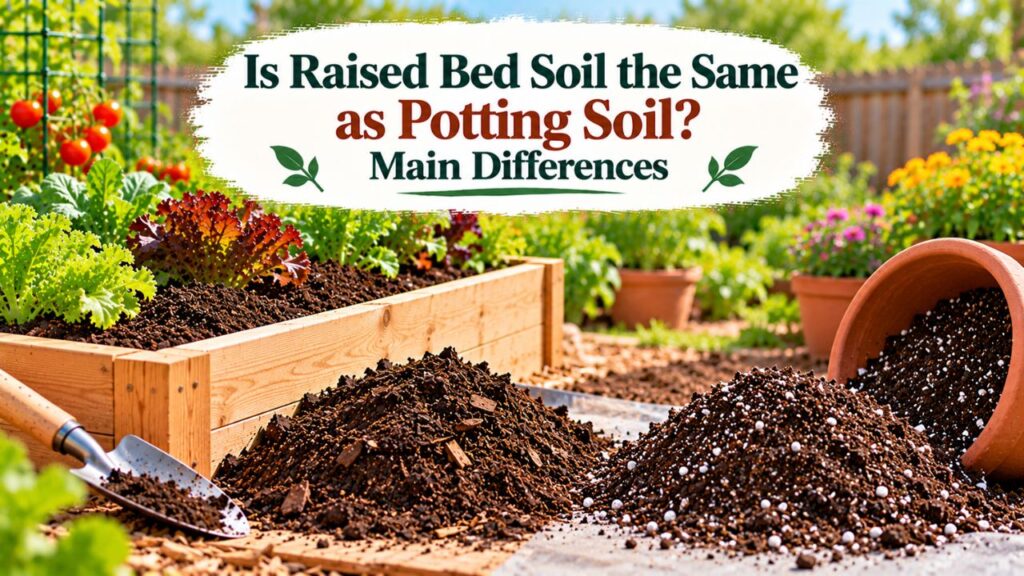
Raised bed soil and potting soil can contain overlapping ingredients, but their typical formulations serve different growing environments.
The main distinction is the amount of mineral soil compared with lightweight organic and inorganic growing materials.
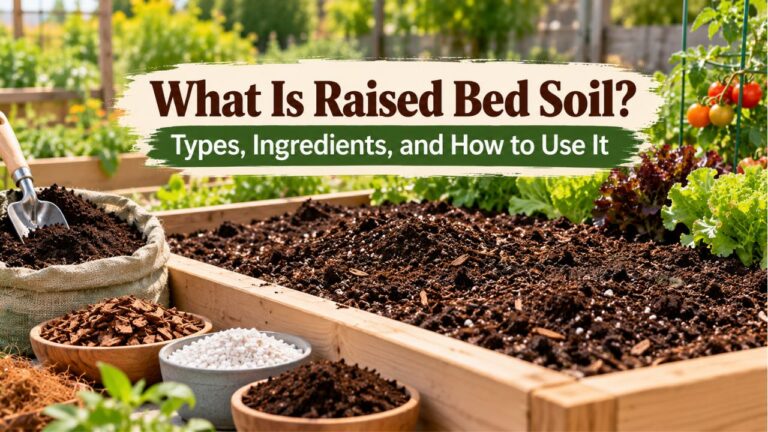
What Is Raised Bed Soil Made Of?
Traditional raised bed soil is a growing medium designed to support plants in garden beds built above the surrounding ground.
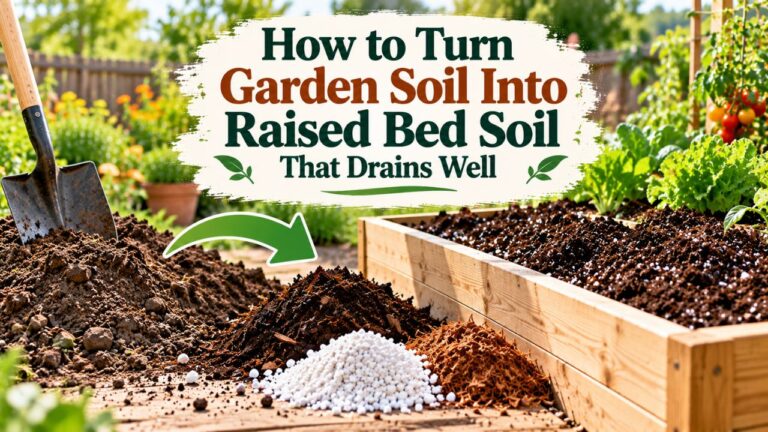
A well-prepared mineral-soil-based raised bed mix commonly contains:
- Loamy topsoil: Provides mineral particles, structure, and long-term stability.
- Finished compost: Adds organic matter and contributes nutrients.
- Other organic materials: May improve moisture retention and soil structure when needed.
- Optional drainage amendments: Sometimes included to adjust the mixture’s physical properties.
Loamy topsoil contains sand, silt, and clay in proportions that help balance drainage and moisture retention.
Finished compost improves soil structure and supports soil organisms that contribute to nutrient cycling.
However, commercial raised bed soil isn’t standardized to one recipe. Some bagged products contain very little mineral soil and are primarily organic growing media.
Checking the ingredients is more reliable than relying on the product name.
What Is Potting Soil Made Of?
Potting soil, often called potting mix, is generally formulated for plants growing in containers.
Despite its name, many potting mixes contain no actual mineral soil.
Common ingredients include:
- Sphagnum peat moss: Helps retain moisture in the growing medium.
- Coconut coir: Provides a lightweight organic material with moisture-holding capacity.
- Perlite: Helps maintain air spaces and drainage.
- Vermiculite: Retains moisture and some nutrients.
- Composted bark: Contributes structure and porosity.
- Compost: May provide organic matter and nutrients.
- Added fertilizer: Some products contain starter nutrients or controlled-release fertilizer.
The proportions vary by product.
For example, a moisture-retentive potting mix may behave differently from a coarse bark-based mixture intended for plants that need excellent drainage.
The main objective is to provide adequate water, air, and physical support within a relatively restricted root space.
Raised Bed Soil vs. Potting Soil: Key Differences
The most useful comparison involves the growing environment rather than the name printed on the bag.
| Feature | Raised bed soil | Potting soil |
| Primary use | Garden beds, especially open-bottom beds | Pots, planters, and enclosed containers |
| Typical composition | Mineral topsoil and compost | Peat, coir, bark, perlite, and other lightweight materials |
| Weight | Usually heavier when mineral soil is present | Generally lighter |
| Drainage | Depends on mineral texture and organic matter | Formulated to maintain drainage and aeration in containers |
| Moisture retention | Often more stable in a permanent garden bed | Varies with the mix and container size |
| Long-term stability | Mineral-soil-based mixes settle relatively little after initial settling | Organic ingredients gradually break down and settle |
| Nutrient supply | Depends on soil fertility and compost | Depends on added compost and fertilizer |
| Typical cost for large beds | Bulk mixes are often more economical | Bagged potting mixes can be expensive in large quantities |
These comparisons describe common formulations rather than guarantees.
A commercial raised bed product made primarily from peat and coir may behave much like potting mix. Conversely, specialty potting products may contain mineral ingredients.
Differences in Drainage and Airflow
Both growing media need enough air spaces to support healthy roots.
The difference is how those spaces are maintained.
Mineral soil in an open-bottom raised bed can drain into suitable native soil beneath it. The bed’s depth also provides considerable room for water redistribution and root growth.
A pot has a limited growing depth, and its bottom creates a different drainage environment.
Potting mixes are formulated with ingredients that maintain adequate pore space, allowing water and air to move through the container.
Dense topsoil can lose much of its useful air space when packed into a small pot.
Differences in Water Retention
A properly balanced raised bed mixture holds moisture while allowing excess water to drain.
Potting mixes also retain moisture, but their behavior depends on ingredients and container conditions.
Some peat-based mixes become difficult to rewet when they dry severely.
Other products contain moisture-retaining ingredients that keep the root zone damp for longer.
A large open-bottom raised bed and a small plastic pot can therefore need very different watering schedules even when planted with the same vegetables.
Differences in Soil Stability
Mineral soil provides a relatively stable framework for a permanent garden bed.
A potting mix containing substantial organic material changes as peat, bark, and other ingredients slowly decompose.
The growing medium may settle and require refreshing.
This doesn’t make potting mix unsuitable for plants. It simply means its physical characteristics are better matched to container gardening than to some long-term garden bed applications.
Which Soil Is Better for Raised Garden Beds?
For most traditional raised beds with direct contact to the ground, a suitable mineral-soil-based raised bed mixture is generally the better choice.
However, an elevated planter with a solid bottom should usually be treated as a container.
Open-Bottom Raised Garden Beds
An open-bottom raised bed sits directly over native soil.
Its plants can potentially extend their roots into the ground beneath the bed, provided the underlying soil is suitable.
A mixture of quality topsoil and mature compost creates a useful growing environment.
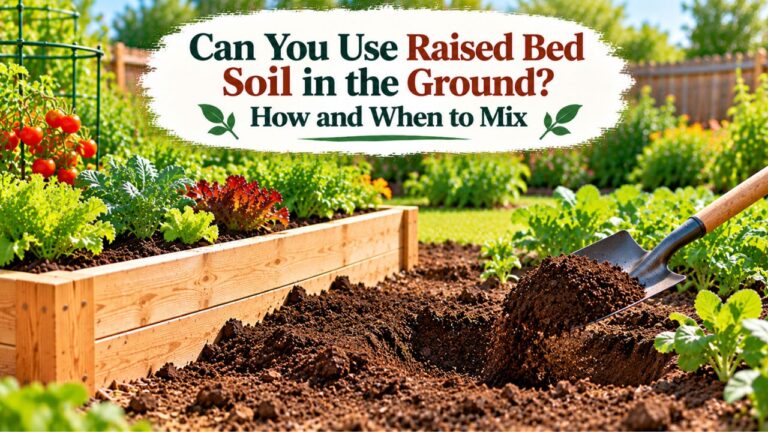
The University of Minnesota Extension’s raised bed gardening guidance recommends approximately one-half to two-thirds topsoil combined with one-third to one-half plant-based compost as a starting blend.
For example, a simple mixture could contain:
- 2 parts loamy topsoil.
- 1 part finished plant-based compost.
This is a starting recipe rather than a requirement for every garden.
If the topsoil already contains substantial compost, additional organic material may be unnecessary.
The University of Minnesota also advises against relying on potting soil for permanent raised beds because it can dry out too quickly.
Elevated Raised Beds With Solid Bottoms
An elevated raised bed supported by legs often has a solid bottom with drainage holes.
Although gardeners call it a raised bed, it functions more like a large container.
A quality outdoor potting mix is usually the better choice for this type of planter.
Its lightweight structure helps maintain adequate air space around the roots.
Mineral topsoil can be too heavy for some elevated planters and may create drainage problems.
Before filling an elevated bed, check the manufacturer’s weight capacity and drainage design.
Wet growing media weigh substantially more than dry media.
Raised Beds Placed on Concrete
A raised bed positioned on concrete or another impermeable surface requires special attention.
If water cannot drain freely from the bottom, the growing medium may become waterlogged.
The appropriate soil depends on whether the bed is:
- An enclosed planter with drainage holes.
- A raised bed with a permeable bottom and an effective outlet for water.
- A structure that traps water against the underlying concrete.
For enclosed planters, a suitable container mix is generally preferable.
For larger installations, the drainage system and growing medium should be designed together.
Simply adding gravel to the bottom doesn’t solve inadequate drainage.
Can You Use Potting Soil in a Raised Bed?
Yes, potting soil can grow plants in a raised bed, but it isn’t always the most practical option for a large, permanent garden bed.
Many vegetables, herbs, and flowers can grow successfully in a suitable potting mix.
However, the mixture may need more frequent moisture monitoring, nutrient management, and periodic replenishment.
What Happens if You Fill a Raised Bed With Potting Soil?
The results depend on the product’s ingredients, the bed’s construction, and local growing conditions.
Several issues may occur.
1. The Growing Medium May Settle
Organic components gradually decompose.
Over time, the soil level can drop, particularly if the mixture contains substantial amounts of quickly decomposing material.
2. Watering Requirements May Increase
A lightweight potting mix may dry faster than a well-balanced mineral soil in an exposed raised bed.
This is especially noticeable during hot, windy weather.
However, some potting mixes retain considerable moisture, so watering should always depend on actual root-zone conditions.
3. Nutrients May Need Replenishment
Some potting mixes contain starter fertilizer, while others have limited nutrient supplies.
Container-style mixes often require planned fertilization to maintain plant growth through an entire growing season.
4. Filling Large Beds May Be Expensive
Large raised beds require substantial growing-medium volume.
Purchasing dozens of small bags of potting mix may cost significantly more than obtaining a suitable raised bed blend in bulk.
How to Improve a Raised Bed Already Filled With Potting Soil
There’s usually no need to discard healthy potting soil immediately.
First, determine whether the existing mixture is causing problems.
If plants grow well and drainage is adequate, continue monitoring moisture and nutrients.
If the mixture dries excessively or settles repeatedly in an open-bottom bed, consider incorporating suitable mineral topsoil when the bed is empty.
A practical approach is to:
- Remove spent plants after harvesting.
- Inspect the existing mix for drainage and decomposition.
- Add quality loamy topsoil if the mix lacks a stable mineral component.
- Blend materials gently rather than leaving sharply separated layers.
- Water lightly to settle the mixture.
- Test soil fertility before applying additional fertilizer or compost.
Avoid adding a large quantity of dense topsoil to an enclosed elevated planter.
That type of planter still needs a container-appropriate growing medium.
Can You Use Raised Bed Soil in Pots?
Raised bed soil isn’t automatically suitable for flowerpots, grow bags, or other small containers.
A mineral-soil-rich raised bed mixture may become overly dense when confined to a pot.
Restricted air movement can contribute to poor root development and prolonged wetness.
The University of Maryland Extension’s guidance on container growing media explains that ordinary garden soils are generally too dense for container use, while lightweight soilless mixes provide better conditions for air and water movement.
When Raised Bed Soil Might Work in a Container
Some commercial products labeled “raised bed mix” contain mainly lightweight materials suitable for container growing.
In that case, the product may perform similarly to potting soil.
Before using it, check:
- Whether the product contains substantial mineral topsoil.
- Whether the label recommends container use.
- Whether the mixture drains adequately.
- Whether the container has suitable drainage openings.
- Whether the product contains fertilizer.
The ingredient list and manufacturer’s intended uses are more informative than the marketing label.
For small flowerpots, hanging baskets, and typical patio containers, a dedicated potting mix is generally the simpler choice.
Should You Mix Raised Bed Soil and Potting Soil Together?
Yes, the two products can sometimes be mixed, but combining them isn’t automatically necessary.
The appropriate decision depends on the existing soil and the growing environment.
Mixing Both Products in an Open-Bottom Raised Bed
If an open-bottom raised bed contains suitable mineral soil, adding a limited amount of lightweight organic growing medium may be workable.
However, potting mix shouldn’t automatically replace finished compost or quality topsoil.
Many potting mixes already contain compost or other organic ingredients.
Adding large quantities without checking the existing mixture may produce an overly organic growing medium.
If the raised bed has adequate drainage, stable structure, and suitable organic matter, additional potting mix may offer little benefit.
Mixing Both Products in a Closed-Bottom Planter
Mixing substantial quantities of mineral-rich raised bed soil into container potting mix can increase weight and reduce aeration.
For most small or moderately sized enclosed planters, a quality container mix is preferable.
If a commercial blend is specifically designed for large outdoor planters, follow its intended application.
Avoid adding heavy garden soil merely to reduce the amount of potting mix needed.
How to Identify Raised Bed Soil and Potting Soil Before Buying
Product packaging can be confusing because words such as “soil,” “mix,” and “planting medium” are used across different growing products.
Check the actual ingredients and recommended applications before buying.
Read the Ingredient List
A raised bed mix intended for permanent open-bottom beds may contain mineral topsoil, loam, and compost.
A typical potting mix may contain peat moss, coconut coir, perlite, bark, and other lightweight ingredients.
Some products contain both types of materials.
If the label doesn’t identify mineral soil, don’t assume the product contains it.
When buying bulk soil, ask the supplier about its mineral soil content, compost source, and any available soil test results.
Check Whether Fertilizer Is Included
Potting mixes sometimes contain added fertilizer intended to support plants during their initial growth.
Raised bed mixes may also contain nutrients from compost or added fertilizers.
However, neither product should be assumed to provide the correct nutrient balance for every crop.
A soil test helps determine the needs of an established mineral-soil raised bed.
For container mixes, follow the manufacturer’s fertilizer instructions and monitor plant development.
Examine the Texture and Moisture Behavior
If possible, inspect the growing medium before purchasing a large quantity.
A suitable raised bed mixture should have a reasonably crumbly texture without excessive clay clods or undecomposed wood.
A good potting mix should feel relatively light and porous.
Avoid products with sour odors, excessive debris, or signs of poor storage conditions.
Moisture behavior also matters. Some dry organic mixes resist initial wetting and need to be moistened thoroughly before planting.
How to Choose Between Raised Bed Soil and Potting Soil
The simplest way to choose is to match the growing medium to the planter’s construction.
| Growing situation | Recommended starting choice |
| Traditional wooden raised bed on garden soil | Mineral-soil-based raised bed mix |
| Metal raised bed with an open bottom | Raised bed mix with quality topsoil and compost |
| Elevated planter with solid bottom and drainage holes | Outdoor potting mix |
| Flowerpot or patio container | Potting mix |
| Fabric grow bag | Container potting mix |
| Large raised bed filled for long-term vegetable growing | Stable loamy topsoil and compost blend |
| Seed-starting trays | Seed-starting medium |
| Raised bed on an impermeable patio | Container-style mix if built as a draining planter |
Plant requirements may justify changes to these choices.
For example, plants that prefer particularly fast drainage may need a coarser growing medium.
Plants that prefer consistent moisture may benefit from a different mix and watering schedule.
The growing medium, planter design, and plant requirements should work together.
How to Maintain Either Soil Type for Healthy Plant Growth
Raised bed soil and potting soil require different maintenance approaches because their physical properties change differently over time.
Maintaining Mineral-Soil-Based Raised Beds
For established open-bottom raised beds:
- Avoid walking or kneeling directly on the planting surface.
- Keep soil covered with suitable mulch when practical.
- Avoid cultivating saturated soil.
- Add compost according to soil needs rather than using a fixed large amount every year.
- Test soil fertility periodically.
- Replace lost soil volume with a suitable growing mixture when necessary.
A properly maintained mineral-soil-based raised bed can remain productive for many growing seasons without complete soil replacement.
Maintaining Potting Mix in Containers
For plants growing in potting mix:
- Check moisture regularly because containers can dry quickly.
- Water thoroughly while allowing excess water to escape.
- Follow appropriate fertilizer recommendations.
- Remove diseased plant material when replacing crops.
- Refresh decomposed or settled growing media as needed.
- Maintain open drainage holes.
Unlike a permanent raised bed, a container has limited root volume.
Changes in moisture, nutrient concentration, and drainage can therefore affect the entire root zone relatively quickly.
Conclusion
So, is raised bed soil the same as potting soil? Generally, no. Although the ingredients can overlap, the two growing media are commonly formulated for different environments.
Raised bed soil containing quality loamy topsoil and compost is usually the better choice for permanent open-bottom garden beds. Its mineral components provide long-term structure and support healthy root growth.
Potting soil is generally better suited to enclosed planters, flowerpots, grow bags, and elevated beds that function as containers.
The most important step is to inspect the ingredients rather than relying only on the bag’s name.
Choose a growing medium that matches the bed’s drainage design, root space, and intended plants. That approach is more dependable than treating every product labeled “soil” as interchangeable.
FAQs About Is Raised Bed Soil the Same as Potting Soil
Can I Use Potting Soil Instead of Raised Bed Soil?
Yes, potting soil can support plants in a raised bed, especially when the bed functions as a container.
However, for large permanent open-bottom beds, a mineral-soil-based raised bed mix is usually a more practical choice because of its stability and moisture-management characteristics.
Is Raised Bed Soil Heavier Than Potting Soil?
Usually, yes. Raised bed mixtures containing substantial mineral topsoil tend to be heavier than lightweight soilless potting mixes.
However, some commercial raised bed products contain mostly organic materials and may weigh about the same as potting mix. Moisture content also affects weight considerably.
Is Raised Bed Soil Better Than Potting Soil for Vegetables?
For traditional open-bottom vegetable beds, a well-prepared raised bed mixture is generally preferable.
For vegetables grown in enclosed containers, potting mix is usually better because it maintains appropriate aeration within the limited root space.
Can You Add Potting Soil on Top of Raised Bed Soil?
Yes, a small amount of potting mix can be used to top off a raised bed when appropriate.
However, if a permanent open-bottom bed has lost a substantial amount of growing medium, replacing that volume with a suitable mineral-soil-based mix may provide better long-term stability.
Does Raised Bed Soil Need Fertilizer?
Not always. The need for fertilizer depends on the soil’s existing nutrients, compost content, and plants being grown.
A soil test is the most reliable way to determine the fertilizer requirements of a mineral-soil raised bed.
Is Garden Soil the Same as Raised Bed Soil?
Not necessarily. Garden soil may refer to native soil, bagged soil amendments, or a prepared planting mixture.
Raised bed soil is generally sold or prepared for raised garden beds. Both products vary, so checking their composition is important.
Do I Need to Replace Raised Bed Soil Every Year?
No. Healthy mineral-soil-based raised bed soil generally doesn’t require annual replacement.
Maintain it through appropriate watering, organic matter management, mulching, and soil testing. Replace or amend the growing medium when a specific problem makes that necessary.

I’m Maya L. Greenwood, a lifelong plant lover who believes anyone can grow something beautiful with the right guidance. After years of testing soil mixes, pruning methods, irrigation tricks, and pest-safe solutions, I started EasyGardenTips.com to turn hard-won lessons into step-by-step advice. From seed starting and container gardens to composting and seasonal checklists, my goal is to make gardening simple, sustainable, and fun.