Is Mushroom Soil Good for Raised Beds? Benefits, Risks, and Uses
Yes, mushroom soil can be good for raised beds when it is properly aged and mixed with suitable garden soil. It adds organic matter, improves soil structure, and contributes nutrients that support plant growth. However, fresh mushroom soil can contain high levels of soluble salts, making it unsuitable for some vegetables and young plants.
Mushroom soil, commonly called spent mushroom compost or spent mushroom substrate, is the growing material left after commercial mushroom production. Although it looks like rich compost, its composition differs from ordinary homemade compost. It may contain manure, straw, gypsum, and other ingredients used to grow mushrooms.
The biggest mistake is treating mushroom soil as a complete replacement for raised bed soil. Using too much can create problems with salt concentration, nutrient balance, and soil pH.
For most vegetable gardens, mushroom soil works better as an amendment than as the primary growing medium. Understanding whether the material is fresh or weathered, how much to add, and which plants may be sensitive helps you use it effectively without creating unnecessary growing problems.
What Is Mushroom Soil Made Of?
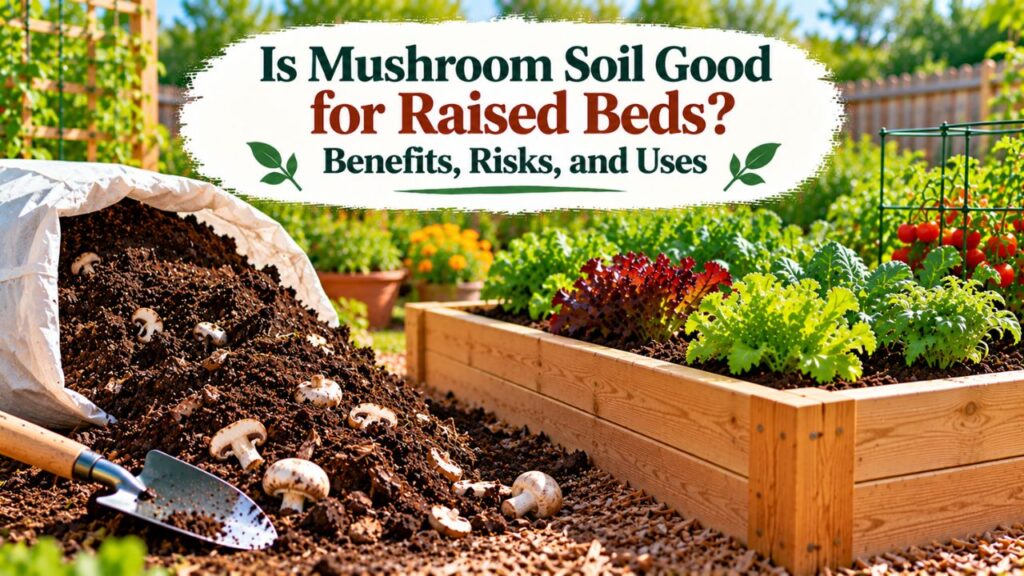
Mushroom soil is the organic growing material remaining after a commercial mushroom crop has been harvested.
Mushroom growers prepare specialized substrates that supply the moisture, nutrients, and physical conditions needed for mushroom production. Once the substrate is no longer economical for growing mushrooms, it can be recycled into agricultural or landscaping applications.
The material is often sold under several names:
- Mushroom soil
- Mushroom compost
- Spent mushroom compost
- Spent mushroom substrate
- Mushroom manure
These names generally describe the same type of material, although commercial products may differ in composition and processing.
Common Ingredients in Mushroom Soil
The ingredients depend on the mushroom farm and its production method.
Commercial mushroom substrates may contain:
- Wheat straw or other agricultural straw
- Horse or poultry manure
- Hay and corn cobs
- Cottonseed hulls
- Gypsum
- Supplemental agricultural materials
- Peat moss and limestone from the casing layer
These materials are processed to create a growing medium suitable for mushrooms.
After harvesting, many commercial growers steam-pasteurize the spent substrate to reduce insects, pests, and potential disease organisms.
The remaining material contains substantial organic matter and some nutrients, making it useful for soil improvement.
However, mushroom soil is not the same as natural mineral topsoil. It should not automatically replace the topsoil portion of a raised bed mixture.
Fresh Mushroom Soil vs. Weathered Mushroom Soil
There are two common forms of spent mushroom substrate.
Fresh mushroom soil is removed from mushroom production and sold relatively soon afterward. It may contain elevated soluble salts and other concentrated materials.
Weathered mushroom soil has been stored outdoors or further processed after mushroom production. Rainfall, drainage, and continued decomposition can change its properties, including salt concentration.
Weathering generally makes suitable mushroom compost easier to incorporate into gardens, although the results depend on the material and storage conditions.
For vegetable raised beds, properly weathered mushroom soil is usually the more cautious choice.
Is Mushroom Soil Good for Raised Beds? Where It Helps
Mushroom soil can improve several important properties of raised bed soil when used appropriately.
Its main value comes from contributing organic matter rather than functioning as a complete fertilizer or standalone growing medium.
Mushroom Soil Can Improve Heavy Raised Bed Soil
Heavy soil containing substantial clay may become dense, especially when repeatedly watered or compressed.
Adding suitable organic material can help improve aggregation, creating a more workable structure.
Mushroom soil contributes decomposed organic matter that can improve the physical condition of a mineral-soil-based raised bed.
Better soil structure helps create spaces for air and water movement and makes the growing medium easier for roots to penetrate.
However, mushroom compost cannot correct every drainage problem.
If the bed sits over severely compacted ground or an area with standing water, the underlying drainage issue still needs attention.
Mushroom Soil Can Improve Moisture Retention
Organic matter contributes to a soil’s ability to hold moisture.
This can be useful in raised beds containing sandy soil or other materials that dry relatively quickly.
When incorporated into suitable topsoil, mushroom compost can contribute to a more balanced growing medium that retains moisture without becoming excessively dense.
The actual effect depends on the existing soil and the mushroom compost’s characteristics.
Adding excessive amounts of compost can also create moisture-management problems, so more organic matter does not always mean better growing conditions.
Mushroom Soil Adds Nutrients to Raised Bed Soil
Spent mushroom substrate contains nutrients remaining from the original growing materials.
These may include:
- Nitrogen
- Phosphorus
- Potassium
- Calcium
- Magnesium
- Other plant nutrients in varying quantities
According to Penn State Extension’s guidance on spent mushroom substrate, the material contains substantial organic matter and some plant nutrients, although its composition varies between production batches.
The presence of nutrients does not mean they are all immediately available to plants.
Nutrient availability depends on decomposition, soil conditions, and the characteristics of the material.
For that reason, mushroom soil should be treated as a soil amendment rather than a guaranteed replacement for fertilizer.
Mushroom Soil Can Help Maintain a Workable Soil Texture
A raised bed should contain a growing medium that is loose enough for roots to develop while maintaining sufficient structure to support plants.
Properly prepared mushroom compost can contribute to that balance when mixed with quality topsoil.
It is particularly useful when improving a mineral soil that lacks organic matter.
Unlike a thick layer of undecomposed woody material, suitable finished compost can be blended throughout the growing area.
This creates a more consistent root environment than leaving the amendment in a sharply separated layer.
What Are the Risks of Using Mushroom Soil in Raised Beds?
Mushroom soil has several limitations that deserve attention before it is added to a vegetable garden.
The most important concerns involve soluble salts, soil pH, material quality, and excessive application.
Fresh Mushroom Soil May Contain Too Much Salt
High soluble salt concentration is one of the main concerns with fresh spent mushroom substrate.
These salts are dissolved mineral compounds, not necessarily ordinary table salt.
When concentrations become excessive, plant roots can have difficulty absorbing water even when the surrounding soil is moist.
Possible symptoms of salt-related growing problems include:
- Poor seed germination
- Slow seedling development
- Browning along leaf edges
- Wilting despite adequate soil moisture
- Reduced root growth
- Stunted plants
These symptoms can also result from other problems, so appearance alone cannot confirm salt injury.
Fresh mushroom soil should not be added heavily around sensitive plants without knowing its condition.
Weathering may reduce salt concentration, but laboratory testing is more reliable than assuming that age alone makes a particular batch suitable.
Mushroom Soil Can Affect Soil pH
Some mushroom compost products are neutral to moderately alkaline.
This partly reflects their ingredients, which can include limestone and other calcium-containing materials.
However, mushroom soil does not have one fixed pH.
Its acidity or alkalinity varies with the substrate, growing process, and weathering conditions.
For raised beds already containing alkaline soil, adding large amounts of alkaline mushroom compost may make it harder to maintain the pH preferred by certain plants.
Do not add lime automatically when using mushroom compost. The growing medium may already contain substantial calcium-bearing materials.
Testing the soil pH provides a better basis for deciding whether any adjustment is needed.
Too Much Mushroom Compost Can Create Nutrient Imbalances
Mushroom compost can contain meaningful amounts of phosphorus and other nutrients.
Repeated heavy applications may contribute to excessive nutrient accumulation, particularly in beds already containing fertile soil or manure-based compost.
A high nutrient concentration is not always beneficial.
Excessive levels of certain nutrients can interfere with plant nutrient balance and may increase the risk of nutrient loss from the garden.
A soil test can identify whether additional organic amendments or fertilizer are appropriate.
Mushroom Soil Quality Varies Between Suppliers
Two products labeled mushroom soil may have noticeably different properties.
Differences can include:
- Organic matter content
- Moisture level
- Soluble salt concentration
- pH
- Degree of weathering
- Nutrient content
- Amount of undecomposed material
Some bagged products are already blended with other composts or topsoil.
Check the product description before calculating how much mushroom soil to add.
How to Use Mushroom Soil in Raised Beds
The most practical approach is to incorporate suitable mushroom compost into a balanced soil mixture instead of using it alone.
The amount depends on whether you are filling a new bed or improving an existing one.
Step 1: Choose Properly Weathered Mushroom Soil
Start with mushroom soil that has been adequately weathered or otherwise processed and is suitable for gardening.
Inspect the material before buying.
Good-quality material should generally have an earthy smell and a reasonably consistent texture.
Avoid products with strong ammonia-like or sour odors.
If purchasing bulk mushroom soil directly from a mushroom farm, ask how recently it was removed and whether the supplier has tested its soluble salt concentration.
Freshly removed substrate may need additional weathering before use.
Step 2: Prepare the Raised Bed Soil
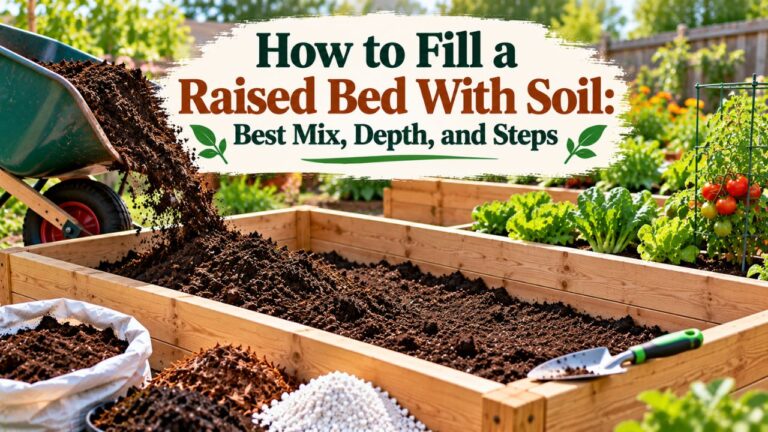
For a new open-bottom raised bed, start with quality loamy topsoil and suitable finished compost.
The University of Maryland Extension’s raised-bed gardening guidance recommends preparing beds with compost and topsoil mixed in proportions ranging from one part compost to two parts topsoil through equal parts compost and topsoil, depending on the situation.
When using mushroom soil, it can replace part of the ordinary compost portion rather than being added on top of an already compost-rich mixture.
This approach helps limit excessive organic amendments while maintaining a workable growing medium.
Step 3: Mix Mushroom Soil With Topsoil and Other Compost
There is no universal mushroom soil percentage that is safe for every product and plant.
A cautious example for a new raised bed containing mineral soil is:
| Ingredient | Example Proportion |
| Quality topsoil | 60% |
| Finished plant-based compost | 30% |
| Weathered mushroom soil | 10% |
| Total | 100% |
This is an illustrative starting mixture, not a tested formula or a guarantee against salt injury.
The mushroom soil occupies only a small part of the overall growing medium.
If the mushroom compost has an unusually high salt concentration or the existing soil already has excessive nutrients, even this amount may be inappropriate.
A low-salt, properly tested product may allow different proportions.
Step 4: Blend the Materials Evenly
Add the materials in manageable amounts and combine them thoroughly.
Use a garden fork, shovel, or rake to distribute the mushroom soil through the prepared growing medium.
Avoid leaving concentrated pockets of mushroom compost around roots.
Do not add a thick, separate mushroom compost layer beneath the vegetable root zone.
A uniform mixture generally provides more predictable growing conditions.
Step 5: Water and Check the Soil Before Planting
After mixing, water the soil gently and allow the growing medium to settle.
Check that water drains appropriately and that the soil does not remain excessively wet.
Watering a suitable amendment can help distribute moisture and may move some soluble salts through a freely draining soil. However, it does not guarantee that a high-salt product becomes safe, especially in poorly drained beds.
For uncertain products, test soluble salts before planting sensitive vegetables.
How Much Mushroom Soil Should You Add to a Raised Bed?
The quantity depends on the bed’s dimensions, existing soil, and amendment quality.
It is best to calculate the total growing medium first and then determine what fraction will be mushroom compost.
For a new bed, the 10% example above offers a simple way to estimate a modest application without using mushroom soil as the main ingredient.
Example: Mushroom Soil for a 4×8 Raised Bed
Consider a raised bed measuring:
- Length: 8 feet
- Width: 4 feet
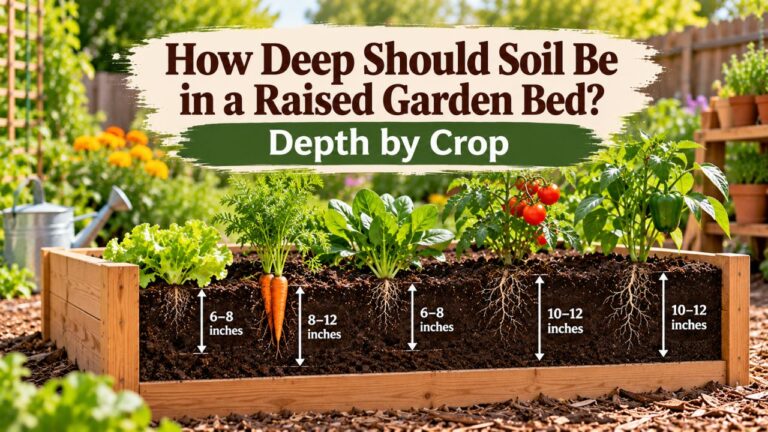
- Soil depth: 12 inches
The total volume is:
8 × 4 × 1 = 32 cubic feet
Using the illustrative mixture of 60% topsoil, 30% plant-based compost, and 10% weathered mushroom soil:
| Ingredient | Volume |
| Topsoil | 19.2 cubic feet |
| Plant-based compost | 9.6 cubic feet |
| Mushroom soil | 3.2 cubic feet |
| Total | 32 cubic feet |
The mushroom soil is a relatively small part of the overall blend.
These quantities assume that all materials are suitable and that the raised bed requires the full 12-inch fill depth.
Adding Mushroom Soil to an Existing Raised Bed
For an established raised bed, there is usually no reason to replace the existing growing medium.
If the soil needs organic matter and mushroom compost is appropriate, apply a modest amount and gently incorporate it into the upper soil layer.
The exact application should depend on soil-test results and the amendment’s salt and nutrient levels.
Avoid digging deeply around established roots.
For beds with healthy soil and adequate nutrients, regular applications of mushroom compost may offer little additional benefit.
Is Mushroom Soil Good for Vegetable Raised Beds?
Properly weathered, suitably tested mushroom compost can be used in raised beds growing common vegetables.
Its usefulness depends more on the condition of the growing medium than on the name of the vegetable.
For example, a well-drained bed with appropriate soil pH and low soluble salts may support tomatoes, peppers, leafy greens, and many other garden crops.
However, a fresh, salty mushroom substrate may harm sensitive seedlings or growing plants.
Using Mushroom Soil for Tomatoes and Peppers
Tomatoes and peppers can benefit from organic matter in a balanced growing medium.
Weathered mushroom soil may contribute to soil structure and nutrient availability when mixed appropriately.
However, these crops still require suitable drainage, adequate rooting depth, and balanced nutrition.
Do not assume mushroom compost supplies every nutrient needed throughout the growing season.
A soil test can help determine whether additional fertilizer is necessary.
Using Mushroom Soil for Lettuce and Other Leafy Greens
Leafy greens can grow in raised beds containing suitable mushroom compost.
The primary concern is avoiding excessive soluble salts, particularly during germination and early growth.
If the mushroom compost has not been tested, use a known low-salt growing medium for starting seeds.
Once plants are established, their performance still depends on soil moisture, temperature, and available nutrients.
Avoid placing fresh mushroom substrate directly against young roots.
Using Mushroom Soil for Root Vegetables
Carrots, radishes, and other root vegetables benefit from a growing medium that allows roots to develop without excessive physical resistance.
Properly blended organic amendments can help improve the structure of dense mineral soil.
However, mushroom compost cannot compensate for large rocks, severe compaction, or an overly shallow growing layer.
For root vegetables, use a consistent, crumbly soil mixture and avoid adding excessive concentrated amendments immediately before sowing.
Plants That May Not Be Suitable for Mushroom Soil
Mushroom soil is not necessarily appropriate for every raised bed.
Use additional caution with:
- Blueberries: These require distinctly acidic soil, while mushroom compost may be neutral or alkaline.
- Azaleas and rhododendrons: These acid-loving plants may not perform well in a growing medium made more alkaline by an unsuitable amendment.
- Salt-sensitive seedlings: Excessive soluble salts can interfere with germination and young root development.
- Plants already growing in alkaline soil: Additional alkaline amendments may worsen existing pH problems.
For acid-loving plants, use a growing medium designed to maintain the required pH rather than adding mushroom compost without testing.
Is Mushroom Soil Better Than Regular Compost for Raised Beds?
Neither amendment is automatically better.
Mushroom compost and ordinary finished compost both contribute organic matter, but their characteristics can differ significantly.
The comparison below explains the main considerations.
| Feature | Mushroom Soil | Regular Finished Compost |
| Main source | Spent mushroom growing substrate | Decomposed plant or other organic materials |
| Organic matter | Generally substantial | Varies by ingredients |
| Nutrient content | Variable; may be nutrient-rich | Variable |
| Soluble salts | May be elevated, especially when fresh | Depends on ingredients and processing |
| pH | Often near neutral or somewhat alkaline | Depends on ingredients |
| Best use | Suitable soil amendment when properly processed | Soil amendment or compost component |
| Main precaution | Salt levels and material condition | Compost maturity and nutrient balance |
When Mushroom Soil Makes Sense
Weathered mushroom compost can be useful when it is locally available, reasonably priced, and suitable for the plants you intend to grow.
It is particularly worth considering when you want to add organic matter to a raised bed containing mineral soil.
The product’s quality and analysis should guide how much you use.
When Plant-Based Compost Is a Better Choice
Finished plant-based compost may be preferable when the mushroom soil’s salt concentration is unknown or the garden already has high nutrient levels.
It may also be easier to manage in beds intended for sensitive seedlings.
However, regular compost can also contain excessive salts or nutrients, depending on its ingredients.
The appropriate choice is the material that best fits the soil’s existing conditions.
How to Check Mushroom Soil Quality Before Using It
A few checks can help identify whether a mushroom soil product is suitable for a raised bed.
Examine the Texture and Smell
Suitable mushroom compost generally has a dark, organic appearance with an earthy smell.
Its texture may be fibrous because mushroom substrates often contain straw and other agricultural materials.
Avoid material with strong ammonia-like odors, obvious contamination, or large amounts of unprocessed waste.
Appearance alone cannot confirm that the product has acceptable soluble salt levels.
Ask for Soluble Salt and pH Results
If purchasing bulk material, ask the supplier whether laboratory results are available.
Two useful measurements are:
- Electrical conductivity (EC): An indicator of soluble salt concentration
- pH: An indicator of how acidic or alkaline the material is
Electrical conductivity results must be interpreted according to the test method used. A value measured in a compost extract cannot always be compared directly with a value from a different soil-testing procedure.
Ask a soil-testing laboratory to interpret the results for the intended application.
Check the Existing Raised Bed Soil
Testing the mushroom compost alone does not reveal whether the completed raised bed mixture will be appropriate.
Existing soil may already contain high phosphorus, potassium, or soluble salts.
A laboratory soil test can help identify nutrient and pH conditions before additional amendments are added.
This is particularly useful for raised beds that have received heavy compost applications over several years.
Confirm the Product’s Origin
When purchasing from a commercial supplier, ask whether the product is fresh spent substrate, weathered mushroom compost, or a prepared soil blend.
If you garden under organic production requirements, check whether the particular product meets the relevant standards rather than assuming all mushroom compost is certified organic.
Avoid purchasing material of unknown origin when growing edible crops.
Conclusion
Is mushroom soil good for raised beds? Yes, properly weathered mushroom soil can be a useful amendment because it adds organic matter, contributes nutrients, and helps improve soil structure.
However, mushroom compost should not automatically replace topsoil or make up most of the growing medium. Fresh material may contain excessive soluble salts, and some products can affect soil pH or contribute more nutrients than plants need.
For ordinary vegetable raised beds, a modest amount of suitable weathered mushroom compost mixed with quality topsoil and other finished compost is a sensible approach.
Check the material’s condition, consider the needs of your plants, and use soil testing when salt or nutrient levels are uncertain. The quality and suitability of the amendment matter more than adding a large quantity.
FAQs About Is Mushroom Soil Good for Raised Beds
Can You Fill an Entire Raised Bed With Mushroom Soil?
Using mushroom soil alone is generally not recommended for an ordinary vegetable raised bed. It may contain excessive soluble salts or nutrients, and its physical properties can differ from those of a balanced mineral-soil-based mixture. Use suitable mushroom compost as an amendment unless a commercially prepared product is specifically formulated and tested as a complete growing medium.
How Long Should Mushroom Soil Age Before Using It?
Penn State Extension advises that spent mushroom substrate weathered for six months or longer can be used in gardens with most plants. However, aging time alone does not guarantee suitable salt levels. If the product’s condition is uncertain, laboratory testing provides more reliable guidance.
Can Mushroom Soil Burn Plant Roots?
Yes, mushroom soil with excessive soluble salts can damage roots and interfere with water absorption. The concern is greater with fresh substrate and sensitive young plants. Using properly weathered, suitable material in a balanced soil mixture reduces the risk, but testing is the best way to evaluate an unfamiliar product.
Can You Grow Mushrooms in Mushroom Soil Used for Raised Beds?
Spent mushroom substrate has already supported mushroom production, so it is not necessarily a suitable medium for another mushroom crop. Occasional mushrooms may appear as organic materials decompose, but their presence does not automatically indicate a problem with the raised bed. Never eat unidentified mushrooms growing in garden soil.
Is Mushroom Soil the Same as Mushroom Compost?
The terms are commonly used interchangeably to describe spent mushroom substrate. However, some suppliers use mushroom soil to describe a blended product containing topsoil and compost. Check the package ingredients or ask the supplier before deciding how much to add.
Does Mushroom Soil Need Additional Fertilizer?
Not always. Mushroom soil contains some plant nutrients, but their quantities and availability vary. Additional fertilizer requirements depend on the existing raised bed soil and the crops being grown. A soil test is the most reliable basis for deciding whether supplementation is necessary.

I’m Maya L. Greenwood, a lifelong plant lover who believes anyone can grow something beautiful with the right guidance. After years of testing soil mixes, pruning methods, irrigation tricks, and pest-safe solutions, I started EasyGardenTips.com to turn hard-won lessons into step-by-step advice. From seed starting and container gardens to composting and seasonal checklists, my goal is to make gardening simple, sustainable, and fun.