How to Fill a Raised Bed With Soil: Best Mix, Depth, and Steps
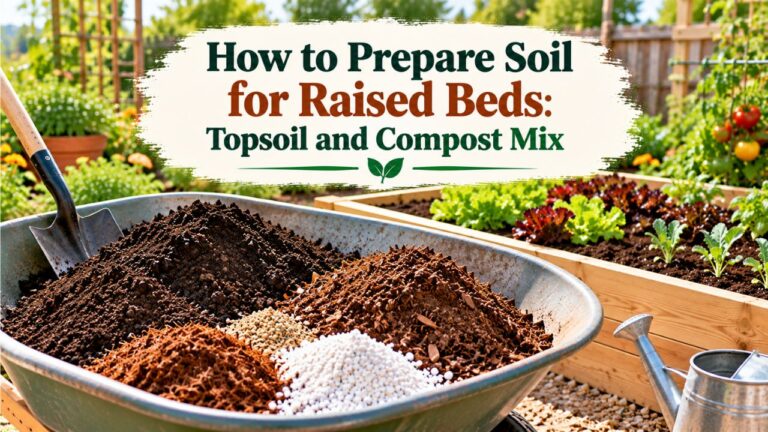
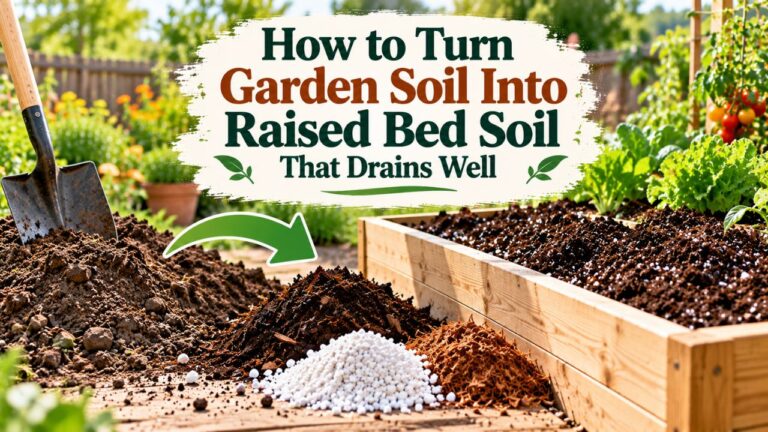
To fill a raised bed with soil, use a loose mixture of quality topsoil and finished compost, spread it evenly, and water it thoroughly before planting. For most open-bottom raised beds, approximately two parts topsoil to one part compost is a practical starting mixture that provides mineral soil, organic matter, and space for roots to grow.
The process is straightforward, but the materials and soil depth matter. A raised bed filled with heavy clay may drain slowly, while one containing too much compost can dry unevenly and settle excessively. The surface underneath also affects how the bed should be prepared.
A raised bed placed directly on garden soil allows roots to reach the ground below. A bed on concrete or another hard surface needs enough growing medium to support the entire root system.
Measuring the bed before purchasing soil also prevents unnecessary expense, especially when filling large or tall garden beds.
The following steps explain which soil materials to use, how to prepare the bottom, how much soil to purchase, and how to create a suitable growing environment for vegetables, herbs, and flowers.
What Soil Should You Use to Fill a Raised Bed?
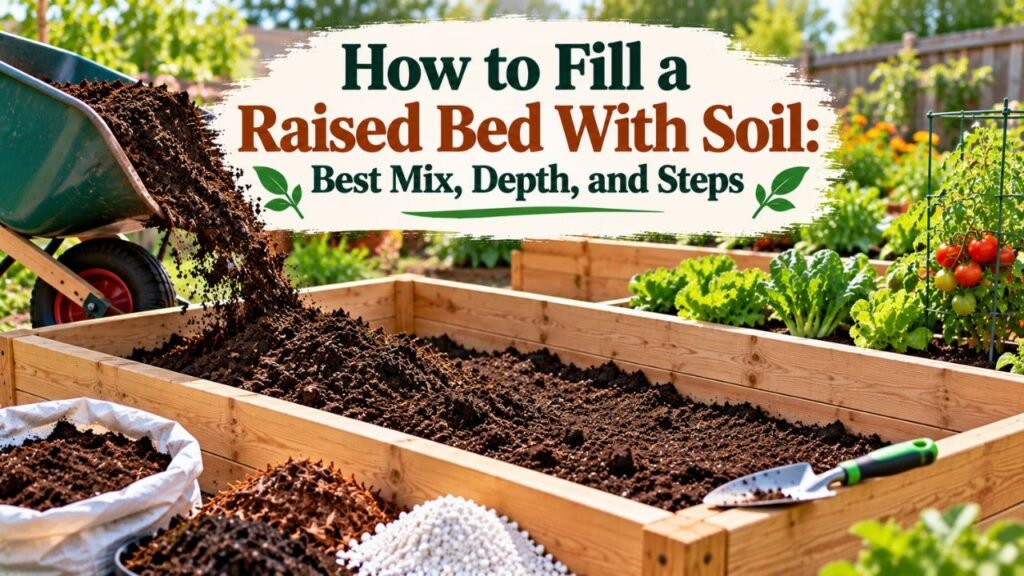
A raised garden bed needs soil that retains enough moisture for plant roots while allowing excess water to drain. The mixture should also contain organic matter to support soil structure and nutrient availability.
For an open-bottom bed on suitable garden ground, a combination of loamy topsoil and mature compost is a reliable choice.
The Best Topsoil and Compost Mixture
A practical starting ratio for a new raised bed is:
- Approximately 67% topsoil: Provides mineral particles, structure, and water-holding capacity.
- Approximately 33% finished compost: Adds organic matter and helps improve soil texture.
For example, a mixture totaling 15 cubic feet would contain approximately 10 cubic feet of topsoil and 5 cubic feet of compost.
This proportion is consistent with the University of Minnesota Extension’s raised-bed soil recommendations, which describe mixtures containing approximately one-half to two-thirds topsoil and one-third to one-half plant-based compost.
These proportions are starting points rather than fixed requirements. Existing soil texture, compost quality, and drainage conditions may justify adjustments.
Choose topsoil with a crumbly texture rather than dense clay or loose sand. Compost should be mature, dark, and earthy-smelling, without obvious undecomposed food scraps.
Important: Compost should be mixed with the soil rather than used as the entire growing medium. Large amounts of compost can create moisture-management problems and increase certain nutrient concentrations.
Can You Use Bagged Raised-Bed Soil?
Yes. Commercial raised-bed soil can be used directly if the product is formulated as a complete growing medium.
Bagged raised-bed mixtures may contain mineral soil, compost, aged bark, and other organic components. Their composition varies by manufacturer.
Check the ingredient list before purchasing. A product containing a balanced mixture may not need additional compost.
Bagged soil is convenient for small beds because it is easy to transport and measure. For larger beds, purchasing a suitable bulk topsoil-compost blend is often more economical.
Ordinary potting mix is not automatically the best choice for a large, open-bottom raised bed. Many lightweight potting mixtures are designed for containers and may dry faster than mineral-soil blends.
However, soilless growing media can be appropriate for raised beds with enclosed bottoms or those installed on hard surfaces.
How Much Soil Do You Need for a Raised Bed?
The amount of soil depends on the bed’s inside length, width, and planned filling depth.
Measure the interior rather than the outside of the frame. Thick wooden boards or other framing materials can slightly reduce the available growing space.
Calculate Raised-Bed Soil Volume
For rectangular raised beds, use this formula:
Soil volume (cubic feet) = Length (feet) × Width (feet) × Soil depth (feet)
If the soil depth is measured in inches, divide that measurement by 12 before multiplying.
For example, consider a raised bed measuring:
- Length: 4 feet
- Width: 8 feet
- Soil depth: 12 inches (1 foot)
The calculation is:
4 × 8 × 1 = 32 cubic feet
Because one cubic yard contains 27 cubic feet:
32 ÷ 27 = approximately 1.19 cubic yards
If each soil bag contains 2 cubic feet, filling the entire 12-inch depth would require 16 bags.
Common Raised-Bed Soil Volume Examples
| Bed dimensions | Soil depth | Cubic feet | Cubic yards |
| 4 × 4 feet | 10 inches | 13.3 | 0.49 |
| 3 × 6 feet | 10 inches | 15 | 0.56 |
| 4 × 8 feet | 10 inches | 26.7 | 0.99 |
| 4 × 8 feet | 22 inches | 58.7 | 2.17 |
These calculations assume a rectangular bed with the stated internal dimensions. They do not include extra material for later settling.
For a 12-inch-tall bed, filling to a depth of 10 inches leaves approximately 2 inches of space below the rim. A 4-by-8-foot bed filled to this depth requires about 27 cubic feet rather than 32 cubic feet.
Pro Tip: Calculate the required soil volume before ordering. Purchase a modest additional amount if the soil is especially loose or settling is expected, but avoid buying enough to fill the bed above its intended level.
How to Fill a Raised Bed With Soil Step by Step
The most effective filling method is to prepare the underlying surface, add a suitable growing mixture, and allow the soil to settle naturally without compacting it.
For an ordinary open-bottom raised garden bed, follow these steps.
Step 1: Prepare the Ground Under the Raised Bed
Start by examining the area underneath the bed.
Remove trash, large stones, persistent weeds, and unwanted vegetation. If the ground is already suitable for gardening, avoid unnecessary disturbance.
For compacted soil, insert a garden fork into the surface and gently rock it backward and forward. This loosens the ground without completely turning over the soil layers.
The goal is to create a transition between the raised-bed mixture and the existing soil so water and roots can move downward.
When the bed sits over thick grass, plain overlapping cardboard can temporarily suppress the vegetation. Remove packaging tape, labels, and plastic coatings before using it.
Cardboard eventually decomposes, although it may temporarily slow water movement until it softens.
The University of Maryland Extension’s raised-bed instructions describe methods for preparing lawns, loosening compacted ground, and filling beds using compost and soil mixtures.
Step 2: Check the Bottom for Drainage
Most raised beds installed directly on the ground do not need a solid bottom.
Leaving the base open allows water to move into the underlying soil and gives plant roots access to additional growing space.
If burrowing animals are a concern, galvanized hardware cloth can be placed beneath the bed. Its openings should allow water and roots to pass through.
Avoid installing an impermeable plastic sheet beneath an open-bottom bed. It can restrict drainage and prevent roots from reaching the soil below.
For raised beds installed on concrete, make sure excess water has a path out of the structure. A solid-bottom bed requires appropriate drainage openings.
Step 3: Prepare the Raised-Bed Soil Mixture
Combine the selected topsoil and fully finished compost before filling the bed.
For a basic two-to-one mixture:
- Measure two equal portions of topsoil.
- Add one equal portion of finished compost.
- Blend the materials using a shovel or garden fork.
- Break apart compacted clumps and remove large debris.
- Continue mixing until the compost is distributed throughout the soil.
Mixing on a clean tarp is convenient for small quantities. For larger beds, materials can be combined in manageable batches inside the frame.
If using a commercially prepared raised-bed mix, follow the product directions instead of automatically adding more compost.
Keep in Mind: Using compost and soil as separate, sharply defined layers can create different moisture conditions within the bed. A reasonably uniform growing mixture is generally easier to manage.
Step 4: Add the Soil Gradually
Begin adding the prepared soil mixture with a shovel, bucket, or wheelbarrow.
Spread it evenly across the bed using a garden rake or the back of a shovel.
For deeper beds, add soil in several manageable portions. This makes it easier to distribute the materials and identify large pockets or uneven areas.
Avoid stepping inside the bed or pressing down firmly with your feet.
Excessive compaction reduces the air spaces between soil particles, making it harder for roots to spread and water to move through the growing medium.
The soil should remain loose enough to crumble when gently handled.
Step 5: Leave Space Below the Raised-Bed Rim
Stop filling when the soil surface is approximately 1–2 inches below the top edge of the frame.
This is a practical watering allowance rather than a strict measurement.
The space helps keep water and loose soil inside the bed during irrigation. It also provides room for a light layer of mulch.
Use a rake to level the soil surface without pressing it down heavily.
If the bed contains a large volume of dry soil, some additional settling should be expected after watering.
Step 6: Water the Soil and Allow It to Settle
Once the bed is filled, water slowly and evenly.
The objective is to moisten the growing medium throughout the intended root zone without creating standing water.
A watering wand or hose attachment with a gentle spray pattern works well.
Watch how the surface responds:
- Water should soak into the soil rather than remain pooled for long periods.
- The soil should become moist without turning into dense mud.
- Loose areas may sink as the mixture settles.
- Low spots can be corrected with additional prepared soil.
If the soil is extremely dry, particularly when it contains peat or other moisture-resistant organic components, water in several passes.
Allow time for the first application to penetrate before adding more water.
Step 7: Plant and Protect the Soil Surface
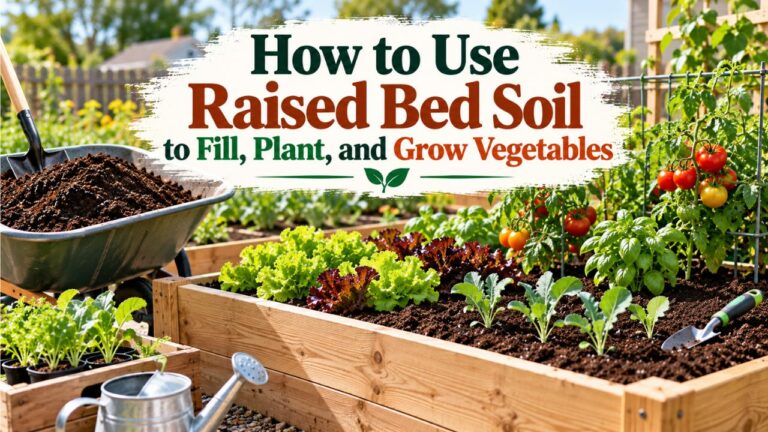
After watering and leveling, the raised bed can be planted when weather and crop requirements are suitable.
Use the recommended seed depth or transplant spacing for each crop.
For transplants, avoid burying the crown of plants that require their stems to remain above the soil surface.
A light layer of clean organic mulch around established plants can help moderate moisture loss and reduce surface crusting.
Keep thick mulch away from newly sown seeds until they emerge, and avoid piling it against plant stems.
How Deep Should the Soil Be in a Raised Bed?
The correct soil depth depends on the vegetables or flowers being grown and whether the bed is connected to the ground underneath.
A raised bed does not necessarily need to be filled to its entire structural height with purchased soil, especially when the underlying ground is already suitable for root growth.
Soil Depth for Open-Bottom Raised Beds
For beds placed directly on garden soil, approximately 8–12 inches of improved growing mixture provides a useful starting depth for many vegetables.
Roots can continue growing downward into the native soil if it is reasonably loose, well-drained, and free from restrictive barriers.
A shallow frame may therefore provide more usable rooting space than its wall height suggests.
Root vegetables such as carrots and parsnips need sufficiently deep, loose soil to develop straight roots.
Tomatoes and other larger plants also benefit from adequate rooting space, especially where the ground underneath is compacted.
If the underlying soil is poor, loosening or improving that soil may be more helpful than simply making the frame taller.
Soil Depth for Raised Beds on Concrete
A raised bed installed on concrete, pavement, or another impermeable surface requires more careful planning.
Plant roots cannot continue growing into the ground, so the growing medium inside the structure must supply enough moisture and rooting space.
As a practical reference:
- At least 8 inches: May support leafy greens and certain other vegetables when the growing medium is well managed.
- 12–24 inches: Provides more rooting space for crops such as tomatoes, peppers, and squash.
These are general crop-related guidelines, not universal requirements for every variety.
A bed on a hard surface may also benefit from a lightweight, well-draining soilless growing medium blended with finished compost.
Water management becomes particularly important because the plants cannot access moisture stored in the ground below.
What Should Go at the Bottom of a Raised Bed Before Adding Soil?
For an ordinary raised bed placed directly on healthy garden ground, the simplest approach is often to use the existing soil as the base.
Additional bottom materials are appropriate only when they solve a specific problem, such as unwanted vegetation, burrowing animals, or the cost of filling a particularly tall structure.
Should You Put Cardboard Under Raised-Bed Soil?
Cardboard can be useful when installing a new raised bed over existing grass or annual weeds.
Use plain, non-waxed cardboard with tape and plastic removed. Overlap the pieces to prevent gaps through which vegetation may grow.
Moisten the cardboard and cover it with the soil mixture.
As the cardboard decomposes, roots can eventually grow into the ground underneath.
However, cardboard is not always necessary. If the area is already clear and the soil drains well, leaving the bottom unobstructed is usually simpler.
Avoid treating cardboard as a permanent drainage or weed-control barrier.
Can You Fill the Bottom of a Tall Raised Bed With Logs and Leaves?
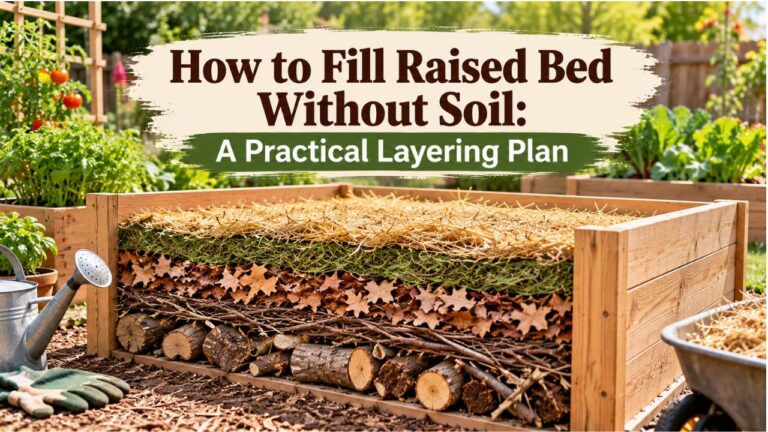
Yes, woody materials are sometimes used in very tall raised beds to reduce the amount of purchased soil required.
This approach is associated with hugelkultur, in which logs, branches, and other organic materials gradually decompose beneath a growing layer.
Possible bottom materials include:
- Untreated, non-contaminated logs
- Small branches and twigs
- Dry leaves
- Shredded plant debris
- Finished compost between larger materials
This approach makes more sense in a bed taller than approximately 2 feet than in a shallow vegetable bed.
The upper portion must still contain enough suitable growing medium for the chosen crops.
Woody filling materials gradually break down, causing the soil level to sink. The bed will need additional soil over time.
Avoid chemically treated wood, painted lumber, trash, plastics, and contaminated yard waste.
For shallow beds, filling with a proper soil mixture is generally more predictable than using bulky organic material underneath.
Should You Put Rocks or Gravel at the Bottom?
A separate gravel layer is unnecessary for most open-bottom raised beds.
It occupies space that could otherwise contain soil and does not correct a compacted, poorly draining site.
For beds with enclosed bottoms, gravel is not a substitute for proper drainage openings.
If water collects inside the growing medium, investigate the soil texture and available drainage pathways rather than adding rocks.
How to Fill a Raised Bed With Soil on a Budget
Filling several raised beds can require a considerable amount of material. Soil quality should remain the main priority, but there are practical ways to reduce costs.
Buy Topsoil and Compost in Bulk
Garden centers and landscape suppliers frequently sell screened topsoil, compost, and prepared raised-bed mixtures by the cubic yard.
For larger quantities, bulk delivery may cost less than purchasing individual bags.
Before ordering, ask about:
- Soil ingredients and compost proportions
- Whether the material is suitable for vegetable gardening
- Soil texture and drainage characteristics
- Available soil test information
- Minimum delivery quantity and delivery charges
Avoid buying inexpensive fill dirt simply because it is sold as soil. Fill material may contain dense clay, stones, construction debris, or other unwanted components.
Use Suitable Soil Already in the Garden
Existing garden soil can reduce the amount of material that must be purchased.
If it has a good texture, drains properly, and has no known contamination concerns, it may be blended with finished compost.
Soil from the pathways between raised beds may also be useful if removing it will not create drainage problems.
For food gardening, consider laboratory testing when the site’s history is uncertain, particularly in older urban properties or areas with possible lead contamination.
Reduce the Volume of Purchased Soil in Tall Beds
For a tall open-bottom bed, first determine how much quality soil is actually needed for the planned crops.
Where appropriate, sound native soil or an adequately prepared organic base may reduce the amount of new material required.
However, do not sacrifice the entire root zone to save money.
A deep bed filled mostly with coarse debris may settle unevenly and become difficult to maintain.
How to Maintain Soil After Filling a Raised Bed
Once the bed is filled and planted, the soil will change as roots grow, organic materials decompose, and watering gradually settles the mixture.
Regular observation helps maintain the structure and growing conditions established during filling.
Monitor Soil Moisture
Raised beds commonly dry faster than nearby ground-level gardens.
Check the soil a few inches below the surface before watering instead of relying only on how the top looks.
If the soil feels dry through the active root zone, water slowly enough to let moisture penetrate.
Avoid keeping the entire bed continuously saturated, since roots also need oxygen.
Replace Soil Lost Through Settling
The soil level may gradually drop after installation.
A small amount of settling is normal. Larger reductions can occur in beds containing leaves, branches, or other decomposing materials.
Add suitable topsoil-compost mixture when necessary to maintain the intended planting depth.
Avoid covering established plant crowns or burying stems more deeply than the crop tolerates.
Maintain Organic Matter Without Overloading the Soil
Compost continues to affect soil structure as it decomposes.
Small additions may be helpful over time, but large annual applications are not automatically necessary.
Excess compost or manure can contribute to nutrient imbalances, including elevated phosphorus levels.
A soil test can identify nutrient levels and help determine whether fertilizer, compost, or another amendment is needed.
Keep permanent walking paths outside the bed so the soil remains loose and does not become compacted.
Conclusion
Understanding how to fill a raised bed with soil begins with choosing suitable growing materials, preparing the underlying surface, and measuring the actual soil depth required.
For most open-bottom beds, a mixture of approximately two parts quality topsoil and one part finished compost provides a practical foundation. Add the mixture evenly, avoid heavy compaction, and water thoroughly enough to settle the soil before planting.
A bed on concrete needs reliable drainage and enough soil for the plants’ entire root systems. Tall beds may accommodate alternative bottom materials, but they still need a generous layer of appropriate growing medium.
The most dependable approach is to prioritize soil quality and usable rooting depth rather than simply filling every available inch with the cheapest material.
FAQs About How to Fill a Raised Bed With Soil
Can I Fill a Raised Bed With Regular Garden Soil?
Yes, regular garden soil can be used if it is suitable for plant growth, drains well, and is free from significant contamination. Mixing it with mature compost can improve its structure and organic matter content.
Avoid relying entirely on dense clay soil or unknown fill dirt.
Can I Fill a Raised Garden Bed With Only Compost?
No, filling a raised garden bed entirely with compost is generally not recommended.
Compost is most useful as part of a balanced growing medium. Combining it with suitable topsoil provides a mineral component and helps maintain more stable growing conditions.
How Many Bags of Soil Does a 4-by-8 Raised Bed Need?
A 4-by-8-foot raised bed filled to a depth of 12 inches requires 32 cubic feet of soil, equal to sixteen 2-cubic-foot bags.
If the same bed is filled to 10 inches, leaving a 2-inch gap below the rim, it requires approximately 26.7 cubic feet, or fourteen 2-cubic-foot bags when rounded up.
The actual requirement depends on the interior dimensions and desired fill depth.
Can I Plant Immediately After Filling My Raised Bed?
Yes, planting can begin after the soil has been properly mixed, moistened, and allowed to settle, provided the compost is fully finished and the weather suits the crops.
There is generally no need to wait several weeks when using suitable, mature growing materials.
If the mix settles noticeably after watering, correct the level before planting.
Do I Need Landscape Fabric Under a Raised Bed?
Most open-bottom raised beds do not need landscape fabric underneath.
A permanent fabric barrier can restrict root growth into the underlying ground.
For beds installed on hard surfaces, a water-permeable liner may help contain soil where necessary, provided the structure still drains adequately.
How Often Should I Add More Soil to a Raised Bed?
Add soil when settling reduces the available planting depth or the surface becomes noticeably uneven.
Beds containing logs, leaves, or other decomposing organic materials may need more frequent topping up than those filled with a stable mineral-soil blend.
Check the soil level before each growing season and add fresh growing mixture as needed.

I’m Maya L. Greenwood, a lifelong plant lover who believes anyone can grow something beautiful with the right guidance. After years of testing soil mixes, pruning methods, irrigation tricks, and pest-safe solutions, I started EasyGardenTips.com to turn hard-won lessons into step-by-step advice. From seed starting and container gardens to composting and seasonal checklists, my goal is to make gardening simple, sustainable, and fun.