How to Fill Raised Bed Without Soil: A Practical Layering Plan
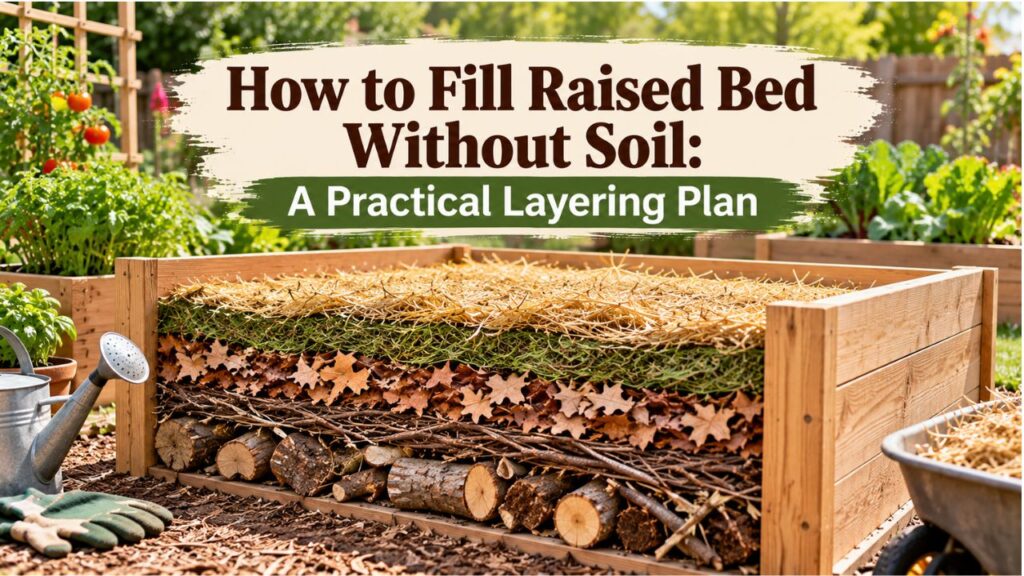
You can fill much of a tall raised garden bed without soil by layering untreated logs, branches, leaves, and other organic materials beneath a suitable planting mix. This reduces the amount of purchased soil needed while making use of natural materials that gradually decompose.
If you want to avoid mineral soil completely, you can use a quality soilless growing mix in the upper planting area. Vegetables still need a stable medium that holds moisture, supplies or retains nutrients, and gives their roots enough room to develop.
Filling a deep raised bed entirely with bagged soil can be expensive, especially when building several garden beds. However, simply filling the space with wood chips, grass clippings, or unfinished compost can create problems with settling, moisture, and plant growth.
The right approach depends on the bed’s height, drainage, available materials, and the vegetables you intend to grow.
A taller raised bed can accommodate a substantial organic base, while a shallow bed usually needs most of its depth for growing medium. Understanding how to arrange these materials makes it easier to build an affordable raised bed without compromising the growing conditions plants need.
Can You Fill a Raised Garden Bed Without Soil?
Yes, you can fill a raised garden bed without using traditional garden soil, but the method depends on whether you want to eliminate soil completely or simply reduce how much you need to purchase.
There are two practical approaches.
- Organic bottom filling: Use logs, branches, leaves, and other clean organic materials to fill the lower portion of a deep bed. Add a suitable growing medium above them.
- Soilless growing: Use a commercial soilless planting mix containing materials such as coconut coir, peat, composted bark, and perlite instead of mineral topsoil.
The first approach is generally more affordable for large, deep raised beds. The second is useful when you specifically want to avoid using natural garden soil.
However, wood, leaves, and grass clippings alone are not suitable substitutes for a finished planting medium when growing vegetables immediately.
Why Gardeners Use Organic Materials Instead of Soil
A raised garden bed that is 24–36 inches tall requires considerably more filling material than a shallow bed.
Using organic materials in the lower portion can reduce the amount of purchased planting mix required.
Other practical reasons include:
- Making use of fallen branches, leaves, and other yard materials.
- Reducing the amount of material that must be transported.
- Adding decomposable organic matter to the lower bed.
- Filling unused depth beneath the main vegetable root zone.
- Gradually creating decomposed organic material within the bed.
This approach is related to hügelkultur, a gardening method that incorporates woody material into growing beds.
The University of Minnesota Extension’s raised-bed gardening guidance discusses layered organic materials and hügelkultur as alternatives for filling unusually tall raised beds.
It also notes that these materials gradually break down, making additional growing medium necessary over time.
Best Materials to Fill a Raised Bed Without Topsoil
Not every organic material works equally well inside a raised bed. Some provide long-lasting bulk, while others break down quickly.
Using a combination of materials creates a more stable lower filling than relying on one material alone.
Untreated Logs and Tree Branches
Logs and thick branches are useful for filling the bottom of a deep raised bed because they occupy substantial space.
They decompose slowly, making them more suitable for long-term bottom filling than loose grass clippings or thin leaves.
Suitable materials include:
- Untreated hardwood logs.
- Naturally fallen branches from healthy trees.
- Small pieces of partially decomposed wood.
- Untreated woody garden prunings.
Place larger pieces at the bottom and fill spaces between them with smaller branches.
Partially decomposed wood is often easier to incorporate because it is already breaking down. Fresh wood can also be used, but it may take longer to decompose.
Important: Avoid pressure-treated scraps of unknown age or composition, painted lumber, construction debris, and wood that may contain harmful chemicals.
Dry Leaves and Leaf Mold
Fallen leaves are useful for filling spaces between branches.
They contain organic matter that gradually decomposes and can contribute to the material developing inside the raised bed.
Two options are particularly useful:
- Shredded dry leaves: These settle into smaller spaces and decompose more evenly than thick mats of whole leaves.
- Leaf mold: Partially or fully decomposed leaves that have developed a soft, crumbly structure.
Avoid tightly packing thick layers of wet whole leaves because they can form dense mats.
Moisten dry leaves lightly while filling the bed so they settle around the larger materials.
Straw and Dry Plant Materials
Clean straw can fill some of the smaller spaces above the woody materials.
Unlike large logs, straw decomposes relatively quickly and loses volume as it breaks down.
Use straw in modest amounts rather than making it the primary structural filling.
Select straw that is free from persistent herbicide residues and excessive weed seeds.
Dried, pesticide-free garden debris can also be useful if it is free from plant diseases and invasive weeds.
Finished Compost
Finished compost is valuable near the upper part of the bed because it contributes organic matter and nutrients.
However, compost should not be treated as a complete replacement for a balanced growing medium.
A high proportion of compost can create nutrient imbalances, excess soluble salts, and problems with moisture management.
According to Oregon State University Extension’s compost guidance, framed raised beds should not be filled with compost alone. The publication recommends combining compost with appropriate soil or planting materials.
For a soil-free bed, choose a formulated soilless growing mix rather than relying entirely on finished compost.
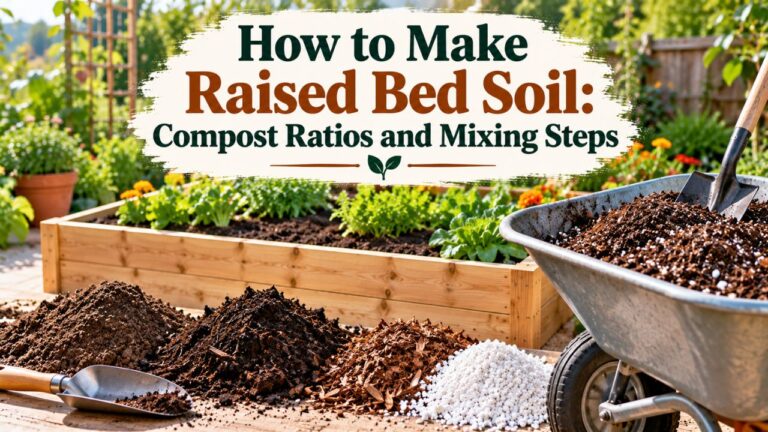
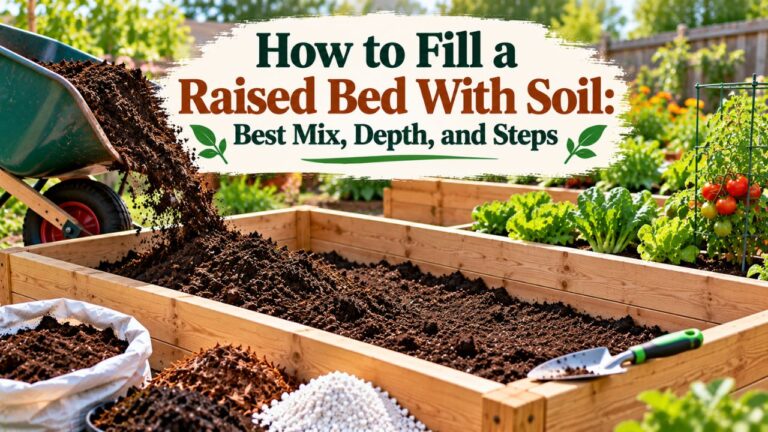
How to Fill Raised Bed Without Soil Using Organic Layers
For a tall, open-bottom raised bed, the following process uses readily available organic materials to reduce the amount of purchased growing medium.
The method works best when the bed has enough height to accommodate both a lower filling layer and a substantial upper planting area.
Step 1: Prepare the Bottom of the Raised Bed
Start by checking the location and construction of the bed.
If the bed sits directly on garden ground, remove persistent weeds, thick grass roots, and unwanted vegetation.
Loosen heavily compacted ground beneath the bed with a garden fork when practical.
This helps roots move into the ground below and allows water to move through the planting area more easily.
If weeds are a concern, a single layer of plain, uncoated cardboard can provide temporary suppression. Wet the cardboard and avoid creating thick, overlapping barriers.
For beds standing on concrete or another hard surface, drainage must be provided through suitable openings or the container design.
Do not assume that logs or gravel can replace proper drainage.
Step 2: Place Large Logs and Branches at the Bottom
Arrange untreated logs and thick branches horizontally across the bottom.
Start with the largest pieces and fit smaller branches into the open spaces.
Avoid stacking wood in a way that creates large empty cavities.
A reasonably stable arrangement reduces the likelihood of dramatic sinking when smaller materials decompose.
Use wood only in the lower portion of a sufficiently deep bed. The upper planting area must remain deep enough for vegetable roots.
Step 3: Fill the Gaps With Twigs and Smaller Branches
After adding the larger wood pieces, spread smaller twigs and woody prunings between them.
These materials help occupy spaces that large logs cannot fill.
They also create a gradual transition between the coarse woody base and the finer organic materials above it.
Break unusually long branches into manageable pieces so they fit inside the bed without sticking into the planting area.
Step 4: Add Leaves and Other Clean Organic Matter
Spread shredded leaves, leaf mold, or modest amounts of clean straw over the woody base.
Work some of the material into spaces between the branches.
Avoid adding a thick, tightly packed layer of fresh grass clippings. Fresh clippings can become matted and develop unpleasant odors when they accumulate without enough airflow.
If using grass clippings, add only thin amounts mixed with drier materials.
Lightly water the organic layers as they are added.
The goal is to moisten the materials and settle them into place, not to saturate the bed.
Step 5: Add a Layer of Decomposed Organic Material
Cover the coarse organic base with some finished compost or well-decomposed leaf mold.
This helps fill smaller spaces and creates a transition to the growing medium above.
Use finished material rather than raw manure or decomposing kitchen scraps.
Unfinished organic materials may temporarily compete with plants for available nitrogen as microorganisms break them down.
Keeping coarse, actively decomposing materials below the primary root zone reduces direct interference with young plants.
Step 6: Add the Main Growing Medium
The upper planting layer determines whether vegetables can establish strong roots.
For many vegetable beds, around 12 inches of suitable growing medium is a useful starting point. Certain crops, especially larger or deep-rooted vegetables, benefit from more rooting depth.
Choose the medium based on your goal:
- To avoid using soil from your yard, add a quality purchased raised-bed soil mix.
- To avoid mineral soil entirely, use a well-formulated soilless growing medium suitable for edible plants.
- To reduce overall cost, purchase the planting mix in bulk when available.
Do not plant seeds or young vegetable transplants directly into a mixture of fresh branches and loose leaves.
The top layer should be reasonably uniform, moist, and capable of supporting root growth.
Step 7: Water the Bed and Add Surface Mulch
Water the completed bed thoroughly enough to moisten the upper growing medium.
Allow the materials to settle naturally. Add more planting mix if the surface drops below the intended level.
Avoid stepping on the growing surface or pressing it down heavily.
A light layer of clean straw or shredded leaves can be placed over the planting surface after planting.
Keep mulch away from the stems of young plants to reduce excess moisture around their bases.
The bed can generally be planted immediately when the upper growing medium is finished, suitable for the crop, and sufficiently deep.
Can You Fill a Raised Bed Without Using Any Soil at All?
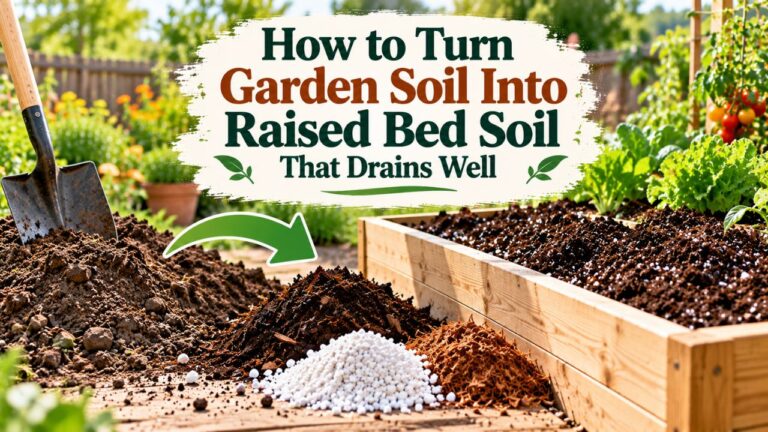
Yes. Vegetables can grow in a properly formulated soilless potting mix, which contains no natural mineral topsoil.
Such mixes commonly contain materials that hold water and provide air spaces around the roots.
Possible ingredients include:
- Coconut coir.
- Sphagnum peat moss.
- Composted pine bark.
- Perlite.
- Vermiculite.
- Other processed organic growing materials.
These ingredients help support plant roots physically, but their nutritional properties differ from natural garden soil.
Many soilless products require fertilizer additions or already contain starter nutrients.
Check the product label to understand whether fertilizer is included and whether the mix is appropriate for vegetables.
Soil-Free Growing Mix vs. Organic Bottom Filling
| Method | Main Materials | Best Application |
| Organic bottom filling | Logs, branches, leaves, compost | Reducing purchased fill in tall raised beds |
| Completely soilless growing | Formulated potting mix with coir, peat, bark, or perlite | Growing without mineral soil |
| Layered composting | Leaves, straw, garden waste | Preparing organic material that will decompose over time |
| Purchased raised-bed mix over wood | Soil-based growing mix over organic filler | Reducing the quantity of purchased soil |
A completely soilless bed may require more frequent watering and carefully managed fertilization.
It can also be expensive to fill a large raised bed entirely with bagged growing mix.
For most deep outdoor garden beds, using organic filling materials below a suitable upper planting layer offers a practical balance between cost and growing conditions.
How Much Organic Material Should You Put in a Raised Bed?
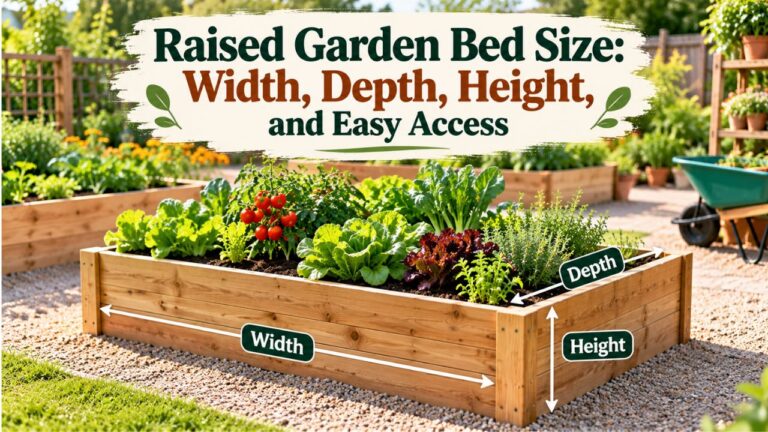
The quantity of filler depends on the raised bed’s dimensions and how much growing depth the plants require.
There is no single percentage that works for every bed.
A shallow bed may have no usable space for logs, while a tall bed can accommodate a substantial organic base.
Calculate the Raised Bed’s Total Volume
For a rectangular raised bed, calculate the volume using:
Length × Width × Height = Total Volume
Measure all dimensions in feet to calculate cubic feet.
For example, consider a raised bed with these dimensions:
- Length: 8 feet
- Width: 4 feet
- Height: 2 feet
The total volume is:
8 × 4 × 2 = 64 cubic feet
To convert cubic feet into cubic yards, divide by 27.
64 ÷ 27 = approximately 2.37 cubic yards
This is the total interior volume before accounting for the space occupied by the different filling materials.
Calculate the Upper Planting Layer
Suppose the same 4-by-8-foot raised bed has a 12-inch-deep growing layer.
Since 12 inches equals 1 foot:
8 × 4 × 1 = 32 cubic feet
That equals approximately 1.19 cubic yards of growing medium.
The lower 12 inches represents another 32 cubic feet that could accommodate organic filling materials.
This is a volume calculation, not a recommendation that every raised bed should contain 50% organic filler.
The appropriate depth depends on the crops, the bed’s height, and whether roots can continue growing into the ground beneath it.
Adjust the Filling Depth for Different Raised Beds
| Raised Bed Height | Organic Bottom Filling |
| 6–12 inches | Usually avoid bulky logs; preserve rooting depth |
| 12–18 inches | Use little or no coarse filler unless adequate rooting depth remains |
| 24 inches | A lower organic layer may be practical |
| 30–36 inches | More space is available for woody filling beneath a deep growing layer |
These are general planning guidelines rather than fixed growing requirements.
A raised bed with a solid bottom needs particular attention to rooting depth because plant roots cannot extend into the ground underneath.
Keep in mind: Logs and branches contain empty spaces, and organic materials shrink as they decompose. The final settled volume will differ from the volume measured immediately after filling.
Materials You Should Avoid Putting Inside a Raised Bed
Although many natural materials can be used as filling, some create unnecessary risks for vegetable gardening.
Pressure-Treated or Contaminated Wood
Avoid painted wood, chemically contaminated lumber, railroad ties treated with creosote, and construction debris.
The chemical history of reclaimed wood may be unknown.
Clean, untreated natural wood is a safer choice for filling a vegetable bed.
Fresh Manure and Unfinished Kitchen Waste
Fresh manure may introduce pathogens and excessive nutrients.
Kitchen scraps can attract rodents and other animals when buried in accessible garden beds.
Use properly finished compost instead of placing large amounts of raw food waste directly beneath vegetables.
Thick Layers of Fresh Grass Clippings
Grass clippings can decompose quickly, but large wet masses may compact and create poorly aerated conditions.
Only use clippings from lawns that have not been treated with persistent herbicides.
Mix small amounts with dry materials rather than creating a thick layer.
Plastic, Gravel, and Nondegradable Waste
Plastic bottles, foam packaging, and other household waste should not be used simply to occupy space in a vegetable bed.
These materials do not contribute useful organic matter and may create problems during future gardening.
A thick gravel layer is also unnecessary in most raised beds.
Gravel does not automatically improve drainage, and it takes up space that could otherwise support roots. Drainage depends on the bed’s design, the properties of the growing medium, and the ability of water to leave the bed.
Diseased Plants and Persistent Weeds
Avoid adding plants affected by serious diseases or materials containing invasive roots, rhizomes, and mature weed seeds.
These materials may survive or spread through the bed.
Healthy, clean yard debris is more suitable for organic filling.
How to Maintain a Raised Bed Filled With Organic Materials
A layered raised bed changes over time as its organic contents break down.
A few maintenance practices help keep the planting area suitable for vegetables.
Replace Growing Medium as the Organic Layers Settle
Leaves, straw, and woody materials gradually lose volume during decomposition.
The surface may sink unevenly, particularly in beds containing large quantities of loose organic matter.
Check the bed at the beginning of each growing season.
Add suitable growing medium to restore the desired planting depth. Avoid burying the crowns or stems of established plants too deeply.
Large logs may continue decomposing for several years, so some settling can occur long after the bed is constructed.
Monitor Moisture in the Upper Growing Layer
Organic materials can influence how water moves through a raised bed.
However, buried logs do not guarantee that plants will need less irrigation.
The upper growing medium can still dry out, particularly in hot or windy weather.
Check moisture several inches below the surface rather than judging only by the appearance of the mulch.
Water according to the plant’s needs and the actual moisture condition of the growing medium.
Soilless mixes may need especially close attention because their water-holding behavior varies by composition.
Watch for Nutrient Deficiencies
Fresh woody materials contain substantial carbon.
As microorganisms decompose them, they can temporarily use nitrogen from the surrounding environment.
This effect is most noticeable when fresh wood particles are mixed directly into the root zone.
Keeping larger woody materials lower in the bed helps reduce this problem.
If plants develop pale leaves or weak growth, inspect watering conditions and consider whether nutrients are available in the planting medium.
A soil or growing-media test can help identify nutrient problems before adding unnecessary fertilizer.
Add Organic Matter Without Overloading the Bed
Finished compost can help maintain the planting layer, but adding large amounts every season is not automatically beneficial.
Repeated heavy compost applications may cause nutrient imbalances.
Use modest additions based on the growing medium’s condition and crop requirements.
For beds containing soilless media, follow appropriate fertilization recommendations rather than assuming compost alone provides everything plants need.
Is Organic Filling Suitable for Every Raised Bed?
Organic bottom filling is most useful in deep, open-bottom raised beds that provide enough space for both coarse materials and a substantial planting layer.
It is less suitable in several situations.
Shallow raised beds: A bed only 8–10 inches deep may need nearly its entire depth for plant roots. Large logs would occupy too much growing space.
Elevated planters: Raised planters with solid bottoms behave more like large containers. They generally perform better with a suitable container-growing medium and reliable drainage.
Beds on concrete: These beds cannot rely on the ground below for drainage or additional rooting depth. Use a design with adequate drainage and sufficient growing medium.
Contaminated ground: If the underlying ground contains potentially harmful substances, ordinary cardboard and organic layers should not be considered a reliable protective barrier. Use an appropriate separation system and clean growing media based on the site conditions.
Beds intended for deep-rooted crops: Large vegetables and crops with long taproots may require more uninterrupted growing depth than a shallow top layer provides.
For these situations, prioritize the quality and depth of the planting medium over saving money with bulky filler.
Conclusion
Understanding how to fill raised bed without soil begins with separating the lower filling materials from the upper planting medium.
Logs, branches, shredded leaves, and other clean organic materials can fill much of the unused depth in a tall raised garden bed. These materials gradually decompose, but they should not replace the stable growing environment needed by vegetable roots.
For an entirely soil-free bed, choose a formulated soilless growing mix and manage its watering and nutrient needs carefully.
The most practical approach for many gardeners is to use untreated organic materials in the lower section of a deep bed while reserving adequate space above for a high-quality planting mix.
This reduces unnecessary filling costs while preserving the rooting depth, moisture conditions, and support that healthy vegetable plants require.
FAQs About how to fill raised bed without soil
Can I Fill a Raised Bed With Only Leaves?
You can fill a raised bed with leaves for composting, but loose leaves alone are not a reliable growing medium for vegetables.
Leaves shrink considerably during decomposition and may form dense layers when wet. For immediate planting, use finished growing medium above any undecomposed leaves.
Can I Put Cardboard at the Bottom of a Raised Bed?
Yes, plain, uncoated cardboard can be used as a temporary weed-suppression layer beneath an open-bottom raised bed.
Use a single layer and wet it before filling. Avoid thick barriers that could restrict water movement or root growth while the cardboard is decomposing.
Can I Use Wood Chips Instead of Soil in a Raised Bed?
Wood chips can occupy space in the lower section of a tall raised bed, but they should not replace the entire planting medium.
Fresh wood chips mixed throughout the root zone can contribute to temporary nitrogen shortages during decomposition.
Keep coarse wood materials below the main growing layer.
Can I Plant Vegetables Immediately After Filling With Logs and Leaves?
Yes, provided the logs and leaves are covered with a sufficiently deep layer of finished, suitable growing medium.
You do not need to wait for all the buried wood to decompose before planting.
However, if the entire bed consists of unfinished composting materials, allow them to decompose and create or add a suitable planting layer before growing vegetables.
What Is the Cheapest Way to Fill a Deep Raised Garden Bed?
One economical option is to use clean, untreated logs and branches already available on the property, fill smaller spaces with leaves, and purchase enough quality growing mix for the upper root zone.
Bulk growing media may cost less per cubic foot than individual bags, although delivery fees and local availability affect the final cost.
Do not reduce the depth of the planting layer excessively just to save money.
Can Vegetables Grow in a Raised Bed Without Any Natural Soil?
Yes. Vegetables can grow in commercial soilless planting mixes that provide suitable water retention, aeration, and root support.
However, soilless media may require more careful fertilizer management and regular irrigation.
For large outdoor beds, the cost and maintenance needs of an entirely soilless system should be considered before filling the bed.

I’m Maya L. Greenwood, a lifelong plant lover who believes anyone can grow something beautiful with the right guidance. After years of testing soil mixes, pruning methods, irrigation tricks, and pest-safe solutions, I started EasyGardenTips.com to turn hard-won lessons into step-by-step advice. From seed starting and container gardens to composting and seasonal checklists, my goal is to make gardening simple, sustainable, and fun.