How to Layer Soil in a Raised Bed for Drainage and Root Growth
The best way to layer soil in a raised bed is to prepare the ground underneath, fill the bed with a mixture of quality topsoil and finished compost, and finish with organic mulch. For most raised garden beds, the growing soil should be blended rather than arranged in separate layers.
Many gardeners assume a raised bed needs rocks at the bottom, sticks in the middle, compost above them, and topsoil on the surface. Although organic layering can work in certain deep beds, this arrangement isn’t necessary for a standard vegetable garden.
The biggest concern is creating enough loose, well-drained soil for plant roots to spread. Poorly arranged materials can interfere with water movement, create uneven moisture conditions, or leave insufficient growing space for vegetables.
The correct filling method also depends on whether the raised bed sits directly on garden soil, concrete, or another surface. Taller beds may benefit from different materials in their lower sections.
Understanding the proper order of soil materials, how much compost to add, and when to use organic filler will help you prepare a productive raised bed without wasting soil or money.
How to Layer Soil in a Raised Bed Step by Step
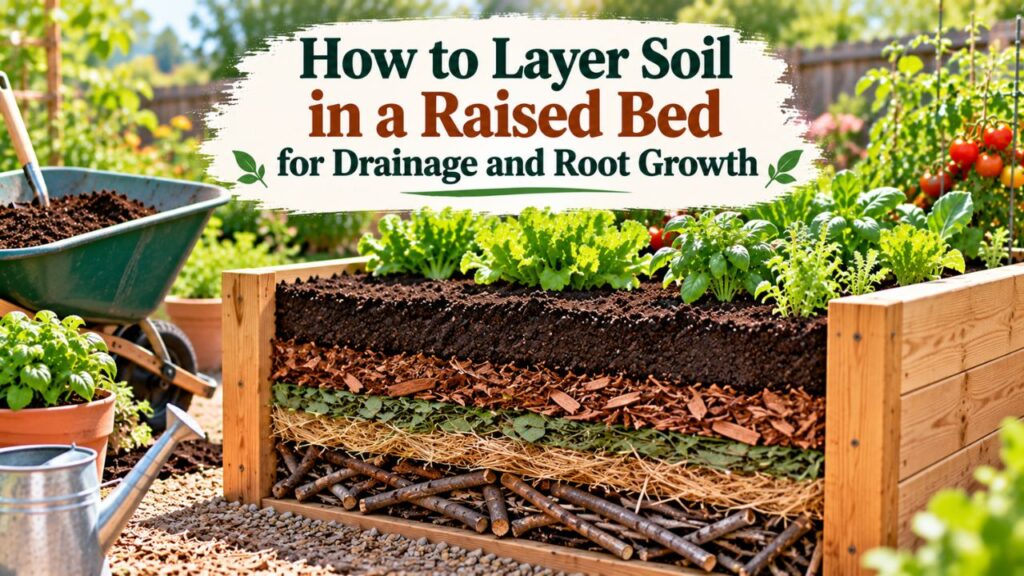
A standard raised bed doesn’t require several distinctly separated soil layers. Instead, focus on preparing the base and building a consistent growing medium above it.
The following process works for most open-bottom raised garden beds placed directly on suitable ground.
Step 1: Clear the Ground Beneath the Raised Bed
Start by removing grass, weeds, stones, and unwanted plant material from the area where the raised bed will sit.
Pull out persistent perennial weeds along with as much of their root systems as possible. Otherwise, they may grow through the new soil.
If the existing ground is healthy, there is usually no reason to separate it permanently from the raised bed.
Keeping the bottom open allows plant roots to extend into the natural soil below and provides a path for excess water.
Step 2: Loosen the Existing Garden Soil
Use a garden fork or spade to loosen the ground beneath the raised bed.
Work approximately 6–8 inches deep where practical, especially if the existing soil is compacted.
Avoid turning the ground into fine powder. The goal is to create a looser structure while minimizing unnecessary disturbance.
This step improves the connection between the original soil and the new raised bed mixture.
Important: If the native soil may contain lead, industrial pollutants, or other contaminants, don’t mix it into the growing area. Have the soil assessed and use an appropriate separation method with clean imported soil.
Step 3: Prepare the Raised Bed Soil Mixture
For a typical open-bottom vegetable bed, a practical starting mixture is:
- Two parts quality topsoil
- One part mature, plant-based compost
This produces a blend containing approximately 67% topsoil and 33% compost by volume.
The topsoil supplies mineral particles, structure, and nutrient-holding capacity. Finished compost adds decomposed organic matter that helps improve soil texture and moisture management.
Mix these materials thoroughly in a wheelbarrow, on a clean tarp, or directly inside the bed.
Avoid leaving thick, unmixed bands of compost and topsoil.
Step 4: Create a Transition Between the Old and New Soil
Spread a few inches of prepared soil mixture over the loosened ground.
Use a garden fork to gently blend part of this mixture into the upper surface of the existing soil.
This creates a gradual transition rather than a sudden boundary between two different soil textures.
According to Iowa State University Extension’s raised bed soil guidance, distinct soil layers can interfere with water movement and discourage root growth.
Creating a blended transition is particularly helpful when adding purchased topsoil over existing garden soil.
Step 5: Fill the Bed With the Remaining Soil Mix
Continue adding the prepared mixture until the raised bed reaches the desired soil level.
For a large bed, add the mixture in manageable batches so it stays evenly distributed.
Break apart large clumps and remove unwanted debris as you fill.
The finished growing zone should have a relatively consistent texture throughout.
Avoid stepping inside the bed or pressing the soil down firmly. Excessive compaction reduces the pore spaces needed for air, water, and root development.
Step 6: Water the Soil and Check for Settling
Moisten the filled bed using a watering can or a hose with a gentle spray attachment.
Apply enough water to dampen the soil without saturating it.
The moisture helps the mixture settle naturally and reveals areas that need additional material.
If the soil level drops noticeably, add more of the same blended mixture.
Keep enough space below the top edge of the bed for mulch and watering.
Step 7: Finish With Organic Mulch
After planting, spread an appropriate layer of organic mulch over the exposed soil.
Suitable materials include:
- Clean, seed-free straw
- Shredded dry leaves
- Fine, untreated wood chips
- Other clean, plant-based mulch
A layer of roughly 1–2 inches works well as a starting point for many vegetable beds, depending on the material and crop.
Mulch reduces evaporation, limits weed growth, and helps protect the soil surface from heavy rain.
Keep mulch away from direct contact with plant stems to reduce problems associated with constantly wet stem bases.
What Goes at the Bottom of a Raised Garden Bed?
The material at the bottom depends on the raised bed’s height, location, and intended planting method.
A shallow bed installed over healthy garden soil needs a different base than a tall raised bed filled with organic materials to reduce the amount of purchased soil.
For Raised Beds Placed Directly on Garden Soil
The best foundation is usually the existing ground, provided it is suitable for growing plants.
Remove unwanted vegetation, loosen compacted soil, and add the prepared growing mixture.
You generally don’t need:
- A gravel drainage layer
- A thick layer of stones
- Plastic sheeting beneath the soil
- A permanent weed barrier
- Large logs or branches
A continuous growing medium allows roots to spread beyond the raised bed frame.
For a shallow bed, this connection is especially useful because the growing area above ground may be limited.
For Tall Raised Beds With Extra Filling Space
A tall raised bed may require considerably more material than a shallow one.
In beds approximately 24 inches or taller, some gardeners place bulky organic material in the lower section to reduce the amount of purchased soil.
This approach is related to hügelkultur, a gardening method that incorporates woody material and other organic matter beneath the planting area.
A possible arrangement from bottom to top is:
- Larger untreated logs or branches in the lowest section.
- Smaller sticks and woody material filling some of the larger gaps.
- Clean leaves and partially decomposed plant material distributed around the wood.
- A substantial upper layer of blended topsoil and finished compost.
- Organic mulch covering the soil surface.
Keep at least 12–18 inches of suitable growing soil above buried woody filler for many common vegetables, and provide more depth when the crop or root system requires it.
The lower organic materials should not replace the soil where most young roots develop.
This approach is optional rather than a requirement. Filling the entire bed with a suitable soil mixture generally creates a more predictable growing environment.
For Raised Beds on Concrete or Other Hard Surfaces
A raised bed placed on concrete cannot drain directly into natural soil or allow roots to extend into the ground.
Drainage must therefore be part of the bed’s design.
Use an appropriately deep planter or raised bed with a clear route for excess water to escape.
Fill the growing area with a suitable soil-based or container-appropriate growing mix, depending on the bed’s construction.
Avoid filling a shallow, bottomed planter with bulky branches or stones that reduce usable root space.
Never use a waterproof bottom liner without providing adequate drainage. Water trapped inside the bed can leave plant roots exposed to prolonged saturation.
Choosing the Right Materials for Raised Bed Soil Layers
The quality of the materials matters more than the number of layers.
Each component should serve a specific purpose in the growing medium.
Quality Topsoil for the Main Growing Layer
Topsoil forms the mineral foundation of many raised garden bed mixtures.
Good topsoil generally has a crumbly texture, contains a balanced mixture of mineral particles, and isn’t excessively compacted.
Loam or sandy loam is often suitable because it provides a useful balance between drainage and moisture retention.
Avoid purchasing soil that is:
- Extremely heavy and sticky when wet
- Almost entirely sand
- Contaminated with construction debris
- Infested with persistent weeds
- Taken from an unknown or potentially polluted location
Inspect bulk topsoil before purchasing whenever possible.
Very dense clay soil can be difficult to manage in a raised bed, especially when wet. A properly formulated raised bed blend may be more convenient than trying to correct unsuitable topsoil with large amounts of other materials.
Finished Compost for Organic Matter
Compost helps improve the structure of a mineral-based soil mixture.
It can contribute organic matter, support biological activity, and improve the soil’s ability to retain moisture and nutrients.
Use mature compost that has finished decomposing.
Suitable compost is generally dark, crumbly, and earthy-smelling. It shouldn’t be hot or contain large amounts of recognizable fresh food waste.
Plant-based compost is often a practical choice.
Composted manure can also supply nutrients, but it should be used carefully because repeated applications may increase phosphorus and soluble salt levels.
Avoid filling the entire raised bed with compost alone. High compost concentrations may create problems with moisture management and nutrient balance.
Organic Mulch for the Surface Layer
Mulch belongs on the soil surface rather than being mixed throughout the root zone in large amounts.
Straw, shredded leaves, and similar materials can help conserve moisture and reduce the amount of exposed soil.
As organic mulch decomposes, some of its material becomes incorporated into the upper soil through natural processes.
Replace mulch when it becomes too thin to provide effective coverage.
Optional Materials for Improving the Soil Mix
Some raised bed mixes contain materials such as perlite, pumice, or other coarse amendments.
These ingredients can modify the physical properties of a growing medium, but they aren’t necessary in every raised bed.
A well-balanced topsoil and compost mixture may already provide suitable drainage and aeration.
Adding large amounts of sand, perlite, or other amendments without understanding the existing soil can create unnecessary expense or an unsuitable texture.
Start with a good base mixture and adjust it only when the soil conditions justify a change.
How Much Topsoil and Compost Should You Add?
The quantity of soil depends on the raised bed’s length, width, and intended filling depth.
For a rectangular bed, calculate the required volume using:
Soil volume (cubic feet) = Length (feet) × Width (feet) × Soil depth (feet)
For example, consider a raised bed measuring:
- Length: 4 feet
- Width: 8 feet
- Soil depth: 12 inches (1 foot)
The required volume is:
4 × 8 × 1 = 32 cubic feet
This is approximately 1.19 cubic yards before allowing for settling.
For a mixture containing two parts topsoil and one part compost, the approximate quantities would be:
| Material | Approximate Volume |
| Topsoil | 21.3 cubic feet |
| Finished compost | 10.7 cubic feet |
| Total mixture | 32 cubic feet |
This example assumes the entire specified depth will contain the soil mixture rather than logs or other bulky filler.
Actual purchased amounts may differ because loose materials settle and their combined volume can change during mixing.
When ordering bulk soil, allow a reasonable margin for settling without automatically purchasing excessive amounts.
How to Layer a Deep Raised Bed With Logs and Organic Matter
A deep raised bed can use a different filling strategy when reducing soil costs is an important consideration.
However, adding buried organic materials creates tradeoffs that gardeners should understand before planting.
Place Larger Woody Materials in the Lower Section
Use clean, untreated branches or logs in the lowest portion of the bed.
Arrange them so large empty spaces are minimized.
Wood from painted, chemically treated, or otherwise contaminated sources should not be used.
Avoid packing fresh wood into the upper growing zone where seedlings need consistent access to moisture and nutrients.
Fill Gaps With Smaller Organic Materials
Small branches, clean leaves, and other suitable plant materials can occupy some spaces around larger wood.
A little finished compost or soil may help fill gaps.
Avoid thick, compressed masses of wet grass clippings because they can become poorly aerated during decomposition.
Do not bury meat, oily food scraps, or other unsuitable household waste in a vegetable bed.
Use caution with plant material that may have been exposed to persistent herbicides.
Cover the Organic Filler With a Deep Soil Mixture
After arranging the lower materials, add enough blended topsoil and compost to create a dependable planting zone.
The upper section should contain real growing soil rather than mostly raw wood chips or undecomposed leaves.
The University of Connecticut’s guidance on starting raised beds explains the use of organic materials in deep beds and notes that most annual vegetables need substantial soil depth, commonly around 12–18 inches.
The same guidance explains that buried organic material settles as it breaks down, so additional topsoil and compost may be needed in later years.
Keep in mind: Buried wood decomposition can temporarily affect nutrient availability near the wood. Keeping a generous layer of prepared growing soil above it reduces the likelihood that young plants will be affected by conditions in the lower filler.
Soil Layering Mistakes That Can Affect Raised Bed Drainage
Several common filling methods appear practical but can make water and root management more difficult.
Putting Gravel or Rocks Under the Soil
Adding gravel at the bottom is often presented as a way to improve drainage.
However, a gravel layer doesn’t correct compacted ground, a blocked drainage outlet, or an unsuitable growing medium.
A sharp boundary between fine soil and coarse material can also change how water moves through the bed.
For most open-bottom raised beds, focus on improving the underlying soil and providing a continuous growing medium instead.
On hard surfaces, proper drainage openings and water escape routes matter more than adding rocks.
Creating Thick, Separate Soil and Compost Layers
Placing several inches of compost above several inches of topsoil may seem like an easy filling method.
However, keeping these materials completely separate can produce inconsistent moisture and nutrient conditions.
A blended mixture is usually more dependable for the main root zone.
Compost can also be applied later as a surface amendment, but this is different from constructing an entire planting bed out of separate soil bands.
Using Too Much Unfinished Organic Material
Fresh leaves, sticks, wood chips, and garden waste don’t behave like finished compost.
They require time to decompose.
When substantial amounts are buried close to plant roots, decomposition can change nutrient availability and cause noticeable settling.
Keep unfinished organic filler deep in tall beds rather than using it as a replacement for prepared growing soil.
Compacting the Soil While Filling
Walking inside a raised bed or repeatedly pressing down the mixture may remove valuable pore space.
Compacted soil restricts air movement and can make root growth more difficult.
Spread the soil evenly, break up large clumps, and allow it to settle through gentle watering.
Avoid compressing the surface to make it look perfectly level.
Adding a Permanent Barrier Beneath an Open-Bottom Bed
Plastic sheeting and some dense landscape barriers can restrict drainage or root growth.
They are generally unnecessary beneath an open-bottom raised bed on suitable soil.
Cardboard can sometimes be used temporarily to suppress existing grass, but it may also slow water movement or root penetration until it decomposes.
For an immediately planted bed, removing unwanted vegetation before filling is often the more straightforward approach.
If burrowing animals are a concern, appropriately installed galvanized hardware cloth is an alternative that can discourage entry while leaving openings for water movement.
How to Maintain Soil Layers After Planting
A properly filled raised bed still needs occasional attention because organic matter decomposes and the soil gradually settles.
Check the Raised Bed Soil Level Each Season
Inspect the soil depth before each planting season.
Some settling is normal, especially during the first year.
Beds containing buried logs and leaves may settle more noticeably as those materials break down.
Top up the growing area with suitable soil mixture when necessary.
Avoid adding a thick layer of fresh compost every year without considering existing soil fertility.
Add Compost Based on Soil Condition
Mature compost can be used to maintain organic matter over time.
However, the amount needed depends on the soil’s existing nutrient levels, previous amendments, and crop requirements.
A soil test can help identify whether additional nutrients or pH adjustments are necessary.
Repeated heavy compost applications are not automatically better for plant growth.
Maintain Consistent Moisture
Raised beds often dry faster than surrounding garden soil because their exposed sides allow additional moisture and heat exchange.
Check moisture beneath the mulch rather than judging conditions from the dry surface alone.
Water deeply enough to reach the active root zone, then allow excess water to drain.
Avoid keeping the soil constantly saturated.
Drip irrigation or a soaker hose can help provide consistent moisture without disturbing the surface mulch.
Conclusion
Understanding how to layer soil in a raised bed begins with recognizing that most garden beds need a consistent, well-drained growing mixture, not numerous separate bands of different materials.
For a standard open-bottom bed, loosen the existing ground, blend quality topsoil with mature compost, fill the growing area evenly, and finish with organic mulch.
Very tall beds can use untreated wood and other suitable organic materials in their lower sections, provided enough prepared soil remains above them for plant roots.
Choose the filling method based on bed depth, drainage, and the crops you intend to grow. A simple, well-prepared soil mixture is often the most reliable foundation for healthy raised bed plants.
FAQs About How to Layer Soil in a Raised Bed
Should Compost Go on the Bottom or Top of a Raised Bed?
For a new raised bed, finished compost is generally best mixed throughout the main growing soil rather than placed in one thick layer at the bottom or top.
After the bed is established, smaller compost applications can be added to the surface as needed.
Can I Put Cardboard at the Bottom of a Raised Bed?
Yes, plain cardboard can sometimes be used to suppress grass beneath a new bed. However, it isn’t necessary in every garden and can temporarily restrict water movement and root penetration until it decomposes.
If the goal is immediate planting, removing existing vegetation and loosening the soil is often preferable.
Can I Use Leaves Instead of Soil in a Raised Bed?
Leaves can be used as mulch or as part of the lower organic filler in a sufficiently deep bed.
However, undecomposed leaves shouldn’t replace the entire growing layer. Plant roots need a suitable soil mixture with dependable structure, moisture, and nutrient availability.
Do Raised Garden Beds Need a Drainage Layer?
Most open-bottom raised beds don’t need a separate gravel or rock drainage layer.
Good drainage depends on suitable growing soil, the condition of the ground underneath, and an unobstructed path for excess water.
Beds with solid bottoms require appropriate drainage openings.
Should I Mix Topsoil and Compost Before Filling a Raised Bed?
Yes. Mixing quality topsoil and finished compost creates a more consistent growing medium than leaving thick layers of each material separate.
A mixture of approximately two parts topsoil to one part mature compost is a reasonable starting point for many soil-based raised garden beds.
How Often Should I Add More Soil to a Raised Bed?
Check the soil level at least once each growing season and top it up when settling has reduced the usable planting depth.
Raised beds containing large amounts of decomposing organic filler may need more frequent replenishment than beds filled entirely with a prepared soil mixture.

I’m Maya L. Greenwood, a lifelong plant lover who believes anyone can grow something beautiful with the right guidance. After years of testing soil mixes, pruning methods, irrigation tricks, and pest-safe solutions, I started EasyGardenTips.com to turn hard-won lessons into step-by-step advice. From seed starting and container gardens to composting and seasonal checklists, my goal is to make gardening simple, sustainable, and fun.