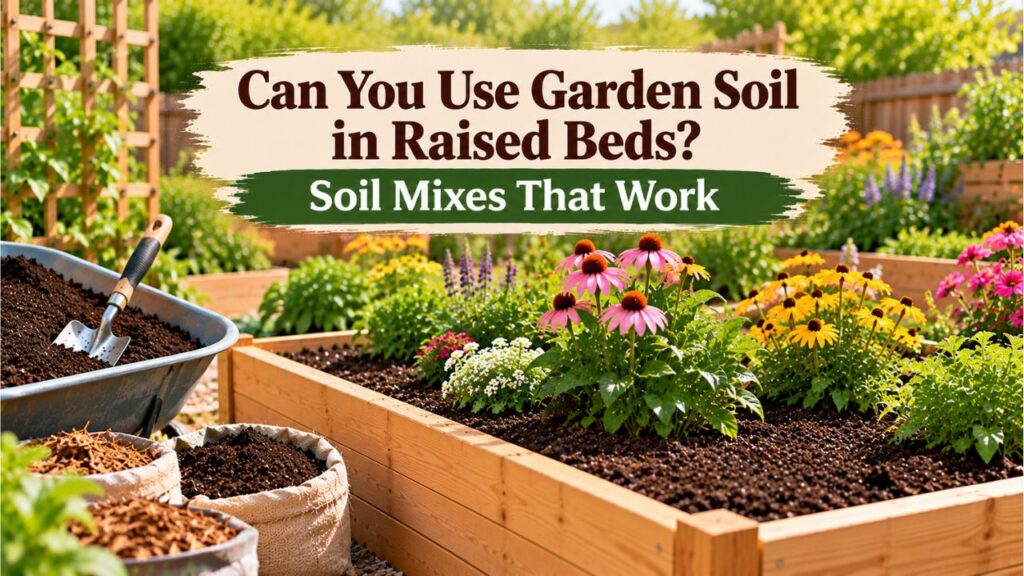
Can You Use Garden Soil in Raised Beds? Soil Mixes That Work
Yes, you can use garden soil in raised beds, provided it is clean, well-draining, and suitable for growing plants. Good-quality garden soil can serve as the main ingredient in a raised bed, especially when mixed with finished compost to improve its structure and organic matter content.
However, not all garden soil performs equally well. Heavy clay soil may become compacted, while very sandy soil can dry out too quickly. Soil taken from an unknown location may also contain weed seeds, excessive salts, or harmful contaminants.
The type of raised bed matters, too. An open-bottom bed placed directly on the ground can often use native garden soil successfully. A tall, enclosed planter sitting on concrete may require a different, lighter growing medium.
Another common source of confusion is the difference between garden soil, topsoil, raised bed soil, and potting mix. These products aren’t always interchangeable.
Understanding their differences helps prevent drainage problems, poor root development, and unnecessary spending on soil amendments.
Here’s how to determine whether your garden soil is suitable, improve it when necessary, and prepare a productive raised bed for vegetables, herbs, and flowers.
Can You Use Garden Soil in Raised Beds Without Adding Compost?
Yes, garden soil can sometimes be used in raised beds without additional compost, particularly when it already has good structure, sufficient organic matter, and suitable nutrient levels.
Healthy garden soil contains mineral particles, organic matter, water, air, and living organisms. These components help support plant roots and supply essential nutrients.
However, soil quality varies considerably between locations.
Soil taken from an established vegetable garden may already be suitable, while soil removed from a compacted lawn or construction site could require significant improvement.
When Garden Soil Can Be Used Alone
Garden soil may be suitable without additional amendments when it:
- Has a loose, crumbly texture.
- Allows excess water to drain.
- Retains enough moisture for plant roots.
- Contains suitable organic matter.
- Has an appropriate pH and nutrient balance.
- Is free from concerning contamination.
- Does not form dense, compacted layers after watering.
Well-maintained soil from an existing vegetable garden often meets several of these conditions.
If the soil already supports healthy vegetables and drains properly, adding compost may provide little immediate benefit.
A soil test is the most reliable way to determine whether additional nutrients or amendments are needed.
When Garden Soil Needs Improvement
Garden soil usually benefits from amendments when it is:
- Heavy, sticky, and dominated by clay.
- Extremely sandy and unable to retain moisture.
- Compacted from foot traffic or construction.
- Low in organic matter.
- Prone to forming hard surface crusts.
- Poorly drained after rainfall.
Finished compost is a common amendment because it adds organic matter and can improve soil structure.
However, adding large amounts without considering the existing soil can create moisture and nutrient problems.
The objective is to create a balanced growing medium, not to replace mineral soil with compost.
Garden Soil vs. Raised Bed Soil: What’s the Difference?
Garden soil and raised bed soil can contain many of the same materials, but their composition and intended uses may differ.
Natural garden soil contains mineral particles such as sand, silt, and clay, along with organic matter.
Commercial raised bed mixes often combine topsoil, compost, and other ingredients to create a growing medium suitable for elevated planting areas.
Bagged products labeled “garden soil” vary considerably. Some are mineral-soil blends, while others contain mostly composted organic materials.
The product name alone does not establish its composition.
| Soil type | Main characteristics | Raised bed suitability |
| Native garden soil | Natural mineral soil with varying organic matter | Good when clean and well-structured |
| Purchased topsoil | Mineral soil from a supplier | Suitable when quality and drainage are appropriate |
| Bagged garden soil | Ingredients vary by product | Check label and intended use |
| Raised bed mix | Often contains topsoil, compost, and other amendments | Usually formulated for raised beds |
| Potting mix | Often lightweight and largely soilless | Better suited to containers and elevated planters |
Is Garden Soil Better Than Raised Bed Soil?
Neither option is automatically better.
Healthy native garden soil can provide long-term structure, mineral nutrients, and moisture storage.
A commercial raised bed mix offers convenience because its ingredients have already been combined.
However, some packaged mixes contain very large amounts of organic material. These products may settle or dry unevenly as the materials decompose.
For a permanent raised bed placed directly on the ground, a suitable mineral-soil-and-compost mixture is often a practical choice.
For enclosed elevated planters, a lighter growing medium may be preferable.
Can You Use Bagged Garden Soil in Raised Beds?
Yes, but read the product label before using it.
Some bagged garden soils are designed to be mixed into existing ground soil rather than used alone.
Others are suitable for raised beds.
Check the label for:
- Recommended applications.
- Mineral soil content.
- Compost and other organic ingredients.
- Added fertilizers.
- Drainage characteristics.
- Instructions for mixing with existing soil.
If the manufacturer specifies in-ground use only, don’t assume the product will perform well as the sole growing medium in an elevated planter.
How to Mix Garden Soil for Raised Beds
A useful raised bed mixture often contains good-quality garden soil or topsoil combined with finished compost.
The proportions should depend on the existing soil rather than following a rigid formula.
Recommended Garden Soil and Compost Ratio
The University of Minnesota Extension’s raised bed gardening guidance recommends a mixture containing approximately one-half to two-thirds topsoil and one-third to one-half plant-based compost.
For many new beds, a practical starting mixture is:
- Two parts good-quality garden soil or topsoil.
- One part finished plant-based compost.
This creates a mixture containing approximately 67% mineral soil and 33% compost by volume.
It is a starting point, not a universal requirement.
If your garden soil already contains substantial organic matter, use less compost.
If the soil is poorly structured or highly compacted, additional preparation may be needed before incorporating amendments.
Why Garden Soil Needs Mineral Content
Mineral soil contains particles of sand, silt, and clay.
These particles influence drainage, nutrient retention, and the physical support available to plant roots.
A suitable combination creates pore spaces that hold both water and air.
Soil containing too much clay may have limited drainage when compacted.
Very sandy soil may drain rapidly and retain relatively little moisture.
A balanced soil texture supports healthy root development without requiring unusually frequent watering.
Why Finished Compost Helps Garden Soil
Finished compost adds decomposed organic material to the growing medium.
It can improve the structure of heavy soil and increase the moisture-holding capacity of sandy soil.
Compost also contributes nutrients, although its nutrient composition varies.
Use mature compost with an earthy smell and a reasonably uniform texture.
Avoid adding large amounts of unfinished compost, fresh manure, or partially decomposed kitchen waste directly around vegetable roots.
Excess compost can also create problems, including excessive nutrient concentrations and uneven moisture retention.
Example: Mixing Soil for a 4 × 8-Foot Raised Bed
Consider a raised bed measuring:
- Length: 8 feet
- Width: 4 feet
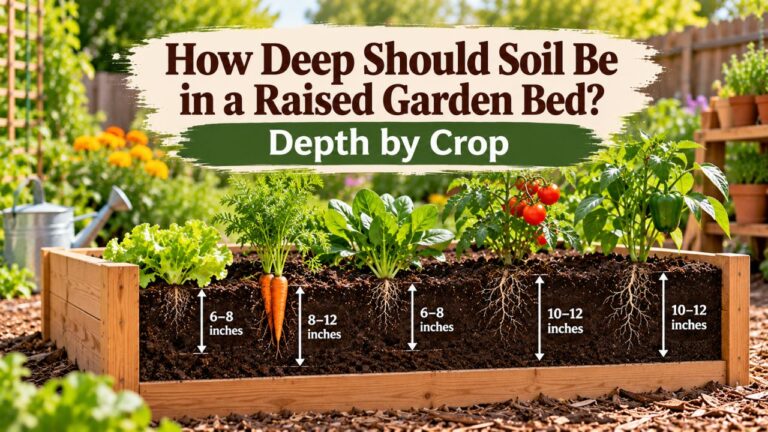
- Intended soil depth: 12 inches
The volume is:
8 × 4 × 1 = 32 cubic feet
Using a two-part soil to one-part compost mixture requires approximately:
| Ingredient | Approximate volume |
| Garden soil or topsoil | 21.3 cubic feet |
| Finished compost | 10.7 cubic feet |
| Total growing medium | 32 cubic feet |
This calculation assumes the entire 12-inch depth will be filled with the mixture.
Actual quantities may differ because of the bed’s internal dimensions, soil already present, and settling after watering.
How to Prepare Garden Soil for Raised Beds
Proper preparation is especially important when using soil collected from an existing garden or another part of the yard.
Follow these steps before planting vegetables or other crops.
Step 1: Check the Garden Soil’s Quality
Inspect the soil for texture, drainage, and possible contamination.
Healthy topsoil often has a crumbly texture and an earthy smell.
Avoid using material containing construction debris, excessive stones, unknown chemical residues, or suspicious waste.
For food gardening, testing soil is particularly important when the property has an uncertain history.
The University of Maryland Extension’s raised-bed gardening guidance recommends laboratory soil testing before modifying existing ground soil, including testing for lead when growing edible crops.
A standard soil test can also help identify pH and nutrient levels.
Step 2: Prepare the Ground Beneath the Raised Bed
If the raised bed sits directly on the ground, remove weeds, unwanted vegetation, and debris.
Check whether the underlying soil is severely compacted.
Where necessary, gently loosen the native soil using a garden fork.
This can help roots move into the soil below the bed and improve the connection between the two growing layers.
Avoid turning over large amounts of healthy soil unnecessarily.
If the bed is installed over clean, well-draining ground, an open bottom is generally preferable.
Step 3: Remove Large Clumps and Unwanted Materials
Before mixing the garden soil, remove:
- Large stones.
- Persistent weed roots.
- Plastic and other trash.
- Construction materials.
- Large woody debris that interferes with planting.
Break apart hard soil clumps with a shovel or garden fork when the soil is appropriately moist.
Don’t try to pulverize the soil into a fine powder.
The goal is a loose growing medium with stable aggregates, not a completely uniform texture.
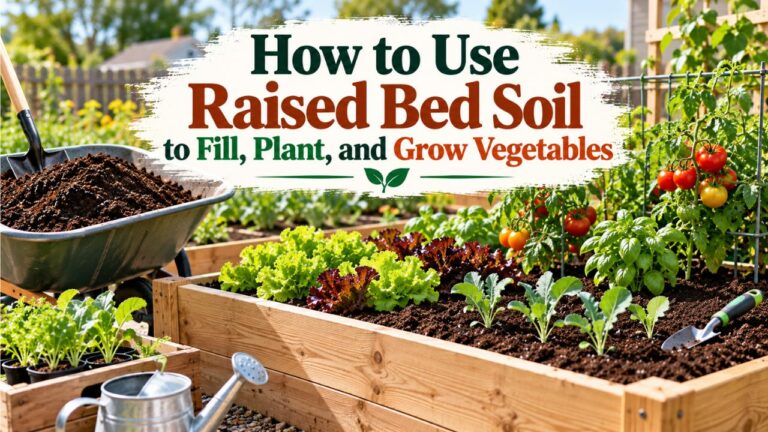
Step 4: Mix Garden Soil With Compost
Spread the garden soil and finished compost in manageable amounts.
Blend the ingredients using a shovel, garden fork, or suitable hand tool.
Distribute the compost reasonably evenly throughout the growing layer.
Avoid creating sharply separated layers of dense garden soil and lightweight compost.
A gradual transition between materials helps roots move through the bed and can reduce abrupt differences in water movement.
Step 5: Fill the Raised Bed
Add the prepared soil mixture to the bed.
Spread it into the corners and level the surface.
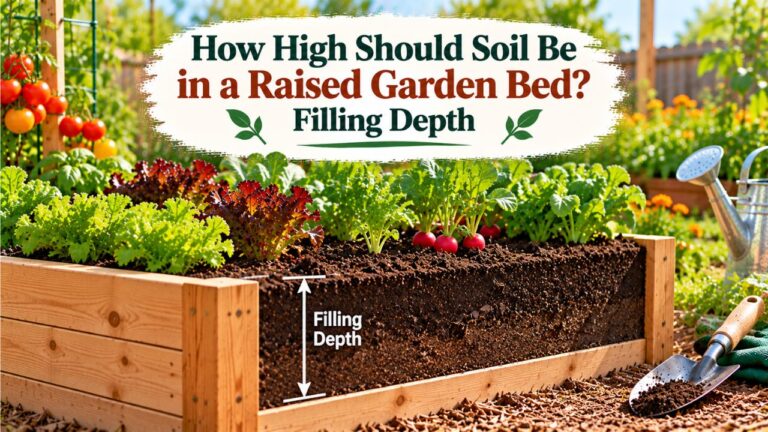
Leave approximately 1–2 inches between the soil surface and the upper edge of the frame.
This space helps contain irrigation water and mulch.
Avoid standing or walking on the soil while filling the bed.
Repeated foot traffic can compress the growing medium and reduce the pore spaces needed for drainage and root development.
Step 6: Water and Check for Settling
Water the bed gently after filling it.
Allow moisture to move through the growing layer.
Check for areas where water collects or fails to soak into the soil.
Some settling is normal after the first watering.
Add more growing medium where necessary, keeping enough room below the frame for mulch and irrigation.
Once moisture and drainage are suitable, the bed can be planted.
Can You Use Clay Garden Soil in Raised Beds?
Yes, clay garden soil can be used in raised beds, but its structure and drainage need attention.
Clay particles are extremely small and can hold considerable water and nutrients.
However, heavy clay soil may become dense when compacted, restricting the air available to roots.
How to Improve Clay Soil for Raised Beds
If your soil contains substantial clay:
- Allow wet soil to dry until it is workable.
- Break apart large compacted clumps.
- Add suitable finished compost when needed.
- Incorporate the amendment without excessive tilling.
- Avoid stepping on the growing area.
- Maintain organic mulch after planting to protect the soil surface.
Good-quality compost can help improve aggregation and make clay soil easier to manage.
Don’t automatically add small amounts of sand to heavy clay.
Changing clay texture through sand additions may require substantial quantities and careful selection of materials. Small additions can fail to improve the structure.
For severely compacted soil, incorporating better-quality loamy topsoil may be more practical than relying on compost alone.
Can Sandy Garden Soil Be Used in Raised Beds?
Yes. Sandy soil often provides good drainage and is easy to work.
Its main limitation is that water and soluble nutrients can move through it quickly.
Adding finished compost can improve moisture retention and contribute organic matter.
Mulching the surface and using consistent irrigation can also help prevent excessive drying.
A soil test can guide fertilizer decisions, particularly when nutrients are easily lost through drainage.
When Should You Avoid Using Garden Soil in Raised Beds?
Certain conditions make ordinary garden soil unsuitable without further treatment or replacement.
Garden Soil May Be Contaminated
Soil collected near older painted buildings, industrial sites, former dumping areas, or locations with an uncertain chemical history may contain contaminants.
Don’t assume that dark-colored soil is safe simply because it appears fertile.
If you’re growing vegetables, obtain appropriate soil testing when contamination is possible.
Use verified clean growing material instead of moving questionable soil into the raised bed.
If the underlying ground is contaminated, the bed may also require suitable separation from that soil. The design should follow the specific contamination risk and local extension recommendations.
Garden Soil Is Extremely Compacted
Soil that forms hard, dense layers can restrict root development.
If water remains on the surface for long periods or the soil becomes nearly impossible to penetrate when dry, substantial improvement may be necessary.
Loosening the soil and incorporating appropriate organic matter can help.
However, replacing part of a severely compacted growing layer with suitable topsoil may sometimes be the better solution.
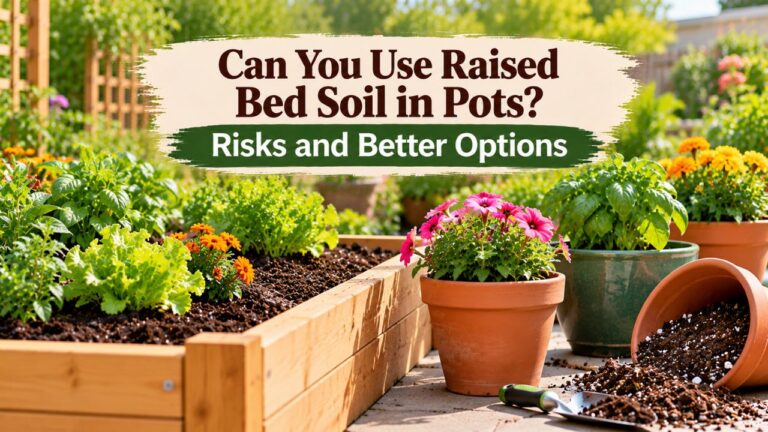
The Raised Bed Sits on Concrete or Another Hard Surface
Raised beds placed directly on the ground behave differently from enclosed beds on patios or driveways.
An open-bottom bed allows roots and water to move into the soil beneath it.
A bed on concrete has a limited rooting volume and must provide its own drainage.
For these installations, dense native garden soil may be unsuitable as the main growing medium.
A properly formulated, lighter growing mix can provide better drainage and root-zone conditions.
University of Maryland Extension recommends a compost-and-soilless-media approach for raised beds on impermeable surfaces, with only limited topsoil added under suitable depth conditions.
Also consider the weight of wet soil when placing raised beds on decks, balconies, or other elevated structures. The structure must be capable of supporting the full loaded weight.
Can You Add Garden Soil to an Existing Raised Bed?
Yes, clean garden soil can be added to an existing raised bed when it is compatible with the growing medium already present.
This can be useful when the bed has settled or needs additional mineral soil.
However, adding garden soil is not always the correct way to restore soil fertility.
Adding Garden Soil to Refill a Settled Bed
Over time, organic materials decompose and the soil level may decrease.
If the bed has lost substantial volume, add suitable soil to restore the growing depth.
Where practical, blend the new material into the upper layer instead of creating a thick, sharply separated layer.
Avoid burying the crowns or lower stems of established plants that are sensitive to deeper planting.
Adding Garden Soil to Improve an Organic-Heavy Mix
Some raised beds contain growing mixes made mostly from compost, peat, or other organic materials.
These mixes may settle considerably as their ingredients decompose.
If the bed is open to native ground, incorporating appropriate mineral topsoil can help create a more stable growing medium.
Make gradual changes rather than replacing the entire bed unnecessarily.
For elevated planters with solid bottoms, use a growing medium suited to container-like conditions instead.
Should You Replace the Old Raised Bed Soil?
Healthy raised bed soil usually does not need complete replacement every growing season.
Instead, check:
- Soil level and settling.
- Drainage and compaction.
- Organic matter condition.
- Soil pH and nutrient levels.
- Possible disease or contamination concerns.
Add new soil or compost only when there is a reason to do so.
If the bed remains productive and the soil tests within suitable ranges, routine maintenance is generally enough.
Conclusion
So, can you use garden soil in raised beds? Yes. Clean, good-quality garden soil can form an excellent growing medium, especially in open-bottom beds that sit directly on the ground.
For a new raised bed, combining suitable mineral soil with finished compost is a practical approach. A mixture of approximately two parts topsoil to one part compost provides a useful starting point, but the actual proportions should reflect your soil’s condition.
Avoid using contaminated soil, severely compacted material, or dense native soil in enclosed planters without considering drainage and weight.
The best choice is not necessarily a commercial product labeled “raised bed soil.” It’s a growing medium that provides healthy roots with adequate air, water, nutrients, and space.
FAQs About Can You Use Garden Soil in Raised Beds
Can I Use Soil From My Backyard in a Raised Bed?
Yes, you can use backyard soil if it is clean, well-draining, and suitable for gardening. Test it when necessary, especially before growing edible crops. Heavy clay or sandy soil may benefit from compost or other appropriate amendments.
Can I Fill a Raised Bed With Only Garden Soil?
Yes, if the soil already has good structure, suitable organic matter, and adequate fertility. However, many garden soils benefit from some finished compost. Avoid using dense, compacted soil as the only growing medium.
Can I Use Bagged Garden Soil Instead of Raised Bed Soil?
Sometimes. Check the bag’s ingredients and intended applications. Products formulated only for mixing into existing ground soil may not perform well when used alone in a raised bed.
How Much Compost Should I Add to Garden Soil?
For a new raised bed, approximately one part finished compost to two parts suitable topsoil is a reasonable starting point. Use less if the soil already contains substantial organic matter or testing indicates that additional compost is unnecessary.
Do I Need Gravel Under Garden Soil in a Raised Bed?
No. Gravel is generally unnecessary at the bottom of an open-ground raised bed and does not replace proper drainage. Allow water to move into suitable native soil beneath the bed. Enclosed raised planters need appropriate drainage openings.
Can I Mix Potting Soil With Garden Soil in Raised Beds?
Yes, some soilless potting mix can be incorporated when its ingredients and the bed design make it appropriate. However, a permanent open-bottom raised bed generally benefits from suitable mineral soil rather than relying entirely on a lightweight potting mix.
Is Garden Soil Safe for Growing Vegetables in Raised Beds?
Garden soil can be safe for vegetables when its source is known and contamination risks have been addressed. Soil from older residential properties, industrial areas, or unknown locations should be tested when there is a reasonable concern about lead or other contaminants.

I’m Maya L. Greenwood, a lifelong plant lover who believes anyone can grow something beautiful with the right guidance. After years of testing soil mixes, pruning methods, irrigation tricks, and pest-safe solutions, I started EasyGardenTips.com to turn hard-won lessons into step-by-step advice. From seed starting and container gardens to composting and seasonal checklists, my goal is to make gardening simple, sustainable, and fun.