What to Plant With Peas in a Raised Bed: Best Companion Crops
The best plants to grow with peas in a raised bed include lettuce, spinach, radishes, carrots, arugula, turnips, beets, and cilantro. These crops share many of the same cool-season growing conditions as peas and can make efficient use of the space around a pea trellis without creating excessive competition.
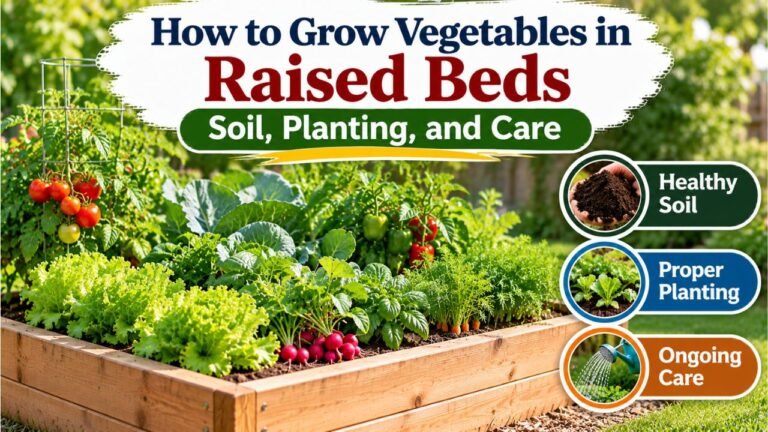
Peas are especially useful in raised gardens because climbing varieties grow vertically, leaving room for smaller vegetables near the soil surface. For example, you can plant sugar snap peas along a trellis at the back of a 4 × 8-foot raised bed and grow lettuce or radishes toward the front.
However, companion planting does not guarantee better yields or automatic pest protection. Successful plant combinations depend on compatible temperatures, mature plant sizes, sunlight, watering requirements, and harvest timing.
Some traditional companion planting charts also warn against growing peas near onions and garlic, but the evidence supporting specific plant incompatibilities is less consistent than these charts suggest.
In this article, I cover the best vegetables, herbs, and flowers to plant alongside peas, which combinations need extra space, and how to arrange everything in a raised bed. I also explain spacing, trellis placement, nitrogen fixation, seasonal planting, and common mistakes to avoid.
What to Plant With Peas in a Raised Bed: Best Companions

Low-growing, cool-season vegetables are usually the most practical companions for garden peas. They use different parts of the growing space and often reach harvest size before pea vines become too dense.
According to the University of Minnesota Extension’s companion planting guide, combining crops with different growing habits and harvest times is a useful way to increase space efficiency in small gardens.
Best Pea Companion Plants at a Glance
| Companion Plant | Main Benefit | Best Placement |
| Leaf lettuce | Compact, cool-season crop | In front of pea trellis |
| Spinach | Similar cool-weather preference | Along an open bed edge |
| Radishes | Fast harvest frees space | Between wider plantings |
| Carrots | Use soil space beneath foliage | In a separate nearby row |
| Arugula | Quick-growing salad green | Front or side of bed |
| Turnips | Cool-season root and greens crop | Open section near peas |
| Beets | Different growth habit | Along a separate row |
| Swiss chard | Productive leafy vegetable | Outside dense pea foliage |
| Cilantro | Cool-season herb; flowers can support insects | Bed corners or ends |
| Dill | Flowers can support beneficial insects | Edge with adequate room |
| Calendula | Flowers add diversity | Sunny outside edge |
| Kale or kohlrabi | Cool-season crop | With generous spacing |
For a beginner, peas with leaf lettuce, spinach, and radishes are among the easiest combinations.
Carrots and beets can also work, but they require careful thinning and enough space for their roots.
The goal is not to squeeze as many plant species as possible into one raised bed. It is to create a planting arrangement where each crop receives sufficient light, water, and root space.
Key Takeaway: Lettuce, spinach, radishes, and carrots are practical companions for peas. Their cool-season growing habits make them suitable for sharing a raised bed when properly spaced.
1. Lettuce: One of the Best Companions for Peas
Lettuce and peas are a useful raised-bed combination because both grow well during cool weather.
Leaf lettuce stays relatively short, while climbing peas use a vertical trellis.
This allows the plants to occupy different parts of the garden.
Why Lettuce Works Well With Peas
Lettuce offers several advantages:
- Prefers cooler growing conditions
- Requires relatively little vertical space
- Can be harvested while pea vines are developing
- Fits along the front of a raised bed
- Can help cover otherwise unused soil
Some leaf lettuce varieties can also tolerate limited afternoon shade during warmer weather.
However, lettuce still needs enough light to grow well.
How to Plant Lettuce With Peas
A practical arrangement is:
- Install a pea trellis along one side of the bed.
- Sow peas near the base of the support.
- Leave sufficient space for the pea plants to develop.
- Plant leaf lettuce in a separate row toward the front.
- Thin lettuce to its recommended final spacing.
- Harvest lettuce before crowded foliage becomes a problem.
For full-size leaf lettuce, approximately 6–8 inches between plants is a useful starting point, depending on the variety and harvesting method.
Baby lettuce may be grown more closely and harvested earlier.
Which Lettuce Is Best?
Loose-leaf varieties are especially convenient.
Examples include:
- Green leaf lettuce
- Red leaf lettuce
- Oakleaf lettuce
- Baby leaf salad mixes
Large head lettuce may require more space and can be less convenient in a densely planted bed.
Key Takeaway: Leaf lettuce is an excellent companion for peas because it grows low to the ground, prefers cool weather, and can be harvested before the bed becomes crowded.
2. Spinach: A Cool-Season Companion for Peas
Spinach is another practical vegetable to plant alongside peas.
Both crops generally perform better during cool weather than during intense summer heat.
The University of Minnesota Extension’s vegetable planting guidance identifies peas and spinach among vegetables that can be direct-seeded when soil temperatures are approximately 40–50°F.
Benefits of Growing Spinach With Peas
Spinach has a relatively compact growth habit.
It can occupy an open section of the bed while peas climb a support.
Other advantages include:
- Suitable spring planting temperatures
- Relatively shallow growing habit
- Harvestable leaves
- Compatibility with intensive small-space gardening
However, spinach can bolt when temperatures rise and day length increases.
Plan to harvest it before hot weather becomes a problem.
How to Arrange Spinach
Plant spinach in a separate row or block.
For full-size spinach, approximately 4–6 inches between plants can be appropriate.
Closer spacing may work for baby leaves harvested early.
Keep the spinach outside the densest pea foliage.
Does Spinach Need Shade From Peas?
Not necessarily.
Spinach benefits from sunlight during cool spring weather.
Some shade may become useful as temperatures rise, but excessive shading can reduce growth.
Do not deliberately bury spinach beneath a thick canopy of pea vines.
Key Takeaway: Spinach and peas share similar cool-season conditions. Grow spinach toward the open side of the bed and harvest before hot weather causes bolting.
3. Radishes: A Fast-Growing Companion for Peas
Radishes are especially useful when you want to grow multiple vegetables in a small raised bed.
Many spring radish varieties mature in approximately 25–35 days under favorable conditions.
That means they can be harvested while pea vines are still developing.
Why Radishes Work Well
Radishes offer several practical advantages:
- Short growing season
- Small early growth habit
- Suitable cool-season temperatures
- Relatively simple direct seeding
- Early harvest that frees space
For example, you can sow radishes near a young pea row, then harvest them before the peas reach their mature size.
This is a form of intercropping based on different harvest times.
How to Plant Radishes With Peas
Use a separate narrow row rather than planting radish seeds directly into every pea planting hole.
A simple method is:
- Sow the peas near their trellis.
- Make a radish row in the open soil nearby.
- Plant radish seeds approximately ¼–½ inch deep, according to the variety.
- Thin seedlings to about 2–3 inches apart for many small varieties.
- Harvest when roots reach the recommended size.
Larger radish varieties require more space.
Can Radishes Improve Pea Growth?
There is no strong reason to assume radishes directly increase pea yield through a special chemical interaction.
Their main advantage is efficient use of space and a short harvest period.
The University of Maryland Extension’s companion planting guide emphasizes using quick-growing crops such as radishes alongside slower crops to improve garden productivity.
Key Takeaway: Radishes are one of the easiest companions for peas because they grow quickly and can be harvested before pea vines occupy more space.
4. Carrots: A Root Crop That Can Share Space With Peas
Carrots can be grown near peas when the raised bed has loose, sufficiently deep soil.
They develop edible roots beneath the soil surface while peas climb upward.
This makes them a practical combination in a well-planned raised bed.
Why Carrots Can Work
Carrots and peas have different mature growth habits.
Peas produce climbing vines or compact bushes.
Carrots form a relatively low leaf canopy and a storage root.
However, both plants still need space below ground.
Different root shapes do not eliminate competition for water and nutrients.
How to Plant Carrots Near Peas
Choose a separate carrot row rather than sowing directly against the pea stems.
For many carrot varieties:
- Seed depth: approximately ¼ inch
- Final spacing: approximately 2–3 inches
- Soil: loose, fine, and well-draining
Maintain consistent moisture during germination.
Carrots may take longer to emerge than peas.
Avoid disturbing young carrot roots while training or harvesting pea vines.
Should You Plant Carrots Behind Peas?
Usually, place carrots where they receive sufficient sunlight.
In many Northern Hemisphere gardens, a pea trellis along the northern edge allows shorter crops planted to its south to receive more direct midday sunlight.
Actual conditions depend on bed orientation and nearby shade.
Key Takeaway: Carrots can grow successfully near peas, especially in deep, loose raised-bed soil. Give carrots their own row and keep them out of dense pea shade.
5. Arugula: A Quick Salad Crop for Cool Weather
Arugula is another compact vegetable that fits well into a spring pea garden.
It grows quickly in suitable weather and can provide edible leaves before summer heat arrives.
Why Arugula Is a Practical Choice
Arugula generally prefers cooler growing conditions.
It can be planted in small sections along the front or side of a raised bed.
Its advantages include:
- Short growing period
- Compact early growth
- Easy harvesting
- Good use of open spring soil
However, arugula can bolt as temperatures rise.
Planting it during the cooler part of the season gives it a better chance of producing tender leaves.
How to Grow Arugula Beside Peas
Sow seeds shallowly, following the seed packet.
Thin seedlings according to whether you want baby leaves or full-size plants.
For larger plants, spacing around 4–6 inches may be suitable.
Keep arugula away from areas where dense pea vines will cover it.
Is Arugula a Pest-Repelling Companion?
Arugula is not a proven general pest repellent for peas.
It can attract flea beetles and other insects that feed on brassica-family vegetables.
Its strongest value in this combination is as a quick-growing edible crop.
Key Takeaway: Arugula shares peas’ preference for cool weather and can be harvested early. Grow it for efficient space use rather than expecting automatic pest protection.
6. Turnips: A Useful Companion for Spring and Fall
Turnips can fit into raised beds containing peas because both crops can be grown during cool seasons.
Depending on the variety, turnips may be harvested for their roots, greens, or both.
Why Turnips Work
Turnips offer a different growing habit from peas.
Most of their harvestable root develops below ground, while the leaves remain relatively low compared with climbing pea vines.
Small or quick-growing varieties are particularly useful in raised beds.
How to Plant Turnips With Peas
Sow turnips in their own row or block.
For many varieties:
- Plant seeds approximately ¼–½ inch deep.
- Thin young plants to their recommended spacing.
- Allow more room for larger roots.
Small turnips may need approximately 3–4 inches between plants, while larger storage varieties require more.
Avoid planting them so close to pea stems that harvesting damages the peas.
Can You Grow Turnips With Fall Peas?
Yes, where the fall growing season is long enough.
Both crops tolerate cool conditions.
However, peas require enough time to establish, flower, and produce pods before severe cold.
Use local frost dates and variety maturity information.
Key Takeaway: Turnips are suitable companions for peas during cool growing seasons. Keep them in separate planting rows and allow adequate space for developing roots.
7. Beets: Another Good Root Vegetable Option
Beets can grow near peas because their growth habits are relatively different.
They also tolerate cool-season growing conditions.
However, beets need enough root space and should not be crowded directly against the pea trellis.
How to Plant Beets
Beets are commonly direct-seeded.
For many varieties, use:
- Planting depth: approximately ½–1 inch
- Final spacing: around 3–4 inches
- Soil: well-draining and reasonably loose
Many conventional beet seed clusters can produce multiple seedlings.
Thinning may be necessary.
Where Should Beets Go?
Place beets in an open part of the raised bed.
Avoid sections where pea vines create dense shade.
If the bed is small, grow a limited number of beet plants rather than crowding the entire area.
Can Peas Supply Nitrogen to Beets?
Peas can fix atmospheric nitrogen when they form an effective relationship with suitable rhizobia bacteria.
However, this does not mean actively growing pea plants automatically provide enough nitrogen to neighboring beets.
The available nitrogen benefit depends on soil biology, plant growth, and decomposition.
Do not treat pea companion planting as a substitute for checking the fertility needs of other crops.
Key Takeaway: Beets can share a raised bed with peas when properly spaced, but they still need sufficient light, moisture, and soil nutrients.
8. Swiss Chard: A Productive Leafy Companion
Swiss chard is a useful option for gardeners who want a longer leafy harvest.
It tolerates a wider range of growing conditions than some cool-season salad greens.
Young chard plants can occupy an open section near peas.
Why Swiss Chard Fits
Chard offers:
- Edible leaves and stalks
- A relatively upright growth habit
- Multiple potential harvests
- Good use of an open raised-bed area
However, mature Swiss chard can become much larger than leaf lettuce.
It should not be squeezed into a small space directly under the pea vines.
How Much Space Does It Need?
For mature plants, approximately 8–12 inches or more may be appropriate depending on the variety.
Plants grown for baby leaves can be spaced more closely.
Keep the crop accessible so leaves can be harvested without disturbing the pea roots.
Is Swiss Chard Better Than Spinach?
Spinach is often a particularly good match for early spring peas because both favor cool conditions.
Swiss chard may remain productive longer as the weather warms, depending on the climate.
If you want a bed that transitions from spring into summer, Swiss chard can be a useful option.
Key Takeaway: Swiss chard can grow with peas, but it needs more mature growing space than spinach or baby lettuce.
9. Cilantro: A Herb That Shares Peas’ Cool-Season Preference
Cilantro is a practical herb to grow near peas, especially during spring or fall.
It generally performs better in cooler weather than during prolonged summer heat.
Why Cilantro Works
Cilantro can fit into the corners or open edges of a pea bed.
It provides a useful edible harvest without requiring a large support structure.
If allowed to flower, it may also provide nectar and pollen for beneficial insects.
The University of Maryland Extension identifies flowering herbs, including members of the carrot family such as cilantro and dill, as useful resources for pollinators and natural enemies of garden pests.
How to Plant Cilantro Near Peas
Use a separate planting area.
For full-size cilantro, approximately 6–8 inches between plants can be a practical starting range, depending on the variety and intended harvest.
Avoid placing cilantro so close to the pea trellis that it becomes buried beneath the vines.
Does Cilantro Repel Pea Aphids?
Flowering cilantro can support beneficial insects, but that does not guarantee aphid control.
It is better viewed as part of a diverse garden habitat than as a reliable stand-alone pesticide.
Key Takeaway: Cilantro is a useful cool-season herb companion. Its edible leaves and potential value to beneficial insects make it worth considering near peas.
10. Dill and Calendula: Flowering Companions for Garden Diversity
Flowering plants can make a raised-bed garden more attractive to a wider range of insects.
However, they need adequate sunlight and space.
Dill
Dill can grow during cooler weather and produce flowers that attract some beneficial insects.
However, mature dill plants may become tall.
Place them near an outer corner or in a separate adjacent area.
Do not allow large dill plants to shade the pea crop excessively.
Calendula
Calendula is an ornamental flowering plant that can tolerate relatively cool growing conditions.
It can be planted near the edge of a raised bed or immediately beside it.
Calendula flowers may provide resources for visiting insects.
However, planting calendula does not guarantee that peas will avoid aphids or other pests.
What About Nasturtiums?
Nasturtiums are frequently recommended as companion flowers in vegetable gardens.
They can add floral diversity, and some varieties have sprawling growth habits.
However, nasturtiums are generally more frost-sensitive than garden peas.
In cold-spring climates, they may not be ready to grow outdoors at the same time.
They are often better placed near a warm-season garden or added later when conditions are suitable.
Should You Plant Flowers Inside the Pea Bed?
You can, but space is limited.
For a small 4 × 4-foot raised bed, planting flowers just outside the frame may be more practical.
This leaves more room for peas and other vegetables.
Key Takeaway: Flowering herbs and ornamentals can support garden biodiversity, but their main benefit is habitat diversity, not guaranteed pest control for peas.
Can You Grow Peas With Broccoli, Cabbage, and Kale?
Yes, these vegetables share some cool-season growing conditions with peas.
However, they may not be the easiest companions in a small raised bed because they become large.
Broccoli
Broccoli needs considerable room for its foliage and developing head.
It may work near peas in a larger bed.
However, planting mature broccoli directly against a pea trellis can create crowding.
For many broccoli varieties, approximately 18–24 inches between plants is appropriate.
Cabbage
Cabbage also develops broad leaves.
A mature cabbage plant may shade lower crops and occupy a substantial section of the bed.
If you want both cabbage and peas, give each a clearly defined area.
Kale
Kale is often easier to harvest over time.
However, mature kale can become tall and wide.
Allow enough room for leaf development.
For large kale plants, approximately 12–18 inches or more may be needed.
Kohlrabi
Kohlrabi is a more compact brassica option for some gardens.
Its edible swollen stem develops above ground.
It can fit into a raised-bed planting plan when given appropriate spacing.
Are Brassicas Better Than Lettuce?
Not necessarily.
In a small bed, lettuce and spinach are generally easier companions because they require less mature space.
Broccoli, cabbage, and kale can work when the bed is large enough.
Key Takeaway: Peas can share a raised bed with brassicas, but large cabbage-family crops need significant space. For smaller beds, lettuce and spinach are usually more convenient.
What Should You Avoid Planting Next to Peas?
The most important plants to limit near peas are those that compete heavily for light, water, and growing space or require very different seasonal conditions.
Some companion planting charts also list specific plant incompatibilities, but these claims deserve careful interpretation.
1. Onions, Garlic, and Other Alliums
Traditional companion planting charts commonly advise against planting peas with onions or garlic.
For example, the University of Vermont Extension’s onion-growing guide recommends keeping onions separate from peas and beans.
However, there is limited consistent experimental evidence demonstrating that ordinary garden peas will fail simply because an onion or garlic plant grows nearby.
The University of Minnesota Extension also cautions that many widely repeated companion planting claims have weak or inconsistent research support.
Practical approach: If you have sufficient space, grow onions and garlic in their own rows or beds. This makes spacing, harvest timing, and crop rotation easier to manage.
There is no need to assume that one accidentally planted onion will destroy a pea crop.
2. Large Squash and Pumpkin Plants
Squash and pumpkin vines can spread across large areas.
They may shade peas, interfere with harvesting, and compete for moisture.
They also prefer warmer growing conditions.
In many U.S. climates, it is more practical to grow squash after spring peas have finished.
3. Tall Corn and Sunflowers
Corn and sunflowers can become tall enough to shade nearby vegetables.
Peas generally prefer cool growing weather and adequate sunlight.
Combining all these crops in a small raised bed can become difficult to manage.
Although some traditional companion planting lists recommend corn and peas together, the arrangement must be planned carefully.
For most beginners, an independent pea trellis is simpler.
4. Large Mature Tomato Plants
Tomatoes require warmer weather than peas.
A large indeterminate tomato can also occupy substantial growing space.
They are not automatically incompatible, but growing both crops at full size simultaneously in a small raised bed may create unnecessary competition.
A better approach is often to grow peas in early spring and transition the space to tomatoes later.
5. Other Vigorous Climbing Crops
Planting several climbing crops on one small trellis may lead to tangled stems and difficult harvesting.
For example, peas and vigorous pole beans have different preferred growing seasons in many climates.
Rather than crowding them together, grow peas first and plant beans after the pea harvest.
Plants to Manage Carefully
| Plant | Main Concern | Better Approach |
| Onion and garlic | Traditional incompatibility claims; management differences | Grow in a separate row or bed when convenient |
| Large squash | Spreading vines and warm-season needs | Grow after peas or elsewhere |
| Pumpkin | Large canopy and heavy fruit | Provide a separate growing area |
| Corn | Height, shade, and space | Use a larger dedicated planting |
| Sunflowers | Shade and extensive growth | Place outside the pea bed |
| Indeterminate tomatoes | Size and seasonal differences | Succession plant when possible |
| Pole beans | Trellis crowding and different timing | Grow after spring peas |
| Mint | Aggressive spreading | Grow in a separate container |
Key Takeaway: Avoid crowding peas with large, aggressive plants. Traditional warnings about onions and garlic exist, but planting compatibility should be evaluated through real growing conditions rather than treated as an absolute rule.
How to Arrange Peas and Companion Plants in a 4 × 8 Raised Bed
A 4 × 8-foot raised bed provides 32 square feet of growing space.
This is enough for a simple pea-and-vegetable planting plan.
The key is to put climbing peas near the trellis and keep shorter crops in accessible, well-lit sections.
Example Raised-Bed Layout
For a bed with the 8-foot length running east to west:
| Bed Position | Suggested Crop | Purpose |
| Northern edge | Climbing peas on an 8-foot trellis | Vertical growing |
| Middle section | Leaf lettuce and spinach in separate blocks | Cool-season leafy harvest |
| Southern section | Radishes and carrots in separate rows | Root crops and early harvest |
| One accessible corner | Cilantro | Herb harvest and floral diversity if allowed to bloom |
This is a planning example, not a fixed number of plants per section.
Adjust the layout to the mature spacing requirements.
Why Put Peas on the North Side?
In much of the United States, placing taller crops toward the northern side of a bed can reduce the amount of midday shade cast over shorter plants to the south.
However, the exact pattern depends on location, season, and nearby obstructions.
Observe the sunlight in your garden before finalizing the layout.
How Many Pea Plants Should You Grow?
That depends on the variety and planting arrangement.
For example, a single trellised row approximately 8 feet long with seeds spaced around 6 inches apart might accommodate roughly 16 pea plants.
Some intensive planting systems use closer spacing, while others use wider spacing.
The University of Minnesota Extension’s pea-growing guide describes different planting patterns for narrow trellised rows and wider bush-pea plantings.
Follow the instructions for the selected cultivar and support system.
What About a 4 × 4 Raised Bed?
For a smaller bed:
- Place a short pea trellis along one side.
- Grow a compact section of leaf lettuce.
- Plant a short row of radishes.
- Reserve enough room for access and watering.
Do not try to grow a large quantity of peas, carrots, cabbage, and several herbs in every part of the bed.
A simpler planting plan often works better.
Key Takeaway: In a 4 × 8-foot bed, grow peas along an edge with a trellis and reserve open sections for lettuce, spinach, carrots, and radishes.
How Far Apart Should You Plant Peas and Their Companions?
Spacing is one of the most important considerations in companion planting.
Two crops may tolerate the same temperatures but still perform poorly if their leaves and roots are severely crowded.
Raised-Bed Spacing Guide
| Crop | Approximate Final Spacing | Planting Note |
| Peas | Varies by row design; follow seed packet | Place near support |
| Leaf lettuce | 6–8 inches for many full-size leaf plants | Harvest young for closer spacing |
| Spinach | 4–6 inches for mature plants | Baby leaves can be closer |
| Radishes | 2–3 inches for small varieties | Thin as needed |
| Carrots | 2–3 inches | Need consistent germination moisture |
| Arugula | 4–6 inches for larger plants | Harvest baby greens earlier |
| Turnips | 3–4 inches for small varieties | Larger roots need more room |
| Beets | 3–4 inches | Thin crowded seedlings |
| Swiss chard | 8–12 inches for mature plants | Wider spacing for large varieties |
| Cilantro | Approximately 6–8 inches | Adjust for leaf or seed production |
| Kale | 12–18 inches or more | Depends on mature size |
| Broccoli | 18–24 inches | Needs substantial space |
These are general planning ranges.
The seed packet should determine final spacing for the specific variety.
Should Companion Crops Touch Each Other?
Some leaf overlap is normal in intensive vegetable gardening.
However, plants should not become so crowded that air movement is severely restricted or harvesting becomes difficult.
Can You Plant Radishes Between Pea Seeds?
You can use nearby open space, but avoid disturbing pea roots.
A separate small row is generally easier to manage than scattering radish seeds directly into the pea planting trench.
How Much Space Should You Leave Around a Trellis?
Leave enough room to:
- Reach the vines
- Harvest pods
- Water the plants
- Remove weeds
- Inspect for pests
- Replace damaged ties
The exact working clearance depends on the trellis design and bed accessibility.
Key Takeaway: Follow mature plant spacing, not seedling size. Companion planting is most successful when the crops share space without becoming overcrowded.
When Should You Plant Companion Crops With Peas?
Peas are cool-season vegetables.
In many U.S. climates, they are planted in early spring as soon as the soil becomes workable.
Companions should be selected according to compatible planting windows.
Spring Planting
The University of Minnesota Extension identifies approximately 55–65°F as a favorable growing temperature range for peas.
Peas can begin growing in cooler conditions, but production may decline as temperatures become very hot.
For spring planting, consider combining peas with:
- Lettuce
- Spinach
- Radishes
- Carrots
- Arugula
- Turnips
These crops can often be planted during similar cool-weather windows.
Fall Planting
Fall peas are possible where enough time remains before damaging cold.
Suitable fall companions may include:
- Spinach
- Radishes
- Lettuce
- Arugula
- Turnips
- Certain kale varieties
The appropriate planting date depends on the first expected hard freeze and the number of days needed for the pea variety to produce pods.
Summer Planting
In many warm U.S. regions, ordinary garden peas struggle during summer heat.
The University of Minnesota Extension notes that pea plants may stop flowering or producing pods when temperatures rise above approximately 85°F.
Instead of forcing peas through hot weather, it is often better to replace them with appropriate warm-season crops.
Can You Plant Companions After Peas Have Started Growing?
Yes, if adequate open space remains.
However, newly planted seeds may struggle when mature pea vines create dense shade.
For easiest establishment, sow many cool-season companion crops near the beginning of the pea-growing period.
Key Takeaway: Plant peas and other cool-season crops during compatible spring or fall windows. In hot climates, transition the bed to warm-season vegetables after the pea harvest.
Do Peas Add Nitrogen for Companion Plants?
Peas can fix atmospheric nitrogen through a relationship with suitable soil bacteria, but they do not automatically fertilize neighboring vegetables throughout the growing season.
This is an important distinction.
How Pea Nitrogen Fixation Works
Peas are legumes.
When compatible rhizobia bacteria colonize their roots, they can form nodules.
These bacteria convert atmospheric nitrogen into forms the pea plant can use.
The process helps peas meet part of their nitrogen requirements.
However, the amount fixed depends on several factors, including:
- Soil conditions
- Bacterial availability
- Soil pH
- Existing nitrogen levels
- Plant health
- Moisture and temperature
The University of Minnesota Extension’s 2026 guidance on peas and beans explains that available soil nitrogen and rhizobia populations influence fixation.
Do Peas Feed Lettuce and Carrots Directly?
Not necessarily.
Most nitrogen fixed by an actively growing pea plant is used within that plant.
Some nitrogen can eventually become available through decomposition of roots, nodules, and other plant material.
The amount available to neighboring crops during the same season is variable and should not be assumed sufficient.
Should You Add Extra Nitrogen?
Peas often need less nitrogen fertilizer than many other vegetables.
Excess nitrogen can reduce nitrogen-fixing activity and encourage unnecessary leafy growth.
However, other crops in the bed may have different nutritional requirements.
Use a soil test and crop-specific guidance.
Should You Leave Pea Roots After Harvest?
If the peas are healthy and the growing system permits it, cutting the plants at soil level and leaving roots to decompose can be useful.
However, remove affected roots when disease problems require it.
Healthy plant residues can contribute organic matter over time.
Key Takeaway: Peas can contribute to soil nitrogen cycling, especially as residues decompose. They should not be treated as an immediate replacement for proper fertilization of companion vegetables.
Can You Plant Tomatoes or Cucumbers After Peas?
Yes. In many climates, succession planting is more practical than growing peas and large warm-season crops together at full size.
Succession planting means growing one crop after another in the same space.
Peas Followed by Tomatoes
A typical sequence may be:
- Plant peas in early spring.
- Harvest pods while the weather remains cool.
- Remove spent vines.
- Prepare the soil as necessary.
- Transplant tomatoes after frost danger has passed.
This timing depends on the local season.
Some regions may have a short overlap between pea and tomato crops.
The University of Maryland Extension even describes planting peas near tomato cages in early spring as a temporary way to use space before the tomatoes grow larger.
Peas Followed by Cucumbers
Cucumbers prefer warmer conditions than peas.
After harvesting spring peas, the bed may be suitable for cucumber planting.
Check:
- Soil temperature
- Remaining growing-season length
- Root-zone moisture
- Available trellis support
The pea trellis may be reusable if it is strong enough for cucumber vines.
Peas Followed by Bush Beans
Bush beans are another warm-season option.
They grow without requiring the same tall trellis as climbing peas.
Check whether the planting schedule provides enough time for the bean variety to mature.
Peas Followed by Summer Squash
Summer squash can grow after peas when the bed has sufficient space.
However, a single mature zucchini plant may occupy a large portion of a raised bed.
Choose the variety carefully.
Example Seasonal Crop Plan
| Season | Crop | Main Reason |
| Early spring | Peas and radishes | Cool-season production |
| Mid-spring | Lettuce and spinach | Leafy harvest |
| Late spring to summer | Cucumbers or bush beans | Warm-season production |
| Fall | Kale, spinach, or radishes | Cooler-weather harvest |
The exact months vary greatly by location.
Use frost dates and days-to-maturity information rather than copying one calendar schedule.
Key Takeaway: Tomatoes, cucumbers, beans, and squash are often better grown after spring peas rather than crowded beside them throughout the same season.
How to Care for Peas and Companion Plants in One Raised Bed
When several vegetables share a raised bed, basic garden management becomes especially important.
Maintain Suitable Soil Conditions
Peas grow best in well-draining soil.
The University of Minnesota Extension identifies a soil pH range of approximately 6.0–7.5 as suitable for peas.
Many of their cool-season companions also grow well in moderately acidic to near-neutral garden soil.
However, soil pH does not eliminate the need to test nutrients.
Water According to Root-Zone Moisture
Peas and their companions need adequate moisture.
A common starting guideline for many established vegetables is approximately 1 inch of water per week from rainfall and irrigation combined.
Actual needs change with weather, plant size, soil composition, and raised-bed depth.
Check moisture beneath the surface.
Avoid leaving the soil waterlogged.
Install Trellises Before Planting
Climbing peas need suitable support.
Install the trellis before or during planting to reduce the risk of damaging roots later.
A trellis approximately 3–6 feet tall may suit many pea varieties, depending on mature vine height.
Use taller or stronger supports where the cultivar requires them.
Control Weeds Gently
Pea roots can grow close to the soil surface.
Avoid deep cultivation near the plants.
Remove weeds carefully by hand or with shallow tools.
Mulch After Seedlings Establish
Suitable mulch can help retain moisture and suppress weeds.
Options include:
- Weed-free straw
- Shredded leaves
- Other appropriate organic mulch
Avoid covering small, newly planted seeds with a thick mulch layer.
Keep mulch away from tender plant stems.
Watch for Pest and Disease Problems
Inspect peas and companion vegetables for:
- Aphids
- Chewed leaves
- Powdery mildew
- Wilting
- Yellowing
- Root problems
- Poor airflow
Companion planting does not eliminate these risks.
Identify a problem accurately before choosing a treatment.
Key Takeaway: Mixed raised-bed planting succeeds when every crop receives appropriate sunlight, water, nutrients, and space.
Do Companion Flowers Keep Aphids Away From Peas?
Not reliably.
Some flowering plants support insects that prey on or parasitize garden pests.
However, planting a flower near peas does not guarantee that aphids will disappear.
Why Beneficial Insects Matter
Predatory insects such as lady beetles and lacewings may consume aphids.
Some tiny parasitic wasps also attack aphids.
Flowering plants can provide nectar, pollen, and habitat for certain beneficial species.
However, the benefit depends on which insects are present and whether the flowers are useful to them.
Which Flowers Can Help Garden Diversity?
Consider plants suited to the local growing season, such as:
- Calendula
- Cilantro allowed to flower
- Dill allowed to flower
- Other locally appropriate flowering herbs
Choose plants that do not overcrowd the pea bed.
Do Peas Need Pollinator Flowers?
Most common garden peas are predominantly self-pollinating.
Therefore, adding flowers is not normally necessary for basic pea pod production.
Flowering companions may still benefit the wider garden ecosystem.
What Should You Do if Peas Have Aphids?
Inspect affected plants.
Possible management steps include:
- Check the severity of infestation.
- Look for beneficial insects.
- Remove small aphid colonies when practical.
- Use an appropriate water spray if the pea plants can tolerate it.
- Follow locally recommended controls if the infestation becomes damaging.
Avoid spraying broad-spectrum insecticides unnecessarily, as these may harm beneficial insects.
Key Takeaway: Flowering companions can support beneficial insects, but they are not a guaranteed aphid treatment and are not essential for pollinating ordinary garden peas.
Common Mistakes When Companion Planting Peas
Several mistakes can make a promising crop combination less productive.
1. Planting Too Many Vegetables Together
Trying to fit every recommended companion into one small bed often causes overcrowding.
Choose only a few compatible crops.
2. Ignoring the Peas’ Cool-Season Needs
Peas generally perform poorly during intense summer heat.
Do not plan the entire raised bed around plants that need very different growing temperatures.
3. Planting Tall Crops in Front of Peas
Large plants can block sunlight or make harvesting difficult.
Consider mature plant height when designing the bed.
4. Forgetting Trellis Support
Vining peas need appropriate support.
Without it, vines may spread over lettuce or other nearby crops.
5. Planting Root Crops Too Close to Pea Stems
Harvesting carrots or beets directly against pea roots may disturb the vines.
Use separate rows or planting blocks.
6. Believing Every Companion Planting Claim
Traditional charts sometimes make absolute claims about which crops repel pests or should never touch.
Research support varies.
Prioritize measurable growing requirements over unsupported assumptions.
7. Assuming Peas Fertilize Every Neighbor
Nitrogen fixation does not mean that peas immediately supply all the nitrogen needed by other crops.
Manage soil fertility according to actual needs.
8. Overwatering the Entire Bed
Different crops may have different root depths and moisture needs.
Check soil conditions rather than applying water on a rigid schedule.
9. Choosing Flowers That Overcrowd the Bed
Large or sprawling ornamentals can take space away from vegetables.
Place some flowering plants outside the raised bed when necessary.
10. Failing to Harvest Quick Crops on Time
Radishes and small greens may become overcrowded if left too long.
Harvest them at the appropriate stage to free space for developing pea vines.
11. Reusing the Same Trellis for Too Many Climbers
Mixing several vigorous vines on one support can create tangles and poor airflow.
Succession planting is often easier.
12. Ignoring Crop Rotation
Growing peas or other legumes repeatedly in the same soil can contribute to some recurring pest or disease problems.
Rotate plant families when practical and manage infected plant residue carefully.
Key Takeaway: Companion planting works best when based on realistic crop sizes, seasonal timing, and good garden care rather than trying to follow every traditional planting chart.
Best Pea Companion Planting Combinations for Beginners
If you are starting your first raised-bed pea garden, keep the planting plan simple.
Here are practical combinations based on space and growing conditions.
Combination 1: Peas, Lettuce, and Radishes
Best for: A compact spring raised bed.
This combination works because:
- Peas grow upward.
- Lettuce remains relatively low.
- Radishes mature quickly.
Plant peas along a trellis and reserve the front section for lettuce and radishes.
Harvest radishes promptly as the pea vines expand.
Combination 2: Peas, Spinach, and Carrots
Best for: A bed with loose, reasonably deep soil.
The crops share cool-season planting conditions.
Spinach can be harvested relatively early, while carrots continue developing.
Keep the carrot row accessible and avoid disturbing roots during pea harvesting.
Combination 3: Peas, Arugula, and Cilantro
Best for: Gardeners who want salad greens and herbs.
All three can be planted during suitable cooler weather.
However, cilantro and arugula may bolt when temperatures rise.
Harvest frequently and allow enough room for each plant.
Combination 4: Peas, Radishes, and Turnips
Best for: A spring or fall bed focused on root vegetables.
Radishes can be harvested early.
Turnips take longer and need appropriate root spacing.
Leave room along the trellis for pea vines.
Combination 5: Peas and a Small Flowering Border
Best for: A garden that prioritizes floral diversity.
Grow peas along a trellis, place a compact leafy crop nearby, and use a small amount of calendula or flowering herbs along an outer edge.
Avoid crowding the vegetables.
Which Combination Is Best?
For most beginners, I recommend peas, leaf lettuce, and radishes.
The crops are relatively straightforward, share suitable cool-season conditions, and can be arranged clearly within a small raised bed.
After becoming comfortable with that layout, add carrots, spinach, or herbs in future plantings.
Key Takeaway: Start with two or three companion crops rather than a complicated mixture. Peas with lettuce and radishes provide a simple, space-efficient spring garden.
Conclusion
The best plants to grow with peas in a raised bed are cool-season vegetables that use space efficiently without crowding the pea vines. Lettuce, spinach, radishes, carrots, arugula, turnips, and beets are all practical options when planted at suitable spacing.
For a typical 4 × 8-foot raised bed, place climbing peas along a trellis near one edge and use the remaining space for lower-growing vegetables.
Lettuce and spinach provide leafy harvests, while radishes can mature quickly and free space as the pea vines grow. Carrots and beets are also useful but need adequate root space.
Herbs such as cilantro and dill, along with suitable flowers, can add diversity and support beneficial insects. However, they should not be treated as guaranteed pest repellents.
Avoid overcrowding peas with large squash, pumpkins, tall corn, or several other vigorous climbing crops. For warm-season vegetables such as cucumbers and tomatoes, planting them after the pea harvest may be more practical than growing everything simultaneously.
I recommend beginning with a simple combination of peas, leaf lettuce, and radishes. It is easy to organize, fits the cool growing season, and makes productive use of limited raised-bed space.
FAQs About What to Plant With Peas in a Raised Bed
What vegetables grow best next to peas in a raised bed?
Lettuce, spinach, radishes, carrots, arugula, turnips, and beets are practical choices. They share many of the same cool-season growing conditions and can occupy lower growing spaces while climbing peas use a trellis. The best combination depends on spacing and mature plant size.
Can you plant lettuce and peas together?
Yes. Lettuce and peas are well suited to cool-season gardening. Plant peas along a trellis and grow lettuce in a separate row or block where it receives sufficient light. Leaf lettuce is particularly convenient because it occupies relatively little vertical space.
Can you grow carrots next to peas?
Yes. Carrots can grow beside peas when the soil is loose, sufficiently deep, and well-draining. Give carrots their own row and thin them to the recommended spacing. Avoid planting so close to pea stems that harvesting carrots disturbs pea roots.
What should you not plant next to peas?
Avoid crowding peas with large squash, pumpkins, or other plants that compete heavily for space and sunlight. Traditional companion planting guides also advise separating onions and garlic from peas, although strong evidence for a universal incompatibility is limited. Proper spacing and growing conditions matter most.
Do peas help other vegetables grow by adding nitrogen?
Peas can fix atmospheric nitrogen through a relationship with compatible soil bacteria. However, most of that nitrogen supports the pea plant during active growth. Some becomes available through decomposition of roots and other plant material, but peas should not be assumed to provide immediate fertilizer for neighboring crops.
Can you plant peas and cucumbers in the same raised bed?
Yes, but their preferred growing seasons differ in many U.S. climates. Peas prefer cool weather, while cucumbers need warmer conditions. Growing cucumbers after spring peas have finished is often more practical than trying to grow both crops at full size simultaneously.
How far apart should peas and companion plants be?
Spacing depends on the pea variety, trellis arrangement, and companion crop. Leaf lettuce may need approximately 6–8 inches, spinach 4–6 inches, radishes 2–3 inches, and carrots 2–3 inches after thinning. Follow each seed packet and leave enough space for harvesting and air circulation.

I’m Maya L. Greenwood, a lifelong plant lover who believes anyone can grow something beautiful with the right guidance. After years of testing soil mixes, pruning methods, irrigation tricks, and pest-safe solutions, I started EasyGardenTips.com to turn hard-won lessons into step-by-step advice. From seed starting and container gardens to composting and seasonal checklists, my goal is to make gardening simple, sustainable, and fun.