How Long Do Pallet Raised Beds Last? Durability and Care Tips
Pallet raised beds made from untreated wood typically last around 3–5 years, although thin, damaged, or constantly wet pallet boards may deteriorate sooner. Their actual lifespan depends on the type of wood, its previous condition, local weather, construction quality, and how much moisture reaches the boards.
Wooden pallets are popular for DIY raised garden beds because they’re inexpensive, widely available, and easy to repurpose. However, most shipping pallets weren’t designed to remain in contact with damp garden soil for several years.
Unlike thick garden lumber, pallet boards are often relatively thin. This makes them more vulnerable to moisture damage, splitting, and structural deterioration, especially in humid environments.
Heat-treated pallets can be suitable for vegetable gardening when their history is known, but heat treatment doesn’t make the wood resistant to rot.
In this article, I cover how long pallet raised beds can last in different conditions, what causes pallet wood to deteriorate, and how to identify early signs of damage. You’ll also learn how to extend their lifespan, choose safer pallets for vegetable gardening, and determine when repair or replacement makes more sense.
How Long Do Pallet Raised Beds Last in Different Conditions?
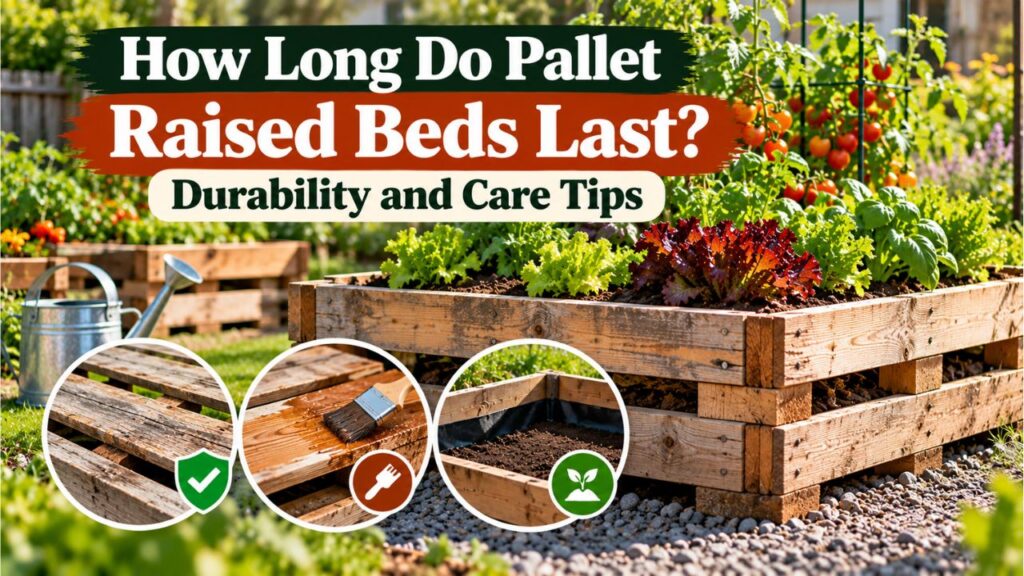
Most pallet raised beds should be considered temporary or medium-term garden structures rather than permanent installations.
According to the University of New Hampshire Extension’s raised bed gardening guidance, untreated wooden raised beds generally last three to five years, while beds made from naturally decay-resistant cedar or redwood may last ten years or longer.
Those figures describe wooden raised beds broadly, not a controlled lifespan test of shipping pallets. Pallet wood can deteriorate faster because of thinner boards, previous shipping damage, or prolonged soil contact.
Expected Lifespan by Pallet Wood Condition
| Pallet Raised Bed Condition | Expected Durability |
| Sound, untreated pallet wood | Roughly 3–5 years is a planning estimate |
| Thin or previously damaged pallet boards | May fail sooner |
| Pallet wood in consistently wet soil | Faster decay is likely |
| Well-drained location with sturdy construction | May remain usable longer |
| Pallets with existing rot or serious splitting | May be unsuitable from the beginning |
These are general expectations rather than guaranteed service lives.
A pallet garden bed in a dry climate may remain structurally sound longer than an identical bed in a region with frequent rainfall and high humidity.
Construction design also matters. A simple frame with soil pressing continuously against thin wooden slats may deteriorate differently from a reinforced frame built using thicker reclaimed pallet boards.
How Long Do Pallet Raised Beds Last in Wet Climates?
Pallet beds generally deteriorate faster in wet or humid conditions.
Wood-decay fungi become active when suitable moisture, oxygen, and temperature conditions are present.
The sections of wood touching damp soil are particularly vulnerable.
Rainwater can also accumulate around joints, nail holes, and areas where boards overlap.
A bed that remains wet for extended periods may develop soft spots and structural damage earlier than expected.
Good site drainage and regular inspection are especially important in regions with frequent rainfall.
How Long Do Pallet Beds Last in Dry Climates?
Dry conditions can slow moisture-related wood decay.
A pallet bed installed in a relatively dry location may remain usable for several growing seasons if the boards are sound and properly supported.
However, dry climates introduce other challenges.
Repeated expansion and contraction from moisture changes can contribute to splitting and loose joints.
Strong sunlight also weathers exposed wood surfaces.
Even in dry regions, irrigation keeps the inner faces of the boards in contact with moisture.
Therefore, a dry climate doesn’t eliminate the need for maintenance.
Why Do Pallet Raised Garden Beds Rot So Quickly?
Several features of shipping pallet construction make these beds more vulnerable to deterioration than raised beds built from thicker, durable lumber.
Thin Pallet Boards Have Less Material to Lose
Many shipping pallets use relatively thin boards designed to support loads during transportation.
These boards may be strong enough for their original purpose but aren’t necessarily ideal for holding heavy, moist garden soil over several years.
As decay develops, thin boards have less remaining material to maintain their strength.
A small amount of wood loss can create a noticeable weakness.
By comparison, a raised bed built from substantial lumber can sometimes tolerate limited surface weathering without losing its structural function.
The condition and thickness of the boards matter more than the fact that they originally came from pallets.
Constant Soil Contact Encourages Decay
The inner walls of a raised garden bed remain in contact with soil.
Even when the soil surface looks dry, deeper material may hold moisture.
Wood exposed to these conditions can absorb water repeatedly.
Over time, suitable moisture conditions allow decay organisms to break down the wood.
The lower edges of pallet boards are particularly vulnerable because they may experience both soil moisture and surface runoff.
Pallet Wood May Already Be Weathered
Used pallets often spend time in warehouses, trucks, storage yards, or outdoor loading areas.
They may arrive with:
- Existing cracks
- Splintered edges
- Loose nails
- Crushed corners
- Weathered surfaces
- Previous moisture damage
Reusing damaged wood reduces the amount of service life remaining.
Before building a raised bed, inspect each board rather than assuming the pallet is strong because it can still hold its original shape.
Poor Construction Increases Structural Stress
Raised bed walls must resist pressure from the growing medium.
As soil becomes wet, its weight increases.
Long, unsupported pallet boards may bend outward under this load.
Weak joints, rusty nails, and insufficient corner supports can cause the frame to separate before the wood has completely rotted.
A pallet raised bed can therefore fail from structural weakness even when some boards still appear usable.
Does Heat-Treated Pallet Wood Last Longer Outdoors?
Heat-treated pallet wood isn’t automatically more rot-resistant than ordinary untreated wood.
Heat treatment used for shipping pallets is primarily intended to control pests that could spread through international wood packaging.
It isn’t the same as pressure treatment with wood preservatives or specialized thermal modification intended to improve durability.
What Does HT Mean on a Pallet?
The marking HT indicates that the pallet underwent an approved heat-treatment process.
This treatment uses heat to control pests in the wood.
It doesn’t mean the pallet was chemically pressure-treated for long-term moisture and decay resistance.
As a result, a heat-treated pine pallet can still rot when used in a damp raised garden bed.
The wood species, thickness, condition, and exposure remain important.
What Do Other Pallet Stamps Mean?
The University of California Agriculture and Natural Resources’ guide to choosing pallets for raised beds explains several common markings and the precautions gardeners should take.
| Pallet Marking | Meaning | Vegetable Garden Consideration |
| HT | Heat-treated | Generally preferable when the pallet’s history is known |
| KD | Kiln-dried | Indicates drying, not proof of an approved pest heat treatment |
| DB | Debarked | Describes bark removal, not chemical safety |
| MB | Methyl bromide fumigation | Avoid for edible gardening |
| No readable marking | Treatment information unavailable | Avoid unless the origin and treatment can be reliably verified |
Important: An HT stamp only describes a treatment process. It doesn’t establish what the pallet previously transported.
A pallet may have been exposed to chemical spills, oils, pesticides, or other contaminants during use.
Avoid pallets with unknown histories, chemical odors, suspicious stains, or signs of contamination.
For a vegetable garden, clean pallets from a known source with appropriate treatment information are preferable to unidentified discarded pallets.
What Factors Affect the Lifespan of Pallet Raised Beds?
The same pallet design can perform differently depending on how it is built and maintained.
Wood Species
Pallets may contain pine, other softwoods, or hardwood species.
Different woods have different resistance to decay.
A naturally durable hardwood may perform better than a less decay-resistant softwood, although not every hardwood is resistant to rot.
Pallets aren’t always labeled by wood species.
Without reliable identification, it’s difficult to predict the material’s exact outdoor lifespan.
Board Thickness
Thicker boards generally offer more material to resist damage and wear.
Thin slats may split around fasteners and become structurally weak as decay progresses.
When dismantling pallets, select the strongest usable boards rather than using every piece.
Ground Contact
Wood resting directly against wet ground may absorb additional moisture.
The frame’s lower edges can deteriorate faster when surrounded by puddles or constantly damp mulch.
Keeping the supporting perimeter properly drained helps reduce prolonged moisture exposure.
Drainage Around the Bed
A raised bed in a poorly drained location may remain wet for extended periods.
Check whether rainwater collects around the frame.
The soil should retain enough water for plant growth while allowing excess moisture to move away.
An open-bottom bed over suitable garden soil usually provides a practical drainage arrangement.
Construction Quality
A properly assembled frame distributes soil pressure across its walls and supports.
Corner posts, reinforcement, and suitable fasteners help keep the bed stable.
Weak connections may fail even when the wood itself has not completely deteriorated.
How to Make Pallet Raised Beds Last Longer
You cannot stop untreated pallet wood from aging, but careful construction and maintenance can reduce avoidable deterioration.
Step 1: Select Strong, Undamaged Pallets
Start with pallets that have a known source and suitable treatment history.
Inspect the boards carefully.
Reject pieces with:
- Soft or crumbling wood
- Severe splitting
- Signs of established rot
- Chemical stains or unusual odors
- Large areas of damage
- Loose or badly weakened joints
When possible, choose thicker boards with fewer defects.
Don’t use a questionable pallet simply because it is free.
Step 2: Build a Reinforced Frame
Use sturdy corner posts and appropriate exterior-rated fasteners.
If the bed has long sides, install intermediate supports to reduce bowing.
Predrilling holes near the ends of thin boards can help prevent splitting.
Avoid relying only on old pallet nails that may already be loose or corroded.
Make sure the frame is square and sits on a stable foundation before filling it.
Step 3: Keep the Surrounding Ground Well Drained
Select a location where water doesn’t regularly collect.
Level the frame and address drainage problems before adding soil.
Avoid placing pallet boards in depressions that remain wet after rainfall.
If you’re using pavers or blocks to support parts of the frame, make sure the structure remains stable and doesn’t create large gaps through which soil can escape.
The bed still needs a suitable drainage path.
Step 4: Consider a Suitable Sidewall Liner
A liner attached to the inside walls may reduce direct soil contact with the wooden boards.
However, lining doesn’t guarantee additional years of service.
Moisture can collect between a liner and the wood if the installation prevents drying.
If using a liner:
- Choose a material suitable for the intended garden application.
- Attach it to the inside walls rather than automatically covering the entire bottom.
- Avoid blocking drainage.
- Prevent pockets where water can remain trapped.
- Inspect the wood periodically.
A liner may help manage direct contact with moist soil, but its effectiveness depends on the construction.
Step 5: Use Appropriate Exterior Wood Protection
An appropriate exterior wood finish may help reduce surface moisture absorption and weathering.
However, not every stain, sealant, or preservative is suitable for a vegetable garden.
Choose a product whose manufacturer permits the intended use, and follow its application, curing, and reapplication instructions.
Don’t assume a product is suitable for food-growing areas simply because it is labeled natural or water-based.
Exterior coatings also cannot restore rotten or structurally damaged wood.
Step 6: Prevent Mulch From Accumulating Against the Frame
Organic mulch can help conserve soil moisture.
However, thick piles of consistently wet mulch against wooden sidewalls may prolong moisture exposure.
Keep surrounding pathways reasonably clear and avoid burying the exterior lower boards beneath damp debris.
You don’t need to remove useful mulch from the planting area.
The goal is simply to prevent unnecessary moisture accumulation around the wood.
Step 7: Inspect and Repair the Frame Each Season
Check the frame before major planting periods.
Look for soft wood, loose connections, cracks, and outward bowing.
Replace weak boards before they fail under the weight of the soil.
A small repair early in the season is usually easier than dealing with a collapsed sidewall after vegetables have developed extensive roots.
How Can You Tell When a Pallet Raised Bed Is Rotting?
Early deterioration isn’t always obvious from the outside.
Wood may look weathered while remaining strong, or it may appear intact but have extensive decay near the soil line.
Soft or Spongy Wood
One of the clearest warning signs is wood that becomes unusually soft.
Use a screwdriver or similar tool to gently probe a suspicious area.
If the tool easily penetrates wood that should be solid, decay may have reduced its strength.
Pay particular attention to the bottom edges and corners.
Crumbling or Breaking Boards
Rotten wood may crumble, break into small pieces, or separate along damaged fibers.
These changes suggest that the material is losing structural integrity.
A board that breaks under light pressure shouldn’t be relied upon to hold garden soil.
Bowing or Leaning Sidewalls
A sidewall that bends noticeably outward may be struggling to resist soil pressure.
Possible causes include:
- Weakened pallet boards
- Loose corner connections
- Insufficient reinforcement
- Splitting near fasteners
If the frame is leaning significantly, support it and address the problem before continuing regular use.
Loose or Rusting Fasteners
Outdoor moisture can corrode ordinary nails and screws.
Rust alone doesn’t prove that a fastener has failed, but severe corrosion or movement around the connection can reduce its reliability.
Replace damaged hardware with suitable exterior-rated fasteners.
Persistent Dampness and Fungal Growth
Mold or other fungal growth may appear on damp wooden surfaces.
Surface discoloration alone doesn’t prove structural decay.
However, persistent moisture combined with soft wood, crumbling fibers, or spreading damage deserves attention.
Improve moisture conditions and inspect the affected boards.
Can You Repair a Rotten Pallet Raised Bed?
Yes. Small sections of damaged pallet wood can often be repaired when the rest of the frame remains sound.
However, extensive structural decay may make replacement more sensible.
Replacing a Damaged Board
If only one board is weakened:
- Remove soil pressure from the damaged section as necessary.
- Support the surrounding frame.
- Remove the old board carefully.
- Inspect nearby posts and fasteners.
- Install a sound replacement board.
- Secure it with suitable exterior-rated screws.
- Check that the frame is stable before restoring the soil.
Avoid disturbing established plant roots unnecessarily.
If repairs would require removing most of the soil, it may be easier to work between growing seasons.
Reinforcing Weak Corners
Loose corners can sometimes be strengthened with new posts, brackets, or suitable fasteners.
However, attaching a new bracket to rotten wood doesn’t create a reliable connection.
The material receiving the fasteners must still be structurally sound.
When the Entire Frame Should Be Replaced
Replacement is generally the better choice when:
- Several boards have extensive rot.
- Corner posts are no longer sound.
- Sidewalls are visibly collapsing.
- Fasteners cannot hold securely.
- Repairs would require replacing most of the structure.
A frame that cannot safely contain wet soil shouldn’t be kept in service simply to avoid purchasing replacement materials.
Do Pallet Raised Beds Last Longer With a Bottom?
Adding a wooden bottom doesn’t automatically increase the lifespan of a pallet raised bed.
In some designs, it creates additional wood surfaces that remain exposed to moisture.
Open-Bottom Pallet Raised Beds
An open-bottom bed allows roots to extend into suitable native soil.
It also allows water to move downward when the underlying ground drains properly.
This design avoids placing a full wooden pallet floor beneath constantly moist soil.
However, the lower edges of the sidewalls still need protection from persistent dampness.
Pallet Beds With Wooden Bottoms
A pallet planter with a wooden floor can be useful when built as a properly supported, elevated container.
However, its bottom boards may remain wet after irrigation.
The floor must also support the weight of moist soil and mature plants.
Thin pallet slats may require substantial reinforcement.
Provide suitable drainage openings and check the structural capacity before filling.
For a conventional garden bed placed directly on healthy ground, an open-bottom frame is generally simpler.
Pallet Raised Beds vs. Other Wood Raised Beds: Which Lasts Longer?
Pallet wood is economical, but purpose-built lumber may provide better long-term durability.
| Raised Bed Material | General Durability |
| Reclaimed untreated pallet wood | Often a short-term option; approximately 3–5 years if sound, sometimes less |
| New untreated pine lumber | Commonly around 3–5 years |
| Cedar or redwood lumber | Often 10 years or longer |
| Suitable modern pressure-treated lumber | Generally more decay-resistant than untreated softwood |
These are broad expectations rather than guaranteed lifespans. Wood thickness, species, climate, treatment, and construction influence actual service life.
Pallet Wood vs. Untreated Pine
Pallets and untreated pine lumber may contain similar types of wood.
The main difference is often the condition and dimensions of the boards.
New lumber can be selected in suitable thicknesses and lengths.
Reclaimed pallet boards may already contain damage or weakened fastener holes.
For a long-term garden, properly sized new lumber may offer more predictable structural performance.
Pallet Wood vs. Cedar
Suitable cedar heartwood has natural decay resistance.
That makes it a practical choice for gardeners who want an untreated wooden raised bed with longer service potential.
Cedar generally costs more than repurposed pallet wood.
However, fewer repairs and less frequent replacement may justify the additional expense.
Pallet Wood vs. Pressure-Treated Lumber
Modern pressure-treated lumber is designed to resist decay and insect damage.
However, gardeners should use only treatment types suitable for the intended application and follow the manufacturer’s guidance.
Old or unidentified treated wood is not a suitable substitute for verified garden-safe materials.
For edible gardening, some people prefer untreated cedar or other naturally decay-resistant wood to avoid preservative-related concerns.
Are Pallet Raised Beds Worth Building?
Pallet raised beds can be worthwhile when you have access to sound, appropriately sourced wood and want an inexpensive DIY project.
They are especially practical for:
- Small vegetable gardens
- Temporary growing areas
- Short-term gardening projects
- Learning basic raised bed construction
- Reusing suitable materials rather than discarding them
However, their limitations deserve consideration.
Pallet boards may require careful dismantling, inspection, reinforcement, and more frequent replacement.
Removing old nails and cutting damaged boards also takes time.
A free pallet isn’t necessarily a free garden bed once fasteners, supports, soil, and labor are included.
If you want a raised garden bed to remain in the same location for a decade or longer with limited structural maintenance, purpose-built durable lumber, metal, or another long-lasting material may be more practical.
When Should You Replace a Pallet Raised Bed?
Don’t wait for the entire frame to collapse before considering replacement.
Inspect the bed at the end of each growing season, particularly if it has already been outdoors for several years.
If the frame is stable and the boards remain structurally sound, continued use may be reasonable.
If the lower boards are deteriorating, plan repairs before the next growing season.
For beds approaching the three-to-five-year range, pay closer attention to sections that stay damp or support the greatest soil pressure.
The wood’s condition is more important than its age alone.
A sound five-year-old pallet bed may remain usable, while a badly weakened two-year-old bed may need replacement.
When rebuilding, you can often retain the existing growing soil if it remains healthy and hasn’t been contaminated by unsuitable materials.
Conclusion
How long do pallet raised beds last? For sound frames built from untreated pallet wood, approximately 3–5 years is a reasonable planning estimate, although thin, damaged, or frequently wet boards may fail sooner.
Their lifespan depends on wood quality, weather exposure, drainage, construction strength, and maintenance.
Using suitable pallets, reinforcing the frame, managing moisture, and replacing weakened boards can help extend the usable life of the structure.
For vegetable gardening, also verify pallet treatment markings and previous use. Heat-treated pallets with a known, clean history are preferable to unmarked or potentially contaminated materials.
Pallet raised beds are a practical low-cost option for short-term gardening. If long-term durability is the main goal, naturally rot-resistant lumber or another purpose-built raised bed material is generally a better investment.
FAQs About How Long Do Pallet Raised Beds Last
Can Pallet Raised Beds Last 10 Years?
It’s possible for an unusually well-protected pallet structure to remain usable for an extended period, but ten years shouldn’t be the expected lifespan of an ordinary untreated softwood pallet bed.
For a garden intended to last that long, suitable cedar, redwood, or another durable material is generally more dependable.
Do Heat-Treated Pallets Rot in Raised Beds?
Yes. Heat-treated pallets can rot when exposed to prolonged moisture.
The HT marking refers to a pest-control treatment, not a preservative treatment designed to prevent outdoor wood decay.
Can I Use Old Pallets for a Vegetable Raised Bed?
Yes, if the pallets are structurally sound and their treatment and previous use can be reliably verified.
Choose suitable heat-treated pallets and avoid wood with unknown chemical exposure, suspicious stains, or methyl bromide treatment markings.
Will Painting Pallet Wood Make a Raised Bed Last Longer?
A suitable protective exterior finish may help reduce weathering and moisture absorption.
However, paint doesn’t make untreated wood permanently rot-proof. Choose a finish appropriate for the intended garden use and follow the manufacturer’s application instructions.
Does Lining a Pallet Raised Bed Prevent Rot?
A properly selected sidewall liner may reduce direct soil contact, but it doesn’t completely prevent moisture damage.
Water can still reach the wood through rainfall, joints, and condensation. Poorly installed liners may also trap moisture.
Can I Leave a Pallet Raised Bed Outside All Winter?
Yes. Pallet raised beds can remain outdoors through winter when the structure is stable and suitable for local weather conditions.
Inspect the boards, remove trapped debris, and check drainage before freezing or prolonged wet weather. Replace damaged supports before the next planting season.
Which Part of a Pallet Raised Bed Rots First?
The lower boards, corners, and areas that stay in contact with wet soil are often among the first places to deteriorate.
However, damage can also begin around cracked boards, fastener holes, and joints that trap moisture. Regular inspection helps identify weak sections before the frame fails.

I’m Maya L. Greenwood, a lifelong plant lover who believes anyone can grow something beautiful with the right guidance. After years of testing soil mixes, pruning methods, irrigation tricks, and pest-safe solutions, I started EasyGardenTips.com to turn hard-won lessons into step-by-step advice. From seed starting and container gardens to composting and seasonal checklists, my goal is to make gardening simple, sustainable, and fun.