What to Put on the Ground Around Raised Beds: Best Path Ideas
Wood chips are one of the best materials to put on the ground around raised beds because they help prevent muddy paths, suppress weeds, and provide a comfortable, affordable walking surface. Gravel, brick or concrete pavers, and compacted crushed stone are also practical options when you want a firmer or more permanent garden pathway.
The ground between raised beds is easy to overlook until rain creates muddy walkways, weeds spread along the frames, or loose soil sticks to your shoes. Leaving pathways uncovered can increase maintenance and make planting, watering, and harvesting less convenient.
The right ground cover depends on your garden’s drainage, how frequently you use the paths, the surrounding landscape, and your budget. Organic materials are generally easier to install, while properly constructed hard surfaces can provide better long-term stability.
In this article, I compare the best ground covers for raised bed pathways, including wood chips, gravel, pavers, and natural alternatives. I also explain how to prepare the ground, prevent weeds and mud, choose comfortable walkway widths, and maintain the surrounding area so your raised bed garden stays accessible and organized.
What to Put on the Ground Around Raised Beds: Best Materials Compared
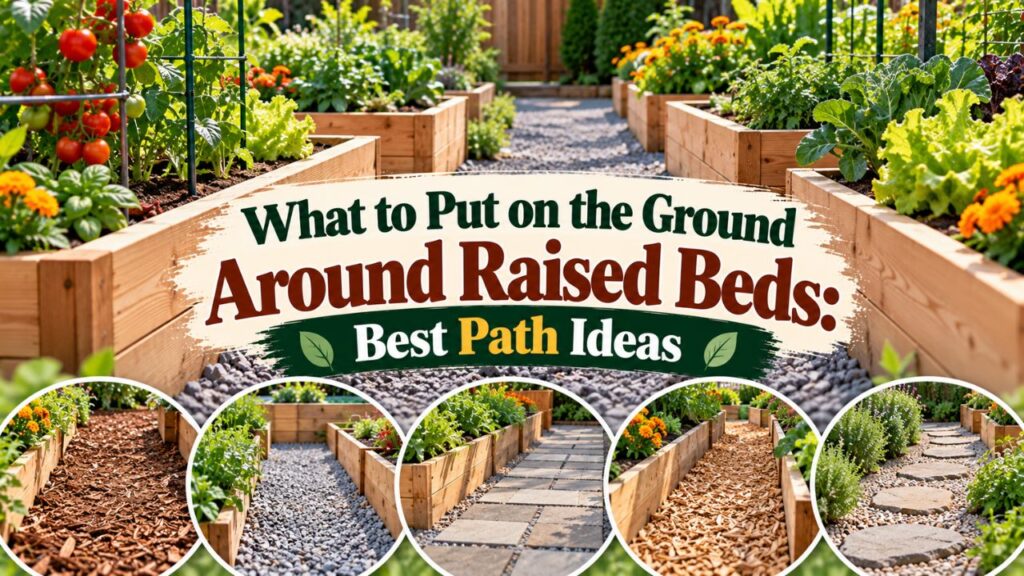
The best ground cover should provide a stable walking surface, reduce unwanted vegetation, and allow rainwater to drain appropriately.
Different materials perform better in different situations.
| Ground Cover | Main Advantage | Main Limitation | Best Use |
| Wood chips | Affordable, comfortable, and weed-suppressing | Need periodic replenishment | Most backyard vegetable gardens |
| Shredded bark | Natural appearance and good ground coverage | Gradually decomposes | Decorative garden pathways |
| Crushed gravel | Durable and can form a firm surface | Requires proper installation | Frequently used pathways |
| Pea gravel | Attractive and allows water through | Loose stones shift underfoot | Decorative, low-traffic paths |
| Brick or pavers | Stable, cleanable walking surface | Higher installation cost | Permanent garden layouts |
| Decomposed granite | Compact, relatively smooth finish | May erode or soften without proper construction | Natural-looking firm pathways |
| Straw or pine needles | Easy to spread and inexpensive in some areas | Decompose or move easily | Temporary garden paths |
| Grass or low ground cover | Green, natural appearance | Requires trimming and upkeep | Spacious gardens |
For most gardeners who want a simple, low-cost solution, wood chips are an excellent starting point.
However, if you regularly move a wheelbarrow or need a smooth path for mobility equipment, properly installed pavers or another firm, stable surface may be more practical.
1. Wood Chips Around Raised Garden Beds
Wood chips are one of the most useful materials for covering the ground around raised vegetable beds.
They provide a natural-looking surface while reducing direct contact between shoes and wet soil.
Wood chips also block some sunlight from reaching weed seeds, helping reduce weed growth when applied at an appropriate depth.
The University of Maine Cooperative Extension’s guidance on arborist wood chips specifically identifies permanent walkways and spaces between raised beds as good places to use wood chips for weed suppression.
Why Wood Chips Work Well Between Raised Beds
Wood chips offer several practical advantages:
- They help reduce muddy conditions after rainfall.
- They provide a relatively comfortable surface for walking and kneeling.
- They suppress many annual weeds when applied thickly.
- They can be spread without specialized tools.
- They allow water to move through the surface.
- They create a natural appearance around wooden or metal beds.
As the chips gradually decompose, they need replenishment.
This makes them less permanent than stone or pavers, but installation and repairs are generally easier.
How Thick Should Wood Chips Be Around Raised Beds?
For many garden pathways, a starting layer of approximately 3–4 inches of coarse wood chips provides useful coverage.
The ideal depth depends on chip size, soil conditions, and existing weed pressure.
Before spreading them, remove persistent weeds and level the pathway.
If you’re converting a grassy area, plain overlapping cardboard may help suppress the existing vegetation beneath the chips.
Keep the finished pathway low enough that the chips don’t spill into the raised bed or block drainage openings.
Can You Use Fresh Wood Chips Around Raised Beds?
Yes. Fresh arborist wood chips can be used on pathways surrounding raised beds.
Their high carbon content isn’t generally a concern when they remain on the surface of the walkway.
However, avoid mixing large amounts of fresh wood chips directly into the vegetable bed’s growing soil.
Decomposition of incorporated woody material can temporarily reduce nitrogen availability near that material.
Best use: Permanent or semi-permanent paths where affordable installation, comfortable walking, and weed control are priorities.
2. Shredded Bark Mulch Around Raised Beds
Shredded bark is another practical organic ground cover.
It offers many of the same advantages as wood chips but may produce a more uniform, decorative appearance.
Bark mulch is useful around raised beds located near flower gardens, patios, or landscaped yards.
Benefits of Bark Mulch Pathways
Shredded bark can help:
- Cover bare ground.
- Reduce soil splash during rainfall.
- Suppress some weed growth.
- Create a visually consistent pathway.
- Keep garden paths more comfortable to walk on.
The texture matters.
Finely shredded bark can form a relatively cohesive layer, while large bark nuggets may move more easily underfoot.
Some bark products also float or shift during heavy rain.
For a frequently used vegetable garden pathway, medium or coarse shredded bark is often more practical than very large decorative nuggets.
Wood Chips vs. Bark Mulch
Both materials are suitable for paths around raised beds.
Wood chips are often the more economical choice when local tree services or municipal programs provide suitable arborist chips.
Bagged bark mulch may be more convenient when you want a specific color or consistent appearance.
Neither material permanently eliminates weeds.
Organic debris can collect on the surface, and new weed seeds may germinate over time.
Best use: Raised bed gardens where appearance matters alongside comfortable walking and weed suppression.
3. Gravel Around Raised Garden Beds
Gravel is a durable option for gardeners who want a more permanent pathway.
Unlike wood chips, gravel doesn’t decompose and doesn’t require routine replacement for that reason.
However, different types of gravel behave differently when walked on.
Crushed Gravel for Stable Raised Bed Paths
Angular crushed stone can lock together when properly compacted.
This helps create a firmer walking surface than loose, rounded stone.
A well-constructed crushed gravel pathway may work well for:
- Wheelbarrow access.
- Frequently used garden routes.
- Areas where organic mulch would need frequent replenishment.
- Permanent paths between raised bed rows.
The installation should include appropriate base preparation, grading, and compaction.
Simply spreading a thin layer of gravel over soft, muddy ground may not solve the underlying problem.
Pea Gravel Around Raised Beds
Pea gravel consists of small, rounded stones.
It creates an attractive finish and allows water to pass through spaces between the stones.
However, its rounded shape means the stones can shift when stepped on.
This can make pushing a loaded wheelbarrow difficult.
Loose pea gravel is also less suitable for wheelchairs, walkers, and other wheeled mobility equipment than a smooth, stable surface.
If you prefer pea gravel, use appropriate landscape edging to keep it within the path.
Does Gravel Stop Weeds?
Gravel can reduce exposed soil, but it doesn’t permanently prevent weed growth.
Windblown seeds may germinate in dust and organic debris that accumulates between stones.
Persistent weeds can also grow through poorly prepared paths.
Proper ground preparation, appropriate material depth, and ongoing maintenance are still necessary.
Best use: Permanent pathways where durability is more important than softness or ease of installation.
4. Bricks and Pavers Around Raised Beds
Bricks and concrete pavers provide a defined, long-lasting garden path when installed over a suitable base.
They work particularly well in organized kitchen gardens with several raised beds.
Pavers can create straight walkways, curved paths, or larger working areas where you need to stand, kneel, or move garden equipment.
Benefits of Paved Raised Bed Walkways
A properly installed paved surface offers:
- A firm walking area.
- Convenient wheelbarrow movement.
- Less direct contact with muddy soil.
- Easy sweeping and cleaning.
- A consistent layout between beds.
- A durable surface that doesn’t decompose.
Pavers are especially useful around raised beds that receive frequent attention.
For example, a paved pathway between two long vegetable beds can make harvesting and moving compost easier than walking through loose gravel.
How to Install Pavers Between Raised Beds
A basic installation involves:
- Marking the intended pathway.
- Removing grass, weeds, and unsuitable surface material.
- Excavating to the required depth.
- Preparing and compacting an appropriate base.
- Leveling the bedding layer.
- Placing the pavers in the desired pattern.
- Finishing joints and edges according to the product instructions.
The base design depends on soil conditions, climate, and the intended loads.
In regions with freezing winters, inadequate foundations may allow pavers to shift during freeze-thaw cycles.
Also, make sure the finished pathway doesn’t direct runoff toward a house foundation or trap water beside raised bed frames.
Are Pavers Better Than Gravel?
Pavers generally provide a more stable surface, particularly for wheeled equipment.
Gravel is often easier to install around irregular garden layouts and may have a lower initial material cost.
Pavers require more preparation but can be easier to keep clean when correctly installed.
Best use: Permanent raised bed gardens where stable footing, accessibility, and a tidy appearance are priorities.
5. Decomposed Granite Around Raised Beds
Decomposed granite is made from weathered granite particles and is often used for natural-looking landscape pathways.
Its appearance falls somewhere between fine gravel and compacted soil.
When appropriately installed and compacted, certain decomposed granite products can create a relatively firm surface.
Advantages of Decomposed Granite
It can provide:
- A natural, earthy appearance.
- A relatively smooth walking surface.
- Compatibility with modern and rustic garden designs.
- Less loose stone movement than rounded pea gravel when compacted properly.
However, performance depends on the specific material, installation method, drainage, and climate.
Limitations in Wet Gardens
Unstabilized decomposed granite can soften or erode under heavy rain or concentrated water flow.
It may also require occasional regrading or replenishment.
Products containing suitable stabilizers may perform differently, but installation instructions should be followed carefully.
Avoid using it as a quick covering over a path that already has serious drainage problems.
Best use: Gardeners seeking a compacted, natural-looking pathway with suitable site drainage.
6. Straw and Pine Needles Around Raised Beds
Straw and pine needles are lightweight organic materials that can cover paths between raised beds.
They may be especially convenient when already available on the property.
However, they generally require more frequent attention than wood chips or stone.
Using Straw Between Raised Beds
Clean, seed-free straw can create a temporary walking surface and reduce soil splash.
It is easy to spread and can be useful during a single growing season.
Over time, straw may:
- Decompose and become thinner.
- Blow away in exposed locations.
- Become slippery or matted when wet.
- Contain unwanted grain seeds if poorly sourced.
- Require frequent topping up.
Straw is often better for temporary pathways than for heavily used permanent routes.
Using Pine Needles as Path Mulch
Pine needles, sometimes sold as pine straw, can form a loose ground-covering layer.
They may work well in gardens surrounded by pine trees.
Pine needles are lightweight and easy to distribute, although they may shift or wash away depending on the slope and rainfall.
They are generally more useful for low-traffic paths than areas where loaded carts are moved regularly.
Best use: Seasonal garden paths where suitable natural materials are already available.
7. Grass or Living Ground Cover Around Raised Beds
Grass is another option, particularly in large backyard gardens where raised beds are installed directly into an existing lawn.
It creates a green appearance without requiring a separate pathway material.
However, living vegetation needs maintenance.
Keeping Grass Between Raised Beds
Grass paths can work when:
- The spaces between beds are wide enough to mow.
- The ground drains adequately.
- Grass can tolerate the available sunlight.
- You don’t mind regular trimming.
- The garden has relatively low foot traffic.
Grass may become muddy or worn where people repeatedly walk in the same area.
It can also spread into raised beds, especially around frames with gaps or exposed soil.
Low-Growing Plants as Pathway Cover
Some gardeners use low-growing plants such as suitable clovers or creeping ground covers between beds.
These can create an attractive planted pathway in appropriate conditions.
However, not every ground-cover plant tolerates foot traffic.
Some species spread aggressively and may invade the raised beds.
Choose noninvasive plants suited to your region, sunlight, moisture conditions, and expected traffic.
Best use: Spacious gardens where regular mowing or trimming is acceptable.
How to Prepare the Ground Around Raised Beds Before Adding Cover
Proper preparation is often more important than the surface material itself.
A poorly prepared path can develop weeds, mud, or uneven areas even after being covered with expensive materials.
The following process is suitable for many organic-mulch pathways.
Step 1: Remove Grass and Persistent Weeds
Clear the area between and around the raised beds.
For established weeds with spreading underground roots, remove as much of the root system as practical.
Cutting tall grass and immediately covering it with a thin mulch layer may not stop vigorous regrowth.
Pay particular attention to persistent perennial weeds.
Step 2: Level the Walkway
Remove large stones, roots, and uneven mounds that could create tripping hazards.
Aim for a reasonably level walking surface with appropriate drainage.
Avoid digging beneath the support of the raised bed walls.
For a sloping garden, plan a stable route that won’t direct water into the beds or cause erosion.
Step 3: Choose a Weed-Suppression Method
For organic paths, plain cardboard can be a practical temporary barrier when converting existing grass.
Remove plastic tape, staples, and other non-paper materials.
Overlap the cardboard pieces so grass cannot easily grow through gaps.
Wet the cardboard lightly to help it settle against the ground.
Avoid using waterproof plastic sheeting as a universal pathway underlayment.
Plastic may obstruct infiltration and contribute to unwanted runoff or puddling.
Step 4: Spread the Ground Cover
For wood chips, distribute the material evenly across the path.
A starting depth of approximately 3–4 inches is useful for many garden walkways.
For gravel or pavers, prepare the appropriate base and install the surface according to the material’s construction requirements.
Do not assume the same layering method works for every ground cover.
Step 5: Secure the Pathway Edges
Use suitable edging where necessary to keep material from spreading.
Options may include metal edging, stone borders, or other landscape products.
Keep loose gravel from entering the planting soil.
For wooden raised bed frames, avoid burying the lower boards excessively in damp mulch.
Step 6: Inspect the Path After Rain
Check whether water drains appropriately.
Look for:
- Standing water.
- Washed-out mulch.
- Exposed cardboard.
- Shifting gravel.
- Uneven walking surfaces.
- Water collecting against the raised bed walls.
Correct drainage or stability problems before adding more material.
Should You Put Landscape Fabric Under Raised Bed Pathways?
Landscape fabric is optional. It may be useful for certain pathways, but it isn’t necessary beneath every type of ground cover.
The correct choice depends on the surface material and the maintenance you prefer.
Landscape Fabric Under Gravel
A suitable permeable landscape geotextile can help separate gravel from the soil beneath it.
This may reduce the amount of stone that sinks into soft ground.
However, the fabric must be appropriate for the application and installed over a prepared base.
It doesn’t permanently stop weeds because seeds can germinate in debris accumulating on top.
Avoid substituting ordinary waterproof plastic for a permeable separation material.
Landscape Fabric Under Wood Chips
Fabric beneath wood chips is less attractive as a long-term strategy.
As the chips decompose, organic material may collect on top of the fabric.
Weeds can establish in this material, and their roots may become entangled in the barrier.
Removing old fabric later can be difficult.
For a natural wood-chip pathway, suppressing the original vegetation and replenishing the chips is often simpler.
Cardboard vs. Landscape Fabric
| Feature | Plain Cardboard | Landscape Fabric |
| Biodegradable | Yes | Usually no |
| Initial weed suppression | Useful for smothering vegetation | Can block some weed growth |
| Long-term separation | No | Can separate gravel from soil |
| Best application | Organic mulch pathways | Selected gravel installations |
| Main limitation | Decomposes over time | Weeds and roots may accumulate around it |
The University of Maryland Extension’s raised bed gardening guidance recommends protecting permanent garden pathways with materials such as wood chips, shredded bark, bricks, pavers, or heavyweight landscape fabric.
The appropriate method depends on how permanent the pathway should be and whether it needs a separate structural base.
What to Put on the Ground Around Raised Beds to Prevent Mud
Mud usually develops when the surface remains exposed, poorly drained, or unable to handle regular foot traffic.
Covering bare soil helps, but the best solution also depends on why water accumulates.
For Occasional Mud After Rain
Wood chips or shredded bark are often sufficient.
A reasonably thick layer separates shoes from the wet soil underneath.
This makes it easier to walk through the garden without carrying mud into nearby paths or the house.
For Frequently Used Wet Pathways
A properly constructed crushed-stone pathway may provide better long-term stability.
However, the base must be designed for the existing ground conditions.
Loose gravel placed directly into deep mud can sink and mix with the soil.
It may be necessary to correct grading or drainage before building the path.
For Areas With Standing Water
Ground cover alone won’t solve persistent ponding.
Investigate whether the water comes from:
- Poorly graded ground.
- Downspout discharge.
- Irrigation runoff.
- Compacted soil.
- Water flowing from higher surrounding areas.
- An obstructed drainage route.
Correct the source where practical.
Avoid directing concentrated runoff into vegetable beds or toward nearby structures.
For Sloped Raised Bed Gardens
On a slope, loose mulch or gravel may wash downhill during heavy rain.
Stable pavers, appropriately constructed steps, or paths with suitable retaining edges may be better choices.
For steep slopes, professional landscape guidance may be needed to manage drainage and prevent erosion.
How Wide Should Paths Be Around Raised Garden Beds?
Pathway width affects how comfortably you can plant, weed, harvest, and move equipment.
A narrow path may save garden space, but it can make daily maintenance inconvenient.
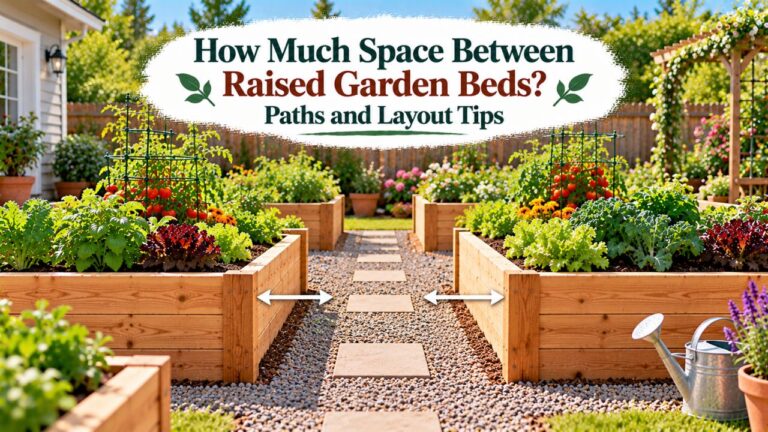
Two-Foot-Wide Paths for Basic Access
Approximately 24 inches is a practical starting width for many paths used mainly on foot.
It generally provides space to stand and work beside a raised bed.
However, narrow paths may become uncomfortable when carrying buckets or moving garden tools.
Three- to Four-Foot-Wide Paths for Equipment
Wider paths are useful when you regularly move wheelbarrows, garden carts, or other equipment.
Approximately 36–48 inches may provide more comfortable access, depending on the equipment.
Measure the actual width of your wheelbarrow or cart before deciding.
Also consider where you’ll need to turn around or stop beside a bed.
Accessible Raised Bed Pathways
For users with wheelchairs, walkers, or other mobility equipment, the surface should be firm, stable, and appropriately wide.
Loose pea gravel and deep wood chips may make wheeled movement difficult.
Smooth pavers or other properly constructed stable surfaces are often more suitable.
Path width, turning space, slope, and transitions should be designed for the equipment and user. Where accessibility standards apply, follow the relevant requirements.
How Much Ground Cover Do You Need Around Raised Beds?
Calculate the amount based on the pathway area and intended material depth.
For a rectangular pathway:
Volume (cubic feet) = Length (feet) × Width (feet) × Depth (feet)
For example, consider an 8-foot-long, 2-foot-wide wood-chip pathway.
If you want a layer 3 inches deep:
8 × 2 × (3 ÷ 12) = 4 cubic feet
That’s equivalent to two bags containing 2 cubic feet each.
For multiple pathways, calculate each section separately and combine the totals.
Ground Cover Quantities for a 2-Foot-Wide, 8-Foot-Long Path
| Material Depth | Required Volume |
| 2 inches | 2.67 cubic feet |
| 3 inches | 4 cubic feet |
| 4 inches | 5.33 cubic feet |
These are geometric volume estimates.
Loose material may settle, and gravel or other compacted products may require additional quantity depending on installation.
For pavers, calculate the surface area in square feet and allow for cuts, joints, and the selected laying pattern.
How to Keep Raised Bed Pathways Weed-Free
No ground-cover material guarantees permanent weed prevention.
Wind, birds, soil disturbance, and nearby vegetation can introduce new seeds.
However, consistent maintenance can keep weed problems manageable.
Remove Weeds Before They Set Seed
Inspect pathways regularly during the growing season.
Pull young weeds before they develop substantial roots or produce seeds.
Small weeds are generally easier to remove than established perennial plants.
Replenish Organic Mulch
Wood chips and bark slowly decompose.
As the layer becomes thinner, more light can reach the ground and additional weeds may establish.
Top up the surface when coverage becomes inadequate.
You don’t necessarily need to remove the old chips before adding more.
Prevent Grass From Creeping Into the Paths
Grass along the outside edge of raised beds can spread into garden pathways.
Install suitable edging where necessary and trim encroaching vegetation before it becomes established.
For aggressive spreading grasses, ongoing root control may be needed.
Clean Debris From Gravel and Pavers
Leaves, soil, and decaying plant material can accumulate between stones or paving joints.
These deposits may provide a place for weed seeds to germinate.
Remove excess debris periodically.
Inspect joints and edges for developing weeds rather than allowing large plants to establish.
Ground Covers to Avoid Around Raised Garden Beds
Some materials may create unnecessary problems when used as the main walkway surface.
Bare Soil in Frequently Used Paths
Bare soil is inexpensive, but it can become muddy after rain and allow weeds to establish.
Frequent walking also compacts the exposed ground.
A protective surface generally makes a permanent garden easier to maintain.
Waterproof Plastic Sheeting
Plastic sheeting can block plant growth beneath it, but it may also prevent water from soaking into the ground.
Depending on grading, water may collect on top or flow into unwanted areas.
For ordinary raised bed paths, a permeable or organic solution is usually more practical.
Very Loose Gravel for Wheelbarrow Routes
Deep, rounded gravel can shift under wheels.
This makes pushing heavy loads more difficult and may create unstable footing.
Use an appropriately designed compacted surface where equipment access is important.
Unknown or Contaminated Recycled Materials
Avoid using materials that may contain hazardous residues.
Examples include unidentified industrial waste, chemically contaminated wood chips, or crushed materials of unknown origin.
For an edible garden, choose ground-cover products from reputable sources.
Thick Layers of Fine Sawdust
Fine sawdust can become compacted or matted when wet.
It may also blow around when dry.
Although sawdust can have appropriate horticultural uses, coarse wood chips are generally more practical for a permanent walking path.
How to Maintain the Ground Around Raised Beds
A well-designed pathway should need less maintenance than bare ground, but occasional care is still necessary.
Check the Pathways Each Growing Season
Inspect the surface for settling, erosion, weeds, and uneven areas.
Replenish organic materials where needed.
For gravel and pavers, check whether the base or edging has shifted.
Maintain Proper Drainage
After heavy rain, inspect how water moves across the garden.
If water collects beside raised bed frames, correct the cause rather than repeatedly adding mulch.
Persistent moisture may shorten the lifespan of some wooden materials and make paths uncomfortable or unsafe.
Keep Pathways Clear
Remove unused tools, hoses, plant debris, and other obstacles.
Keep irrigation lines secured so they don’t create tripping hazards.
If vegetables spread beyond their beds, prune or support them where appropriate to maintain usable walking space.
Avoid Letting Mulch Build Up Against Wood Frames
Organic mulch can remain damp for extended periods.
Avoid piling thick layers directly against wooden bed walls, especially where drainage is limited.
Leave the framing visible enough to inspect for deterioration and maintain the intended path level.
Which Ground Cover Is Best for Your Raised Bed Garden?
The most suitable choice depends on how you use the garden.
For most backyard vegetable gardens: Coarse wood chips are a practical first choice because they’re relatively inexpensive, easy to apply, and useful for reducing mud and weeds.
For a permanent, high-traffic garden: Properly installed crushed stone or pavers may provide better long-term stability.
For a decorative raised bed layout: Shredded bark, brick, or stone can create an attractive, organized appearance.
For a garden with wheelbarrow or mobility access: Choose a firm, stable surface and provide enough pathway width for safe movement.
For a temporary or low-budget garden: Suitable straw, pine needles, or locally available arborist wood chips may minimize upfront expenses.
In every case, the condition of the underlying ground matters. Even a durable material can perform poorly if placed over unstable soil without appropriate preparation.
Conclusion
Deciding what to put on the ground around raised beds depends on your priorities for weed control, drainage, comfort, cost, and long-term maintenance.
Wood chips are an excellent all-around option for many home vegetable gardens. They reduce muddy conditions, suppress weeds, and create comfortable pathways without complicated installation.
Gravel and compacted crushed stone provide more permanent alternatives, while brick and pavers work well when you want a stable, cleanable surface. Bark mulch, straw, and living ground covers are also useful in suitable situations.
For most gardeners starting with a few raised beds, I recommend preparing the pathways, removing persistent weeds, and adding a generous layer of coarse wood chips. If the paths experience heavy traffic or require reliable wheeled access, consider a properly constructed firm surface instead.
FAQs About What to Put on the Ground Around Raised Beds
What Is the Cheapest Ground Cover for Raised Bed Pathways?
Locally available arborist wood chips are often among the least expensive options.
Some tree services and municipal programs provide suitable chips at low cost or without a material charge.
Straw and pine needles may also be economical when already available, although they generally require more frequent replenishment.
Is Mulch or Gravel Better Around Raised Beds?
Mulch is usually easier and less expensive to install, while gravel offers greater long-term durability.
Wood chips provide comfortable walking conditions and natural weed suppression.
Gravel is useful for permanent paths but requires suitable preparation and may be less comfortable when the stones are loose.
Should I Put Cardboard Under Wood Chips Between Raised Beds?
Cardboard can help smother existing grass and weeds before applying wood chips.
Use plain, non-waxed cardboard with tape and labels removed. Overlap the pieces and cover them promptly with suitable mulch.
Cardboard decomposes over time, so the mulch layer will still need maintenance.
How Do I Keep Grass From Growing Between Raised Beds?
Remove persistent grass before installing the pathway surface.
A suitable ground cover can suppress new growth, while landscape edging may help limit grass spreading from surrounding lawns.
Inspect the borders regularly and remove unwanted vegetation before it becomes established.
Can I Leave Grass Around My Raised Garden Beds?
Yes. Grass can work around raised beds when there is enough space for mowing and the ground drains adequately.
However, grass paths may become worn or muddy under frequent traffic, and spreading grasses may grow into the beds.
What Is the Best Ground Cover for Raised Beds in Wet Areas?
A properly designed crushed-stone or paved pathway may provide stable access in areas that frequently become wet.
However, the underlying drainage problem should be corrected first.
Adding gravel or mulch over persistently waterlogged ground doesn’t automatically remove excess water.
Do You Need Landscape Fabric Under Gravel Around Raised Beds?
Not always. A suitable permeable geotextile can help separate gravel from underlying soil in certain installations.
However, it doesn’t permanently prevent weeds, and it won’t correct poor drainage.
Choose the base and separation materials according to the soil conditions and intended path construction.

I’m Maya L. Greenwood, a lifelong plant lover who believes anyone can grow something beautiful with the right guidance. After years of testing soil mixes, pruning methods, irrigation tricks, and pest-safe solutions, I started EasyGardenTips.com to turn hard-won lessons into step-by-step advice. From seed starting and container gardens to composting and seasonal checklists, my goal is to make gardening simple, sustainable, and fun.