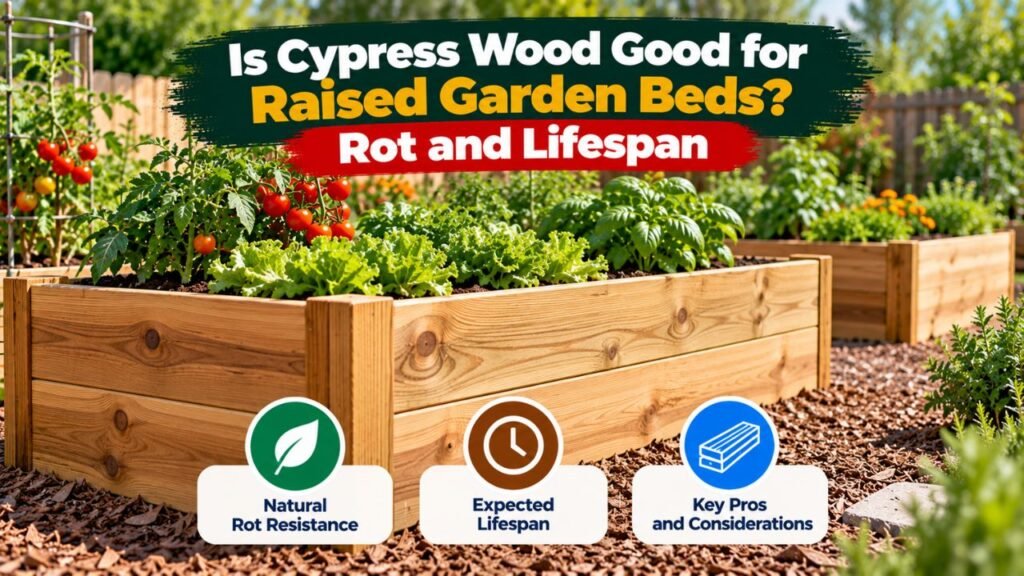
Is Cypress Wood Good for Raised Garden Beds? Rot and Lifespan
Yes, cypress wood is a good choice for raised garden beds, especially when you can buy untreated boards with a substantial amount of naturally decay-resistant heartwood. It can form sturdy garden walls without relying on added chemical preservatives. However, not all cypress lumber lasts equally well in wet soil.
Old-growth baldcypress earned a strong reputation for durability, but much of the cypress sold today comes from younger trees. Those boards often contain more sapwood and may be considerably less resistant to decay than buyers expect. Direct soil contact, prolonged moisture, thin boards, and weak corner joints can also shorten the usable life of a raised bed.
Cypress is often easier to find in parts of the southeastern United States, while cedar or pine may be more practical elsewhere. The right choice depends on lumber quality, local availability, and the price of alternative materials.
In this article, I explain whether cypress is safe for vegetable beds, what determines its rot resistance and lifespan, and how it compares with cedar and pine. You’ll also learn how to choose suitable boards, construct a sturdy raised bed, and protect the wood from premature deterioration.
Is Cypress Wood Good for Raised Garden Beds? Benefits and Drawbacks
Cypress is a practical raised bed material because it combines workable lumber with some natural resistance to decay and insects.
However, its performance depends heavily on the type and quality of wood.
The following comparison summarizes its main advantages and limitations.
| Feature | Cypress Wood Performance |
| Vegetable garden safety | Suitable when untreated and uncontaminated |
| Natural rot resistance | Varies; strongest in durable heartwood |
| Insect resistance | Variable, depending on wood quality |
| Ground contact | Possible, but increases decay exposure |
| Strength | Suitable for properly supported raised bed frames |
| Workability | Generally easy to cut, drill, and fasten |
| Maintenance | Periodic inspection and moisture management |
| Cost | Depends on regional availability and lumber grade |
| Expected lifespan | Variable; no reliable universal number |
| Best application | Permanent garden frames using quality lumber |
Advantages of Cypress Wood for Raised Beds
Cypress provides several useful qualities for building a vegetable garden.
- Natural decay resistance: Quality heartwood contains natural extractives that help resist deterioration.
- No preservative treatment required: Untreated cypress avoids the added chemical preservatives used in pressure-treated lumber.
- Good workability: The wood can generally be cut, drilled, and assembled using ordinary woodworking tools.
- Attractive appearance: Cypress has natural grain patterns and colors ranging from pale tan to deeper reddish-brown tones.
- Suitable for outdoor construction: Quality cypress has a history of use in siding, fencing, and other exposed applications.
These advantages make cypress particularly appealing when a gardener wants a natural wooden frame rather than metal or concrete.
Disadvantages of Cypress Wood for Raised Beds
Cypress also has limitations.
- Modern cypress lumber may contain substantial sapwood with limited natural rot resistance.
- High-quality heartwood can be difficult to find.
- Prices may be higher outside areas where cypress is grown and milled.
- Continual contact with wet soil increases the risk of decay.
- Wood can crack, warp, or deteriorate as environmental conditions change.
- Thick, high-quality boards may cost more than common untreated pine.
Cypress is therefore not automatically the best material for every garden.
Key Takeaway: Cypress is worth considering when you can obtain good-quality untreated lumber at a reasonable price. Its durability depends on the wood’s heartwood content, construction quality, and exposure to moisture.
How Long Does Cypress Wood Last in Raised Garden Beds?
There is no single reliable lifespan for every cypress raised garden bed.
The service life depends on the age and composition of the lumber, moisture exposure, climate, board thickness, drainage, and maintenance.
A frame made with durable heartwood may perform substantially better than one made from younger cypress containing a large proportion of sapwood.
Old-Growth Cypress vs. Second-Growth Cypress
This is one of the most important distinctions when evaluating cypress lumber.
Old-growth cypress heartwood developed its reputation for exceptional resistance to decay.
However, modern commercially available lumber is often produced from younger, second-growth trees.
The USDA Forest Service’s research on baldcypress explains that old-growth heartwood is particularly resistant to rot, while second-growth baldcypress often lacks the same level of decay resistance.
The research also indicates that even relatively mature second-growth trees may produce lumber susceptible to decay.
This means the word “cypress” on a lumber label does not guarantee the exceptional durability historically associated with old-growth material.
For raised beds, the quality of the actual boards matters more than the species name alone.
Heartwood vs. Sapwood
Cypress lumber contains two major wood regions.
Heartwood is the older inner portion of the tree. In durable cypress, it contains natural extractives associated with resistance to biological deterioration.
Sapwood is the younger outer portion that originally transported water and nutrients while the tree was growing.
Sapwood generally provides much less natural decay resistance.
In cypress, heartwood often appears darker than sapwood, although color varies and is not a reliable guarantee of durability.
If you’re purchasing cypress specifically for a long-lasting raised bed, ask the supplier about heartwood content and lumber grade.
Avoid assuming that every board sold as cypress is predominantly heartwood.
Factors That Shorten Cypress Raised Bed Lifespan
Several conditions can accelerate deterioration:
- Constant contact with saturated soil
- Poor drainage around the frame
- Boards that remain wet for extended periods
- Large amounts of vulnerable sapwood
- Thin or damaged lumber
- Exposed, poorly protected end grain
- Loose joints that allow movement and moisture accumulation
- Insects or decay fungi attacking susceptible material
Raised bed walls experience different conditions from ordinary outdoor furniture.
One side remains against moist growing soil, while the other is exposed to rain, sunlight, and changing temperatures.
These uneven moisture conditions can contribute to movement, splitting, and deterioration.
Can Cypress Raised Beds Last 10 Years or Longer?
Some well-built cypress raised beds may remain serviceable for 10 years or more, but that should not be treated as a guaranteed lifespan.
The durability of modern second-growth lumber varies too much to promise a fixed number of years.
A frame made from high-quality heartwood in a well-drained location may last considerably longer than one built from sapwood-heavy boards in constantly wet conditions.
When comparing lumber prices, ask the supplier about the specific wood quality rather than relying on a general lifespan claim.
Is Untreated Cypress Wood Safe for Vegetable Raised Beds?
Yes. Clean, untreated cypress wood is generally suitable for raised beds used to grow vegetables, herbs, and fruits.
Natural cypress lumber does not require added chemical preservatives to be used as a garden frame.
Its natural wood constituents are different from industrial wood-preserving treatments.
However, the suitability of a particular board also depends on whether it has been coated, treated, or exposed to contamination.
Does Cypress Wood Leach Harmful Chemicals Into Garden Soil?
Untreated cypress contains natural extractives associated with its decay resistance.
The presence of these naturally occurring compounds is not, by itself, evidence that the wood makes vegetables unsafe.
Ordinary untreated cypress is widely used as a garden construction material.
For food-growing applications, the more important concern is whether the lumber contains unknown chemical treatments, coatings, or residues from previous use.
Choose new, untreated boards with a known source whenever possible.
Should You Avoid Pressure-Treated Cypress?
Cypress is often purchased untreated because natural decay resistance is one of its main selling points.
If a product is pressure-treated, its suitability depends on the actual preservative and the manufacturer’s intended-use information.
Do not assume every treated product is unsafe, but don’t assume every treatment is appropriate for vegetable gardens either.
For gardeners who specifically want to avoid added preservatives, untreated cypress is a straightforward choice.
Is Reclaimed Cypress Safe?
Reclaimed cypress may be suitable when its previous use is known and the wood remains structurally sound.
However, old lumber can contain unidentified coatings or chemical residues.
Avoid using wood salvaged from:
- Railroad ties
- Industrial chemical storage areas
- Unknown demolition sites
- Structures with hazardous coatings
- Locations exposed to oil or chemical spills
A weathered appearance does not establish that reclaimed lumber is safe for food production.
If its history cannot be confirmed, choose new untreated material.
Cypress vs. Cedar vs. Pine for Raised Garden Beds
Cypress, cedar, and pine are common choices for wooden raised beds.
Each offers a different balance of cost, availability, workability, and decay resistance.
Raised Bed Wood Comparison
| Feature | Cypress | Cedar | Untreated Pine |
| Natural decay resistance | Variable; good in quality heartwood | Generally good in durable heartwood | Usually low |
| Vegetable garden suitability | Suitable untreated | Suitable untreated | Suitable untreated |
| Regional availability | Stronger in parts of the Southeast | Varies by species and region | Widely available |
| Typical cost position | Depends on local supply | Often premium-priced | Usually economical |
| Soil-contact durability | Depends heavily on lumber quality | Depends on species and heartwood content | Often relatively short |
| Ease of cutting | Generally good | Generally good | Generally good |
| Best reason to choose | Locally available quality lumber | Durable untreated wood | Low initial cost |
These are general comparisons, not guaranteed performance rankings for every product.
Cypress vs. Cedar Raised Beds
Both woods are popular for gardeners who want untreated wooden frames.
Cedar species vary in density, durability, and availability, so not every cedar board performs identically.
Similarly, cypress durability depends strongly on heartwood quality.
The University of Georgia Extension’s raised bed materials guide notes that cypress can be a practical alternative to cedar, particularly where it is grown and milled locally.
The publication also cautions that cypress’s decay and insect resistance may be less dependable than its reputation suggests, especially in direct soil contact.
Choose between them by comparing the actual board quality and total project cost.
If good cypress heartwood is available locally for less than comparable cedar, cypress can offer strong value.
If the cypress is mostly sapwood and the cedar has better documented durability, cedar may be worth the additional cost.
Cypress vs. Untreated Pine Raised Beds
Untreated pine is often less expensive and easier to find than cypress.
However, ordinary pine generally has less natural resistance to decay when exposed to damp soil.
Cypress may last longer, especially when the boards contain suitable heartwood.
Pine can still be a sensible choice for temporary beds or gardeners who prioritize a low initial cost.
For a bed intended to remain in place for multiple growing seasons, compare the expected replacement needs rather than only the initial lumber price.
Cypress vs. Pressure-Treated Pine
Modern pressure-treated pine is another option used in outdoor construction.
Its preservatives are intended to reduce decay and insect damage.
Cypress offers a different approach: selecting wood with some natural durability rather than relying on added preservatives.
The better choice depends on treatment specifications, budget, availability, and personal preferences.
If selecting pressure-treated lumber, confirm that the product is approved for the intended ground-contact application and follow applicable manufacturer guidance.
What Type of Cypress Lumber Is Best for Raised Beds?
Selecting suitable boards can make a greater difference than simply choosing cypress over another wood species.
Pay attention to the species, proportion of heartwood, board dimensions, moisture condition, and overall quality.
Choose Heartwood-Rich Cypress When Available
Ask the lumber supplier whether the boards contain mostly heartwood or substantial sapwood.
Heartwood-rich lumber is particularly desirable when natural decay resistance is the main reason for choosing cypress.
However, visually inspecting color is not enough to confirm performance.
A knowledgeable supplier may be able to provide better information about the wood’s origin and grade.
You should also confirm the actual species. The common name “cypress” can refer to different trees and commercial lumber products.
The durability information for baldcypress, Taxodium distichum, should not automatically be applied to every wood marketed under a similar name.
Choose Sufficiently Thick Boards
Board thickness affects resistance to bowing, damage, and loss of structural strength as the wood ages.
For a typical backyard raised bed, nominal 2-inch-thick lumber is often a practical option.
Common board sizes include:
- 2×6 lumber
- 2×8 lumber
- 2×10 lumber
- 2×12 lumber
These are nominal sizes. For example, common surfaced 2-inch lumber is approximately 1½ inches thick.
A nominal 2×10 board is generally about 9¼ inches wide.
Choose dimensions based on the desired bed height, available lumber, and framing requirements.
Thicker boards are not immune to decay, but they provide more material and can support a sturdy frame when properly braced.
Inspect Boards Before Buying
Look for straight boards with reasonably consistent dimensions.
Avoid lumber showing:
- Soft or crumbling sections
- Large cracks through critical fastening areas
- Severe twisting
- Extensive decay
- Significant insect damage
- Unidentified chemical stains
Some minor knots and natural color variation are normal.
However, large defects near corners or fastener locations can reduce the quality of the finished frame.
Select boards that are suitable for outdoor construction rather than assuming every piece of decorative cypress is appropriate for structural garden use.
How to Build a Raised Garden Bed With Cypress Wood
Cypress can be used in conventional open-bottom raised beds built directly over garden soil.
The construction process is similar to building a frame from cedar or other suitable lumber.
A rectangular bed is usually the easiest design for a beginner.
Step 1: Choose the Raised Bed Dimensions
A 4×8-foot raised bed provides 32 square feet of growing area and can be reached from both long sides.
A width of approximately 3–4 feet is practical for many gardeners.
If the bed can only be accessed from one side, a narrower design is usually easier to maintain.
Choose the height based on the crops and the condition of the ground underneath.
A bed approximately 8–12 inches high is a practical starting option for many vegetable gardens built over suitable native soil.
Step 2: Measure and Cut the Cypress Boards
Measure the required board lengths before cutting.
Account for how the corners will be assembled.
Depending on whether the end boards fit between the long boards or overlap them, the cutting lengths will differ.
Use a square to mark straight cuts.
Wear eye protection and a suitable dust mask or respirator when cutting or sanding wood, according to the tool and workplace conditions.
Step 3: Assemble the Wooden Frame
Position the boards on a flat surface.
Connect the corners using corrosion-resistant exterior-rated screws and suitable reinforcement.
Predrill near board ends where necessary to reduce splitting.
For a longer bed, consider intermediate braces or stakes to help prevent the sidewalls from bowing outward when filled with soil.
The frame should remain square and stable before soil is added.
Step 4: Prepare the Ground Beneath the Bed
Choose a reasonably level, well-drained location.
Remove persistent weeds and large debris.
If the underlying soil is compacted, loosen it gently with a garden fork.
A conventional raised bed built over clean natural ground generally does not require a solid bottom.
Leaving the bottom open allows plant roots to reach the soil beneath and provides a drainage route for excess water.
Step 5: Position and Level the Cypress Frame
Move the completed frame to its intended location.
Check that the corners are level and the boards are supported evenly.
Avoid leaving large unsupported gaps beneath the frame.
If the ground slopes substantially, prepare a suitable level foundation rather than forcing the frame into position.
Step 6: Fill the Bed With Suitable Soil
Use clean, well-structured topsoil and finished compost as needed.
The exact mixture depends on the native soil’s condition.
Avoid filling the bed entirely with compost or dense, heavily compacted clay.
Spread the growing medium evenly without pressing it excessively against the wooden walls.
Water gently, allow the mixture to settle, and check drainage before planting.
How to Make Cypress Raised Garden Beds Last Longer
Even naturally durable wood benefits from appropriate construction and moisture management.
The main objective is to avoid conditions that keep susceptible wood wet for extended periods.
Improve Drainage Around the Wooden Frame
Choose a site that doesn’t collect standing water.
An open-bottom raised bed should allow water to move into the ground beneath it.
If the site has heavy, compacted clay or persistent flooding, address the drainage problem before building.
Cypress can tolerate outdoor exposure, but that does not mean constant saturation has no effect on the wood.
Keep Soil From Remaining Excessively Wet
Water according to plant needs and the actual moisture condition of the growing medium.
Avoid allowing irrigation runoff to collect around the exterior base of the frame.
Proper soil structure and drainage help plants while reducing prolonged wet conditions against the boards.
Reinforce Long Sidewalls
As a raised bed fills with soil, the growing medium pushes outward against the walls.
Long, unsupported boards may gradually bow.
Add appropriate corner reinforcement and intermediate supports based on the frame dimensions.
This is especially important for tall beds.
Support stakes or braces should be securely attached and able to resist the expected soil pressure.
Protect Exposed End Grain
Board ends can absorb moisture readily.
Good construction details can help prevent unnecessary water accumulation around joints.
Keep connections tight, use corrosion-resistant fasteners, and avoid designs that trap standing water.
If using an exterior coating, verify that it is suitable for the intended garden application and apply it according to the manufacturer’s instructions.
Inspect the Wood Regularly
Check the frame at least once each growing season.
Pay particular attention to:
- Lower boards in contact with soil
- Corners and fastening points
- Areas where water collects
- Cracked or distorted sections
- Soft wood that may indicate decay
Replace seriously deteriorated boards before they lose the strength needed to hold the growing soil.
Should You Line a Cypress Raised Garden Bed With Plastic?
A plastic liner is optional for most cypress raised beds.
Some gardeners use heavy-duty plastic along the interior walls to reduce direct contact between soil and wood.
However, lining the wood does not guarantee a longer lifespan.
Water can still reach the boards through rainfall, condensation, gaps, or the upper edges.
When a Sidewall Liner May Help
A suitable liner can provide a physical barrier between damp soil and the wooden frame.
If you choose to install one:
- Use a durable plastic material intended for the application.
- Attach it along the interior sidewalls.
- Avoid unnecessary holes in the lower sections.
- Keep the bottom open for drainage.
- Inspect the liner periodically for damage.
Do not assume that a plastic liner compensates for poor construction or rotting wood.
Should You Line the Bottom of a Cypress Raised Bed?
Generally, no.
For a conventional open-bottom bed on natural ground, waterproof plastic can interfere with drainage and restrict root growth.
Leave the bottom open unless a specific site condition requires a properly designed barrier system.
If you’re using an elevated cypress planter with a structural bottom, the construction requirements are different.
The bottom must safely support the weight of wet growing medium and provide appropriate drainage openings.
Is Cypress Wood Worth the Cost for Raised Garden Beds?
Cypress can be worth buying when quality lumber is available at a reasonable local price.
However, the name alone does not justify paying a large premium.
Compare the material you can actually purchase with suitable cedar, pine, or other alternatives.
When Cypress Is a Good Investment
Cypress is particularly appealing when:
- You can obtain quality untreated lumber.
- The boards contain a substantial amount of durable heartwood.
- A local sawmill offers competitive pricing.
- You want the appearance of natural wood.
- The raised bed will remain in one location.
- You prefer not to use preservative-treated lumber.
These conditions make it easier to benefit from cypress’s strengths.
When Cypress May Not Be Worth the Extra Cost
Cypress may be less attractive when:
- The lumber is expensive to transport.
- The supplier cannot identify its quality or composition.
- Most boards contain substantial sapwood.
- Comparable cedar is available for a similar price.
- You only need a temporary garden frame.
- The bed will be exposed to persistently saturated ground.
A more expensive board does not automatically provide greater durability.
If the goal is a long-lasting raised bed, evaluate both the material and the conditions in which it will be used.
Consider Responsible Lumber Sourcing
Cypress trees are an important part of southeastern wetland ecosystems.
Choosing responsibly sourced lumber can help reduce unnecessary environmental impacts.
Ask suppliers about where the wood was harvested and whether it comes from managed forests or documented sources.
Locally produced lumber may also reduce transportation needs.
There is generally no reason to seek rare old-growth timber simply because it has exceptional historical decay resistance.
For ordinary home gardening, suitable second-growth lumber or another responsibly sourced material is usually the more practical choice.
Common Mistakes When Using Cypress for Raised Beds
Several decisions can reduce the performance of a cypress frame.
Assuming Every Cypress Board Is Rot-Resistant
Modern boards may contain large amounts of sapwood.
Check the lumber quality instead of relying only on the species label.
Using Thin Boards Without Reinforcement
Thin, unsupported boards can bow or deteriorate more quickly under pressure from wet soil.
Choose suitable thicknesses and add reinforcement where necessary.
Installing Cypress in Constantly Wet Ground
Poor site drainage keeps wood wet for extended periods.
Correct persistent waterlogging before building the bed.
Using Unknown Reclaimed Lumber
Salvaged boards may contain harmful coatings or residues.
For vegetables, choose wood with a known and suitable history.
Applying Unverified Wood Treatments
Not every exterior stain, oil, or preservative is appropriate for a vegetable garden.
Check the intended-use instructions before applying any product.
Ignoring Damage at the Corners
Corners carry significant forces from the soil-filled frame.
Inspect fasteners and adjoining boards regularly.
Replace damaged wood rather than trying to hold a deteriorating joint together with additional screws.
Conclusion
So, is cypress wood good for raised garden beds? Yes. Cypress can provide an attractive, sturdy, and practical untreated wooden frame for growing vegetables, herbs, and flowers.
Its main advantage is natural decay resistance, especially in quality heartwood. However, modern second-growth cypress may not offer the exceptional durability associated with old-growth lumber.
When choosing boards, prioritize known material quality, adequate thickness, reasonable cost, and a suitable construction design.
If locally available cypress costs about the same as comparable cedar, either can be a sensible choice. If the cypress contains substantial sapwood and costs considerably more, its value becomes less certain.
For a long-lasting garden bed, combine suitable lumber with a stable frame, good drainage, corrosion-resistant fasteners, and periodic maintenance. Those practical details matter as much as the wood species.
FAQs About Is Cypress Wood Good for Raised Garden Beds
Is Cypress Wood Safe for Growing Vegetables?
Yes. Clean, untreated cypress is generally suitable for raised beds used to grow vegetables, herbs, and fruits. Choose wood with a known source and avoid boards containing unidentified chemical treatments or coatings.
Is Cypress More Rot-Resistant Than Cedar?
Not necessarily. Durability depends on the cypress and cedar species, heartwood content, age, and exposure conditions. Quality old-growth cypress heartwood is highly resistant to decay, but modern second-growth cypress may have considerably less resistance. Compare the actual lumber rather than relying only on the names.
How Many Years Will a Cypress Raised Garden Bed Last?
There is no guaranteed lifespan. Some well-built frames may remain serviceable for a decade or longer, while boards containing substantial sapwood may deteriorate sooner. Soil moisture, drainage, construction quality, and maintenance strongly affect the result.
Does Cypress Wood Need to Be Sealed for Raised Beds?
No. Untreated cypress does not automatically require sealing before use. An appropriate exterior coating may reduce weathering, but it must be suitable for the intended application. Avoid applying unidentified preservatives to wood used around edible crops.
Can Cypress Wood Touch Garden Soil Directly?
Yes. Cypress can be used in direct soil contact, but constant moisture increases the risk of decay. Its performance depends on the proportion of naturally durable heartwood and the surrounding conditions. Good drainage can help reduce prolonged exposure.
Is Cypress Better Than Pine for Raised Beds?
Cypress can be a better option than untreated pine when natural rot resistance and a longer potential service life are priorities. However, pine is often cheaper and more widely available. The better value depends on lumber quality and local pricing.
Should You Use Cypress Mulch in Raised Garden Beds?
Cypress mulch can be used as a surface mulch, but it isn’t necessary for building or maintaining a raised bed. Because cypress mulch production may involve harvesting trees from sensitive wetland ecosystems, consider locally available alternatives such as shredded leaves, clean straw, or other suitable organic mulches.

I’m Maya L. Greenwood, a lifelong plant lover who believes anyone can grow something beautiful with the right guidance. After years of testing soil mixes, pruning methods, irrigation tricks, and pest-safe solutions, I started EasyGardenTips.com to turn hard-won lessons into step-by-step advice. From seed starting and container gardens to composting and seasonal checklists, my goal is to make gardening simple, sustainable, and fun.