
Low humidity can create an uncomfortable and unhealthy environment, especially during dry seasons, winter months, or in rooms with heating and air conditioning. While a humidifier is the most convenient way to add moisture, it is not always necessary for making small humidity improvements.
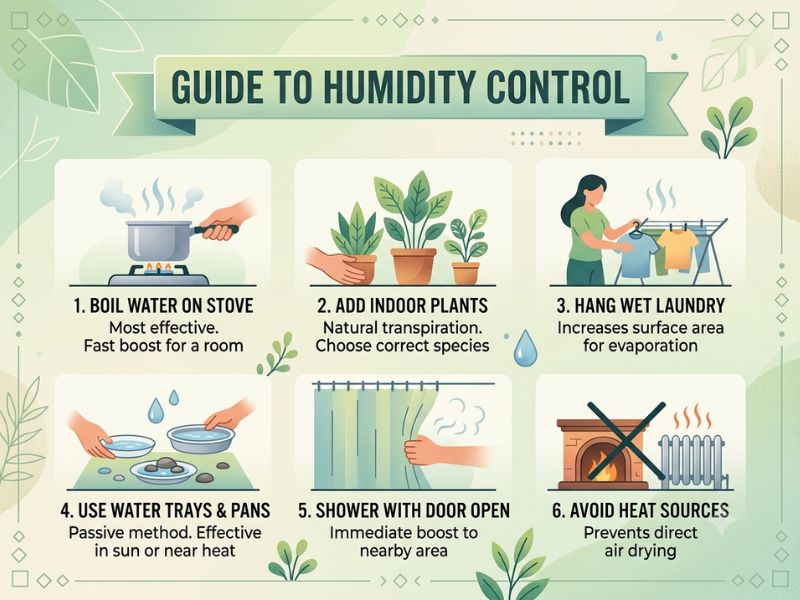
There are several natural ways to increase humidity without using a humidifier, such as placing water containers, drying wet clothes indoors, adding plants, adjusting airflow, and reducing unnecessary ventilation. These simple methods can help increase moisture levels and create a more balanced environment.
In this guide, I’ll explain how to raise humidity without a humidifier, how effective each method is, and how to avoid common mistakes. By combining the right techniques with a reliable hygrometer, you can improve humidity levels naturally without investing in additional equipment.
Why Is Humidity Important?
Humidity refers to the amount of water vapor present in the air. Maintaining the right humidity level is important because moisture in the air affects comfort, plant health, materials, and overall indoor conditions.
When humidity is too low, the air becomes dry and can cause moisture to evaporate quickly from surfaces, plants, and the human body. Increasing humidity helps create a more balanced environment and prevents many problems associated with excessively dry air.
Effects of Low Humidity
Low humidity can cause several issues, including:
- Dry skin and irritation
- Static electricity buildup
- Dry or damaged indoor plants
- Faster moisture loss from materials
- Increased discomfort in dry environments
In indoor growing spaces, low humidity can also affect plant water balance because plants lose moisture faster through their leaves.
Humidity and Moisture Balance
The goal is not to make the air as humid as possible but to maintain an appropriate balance. Too little moisture can create dry conditions, while too much humidity may lead to condensation and moisture-related problems.
Factors that influence humidity include:
- Temperature
- Air circulation
- Ventilation
- Room size
- Available moisture sources
Understanding these factors helps you choose the right method to increase humidity naturally.
Measure Humidity Before Making Changes
Before trying to raise humidity, check your current humidity level with a digital hygrometer. This gives you an accurate starting point and helps you determine how much adjustment is needed.
A hygrometer allows you to:
- Track humidity changes.
- Avoid adding too much moisture.
- Understand how different methods affect your environment.
- Maintain more stable conditions.
Once you know your current humidity level, you can choose the most suitable method to increase moisture without using a humidifier.
Use Open Water Containers to Increase Humidity Naturally
One of the easiest ways to raise humidity without a humidifier is by placing open water containers in the space. As water evaporates, it releases moisture into the air and can gradually increase humidity levels.
This method is simple, inexpensive, and works best when you only need a small humidity boost.
Use Wide Water Trays for Better Results
The amount of moisture added depends on how quickly water can evaporate. Containers with a larger surface area expose more water to the air, allowing faster evaporation.
For better results:
- Use shallow, wide containers instead of deep bowls.
- Place multiple containers around the room if needed.
- Position them where air can move around the water.
- Refill water as it evaporates.
A wide tray usually works better than a narrow container because more water is exposed to the surrounding air.
Place Water Containers Near Gentle Airflow
Air movement helps distribute moisture throughout the space. Placing water containers near a fan or natural airflow can increase evaporation and spread humidity more evenly.
However, avoid strong airflow directly over the water because it may create uneven moisture distribution and cause the water to evaporate too quickly.
Keep Water Containers Clean
Standing water can collect dust and become a source of unwanted odors if it is not maintained properly.
To keep water sources clean:
- Replace the water regularly.
- Wash containers frequently.
- Avoid allowing algae or buildup to form.
- Keep containers away from electrical equipment.
Understand the Limitations
Water containers are useful for minor humidity adjustments, but they have limitations:
- They do not provide precise humidity control.
- Larger rooms may need several containers.
- Results depend on temperature and airflow.
- They work slower than a humidifier.
For small increases in humidity, open water containers can be an effective natural solution. For larger humidity problems, combining this method with airflow adjustments and humidity monitoring will provide better results.
Hang Wet Towels or Clothes to Increase Humidity
Using wet towels or drying clothes indoors is another simple way to raise humidity without a humidifier. As the water in the fabric evaporates, it adds moisture to the surrounding air and can help increase humidity levels naturally.
This method works best in smaller rooms or enclosed spaces where only a moderate humidity increase is needed.
How Wet Fabrics Increase Humidity
Wet towels and clothes provide a large surface area for evaporation. Compared with a small bowl of water, fabric can release moisture more quickly because more water is exposed to the air.
The rate of evaporation depends on:
- Room temperature
- Air movement
- Fabric size
- Current humidity level
Warmer air and gentle airflow can increase evaporation, while already humid air slows the process.
Best Way to Use Wet Towels
For better results:
- Hang damp towels in an open area.
- Place them where air can circulate around them.
- Re-moisten them when they become dry.
- Use clean towels to prevent odors.
Avoid placing wet fabrics directly on furniture or surfaces where trapped moisture could cause damage.
Dry Clothes Indoors
Drying freshly washed clothes indoors can also add moisture to the air. As clothes dry, the water inside the fabric evaporates and increases surrounding humidity.
This method can be useful during:
- Dry winter months
- Low-humidity weather
- Heated indoor environments
However, make sure there is enough air circulation to prevent excessive moisture buildup.
Limitations of This Method
While wet towels and clothes can help increase humidity, they are not a replacement for a dedicated humidifier when precise control is needed.
Limitations include:
- Humidity increases are temporary.
- Fabrics need regular re-wetting.
- Results depend on room conditions.
- Excess moisture can create condensation if overused.
Using wet fabrics is a convenient short-term solution for raising humidity naturally, especially when you need a quick moisture boost without purchasing additional equipment.
Add Indoor Plants to Naturally Increase Humidity
Indoor plants can help raise humidity naturally through a process called transpiration. During transpiration, plants absorb water through their roots and release water vapor through tiny openings in their leaves, adding moisture to the surrounding air.
While plants usually do not increase humidity as quickly as a humidifier, they can provide a gradual and natural moisture boost.
How Plants Increase Humidity
Plants release moisture into the air as part of their normal growth process. The amount of humidity they add depends on:
- Plant size
- Number of plants
- Leaf surface area
- Water availability
- Room temperature
- Air circulation
Larger plants with more leaves generally release more moisture than small plants.
Choose Plants With Higher Moisture Release
Some indoor plants naturally contribute more humidity because they have larger leaves and higher water requirements.
Examples include:
- Ferns
- Peace lilies
- Palms
- Spider plants
The goal is not to overcrowd the space but to add healthy plants that fit your environment.
Group Plants Together
Placing several plants together can create a slightly more humid microenvironment because moisture released from multiple plants accumulates around the group.
For better results:
- Group plants in the same area.
- Keep them properly watered.
- Provide adequate light.
- Maintain good airflow around leaves.
Avoid placing plants too close together if airflow becomes restricted.
Keep Plants Healthy
Healthy plants release moisture more effectively. To support natural humidity:
- Water plants according to their needs.
- Use proper soil and drainage.
- Remove damaged leaves.
- Provide suitable lighting conditions.
Overwatering plants to increase humidity is not recommended because it can damage roots and create other moisture problems.
Understand the Limitations
Plants can help maintain a more comfortable environment, but they usually cannot significantly increase humidity in large or very dry spaces.
For noticeable humidity improvement, combine plants with other methods such as:
- Water containers
- Wet towels
- Reduced excessive airflow
- Proper humidity monitoring
Adding indoor plants is a natural and attractive way to support humidity levels while improving the overall indoor environment.
Reduce Excessive Airflow and Ventilation
Strong airflow is one of the main reasons humidity levels remain low. Fans, ventilation systems, and air leaks can remove moist air and replace it with drier air, making it difficult to increase humidity naturally.
By reducing unnecessary air movement, you can help retain moisture and create a more balanced environment.
Adjust Fan Speed
If fans are running faster than needed, they may be removing moisture too quickly. Reducing fan speed can help keep humid air inside the space for longer.
Helpful adjustments include:
- Lowering the speed of adjustable fans.
- Moving fans away from directly blowing across the area.
- Using gentle air circulation instead of strong airflow.
- Running ventilation only when necessary.
The goal is to maintain air movement without constantly removing moisture.
Seal Unnecessary Air Leaks
Small openings can allow dry air to enter and humid air to escape. Checking for air leaks can improve humidity retention.
Common leak points include:
- Door gaps
- Window openings
- Ventilation gaps
- Poorly sealed openings
Sealing unnecessary gaps helps maintain the moisture already present in the environment.
Balance Fresh Air and Humidity
Reducing ventilation does not mean completely blocking airflow. Fresh air exchange is still important for maintaining a healthy environment.
A balanced approach provides:
- Better moisture retention
- More stable humidity
- Proper air circulation
- Reduced stagnant air problems
Avoid closing all vents or stopping airflow completely, as this can create uneven conditions.
Monitor Humidity After Adjustments
After reducing airflow, check humidity levels regularly. Changes in ventilation can affect moisture levels faster than expected, especially in smaller spaces.
Use a hygrometer to monitor:
- Current humidity
- Temperature changes
- Daily fluctuations
Adjust airflow gradually until you find the right balance between moisture retention and proper ventilation.
Reducing excessive airflow is one of the simplest ways to raise humidity naturally, especially when dry air is caused by strong fans, heating systems, or unnecessary ventilation.
Place Water Near a Heat Source to Increase Evaporation
Using heat to increase water evaporation is another simple way to raise humidity without a humidifier. When water is exposed to warmer air, it evaporates faster and releases more moisture into the surrounding environment.
This method can provide a temporary humidity boost, especially during dry seasons or in heated indoor spaces.
How Heat Increases Humidity
Warm air increases the rate of evaporation because water molecules move faster at higher temperatures. As more water changes into vapor, the moisture content of the air increases.
Factors that affect evaporation include:
- Water surface area
- Temperature
- Air movement
- Existing humidity level
A warm environment with gentle airflow can help distribute moisture more effectively.
Use Safe Water Placement
If using this method, safety should be the priority.
Good practices include:
- Place water containers on stable surfaces.
- Keep them away from electrical equipment.
- Avoid placing water directly on heating devices unless designed for that purpose.
- Prevent spills near electronics or sensitive materials.
The goal is to increase evaporation naturally without creating safety risks.
Use Radiator or Heating Area Moisture Sources
During colder months, heating systems often make indoor air very dry. Placing a water container near a safe heat source can help counteract this dryness by adding moisture back into the air.
However:
- Do not block heating vents.
- Avoid overheating water containers.
- Monitor humidity levels regularly.
Understand the Limitations
Using heat to increase evaporation is a temporary solution and may not provide enough humidity for larger spaces.
Limitations include:
- Requires a consistent heat source.
- Provides less control than a humidifier.
- Can increase humidity unevenly.
- Needs regular monitoring.
For small humidity improvements, this method can be useful. Combining it with water trays, plants, and airflow adjustments can create a more noticeable increase in humidity without using a humidifier.
Use Steam From Showers and Cooking to Add Moisture
Everyday household activities can naturally increase humidity by releasing water vapor into the air. Showers, cooking, and boiling water create steam that can temporarily raise moisture levels without requiring a humidifier.
This method works best for short-term humidity increases, especially in dry indoor environments.
Use Shower Steam to Increase Humidity
A hot shower produces a large amount of water vapor that can spread into nearby areas.
To use shower steam:
- Allow warm, moist air to remain in the bathroom briefly after showering.
- Keep the bathroom door open if you want moisture to move into other areas.
- Avoid using exhaust fans for too long if your goal is to retain humidity.
However, avoid creating excessive moisture in rooms where condensation or mold could become a problem.
Release Cooking Steam Into the Air
Cooking activities such as boiling water, steaming food, or using a kettle naturally add moisture to indoor air.
Ways to increase humidity through cooking:
- Allow some steam to spread naturally.
- Avoid immediately removing all moisture with ventilation.
- Use cooking steam as a temporary humidity boost.
Always maintain proper ventilation when cooking to remove odors and maintain indoor air quality.
Use Boiling Water Carefully
A pot or kettle of hot water can release moisture through evaporation. This can help increase humidity for a short period.
Safety tips:
- Never leave boiling water unattended.
- Keep hot water away from children and pets.
- Avoid placing hot containers near electronics.
Limitations of Steam-Based Methods
While steam can quickly increase humidity, the effect is usually temporary.
Limitations include:
- Humidity drops once the steam disappears.
- Results depend on room size and airflow.
- It does not provide precise humidity control.
Steam from showers and cooking is a convenient natural method for small humidity increases, but for consistent moisture control, combine it with other techniques such as water containers, plants, and airflow management.
Lower the Room Temperature Slightly to Increase Relative Humidity
Temperature and humidity are closely connected. When you lower the temperature in a room, the air’s ability to hold moisture decreases, which can increase the relative humidity (RH) reading even without adding extra water to the air.
This method does not create new moisture, but it can help increase humidity levels naturally in dry environments.
How Temperature Affects Relative Humidity
Warm air can hold more water vapor than cool air. When the temperature drops, the same amount of moisture in the air represents a higher percentage of relative humidity.
For example:
- A warm room may have lower relative humidity because the air can hold more moisture.
- A slightly cooler room may show higher relative humidity because the air is closer to saturation.
Understanding this relationship helps explain why humidity often rises during cooler parts of the day.
Reduce Excessive Heating
Heating systems are a common cause of dry indoor air. Warm air from heaters can lower relative humidity and make the environment feel dry.
To retain more moisture:
- Avoid overheating the room.
- Use moderate temperature settings.
- Reduce unnecessary heat sources.
- Improve insulation to maintain stable conditions.
Keeping temperatures steady can make humidity easier to manage.
Avoid Sudden Temperature Changes
Large temperature swings can cause humidity fluctuations and may create condensation problems.
For better control:
- Maintain a consistent room temperature.
- Monitor temperature and humidity together.
- Make gradual adjustments.
A stable environment is easier to manage than one with frequent changes.
Monitor Both Temperature and Humidity
Because temperature directly affects humidity readings, always track both factors using a thermometer-hygrometer.
Monitoring both helps you understand:
- Whether humidity is changing because of temperature.
- How environmental adjustments affect moisture.
- When additional humidity methods are needed.
Lowering temperature slightly can help increase relative humidity, but it is usually a supporting method rather than a complete solution. For noticeable humidity increases, combine temperature control with other natural methods like water containers, plants, and airflow adjustments.
Monitor Humidity With a Hygrometer
When trying to raise humidity without a humidifier, accurate monitoring is essential. Without measuring humidity levels, it is difficult to know whether your methods are working or whether you are adding too much moisture.
A digital hygrometer allows you to track humidity changes and make informed adjustments.
Why a Hygrometer Is Important
A hygrometer measures relative humidity (RH), which shows the percentage of moisture in the air compared with the maximum amount the air can hold at a specific temperature.
Using a hygrometer helps you:
- Identify when humidity is too low.
- Track whether natural methods are effective.
- Prevent excessive humidity.
- Maintain more stable conditions.
Without measurement, it is easy to overcorrect and create moisture problems.
Choose a Reliable Humidity Monitor
A good humidity monitor should provide:
- Accurate RH readings.
- Temperature measurements.
- Easy-to-read display.
- Consistent performance.
Many digital thermometer-hygrometers measure both temperature and humidity, making them useful for understanding how environmental changes affect moisture levels.
Place the Hygrometer Correctly
Sensor placement can affect accuracy. Avoid placing it:
- Directly beside water containers.
- Near steam sources.
- In direct sunlight.
- Against cold walls or corners.
For better readings:
- Place it in the middle of the area.
- Keep it at the height where humidity matters most.
- Ensure there is normal air circulation around the sensor.
Check Humidity Changes Over Time
Humidity levels naturally change throughout the day because of:
- Temperature changes.
- Heating or cooling systems.
- Ventilation.
- Weather conditions.
- Human activity.
Checking readings at different times helps you understand patterns and choose the right humidity adjustment method.
Make Adjustments Based on Data
Use your humidity readings to guide decisions:
- If humidity is slightly low, simple methods like water trays or plants may be enough.
- If humidity remains very low, stronger solutions may be needed.
- If humidity becomes too high, reduce moisture sources or improve airflow.
A hygrometer is the foundation of effective humidity control. Even when using natural methods, measuring conditions ensures you increase humidity safely and maintain a balanced environment.
Common Mistakes When Raising Humidity Without a Humidifier
Increasing humidity naturally can be effective, but using the wrong approach may create problems instead of improving the environment. Many people add too much moisture, reduce airflow too much, or ignore humidity measurements.
Avoiding these common mistakes helps you raise humidity safely and maintain better control.
Adding Too Much Moisture at Once
One of the biggest mistakes is trying to increase humidity quickly by using too many moisture sources at the same time.
For example:
- Adding many water containers.
- Hanging multiple wet towels.
- Increasing steam exposure excessively.
Too much moisture can cause:
- Condensation on surfaces.
- Damp areas.
- Uncomfortable conditions.
- Mold and mildew problems.
Make gradual changes and monitor humidity after each adjustment.
Not Measuring Humidity Levels
Many people try to increase humidity without knowing the actual humidity level. A room may feel dry, but the real humidity could already be within an acceptable range.
Always use a hygrometer to:
- Check current humidity.
- Track changes.
- Avoid over-humidifying.
Accurate measurements make humidity management much easier.
Reducing Airflow Too Much
Lowering airflow can help retain moisture, but completely stopping ventilation can create problems.
Poor airflow may lead to:
- Stagnant air.
- Uneven moisture distribution.
- Condensation buildup.
- Unpleasant odors.
Maintain gentle air circulation while reducing only unnecessary air movement.
Ignoring Temperature Changes
Temperature affects relative humidity, so focusing only on moisture sources can lead to incorrect adjustments.
Common mistakes include:
- Overheating the room.
- Ignoring temperature fluctuations.
- Misreading humidity changes caused by temperature.
Monitor both temperature and humidity together for better results.
Leaving Standing Water Unmaintained
Water containers can help increase humidity, but dirty or stagnant water can create hygiene issues.
To avoid problems:
- Replace water regularly.
- Clean containers often.
- Prevent spills.
- Keep water away from electrical equipment.
Clean moisture sources work better and create fewer problems.
Expecting Natural Methods to Replace a Humidifier Completely
Natural methods are useful for small humidity increases, but they may not be enough for large spaces or extremely dry environments.
If humidity remains consistently low, you may need:
- A dedicated humidifier.
- A humidity controller.
- Better environmental control.
Understanding the limitations of natural methods helps you choose the right solution without wasting time or creating unwanted moisture issues.
Frequently Asked Questions About Raising Humidity Without a Humidifier
How can I raise humidity quickly without a humidifier?
The fastest natural methods include placing open water containers, hanging wet towels, allowing shower steam to spread, and drying wet clothes indoors. These methods can increase humidity temporarily, but the results depend on room size, airflow, and current humidity levels.
Does a bowl of water increase humidity?
Yes, an open bowl or tray of water can increase humidity as the water evaporates into the air. Wide, shallow containers usually work better because they expose more water surface area.
However, this method provides only a small humidity increase and may not be enough for large rooms.
Do plants increase humidity?
Yes, plants can increase humidity through transpiration, where they release water vapor through their leaves. Larger plants and groups of plants generally contribute more moisture than small plants.
However, plants usually provide a gradual humidity increase rather than a quick solution.
How long does it take to increase humidity naturally?
The time required depends on:
- Room size.
- Current humidity level.
- Temperature.
- Air circulation.
- Moisture source used.
Small rooms may show changes within a few hours, while larger spaces may take much longer.
Can wet towels increase humidity?
Yes, wet towels can increase humidity because water evaporates from the fabric surface. They work best in small spaces and provide a temporary humidity boost.
For better results, hang towels in an open area with gentle airflow.
What is the easiest way to add moisture to dry air?
The easiest methods include:
- Placing water trays around the room.
- Drying clothes indoors.
- Adding indoor plants.
- Allowing shower steam to spread.
- Reducing excessive ventilation.
The best method depends on how much humidity you need to add.
Can cooking increase indoor humidity?
Yes, cooking activities such as boiling water or steaming food release water vapor into the air. This can temporarily increase humidity levels, especially in smaller areas.
Can lowering temperature increase humidity?
Lowering temperature can increase relative humidity because cooler air holds less moisture. However, it does not add actual moisture to the air, so it is only a supporting method.
How do I know if humidity is too high?
Signs of excessive humidity include:
- Condensation on windows.
- Damp surfaces.
- Musty odors.
- Increased mold risk.
A hygrometer is the most reliable way to measure humidity accurately.
Conclusion
Raising humidity without a humidifier is possible using simple natural methods such as water containers, wet towels, indoor plants, steam, and airflow adjustments. These solutions work well for small humidity improvements and can help create a more balanced environment.
The key to successful humidity control is monitoring conditions with a hygrometer and making gradual adjustments. By combining different methods and avoiding common mistakes, you can increase humidity naturally without relying on a dedicated humidifier.

I’m Maya L. Greenwood, a lifelong plant lover who believes anyone can grow something beautiful with the right guidance. After years of testing soil mixes, pruning methods, irrigation tricks, and pest-safe solutions, I started EasyGardenTips.com to turn hard-won lessons into step-by-step advice. From seed starting and container gardens to composting and seasonal checklists, my goal is to make gardening simple, sustainable, and fun.