How Much Mulch Fits in a Truck Bed by Pickup Size
Most pickup trucks hold about 1 to 3 cubic yards of loose mulch, depending on bed length, bed width, side height, mulch weight, and the truck’s payload rating. A compact pickup usually carries 1 to 1.5 cubic yards, a half-ton pickup carries about 1.5 to 2.5 cubic yards, and an 8-foot bed can hold close to 3 cubic yards when loaded level and safely.
Are you trying to avoid buying too little mulch and making a second trip? Are you worried that a full load could squat the truck or strain the tailgate?
You’ll learn how to estimate mulch volume from your truck bed, convert cubic feet into cubic yards, check payload limits, and choose a safe fill height.
Get the math right, and you’ll save fuel, time, and a muddy cleanup. Guess wrong, and the truck may ride low, the mulch may spill down the road, or the garden bed may end up thinner than planned.
This takes about 9 minutes to read, then you’ll be ready to:
- Match your pickup size with a practical mulch range.
- Calculate bed capacity from length, width, and depth.
- Convert bagged mulch, scoops, and truckloads into cubic yards.
- Load, cover, and unload mulch without abusing the truck.
How Much Mulch Fits in a Truck Bed
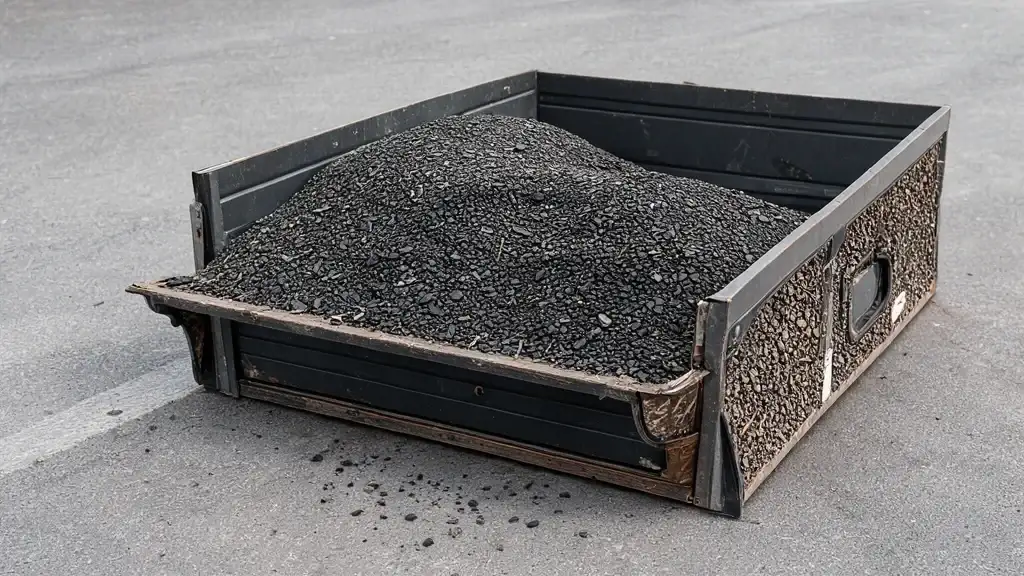
A compact pickup usually holds 1 to 1.5 cubic yards of mulch, while a full-size pickup commonly holds 1.5 to 3 cubic yards. The safe amount depends on payload capacity, which means the combined weight of passengers, cargo, tools, and mulch that the truck can carry.
A cubic yard equals 27 cubic feet. Most truck beds hold less than their wall height suggests because a level load keeps mulch from spilling, protects visibility, and places less pressure on the tailgate.
| Pickup bed size | Practical loose mulch volume | Approximate bed fill | Best use |
|---|---|---|---|
| Compact, 5-foot bed | 1 to 1.5 cubic yards | Level with bed sides | Small garden refresh |
| Midsize, 5 to 6.5-foot bed | 1.25 to 2 cubic yards | Level or slightly heaped | Several flower beds |
| Half-ton, 5.5 to 6.5-foot bed | 1.5 to 2.5 cubic yards | Level with careful loading | Typical yard project |
| Half-ton, 8-foot bed | 2 to 3 cubic yards | Level, with payload check | Larger mulch job |
| Heavy-duty pickup, 6.5 to 8-foot bed | 2 to 4 cubic yards | Limited by payload and side height | Large delivery or worksite load |
These figures describe loose mulch piled in the bed, not compressed bags. A truck bed measuring 6 feet long, 5.5 feet wide, and 2 feet high holds 66 cubic feet when filled to the top, or about 2.44 cubic yards. A level load closer to 18 inches deep holds about 1.83 cubic yards.
That math looks simple, but mulch density changes the weight. Dry shredded wood mulch weighs less than damp hardwood chips, while rubber mulch can weigh far more than wood mulch for the same volume.
What does that mean for your shopping list? Treat the table as a volume estimate, then lower the amount if the mulch feels wet, dense, or unusually heavy.
How to Calculate Truck Bed Mulch Capacity
You can calculate truck bed capacity by multiplying inside length, inside width, and average mulch depth, then dividing the result by 27. Measure in feet, and use the average depth instead of the tallest mound.
Use this formula:
- Measure the inside bed length in feet.
- Measure the inside bed width between the walls.
- Choose a safe average depth in feet.
- Multiply length × width × depth.
- Divide the result by 27 to convert cubic feet into cubic yards.
A 6-foot bed that measures 5.5 feet wide and carries mulch 1.5 feet deep works out like this:
- 6 × 5.5 × 1.5 = 49.5 cubic feet
- 49.5 ÷ 27 = 1.83 cubic yards
That gives you roughly 1.8 cubic yards by volume. The safe load may still be lower if the mulch is wet or the truck has passengers, toolboxes, bed caps, or other cargo.
A heaped load rises above the bed rails in the center. Heaping adds volume, but the extra material can slide during braking or turns, and it may block the rear window. I prefer a level load for normal driving because a few extra shovelfuls aren’t worth a dirty windshield or a scattered trail through town.
Use the Right Bed Measurements
Truck brochures list outside dimensions, but the useful numbers are the inside length, inside width, and usable wall height. Wheel wells take up space, so a simple length-by-width calculation can slightly overstate the real capacity.
Measure from the front wall to the closed tailgate. Measure the narrowest width between the bed walls, not the wider space above the wheel wells. If a bed liner has thick sides, measure inside the liner.
Pro Tip: Keep a note in your phone with the bed’s inside dimensions. The next mulch, soil, gravel, or firewood run becomes a two-minute calculation instead of a guessing game.
Don’t fill the bed to the top just because the walls allow it. A 2-foot wall does not mean a 2-foot-deep safe load, especially when the truck already carries a toolbox, passengers, a trailer hitch, or heavy equipment.
Account for Mulch Type and Moisture
Wood mulch changes weight as moisture changes. Freshly delivered mulch may feel damp and compact, while old dry mulch has more air spaces and may spread farther.
Rubber mulch has a different weight profile from pine bark, cedar, hardwood, or dyed wood mulch. A cubic yard of rubber mulch can push a light-duty pickup closer to its payload limit even though the volume looks modest.
The supplier’s weight estimate matters more than a generic online number. Ask how much the specific product weighs per cubic yard, especially after rain.
How Much Weight Can a Pickup Carry?
A pickup can carry only as much mulch as its payload rating allows after subtracting passengers and other cargo. The payload label on the driver-side doorjamb gives the most useful number for that specific truck, while the owner’s manual explains loading limits and axle restrictions.
Payload is not the same as towing capacity. Towing capacity describes a trailer behind the truck; payload describes weight inside the truck and on the truck’s hitch.
Use this quick calculation:
- Door-label payload rating
- Minus driver and passengers
- Minus tools, bed cover, toolbox, and equipment
- Minus mulch weight
- Equals remaining payload
A truck with a 1,500-pound payload rating may have only 1,250 pounds left after people and gear. If the mulch weighs 600 pounds per cubic yard, two cubic yards would weigh about 1,200 pounds before any extra moisture is counted.
That load might fit by volume and still leave very little safety margin. The truck may squat at the rear, steering may feel light, and braking distance can increase.
I once loaded a pickup with a volume that looked reasonable but felt far heavier than expected because the mulch had taken on rain. The truck handled poorly on the way home, and that was enough to make me stop treating bed space as the main limit.
How to Check the Truck Before Loading
Safety starts before the first scoop reaches the bed. Check the doorjamb payload label, tire pressure, tire condition, tailgate latch, and suspension height.
Look for these warning signs:
- The rear of the truck sits noticeably lower.
- The front end feels light.
- Tires look wider at the sidewall or show unusual bulging.
- The tailgate or bed floor flexes.
- Braking, steering, or turning feels different.
If any of those signs appear, stop loading or unload part of the mulch. A qualified mechanic can check a truck with worn springs, weak shocks, damaged tires, or suspension problems.
Important Tip: Never use the truck’s maximum payload as a target. Leave room for wet mulch, shifting material, people, and the uncertainty that comes with bulk products.
Weight Estimates by Mulch Type
The table below gives broad planning ranges for common mulch materials. Actual weight changes with moisture, particle size, wood species, and how tightly the material settled.
| Mulch material | Approximate weight per cubic yard | Pickup planning note |
|---|---|---|
| Dry pine bark or light wood mulch | About 300 to 500 pounds | Often easier for small pickups |
| Typical shredded wood mulch | About 400 to 700 pounds | Common range for garden projects |
| Damp hardwood mulch | About 600 to 900 pounds or more | Reduce the load if it feels wet |
| Wood chips | About 400 to 800 pounds | Chunk size changes the weight |
| Rubber mulch | Often 1,000 pounds or more | Check the supplier’s exact estimate |
| Compost-blended mulch | Varies widely | Moisture can add substantial weight |
These ranges help with planning, not certification. A supplier’s scale ticket or product label deserves priority over a broad estimate.
How to Load Mulch Without Damaging the Truck
Load mulch with the tailgate closed whenever possible, keep the pile even, and spread weight across the bed instead of building one tall mound near the cab or tailgate. A load tarp keeps loose material from blowing out and protects the truck from rain.
Put a tarp in the bed before loading if you plan to shovel mulch out by hand. Leave enough tarp along the sides to pull the material out later, but keep the loose edges away from the tires.
Use these steps:
- Park on firm, level ground away from traffic.
- Check payload, tires, tailgate, and bed condition before loading.
- Ask the loader to place material across the bed, not in one concentrated pile.
- Keep the mulch level with the bed sides or lower.
- Close and secure the tailgate before driving.
- Cover the load with a tarp and fasten every corner.
- Drive slowly, leaving extra room for braking and turns.
- Recheck the tarp after the first few miles.
A front-heavy pile can make the truck squat at the rear, while a load concentrated at the tailgate puts extra stress on the tailgate hinges and bed floor. Even distribution helps the truck stay balanced.
Can you drive with the tailgate down to make room for more mulch? You can gain some length, but the tailgate may not be rated to support a large, heavy pile, and loose mulch can spill during braking. Keep the tailgate closed unless the truck manual and load setup support another arrangement.
Tools That Make Unloading Easier
A long-handled shovel works well for moving a loose pile, but the blade shape matters. A broad scoop moves more mulch per pass, while a narrow blade gives better control in tight beds and flower borders.
If you’re comparing tools, the best shovel for mulch usually has a light handle, a wide blade, and a comfortable grip that reduces repeated bending. For loose bark or chunky chips, a pitchfork can lift and spread material with less packing on the blade.
A best pitchfork for mulch has tines that hold bulky material without dragging half the pile back into the truck. Use a wheelbarrow for longer distances, and keep the load small enough to steer without fighting the handles.
My favorite setup is simple: tarp under the mulch, shovel for the first few feet, then a wheelbarrow for the garden beds. It saves the lower back and prevents the truck bed from turning into a wooden-chip bathtub.
How Many Trips Should You Plan?
Plan another trip when the required mulch volume exceeds the truck’s safe capacity, not just its visible bed space. Two lighter loads are safer than one overloaded trip, and the extra fuel usually costs less than a damaged tire or bent tailgate.
A garden needing 4 cubic yards may take two trips in a full-size half-ton pickup. A compact pickup may need three or four trips for the same project, depending on the mulch weight and bed size.
Could delivery be cheaper than hauling it yourself? Compare the delivery charge with fuel, time, loading help, and the risk of overloading. For larger orders, delivery often wins on convenience and keeps your truck out of the heavy-load guessing game.
Converting Bags, Scoops, and Truckloads
One cubic yard equals 27 cubic feet, 13.5 bags of 2-cubic-foot mulch, or 18 bags of 1.5-cubic-foot mulch. Bag labels vary, so use the printed volume rather than assuming every bag holds the same amount.
The basic conversions are:
- 1 cubic yard = 27 cubic feet
- 1 cubic yard = 13.5 bags at 2 cubic feet each
- 1 cubic yard = 18 bags at 1.5 cubic feet each
- 1 cubic yard = 54 bags at 0.5 cubic feet each
Bulk suppliers may sell mulch by the cubic yard, scoop, or truckload. A loader scoop has no universal size because bucket capacity differs by machine. Ask the yard how many cubic feet the scoop holds before paying for a partial scoop.
If you’re comparing bulk and bagged material, the guide to how many cubic feet in a scoop of mulch can help translate a loader bucket into the same cubic-foot language used on bag labels. That makes price comparisons much less confusing.
The same math helps with wheelbarrow loads. A standard wheelbarrow may carry around 2 to 3 cubic feet, but the real amount depends on the barrow size and how high the mulch is piled. The answer to how many wheelbarrows of mulch in a yard changes with each wheelbarrow, so count by cubic feet rather than by heap height.
How Much Mulch Does the Garden Need?
Measure each bed’s length and width, then choose the target depth. Mulch usually goes down about 2 to 4 inches, depending on the plantings, material, and the purpose of the mulch.
Use this formula:
- Multiply bed length by bed width in feet.
- Multiply that area by depth in feet.
- Divide by 27 for cubic yards.
A 12-by-8-foot bed covered 3 inches deep needs about 0.89 cubic yards:
- 12 × 8 × 0.25 = 24 cubic feet
- 24 ÷ 27 = 0.89 cubic yards
Round up modestly for settling and uneven ground. Don’t build mulch against tree trunks, shrub stems, siding, or porch posts because trapped moisture can cause decay and invite pests.
For a more detailed bed-by-bed estimate, use how much mulch do I need as a planning reference before choosing the truck size. It’s much easier to match the order to the pickup than to guess after the loader fills the bed.
Pro Tip: Mark the bed’s target depth with a strip of painter’s tape on the inside wall. A 12-inch mark and an 18-inch mark give the loader a quick visual limit.
Common Mulch Loading Mistakes
The most common mistake is filling the bed by eye without checking the truck’s payload rating. A light-looking load can weigh heavily when the material is wet, compacted, or made from rubber.
Other trouble spots include:
- Counting the bed’s top edge as usable volume.
- Forgetting passengers and tools in the payload calculation.
- Loading a tall mound above the bed rails.
- Leaving the tailgate down under a heavy pile.
- Driving without a tarp or tie-downs.
- Measuring a garden in inches but calculating in feet.
- Assuming every supplier scoop has the same volume.
- Spreading mulch against plant stems or tree trunks.
Mulch also settles after loading and after spreading. A truck that appears full at the supplier may deliver slightly less usable coverage once air spaces collapse.
One final check prevents many headaches: compare your needed cubic yards, the truck’s safe volume, and the product’s estimated weight. The lowest limit controls the load.
- Compact pickups usually carry 1 to 1.5 cubic yards.
- Full-size pickups commonly carry 1.5 to 3 cubic yards.
- Payload rating matters more than bed volume when mulch is wet or dense.
- Measure in cubic feet, then divide by 27 to get cubic yards.
- A level, covered load is safer than a tall heap above the bed rails.
FAQs About How Much Mulch Fits in a Truck Bed
Can a half-ton truck carry 2 cubic yards of mulch?
Yes, a half-ton truck can often carry 2 cubic yards of ordinary wood mulch, but the payload rating and moisture level decide whether the load is safe. Two cubic yards may weigh roughly 800 to 1,800 pounds, so subtract passengers, tools, and accessories before loading.
How many bags of mulch fit in a pickup truck?
A pickup truck may carry about 27 to 54 bags of mulch, depending on bag size and payload. Two-cubic-foot bags equal 13.5 bags per cubic yard, while half-cubic-foot bags equal 54 bags per cubic yard, so check each label.
Is it safe to load mulch above the truck bed rails?
No, loading mulch above the rails creates spill and visibility problems and raises the center of gravity. Keep the load level with the bed sides, cover it with a secured tarp, and reduce the amount when the material is wet or heavy.
How much does one cubic yard of mulch weigh?
One cubic yard of wood mulch commonly weighs about 300 to 900 pounds, depending on wood type, particle size, and moisture. Rubber mulch often weighs much more, so a supplier’s product-specific weight estimate matters before loading a pickup.
Can mulch damage a truck bed?
Yes, mulch can stain the bed, trap moisture, scratch painted surfaces, and add stress to the tailgate when loaded carelessly. A tarp under the mulch, a closed tailgate, and an even load protect the truck and make cleanup much easier.
Should mulch be loaded with the tailgate up or down?
Mulch should usually be loaded and transported with the tailgate up. A closed tailgate supports the material and keeps weight inside the bed, while driving with the tailgate down can increase spill risk and place extra stress on the tailgate.
Choose the Load That Fits Your Truck
A pickup truck’s mulch capacity comes down to two limits: cubic-yard space and safe payload weight. Use the smaller limit, keep the load level, and ask the supplier about moisture and product weight before the loader starts.
My practical choice is a slightly lighter load with a tarp and a second trip if needed. That approach costs a little more time, but it protects the truck, keeps the ride predictable, and leaves you with mulch instead of a roadside cleanup job.
Measure the garden first, check the doorjamb payload label, and write down the truck bed dimensions. With those three details, you can order the right amount and make the trip with far less guesswork.

I’m Maya L. Greenwood, a lifelong plant lover who believes anyone can grow something beautiful with the right guidance. After years of testing soil mixes, pruning methods, irrigation tricks, and pest-safe solutions, I started EasyGardenTips.com to turn hard-won lessons into step-by-step advice. From seed starting and container gardens to composting and seasonal checklists, my goal is to make gardening simple, sustainable, and fun.