5 Best Pitchfork for Mulch to Spread and Turn Beds Faster
A pitchfork that is wrong for mulch can turn a simple bed refresh into a slow workout. Tines that let material slip, a handle that makes you bend too far, or a loose head can leave mulch scattered across paths and your back complaining before the job is done.
For mulch, pay attention to the tine count and spacing first, because those details decide whether a scoop stays together or falls through before reaching the bed. Handle length matters just as much, since a tool that is too short encourages bending while one that is too long can feel awkward around shrubs.
Here is what this guide covers:
- Which tine designs work best for bark, wood chips, leaves, and compost.
- How handle length, grip design, and head shape affect comfort.
- How to spread mulch evenly without burying stems or tree trunks.
- How to clean, store, and inspect a garden fork before the next season.
Quick Picks
-
Best For Wide loads and quick assembly

COSITA Pitch Fork for Garden, Wide Pitchfork
A 10-tine carbon steel head moves more mulch per scoop, while the 44-inch fiberglass handle suits routine garden work.
-
Best For Tall users and back comfort

Nohovu Heavy Duty 10 Tine Pitchfork with
The 56-inch handle and curved 10-tine head support a more upright posture when spreading mulch or turning compost.
Top 5 Pitchforks for Mulch at a Glance
COSITA is the easiest place to start if you want a wide head, a manageable length, and quick assembly. Nohovu and VNIMTI suit taller users who want more reach, while KOLEIYA offers a narrower five-tine layout and the 45-inch orange fork favors a wide head with a shorter reach.
| Product image | Product name | Check product |
|---|---|---|
| 1 |
COSITA Pitch Fork for Garden, Wide Pitchfork | Check Price |
| 2 |
Nohovu Heavy Duty 10 Tine Pitchfork with | Check Price |
3 |
VNIMTI Pitch Fork Heavy Duty, 10-Tine Pitchfork | Check Price |
4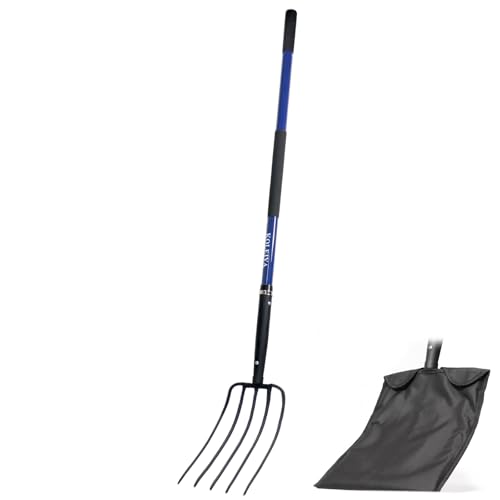 |
KOLEIYA 5-Tine Pitchfork for Gardening, 57-Inch Heavy | Check Price |
5 |
Pitch Fork Pitchfork,10-Tine Wide 45Inch Fiberglass Manure | Check Price |
5 Best Pitchforks for Mulch: Detailed Reviews
When I chose the best pitchfork for mulch, I paid attention to head width, tine count, handle length, grip control, and the connection between the head and shaft. Those details affect how much mulch stays on the fork, how often you need to reload, and how much bending the job requires.
The five choices cover a useful range rather than pretending every garden has the same needs. Comparing them side by side helps you match the tool to your height, the size of your beds, the type of mulch you move, and whether you also handle compost, hay, leaves, or manure.
1. COSITA Pitch Fork for Garden, Wide Pitchfork
A 10-tine carbon steel head moves more mulch per scoop, while the 44-inch fiberglass handle suits routine garden work.
- ColorRed
- Length44 inches
- Weight5 pounds
- Tines10
COSITA Pitch Fork is a wide garden fork for moving mulch, compost, leaves, and other loose material in backyard beds or around a small property.
Wide head for fewer trips
The head has 10 carbon steel tines spread across a wide working area. Carbon steel is a strong steel blend used for tools that need to resist bending under force, so these tines are suited to lifting loose mulch rather than merely raking the surface.
A wide 10-tine layout lets COSITA Pitch Fork carry more material in one scoop than a small garden fork. That can save repeated trips from a mulch pile to the bed, especially when the pile is several yards away or the bed is large.
The spacing still matters with chunky bark. Very large pieces may rest across the tines instead of sitting in a solid sheet, so a fuller scoop may need a steady lift and a short walking distance.
Fiberglass shaft and D-grip
The 44-inch fiberglass handle gives COSITA Pitch Fork a useful balance between reach and control. Fiberglass is a weather-resistant shaft material that will not splinter like untreated wood, which makes storage and outdoor use simpler.
The D-grip gives the upper hand a defined place to push and steer. That helps when you angle mulch into a bed instead of dropping the whole load in one spot, and the 5-pound weight keeps the tool substantial without making the fork unusually bulky.
COSITA Pitch Fork is also described as requiring no tools for assembly. A reinforced joint is meant to hold the head and handle together, but you should still check for movement before lifting a heavy load.
Pros:
- Ten tines, wider contact area for larger mulch scoops.
- Carbon steel head, resists bending during normal heavy work.
- Fiberglass handle, avoids splintering and weather-related warping.
- D-grip, gives better control while tipping mulch.
- 44-inch length, balances reach with close garden control.
- Five-pound weight, remains manageable during repeated lifts.
Cons:
- 44-inch length may feel short for very tall users.
- Wide heads can be awkward between closely planted shrubs.
- Large bark pieces may not settle evenly across every tine.
Buy it if: you move mulch across open beds and want a wide 10-tine head with a manageable 44-inch reach.
Skip it if: you need a very long handle for standing fully upright, because a taller garden fork would suit you better. For another fit, consider Nohovu or Vnimti.
I’d pick COSITA Pitch Fork for a typical homeowner who refreshes beds a few times each year and also turns compost or clears leaves. The combination of 10 tines, a 44-inch shaft, and a D-grip makes the basic work pattern easy to understand. I would double-check the assembled joint and the available clearance around shrubs before buying.
COSITA Pitch Fork makes the most sense for medium-size beds where control matters as much as load size.
2. Nohovu Heavy Duty 10 Tine Pitchfork with
The 56-inch handle and curved 10-tine head support a more upright posture when spreading mulch or turning compost.
- ColorYellow
- Length56-inch
- Tines10
- HandleFiberglass
Nohovu Heavy Duty Pitchfork is a long-handled 10-tine fork for spreading mulch, turning compost, moving hay, and clearing loose yard debris while keeping your hands farther from the ground.
Curved tines support loose loads
Nohovu Heavy Duty Pitchfork uses 10 evenly spaced tines with a curved shape. A curved tine layout cups loose material slightly, which helps mulch stay supported while you lift and carry it a short distance.
The tine tips are finely ground for easier penetration into compost and other loose piles. That does not turn the fork into a digging shovel, but it can make starting a scoop easier when mulch has settled or clumped together.
The head has a protective coating described as reducing wear and rust. Mulch often holds moisture, so drying the head after wet work remains sensible even with a coated finish.
56-inch fiberglass handle
The 56-inch fiberglass handle is the main reason to consider Nohovu Heavy Duty Pitchfork. A longer shaft can help you work with less bending, especially when a mulch pile sits on the ground and you need to repeat the same scoop dozens of times.
The non-slip grip helps keep your hands from sliding as you pull through a pile. Double-riveted connection points add support at the area where the head meets the shaft, which is useful because that joint takes repeated impact during lifting and tipping.
The trade-off is reach in tight places. Nohovu Heavy Duty Pitchfork may feel less nimble around low branches, narrow borders, or raised beds that are easy to reach with a shorter tool.
Pros:
- Ten curved tines, support mulch during short carries.
- Finely ground tips, enter loose compost more easily.
- 56-inch fiberglass handle, reduces repeated bending.
- Non-slip grip, improves control with damp hands.
- Double-riveted connection, adds support at the joint.
- Protective coating, helps limit surface wear and rust.
Cons:
- Longer shaft may feel awkward in narrow beds.
- Curved head can hold more material than needed for light edging.
- A taller handle needs more room to swing and tip.
Buy it if: you are tall or work through large mulch piles, because the 56-inch handle helps keep your posture more upright.
Skip it if: you work mostly between tight shrubs and raised-bed corners, because a shorter garden fork would suit you better. Cosita and Vnimti are worth a closer look instead.
What I like about Nohovu Heavy Duty Pitchfork is the clear focus on reach and posture. The curved 10-tine head gives loose mulch support, while the long fiberglass shaft reduces the urge to hunch over every scoop. I would check the handle length against your height and storage space before ordering.
Nohovu Heavy Duty Pitchfork is the sensible pick for broad beds, tall gardeners, and repeated mulch moving.
3. VNIMTI Pitch Fork Heavy Duty, 10-Tine Pitchfork
The catalog lists Premium Material: The head of this pitch fork is forged from premium high carbon steel, delivering excellent t. Compare fit and care needs before choosing.
- ColorOrange
- Length58 inches
- Weight6.1 lbs
- Tines10
VNIMTI Heavy Duty Pitch Fork is a long 10-tine garden fork for moving mulch, compost, hay, manure, leaves, and straw across larger outdoor areas.
Ten tines and a widened head
VNIMTI Heavy Duty Pitch Fork has a widened 10-tine head designed to carry more loose material in one load. The evenly spaced tines help limit material loss, so fewer pieces fall through while you walk from the pile to the bed.
The head is made from high carbon steel, which gives the tines a firm structure for repeated lifting. A strong head helps with settled mulch, though the fork should still be used as a lifting tool rather than a lever for rocks or compacted soil.
The wider layout is useful for spreading a thin layer over a broad bed. For a narrow planting strip, the same width can make accurate placement harder, so you may need to approach from the long side of the bed.
58-inch handle and two grips
VNIMTI Heavy Duty Pitch Fork measures 58 inches and weighs 6.1 lbs. The long shaft gives more reach and leverage, while the added weight may make the fork feel planted when you are pulling mulch toward yourself.
Two anti-slip grips give your hands more than one place to hold. One hand can guide the upper shaft while the other controls the lower section, which helps you keep a load level before tipping it over the bed.
That length deserves a practical check before purchase. A 58-inch garden fork can be comfortable in open areas but may catch on fences, low tree limbs, or the roof of a small shed.
Pros:
- Widened 10-tine head, covers more mulch per scoop.
- High carbon steel, supports repeated heavy lifting.
- 58-inch length, reduces deep bending over piles.
- Two anti-slip grips, give more hand-position choices.
- Six-point-one-pound weight, feels stable during larger lifts.
- Sharp tines, enter loose mulch and compost more readily.
Cons:
- Long 58-inch shaft needs generous swinging clearance.
- Six-point-one-pound weight may tire smaller users sooner.
- Wide head is less precise in crowded planting areas.
Buy it if: you handle large mulch piles in open spaces and want maximum reach with a widened 10-tine head.
Skip it if: you have limited arm strength or crowded beds, because a shorter and lighter pitchfork would suit you better. If those trade-offs rule it out, Cosita or Nohovu may suit you better.
I’d choose VNIMTI Heavy Duty Pitch Fork for a large yard where the extra reach will be used rather than stored in a corner. The 58-inch length and two grips make the posture and hand control easy to tailor, while the 10-tine head keeps loads from becoming too small. The main hesitation is the 6.1-pound weight, which deserves an honest lift test if a family member will share the tool.
VNIMTI Heavy Duty Pitch Fork fits broad beds and frequent material handling best.
4. KOLEIYA 5-Tine Pitchfork for Gardening, 57-Inch Heavy
The catalog lists 1. 【Premium Durability and 5-Tine Design】Crafted with high-carbon steel tines and a reinforced fiberglass hand. Compare fit and care needs before choosing.
- ColorBlue
- Size57inch
- HandleFiberglass
- Material1. 【Premium Durability and 5-Tine Design】Crafted with high-carbon steel tines and a reinforced fiberglass hand
KOLEIYA 5-Tine Pitchfork is a 57-inch garden fork with five tines for moving mulch, compost, hay, manure, and loosening soil in beds.
Five-tine layout for controlled loads
KOLEIYA 5-Tine Pitchfork uses five high-carbon steel tines instead of the 10-tine layout found on most of the other choices here. Fewer tines leave more open space between each tine, which can help you separate, fluff, or aerate loose material instead of lifting one dense slab.
The tines are described as sharp enough to penetrate loose material and help with soil loosening. That makes KOLEIYA 5-Tine Pitchfork more flexible for someone who wants a mulch fork that can also break up the surface of a bed, though the fork is not a replacement for a dedicated digging tool in hard ground.
A five-tine head may carry less fine mulch per scoop than a wider 10-tine head. The benefit is more control when you are working near plant stems or trying to spread a thin layer without burying everything underneath.
Long fiberglass handle
The 57-inch fiberglass handle gives KOLEIYA 5-Tine Pitchfork a long working reach. Fiberglass resists splintering and does not absorb outdoor moisture the way untreated wood can, which helps simplify storage between uses.
Two non-slip grips provide leverage from different hand positions. One grip can help you pull material toward your body, while the other can guide the fork as you tip mulch into a narrow area.
The head is described as a single-piece forged design with a rust-resistant finish. The double-reinforced connection is meant to limit wobbling, but routine checks still make sense after assembly and heavy use.
Pros:
- Five-tine layout, gives better control around plants.
- High-carbon steel tines, support mulch and soil work.
- 57-inch fiberglass handle, reduces repeated bending.
- Two non-slip grips, improve leverage and hand placement.
- Single-piece forged head, limits separate head parts.
- Rust-resistant finish, helps protect the head in damp storage.
Cons:
- Five tines may carry less mulch per scoop.
- Long handle can be excessive in narrow beds.
- Fewer tines allow fine material to fall through more readily.
Buy it if: you need controlled mulch placement near plants and also want a long fork for light soil loosening.
Skip it if: you want the largest possible mulch load each time, because a wide 10-tine fork would suit you better.
To me, the smartest thing about KOLEIYA 5-Tine Pitchfork is the more open head. The five-tine design gives you room to work around stems and spread material without making every scoop a heavy blanket. I would double-check whether your mulch is fine enough to slip between the wider gaps.
KOLEIYA 5-Tine Pitchfork is best for careful bed work rather than fast movement from a huge pile.
5. Pitch Fork Pitchfork,10-Tine Wide 45Inch Fiberglass Manure
The catalog lists 🍃【14.96” WIDE 10-TINE HEAD – MOVE 40% MORE PER SCOOP】 Maximize every lift. With a full 14.96-inch wide head an. Compare fit and care needs before choosing.
- ColorOrange
- Tines10
- Number Of Items1
- WeightNot listed; check details
10-Tine Wide Pitchfork is a 45-inch fiberglass-handled fork with a broad 10-tine head for mulch, compost, manure, leaves, and other outdoor material.
Wide 14.96-inch head
10-Tine Wide Pitchfork has a head listed as 14.96 inches wide with 10 tines. The broad head is designed to gather a substantial load, which can reduce the number of trips when you are spreading mulch across a long bed.
The tines are made from high-carbon steel and the connection uses double rivets with an epoxy seal. A rivet is a fixed fastener that helps hold parts together, while the epoxy seal fills around the joint, so this arrangement is meant to reduce wobble during lifting.
A wide head is not automatically better for every bed. Around small shrubs or between closely spaced plants, a broad fork can catch branches and make accurate placement slower.
Fiberglass grip and shorter reach
The fiberglass handle has a textured rubber D-grip described as non-slip, including in wet or muddy conditions. A D-grip is the handle at the top of a garden tool, and the shape gives your upper hand a firm place to push while the lower hand controls the shaft.
At 45 inches, 10-Tine Wide Pitchfork sits between a short garden fork and the longer 56-, 57-, and 58-inch choices in this group. That can make the tool easier to control for shorter users, though taller gardeners may bend more while loading ground-level mulch.
The handle is described as reinforced fiberglass and backed by a lifetime warranty against breaks. Check the exact warranty terms and the required process on the purchase page, since the supplied details do not explain exclusions or claim steps.
Pros:
- 14.96-inch head, gathers a broad mulch load.
- Ten tines, support mulch and compost during lifting.
- Double-riveted joint, helps limit head movement.
- Epoxy-sealed connection, adds support around the joint.
- Textured rubber D-grip, improves wet-weather hand control.
- 45-inch fiberglass handle, offers a middle-ground reach.
Cons:
- Broad head may be awkward between close plantings.
- 45-inch reach can require bending for tall users.
- Warranty details need checking before purchase.
Buy it if: you want a wide 14.96-inch head and a 45-inch handle for fast work in open beds.
Skip it if: you need maximum reach for a large mulch pile, because a longer-handled pitchfork would suit you better.
I’d pick 10-Tine Wide Pitchfork for someone who values load size but does not want a 56-inch or longer shaft. The wide head, double-riveted joint, and rubber D-grip give the fork a practical setup for muddy garden work. I would read the warranty terms and measure the path between your plants before buying.
10-Tine Wide Pitchfork fits open beds and shorter users who want a broad scoop.
How to Choose the Best Pitchfork for Mulch
The best pitchfork for mulch has enough tines to hold your material, a handle that matches your height, and a head narrow enough for your beds. Start with the work area, then choose load size and comfort instead of chasing the largest head.
Choose the right tine count
Tine count describes how many metal prongs make up the fork head. Ten tines usually create a broad support surface for mulch, leaves, compost, or straw, while five tines leave more open space for controlled spreading and light soil work.
Choose 8 to 10 tines for moving a large pile across an open bed. Choose around 5 tines when you work near stems, need more space between prongs, or want to loosen the top layer of soil as part of the job.
A high tine count does not guarantee that fine mulch will stay put. Check the spacing and head width, since very small bark pieces can fall through wide gaps.
Match handle length to your height
Handle length changes how far you bend and how much room the fork needs to swing. The 44- and 45-inch options are easier to control in smaller beds, while the 56-, 57-, and 58-inch options can help taller users work more upright.
For a quick home check, stand on a flat surface and hold the fork as if you were loading mulch. Your hands should feel comfortable without forcing your shoulders upward or making your back round deeply.
A longer shaft is useful only if you have space to use it. Measure narrow paths, shed doors, raised beds, and low branches before choosing a long-handled fork.
Consider head width
Head width tells you how much ground the fork covers from side to side. A broad head can make a large mulch job faster, while a narrower head gives better control around shrubs and in tight planting rows.
A head around 15 inches wide can be helpful in open beds. For crowded borders, choose a smaller working area or a five-tine layout if the available choices give you better control.
Keep the head size in proportion to your strength. A wide head filled with wet mulch becomes heavy quickly, and no clever handle can make an oversized load feel light.
Check the metal and joint
The metal tines need to resist bending while the joint needs to stay firm. High-carbon steel appears in the listed heads, and several designs add rivets, reinforcement, coating, or an epoxy seal around the handle connection.
Look for tines that are straight, evenly spaced, and firmly attached before the first heavy load. A small amount of movement at the joint can become a bigger problem after repeated lifting.
Do not use a mulch fork as a pry bar for stones or compacted ground. Even strong steel can bend when a long handle multiplies force against an immovable object.
Pick a grip you can control
A D-grip is the top handle that gives your upper hand a firm steering point. Non-slip material helps when the handle or your gloves are damp, while two grip areas let you change hand position during a long job.
Choose a fixed D-grip if you want simple control while tipping mulch. Look for two grip areas if you often alternate between pulling material toward you and lifting it away from your feet.
Wear gloves that still let you feel the handle. Thick gloves can protect your hands, but loose gloves may reduce control around a heavy load.
Account for mulch type
Fine shredded mulch, chunky bark, wood chips, and damp compost behave differently on a pitchfork. Fine material needs closer support, chunky pieces need a stable head, and wet mulch becomes heavier than its dry appearance suggests.
Use a 10-tine head for broad movement of bark, chips, and mixed yard material. Use a five-tine head when you need to tease apart clumps or place mulch carefully around established plants.
If mulch has become soaked, work with smaller scoops. A half-load that stays under control is faster than a full load that forces you to stop, recover, and clean up a spill.
Think about storage and care
Fiberglass handles simplify outdoor storage because the shaft will not splinter, but the metal head still needs basic care. A coated or rust-resistant finish helps, yet moisture left on steel can still create trouble over time.
Choose a fork that fits your shed, garage, or wall rack. A 58-inch tool needs more vertical or horizontal storage room than a 44-inch tool, and forcing a long shaft into a cramped corner can damage nearby items.
How to Use Mulch with a Pitchfork for the Best Results
The best technique is to move small, stable loads and spread mulch after the bed has been cleared. Keep the fork close to the ground, lift with your legs, and use the tines to place material rather than throw it.
- Clear weeds, fallen branches, and old clumps from the bed before opening the mulch pile.
- Check the pitchfork head and handle for loose movement, bent tines, or sharp damage.
- Stand with one foot slightly ahead of the other and keep the mulch pile within a comfortable reach.
- Push the tines under the loose edge of the pile instead of stabbing straight down into compacted material.
- Load enough mulch to control comfortably, leaving room for the material to stay balanced.
- Lift by straightening your legs and keeping the load close to your body.
- Tip the mulch onto the bed, then use the back or side of the head to spread it gently.
- Keep mulch away from trunks, stems, irrigation valves, and the edges of walkways.
A pitchfork is for moving and spreading loose mulch, not for chopping through packed bags or breaking hard soil. Open a bag with a hand tool first, then use the fork once the material has loosened.
For a complete layer, place small piles at regular intervals rather than making one giant mound at the nearest edge. This approach reduces long carries and makes the final depth easier to judge.
Keep your wrists straight during the lift. If your wrists bend sharply or your shoulders twist, reduce the load and reposition your feet before continuing.
The spreading stage is easier when the bed has been prepared first. A clean edge and a clear plan for thickness keep mulch from drifting into grass or covering plants that need air around the base.
If you are unsure about the order of clearing, edging, and spreading, use this practical mulch installation guide marker: mulch installation steps. The tool should support the plan, not replace it.
How to Make Your Pitchfork for Mulch Last Longer
Clean the head after each mulch session, dry the metal before storage, and check the handle joint before the next heavy job. A few minutes of care prevents damp mulch and loose connections from becoming seasonal problems.
After every use
Shake or brush mulch from between the tines while the material is still loose. If damp compost clings to the head, rinse it with plain water and dry the metal fully before putting the fork away.
Inspect the tine tips for bending and check whether the head moves against the shaft. Stop using the fork for heavy loads if the connection feels loose, because extra movement puts more force on the joint.
Wipe dirt from the grip so your hands do not slide during the next lift. A clean handle also makes cracks, fraying, or other surface changes easier to notice.
Before winter storage
Store the fork under cover with the head off the ground. A dry shed, garage, or covered rack protects the steel from repeated wetting and keeps the handle from being stepped on or struck.
Do not leave a pitchfork buried in a mulch pile. Moisture can remain around the head and joint, while hidden tines create a tripping hazard for anyone working nearby.
If the head has a coating, avoid aggressive scraping that removes the finish. Use a soft brush for ordinary mulch and reserve stronger cleaning only for stuck material that water cannot loosen.
During the season
Check the handle connection every few uses, especially after lifting heavy or damp material. Rivets, reinforced joints, and epoxy seals help, but no connection should be treated as maintenance-free.
Straighten your work pattern instead of using the fork to pry roots, stones, or compacted soil. A garden fork can loosen suitable soil, but prying hard objects places unusual force on the tines and shaft.
Keep the tool where children and pets cannot reach the sharp head. Store the head facing down only if the storage setup is secure; a wall rack or protected tool stand is safer than leaning a fork in a busy walkway.
Common Mistakes to Avoid When Buying and Using a Pitchfork for Mulch
Most pitchfork problems begin with a poor match between the tool and the bed, not with the mulch itself. Avoid choosing by tine count alone, overloading the head, or ignoring handle length.
Buying the widest head without measuring the bed
A wide head moves more material but can snag shrubs and catch on narrow paths. Measure the open space between plantings before choosing a broad 10-tine head.
Choosing a long handle only for extra reach
A long shaft can reduce bending but needs room to swing and store. Check your height, bed layout, shed space, and nearby branches together before choosing a 56-, 57-, or 58-inch tool.
Treating every tine gap as the same
Fine mulch can fall through wide spaces while chunky bark may sit well. Match tine spacing and head style to the material you actually use, not only to the number printed in the title.
Filling the fork until the load looks impressive
Wet mulch can become heavy before the scoop looks full. Start with a half-load, then add material only if your posture and grip remain steady.
Using the pitchfork as a digging bar
A fork can enter loose mulch and some workable soil, but hard ground and rocks can bend tines. Use a suitable digging tool to break compacted areas before returning to the pitchfork.
Ignoring the handle joint
A slightly loose connection can worsen under repeated lifting. Test the head before each large job and stop to tighten or repair the connection when movement appears.
Piling mulch against trunks and stems
Mulch touching bark or soft plant stems can hold excess moisture and create a cramped base. Leave a visible gap around trunks and follow the planting needs of each bed.
Spreading before clearing the bed
Old weeds, branches, and debris become harder to remove after mulch covers them. Clear the surface first, then spread an even layer so the pitchfork is doing one job at a time.
How to Plan Mulch Work Through the Seasons
Mulch timing depends on soil temperature, plant growth, moisture, and the material being spread. A pitchfork makes the work easier, but the right season still depends on the bed rather than a fixed calendar date.
For a closer look at seasonal timing, see the best time to mulch marker: best mulch timing. Spring spreading can follow soil warming in many beds, while fall work may protect roots and reduce bare soil through winter.
Fall mulch needs a little restraint. If you are weighing whether to add a layer before cold weather, this guide on fall mulching benefits marker: fall mulching guidance can help you think through moisture, temperature, and plant condition before moving the pile.
Do not spread mulch over frozen ground simply because the calendar says it is time. Wait until the bed is workable, then keep the layer even and away from plant crowns and trunks.
Common Questions About Pitchforks for Mulch
What size pitchfork is best for mulch?
A 10-tine pitchfork with a broad head is usually a good size for moving mulch across open beds. A five-tine head may be easier to control around shrubs and stems. Choose handle length by your height and the space available, since a large head and long shaft can become awkward in a crowded garden.
Is a pitchfork better than a shovel for mulch?
A pitchfork is usually better for loose bark, chips, leaves, and mixed mulch because the tines let excess fine material fall away. A shovel can be better for very fine, damp, or compacted material that needs a solid scoop. Many gardeners choose based on the mulch texture and bed access.
If you want a separate tool for solid scoops, see this guide to the best shovel for mulch marker: mulch shovel choices. A pitchfork remains useful when the pile is airy, chunky, or mixed with leaves.
How thick should mulch be around garden plants?
A common starting point is about 2 to 4 inches, but the right depth depends on the mulch type and plant. Spread the layer evenly instead of making a deep mound, and leave space around trunks and stems. Check local plant-care guidance when a particular tree, shrub, or perennial has special needs.
Can a pitchfork move wet mulch?
Yes, a pitchfork can move wet mulch, but smaller loads are safer and easier to control. Wet material weighs more and tends to clump, so use a strong grip, keep the load close, and take more trips instead of forcing a full scoop.
Dry the head and joint after wet work. Leaving damp mulch packed between steel tines or around the connection can encourage rust and hide damage.
How long should a garden fork handle be?
A handle between 44 and 58 inches can work, depending on your height and the room around the bed. Shorter handles often offer better control in tight spaces, while longer handles can reduce bending in open areas. Hold the fork in a normal working position before buying and check whether your shoulders and back stay relaxed.
How do you spread mulch without damaging plants?
Clear the bed first, then place small loads around the open soil. Keep mulch away from trunks and stems, avoid dragging sharp tines across plant crowns, and use the side or back of the head for light leveling. Smaller scoops are easier to place accurately than a single overloaded lift.
Choose Your Mulch Fork by the Work You Actually Do
Start by measuring the bed and considering your height, then decide whether you value the largest scoop or the most precise placement. Choose a wide 10-tine head for open beds and repeated hauling, or favor a more open five-tine layout when plants and narrow spaces demand control.
Before ordering, confirm the listed length, weight, head width, and connection details on the purchase page. Then plan to use smaller loads, keep the joint dry, and leave clear space around trunks so the new pitchfork helps the garden instead of creating another chore.

I’m Maya L. Greenwood, a lifelong plant lover who believes anyone can grow something beautiful with the right guidance. After years of testing soil mixes, pruning methods, irrigation tricks, and pest-safe solutions, I started EasyGardenTips.com to turn hard-won lessons into step-by-step advice. From seed starting and container gardens to composting and seasonal checklists, my goal is to make gardening simple, sustainable, and fun.