How Many Cubic Feet Are in a Cubic Yard of Mulch
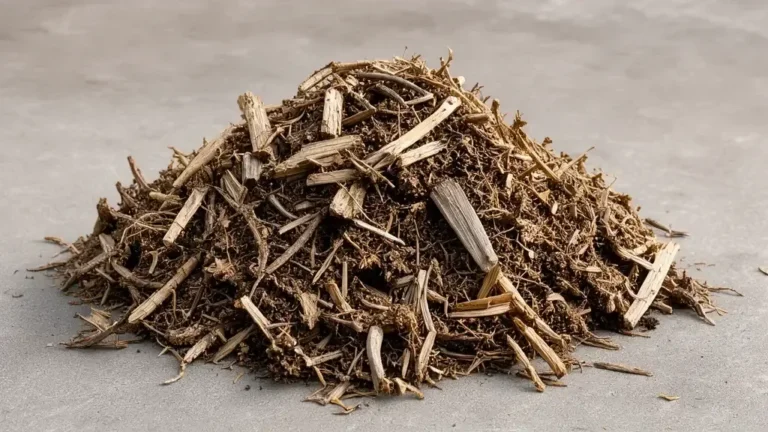
One cubic yard of mulch contains 27 cubic feet. The number comes from multiplying 3 feet by 3 feet by 3 feet, since a cubic yard measures 3 feet long, 3 feet wide, and 3 feet high. That conversion stays the same for bark, wood chips, rubber mulch, compost, and shredded leaves.
Are you trying to turn a cubic-yard delivery into enough coverage for your garden beds? Are you stuck comparing bulk mulch with bags that list only cubic feet?
You’ll learn how to convert mulch volume, estimate coverage at different depths, compare bulk and bagged mulch, and avoid the ordering mistakes that leave a bare strip or a mountain of leftovers.
Get the math right, and you can order close to the amount your beds need, spread a steady layer, and avoid paying for a second delivery. Skip the calculation, and you may run short halfway through the job, bury plant crowns, or spend your Saturday hauling extra bags back and forth.
This takes about 9 minutes to read, and the useful results are:
- Convert cubic yards to cubic feet in seconds.
- Calculate mulch for any bed size and depth.
- Compare bulk mulch with common bag sizes.
- Spot over-ordering, under-ordering, and depth mistakes.
- Plan a clean, practical mulch installation.
How Many Cubic Feet in a Cubic Yard of Mulch?
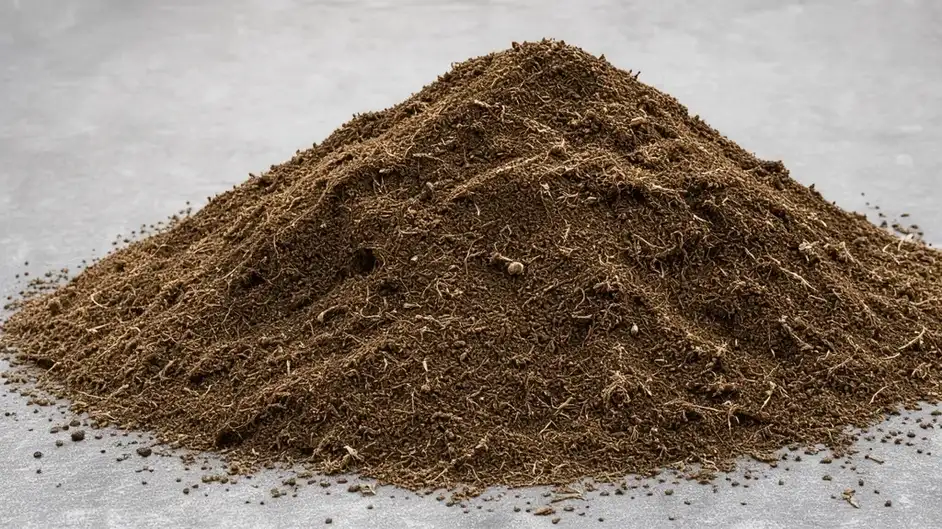
One cubic yard of mulch equals 27 cubic feet, and the basic coverage formula is length in feet × width in feet × depth in feet. A yard of mulch spread 3 inches deep covers about 108 square feet, while the same yard spread 2 inches deep covers about 162 square feet.
The conversion itself is easy:
- Start with the number of cubic yards.
- Multiply that number by 27.
- Use the result as the number of cubic feet.
A half-yard contains 13.5 cubic feet. Two cubic yards contain 54 cubic feet, and 3 cubic yards contain 81 cubic feet.
Depth changes coverage because mulch is a volume, not a flat product. One cubic yard spread thinly travels farther across a bed, while the same yard spread thickly covers less ground.
| Mulch depth | Coverage from 1 cubic yard | Coverage from 1 cubic foot |
|---|---|---|
| 2 inches | About 162 square feet | About 6 square feet |
| 3 inches | About 108 square feet | About 4 square feet |
| 4 inches | About 81 square feet | About 3 square feet |
| 6 inches | About 54 square feet | About 2 square feet |
These figures are close planning numbers, not a promise of perfect coverage. Loose mulch settles, rough bark creates air gaps, and uneven ground eats up extra material.
A 10-foot-by-12-foot bed measures 120 square feet. At 3 inches deep, that bed needs about 1.11 cubic yards, so ordering 1.25 cubic yards gives you a little breathing room without going wildly overboard.
Need to size the order for several beds with different shapes? The mulch calculator guide walks through bed area, depth, and total volume in the same order a typical yard project requires.
Pro Tip: Measure bed depth after you remove weeds and loose debris. Old mulch counts toward the total depth if you leave it in place, but compacted soil and bare spots do not.
How Do You Calculate Mulch Coverage?
Multiply the bed’s length by its width, convert the desired depth from inches to feet, then divide the total cubic feet by 27 to get cubic yards. The full formula is: length × width × depth in feet ÷ 27 = cubic yards of mulch.
Use these steps for a rectangular bed:
- Measure the length in feet.
- Measure the width in feet.
- Multiply length by width to get square feet.
- Divide the mulch depth in inches by 12.
- Multiply square feet by depth in feet.
- Divide cubic feet by 27.
A 15-foot-by-8-foot bed has 120 square feet. At 3 inches deep, the calculation looks like this:
- 3 inches ÷ 12 = 0.25 feet
- 120 square feet × 0.25 feet = 30 cubic feet
- 30 ÷ 27 = 1.11 cubic yards
That result means 1.11 cubic yards fills the measured space mathematically. In real life, 1.25 cubic yards makes more sense because the delivery may settle and the bed may have curves, roots, stones, or low pockets.
How do you handle a round tree ring or a curved flower bed? Break the shape into smaller rectangles, triangles, or circles, calculate each area, and add the sections together before applying the depth.
For a round bed, use the circle formula, 3.14 × radius × radius. A 6-foot-wide circle has a 3-foot radius, so the area is about 28.3 square feet. At 3 inches deep, that area needs roughly 7.1 cubic feet, or about 0.26 cubic yard.
A kidney-shaped bed rarely measures perfectly, and that’s fine. Divide it into two or three rough rectangles, measure each part, and add 10 percent if the outline has lots of curves.
How Much Mulch Should You Add?
Most ornamental beds work well with 2 to 3 inches of mulch, while 3 to 4 inches may suit paths or areas that need more weed suppression. Keep mulch away from trunks, stems, siding, and building vents because trapped moisture can cause rot and invite pests.
Depth depends on the material and location:
- Shredded bark: Usually 2 to 3 inches around shrubs and flowers.
- Wood chips: Often 3 to 4 inches on paths and broad planting areas.
- Fine compost: Commonly 1 to 2 inches as a soil amendment.
- Rubber mulch: Usually applied according to the product label, with playground areas needing special attention.
- Pine straw: Measured by bale count rather than cubic-yard volume in many regions.
A 4-inch layer sounds generous, but it can smother shallow-rooted plants and hold too much moisture in heavy clay soil. I’d rather add a modest layer and refresh it later than dump a thick blanket over every stem.
Important Tip: Leave a 2- to 4-inch gap around tree trunks and woody stems. A mulch volcano looks tidy from the driveway, but it keeps bark damp and creates trouble where the trunk meets the soil.
Bulk Mulch Versus Bagged Mulch
Bulk mulch usually costs less per cubic foot for larger jobs, while bagged mulch offers easier handling and cleaner storage for small beds. Bulk delivery makes sense for several cubic yards, but bags can win when access is tight or the project needs several different materials.
A typical bag label gives volume in cubic feet. Common sizes include 1.5, 2, and 3 cubic feet, though the exact fill varies by brand and product.
| Purchase type | Typical volume | Best fit | Main drawback |
|---|---|---|---|
| Small bag | About 1.5 cubic feet | Pots, narrow borders, small repairs | More bags to carry |
| Medium bag | About 2 cubic feet | Home flower beds | Label volume can vary |
| Large bag | About 3 cubic feet | Larger beds with vehicle access | Heavy and awkward |
| Bulk cubic yard | 27 cubic feet | Large beds and full-yard projects | Needs delivery space |
A cubic yard equals 18 bags that each contain 1.5 cubic feet, 13.5 bags at 2 cubic feet each, or 9 bags at 3 cubic feet each. Since stores sell whole bags, round up to the next full bag.
The common mulch bag sizes matter when you compare shelf prices with a bulk quote. A bag may look inexpensive until you multiply its price by the number needed to reach 27 cubic feet.
I once planned a small front-bed refresh by eye and grabbed what looked like enough bags. The pile disappeared faster than expected, and the last few feet got a thin, stingy layer that made the whole job look unfinished.
That taught me a simple lesson: mulch volume belongs on paper before the shopping trip, even for a small project. A tape measure and a phone calculator beat a second store run every time.
What Mistakes Cause Mulch Shortages?
The most common mulch mistakes are using the wrong depth, forgetting irregular areas, measuring in inches without converting to feet, and treating a bag’s loose volume like compacted volume. Small errors compound quickly across multiple beds.
Watch for these trouble spots:
- Measuring the outside edge instead of the actual planting area.
- Including paths, patios, or large stepping stones in the bed area.
- Using 3 as the depth instead of converting 3 inches to 0.25 feet.
- Assuming one cubic yard covers the same area at every depth.
- Ignoring sloped ground, tree roots, and deep low spots.
- Ordering exactly the calculated amount with no allowance for settling.
- Mixing old mulch into the estimate when the old layer will be removed.
A mulch calculator can give a clean answer, but the calculator still depends on honest measurements. If a bed narrows from 8 feet to 3 feet, split it into sections instead of pretending the entire area is a perfect rectangle.
Why Does Mulch Coverage Change After Delivery?
Mulch coverage changes because loose material settles, moisture changes its weight, and pieces leave air spaces between them. Shredded material usually packs down more than chunky bark, while fresh wood chips can contain large voids.
Delivery piles also look bigger than the final layer. A loose mound has height, but spreading breaks that mound apart across a wide area, and raking exposes thin spots quickly.
Fresh mulch can settle after rain or several weeks of foot traffic. That does not mean the supplier cheated you; it means the material’s loose volume changes as the pieces nest together.
Pro Tip: Ask the supplier how the cubic yard is measured and whether the product is sold loose or in compressed bags. The label and delivery method make a real difference when you compare quantities.
How Can You Check Mulch Depth?
Push a ruler or marked stick through the mulch until it touches the soil, then measure the mulch layer in several spots. Check edges, center areas, slopes, and places near shrubs because one depth reading can hide a thin patch.
Use a simple four-point check:
- Measure near the bed edge.
- Measure in the center.
- Measure beside a large plant.
- Measure the lowest or highest section.
If the target is 3 inches, readings around 2.5 to 3.5 inches usually reflect normal spreading variation. A bare soil patch needs more material, while a 6-inch mound near a shrub needs raking away.
Avoid using mulch to fix a drainage problem. Thick material can slow evaporation, cover surface roots, and hold water against a foundation or wooden edging.
How Many Bags Replace One Cubic Yard?
The number of bags needed for one cubic yard depends on each bag’s cubic-foot rating. Divide 27 by the bag size, then round up because stores do not sell partial bags.
| Bag size | Exact bags for 27 cubic feet | Practical whole-bag count |
|---|---|---|
| 1 cubic foot | 27 | 27 |
| 1.5 cubic feet | 18 | 18 |
| 2 cubic feet | 13.5 | 14 |
| 2.5 cubic feet | 10.8 | 11 |
| 3 cubic feet | 9 | 9 |
The best bagged mulch options can differ in color, texture, smell, and how quickly the material fades. Bagged products also make sense when a narrow gate prevents a bulk truck from dropping material near the bed.
How much ground can one bag cover? The answer depends on bag volume and layer depth, not the bag’s printed color name or the size of the plastic package. The bag coverage chart helps translate cubic feet into square feet at common 2-inch, 3-inch, and 4-inch depths.
A 2-cubic-foot bag covers about 8 square feet at 3 inches deep. At 2 inches, that same bag covers about 12 square feet, while at 4 inches it covers about 6 square feet.
Bulk Delivery Planning
Bulk mulch needs a flat drop area with enough room for the truck, the pile, and your tools. Concrete, asphalt, or a firm driveway works better than soft lawn, where the load may leave ruts.
Before ordering, check:
- Delivery truck access and turning space.
- Low branches, overhead wires, and narrow gates.
- Whether the pile can sit on a tarp.
- How long the material may stay before spreading.
- Whether rain could wash mulch toward a drain.
- Local delivery fees, minimum orders, and distance charges.
Keep the pile away from storm drains and steep slopes. Rain can carry loose bark, dye, and fine soil into drainage systems, creating a mess that nobody wants to explain later.
Bulk mulch also needs a spreading plan. A wheelbarrow, flat shovel, rake, gloves, and a marked depth stick make the work far less frustrating.
Important Tip: Wear gloves and closed-toe shoes while spreading mulch. Sharp bark, splinters, hidden stones, and damp heavy loads can punish bare hands and sandals.
Key Takeaways:
- One cubic yard always equals 27 cubic feet.
- Coverage depends on bed area and mulch depth.
- Three inches is about 0.25 feet.
- Divide cubic feet by 27 to convert back to cubic yards.
- Round up for curves, settling, and uneven ground.
FAQs About How Many Cubic Feet in a Cubic Yard of Mulch
Is one cubic yard of mulch really 27 cubic feet?
Yes, one cubic yard of mulch equals 27 cubic feet because 1 yard equals 3 feet in each direction. Multiplying 3 × 3 × 3 gives 27 cubic feet, regardless of whether the mulch contains bark, wood chips, rubber, or compost.
How many square feet does one cubic yard of mulch cover?
One cubic yard covers about 162 square feet at 2 inches deep, 108 square feet at 3 inches deep, or 81 square feet at 4 inches deep. Loose texture, settling, curves, and uneven soil can reduce the actual finished coverage.
How many bags of mulch equal one cubic yard?
Nine 3-cubic-foot bags equal 27 cubic feet, while fourteen 2-cubic-foot bags provide slightly more than one cubic yard. Eighteen 1.5-cubic-foot bags equal one cubic yard exactly, before settling changes the finished layer.
Can one cubic yard cover a 100-square-foot bed?
Yes, one cubic yard can cover a 100-square-foot bed at roughly 3.2 inches deep. A 3-inch layer uses about 25 cubic feet, leaving close to 2 cubic feet for settling, uneven spots, or small waste.
Should mulch be 2 or 3 inches deep?
Most flower and shrub beds work well with 2 to 3 inches of mulch, while paths may need more. Use less around shallow-rooted plants and keep mulch several inches away from trunks, stems, siding, and vents.
Order the Right Mulch Amount
One cubic yard of mulch contains 27 cubic feet, but that number only becomes useful after you match it to bed area and depth. Measure each bed, convert inches to feet, calculate the volume, and round up modestly for curves and settling.
In my view, 3 inches is a sensible starting point for many ornamental beds, as long as the plants and soil drain well. Order bulk mulch for large, open areas, and choose bags when access, storage, or material variety matters more than price.
Your next step is simple: measure the longest length and widest width of each bed, write down the target depth, and run the calculation before buying anything. That small bit of planning saves money, sore shoulders, and the dreaded last three feet of uncovered soil.

I’m Maya L. Greenwood, a lifelong plant lover who believes anyone can grow something beautiful with the right guidance. After years of testing soil mixes, pruning methods, irrigation tricks, and pest-safe solutions, I started EasyGardenTips.com to turn hard-won lessons into step-by-step advice. From seed starting and container gardens to composting and seasonal checklists, my goal is to make gardening simple, sustainable, and fun.