5 Best Weed Killer for Mulch Beds That Spares Your Plants
Buy the wrong weed killer and you can brown the flowers you meant to protect, miss weeds hiding under mulch, or spend an afternoon spraying with a sore hand. A bottle that is too small means repeated trips to the store, while a broad spray pattern can drift onto shrubs and leave bare, ugly patches in the bed.
For mulch beds, the most useful features are a focused wand, a ready-to-use formula, and clear directions for keeping spray off wanted plants. Root-killing formulas can handle stubborn growth, but careful targeting matters more than a dramatic spray stream when flowers, shrubs, and young trees are nearby.
Here is what this guide covers:
- Which sprayer fits small patches, long beds, and repeated touch-ups.
- How rain timing, planting intervals, and root control affect your plan.
- How to spray mulch without soaking flowers or woody stems.
- Which care habits help a ready-to-use sprayer stay useful.
Quick Picks
-
Best For Small spot treatments

Spruce Weed & Grass Killer₃ Kit, Power
No-mix formula and a reusable power wand simplify targeted spraying for gardeners treating scattered weeds.
-
Best For Large mulch areas

Spectracide Weed & Grass Killer with AccuShot
The 1.33-gallon size and continuous sprayer help cover larger weed patches with less hand fatigue.
Top 5 Weed Killers for Mulch Beds at a Glance
Spruce suits gardeners who want a smaller, no-mix bottle for scattered weeds and simple spot work. Spectracide, the two Roundup options, and Ortho offer larger or smaller ready-to-use formats, with the main differences being container size, wand style, spray duration, and the listed areas of use.
| Product image | Product name | Check product |
|---|---|---|
| 1 |
Spruce Weed & Grass Killer₃ Kit, Power | Check Price |
| 2 |
Spectracide Weed & Grass Killer with AccuShot | Check Price |
3 |
Roundup Weed & Grass Killer4 with Pump | Check Price |
4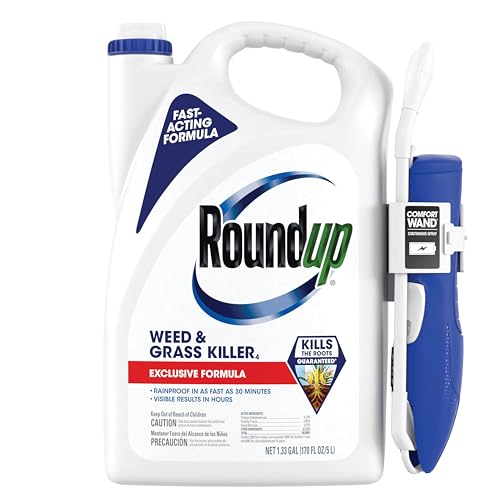 |
Roundup Weed & Grass Killer4 with Comfort | Check Price |
5 |
Ortho GroundClear Super Weed & Grass Killer1 | Check Price |
5 Best Weed Killers for Mulch Beds: Detailed Reviews
When I chose the best weed killer for mulch beds, I looked at spray control, container size, root action, rain timing, and the amount of bending or squeezing required. Those details matter because a precise wand protects nearby plants, a suitable bottle size prevents needless refills, and clear planting guidance helps you avoid redoing the bed.
I kept the choices spread across smaller and larger containers, several wand designs, and different approaches to continuous spraying. Reading them side by side helps you match the sprayer to the size of your bed instead of treating every yard as though it has the same weeds, plants, and watering schedule.
1. Spruce Weed & Grass Killer₃ Kit, Power
No-mix formula and a reusable power wand simplify targeted spraying for gardeners treating scattered weeds.
- Size64 Fl Oz
- Number Of Items1
- PowerThe Snap and Spray Kit – This simplified grass and weed killer kit comes with 2 additional AA batteries to pow
- WeightNot listed; check details
Spruce Weed Killer is a ready-to-use spot treatment for gardeners who want a smaller bottle and a powered wand for scattered weeds in mulch beds.
No mixing before spraying
The formula arrives ready to use, so there is no measuring, pouring, or diluting before treatment. That removes one of the easiest ways for a beginner to make a mess or accidentally create the wrong concentration.
Spruce Weed Killer uses a 64 Fl Oz bottle, which is more manageable than a large jug when you only have a few weeds near flowers or shrubs. The smaller format also makes storage less awkward, though a large property may need more than one bottle over a season.
A powered wand for closer aim
The powered wand uses two AA batteries and sprays when you slide the switch to unlocked and hold the paddle. A powered sprayer can be easier than repeated hand pumping, especially when you are treating several weeds at ground level.
Spruce Weed Killer directs you to hold the nozzle twelve inches from the weeds and wet the entire plant. That distance gives you a simple starting point, but you still need to shield nearby leaves and avoid spraying on a windy day.
Fast visible changes
The listing says visible results can appear in one hour, with dead weeds in one day, and names broadleaf and grassy weeds such as dandelion, crabgrass, white clover, dollarweed, and morning glory vines. Faster visible browning can help you see which plants received enough spray, though visible change is not a reason to apply extra formula.
Spruce Weed Killer says the formula uses water, essential oils, and surfactant, and describes use around people, pets, and bees when used as directed. Read the current label before spraying, keep people and animals away during application as directed, and never assume a gentle-sounding ingredient list makes careless overspray acceptable.
Reusable wand and refill note
The wand is described as reusable for up to five years at twenty uses per year, and the bottle is refillable according to the feature information. That may reduce waste for a gardener who expects regular spot treatments, but the refill arrangement and compatible formula should be checked before purchase.
Pros:
- Ready-to-use formula, skips measuring and dilution.
- 64 Fl Oz size, easier to carry around small beds.
- Powered wand, reduces repeated hand pumping.
- Twelve-inch spray direction, gives a simple aiming guide.
- Named broadleaf and grassy weeds, helps with common invaders.
Cons:
- Smaller bottle, may require more refills for large properties.
- Battery-powered wand, needs two AA batteries to operate.
- Full-plant wetting, demands careful work near flowers.
Buy it if: you have scattered weeds around mulch and want a no-mix, battery-powered wand for controlled spot spraying.
Skip it if: you maintain several large beds, because a 64-ounce container may mean frequent refills, and a larger ready-to-use sprayer would suit you better. For another fit, consider Spectracide or Roundup.
I’d pick Spruce Weed Killer for a beginner who wants the least fussy setup and does not need a large jug. The twelve-inch aiming instruction gives a clear starting habit, while the ready-to-use formula removes measuring from the job. I would double-check the refill details and battery access before buying.
Spruce Weed Killer makes the most sense for small beds, occasional touch-ups, and gardeners who value simple handling over maximum coverage.
2. Spectracide Weed & Grass Killer with AccuShot
The 1.33-gallon size and continuous sprayer help cover larger weed patches with less hand fatigue.
- ColorWhite
- Size1.33 Gal (Pack of 1)
- Number Of Items1
- WeightNot listed; check details
Spectracide Weed Killer is a larger ready-to-use option for homeowners treating broad patches of weeds around walkways, fences, flower beds, shrubs, and trees.
A larger container for repeated work
The 1.33-gallon size holds substantially more formula than a small spot-treatment bottle. That can save trips across the yard when mulch beds run along a fence or surround several planting areas.
More liquid is helpful only when the treatment area justifies it. A large container takes more storage space, and carrying a full sprayer can be tiring, so place the container where you can work without dragging it through delicate plants.
Continuous power spraying
The AccuShot sprayer has an extendable wand and a two-finger trigger designed to reduce hand fatigue. A continuous sprayer lets you keep a steadier pace across a long edge rather than squeezing a small trigger for every short burst.
The extendable wand also helps you reach weeds without bending as deeply. That matters around low mulch beds, where repeated crouching can turn a quick cleanup into an uncomfortable chore.
Root control and rain timing
Spectracide says the formula kills broadleaf weeds and grasses to the root, with visible results as fast as three hours. Root action matters for established weeds because pulling only the top growth may leave the underground portion ready to return.
The spray is described as rainfast after fifteen minutes, meaning rainfall or watering after that interval is not expected to wash away the listed effectiveness. Check the label for the full application rules, and do not use the rain window as permission to spray when heavy weather is already moving in.
Where this sprayer fits
The listed use areas include driveways, walkways, fences, trees, flower beds, shrubs, and other stated locations. A mulch bed can have several of those borders, but you still need to keep the spray on the intended weed and off living leaves, green stems, and exposed roots of plants you want to keep.
This is a practical place to separate weed killing from weed prevention. A spray handles weeds already growing, while preventing weeds in mulch depends on mulch depth, bed preparation, and regular removal of new seedlings.
Pros:
- 1.33-gallon size, covers more treatment work between refills.
- Extendable wand, reduces bending around low beds.
- Two-finger trigger, can ease hand pressure during spraying.
- Root-killing action, addresses weeds below visible leaves.
- Fifteen-minute rainfast claim, gives a short weather window.
Cons:
- Larger container, takes more storage space and may feel heavy.
- Broad listed use areas, still require careful plant protection.
- Continuous spray, can waste formula if the trigger is held too long.
Buy it if: you have long mulch borders or several weed patches and want a larger container with an extendable continuous sprayer.
Skip it if: you only treat a few weeds at a time, because the larger container may be unnecessary, and a smaller spot-treatment bottle would suit you better. Spruce and Roundup are worth a closer look instead.
I’d choose Spectracide Weed Killer when the bed is large enough for the 1.33-gallon size to earn its space. The extendable wand and two-finger trigger address the two complaints that often make yard spraying unpleasant, bending and hand fatigue. I would check where the container will be stored and confirm the label’s planting directions for your specific bed.
Spectracide is a sensible fit for broad mulch borders and repeated seasonal work.
3. Roundup Weed & Grass Killer4 with Pump
The catalog lists Roundup Weed & Grass Killer₄ kills tough weeds and grasses to the root, including dandelion, crabgrass, poison. Compare fit and care needs before choosing.
- Size1.33 gal
- Number Of Items1
- WeightNot listed; check details
- DimensionsNot listed; check details
Roundup Pump Sprayer is a large ready-to-use weed killer with an extendable wand for mulch beds, paths, driveways, and other listed areas around a landscape.
A pump sprayer with extended reach
The Pump ‘N Go 2 sprayer provides up to ten minutes of continuous spray and uses an extendable wand. Continuous spraying means you can cover a line of weeds without repeatedly stopping to build pressure or squeeze a short trigger.
The wand’s reach helps keep your back more upright while you work. It does not remove the need for accuracy, though, because a long spray session can cover wanted foliage quickly if you sweep across the bed without checking the nozzle position.
Use around mulch and landscape plants
The feature information lists mulch beds, flower beds, trees, shrubs, patios, walkways, driveways, gravel, fences, foundations, and retaining walls among the use areas. That broad range is useful for a property with weeds in several places, but each area still needs the label’s specific precautions.
A mulch bed can hide the lower stems of flowers and shrubs, so move loose mulch aside only when needed to see the weed’s base. Aim at the weed itself rather than wetting a broad section of mulch, since overspray can travel across the surface and reach nearby plants.
Rainproof timing and planting interval
Roundup Pump Sprayer is described as rainproof in as fast as thirty minutes, with visible results in hours. Rainproof timing tells you how soon rainfall is less likely to reduce the listed performance, not how soon the bed is safe for every other activity.
The listing says planting may occur one to thirty days after application, depending on the instructions in the booklet. That range is wide, so check the current directions before adding flowers, moving shrubs, or sowing in a treated area.
Root-killing purpose
The formula is described as killing tough weeds and grasses to the root, including dandelion, crabgrass, poison ivy, clover, spotted spurge, and other broadleaf weeds. Root control can be useful in mulch where pulling a deep weed may disturb the surrounding layer.
A root-killing spray still needs time and complete coverage of the target plant. Do not spray extra because a weed looks unchanged after a few hours, and do not assume every plant responds on the same schedule.
A helpful companion question is will mulch kill weeds. Mulch can block light and slow new growth, but a thin, settled, or weed-filled layer may miss established plants, so spraying and mulch maintenance solve different parts of the problem.
Pros:
- 1.33-gallon size, suits larger beds and several treatment zones.
- Up to ten minutes of continuous spray, limits repeated pumping.
- Extendable wand, helps reach weeds without constant bending.
- Listed for mulch beds, matches the main use case.
- Thirty-minute rainproof claim, helps with short weather planning.
Cons:
- Wide use range, requires careful label reading for each area.
- One-to-thirty-day planting interval, needs checking before replanting.
- Long continuous spray, can increase overspray near shrubs.
Buy it if: you need long reach and continuous spraying for established weeds across mulch beds and nearby hard surfaces.
Skip it if: your main concern is treating only a handful of isolated weeds, because a ten-minute spray capacity may be more than you need, and a compact spot sprayer would suit you better. If those trade-offs rule it out, Spruce or Spectracide may suit you better.
I’d pick Roundup Pump Sprayer for a gardener who wants one large container and a wand suited to longer passes. The ten-minute continuous spray is the feature that gives this sprayer its rank, especially along fence lines and wide beds. I would verify the planting interval before using the formula near a bed you plan to replant soon.
Roundup Pump Sprayer fits bigger landscapes where reach matters as much as weed control.
4. Roundup Weed & Grass Killer4 with Comfort
The catalog lists Roundup Weed & Grass Killer₄ with Comfort Wand kills tough weeds and grasses to the root, including dandelion. Compare fit and care needs before choosing.
- Size1.33 gal
- Number Of Items4
- WeightNot listed; check details
- DimensionsNot listed; check details
Roundup Comfort Wand is a 1.33-gallon ready-to-use weed killer with a one-touch continuous-spray wand for mulch beds, walkways, driveways, fences, and other listed locations.
One-touch spraying
The Comfort Wand uses one-touch continuous spray, so your hand does not need to keep squeezing a trigger throughout the application. That can make edging a bed less tiring when the weeds are spread across several feet.
A one-touch control also calls for a deliberate start-and-stop habit. Point the wand at the target, check the wind, press to spray, and release before moving past the weed you intended to treat.
A large ready-to-use format
The container holds 1.33 gallons and arrives ready to use. The larger size is useful for repeated treatment around a property, while the no-mix design keeps the preparation step short.
Large ready-to-use containers are not automatically the right choice for small gardens. Store Roundup Comfort Wand securely and keep the sprayer away from children, pets, food, and garden tools according to the label directions.
Listed use near landscape areas
The feature information names flower beds, walkways, driveways, fences, foundations, trees, shrubs, gravel, and mulch beds as use areas. This makes Roundup Comfort Wand a flexible choice for a yard where weeds appear both inside beds and along their edges.
Near wanted plants, a focused approach matters more than speed. Use the wand close enough to wet the weed without sweeping over flower leaves, green shrub growth, or exposed roots.
Root action and weather planning
Roundup Comfort Wand is described as killing tough weeds and grasses to the root, including dandelion, crabgrass, poison ivy, clover, and spotted spurge. The listing also says visible results appear in hours and the spray is rainproof in as fast as thirty minutes.
The planting direction allows planting one to thirty days after application, with the booklet supplying the details. Treat that range as a reason to plan ahead, not as a promise that every flower or shrub can be planted on the first day.
For prevention, many gardeners first ask what to put under mulch. A properly prepared bed can reduce new growth, but any barrier or base material must fit the plants, drainage, and local conditions before mulch is spread.
Pros:
- 1.33-gallon size, reduces refills across larger landscapes.
- One-touch continuous spray, eases repeated trigger squeezing.
- Ready-to-use formula, avoids measuring and mixing.
- Listed mulch-bed use, matches common landscape applications.
- Thirty-minute rainproof claim, supports basic weather planning.
Cons:
- Large container, may be excessive for tiny planting areas.
- Continuous spray control, needs careful release near plants.
- Planting interval varies from one to thirty days, requires label review.
Buy it if: you want a large ready-to-use sprayer with one-touch continuous spraying for beds and hardscape edges.
Skip it if: you prefer a small bottle for occasional touch-ups, because the 1.33-gallon format takes extra room, and a compact spot-treatment sprayer would suit you better.
What I like about Roundup Comfort Wand is the straightforward balance between a large container and a simple spray control. The one-touch wand can make repeated edge work easier without asking you to mix anything. I would double-check storage space and the planting interval before purchase.
Roundup Comfort Wand is best suited to regular yard maintenance across several connected areas.
5. Ortho GroundClear Super Weed & Grass Killer1
The catalog lists TOUGH WEED CONTROL: Ortho Ground Clear Super Weed & Grass Killer1 kills even the toughest listed weeds and gra. Compare fit and care needs before choosing.
- ColorReady to Use – Small Comfort Wand
- Size0.5 gal
- Number Of Items1
- WeightNot listed; check details
Ortho GroundClear is a smaller ready-to-use weed killer with a Comfort Wand for gardeners who want continuous spraying in mulch beds, around shrubs, and along hard surfaces.
Smaller size for focused maintenance
The container holds 0.5 gallon, making Ortho GroundClear a smaller choice than the 1.33-gallon options in this group. A half-gallon format can be easier to lift, store, and carry when the treatment area is limited.
The trade-off is simple: smaller containers run out sooner when weeds cover long borders. Estimate the size of your beds before buying so a convenient container does not become a refill chore halfway through the job.
Continuous spray with a Comfort Wand
The Comfort Wand provides continuous spray for targeted application. Continuous spraying helps you move along a line of weeds with fewer repeated hand motions, while the wand gives you more reach than spraying from a short bottle neck.
Targeted application is especially important around landscape plants. Keep the nozzle aimed at the weed, avoid windy conditions, and follow the label’s directions for people, pets, reentry, and nearby plants.
Broad listed use areas
Ortho GroundClear is listed for use around landscape plants, shrubs, and trees, plus patios, walkways, driveways, gravel, mulch beds, fences, and buildings. The range makes the formula useful for common places where weeds break through or along the edge of mulch.
A broad list of use areas does not mean every spot should be treated in the same way. Protect wanted foliage and exposed roots, and use extra care where mulch touches the base of a shrub or young tree.
Fast visible results and root control
The formula is described as acting on tough weeds and grasses down to the root, with visible results within hours. Named weeds include crabgrass, dandelion, clover, alder, knotweed, milkweed, and ragweed.
Fast visible results can make follow-up easier because you can see which targets changed. Wait according to the directions before deciding that a plant needs another application, since repeating too soon may increase exposure without improving the outcome.
Spray is only one part of a bed plan. Gardeners comparing options for the best weed spray for mulch beds should also consider bed size, nearby plants, weather, and how carefully the wand can be aimed.
Pros:
- 0.5-gallon size, easier to carry and store.
- Continuous spray, reduces repeated trigger movement.
- Comfort Wand, supports targeted application around beds.
- Listed use on mulch beds, fits the intended setting.
- Root-killing action, addresses tough listed weeds.
Cons:
- Smaller container, may not cover long borders.
- Broad-use formula, still requires careful protection of plants.
- Visible results within hours, does not remove the need for patience.
Buy it if: you want a smaller ready-to-use container with continuous spray for focused work around mulch beds and shrubs.
Skip it if: you treat broad beds every week, because the half-gallon size may run out quickly, and a larger landscape sprayer would suit you better.
I’d choose Ortho GroundClear when storage and carrying comfort matter more than maximum volume. The half-gallon size keeps the sprayer manageable, while the Comfort Wand still supports a steady targeted spray. I would check the expected bed coverage and the label directions for nearby plantings before buying.
Ortho GroundClear is a practical fit for smaller yards and occasional maintenance.
How to Choose the Best Weed Killer for Mulch Beds
The best weed killer for mulch beds should match the bed size, weed type, spray control, weather, and nearby plants. Start with the smallest amount and most focused wand that can handle the job, rather than buying a large container simply because it holds more.
Match the container to the bed
Container size tells you how much ready-to-use formula you have, not how much area every bed will cover. A 0.5-gallon or 64 Fl Oz bottle can be easier for scattered weeds, while a 1.33-gallon container makes more sense for long borders and several treatment zones.
Measure the rough length of your bed and count the areas that need treatment. If weeds appear in only a few small clusters, a compact bottle may prevent waste and be easier to store.
Choose a wand you can control
A wand is the tube that carries spray away from the container and helps you aim at ground-level weeds. An extendable wand can reduce bending, while a one-touch or two-finger trigger can reduce repeated hand pressure.
Look for a control that lets you stop spray immediately. A continuous sprayer is useful for long lines, but a short burst is safer near flowers, shrubs, and young trees.
Separate weeds from wanted plants
A mulch-bed spray is usually meant for unwanted plants, not the living foliage surrounding them. Read the label for listed locations and plant precautions, then inspect the bed before spraying.
Pull back leaves, mark prized plants, and avoid windy weather. The best sign that a sprayer fits your bed is that you can aim at each weed without sweeping over the plants you want to keep.
Consider root action
A root-killing formula works below the visible leaves, which can help with established weeds that return after casual pulling. Root action does not mean every weed disappears instantly, so allow the stated time before judging the result.
Check that the weeds in your bed are among the listed targets. Broadleaf weeds, grassy weeds, vines, and woody seedlings may respond differently, and an unidentified plant deserves extra caution.
Plan around rain and planting
Rain timing tells you how long the spray needs before water is less likely to reduce the listed performance. Apply only when the weather forecast gives you a workable window, and do not spray wet foliage unless the directions allow it.
Planting intervals can range from one day to thirty days in the product information here. If you are preparing a bed for new flowers, check the exact label before buying and mark the treatment date on your calendar.
Think about prevention separately
A weed killer handles growth that is already present, while a weed preventer aims to stop seeds from sprouting. The best weed preventer for mulch depends on the plants in the bed and the label’s permitted use, so do not substitute one type of treatment for another.
Fresh mulch, adequate depth, hand removal, and a clean bed edge can all reduce future work. A spray may be the quick response, but prevention is what keeps the same patch from becoming a weekly appointment.
How to Use Weed Killer in Mulch Beds for the Best Results
The safest routine is to identify the target, prepare the bed, choose a calm dry period, spray only the weed, and wait according to the label. More formula does not make the job better, and overspray is the mistake most likely to harm nearby plants.
- Identify the weeds before opening the sprayer. Check the label’s listed targets instead of spraying an unknown plant.
- Remove toys, pet bowls, tools, and anything else that should not receive spray. Follow the label for people and animal restrictions.
- Inspect the mulch for flower leaves, low stems, and exposed roots. Move loose mulch gently if needed to see the weed’s base.
- Check the wind and rain forecast. A calm period gives you better control and reduces drift onto shrubs.
- Start with the wand pointed directly at the weed. Use the stated distance, such as Spruce’s twelve-inch direction, when that product applies.
- Wet the entire target plant without soaking the surrounding bed. Stop spraying as soon as the weed is thoroughly covered.
- Secure the sprayer after use. Spruce directs users to slide its switch to locked, and other sprayers should be stored according to their labels.
- Wait before judging the result. Visible changes may appear within hours, while root action can require more time.
Use a piece of cardboard as a temporary shield when a weed grows close to a favorite flower. Keep the shield between the nozzle and the wanted plant, then spray in short controlled bursts.
Do not water immediately unless the label allows it. Rainfast instructions vary, and a storm can also splash wet formula into places you did not intend to treat.
How to Make Your Weed Killer Sprayer Last Longer
Good storage and gentle handling protect both the container and the wand. A clean, secured sprayer is easier to aim the next time weeds appear.
Store the container safely
Keep ready-to-use weed killer in its original labeled container and in the storage conditions listed on the label. Do not pour the formula into a drink bottle, food container, or unmarked jug.
Place the sprayer where children and pets cannot reach it. Keep it away from food, animal supplies, heat sources, and areas where the container could be knocked over.
Protect the wand
After spraying, follow the product directions for locking or securing the wand. Avoid dropping the nozzle into mulch, since small bits of bark and soil can interfere with the spray tip.
Do not force a trigger that feels stuck. Check the instructions for cleaning or troubleshooting instead of poking the nozzle with a sharp object.
Keep batteries dry when required
Spruce Weed Killer uses two AA batteries for its powered wand. Keep the battery compartment closed and dry, and remove or replace batteries according to the wand’s instructions if the sprayer will sit unused for a long period.
Do not leave a battery-powered wand in direct rain or a damp shed. Moisture can shorten the life of controls and make the next application unreliable.
Avoid heat and freezing
Extreme temperatures can affect containers, seals, and spray parts. Follow the storage range on the label, and do not leave a ready-to-use bottle baking in a hot vehicle.
If a container has leaked, swollen, or become damaged, do not use it. Follow the label’s disposal guidance instead of trying to repair the bottle.
Track application dates
Write the treatment date on a garden note or calendar. This helps you remember when to inspect the weed again and prevents applying another round too soon.
A date is especially useful when the label gives a planting interval. You can plan new flowers or mulch work without relying on memory during a busy weekend.
Common Mistakes to Avoid When Buying and Using Weed Killer in Mulch Beds
Most problems come from choosing the wrong container, spraying too broadly, or ignoring timing. A few simple checks before and after spraying can save plants, formula, and a second trip around the yard.
- Choosing by bottle size alone: A large container may sit unused or become awkward to carry. Match the volume to the bed area and your storage space.
- Spraying on a windy day: Wind can move droplets onto flowers and shrubs. Wait for calmer conditions and keep the wand close to the target.
- Treating an unknown plant: A mystery seedling may be a wanted plant or a weed not listed on the label. Identify the target before spraying.
- Soaking the whole mulch bed: Broad wetting wastes formula and raises the chance of reaching plant roots. Wet the weed, not every piece of mulch around it.
- Ignoring rain timing: Water too soon and the formula may not work as listed. Choose a dry window that meets the label’s rain guidance.
- Replanting too quickly: Some products list a planting interval that can extend to thirty days. Record the treatment date and follow the exact directions.
- Spraying because results are not instant: Visible browning does not always show the full root response. Wait the stated period before deciding what to do next.
How to Set Up Weed Killer Sprayers Before Use
Ready-to-use sprayers still need a short safety and control check. Setting up carefully helps prevent a stuck trigger, accidental spray, or aim that is too broad for a crowded bed.
- Read the label and confirm the target weed and use area. The stumbling point is assuming a mulch bed is automatically safe for every nearby plant.
- Inspect the bottle, wand, nozzle, and trigger for damage. Do not use a leaking or cracked container.
- Install batteries only when the sprayer requires them. Spruce uses two AA batteries, so check the compartment and close it securely.
- Unlock or activate the wand according to its directions. Keep the nozzle pointed away from people, pets, and wanted plants.
- Test the spray in an empty safe direction if the label permits. This shows the spray pattern before you approach the bed.
- Set your position beside the weed rather than above a flower. A side angle gives you more time to stop if the spray begins to drift.
- Apply only enough to thoroughly wet the weed. Release the control before moving to another target.
- Lock or secure the sprayer after work. Store the container in its labeled original packaging and keep the treatment date.
If the sprayer uses a pump, do not keep pumping after the wand has enough pressure for a controlled stream. If the sprayer uses a continuous trigger, practice releasing it before you enter the bed.
Common Questions About Weed Killer for Mulch Beds
Is weed killer safe around flowers in mulch beds?
Weed killer can damage flowers if spray reaches their leaves, stems, or roots, so careful targeting is required. Use only a formula labeled for the intended area, keep the wand aimed at the weed, avoid wind, and follow the label’s directions for people, pets, reentry, and nearby plants.
How long after spraying can I plant in a mulch bed?
Planting time depends on the specific formula and can range from one day to thirty days in the product information here. Read the current label or booklet before adding flowers, shrubs, or seeds, and record the application date so the waiting period is easy to follow.
Will rain wash weed killer off mulch?
Rain can reduce effectiveness if it arrives before the formula’s stated rainfast period. The products here list different timing, including fifteen minutes and thirty minutes, so spray only when the weather gives you enough dry time and never treat a rain window as a substitute for label directions.
Should I pull weeds before spraying mulch beds?
Usually, you should leave enough living leaf area for the spray to contact the target unless the label says otherwise. Removing all top growth can reduce the surface available for treatment, while clearing loose debris around the weed can improve aim and reduce accidental contact with wanted plants.
Does mulch stop weeds without spray?
Mulch can block light and slow new seedlings, but mulch alone may not control established weeds or seeds brought in by wind and birds. Keep the layer at the depth recommended for your landscape, remove weeds early, and avoid piling mulch directly against plant stems or tree trunks.
Is a large sprayer better for a small mulch bed?
A large sprayer is not automatically better for a small bed. A compact container is easier to carry and store, while a larger format makes sense when you treat long borders or several areas, so choose the smallest size that covers your work without repeated refills.
Make Your Next Mulch-Bed Treatment Count
Begin by measuring the area you actually need to treat, identifying the weeds, and checking how close those weeds are to wanted plants. Choose a controlled wand and a container size that matches the job, then mark the spray date and follow the label before watering, replanting, or applying another treatment.

I’m Maya L. Greenwood, a lifelong plant lover who believes anyone can grow something beautiful with the right guidance. After years of testing soil mixes, pruning methods, irrigation tricks, and pest-safe solutions, I started EasyGardenTips.com to turn hard-won lessons into step-by-step advice. From seed starting and container gardens to composting and seasonal checklists, my goal is to make gardening simple, sustainable, and fun.