Can You Reuse Potting Soil From a Dead Plant? Check This First
Yes, you can reuse potting soil from a dead plant if the plant didn’t die from a disease or serious pest problem and the mix still drains well. If you’re unsure why the plant died, play it safe and don’t put that soil around another potted plant.
Did the plant wilt even though you watered it, or did you find tiny bugs crawling around the pot? Those clues matter because healthy-looking soil can still carry pests or disease from the plant that died.
I once pulled a dead plant from a pot and nearly dumped the soil straight into another container. A closer look turned up a sour smell and mushy roots, so I stopped before giving the next plant the same lousy start. It’s a common mistake, not a dumb one.
I wrote this for anyone staring at a pot of used mix and wondering whether tossing it means wasting money or saving a plant. You’ll learn how to judge the risk, clean up usable soil, and choose a safer use when the old mix isn’t right for a new houseplant.
Get the decision right and you can save a little cash, avoid hauling a heavy potting mix to the trash, and reduce the chance of repeating the same plant problem. Skip the inspection, and a pest infestation or root disease could follow you into the next pot.
This takes about 10 minutes to read. By the end, you’ll be able to:
- Spot signs that make old potting soil a poor choice.
- Remove roots and refresh mix that’s still in good shape.
- Pick a safer use for soil you don’t want near another houseplant.
Can You Reuse Potting Soil from a Dead Plant?
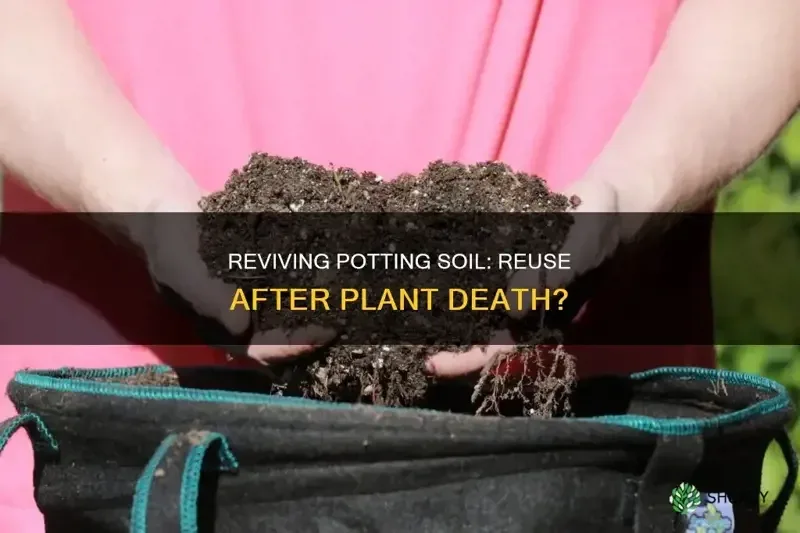
You can reuse potting soil from a dead plant when the death had a clear noninfectious cause, the mix has no pests or foul odor, and it still drains freely. If you can’t tell what killed the plant, don’t reuse the soil for a new container plant.
A plant that died from missed watering, a broken stem, or too little light may leave behind usable mix. Soil from a plant with root rot, a spreading leaf disease, or a heavy pest problem carries more risk, especially in a small pot where the next plant’s roots will be close to everything left behind.
Check the roots and soil before deciding. Healthy roots are usually firm, while rotten roots often feel soft and may smell sour; soil that stays soggy or has collapsed into a dense lump may also fail to give new roots enough air.
Here’s a quick guide to the decision:
| What you find | Reuse for a potted plant? | Better next step |
|---|---|---|
| Clear watering mistake, no pests, normal earthy smell | Usually, after cleanup | Remove roots and refresh the mix |
| Soft, dark roots or sour-smelling soil | No | Bag it and discard it |
| Visible insects, larvae, or widespread webbing | No | Keep it away from houseplants |
| Hard, compacted mix that drains poorly | Not as-is | Use it outdoors or discard it |
| Unknown cause of death | Avoid for a valuable or delicate plant | Use fresh mix for the next pot |
The table is a guide, not a diagnosis. If the plant had several problems at once, treat the soil as higher risk rather than trying to guess which issue mattered most.
Pro Tip: Smell the soil after you pull out the root ball. A mild, earthy smell is normal; a sour, swampy odor is a good reason to stop.
How to Check and Clean Used Potting Soil
Used potting soil is worth keeping only after you inspect the plant’s cause of death, remove leftover roots, and check for pests and drainage problems. A few minutes of sorting can save you from carrying an old problem into a fresh pot.
Start by tipping the soil onto a tarp or into a shallow bin in a bright spot. Wear gloves if you’re handling decaying roots or suspect pests, and avoid shaking dusty, dry mix into your face.
Work through these steps in order:
- Check the plant’s history. Look for a likely cause, such as a missed watering, prolonged sogginess, leaf spots, sticky residue, or insects. If disease or pests seem likely, don’t reuse the mix for another container plant.
- Remove the root ball and debris. Pick out roots, dead leaves, plant labels, and anything else that could decay in the mix. Small root fragments are easy to miss, so break apart clumps by hand.
- Inspect the texture and smell. Healthy potting mix should feel loose rather than cement-like and should smell earthy rather than rotten. If water used to sit on top or run straight down the sides, the mix may have lost its useful structure.
- Look for pests. Check the soil surface, the root ball, and the pot’s drainage holes for insects, larvae, or egg clusters. Don’t reuse visibly infested soil in a new houseplant pot.
- Wash the container. Scrub the pot with hot, soapy water to remove stuck-on soil and roots, then rinse it well. If a disease or pest problem was involved, follow the disinfectant label for the pot material before using it again.
I once spent longer trying to pick every fine root out of a tired mix than it would’ve taken to start fresh. That taught me to stop when the soil is badly compacted or full of debris; saving a handful of mix isn’t worth giving a new plant a poor start.
What if you can’t identify why the plant died? Use fresh potting mix for the next indoor plant, especially if it’s valuable, prone to root problems, or sharing space with other plants. The old soil can still go to a lower-risk use if it has no pests and no signs of disease.
Important Tip: Don’t try to rescue suspicious soil by adding bleach, household cleaners, or random pest treatments. Those products can leave harmful residues, and they don’t reliably make contaminated potting mix safe.
How to Refresh Reusable Potting Soil
Reusable potting soil needs fresh structure and nutrients before it goes back into a container. Old mix can lose air space, drain poorly, or lack the nutrients a new plant needs, even when it looks clean.
For soil that passes inspection, first remove every visible root and loosen clumps. Then blend in fresh potting mix or an amendment suited to the new plant, following the product label rather than adding fertilizer by guesswork.
Organic matter such as finished compost can add nutrients, but too much can make a container mix dense and slow to drain. I’d use a modest amount and keep the mix airy; a soggy pot is a rough place for new roots to settle in.
The right texture depends on the plant. A rubber plant or corn plant generally needs a potting mix that drains well and doesn’t stay waterlogged, while banana plants tend to use a richer mix; match the refreshed soil to the plant instead of treating every container the same. You can compare the needs behind the rubber plant potting mix, corn plant soil mix, and banana plant potting mix before choosing what to add.
If the old mix is clean but too dense for a houseplant, consider using it outdoors rather than forcing it back into a pot. Mix it into a garden bed or use it to improve a suitable outdoor planting area, where it won’t be the only material supporting a plant’s roots.
Can the soil go into a vegetable pot? I wouldn’t reuse it for tomatoes if the previous plant had root disease, because a new tomato seedling would be sharing the same container environment. If the cause of death was clearly unrelated to disease, the mix is clean, and it drains well, refresh it before planting; tomato containers need dependable drainage and steady nutrition.
More tomato-specific soil guidance is covered in reusing soil for tomatoes.
Used potting mix isn’t a substitute for garden soil when you’re planting a tree. Trees need a planting site suited to their roots and local soil, so keep the container mix for pots or use it as an amendment only when appropriate for the outdoor spot. A better way to plant a tree starts with the planting site, not a potful of old mix.
| Condition of old mix | Practical use |
|---|---|
| Loose, clean, and free of pests | Refresh for a compatible container plant |
| Clean but compacted or tired | Consider outdoor use instead |
| Foul-smelling, visibly infested, or linked to disease | Discard rather than reuse |
The general decision about reusing potting soil safely comes down to risk and condition, not simply whether the mix has been used before. Fresh mix costs more than reusing what’s on hand, but replacing questionable soil is often the simpler choice when a new plant’s health is at stake.
- Reuse soil only when you have good reason to rule out disease and pests.
- Remove roots, check drainage, and refresh clean mix before planting again.
- Use fresh soil when the cause of death is unclear or the mix smells rotten.
FAQs About Can You Reuse Potting Soil from a Dead Plant
Can I reuse potting soil if my plant died from overwatering?
Yes, if overwatering caused the death but you find no root disease, pests, or bad odor. Remove the old roots, check that the mix drains freely, and refresh it before planting. If roots are mushy or soil smells sour, discard the mix instead of risking another plant.
Should I throw away soil from a plant with root rot?
Yes, soil from a plant with suspected root rot shouldn’t go into another container plant. Root disease can remain in the damp mix and affect new roots. Bag the soil for disposal, clean the pot, and use fresh potting mix for the replacement plant.
Can old potting soil attract bugs?
Yes, old potting soil can shelter insects or larvae, especially if plant debris and moisture remain in the container. Check the soil surface, root ball, and drainage holes before reusing it. If you find pests, keep the mix away from houseplants and don’t add it to another pot.
Can I reuse potting soil after removing the dead roots?
Yes, removing dead roots is a useful cleanup step, but it doesn’t prove the soil is safe. Check for signs of disease, pests, unpleasant odor, and poor drainage first. Clean, loose soil may be refreshed; contaminated or badly compacted soil is better discarded or used elsewhere.
Can I mix old potting soil with new potting soil?
Yes, you can mix clean, pest-free old potting soil with fresh mix when the old material still drains well. The amount depends on the old soil’s condition and the plant’s needs. Don’t use fresh mix to disguise a sour smell, infestation, or suspected disease.
Can I put used potting soil in my garden?
Yes, if the soil has no signs of disease or pests, you can often use it outdoors rather than in another pot. Avoid spreading suspicious soil around garden plants, and don’t use it to fill a tree’s planting hole as a replacement for suitable site soil.
Give the Next Plant a Clean Start
Potting soil from a dead plant isn’t automatically trash, but it needs a quick, honest inspection before you reuse it. If the plant died from a clear care mistake and the mix smells earthy, drains well, and shows no pests, cleaning and refreshing the soil can be a sensible way to stretch your supplies.
If the cause is a mystery, or you find rotten roots, insects, or a sour smell, don’t gamble with the next plant. Fresh potting mix is the safer pick, particularly for an indoor plant you care about keeping healthy.
Your next step is simple: pull out the old roots, check the soil, and decide based on what you actually find. That’s a lot better than planting first and wondering later why the new leaves are drooping.

I’m Maya L. Greenwood, a lifelong plant lover who believes anyone can grow something beautiful with the right guidance. After years of testing soil mixes, pruning methods, irrigation tricks, and pest-safe solutions, I started EasyGardenTips.com to turn hard-won lessons into step-by-step advice. From seed starting and container gardens to composting and seasonal checklists, my goal is to make gardening simple, sustainable, and fun.