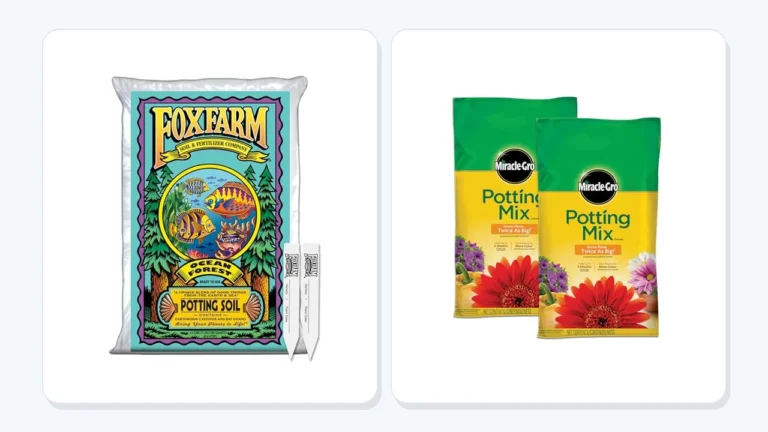
Dr Earth Vs Miracle Gro Potting Soil: Which One Should You Buy?
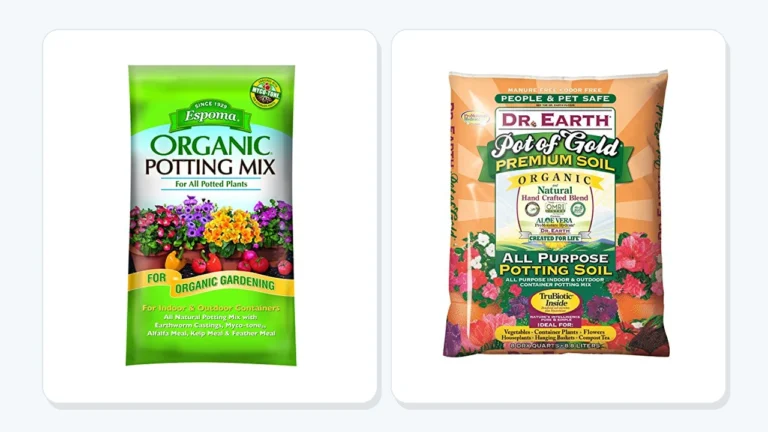
If you’re choosing between Dr Earth and Miracle-Gro potting soil, the practical difference is focus: Dr Earth is an eight-quart organic soil with beneficial microbes and indoor-and-outdoor uses, while Miracle-Gro comes as two 16-quart bags and feeds outdoor container plants for up to six months.
That makes Dr Earth the more natural fit for smaller indoor pots, herbs, and mixed-purpose gardening. Miracle-Gro is easier to match to a larger outdoor potting job, especially if you want a stated feeding period alongside the soil.
The quantity gap matters: the Miracle-Gro bundle holds 32 quarts total, four times the volume of one Dr Earth bag. That doesn’t make it better soil, but it can mean fewer bags to handle when you’re filling several containers.
Below, I’ll compare their intended uses, volume, feeding approach, and practical limits. The short version: choose based on where you’ll use the potting soil and how much you need—not just the brand name.
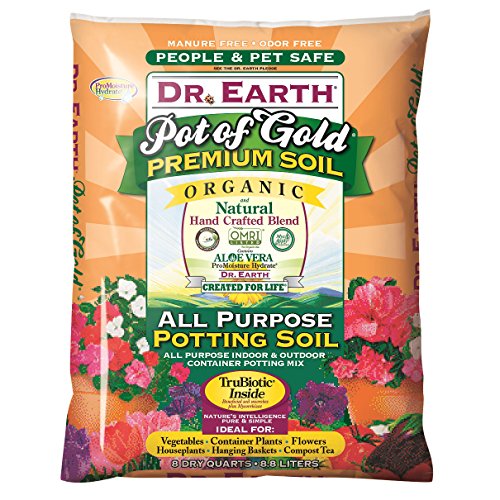
| Natural Organic Soils All Purpose Soils Usa All Purpose Potting | Miracle-Gro Potting Mix 16 Qt. 2-Pack |
 |
 |
Dr Earth Vs Miracle Gro Potting Soil Detailed Comparison
These products suit different gardening plans. Dr Earth All Purpose Potting Soil is designed for indoor and outdoor potting and container use, with applications that extend to seed cover, transplanting, compost use, and some in-ground soil work. Miracle-Gro Potting Mix is specifically presented for outdoor containers, with a clearly stated feeding period of up to six months.
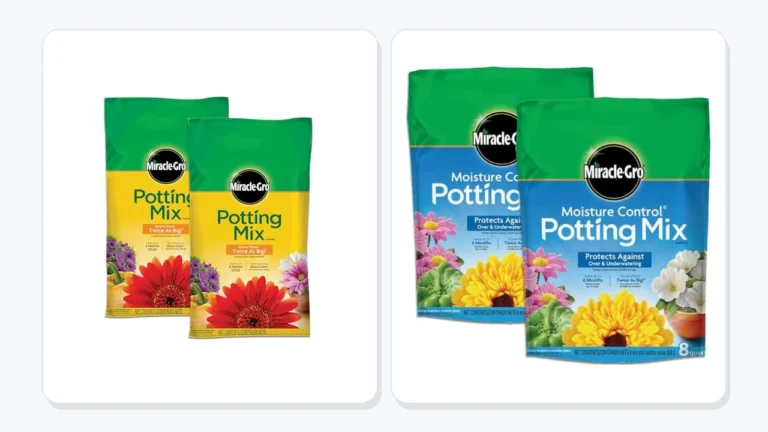
The clearest measurable difference is package volume. Dr Earth comes in an eight-quart bag. The Miracle-Gro 2-pack contains two 16-quart bags, or 32 quarts total; each bag is intended to fill one 12-inch container, though the amount needed can vary with the size of the plant’s root ball.
Picture two common jobs. For a few indoor herb pots or a small container garden that moves between the porch and the kitchen, Dr Earth’s broader indoor-and-outdoor use is a straightforward fit. For several outdoor planters that need a larger quantity of mix, Miracle-Gro gives you more volume in one purchase and a stated feeding window.
There’s also a difference in what each product emphasizes. Dr Earth highlights organic ingredients, TruBiotic soil microbes, and both ecto- and endo-mycorrhizae; it is OMRI listed and MycoApply certified. Miracle-Gro emphasizes outdoor container use and feeding plants for up to six months. Neither set of details proves that one soil will outperform the other in every pot.
In practical terms, start with the job rather than a general “which soil is best?” question. A plant’s location, the number and size of containers, and whether you want a stated feeding period all affect which bag makes sense. The wrong choice may leave you buying extra bags, or with a soil whose stated use doesn’t match where you plan to grow.
Key Differences That Matter
Indoor-and-outdoor range versus outdoor-container focus
Dr Earth is described for both indoor and outdoor potting and container use. Its listed plant uses include herbs, vegetables, flowers, indoor gardens, and container plants. It can also be used as a soil amendment for in-ground planting of trees, shrubs, bare roots, flowers, and vegetables.
Miracle-Gro’s stated use is narrower: outdoor containers, including those holding flowers, vegetables, herbs, shrubs, annuals, and perennials. That’s a clear match for patio pots and similar outdoor planting. If you’re potting a houseplant, Dr Earth is the one of these two with indoor use specifically covered.
This isn’t a claim that Miracle-Gro can never be used indoors. It means its stated fit is outdoor containers, so don’t assume the two products are interchangeable for every indoor setup. If indoor use is central to your plan, Dr Earth offers the more direct match.
Microbes and organic positioning versus a defined feeding window
Dr Earth’s distinctive feature is its microbial emphasis. The mix includes TruBiotic soil microbes and both ecto- and endo-mycorrhizae, and it is OMRI listed and MycoApply certified. For a buyer who specifically wants those features in a potting soil, they’re meaningful points of difference—not a guarantee of a particular plant response.
Miracle-Gro’s standout practical detail is that it feeds outdoor container plants for up to six months. That gives you a stated time frame to consider when planning care. It doesn’t mean you should ignore the plant’s needs or apply extra fertilizer automatically; follow the product directions and the needs of the plants you’re growing.
These are different selling points, not a direct head-to-head nutrient test. Dr Earth’s features speak to its organic ingredients and microbes; Miracle-Gro’s stated benefit speaks to feeding duration. If either one is the deciding factor for you, make sure it matches how you prefer to manage your containers.
Eight quarts versus 32 quarts total
One Dr Earth bag contains eight quarts. The Miracle-Gro bundle totals 32 quarts across two bags, so it contains four times as much soil as one Dr Earth bag. That’s a useful difference for planning, but it’s a comparison of package volume—not a measure of quality, plant growth, or value.
Miracle-Gro also gives a concrete planning reference: each 16-quart bag fills one 12-inch container, with the amount varying according to the root ball. That can help if you’re estimating for a couple of similar outdoor pots. Dr Earth’s confirmed package size is smaller, so check your container dimensions and the amount of soil you need before deciding how many bags to buy.
For a single small pot, 32 quarts could be more than you need. For several containers, the larger bundle may be more convenient. Think through the actual planting list first: unused potting soil is only useful if you have a suitable place to store and use it.
Additional uses beyond filling containers
Dr Earth is described for more than container filling. Its uses include mulching, seed cover, transplanting, compost use, soil boosts, and clay soil applications, as well as in-ground planting as a soil amendment. That breadth may suit someone who wants one product for several small gardening tasks.
Miracle-Gro’s stated scope centers on filling outdoor containers. Its product details don’t give the same list of additional applications, so it’s sensible to choose it for the container job it is intended to serve rather than assume the same range of uses. If you’re comparing them for a garden bed or another non-container task, Dr Earth is the one with those extra uses specifically described.
One versatile bag doesn’t automatically make every task identical. Before using either soil for a particular plant or application, check the directions and make sure the use is appropriate. A broad use list is helpful, but it doesn’t remove the need to match soil and care to the planting situation.
Performance, Features, and Everyday Use
Before you start potting
First, count the pots and estimate how much each one needs. A small herb planter and a deep container for a larger plant won’t use the same amount, and a root ball takes up space that would otherwise be filled with soil. Miracle-Gro’s 12-inch-container reference is a useful starting point for its 16-quart bag, but the root ball can change the amount required.
Dr Earth’s eight-quart size is easier to match to a limited potting job than a 32-quart bundle, but one bag may not cover several sizable containers. Don’t buy by bag count alone: compare total volume with your container needs. If you’re uncertain, measure the pots and leave room for the existing root ball rather than assuming every pot takes a full bag.
For either product, set up the container before opening the soil. Make sure the pot is appropriate for the plant and has suitable drainage, then keep the bag’s directions handy. These are practical steps for container gardening, not claims that one mix has a particular texture or drainage rate.
Using Dr Earth for mixed gardening tasks
Dr Earth makes sense when the same bag may support more than one part of a small gardening routine. You might pot herbs indoors, refresh an outdoor container, or use some soil for transplanting. Its listed uses also cover seed cover and compost use, so it can be a flexible option if those jobs are actually on your list.
The included Pro-Moisture Hydrate is another named feature. Treat that as a product detail, not a reason to change your watering habits blindly. Plants still need care suited to their species, container, and conditions; check moisture rather than assuming any potting soil eliminates the need to water.
Dr Earth is also described as safe for pets and people. That can be reassuring if you garden around family or animals, though normal care still matters: keep soil where it belongs, avoid ingestion, and follow the package directions. Its OMRI listing and MycoApply certification may also appeal if those credentials are part of your buying criteria.
Using Miracle-Gro for outdoor containers
Miracle-Gro’s instructions give a simple filling sequence: put mix in the container to about one-third full, position the plant, then add mix around it and press lightly. That’s a practical setup cue if you’re new to potting or filling several containers in one session.
The up-to-six-month feeding period can make planning feel more straightforward, especially if you prefer a soil with a stated feeding window. It doesn’t tell you exactly how every plant will grow, and the phrase shouldn’t replace plant-specific care. The product is intended for outdoor container plants, so that’s the clearest use case to keep in mind.
Two separate 16-quart bags can be convenient when you’re handling a larger job in stages. They also mean you’re buying a substantial amount at once. If you only have one small planter, consider whether you can use the rest appropriately rather than letting extra soil sit unused.
What neither comparison can settle
The available details don’t establish which soil drains faster, has a lighter texture, or produces a bigger harvest in a particular garden. They also don’t provide a price comparison, so don’t assume the larger bundle is automatically the better deal. Compare the cost you see with the volume you’ll use, while accounting for the different intended uses.
Plant results depend on more than the bag: the plant, container, light, watering, and ongoing care all matter. It’s reasonable to choose a soil based on verified use and features, but not to treat organic ingredients, microbes, or a feeding window as a promise that one product will solve every growing problem.
If your priority is a particular plant type or gardening method, check that the product directions fit before planting. That small pause can prevent a common frustration: buying the right amount of soil for the wrong setting, then having to adjust your plan after the pot is already filled.
Pros and Cons
Natural Organic Soils All Purpose Soils Usa All Purpose Potting
Pros
- ✓Indoor and outdoor use: Fits houseplants and outdoor containers.
- ✓Microbial features: Includes TruBiotic microbes and both mycorrhizae types.
- ✓Broader applications: Covers uses such as transplanting and soil amendment.
Cons
- –Smaller bag: Eight quarts may mean buying multiple bags for larger jobs.
- –No stated feeding period: Less helpful if a defined duration is your main priority.
Miracle-Gro Potting Mix 16 Qt. 2-Pack
Pros
- ✓More total soil: The two bags provide 32 quarts for multiple containers.
- ✓Feeding window: Feeds outdoor container plants for up to six months.
- ✓Clear setup guidance: Includes a simple sequence for filling a pot.
Cons
- –Outdoor focus: Its stated use may not suit buyers seeking indoor-specific guidance.
- –Large bundle: May be more soil than a one-pot gardener needs.
Which One Should You Buy?
Choose Dr Earth if you want one potting soil for indoor and outdoor containers. It’s the more direct choice for indoor gardens, herbs, flowers, and vegetables when you also value its organic ingredients, microbial features, and broader listed applications. Its eight-quart bag is a sensible size to consider for a smaller task, though you may need more than one for a large container or several pots.
Choose Miracle-Gro if your job is mainly outdoor containers and you need more soil at once. The 32-quart total can suit multiple planters, and the stated feeding window gives you a clear care-planning detail. It’s particularly easy to match to a project with two 12-inch containers, while remembering that root-ball size can change how far each bag goes.
Think about how you handle feeding, too. If a stated feed duration matters more than the microbial emphasis, Miracle-Gro lines up better with that preference. If you specifically want a product with OMRI listing, MycoApply certification, and both types of mycorrhizae, Dr Earth has the more relevant features.
Who Should Skip This: Dr Earth. Skip it if you need a large volume for several outdoor pots and don’t want to purchase enough eight-quart bags to cover the job. Also look elsewhere if a clearly stated feeding period is your main requirement.
Who Should Skip This: Miracle-Gro. Skip it if indoor potting is the central task and you want a soil specifically described for indoor use. It may also be an awkward buy for one small planter if you have no use for the remaining soil.
Choosing the wrong one usually creates a practical mismatch, not a guaranteed plant disaster: too little soil for the job, extra soil with nowhere to go, or a use case that isn’t the product’s stated focus. Match the bag to the actual planting plan, then follow its directions and care for the plant as needed.
FAQS About Dr Earth Vs Miracle Gro Potting Soil
Which potting soil is better for indoor plants?
Dr Earth is the clearer fit because it is specifically described for indoor as well as outdoor potting and container use. Miracle-Gro’s stated use is outdoor containers, so don’t treat the two as equally specified for houseplants.
Which product gives you more potting soil?
The Miracle-Gro 2-pack contains 32 quarts total, compared with eight quarts in one Dr Earth bag. That is four times the volume, but the right amount depends on your containers and the size of each plant’s root ball.
Does Dr Earth or Miracle-Gro include a stated feeding period?
Miracle-Gro states that it feeds outdoor container plants for up to six months. Dr Earth’s distinguishing details include organic ingredients and soil microbes, rather than a stated feeding duration.
Can you use both products for outdoor containers?
Yes. Both are described for outdoor container use. Dr Earth is also described for indoor potting and additional gardening applications, while Miracle-Gro’s stated focus is outdoor containers.
Final Verdict: Which One Wins?
Dr Earth wins for indoor-and-outdoor versatility, microbial features, and smaller or mixed-use gardening jobs. Its eight-quart bag is the more natural fit when you want a potting soil specifically described for indoor use as well as outdoor containers.
Miracle-Gro wins for larger outdoor container projects and a stated feeding window. The two 16-quart bags provide four times the volume of one Dr Earth bag, and the up-to-six-month feeding period can help guide your plan.
There isn’t one universal winner. Pick Dr Earth for the broader use range and listed microbial features; pick Miracle-Gro for more outdoor-container soil in one bundle and a defined feeding period.

I’m Maya L. Greenwood, a lifelong plant lover who believes anyone can grow something beautiful with the right guidance. After years of testing soil mixes, pruning methods, irrigation tricks, and pest-safe solutions, I started EasyGardenTips.com to turn hard-won lessons into step-by-step advice. From seed starting and container gardens to composting and seasonal checklists, my goal is to make gardening simple, sustainable, and fun.