5 Best Cultivator for Raised Beds: Compared With Buying Guide
As an Amazon Associate, I earn from qualifying purchases. Learn more
Finding the best cultivator for raised beds means balancing digging power with control. A tool that is too wide can damage plants or feel awkward between bed edges, while an underpowered model may struggle with compacted soil, weeds, or compost mixing.
My first choice is MZK 20V Cordless Tiller Cultivator. The safety lock and ergonomic handle also make it approachable for gardeners who want less fatigue during short planting and aeration jobs.
My second choice is GELIDALITE Cordless Tiller Cultivator. Its 300W peak motor, runtime gauge, and soft-grip handle suit buyers who need more penetrating power without purchasing another charger and battery system.
My third choice is GELIDALITE Cordless Tiller Cultivator. It ranks just behind the Milwaukee-compatible version because the main difference is platform compatibility rather than a clearly broader feature set.
This guide compares all five options, including a manual garden claw, so you can match the tool to bed size, soil condition, battery ownership, and physical comfort. It also explains working width, depth, runtime, safety, first-use technique, maintenance, and the mistakes that can make a raised-bed cultivator frustrating to use.
5 Best Cultivator for Raised Beds Comparison
I selected these products for their direct usefulness in raised beds, small gardens, soil loosening, weed control, aeration, and compost mixing. The comparison considers working dimensions, tine or blade design, power source, included battery equipment, handling features, and stated ownership support; customer-feedback evidence was not supplied for these listings, so no rating-based claims are made. The group also includes different battery platforms and a manual option to give buyers meaningful alternatives rather than five nearly identical tools.
| # | Image | Product | Price on Amazon |
|---|---|---|---|
| 1 |  |
MZK 20V Cordless Tiller Cultivator | Price on Amazon |
| 2 |  |
GELIDALITE Cordless Tiller Cultivator | Price on Amazon |
| 3 |  |
GELIDALITE Cordless Tiller Cultivator | Price on Amazon |
| 4 |  |
DEGGE 21V Cordless Tiller Cultivator | Price on Amazon |
| 5 | 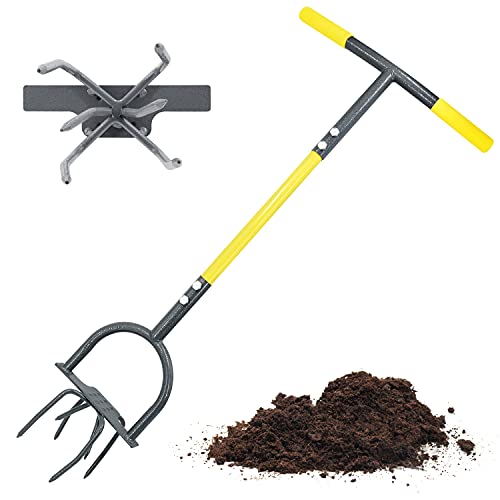 |
Jardineer Manual Twist Tiller Cultivator | Price on Amazon |
MZK 20V Cordless Tiller Cultivator
The MZK is a compact battery-powered cultivator aimed at garden beds, lawn care, and lighter soil preparation. Its 8.6-inch width is narrow enough for many raised beds without taking up excessive space, while the 24 steel tines help break clumps and aerate soil in a single pass when the bed has already been reasonably prepared.
At 360 RPM, it should be useful for routine loosening before planting, mixing amendments into the upper soil, and refreshing areas that have become crusted. The important limitation is the stated focus on pre-tilled beds. Buyers dealing with completely untouched, heavily compacted ground should not assume that a small cordless cultivator will perform like a full-size rototiller.
Its cordless format removes the need to manage an extension cord around the bed. That is especially helpful in tight spaces where a cord could catch on a frame, trellis, or nearby plant. The rechargeable battery also makes quick maintenance sessions convenient, although the supplied information does not specify battery capacity or runtime, so larger projects may require planning around available charge.
An ergonomic handle and lightweight construction should help reduce arm strain, while the safety lock adds protection against accidental starts. Use it for controlled passes rather than forcing it downward into resistant soil. Buyers should confirm exactly what battery and charger are included before ordering, since the available details identify a rechargeable cordless design but do not list the battery package.
Pros
- 8.6-inch width fits many small beds and confined garden areas.
- Twenty-four steel tines support loosening, aeration, and clump breaking.
- Cordless operation avoids extension-cord management.
- Lightweight ergonomic design and safety lock support easier handling.
Cons
- Best suited to pre-tilled soil rather than severe ground breaking.
- Battery capacity and runtime are not specified in the supplied information.
My Opinion
The MZK is the most balanced starting point for gardeners who want a manageable cordless tool for established raised beds. Its narrower working path and practical safety features matter more for routine bed care than maximum digging depth.
GELIDALITE Cordless Tiller Cultivator
This GELIDALITE model is a bare tool for standard Milwaukee M18 cordless platforms, including listed packs such as the 48-11-1820, 48-11-1850, 48-11-1865, and 48-11-1880. That compatibility can substantially improve value for a Milwaukee owner because the purchase does not require another battery and charger. It also means this is not the right choice for someone starting without an M18 battery.
A 300W peak motor turns four hardened steel blades at a stated 360 RPM. The 9-inch cutting width and 7-inch depth give it a little more reach than the MZK, making it useful for loosening deeper soil, preparing raised flower beds, and tackling weeds. In hard-packed ground, the supplied guidance recommends moving back and forth so the blades can penetrate progressively instead of demanding one forceful pass.
Runtime depends on the battery selected. A 4.0Ah pack is stated to provide about 24 minutes of tilling over roughly 400 square feet, while a 6.0Ah High Output setup is stated to provide about 36 minutes and up to 600 square feet. Actual work can vary with soil resistance and technique, but the integrated status gauge gives the operator a useful way to monitor remaining power.
The three-section pole uses a precision-fit collar intended to limit wobble, and the 9.4-pound balance with a soft-grip handle should help with control. A dual-action safety switch reduces accidental activation. The listed support package includes a 90-day return period, one-year replacement coverage, a three-year limited warranty, and lifetime technical support, giving buyers more ownership structure than many basic garden tools.
Pros
- Works with listed Milwaukee M18 battery platforms.
- 9-inch width and 7-inch depth suit deeper bed preparation.
- Status gauge and stated runtime guidance aid project planning.
- Rigid pole design, soft grip, and dual-action safety switch support control.
Cons
- Bare-tool format requires a compatible M18 battery and charger.
- Four blades may need repeated back-and-forth passes in hard soil.
My Opinion
This is a strong platform-specific choice for Milwaukee owners who want more depth and a firm, controlled feel. Its value drops for anyone who must buy into the battery system just to use it.
GELIDALITE Cordless Tiller Cultivator
DeWalt users get a close counterpart to the Milwaukee-compatible GELIDALITE, with compatibility for listed 20V MAX packs such as DCB200, DCB204, DCB205, and DCB206. It is sold as a bare tool, so the main buying question is simple: do you already own a suitable DeWalt battery and charger? If not, the apparent tool-only savings may be reduced by the cost of the power system.
The 300W peak motor, 360 RPM speed, four hardened steel blades, 9-inch width, and 7-inch depth create a useful profile for raised beds, lawn preparation, and weed control. A 7-inch reach can help mix amendments below the surface, but it also calls for care around established roots. In a planted bed, shallow passes and deliberate positioning are safer than immediately working at full depth.
For compacted areas, the recommended back-and-forth motion is important. Allowing the blades to work gradually can improve penetration and reduce the temptation to force the cultivator, which may increase fatigue or drain the battery faster. A 4.0Ah pack is stated to provide approximately 24 minutes and 400 square feet, while a 6.0Ah setup is stated to provide approximately 36 minutes and 600 square feet.
The battery status indicator helps avoid unexpectedly stopping in the middle of a bed. At 9.4 pounds, the tool is not a hand trowel, but the balanced build, soft-grip handle, and rigid three-section pole are intended to make steering easier. Its dual-action safety switch is useful when moving between beds or setting the tool down. The stated support terms include a 90-day return, one-year replacement, three-year limited warranty, and lifetime technical support.
Pros
- Uses listed DeWalt 20V MAX battery platforms.
- 7-inch depth provides useful reach for soil preparation.
- Runtime estimates and a status gauge assist planning.
- Rigid pole and soft grip support steadier operation.
Cons
- No battery or charger is included.
- Full-depth operation may be excessive around established plant roots.
My Opinion
Choose this version when DeWalt battery compatibility is the deciding factor. It is a capable raised-bed option on paper, but its best value comes from buyers who already have the required batteries.
DEGGE 21V Cordless Tiller Cultivator
The DEGGE takes a more complete-kit approach by including two 21V 3.0Ah batteries and a charger. Each battery is stated to provide up to 25 minutes of tilling, allowing a buyer to alternate packs for as much as 50 minutes of continuous work. The batteries reportedly take about three hours to charge, so charging both before a large project is important.
Its 48 hardened steel tines work across a 9-inch path and reach 6.7 inches deep. That combination is appropriate for breaking soil, mixing compost, aerating, and removing weeds at the root in small gardens and raised beds. More tines can create a thorough cultivating action, but they do not eliminate the need to work carefully through stones, thick roots, or very dry clay.
Beginners may appreciate the tool-free assembly and lightweight construction. The cordless design avoids fuel fumes and extension cords, while the stated quiet operation and reduced vibration can make short gardening sessions more pleasant. Two batteries are particularly useful for gardeners who want to finish several beds without waiting for a recharge.
Technique still affects both results and battery life. The supplied guidance recommends lightly watering hard soil the day before, letting the tines dig in before moving forward, and using shorter passes rather than forcing the machine. Clearing weeds and debris from the tines regularly helps reduce clogging and unnecessary battery drain. A dual-button start also helps prevent accidental activation during setup or transport.
Pros
- Includes two 3.0Ah batteries and a charger.
- Up to 50 minutes of stated alternating-battery use.
- Forty-eight hardened steel tines cultivate 9 inches wide and 6.7 inches deep.
- Tool-free assembly and dual-button activation suit beginners.
Cons
- Three-hour charging time requires advance planning.
- Dry clay, rocks, and heavy debris can still slow the tool or clog the tines.
My Opinion
The DEGGE is the most convenient package for buyers who need batteries and a charger included. It is especially appealing for small gardens where alternating packs matters more than matching an existing tool brand.
Jardineer Manual Twist Tiller Cultivator
The Jardineer replaces motor power with a manual twisting action, making it fundamentally different from the cordless options above. Its sharp tines are intended to penetrate, loosen, turn, and aerate small areas, while the powder-coated steel construction is aimed at long-term strength. Since it does not use fuel, electricity, or batteries, it is always ready for a quick spot treatment.
An anti-slip foot plate lets the user place body weight above the tool to help push the tines into compacted soil. The curved, extended handle is intended to reduce twisting effort and back strain compared with kneeling over a short hand tool. That can be useful in raised beds and flower boxes, although manual cultivation still requires physical effort and may be tiring across a large bed.
This garden claw is well suited to loosening around individual plants mixing fertilizer peat moss or other amendments and opening small areas for seeds or transplants It can also help with clay soil when the area is watered ahead of time The manual design offers excellent control near established plants but it will not cover ground as quickly as a powered cultivator and may be less comfortable for anyone with limited grip or shoulder.
Assembly takes only a few minutes with the included wrenches and spare screws. Before using it in a raised bed, remove large rocks and soak very dry clay in advance. Buyers should also check the joints periodically and keep the tines free of packed soil so the twisting motion remains efficient.
Pros
- No battery, charger, cord, fuel, or motor maintenance is required.
- Foot plate helps apply downward force in compacted soil.
- Useful for precise work around plants and in small areas.
- Includes assembly wrenches and spare screws.
Cons
- Manual operation is slower and more physically demanding for large beds.
- Very dry clay and rocky soil should be softened or cleared first.
My Opinion
The Jardineer is the sensible low-maintenance choice for spot cultivation and gardeners who prefer maximum control. It is not a substitute for powered coverage, but it avoids battery uncertainty and can be gentle around established plants.
How I Selected These Best Cultivators for Raised Beds
The selection centers on what makes a cultivator useful in a raised bed rather than simply powerful in an open field. I looked for a manageable working width, enough depth for loosening and amendment mixing, a practical approach to power, and handling or safety details that matter when working close to plants. The list includes compact cordless models, platform-compatible bare tools, a complete battery kit, and a manual cultivator so the comparison reflects different ownership situations.
The rankings also account for the information available in each listing. Specific dimensions, tine or blade construction, battery details, runtime statements, assembly information, and stated support terms received more weight than vague claims about performance. No ratings or customer-feedback volume were supplied, so customer sentiment could not fairly be used to separate the products.
For a raised bed, the best match is not automatically the deepest or fastest tool. Working width, control, battery availability, and the condition of the soil often matter more than headline power.
A bare tool can be a smart value only when its battery platform already exists in your garage. Otherwise, a complete kit or manual model may have the clearer total-cost advantage.
How to Choose the Best Cultivator for Raised Beds
Start with the bed itself: its width, soil depth, plant spacing, and access around the edges. Then consider whether you are preparing empty beds, maintaining planted beds, removing weeds, or mixing amendments. A tool that is excellent for turning an empty bed may be too aggressive around shallow roots, so choosing by task is more reliable than choosing by motor speed alone.
- Match the working width to the bed and the space between plants.
- Choose a battery platform you already own when possible.
- Use deeper powered models for empty-bed preparation, not careless work around roots.
- Prefer included batteries and a charger when you do not already have compatible equipment.
- Consider a manual claw for precise, occasional, or low-maintenance cultivation.
Working Width and Depth
Widths in this group range from 8.6 to 9 inches, which is practical for many raised beds and small garden rows. A narrower tool is easier to guide along edges and between plants, while a slightly wider path can reduce the number of passes in an empty bed. Depth matters too: 6.7 or 7 inches can help loosen deeper soil, but full depth is unnecessary for every task and can disturb roots or irrigation lines.
Battery Platform and Included Equipment
Battery compatibility can be the deciding factor. The two GELIDALITE models are bare tools tied to Milwaukee M18 or DeWalt 20V MAX systems, respectively. That is convenient for existing tool owners but less convenient for newcomers. The DEGGE includes two batteries and a charger, while the MZK listing identifies a rechargeable cordless design without supplying battery-capacity details in the available data. Confirm the package contents before purchase.
Tines Versus Blades
Tines are useful for breaking clumps, aerating, and mixing amendments. The MZK lists 24 steel tines, while the DEGGE lists 48 hardened steel tines. The GELIDALITE models use four hardened steel blades. These descriptions alone do not prove that one cutting arrangement is universally better; soil moisture, forward pressure, debris, and technique have a major effect. Think about the work you do most often rather than counting components in isolation.
Handling and Physical Comfort
Raised-bed cultivation involves repeated passes, turning, and stopping. Lightweight construction, a soft grip, balanced poles, and an ergonomic handle can reduce fatigue, but no powered tool removes all physical demand. A manual tool can reduce noise and maintenance while still requiring body weight and twisting. If grip strength or back comfort is a concern, prioritize secure handles, manageable weight, and shorter work sessions.
Preparing a Raised Bed Before Cultivating
Remove large stones, thick branches, landscape fabric, and visible plastic before starting. Powered blades and tines can catch debris, while hidden irrigation tubing can be damaged by deep cultivation. If the soil is hard and dry, lightly water it the day before rather than saturating it immediately before use. Slightly softened soil usually allows more controlled penetration and can reduce wasted battery power.
For a planted bed, identify the root zones and leave a safety margin around stems. Cultivate open spaces first, then use shallow passes near plants. If the bed is empty, you can work more systematically across the surface, but avoid pushing the tool faster than the tines or blades can comfortably cut.
How to Use a Cordless Cultivator Effectively
Begin with a charged battery and inspect the working head for stones, weeds, or tangled material. Use the safety switch exactly as intended, start the cultivator only when the tines or blades are clear, and let the cutting action begin before walking forward. On hard ground, a back-and-forth motion or several shorter passes is preferable to forcing the tool through all at once.
Work in sections so you can see how deeply the soil has been disturbed. Stop periodically to clear wrapped weeds and check whether the soil is becoming too fine or dry. For compost or fertilizer, distribute the amendment first and then make controlled passes rather than trying to mix a thick pile in one location.
Using the Jardineer Manual Cultivator
Place the foot plate securely on the soil and press down with controlled body weight. Once the tines are embedded, twist the handle to loosen the surrounding area, then lift and reposition rather than dragging the tool sideways through plant stems. Water dry clay ahead of time and use smaller sections if the soil resists.
Battery Runtime and Project Planning
Runtime depends on soil hardness, depth, battery age, and how often the tool is stopped to remove weeds. The GELIDALITE information gives useful planning figures: a 4.0Ah battery is stated to provide 24 minutes and about 400 square feet, while a 6.0Ah High Output pack is stated to provide 36 minutes and about 600 square feet. These figures are guidance, not a promise for every bed.
The DEGGE lists up to 25 minutes per 3.0Ah battery, with two batteries allowing up to 50 minutes when alternated. Charge both before starting and let the tool do the cutting instead of leaning heavily on it. The available MZK information does not specify runtime, so buyers should treat it as a short-session tool unless the included battery details confirm otherwise.
Cleaning and Maintenance
Turn the tool off, remove the battery when applicable, and wait for moving parts to stop before clearing the working head. Brush away soil after each use, especially when the ground is damp enough to form a hard coating. Packed soil can interfere with cutting action and make the next session more difficult.
Inspect tines and blades for bends, cracks, or excessive wear. Check pole connections, collars, handles, and screws for looseness. The Jardineer includes spare screws, but all cultivators benefit from occasional fastener checks. Do not use a damaged cutting assembly simply because the motor still runs.
Storage and Seasonal Ownership Tips
Store powered cultivators in a dry place where soil and moisture will not remain on the metal parts. Clean and dry the tool before putting it away, and keep batteries according to the battery maker’s normal storage guidance. Avoid leaving a battery attached during long-term storage if the instructions for the tool or battery advise removal.
Keep the manual Jardineer under cover and wipe moisture from its powder-coated steel surfaces. Store all models where children cannot activate or handle them unsupervised. Before the next season, inspect the cutting head, safety switch, pole joints, charger, and battery contacts before beginning garden work.
Safety Around Plants, People, and Utilities
Wear sturdy shoes, eye protection, and clothing that cannot hang near rotating parts. Keep hands away from the tines or blades even when the tool appears stopped, because a jammed cutting head can release suddenly. Disconnect the battery before clearing weeds or inspecting the mechanism.
Never cultivate without knowing where irrigation lines, low-voltage garden wiring, or buried edging are located. Use extra caution near bed walls, trellises, and rocks. A dual-action or safety-lock switch helps prevent accidental starts, but it does not replace deliberate handling and a clear work area.
Common Mistakes to Avoid with a Raised-Bed Cultivator
Most frustrating results come from using the wrong depth, moving too quickly, or expecting a compact cultivator to replace a heavy-duty ground breaker. A few simple habits protect the tool and the garden.
- Do not force the cultivator through rock-hard soil; soften the area or use repeated short passes.
- Do not work at maximum depth beside established roots without checking what is below.
- Do not buy a bare tool without confirming the exact battery platform and charger situation.
- Do not leave weeds wrapped around tines or blades during continued operation.
- Do not cultivate wet, sticky soil that clings heavily to the cutting head.
- Do not skip the safety switch, battery removal, or footwear and eye protection.
FAQS About Best Cultivator for Raised Beds
What is the best cultivator for raised beds?
The MZK 20V Cordless Tiller Cultivator is the top choice in this comparison because its 8.6-inch width, 24 steel tines, cordless design, ergonomic handle, and safety lock create a balanced fit for routine raised-bed work. The best individual choice can change if you already own Milwaukee or DeWalt batteries.
Is a 9-inch cultivator too wide for a raised bed?
Not necessarily. A 9-inch working width can suit many raised beds and reduce the number of passes, especially when the bed is empty. Measure the open soil between bed walls and plants first, and use slower, shallower passes where roots are established.
Are cordless cultivators powerful enough for raised beds?
They can be effective for pre-tilled soil, aeration, weed control, and compost mixing. Hard-packed clay, rocks, and untouched ground may require watering ahead of time, repeated passes, or a different tool. Compact cordless cultivators should not automatically be treated as full-size rototillers.
Which raised-bed cultivator is best for Milwaukee batteries?
The GELIDALITE Cordless Tiller Cultivator for Milwaukee M18 Batteries is the compatible option listed here. It is a bare tool, so you need a suitable M18 battery and charger separately unless you already own them.
Which raised-bed cultivator is best for DeWalt batteries?
The GELIDALITE Cordless Tiller Cultivator for DeWalt 20V MAX is the platform-specific option. It uses listed DeWalt 20V MAX batteries and does not include a battery, so verify compatibility before ordering.
Is a manual cultivator good for a small raised bed?
Yes. The Jardineer Manual Twist Tiller is useful for spot loosening, amendment mixing, and work close to established plants. It is slower than a powered tool but avoids charging, motor maintenance, cords, and battery compatibility concerns.
Final Thoughts
The MZK 20V Cordless Tiller Cultivator is my leading choice for balanced raised-bed maintenance, while the GELIDALITE Cordless Tiller Cultivator for Milwaukee M18 Batteries is the strongest alternative for existing Milwaukee owners. The GELIDALITE Cordless Tiller Cultivator for DeWalt 20V MAX fills the same role for DeWalt users; choose the DEGGE for a complete battery kit or the Jardineer when manual control and simple ownership matter most.

I’m Maya L. Greenwood, a lifelong plant lover who believes anyone can grow something beautiful with the right guidance. After years of testing soil mixes, pruning methods, irrigation tricks, and pest-safe solutions, I started EasyGardenTips.com to turn hard-won lessons into step-by-step advice. From seed starting and container gardens to composting and seasonal checklists, my goal is to make gardening simple, sustainable, and fun.