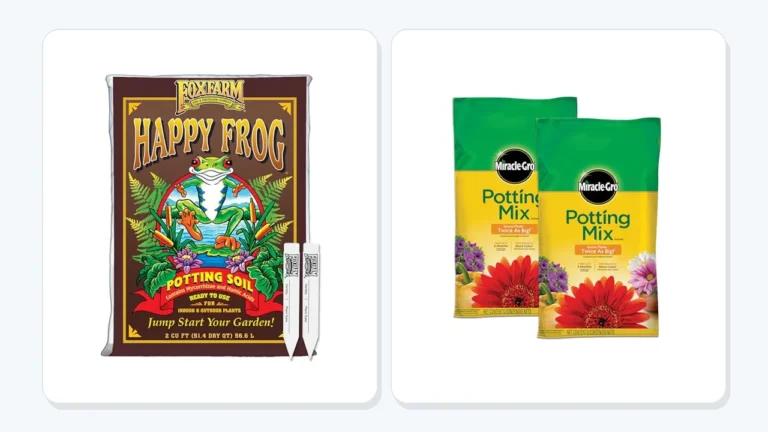
Foxfarm Ocean Forest Vs Happy Frog Potting Soil: Detailed
If you’re comparing foxfarm ocean forest vs happy frog potting soil, the short answer is: choose Ocean Forest for its listed sandy loam and mix of fish, crab, and shrimp meals; choose Happy Frog if its listed soil microbes and mycorrhizal fungi match what you want in a container blend. Neither is the automatic winner for every plant or grower.
The clearest practical differences are the stated volume—1.5 cubic feet for Ocean Forest versus 2 cubic feet for Happy Frog—and their listed amendments. Both include aged forest products, peat moss, perlite, earthworm castings, oyster shell, and fertilizer, but the ingredient lists aren’t identical.
Ocean Forest is listed for containers, houseplants, trees, shrubs, roses, seedlings, and plant starts. Happy Frog is described for indoor and outdoor container plants, including fruits, vegetables, flowers, and houseplants. Those are intended-use descriptions, not a guarantee that every plant will prefer either mix.
Below, I’ll compare the ingredients, volume, setup, and practical trade-offs, then give a buyer-specific verdict. The supplied Amazon listings don’t provide verified ratings, prices, weights, or detailed nutrient analyses, so I won’t guess at them.
| 1.5cu Ft Light Aerated Texture | Ready-to-Use Amended Container Blend |
 |
 |
Foxfarm Ocean Forest Vs Happy Frog Potting Soil Detailed Comparison
These are two FoxFarm container soils, but the supplied listings position them around different details. The product called 1.5cu Ft Light Aerated Texture is Ocean Forest, listed in a 1.5-cubic-foot quantity. Ready-to-Use Amended Container Blend is Happy Frog, listed in a 2-cubic-foot quantity.
Both are described as ready for planting, and both include a blend built around aged forest products, sphagnum peat moss, perlite, and fertilizer. That shared base means the choice isn’t simply “soil versus soil.” The listed differences are the added ingredients, the stated volume, and the uses each product calls out.
Ocean Forest’s ingredient list names sandy loam alongside fish meal, crab meal, shrimp meal, earthworm castings, and oyster shell. The listing says the sandy loam supports drainage, while aged forest products and peat moss help retain moisture. That mix may suit a buyer looking for both moisture-holding and drainage ingredients in one bag.
Happy Frog’s listing names earthworm castings, bat guano, oyster shell, and dolomite lime as fertilizer sources. It also specifically describes soil microbes and mycorrhizal fungi, presenting them as contributors to root development and nutrient use. Those are stated product features; the listing does not provide independent test results or quantify their effects.
Picture a gardener filling several containers before planting. The listed two-cubic-foot Happy Frog bag provides more volume than the 1.5-cubic-foot Ocean Forest bag, so it may cover more of that project if the required amount suits the containers. That does not tell you which costs less per cubic foot; check current price and the volume needed before ordering.
Key Differences That Matter
Volume and project size
Happy Frog is listed at 2 cubic feet, compared with 1.5 cubic feet for Ocean Forest. The difference is half a cubic foot, or one-third more listed volume for Happy Frog relative to Ocean Forest. That can matter when you’re filling a group of pots and don’t want to stop halfway for another bag.
Still, volume alone doesn’t establish better value. The Amazon listing data supplied here does not verify either product’s current price, bag weight, or how much a particular pot will take. Measure your containers or use their stated capacity, then compare the amount you need with each bag’s listed volume and current price.
Ingredient profile and drainage details
Both products list aged forest products, sphagnum peat moss, perlite, and fertilizer. Ocean Forest additionally lists sandy loam, while Happy Frog’s supplied ingredient list does not name it. That’s a difference in what the listings disclose, not proof that one product drains faster in every pot or that an unlisted ingredient is absent.
Ocean Forest’s listing explicitly connects sandy loam with drainage and peat moss and aged forest products with moisture retention. These are useful clues if you’re deciding how the mix’s stated components fit your watering routine. They aren’t a substitute for checking how a container drains in your own setup, especially because pot material, drainage holes, weather, and plant needs also affect watering.
Happy Frog’s listed base includes perlite, too, but its supplied listing doesn’t make the same specific drainage claim. If drainage behavior is your deciding factor, don’t assume either soil will solve a problem caused by a pot without adequate drainage holes. Check the container first, and follow plant-specific care guidance.
Listed amendments and biological components
Ocean Forest names fish meal, crab meal, and shrimp meal, along with earthworm castings and oyster shell. Happy Frog names earthworm castings, bat guano, oyster shell, and dolomite lime. Both lists include castings and oyster shell; the remaining named amendments differ.
Happy Frog is the one whose supplied listing specifically calls out soil microbes and mycorrhizal fungi. It says these are included to support root development and nutrient availability. That makes it a more direct match for someone who wants those biological components identified on the product listing, but the information provided does not show how large or consistent an effect a buyer should expect.
The listings don’t provide a nutrient analysis, ingredient percentages beyond the shared 50–60% aged forest products range, or a schedule for adding fertilizer later. Don’t infer a precise feeding plan from the ingredient names. Check the package and the needs of your particular plants before adding other products.
Intended container uses
Ocean Forest lists container gardens, houseplants, trees, shrubs, roses, seedlings, and plant starts as possible uses. Happy Frog’s listing focuses on indoor and outdoor container plants, naming fruits, vegetables, flowers, and houseplants. There’s overlap, especially for houseplants and general containers, but the use lists emphasize different examples.
Ocean Forest may be the closer listing match if you’re shopping for a mix that specifically names seedlings, plant starts, shrubs, or roses. Happy Frog may be the closer match for container-grown fruits, vegetables, and flowers, particularly if its stated microbes and fungi are part of your selection criteria. These are fit-based comparisons, not claims that either product is unsuitable for plants the listing doesn’t name.
Performance, Features, and Everyday Use
Both are described as ready to use, so the listings don’t require you to add another ingredient before planting. That’s convenient if you want to open a bag and fill a pot without mixing a separate amendment into it. It also means you should avoid buying extra components out of habit before you’ve checked what’s already listed in the blend.
For a small indoor repotting job, the 1.5-cubic-foot Ocean Forest quantity may be more manageable if you don’t need the larger stated volume. The listing includes two plant tags for marking varieties and planting dates. Happy Frog also includes two customizable tags, but its listed volume is larger, which may make more sense for several pots or a bigger container project.
Neither listing verifies bag dimensions, weight, or how easy the package is to carry through a doorway or up stairs. If handling is a concern, check the package details before buying rather than assuming that a larger volume means a particular weight. Soil moisture and packaging can affect handling, and those specifics aren’t provided in the data here.
Once planted, let the container and the plant guide your routine. The product descriptions mention moisture-retaining ingredients in Ocean Forest and components associated with drainage, while Happy Frog highlights biological amendments. But neither listing provides a watering schedule, a guaranteed time between watering, or plant-by-plant instructions. Check the soil and your plant’s care requirements instead of relying on a fixed calendar.
For a seed-starting project, Ocean Forest’s listing explicitly includes seedlings and plant starts among its intended uses. That makes it an easy product-listing match for a buyer seeking one named mix for that purpose. It does not verify that every seed or seedling will thrive in the blend, or that it is a specialized seed-starting medium; check the specific plant’s needs if the early growth stage is sensitive.
For containers of fruit, vegetables, or flowers, Happy Frog’s listing calls out those categories and describes its soil microbes and mycorrhizal fungi. A gardener who values those stated features may prefer it. The supplied listing does not establish a yield, flowering increase, or other measurable outcome, so treat the claims as product details rather than a promise of results.
Both products have ingredients that may matter to shoppers with sourcing preferences. Ocean Forest lists fish, crab, and shrimp meals; Happy Frog lists bat guano. If you avoid particular animal-derived ingredients, check the full package information before purchasing, because the listing summaries may not answer every sourcing question you have.
When comparing the options online, also look for the exact product size and formulation shown at checkout. The verified listings here identify Ocean Forest as 1.5 cubic feet and Happy Frog as 2 cubic feet, but prices and availability can change. Confirm that the selected listing matches the name and volume you intend to buy.
Pros and Cons
1.5cu Ft Light Aerated Texture
Pros
- ✓Listed sandy loam: A useful detail for buyers considering drainage ingredients.
- ✓Named meal amendments: Fish, crab, and shrimp meals are specified.
- ✓Seedling use listed: A clear match for some plant-start projects.
Cons
- –Smaller listed volume: It may take more bags for a large container project.
- –Animal-derived meals: Buyers avoiding these ingredients should check the package.
Ready-to-Use Amended Container Blend
Pros
- ✓More listed volume: Two cubic feet can suit larger filling jobs.
- ✓Microbes and fungi named: The listing identifies these biological components.
- ✓Produce and flowers listed: A practical fit for those container plans.
Cons
- –Bat guano listed: Check the ingredient details if sourcing matters to you.
- –No sandy loam named: Buyers seeking that listed ingredient may prefer Ocean Forest.
Which One Should You Buy?
Choose Ocean Forest 1.5cu Ft Light Aerated Texture if you want the smaller listed quantity and value the ingredients specifically named in its listing: sandy loam, fish meal, crab meal, and shrimp meal. It is also the more direct match if you want a product whose stated uses include seedlings, plant starts, shrubs, or roses.
Who Should Skip This: Skip Ocean Forest if you need the larger listed volume in one bag, or if fish, crab, or shrimp meal conflicts with your ingredient preferences. Happy Frog may fit those buyers better, depending on the project and the rest of its listed ingredients.
Choose Happy Frog Ready-to-Use Amended Container Blend if you need 2 cubic feet, are planting containers of fruits, vegetables, or flowers, or specifically want a listing that names soil microbes and mycorrhizal fungi. Its ingredient list also includes bat guano and dolomite lime, so review those details if they matter to you.
Who Should Skip This: Skip Happy Frog if your priority is Ocean Forest’s specifically listed sandy loam or its fish, crab, and shrimp meal amendments. Also compare the listed volume with the actual job; a larger bag isn’t automatically the sensible choice if you’ll use only a small amount.
Choosing by volume alone can leave you with an inconvenient leftover, while choosing by ingredient names alone can overlook how much soil the project needs. First estimate how many containers you’re filling, then decide which listed ingredients and intended uses best match your plans. If you need exact nutrient levels, a feeding schedule, or a specific ingredient percentage, those details aren’t verified in the supplied listings; check the product packaging or ask the seller.
FAQS About Foxfarm Ocean Forest Vs Happy Frog Potting Soil
Which FoxFarm soil comes in the larger listed volume?
Happy Frog is listed as 2 cubic feet. Ocean Forest is listed as 1.5 cubic feet, so Happy Frog has half a cubic foot more listed volume.
What is the main ingredient difference between Ocean Forest and Happy Frog?
Ocean Forest lists sandy loam, fish meal, crab meal, and shrimp meal. Happy Frog lists bat guano and dolomite lime, and specifically identifies soil microbes and mycorrhizal fungi. Both list earthworm castings and oyster shell.
Is Ocean Forest or Happy Frog the better match for seedlings?
Ocean Forest’s supplied listing specifically names seedlings and plant starts. That makes it the clearer listing match, but it does not guarantee suitability for every seed or plant-starting method.
Which is a better listed fit for container vegetables and flowers?
Happy Frog’s listing specifically names fruits, vegetables, and flowers in containers. Ocean Forest is also listed for container gardens, but those plant examples aren’t named in its supplied use list.
Final Verdict: Which One Wins?
Ocean Forest wins for a buyer who wants the 1.5-cubic-foot option, sandy loam, its named fish, crab, and shrimp meals, or a listing that specifically includes seedlings and plant starts. Its listed moisture-retention and drainage components may be useful clues, but they don’t replace checking your plant and container needs.
Happy Frog wins for a buyer who needs 2 cubic feet, wants its listed microbes and mycorrhizal fungi, or is choosing a blend whose stated uses include container fruits, vegetables, and flowers. For either product, confirm the volume, ingredient preferences, and current price before checkout. There isn’t a universal winner here; the better buy is the one that fits your planting job without leaving you with the wrong amount or formulation.

I’m Maya L. Greenwood, a lifelong plant lover who believes anyone can grow something beautiful with the right guidance. After years of testing soil mixes, pruning methods, irrigation tricks, and pest-safe solutions, I started EasyGardenTips.com to turn hard-won lessons into step-by-step advice. From seed starting and container gardens to composting and seasonal checklists, my goal is to make gardening simple, sustainable, and fun.