Foxfarm Ocean Forest Vs Miracle Gro Potting Soil: Detailed
If you’re choosing between FoxFarm Ocean Forest and Miracle-Gro Potting Mix, the short answer is: pick Ocean Forest for a ready-to-use mix whose listed ingredients and uses span containers, houseplants, and seedlings; pick Miracle-Gro for outdoor container plants when its stated feeding period and two-bag format suit your plans.
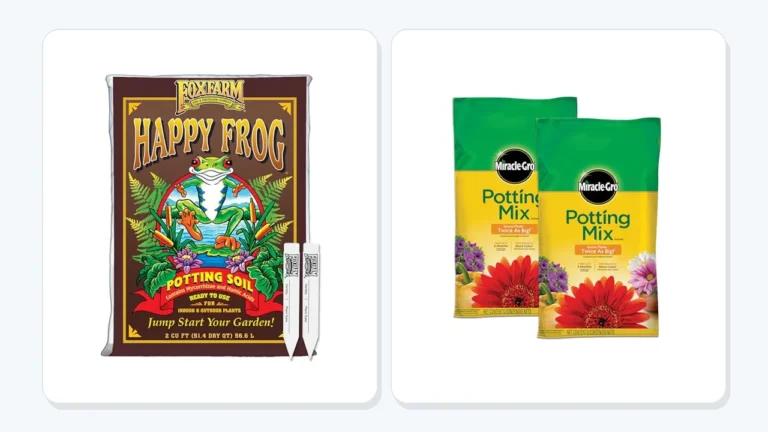
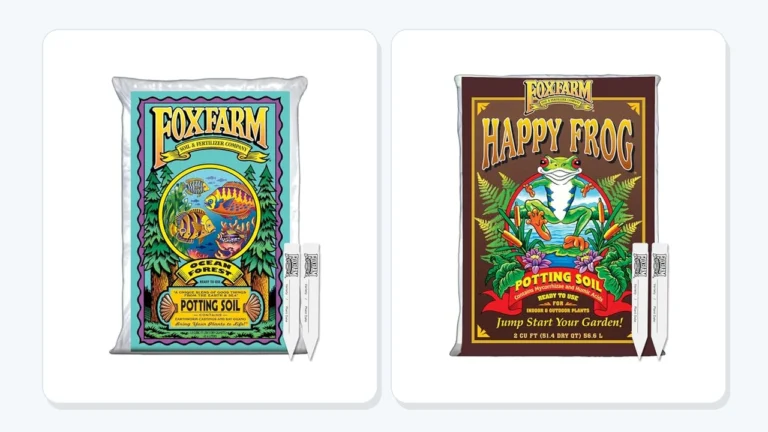
The clearest measurable difference is volume. Ocean Forest comes as one 1.5-cubic-foot bag—about 42 quarts—while the Miracle-Gro bundle contains two 16-quart bags, or 32 quarts total.
The ingredient details also differ. Ocean Forest lists aged forest products, peat moss, perlite, sandy loam, and several meals and castings. Miracle-Gro’s listing focuses instead on outdoor use, feeding for up to six months, and coverage guidance; it doesn’t provide a comparable ingredient breakdown.
Below, I’ll translate those differences into practical choices: how much mix you get, what the listings say about use and feeding, and where each product’s limits matter. Neither is the automatic winner for every pot or planting plan.
| 1.5cu Ft Light Aerated Texture | Miracle-Gro Potting Mix 16 Qt. 2-Pack |
 |
 |
Foxfarm Ocean Forest Vs Miracle Gro Potting Soil Detailed Comparison
These products overlap as mixes for container gardening, but their listings emphasize different jobs. The FoxFarm Ocean Forest 1.5cu Ft Light Aerated Texture is presented as ready for immediate planting and suitable for a range of containers and plants, including houseplants and seedlings. Miracle-Gro Potting Mix 16 Qt. 2-Pack is specifically positioned for outdoor container plants and states that it feeds for up to six months.
That distinction is useful if you’re planning a mixed planting setup. A bag intended for outdoor pots may fit a patio project with flowers, herbs, or vegetables; a mix whose listing includes houseplants and seedlings may be a more natural match for someone also repotting indoors. Those are listing-supported use cases, not a guarantee that every plant will thrive in either mix.
Volume is another practical separator. Ocean Forest’s 1.5 cubic feet converts to roughly 42 quarts, compared with 32 quarts across the Miracle-Gro two-pack. That gives Ocean Forest about 10 additional quarts on the stated amounts, though the soil you need depends on pot size, root-ball volume, and how much mix you use.
Miracle-Gro makes its pack coverage easier to picture: each 16-quart bag is listed as enough to fill one 12-inch container, with the amount varying according to the root ball. Ocean Forest’s listing doesn’t give an equivalent pot count, so don’t assume the same number of containers from the bag label alone.
Quick takeaway: Ocean Forest gives you more listed volume and more detail about its ingredients and range of uses. Miracle-Gro gives you a clearly stated outdoor-container focus, two smaller bags, and a stated feeding window.
Key Differences That Matter
1. Ingredients and what you can actually compare
Ocean Forest’s listing names aged forest products, sphagnum peat moss, perlite, sandy loam, and fertilizer. It also identifies fish meal, crab meal, shrimp meal, earthworm castings, and oyster shell as fertilizer sources. The listed proportions include 50–60% aged forest products, but the listing doesn’t provide a complete percentage breakdown of every ingredient.
Those details tell you more about the type of mix you’re buying, but they don’t establish how it will perform in your particular pot or climate. The listing describes the forest products and peat moss as helping retain moisture, and the sandy loam as contributing drainage. Treat that as product information, not a guarantee that you can ignore watering or drainage-hole needs.
The Miracle-Gro listing doesn’t give a comparable ingredient list or fertilizer analysis. That information is not verified in the supplied listing, so it would be inaccurate to say the product does or doesn’t contain any particular material. If composition is a deciding factor—for example, because you need to avoid a specific ingredient—check the package label before buying.
2. Feeding information
Miracle-Gro states that its mix feeds outdoor container plants for up to six months. That gives a container gardener a stated time window to plan around, but it doesn’t mean every plant has identical feeding needs or that the mix should replace all later care. Follow the package directions and consider the needs of the plants you’re growing.
Ocean Forest’s listing says it contains fertilizer and identifies several sources, but it doesn’t give a feeding duration or nutrient analysis in the supplied information. So there’s no fair basis here to compare the two by fertilizer strength or claim one will feed plants longer. If you need a defined feeding schedule, the six-month statement is the more specific listing claim; verify the package instructions before deciding what to add later.
3. Volume, packages, and pot planning
At roughly 42 quarts, the Ocean Forest bag contains more listed mix than the Miracle-Gro pack’s 32 quarts total. That may reduce the chance of running short during a larger potting session, but it also means you’ll be handling one larger-volume bag. The listing doesn’t provide a bag weight, so I can’t compare how heavy either option is to lift.
Miracle-Gro splits its total into two 16-quart bags and gives a reference point of one 12-inch container per bag. Two bags can be convenient if you want to open one at a time or plan around two containers, but actual fill depends on root-ball size. Ocean Forest includes two plant tags per purchase, a small practical extra for labeling varieties or planting dates; the listing doesn’t say that tags come with Miracle-Gro.
Neither listing gives a reliable number of smaller pots you’ll fill. Pot depth and width, the plant’s existing root ball, and how much mix remains after settling all affect the result. Use the listed volume as a planning guide rather than a promise of an exact pot count.
4. Intended plants and use setting
Ocean Forest lists container gardens, houseplants, trees, shrubs, roses, and seedlings among its intended uses. It also says the mix is ready to use without adding other ingredients. That broad stated range may appeal if one bag needs to serve several kinds of planting jobs.
Miracle-Gro names outdoor container plants, including flowers, vegetables, herbs, shrubs, annuals, and perennials. Its listing is more specific about that outdoor-container setting. It doesn’t establish suitability for every indoor plant or every seed-starting situation, so check the label if you want to use it beyond its stated applications.
There’s a useful distinction between “not listed” and “not suitable.” Miracle-Gro’s listing doesn’t mention houseplants or seedlings in the supplied details; that alone doesn’t prove the mix cannot be used for them. It does mean Ocean Forest has clearer listing support for those uses, while Miracle-Gro has clearer support for outdoor containers.
Performance, Features, and Everyday Use
For a one-day potting project, think first about where the plants will live and how many containers you’re filling. If you’re refreshing a few patio pots with flowers or herbs, Miracle-Gro’s two-bag format and 12-inch-container coverage reference give you a straightforward starting estimate. Measure your containers and account for the root balls before deciding that two bags will be enough.
If your project mixes indoor and outdoor plants, Ocean Forest’s listed range may make planning simpler. One bag is described for uses from houseplants to seedlings and shrubs, and the listing says it’s ready to use as purchased. That means you don’t need to budget for an extra ingredient just to prepare the mix according to the listing, though the right setup still depends on the specific plant and pot.
Ocean Forest’s listed ingredients offer some clues about water handling. Peat moss and aged forest products are described as moisture-retaining, while sandy loam is identified for drainage; perlite is also included in the ingredient list. In practice, those ingredients don’t remove the need to use pots with suitable drainage and check moisture as you go. Plant type, pot material, temperature, and light can all affect how quickly a container dries.
Miracle-Gro’s stated feeding period may help someone who wants a product with a listed time frame for feeding support. But “up to six months” is not a maintenance-free promise: plants still need appropriate watering, light, and attention, and their needs can vary. The supplied listing doesn’t give a nutrient analysis or explain how that period changes by plant, so check the package for the detailed directions.
Consider storage and handling, too. Ocean Forest offers more mix by stated volume in a single bag; Miracle-Gro divides its smaller total into two bags. If you have limited storage or don’t want to open a larger quantity at once, the two-pack may be easier to portion. If you’re filling several sizeable containers, the larger listed volume may be more convenient, though the best fit depends on your actual pot sizes.
Neither listing verifies pH, weight, a specific nutrient ratio, or a guaranteed number of pots beyond Miracle-Gro’s qualified 12-inch-container estimate. Those gaps aren’t proof of a defect; they’re simply details you shouldn’t guess at when they matter to your plants or your ability to handle the bags. Check the current package information for any specification you need before ordering.
Pros and Cons
1.5cu Ft Light Aerated Texture
Pros
- ✓More listed volume: About 42 quarts can cover a broader potting session.
- ✓Named ingredients: Makes the mix easier to evaluate if composition matters.
- ✓Broad stated uses: Includes houseplants, seedlings, and outdoor containers.
Cons
- –One larger-volume bag: May not suit buyers who prefer smaller portions.
- –No listed feed duration: Buyers wanting a stated schedule must check the package.
- –No pot-count estimate: You’ll need to plan from container size and root balls.
Miracle-Gro Potting Mix 16 Qt. 2-Pack
Pros
- ✓Two separate bags: Lets you portion the 32-quart total across projects.
- ✓Stated feeding window: Lists feeding support for up to six months.
- ✓Coverage reference: Estimates one 12-inch container per 16-quart bag.
Cons
- –Less listed volume: The pack totals about 10 fewer quarts than Ocean Forest.
- –Outdoor focus: Its supplied listing gives less guidance for indoor or seed-starting use.
- –Ingredients not detailed here: Check the package if composition affects your choice.
Which One Should You Buy?
Choose FoxFarm Ocean Forest 1.5cu Ft Light Aerated Texture if you want a larger listed amount, value an ingredient list, or need a mix whose stated uses include houseplants and seedlings as well as outdoor containers. It’s also the more straightforward pick if you want to avoid buying separate ingredients for preparation, since its listing says it’s ready to use. That doesn’t mean every plant prefers the same mix; match the product to the plant and potting instructions.
Who Should Skip This: Skip Ocean Forest if you specifically want a stated feeding duration or prefer smaller bags that are easier to portion. The supplied listing doesn’t verify how long its fertilizer supports plants, and its 1.5-cubic-foot bag contains more mix than the Miracle-Gro pack.
Choose Miracle-Gro Potting Mix 16 Qt. 2-Pack if your main job is planting outdoor containers and you value a stated feeding window. Its two 16-quart bags make it easier to split the purchase across separate pots or sessions, and the listing’s one-bag-per-12-inch-container reference gives you a rough planning tool. Treat that as an estimate, since root-ball size can change how much mix a pot takes.
Who Should Skip This: Skip Miracle-Gro if you need more listed volume than 32 quarts, want a detailed ingredient breakdown from the supplied listing, or need clear listing support for seedlings and houseplants. Those are reasons to compare package labels or choose Ocean Forest—not proof that Miracle-Gro cannot work in another setting.
If your main concern is the number of pots you can fill, calculate from your containers rather than relying on the product names. A larger pot or a large root ball can use substantially more mix than a smaller container, and the available listing doesn’t provide an exact Ocean Forest pot count. For the Miracle-Gro pack, its coverage statement is helpful but explicitly depends on root-ball size.
If ingredient selection matters, read the current label before planting. Ocean Forest’s listing names several ingredients, while the supplied Miracle-Gro details don’t provide the same breakdown. If you’re trying to meet a particular plant’s needs or avoid a material, a product name alone isn’t enough to confirm suitability.
The consequences of choosing the wrong fit are mostly practical: you might buy too little for the project, end up storing more than you need, or choose a product whose listed use doesn’t match your plan. A quick count of pots, a check of indoor versus outdoor use, and a glance at the package directions can prevent an avoidable second purchase.
FAQS About Foxfarm Ocean Forest Vs Miracle Gro Potting Soil
Which product gives you more potting mix?
Ocean Forest lists 1.5 cubic feet, about 42 quarts. The Miracle-Gro 2-pack totals 32 quarts, so Ocean Forest provides about 10 more quarts by stated volume.
Which one is listed for houseplants and seedlings?
Ocean Forest’s supplied listing includes both houseplants and seedlings among its uses. The Miracle-Gro details provided here focus on outdoor container plants and don’t give the same guidance for those uses.
Does either product state how long it feeds plants?
Miracle-Gro states that it feeds outdoor container plants for up to six months. Ocean Forest’s supplied listing says it contains fertilizer but doesn’t verify a feeding duration.
How many containers can the Miracle-Gro 2-pack fill?
The listing estimates that each 16-quart bag fills one 12-inch container, so the two-pack’s reference is two such containers. Actual coverage may vary with each plant’s root-ball size.
Final Verdict: Which One Wins?
Ocean Forest wins for buyers who want more listed volume, named ingredients, and clearly stated uses that include houseplants and seedlings. Its roughly 42-quart bag is the larger option, but its listing doesn’t give a feeding duration or an exact container count.
Miracle-Gro wins for outdoor-container projects where two smaller bags and a stated feeding window are more useful. Its 32-quart total is lower, but the listing gives a rough 12-inch-pot coverage reference for each bag.
Before choosing, match the listed use to your plants, estimate the volume your pots require, and check the package for any ingredient or feeding details you need. That’s the safer way to spend your money than assuming either mix is the universal choice.

I’m Maya L. Greenwood, a lifelong plant lover who believes anyone can grow something beautiful with the right guidance. After years of testing soil mixes, pruning methods, irrigation tricks, and pest-safe solutions, I started EasyGardenTips.com to turn hard-won lessons into step-by-step advice. From seed starting and container gardens to composting and seasonal checklists, my goal is to make gardening simple, sustainable, and fun.