How Long Do Galvanized Raised Beds Last? Durability and Care
High-quality galvanized raised garden beds can last 10–20 years or longer, with some premium coated-steel manufacturers advertising a lifespan of more than 20 years. However, the actual lifespan depends on steel thickness, protective coating quality, soil conditions, climate, and maintenance.
Unlike wooden raised beds, galvanized steel does not rot when exposed to moisture. Instead, it relies on a protective metallic coating that slows corrosion. As long as the coating remains effective and the frame stays structurally sound, the bed can provide years of reliable outdoor use.
Not every galvanized raised bed offers the same durability. Some inexpensive products use thinner steel or less substantial protective coatings, while premium models may combine zinc, aluminum, magnesium, and additional painted finishes.
Soil acidity, salt exposure, scratches, and persistent moisture can also affect how quickly the protective coating deteriorates.
In this article, I cover the expected lifespan of galvanized raised beds, how their coatings prevent rust, the factors that shorten durability, warning signs of deterioration, and practical maintenance methods. You’ll also learn how galvanized steel compares with wood and other raised bed materials and when replacing an aging metal bed makes sense.
How Long Do Galvanized Raised Beds Last in Different Conditions?
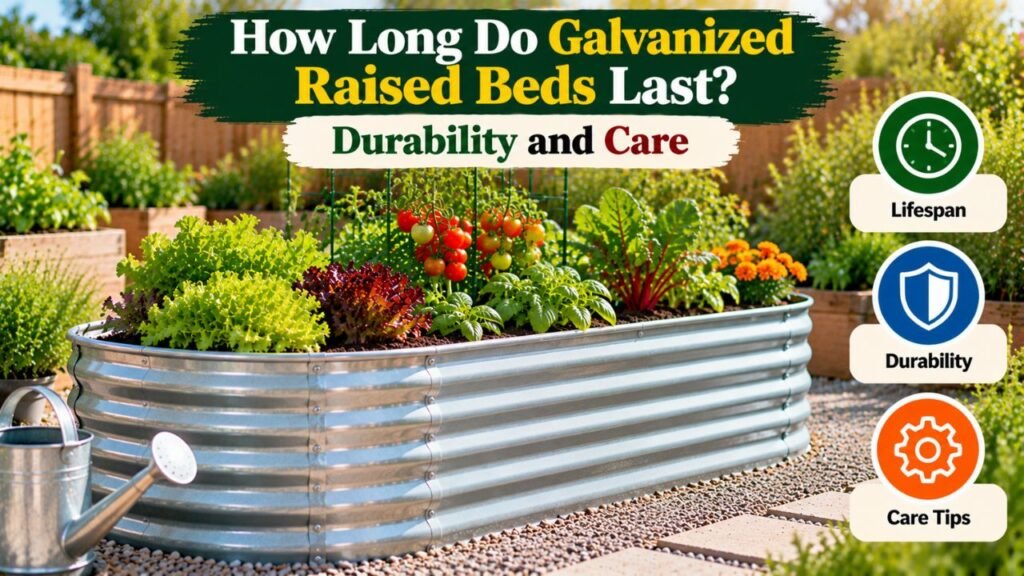
A well-made galvanized raised bed may provide roughly 10–20 or more years of service, although no single lifespan applies to every product.
Some manufacturers advertise 20-year or longer service life, but these figures are not universal guarantees.
The expected longevity depends on the steel material, coating system, and environmental exposure.
Expected Lifespan by Construction Quality
| Raised Bed Type | General Longevity Expectation | Important Consideration |
| Basic thin galvanized steel bed | Several years to potentially a decade or longer | Coating quality and corrosion exposure vary |
| Quality coated-steel raised bed | Often designed for 10–20+ years | Actual service life depends on the product |
| Premium zinc-aluminum-magnesium-coated bed | Some manufacturers advertise 20+ years | Manufacturer claim, not a guaranteed result |
| Heavy-gauge galvanized structural steel | Can last several decades | Not directly comparable to thin raised bed panels |
| Damaged or heavily corroded steel bed | Shortened and unpredictable | Structural condition matters more than age |
These ranges are general planning guidance rather than results from controlled, long-term comparisons of identical raised beds.
A high-quality bed in favorable conditions may remain useful beyond its advertised lifespan.
A poorly manufactured bed in harsh conditions may fail much sooner.
What University Research Says About Galvanized Steel
The Virginia Cooperative Extension’s comparison of raised bed materials explains that the durability of metal raised beds depends on steel thickness, corrosion treatment, soil pH, and moisture.
The publication notes that many metal garden beds use 20–24-gauge steel.
It also references research indicating that 14-gauge galvanized steel may last approximately 35–50 years or longer before its first perforation.
However, 14-gauge steel is substantially thicker than the panels commonly used in lightweight modular raised bed kits.
A lifespan estimate for heavy-gauge structural steel should not be automatically applied to a thin-gauge garden bed.
How Long Do Premium Galvanized Raised Beds Last?
Premium manufacturers often emphasize long-term corrosion protection.
For example, Vego Garden’s official FAQ describes a 20-plus-year expected lifespan for its coated-steel raised beds.
Its VZ 2.0 material combines zinc, magnesium, and aluminum-coated steel with an additional protective finish.
Other manufacturers use different coating formulations and construction systems.
Such claims can be useful when comparing products, but they should be evaluated alongside the actual material specifications and warranty terms.
A claimed 20-year lifespan does not necessarily mean that a manufacturer provides a 20-year replacement warranty.
Key Takeaway: Quality galvanized raised beds can remain functional for many years or even decades, but actual durability depends on the coating, steel construction, and growing conditions. Manufacturer lifespan estimates are not guarantees.
Why Galvanized Raised Garden Beds Resist Rust
Galvanized steel has a protective zinc-based coating that reduces corrosion of the underlying steel.
Without this coating, ordinary carbon steel can rust when exposed to moisture and oxygen.
The protective layer makes galvanized steel useful for outdoor structures such as fencing, roofing, water tanks, and garden beds.
How Galvanization Protects Steel
The basic galvanization process applies zinc to steel.
Zinc protects the underlying metal in two ways.
First, it acts as a barrier that reduces direct exposure of the steel to moisture and oxygen.
Second, zinc provides sacrificial corrosion protection.
This means the zinc coating corrodes preferentially when the surface is damaged, helping protect nearby exposed steel.
However, the coating is gradually consumed as it reacts with the environment.
Once the remaining protection becomes insufficient, the steel underneath may begin developing red rust.
Galvanized Steel vs. Zinc-Aluminum-Magnesium Coatings
Not all metal raised beds use the same coating.
Some products use conventional zinc-galvanized steel.
Others use zinc-aluminum or zinc-aluminum-magnesium alloy coatings.
These additional elements can improve corrosion resistance under certain exposure conditions.
Common coating categories include:
- Zinc-galvanized steel: Uses zinc as the primary protective metal.
- Aluzinc or Zincalume-type steel: Uses zinc-aluminum alloy coatings.
- Zinc-aluminum-magnesium steel: Combines zinc with aluminum and magnesium for additional corrosion protection.
- Painted coated-steel systems: Add a compatible painted or powder-coated finish over a corrosion-resistant metal layer.
The exact performance depends on coating composition, coating mass or thickness, application quality, and the surrounding environment.
The name of a coating system alone is not enough to calculate its lifespan.
Does Thicker Steel Last Longer?
Steel thickness matters, but it does not determine corrosion resistance by itself.
A thicker steel wall may remain structurally useful longer after corrosion begins.
However, two raised beds with the same steel thickness can have different service lives if their coatings differ.
Steel thickness also affects how well the walls resist bending under soil pressure.
For a durable raised bed, look for an appropriate combination of:
- Steel thickness
- Protective coating specifications
- Reinforced panel design
- Suitable fasteners
- Strong corner connections
- Proper installation
Key Takeaway: Galvanized beds resist rust because zinc-based coatings protect the underlying steel. Coating quality, structural design, and material thickness all influence how long a bed remains useful.
What Factors Shorten the Lifespan of Galvanized Raised Beds?
Galvanized steel performs differently depending on the conditions surrounding it.
Soil chemistry, moisture, salt, and physical damage are among the most important factors.
1. Highly Acidic Soil
Acidic conditions can increase the rate at which zinc coatings deteriorate.
Most common vegetables grow well in mildly acidic to near-neutral soil, which is generally more favorable for galvanized steel than strongly acidic conditions.
However, gardeners sometimes intentionally create acidic growing environments for plants such as blueberries.
If the growing medium is strongly acidic, a galvanized steel frame may experience increased corrosion at the soil-contact surfaces.
The University of Minnesota Extension’s raised-bed gardening guidance explains that zinc may leach from galvanized containers under highly acidic conditions, particularly when soil pH falls below 5.
This does not mean every slightly acidic garden bed will corrode rapidly.
The degree of risk depends on coating type, pH, moisture, and duration of exposure.
2. Salt Exposure
Salt can accelerate corrosion of many metal surfaces.
Raised beds near coastal environments may experience salt deposition from sea air.
Other potential sources include:
- Saline irrigation water
- Deicing salt runoff
- Salt-contaminated soil
- Excessively concentrated soluble fertilizers
Chloride exposure can contribute to the deterioration of protective coatings, especially where moisture remains present.
For coastal gardens, selecting a bed with a suitable corrosion-resistant coating is particularly important.
3. Poor Drainage and Persistent Moisture
Galvanized raised beds are designed for outdoor exposure and can tolerate normal rain and irrigation.
However, persistent water accumulation can create unfavorable corrosion conditions.
Problems may occur where:
- Soil remains waterlogged for extended periods
- Water becomes trapped along panel joints
- The frame sits in standing water
- Damp debris accumulates against the exterior
- Drainage openings are blocked
Poor drainage also harms plant roots.
A well-drained bed helps both the growing conditions and the overall installation.
4. Scratches and Damaged Coatings
A deep scratch may expose the steel beneath the protective coating.
Zinc near the damaged area can provide some sacrificial protection, but the amount of protection is limited.
Repeated scraping, grinding, or impacts can remove additional coating material.
Common causes of damage include:
- Metal shovels striking the sidewalls
- Dragging panels over concrete
- Improper cutting or drilling
- Abrasive cleaning
- Contact with sharp landscaping tools
- Damage during assembly or relocation
Inspect damaged areas rather than assuming the remaining steel will stay protected indefinitely.
5. Low-Quality Fasteners and Connections
The panels are only one part of a raised bed.
Fasteners, braces, corner plates, and joints also affect durability.
Corroded hardware can loosen connections and allow the walls to move.
Incompatible metal combinations may also contribute to corrosion under certain conditions.
Choose the hardware supplied or recommended by the manufacturer.
Avoid replacing stainless steel or otherwise specified fasteners with ordinary unprotected screws.
6. Excessive Soil Pressure
A tall raised bed holds a substantial amount of growing medium.
Wet soil places outward pressure on the metal panels.
If the frame lacks adequate bracing, the walls may begin to bulge.
This can loosen fasteners, distort joints, and damage protective finishes.
A structurally deformed bed may become unsuitable for continued use even if the metal has not rusted through.
Key Takeaway: Highly acidic soil, salts, persistent moisture, coating damage, weak connections, and excessive soil pressure can shorten a galvanized bed’s service life.
Do Galvanized Raised Beds Eventually Rust?
Yes, galvanized raised beds can eventually rust because their protective coatings do not last forever.
However, a galvanized bed may remain functional for many years before significant corrosion develops.
Understanding the difference between cosmetic staining and structural rust helps determine whether maintenance or replacement is needed.
What Does Early Corrosion Look Like?
Possible warning signs include:
- White or gray powdery deposits
- Small orange or reddish-brown spots
- Coating discoloration
- Rust-colored streaks near fasteners
- Bubbling or peeling paint
- Surface roughness around joints
Not every stain indicates failure of the steel panels.
For example, rust-colored water running from an ordinary steel screw can leave marks on an otherwise intact galvanized surface.
What Is White Rust on Galvanized Steel?
New galvanized surfaces can develop a white or gray powdery deposit when moisture becomes trapped against the coating with limited airflow.
This condition is commonly called wet storage stain or white rust.
It is different from red rust caused by corrosion of the underlying steel.
Mild surface deposits do not necessarily indicate that the bed is structurally damaged.
However, severe or persistent deposits may signal unfavorable moisture conditions and loss of protective material.
If white deposits develop, inspect the area and follow the manufacturer’s cleaning instructions.
Avoid aggressive wire brushing or abrasive grinding that could remove more of the coating.
What Does Red Rust Mean?
Red or orange rust may indicate exposed carbon steel.
It can develop where protective coatings have been worn away, cut, or damaged.
However, rust-colored deposits can also come from nearby fasteners or other metal objects.
Clean and inspect the affected area to determine whether the panel itself is corroding.
A small isolated surface spot is different from a hole or widespread structural rust.
Can a Rusty Raised Bed Still Be Used?
Sometimes.
Minor cosmetic corrosion does not automatically mean the entire bed needs replacement.
However, continued use depends on the condition of the steel and its connections.
A bed with extensive corrosion, weakened walls, or perforated structural panels may no longer safely contain the soil.
Do not continue using a failing frame simply because the majority of its surface still looks acceptable.
Key Takeaway: Galvanized steel can rust after sufficient coating deterioration. White deposits, surface stains, and actual metal perforation have different meanings and should be evaluated separately.
How to Make Galvanized Raised Beds Last Longer
Good installation and simple maintenance can improve the service life of galvanized raised beds.
The main goal is to protect the coating, preserve structural strength, and avoid unnecessarily corrosive conditions.
Choose a Quality Galvanized Steel Bed
Start with material specifications rather than appearance alone.
Look for:
- Identifiable steel and coating materials
- Stated panel thickness
- Protective edging
- Suitable corrosion-resistant fasteners
- Reinforcing braces where needed
- Clear installation instructions
- Manufacturer contact information
- A written warranty with understandable terms
A higher price does not automatically prove superior corrosion resistance.
However, a product with transparent specifications is easier to evaluate than one that provides little information about its materials.
Install the Bed on Well-Drained Ground
Most standard ground-based metal raised beds have open bottoms.
This allows excess water to move into suitable soil beneath the frame.
Choose a location that does not regularly collect standing water.
Avoid placing the lower panel edges in a depression where water remains after rainfall.
If the underlying ground is compacted, address the drainage problem before installation.
For beds installed on concrete, use an appropriate hard-surface design that provides a clear route for runoff.
Use Suitable Raised Bed Soil
Quality growing soil supports healthy plants and helps avoid persistent waterlogging.
A practical starting mixture for many open-bottom vegetable beds is:
- Two parts loamy topsoil
- One part finished plant-based compost
Adjust the ingredients according to existing soil conditions.
Avoid filling the entire bed with dense clay-heavy material that drains poorly.
Do not assume that adding a gravel layer underneath the soil will correct drainage problems.
The soil needs appropriate structure and a route for excess water to escape.
Monitor Soil pH
Soil pH affects both plant nutrition and metal corrosion.
For most common vegetables, a pH around 6.0–7.0 is a practical starting target, although individual crops have different preferences.
Use an appropriate soil test rather than guessing.
Do not add lime simply to protect galvanized metal without considering plant requirements and the test results.
Similarly, avoid excessive acidifying amendments unless needed for the plants being grown.
If you are growing strongly acid-loving plants, consider whether another bed material or a compatible sidewall liner would be more suitable.
Avoid Damaging the Coating During Assembly
Handle the panels carefully.
Do not drag them across rough ground or concrete.
Use the supplied fasteners and follow the manufacturer’s assembly sequence.
Install structural braces before filling the bed.
Avoid unnecessary drilling, cutting, or grinding.
These operations can remove corrosion protection and alter the structural performance of the panels.
If the manufacturer permits modification, follow the specified coating repair procedure.
Clean the Exterior Gently
Normal dirt and mud can usually be removed with clean water and a soft cloth or sponge.
A mild cleaner may be suitable if the manufacturer allows it.
Avoid harsh acidic cleaners, aggressive abrasives, and steel wire brushes unless the product instructions specifically permit them.
After cleaning, inspect painted surfaces and panel joints for damage.
Keep Debris Away From the Walls
Leaves, mulch, weeds, and other material can accumulate against the exterior of a bed.
When these materials remain wet, they can create prolonged moisture contact.
Keep the surrounding area reasonably clear and allow water to drain away.
This does not mean removing the garden’s normal soil or mulch from inside the bed.
The goal is to avoid unnecessary trapped moisture around external joints and lower panel edges.
Inspect Fasteners and Braces
Check the frame periodically for:
- Loose bolts
- Missing hardware
- Bent braces
- Bulging panels
- Misaligned joints
- Damaged protective edging
- Corrosion around connections
Tighten fasteners according to the manufacturer’s requirements.
Replace damaged hardware with compatible components.
Avoid overtightening bolts, which can distort thin panels or damage their coatings.
Key Takeaway: Selecting quality materials, maintaining drainage, protecting the coating, monitoring soil conditions, and inspecting structural connections can help galvanized raised beds remain functional longer.
Do Galvanized Raised Beds Last Longer Than Wooden Beds?
Galvanized steel often offers longer service life and less maintenance than untreated softwood.
However, the comparison depends on the wood species, preservative treatment, metal coating, and local environment.
Galvanized Steel vs. Untreated Pine
Untreated pine is an inexpensive material for raised beds.
Its main disadvantage is limited natural resistance to fungal decay.
When pine boards remain in contact with damp soil, they may deteriorate over several growing seasons.
Galvanized steel does not experience wood rot, so a quality metal bed may provide substantially longer use.
However, its protective coating can still corrode over time.
Galvanized Steel vs. Cedar
Cedar contains naturally occurring compounds that make suitable heartwood more resistant to decay than ordinary untreated pine.
A well-built cedar raised bed can remain useful for many years.
However, cedar eventually deteriorates, particularly where the wood remains damp.
Quality galvanized steel generally requires less maintenance related to rot.
Cedar may still be preferable for gardeners who want natural wood, easy modifications, and simple board replacement.
Galvanized Steel vs. Pressure-Treated Wood
Modern residential ground-contact-rated pressure-treated lumber contains preservatives that help resist decay.
It can provide a long-lasting and comparatively affordable wooden frame.
However, its lifespan depends on the preservative type, lumber quality, and exposure conditions.
Galvanized steel avoids the decay mechanisms associated with wood while introducing its own corrosion considerations.
Neither is automatically superior under every condition.
Raised Bed Material Comparison
| Material | Main Durability Advantage | Main Limitation |
| Untreated pine | Inexpensive and easy to replace | Vulnerable to fungal decay |
| Cedar | Natural decay resistance | Can still rot in damp conditions |
| Pressure-treated wood | Improved resistance to decay | Treatment and lumber quality vary |
| Galvanized steel | Resists rust and does not rot | Coating eventually deteriorates |
| Zinc-aluminum-magnesium-coated steel | Enhanced corrosion protection in suitable conditions | Performance depends on coating specifications |
| Recycled plastic | Does not experience conventional wood rot | Some products can bow or degrade under UV exposure |
| Stone or properly built masonry | Long-term structural durability | Heavy and difficult to modify |
For a permanent vegetable garden where low maintenance is the main priority, a well-manufactured coated-steel bed is a strong option.
For an inexpensive DIY project, untreated pine may still provide better initial value.
Key Takeaway: Galvanized steel usually avoids the frequent rot-related replacement concerns associated with untreated pine, but cedar, treated lumber, and other materials can also provide good long-term value.
Are Galvanized Raised Beds Safe for Vegetables as They Age?
Galvanized raised beds are generally considered suitable for growing vegetables when the material is appropriate for gardening and the growing conditions are suitable.
However, safety and structural durability are separate questions.
A garden bed may remain structurally sound while experiencing minor surface weathering.
Does Zinc Leach Into Raised Bed Soil?
Zinc can enter soil as a protective coating slowly reacts with the environment.
The amount depends on soil pH, moisture, coating composition, and other conditions.
Zinc is an essential plant micronutrient, but excessive concentrations can affect plant growth.
Highly acidic soil may increase zinc release.
For ordinary vegetable gardens with suitable soil pH, galvanized steel is generally considered an acceptable raised bed material.
Does Rust Contaminate Vegetables?
A small amount of ordinary iron rust on an otherwise suitable metal garden bed does not automatically make the vegetables unsafe.
However, rust should not be ignored when it indicates severe structural deterioration.
The safety of an older metal bed also depends on the identity of its coatings and any previous chemical exposure.
Avoid using unidentified industrial metal containers or old painted panels with unknown finishes for food gardening.
Should You Use a Plastic Liner?
A suitable sidewall liner can reduce direct contact between the growing soil and the metal.
This may be useful when growing plants in highly acidic soil.
However, many properly manufactured galvanized raised beds are designed for direct contact with normal garden soil.
A liner is not automatically necessary.
If one is installed, it should not obstruct bottom drainage.
Also, a plastic liner does not guarantee that an unsuitable or contaminated material becomes safe for growing food.
Key Takeaway: Galvanized beds are generally suitable for vegetable growing, but soil chemistry, coating composition, and the condition of older materials matter. Structural rust and unknown industrial coatings deserve additional caution.
Are Expensive Galvanized Raised Beds Worth the Money?
A more expensive bed may offer better long-term value when its protective coating and structural design justify the additional cost.
However, price alone does not establish durability.
Compare Coating Specifications
Look beyond product descriptions such as rustproof or heavy-duty.
Useful details include:
- Coating composition
- Coating mass or thickness
- Steel substrate thickness
- Protective paint system
- Intended outdoor application
- Manufacturer corrosion-resistance information
A clearly specified coating makes it easier to compare products.
Compare Structural Reinforcement
A raised bed must remain stable while holding wet growing soil.
Check whether the kit includes reinforcing braces for long or tall configurations.
A product with a quality coating but inadequate reinforcement may develop structural problems before its coating reaches the end of its expected service life.
Compare Warranty Coverage
A long advertised lifespan and a product warranty are different.
Before buying, check:
- Warranty duration
- Coverage for manufacturing defects
- Corrosion-related exclusions
- Conditions for installation
- Required maintenance
- Replacement part availability
- Claim procedures
A shorter warranty does not necessarily mean a shorter lifespan, but the written terms matter when evaluating purchase value.
Calculate the Cost Per Year
A simple annual cost comparison can help evaluate different options.
Use:
Annual Frame Cost = Purchase Price ÷ Years of Actual Service
For example, suppose:
- Budget raised bed price: $80
- Useful lifespan assumption: 5 years
- Premium raised bed price: $180
- Useful lifespan assumption: 15 years
Budget bed:
$80 ÷ 5 = $16 per year
Premium bed:
$180 ÷ 15 = $12 per year
In this hypothetical example, the premium bed has a lower annual frame cost.
However, these are illustrative assumptions, not verified product lifespans or current market prices.
Actual value depends on how long the selected product remains serviceable.
Key Takeaway: A premium galvanized bed may offer better long-term value when its coating, reinforcement, and construction are demonstrably better. Compare specifications and total cost rather than relying on marketing claims.
When Should You Replace a Galvanized Raised Garden Bed?
A galvanized raised bed does not need replacement simply because it has reached a particular age.
Its physical condition is more important.
A 15-year-old bed may remain structurally sound, while a much newer bed could become damaged by poor assembly or corrosion.
Signs a Galvanized Bed May Need Replacement
Inspect for:
- Holes caused by corrosion
- Widespread red rust on structural panels
- Significantly weakened metal
- Walls bending or bulging outward
- Cracked or failing connections
- Repeated fastener failures
- Severe corrosion at structural joints
- Panels that can no longer safely contain soil
These conditions may indicate that the frame has lost some of its structural capacity.
Can You Repair a Rusty Galvanized Raised Bed?
Minor localized coating damage may be repairable.
Possible remedies include manufacturer-approved coating repair systems or compatible replacement panels.
However, repairs must match the original material and intended garden use.
Do not apply an unidentified rust converter, automotive coating, or industrial chemical directly to soil-contact surfaces without verifying its suitability.
For extensive corrosion or structural deformation, replacement may be safer and more economical.
Can You Replace Only One Panel?
Some modular raised bed systems allow individual panels or hardware to be replaced.
Check whether compatible replacement parts are available.
If the rest of the frame remains sound, replacing a damaged panel may extend the bed’s useful life.
However, structural compatibility matters.
Do not mix unrelated panels or fasteners when they create weak connections or incompatible metal contact.
What Should You Do With an Old Galvanized Bed?
If the bed is no longer structurally sound, remove the growing soil carefully and dismantle the frame.
Keep sharp or rusted edges away from children and pets.
Galvanized steel is recyclable, although local recycling facilities may have specific acceptance requirements.
Check with the facility before delivering painted or coated steel.
The soil may be reusable if it remains suitable for gardening and has no contamination concerns.
Key Takeaway: Replace a galvanized raised bed when corrosion or structural damage prevents it from safely supporting the soil, not simply when it reaches a particular number of years.
Simple Galvanized Raised Bed Maintenance Schedule
A basic maintenance routine helps identify problems early.
| When | Maintenance Task |
| During assembly | Check coating, panels, and fasteners for damage |
| Early spring | Inspect seams, hardware, and drainage |
| During the growing season | Check for scratches, standing water, and wall movement |
| After heavy storms | Inspect braces, joints, and displaced soil |
| Fall | Clear exterior debris and inspect lower panel edges |
| Winter | Check for trapped moisture, ice-related damage, and loose hardware |
| Every few years | Review coating condition and replace deteriorated components when needed |
Spring Inspection
Before planting, examine the frame for corrosion and movement.
Check that all fasteners remain secure and that the bed has adequate drainage.
Address damaged areas according to the manufacturer’s recommendations.
Summer Inspection
During summer, focus on soil moisture and physical damage.
Use care when working close to the metal walls.
Avoid repeatedly scraping the coating with shovels or other sharp tools.
Clean soil splashes from the exterior when practical.
Fall and Winter Inspection
Remove wet debris accumulated against the outside of the bed.
Inspect seams and lower edges after prolonged rain.
For cold climates, check the structure after freezing and thawing cycles.
Galvanized raised beds usually do not require emptying every winter, provided the structure is in good condition and drainage remains adequate.
Key Takeaway: Seasonal inspections and careful handling are usually more useful than complicated maintenance treatments. Protect the coating and repair problems before they spread.
Conclusion
Galvanized raised beds can last 10–20 years or longer, with some premium coated-steel products designed for more than two decades of outdoor use. However, no single lifespan can be guaranteed for every garden bed.
Steel thickness, protective coating quality, soil acidity, salt exposure, moisture, and structural reinforcement all affect durability.
High-quality galvanized steel resists rust and avoids the fungal rot associated with wooden frames, making it a practical low-maintenance material for vegetable and flower gardens.
To extend its useful life, choose a well-manufactured product, install it on suitable ground, maintain adequate drainage, avoid damaging the coating, and inspect fasteners and joints regularly.
Minor cosmetic staining does not automatically mean the bed has failed. Replacement becomes necessary when corrosion or structural damage prevents the frame from safely containing the growing soil.
For gardeners looking for a durable, relatively low-maintenance raised bed, quality galvanized steel is a strong long-term investment.
FAQs About How Long Do Galvanized Raised Beds Last
Can galvanized raised beds last 20 years?
Yes. Some premium coated-steel manufacturers advertise lifespans of 20 years or longer. However, reaching that lifespan depends on the protective coating, construction quality, soil chemistry, weather exposure, and maintenance. It is not a universal guarantee.
Do galvanized raised beds eventually rust?
Yes. Zinc-based coatings provide corrosion protection, but they can gradually deteriorate. Once the protective coating becomes insufficient, the underlying steel may begin to rust. Quality materials and favorable growing conditions can delay this process for many years.
Do galvanized raised beds last longer than cedar?
They often can, particularly when compared with wooden frames exposed to persistent moisture. However, cedar lifespan varies by species, board thickness, and environment. The metal bed’s coating quality also affects its longevity, so there is no universal winner.
Does acidic soil damage galvanized raised beds?
Highly acidic soil can accelerate the deterioration of zinc-based coatings. The risk depends on soil pH, moisture, and coating composition. Most common vegetables grow in a pH range that is less aggressive to galvanized steel than strongly acidic conditions.
Can galvanized raised beds stay outside during winter?
Yes. Galvanized raised beds are intended for outdoor exposure and generally do not need to be moved indoors during winter. Maintain proper drainage, inspect the frame, and prevent excessive debris buildup around the lower edges and joints.
Should I paint galvanized raised beds to prevent rust?
Not necessarily. Quality galvanized garden beds already have protective coatings. If the surface becomes damaged, use a repair product approved by the manufacturer and suitable for the intended application. Applying an incompatible paint can create additional problems.
Are galvanized raised beds still safe when they develop rust spots?
Minor surface rust does not automatically make a bed unsuitable for growing vegetables. However, widespread corrosion, weakened panels, or unknown coatings require closer evaluation. Replace components when corrosion affects structural strength, and avoid using unidentified industrial metal materials for food gardening.

I’m Maya L. Greenwood, a lifelong plant lover who believes anyone can grow something beautiful with the right guidance. After years of testing soil mixes, pruning methods, irrigation tricks, and pest-safe solutions, I started EasyGardenTips.com to turn hard-won lessons into step-by-step advice. From seed starting and container gardens to composting and seasonal checklists, my goal is to make gardening simple, sustainable, and fun.