Is Fir Wood Good for Raised Garden Beds? Durability and Safety
Yes, fir wood is a practical, affordable material for raised garden beds, especially when you use sound, untreated lumber and accept that it may need replacement sooner than cedar or redwood. Douglas-fir is widely used for outdoor frames, but ordinary fir boards are not automatically rot-resistant.
The main concern is constant moisture. Raised bed walls are exposed to damp soil on one side and rain or irrigation on the other, creating conditions where untreated wood can gradually decay. Board thickness, climate, drainage, and whether the frame contacts wet ground all affect how long it remains sturdy.
There is also an important difference between Douglas-fir, true fir, and mixed lumber labels such as SPF or Hem-Fir. The exact wood you buy matters more than a generic “fir” description, particularly if you are comparing cost and durability.
In this article, I explain whether fir is suitable for vegetable gardens, how its lifespan compares with cedar and pine, and what untreated or pressure-treated lumber means for safety. You’ll also learn how to select boards, build a stable frame, reduce moisture damage, and recognize when old fir boards need replacing.
Is Fir Wood Good for Raised Garden Beds? Main Benefits and Drawbacks
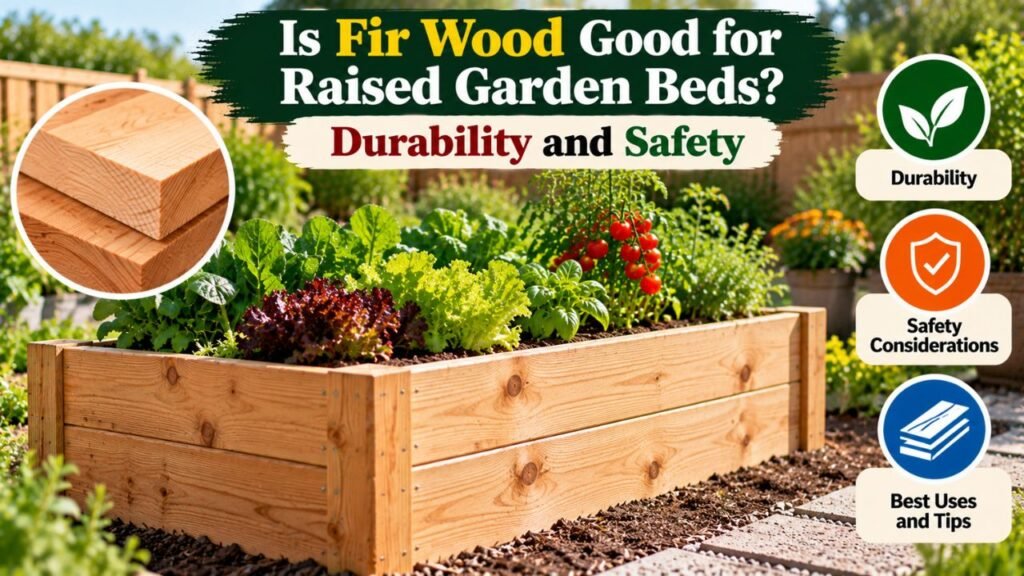
Fir wood can be a sensible choice for raised beds when affordability, availability, and ease of construction are priorities.
However, it has important limitations in environments where the lumber remains damp for extended periods.
Benefits of Using Fir Wood for Raised Beds
Fir lumber offers several advantages for gardeners building their own raised beds.
Affordable material: Fir is often less expensive than naturally decay-resistant woods such as cedar and redwood. Actual prices depend on the region, species, grade, and lumber dimensions.
Widely available: Douglas-fir and mixed softwood lumber are commonly sold through lumberyards and home improvement stores in the United States.
Easy to work with: Fir can be measured, cut, drilled, and fastened using ordinary woodworking tools.
Suitable structural properties: Properly graded and sized Douglas-fir lumber can provide sufficient strength for conventional raised bed frames.
Natural appearance: Untreated fir provides a simple wood finish that fits vegetable gardens and backyard landscapes.
These advantages make fir particularly appealing for gardeners who want to build several raised beds without purchasing premium lumber.
Drawbacks of Fir Wood for Raised Beds
The main disadvantage is its limited resistance to prolonged moisture exposure.
Untreated fir can deteriorate when exposed to consistently damp soil, especially near the lower edges and corners.
Potential problems include:
- Fungal decay in moisture-exposed boards.
- Softening and weakening near the soil line.
- Splitting or checking as the lumber repeatedly wets and dries.
- Faster deterioration in humid climates.
- Eventual replacement of damaged boards.
- Reduced stability if structural corners begin to rot.
Fir also requires more attention to moisture management than naturally decay-resistant wood.
However, decay does not occur at the same rate in every garden. Local climate and construction details make a substantial difference.
Key Takeaway: Fir is a good budget-friendly raised bed material, but untreated lumber is better suited to projects where periodic inspection and eventual replacement are acceptable.
Which Type of Fir Wood Is Best for Raised Garden Beds?
Not every product sold as fir lumber comes from the same tree species.
This distinction is important because different species have different physical properties and natural resistance to decay.
Douglas-Fir for Raised Garden Beds
Douglas-fir (Pseudotsuga menziesii) is commonly used for construction lumber.
Despite its name, Douglas-fir is not a true fir species.
It is valued for its strength, stiffness, and availability.
Douglas-fir heartwood has some natural resistance to decay, but it is less decay-resistant than the heartwood of many cedar and redwood species.
Its sapwood is generally more vulnerable to fungal deterioration.
For a raised bed, sound Douglas-fir boards can be a practical option when the frame is constructed carefully and excessive moisture exposure is minimized.
Thicker boards are generally preferable to thin boards because they provide greater structural capacity and more material before decay compromises the frame.
True Fir Wood for Raised Beds
True firs belong to the genus Abies.
Examples include white fir, grand fir, and noble fir.
These species are different from Douglas-fir.
Most true fir lumber has relatively low natural decay resistance and may deteriorate more quickly under prolonged damp conditions.
That does not mean true fir cannot be used.
It can work for inexpensive, temporary, or shorter-term raised beds when sound lumber is available.
However, it is generally not the first choice for a permanent garden frame expected to remain in contact with moist soil for many years.
What About SPF and Hem-Fir Lumber?
You may see lumber stamped with labels such as:
- SPF.
- Hem-Fir.
- Douglas Fir-Larch.
- DF.
SPF generally identifies a lumber grouping that may contain spruce, pine, or fir species.
Hem-Fir refers to a grouping containing hemlock and certain true fir species.
Douglas Fir-Larch is another structural lumber grouping.
These labels do not guarantee that every board has identical decay resistance.
If you’re buying fir specifically for a raised garden bed, check the species or lumber grouping rather than relying only on the retailer’s product description.
How Long Does Fir Wood Last in Raised Garden Beds?
Untreated fir raised beds can remain functional for several growing seasons, but there is no reliable single lifespan that applies to every installation.
The actual service life depends on the wood species, moisture exposure, board thickness, climate, and construction.
What Research Shows About Untreated Douglas-Fir
An Oregon State University Extension study on raised-bed lumber compared untreated Douglas-fir boards with Douglas-fir treated using a copper-based preservative.
The researchers constructed raised beds using nominal 2 × 12-inch lumber and maintained them under ordinary gardening conditions in Oregon’s Willamette Valley.
By the sixth growing season, the untreated Douglas-fir beds showed substantial decay in the lower portions of their boards.
The treated beds remained mostly intact, with comparatively minor signs of deterioration.
The researchers indicated that the untreated beds were approaching the point where replacement would be needed.
This finding demonstrates that untreated Douglas-fir can be useful for raised beds but may develop significant decay after several years of moisture exposure.
Important: These results describe a particular climate, lumber thickness, and garden installation. They should not be treated as a guaranteed lifespan for every fir raised bed.
Factors That Affect Fir Wood Lifespan
Several conditions influence how quickly fir deteriorates.
| Factor | Effect on fir durability |
| High humidity | Can increase the time wood remains damp |
| Frequent irrigation | Increases moisture exposure along inner walls |
| Poor drainage | Can keep lower boards consistently wet |
| Thick lumber | Provides more structural material |
| Thin lumber | May lose useful strength sooner |
| Direct ground contact | Increases exposure to soil moisture |
| Protective finishing | May reduce moisture absorption when appropriate |
| Good construction | Helps prevent standing water and unstable joints |
Fir generally lasts longer when the wood has opportunities to dry between periods of moisture exposure.
A bed in a dry climate may behave differently from one in a region with frequent rainfall.
Does Thicker Fir Wood Last Longer?
Thicker lumber can improve the structural durability of a raised bed.
For example, a nominal 2-inch-thick board has an actual thickness of approximately 1½ inches, while a nominal 1-inch board is often approximately ¾ inch thick.
The thicker board provides more material to resist soil pressure and gradual deterioration.
However, thickness does not prevent fungal decay.
A thick board that remains continuously wet can still rot.
For many permanent-style DIY raised beds, nominal 2-inch lumber is a practical starting point.
Is Untreated Fir Wood Safe for Raised Vegetable Beds?
Yes, clean, untreated fir lumber is generally suitable for raised beds used to grow vegetables, herbs, and flowers.
Untreated wood does not contain added industrial wood preservatives.
This makes it a straightforward choice for gardeners who prefer natural lumber in contact with their growing soil.
Can Untreated Fir Wood Leach Harmful Chemicals Into Soil?
Clean, untreated fir does not contain the copper-, arsenic-, or creosote-based preservatives associated with certain treated wood products.
Natural wood gradually changes as moisture and microorganisms affect it.
This natural decomposition is different from chemical contamination caused by unsuitable industrial treatments.
However, the source of the lumber still matters.
Avoid using wood that has been exposed to unknown chemicals, pesticides, industrial spills, or previous construction treatments.
Reclaimed boards should not automatically be assumed safe merely because they appear untreated.
Can You Use Pressure-Treated Fir Wood?
Modern pressure-treated fir lumber may be suitable for raised bed construction when the preservative is approved for the intended residential application.
The treatment matters more than the wood species alone.
According to the University of Maryland Extension’s guidance on raised-bed material safety, modern micronized copper azole (MCA) pressure-treated lumber is considered low in toxicity, while older treatments such as chromated copper arsenate (CCA), creosote, and pentachlorophenol should be avoided for raised vegetable beds.
Modern copper-based treatments do not all use identical formulations.
Read the lumber’s end tag and check its intended application.
For material that will contact soil, use an appropriate ground-contact rating.
If you prefer to avoid added wood preservatives entirely, untreated fir, cedar, redwood, or suitable non-wood materials may be more appealing.
Should You Use Old Pressure-Treated Fir Lumber?
Avoid using old reclaimed pressure-treated lumber when its treatment history is uncertain.
Older products may contain preservatives that are not appropriate for residential vegetable gardening.
This is especially important for:
- Reclaimed railroad ties.
- Utility poles.
- Unknown demolition lumber.
- Boards with unidentified chemical treatments.
- Wood previously used in industrial environments.
If you cannot verify the material, purchasing new lumber is a more dependable choice.
Fir Wood vs. Cedar, Pine, and Redwood for Raised Beds
Fir is often compared with other commonly available wood species.
The main differences involve cost, natural decay resistance, availability, and maintenance expectations.
| Wood type | Natural decay resistance | Typical cost position | Raised bed suitability |
| Untreated Douglas-fir | Moderate in heartwood; sapwood less durable | Generally affordable | Good budget option |
| Untreated true fir | Generally low | Often affordable | Better for shorter-term beds |
| Untreated pine | Varies by species; often limited | Often affordable | Budget and temporary beds |
| Cedar | Generally good, especially suitable heartwood | Usually higher | Good for longer-lasting beds |
| Redwood | Generally good, depending on grade and heartwood content | Usually higher | Good for longer-lasting beds |
These are general comparisons. Actual performance depends on species, heartwood content, lumber condition, and exposure.
Fir Wood vs. Cedar for Raised Beds
Cedar is usually the better option when natural decay resistance and longer service life are priorities.
Certain cedar heartwoods contain compounds that help resist decay organisms.
Douglas-fir, however, can be a better value when the budget is limited.
For example, if cedar boards cost substantially more at a local supplier, fir may allow you to build a larger garden for the same initial budget.
The tradeoff is that untreated fir may require replacement sooner.
Choose fir when lower upfront cost matters more than maximum lifespan.
Choose cedar when the longer-term durability of the frame is a higher priority.
Fir Wood vs. Pine for Raised Beds
Fir and pine are both commonly available softwoods.
However, their decay resistance varies by species.
Douglas-fir is generally a better structural lumber option than some lightweight pine species when comparable grades and dimensions are considered.
But structural strength is not the same as resistance to rot.
Both untreated fir and many untreated pine products can deteriorate under prolonged damp conditions.
Compare the actual lumber species, thickness, grade, and price rather than assuming one is always superior.
Fir Wood vs. Redwood for Raised Beds
Redwood is another popular raised bed material.
Its naturally durable heartwood is generally more resistant to decay than untreated fir.
However, redwood can be considerably more expensive or difficult to obtain in some parts of the United States.
If you’re building several large raised beds, the price difference may be substantial.
Fir offers a more economical alternative when a shorter frame lifespan is acceptable.
How to Build a Raised Garden Bed With Fir Wood
A properly constructed frame can help fir lumber perform better under normal garden conditions.
The following method works for a simple rectangular raised bed placed directly on suitable natural ground.
Step 1: Choose Suitable Fir Boards
Look for straight, sound lumber without significant splitting, rot, or major damage.
Nominal 2 × 10-inch or 2 × 12-inch boards can provide a useful growing depth for a single-course bed.
Remember that a nominal 2 × 12-inch board typically measures approximately 1½ × 11¼ inches.
Choose the height based on the desired soil depth and whether roots can extend into suitable native soil.
Avoid purchasing boards that are already soft, heavily checked, or visibly deteriorated.
Step 2: Plan the Bed Dimensions
For many home gardens, a raised bed approximately 4 feet wide is convenient when both long sides can be reached.
A 4 × 8-foot rectangular bed is a common layout.
The length can be adjusted to fit the available space.
Leave enough room around the frame for maintenance and harvesting.
If the bed is especially long or tall, plan appropriate bracing to prevent the sides from spreading under soil pressure.
Step 3: Assemble the Fir Wood Frame
Arrange the boards into a rectangle.
Use suitable corner supports and exterior-rated corrosion-resistant fasteners.
Pre-drill where necessary to reduce splitting.
Check that the corners are square before tightening the connections.
Use fasteners long enough to provide adequate engagement without leaving exposed sharp ends.
The framing design should account for the weight of wet soil.
For longer beds, additional supports or cross-bracing may be necessary.
Step 4: Prepare the Ground
Remove grass, weeds, and unwanted debris from the bed’s footprint.
Check that the ground is reasonably level.
Loosen severely compacted soil where appropriate.
A traditional raised bed placed on healthy natural ground generally does not need a solid bottom.
Leaving the base open allows roots to grow into suitable native soil and helps water move between soil layers.
Step 5: Fill the Bed With Suitable Soil
Use a well-draining growing medium suited to the plants.
For many open-bottom beds, a mixture of suitable mineral topsoil and finished compost works well.
Avoid filling the bed with dense, compacted clay or excessive unfinished organic material.
Spread the soil evenly without walking on it.
Water gently after filling and check for settling.
How to Protect Fir Wood Raised Beds From Rot
Because moisture is the primary cause of fungal wood decay, managing water exposure is central to extending fir’s useful lifespan.
No single treatment guarantees that untreated fir will remain sound indefinitely.
Keep the Bed Properly Drained
Choose a site where water does not collect after rainfall.
If the surrounding ground remains consistently saturated, improve drainage before installing the frame.
Avoid placing wooden raised beds directly beneath roof downspouts or other concentrated runoff sources.
A well-drained growing area reduces prolonged moisture exposure around the lower boards.
However, the garden soil should still receive enough water for healthy plant growth.
Protect the Exterior Wood Surface
An appropriate exterior coating can help reduce moisture absorption and weathering.
Depending on the product and intended use, options may include exterior paint or suitable wood finishes.
Before applying a product:
- Confirm that it is appropriate for the intended garden application.
- Check its instructions for exterior exposure.
- Make sure the lumber is sufficiently dry.
- Prepare the wood surface as directed.
- Apply the coating according to the manufacturer’s instructions.
- Allow the required drying and curing time before filling the bed.
Avoid using unknown industrial preservatives or coatings containing chemicals unsuitable for the intended soil-contact application.
Pay attention to board ends, joints, and exposed cut surfaces because these areas may absorb moisture readily.
Should You Line the Inside of a Fir Raised Bed?
A liner can reduce direct contact between damp soil and the wooden sidewalls.
However, the choice and installation of the material matter.
Some gardeners use a durable plastic liner along the inside walls while leaving the bottom open.
If you use this approach:
- Choose a material suitable for the intended gardening application.
- Cover only the sidewalls when the bed is intended to remain open-bottom.
- Avoid blocking drainage.
- Prevent water from collecting between the liner and wood.
- Secure the liner without creating unnecessary damage to the boards.
A liner may reduce soil contact, but trapped moisture can still encourage deterioration.
It should be treated as an optional protective measure rather than a guaranteed way to prevent rot.
Avoid Trapping Moisture Around the Frame
Keep the outer sides of the raised bed free from constant wet debris.
Avoid piling mulch, soil, or leaves against the exterior boards.
Check whether nearby irrigation equipment repeatedly sprays the wood.
Drip irrigation can help direct water toward the plant root zone instead of unnecessarily wetting the wooden frame.
These practices may help the lumber dry more consistently between watering periods.
Inspect Fir Wood Every Growing Season
Examine the frame during spring preparation and again after the growing season.
Check the lower boards, corners, and fastener locations.
Look for:
- Soft or crumbly wood.
- Deep cracks associated with deterioration.
- Fungal decay.
- Loose screws or separating joints.
- Bowing sidewalls.
- Moisture damage near the soil line.
Small cosmetic cracks do not automatically indicate structural failure.
However, substantial softening or loss of material can reduce the frame’s ability to contain wet soil.
Should You Buy Untreated or Pressure-Treated Fir for Raised Beds?
The choice depends on your gardening priorities and the specific product.
Choose Untreated Fir When
Untreated fir is a sensible option when:
- You prefer lumber without added preservatives.
- The initial budget is limited.
- You are comfortable replacing boards eventually.
- The garden is located in a relatively dry, well-drained area.
- You want a simple DIY frame.
- You can inspect the wood regularly.
It is particularly suitable for gardeners who value straightforward materials and don’t expect the frame to last indefinitely.
Choose Appropriate Pressure-Treated Fir When
Modern pressure-treated fir may be worth considering when:
- The frame will experience frequent moisture exposure.
- Longer service life is a priority.
- The preservative is approved for the intended residential use.
- The lumber has the appropriate ground-contact rating.
- You are comfortable with the treatment’s documented characteristics.
The treatment label is essential.
Do not assume that all pressure-treated wood contains the same chemicals or is approved for the same applications.
When Cedar or Another Material Makes More Sense
Cedar, redwood, stone, or metal may be preferable if you want a more permanent garden structure.
These materials can reduce the need for repeated replacement, although their initial costs and maintenance requirements vary.
For an inexpensive temporary garden, untreated fir may still provide the best overall value.
When Should You Replace Fir Raised Bed Boards?
Fir boards should be replaced when deterioration affects their ability to contain soil safely.
Surface discoloration or weathering alone is not necessarily a reason to rebuild the bed.
However, structural damage deserves attention.
Signs That Fir Wood Is Rotting
Common indicators include:
- Wood that feels soft or spongy.
- Boards that crumble or break apart.
- Deeply deteriorated lower edges.
- Fasteners pulling out of weakened material.
- Corners separating under soil pressure.
- Sidewalls bowing significantly.
- Visible fungal decay in structural areas.
Use a screwdriver or similar tool carefully to examine suspicious areas.
Sound wood generally resists light probing more than severely decayed material.
However, probing alone cannot reliably measure the remaining structural capacity.
Can You Replace One Fir Board Instead of the Entire Bed?
Yes, when the remaining frame is sound and the damaged board can be removed without destabilizing the structure.
Temporarily remove soil near the affected wall if necessary.
Support the remaining structure before taking out damaged components.
Inspect the corner posts and nearby fasteners because decay may extend beyond the visibly damaged board.
If several boards or structural supports have deteriorated, rebuilding the frame may be more practical than replacing individual pieces.
Conclusion
Is fir wood good for raised garden beds? Yes. Fir is an affordable, workable material for raised bed construction, especially when a lower initial cost is more important than maximum natural decay resistance.
Douglas-fir is generally a more appealing option than many true fir species because of its useful structural properties and moderate heartwood decay resistance.
However, untreated fir is likely to deteriorate faster than suitable cedar or redwood heartwood under prolonged damp conditions.
For a budget-friendly DIY raised bed, nominal 2-inch-thick, sound fir lumber is a practical starting choice. Build a sturdy frame, manage drainage, and inspect the lower boards regularly.
If you want a longer-lasting garden frame with less frequent replacement, cedar, redwood, or an appropriately rated pressure-treated product may be more suitable.
The best decision comes down to local lumber prices, climate, acceptable maintenance, and how long you want the raised bed structure to remain in service.
FAQs About Is Fir Wood Good for Raised Garden Beds
Is Douglas-Fir Better Than Regular Fir for Raised Beds?
Douglas-fir is generally preferable to many true fir species for raised bed frames because of its structural properties and moderate heartwood decay resistance. However, untreated Douglas-fir can still rot when exposed to prolonged moisture.
How Many Years Will Untreated Fir Raised Beds Last?
There is no guaranteed lifespan. In an Oregon State University study, untreated Douglas-fir raised beds showed advanced decay by their sixth growing season. Actual durability depends on climate, board thickness, drainage, wood quality, and maintenance.
Can You Grow Vegetables in Untreated Fir Raised Beds?
Yes. Clean, untreated fir lumber is generally suitable for vegetable gardens. It does not contain added industrial wood preservatives, although the wood should come from a reliable source without unknown chemical contamination.
Does Fir Wood Need to Be Sealed for Raised Beds?
Not necessarily. Untreated fir can be used without a coating, but an appropriate exterior finish may help reduce moisture absorption. Use products suitable for the intended garden application and follow their instructions carefully.
Should Fir Raised Bed Boards Touch the Ground?
Fir boards can rest directly on prepared ground, but prolonged soil moisture can accelerate decay. Keeping the site well-drained and preventing water from collecting around the lower edges can help reduce deterioration.
Is Fir or Cedar Better for a Permanent Raised Garden Bed?
Cedar is generally the better choice when natural decay resistance and longer service life are priorities. Fir is often less expensive and can be a good choice when occasional board replacement is acceptable.
Can You Use Fir Wood for Raised Beds Without a Plastic Liner?
Yes. A plastic liner is optional, not required. Many gardeners build untreated wooden raised beds without liners. If you add one, avoid trapping moisture against the boards or blocking drainage through the open bottom.

I’m Maya L. Greenwood, a lifelong plant lover who believes anyone can grow something beautiful with the right guidance. After years of testing soil mixes, pruning methods, irrigation tricks, and pest-safe solutions, I started EasyGardenTips.com to turn hard-won lessons into step-by-step advice. From seed starting and container gardens to composting and seasonal checklists, my goal is to make gardening simple, sustainable, and fun.