Does Raised Bed Soil Go Bad? Signs, Causes, and How to Fix It
Raised bed soil doesn’t go bad simply because it gets old. However, its quality can decline over time as organic matter decomposes, nutrients become depleted or imbalanced, and the soil becomes compacted. Fortunately, most raised bed soil can be refreshed and reused for many growing seasons without complete replacement.
Unlike food, garden soil doesn’t have a fixed expiration date. Its mineral components remain present, but the physical, chemical, and biological conditions that support plant growth can change.
You might notice that your raised bed soil becomes harder, dries out unusually fast, drains poorly, or produces weaker plants than it did during the first growing season. These problems don’t necessarily mean the soil is unusable.
The important distinction is whether your soil needs routine maintenance or has developed a problem that requires more serious attention. Nutrient shortages and declining organic matter are often manageable, while contamination and certain persistent soilborne diseases may require a different approach.
Understanding how raised bed soil changes, what warning signs to check, and how to restore its growing conditions can help you maintain healthy vegetables without repeatedly purchasing new soil.
Does Raised Bed Soil Go Bad Over Time?
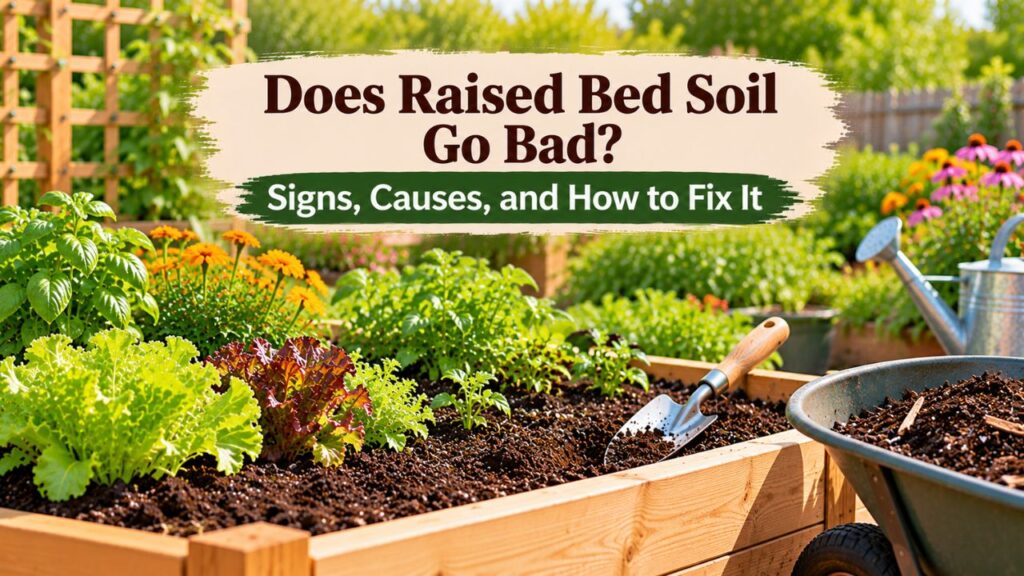
Raised bed soil can lose some of its original growing quality, but it doesn’t automatically become unusable after a certain number of months or years.
A typical soil-based raised bed contains mineral particles, organic matter, water, air, and living organisms.
These components change at different rates.
The mineral particles, including sand, silt, and clay, don’t disappear during ordinary garden use. However, compost and other organic materials gradually break down.
Plants also take up nutrients, water moves dissolved materials through the soil, and everyday gardening practices can change the soil’s structure.
As a result, soil that performed well when first added to a raised bed might need adjustments after several growing seasons.
Mineral Soil Doesn’t Have a Fixed Expiration Date
The mineral portion of garden soil can remain useful indefinitely when its physical and chemical conditions are maintained.
There is no standard rule requiring gardeners to replace topsoil after two, three, or five years.
In fact, established raised beds can become productive long-term growing areas with proper management.
Complete replacement is generally unnecessary when the soil remains clean, well-drained, and suitable for plant growth.
Organic Ingredients Break Down Over Time
Compost, decomposed bark, and other organic ingredients don’t remain unchanged.
Soil organisms gradually break down these materials, releasing some nutrients and converting portions into more stable organic matter.
This process can reduce the volume of the growing medium.
You may notice that the soil surface sits several inches below its original level after multiple seasons.
This is especially noticeable in raised bed mixes containing large proportions of compost or other organic materials.
Soil settling is normal and doesn’t automatically indicate that the growing medium has gone bad.
Nutrient Levels Can Change
Vegetables absorb nutrients such as nitrogen, phosphorus, and potassium as they grow.
Harvesting crops removes some of those nutrients from the garden.
At the same time, organic matter decomposition, fertilization, irrigation, and drainage can change nutrient availability.
Some soils become deficient in nutrients, while others accumulate excessive amounts.
A soil test is more useful than assuming old soil always needs additional fertilizer.
Signs Your Raised Bed Soil May Be Going Bad
Changes in appearance, texture, drainage, and plant growth can indicate that your raised bed soil needs attention.
However, no single symptom proves that the soil must be replaced.
| Warning Sign | Possible Cause | First Action |
| Slow plant growth | Nutrient imbalance, root problems, or poor moisture | Check roots, moisture, and soil fertility |
| Hard soil surface | Compaction or poor structure | Protect soil and reduce disturbance |
| Water pooling | Poor drainage or compaction | Inspect the soil and drainage path |
| Soil dries very quickly | Low moisture retention or high-organic mix | Check watering and mulch |
| Sour or rotten odor | Prolonged saturation and low oxygen | Improve drainage and aeration |
| Soil level dropping | Organic matter decomposition and settling | Top up with suitable growing mix |
| Repeated root disease | Possible soilborne pathogens | Identify the disease before replanting |
These symptoms help narrow down likely problems, but they should be considered alongside watering practices, plant health, and soil testing.
Raised Bed Soil Becomes Hard and Compacted
Healthy growing soil should have enough connected pore space for air, water, and roots to move through it.
When soil becomes compacted, those spaces become smaller.
You may notice that:
- A garden fork is difficult to insert.
- Water takes longer to soak into the surface.
- Seedlings struggle to establish roots.
- The soil forms hard clumps after drying.
Walking inside raised beds, working saturated soil, and repeatedly pressing the surface can contribute to compaction.
Some dense soil mixtures also compact more readily than others.
The solution depends on the existing texture and structure. Adding a suitable organic amendment and avoiding unnecessary disturbance may improve conditions over time.
Water Remains on the Soil Surface
Water pooling after irrigation or rainfall may indicate poor drainage.
Possible causes include compacted soil, an unsuitable growing mixture, blocked drainage outlets, or poorly draining ground beneath the raised bed.
Persistent saturation reduces the oxygen available to roots.
This can interfere with root function and create conditions favorable to certain root diseases.
Before adding amendments, determine where the excess water is being held.
A raised bed placed over compacted clay requires a different solution than a bottomed planter with blocked drainage holes.
Soil Dries Out Faster Than Before
Raised beds can dry more quickly than surrounding garden soil because their sides are exposed to air and changing temperatures.
However, unusually rapid drying may also indicate that the growing mixture has lost some of its water-holding capacity.
Some mixes containing large amounts of compost, peat, or other organic materials can become difficult to rewet after severe drying.
Check the moisture several inches below the surface rather than judging conditions from appearance alone.
Mulch, appropriate watering, and adjustments to the growing medium can help.
Raised Bed Soil Smells Sour or Rotten
Healthy soil typically has a mild, earthy smell.
A strong sour, sewage-like, or rotten odor can indicate prolonged saturation and poorly aerated organic material.
This may occur when drainage is restricted or a thick layer of unfinished organic waste has been buried.
If the soil smells bad, check the moisture and drainage conditions first.
Avoid immediately adding fertilizer or planting sensitive seedlings into a saturated, foul-smelling mixture.
Allowing the soil to drain and addressing the cause may restore normal conditions.
However, soil exposed to sewage or chemical contamination requires a separate safety assessment.
Plants Grow Poorly Despite Regular Care
Slow growth, yellow leaves, and small harvests can sometimes reflect declining soil quality.
But these symptoms may also result from:
- Inadequate sunlight.
- Incorrect watering.
- Root damage.
- Insect pests.
- Plant diseases.
- Unsuitable soil pH.
- Nutrient deficiencies or excesses.
Don’t automatically blame the age of the soil.
Check the plant’s growing conditions and consider a laboratory soil test before purchasing new growing medium.
How Long Does Raised Bed Soil Last?
A properly maintained soil-based raised bed can remain productive for many years without complete soil replacement. There is no fixed lifespan that applies to every growing mixture.
The difference is between the lifespan of the soil itself and the useful condition of its ingredients.
Soil-Based Raised Bed Mixes
Raised beds containing quality mineral topsoil and finished compost can function as permanent garden beds.
The mineral soil remains in place, while organic matter and nutrient levels need periodic attention.
According to the University of Minnesota Extension’s raised bed gardening guidance, established beds can be maintained much like other gardens. The guidance recommends testing soil every two to three years and applying compost or fertilizers according to soil test results.
This approach supports long-term soil management rather than routine replacement.
Raised Bed Mixes Containing Mostly Organic Materials
Some bagged raised bed products contain large amounts of compost, processed bark, peat, or similar ingredients.
These materials can change in volume and physical structure as they decompose.
Over time, the mix may settle, become denser, or behave differently when watered.
Such beds may need more frequent topping up or adjustment than beds containing substantial mineral soil.
However, age alone still doesn’t determine whether the growing medium is usable.
Raised Beds With Buried Logs and Branches
Tall raised beds sometimes contain untreated wood, branches, and leaves beneath the main growing layer.
These materials gradually decompose and settle.
As a result, the upper soil level can decrease noticeably over time.
This doesn’t necessarily mean the soil has deteriorated.
The solution may simply involve adding suitable growing medium to restore the required planting depth.
How to Refresh Raised Bed Soil Instead of Replacing It
Refreshing an established raised bed is usually easier and less expensive than removing the entire growing medium.
The process should address the actual condition of the soil rather than relying on a fixed amendment recipe.
Step 1: Remove Unwanted Plant Material
Start by clearing spent annual plants, weeds, and unwanted debris.
Remove plants showing signs of serious disease and dispose of infected material appropriately.
Healthy plant residues may be composted or used as mulch when suitable.
Avoid mixing diseased roots or heavily infected plant material into the growing area.
If persistent root disease occurred during the previous season, identify the problem before planting another susceptible crop.
Step 2: Check Soil Moisture and Texture
Take a small handful of soil from several inches below the surface.
Healthy soil generally contains aggregates that hold together lightly but can break apart without extreme force.
Very wet, sticky soil should be allowed to dry before further preparation.
Check for unusually hard layers, foul odors, or areas that remain saturated.
If the growing medium is severely compacted, gently loosen the affected area when the soil is moist but not wet.
Avoid aggressive digging unless it is necessary to correct a specific problem.
Step 3: Test the Soil Before Adding Fertilizer
A laboratory soil test can identify important soil conditions, including pH and nutrient levels.
This is particularly useful in established vegetable beds that have received fertilizer or compost for several years.
Follow the sample collection instructions supplied by the testing laboratory.
Use the results to determine whether lime, sulfur, fertilizer, or other amendments are appropriate.
Important: A routine fertility test doesn’t necessarily check for harmful chemicals, heavy metals, or plant pathogens. Those concerns may require separate testing.
Step 4: Add Finished Compost When Needed
Mature compost can help maintain organic matter and improve the structure of a soil-based raised bed.
However, the amount required depends on existing soil conditions.
For established garden beds, Oregon State University Extension’s compost guidance describes annual applications of approximately ¼–1 inch of finished compost.
This provides a useful reference range, not a requirement to apply that amount every year.
If soil testing indicates high phosphorus or soluble salts, additional compost may be unnecessary or undesirable.
Choose mature, good-quality compost and avoid repeatedly adding large quantities of manure-based products.
Step 5: Restore the Soil Level
If decomposition and settling have lowered the soil surface, add enough suitable growing medium to restore the desired depth.
For a soil-based raised bed, this may involve adding quality topsoil blended with mature compost.
Don’t assume that every lost inch must be replaced with pure compost.
Maintaining a balanced growing medium is more important than continually increasing its organic content.
Spread the material evenly and avoid compressing it.
Step 6: Apply Organic Mulch
Mulch helps reduce evaporation, limit surface crusting, and protect the soil from heavy rainfall.
Suitable choices include clean straw, shredded leaves, and other plant-based mulches.
Apply an appropriate layer for the crop and material.
Keep mulch away from direct contact with plant stems.
As organic mulch decomposes, replenish it when necessary.
Step 7: Maintain Proper Watering
Water the raised bed according to soil moisture and plant requirements.
Avoid repeatedly saturating the growing medium.
A soaker hose or drip irrigation system can help deliver water near the roots.
Check whether moisture reaches the intended rooting depth.
If the surface dries rapidly but the lower soil remains wet, adjust your watering rather than simply adding more water.
When Should You Replace Raised Bed Soil Completely?
Complete soil replacement is usually unnecessary, but certain conditions justify serious consideration.
The most important concerns involve contamination, persistent disease problems, or a growing medium that cannot be restored economically.
Soil Contaminated With Harmful Chemicals
If the soil may contain elevated lead, chemical spills, persistent pesticide residues, or other hazardous contaminants, don’t assume that compost will make it safe.
Potential contamination may be associated with:
- Soil taken from unknown industrial locations.
- Areas near older buildings with deteriorating lead-based paint.
- Chemical spills or improper disposal.
- Flooding involving sewage or contaminated runoff.
- Purchased materials with a questionable origin.
Stop using the affected soil for food crops until the risk has been properly assessed.
Contact a local extension service or qualified laboratory for advice about suitable testing.
If contamination is confirmed, removing the affected material or using an appropriately isolated bed with clean soil may be necessary.
Persistent Soilborne Plant Diseases
Some plant pathogens can survive in soil or infected plant residues between growing seasons.
However, one unhealthy plant doesn’t prove that the entire raised bed is contaminated.
Root rot, wilting, and stunted growth may result from several different causes.
If the same disease repeatedly affects susceptible crops, seek a diagnosis through a university extension plant diagnostic service.
Depending on the pathogen, management may involve crop rotation, resistant varieties, improved drainage, removing infected material, or replacing affected growing media.
Don’t replace all the soil solely because a plant developed yellow leaves or died. Confirm the underlying problem first.
Severely Degraded Growing Media
A raised bed filled largely with decomposed organic material may eventually become too dense, unstable, or difficult to manage.
If drainage remains poor after correcting watering and structural problems, replacing part of the mixture may be reasonable.
However, a complete replacement isn’t always necessary.
Removing the worst material and blending in an appropriate fresh growing medium may be sufficient.
Raised Bed Soil With Persistent Salt Problems
Repeated heavy fertilization or manure-based compost applications can lead to excessive soluble salts.
High salinity may damage plant roots and interfere with water uptake.
A laboratory soil test can help identify this condition.
Depending on the severity, improving drainage and carefully leaching salts with suitable water may help.
Severe problems in poorly draining or bottomed beds may require partial or complete media replacement.
Don’t add more fertilizer to soil already affected by excessive salts.
Can Bagged Raised Bed Soil Go Bad in Storage?
Bagged raised bed soil doesn’t automatically become unusable when it sits in storage, but its condition can change.
The ingredients, packaging, temperature, moisture, and length of storage all matter.
A mineral-soil-based blend generally behaves differently from a product made mostly from compost or other organic materials.
Does Unopened Raised Bed Soil Expire?
An unopened bag may remain usable long after purchase if the material was good quality and stored properly.
However, there is no universal shelf life for all raised bed soil products.
A bag containing mineral topsoil and mature compost may remain physically stable longer than a mix containing large amounts of less-decomposed organic material.
Some products also contain added fertilizer, which may change in availability during storage.
Check the manufacturer’s instructions when the product has a printed expiration date or specific storage requirements.
Can Wet Bagged Soil Develop Problems?
Yes. A bag stored under prolonged wet, poorly aerated conditions can develop unpleasant odors and changes in texture.
Organic materials may continue decomposing inside the package.
If the contents smell strongly sour or rotten, inspect the mixture carefully before use.
Avoid planting directly into material that appears contaminated or has deteriorated severely.
Allowing a slightly damp, otherwise healthy mixture to aerate may help, but this won’t correct chemical contamination or make known diseased material safe.
Is White Mold in Bagged Soil Bad?
Not necessarily.
White fungal growth can occur in organic growing media as microorganisms decompose plant-based ingredients.
Its presence alone doesn’t establish that the soil is dangerous or unusable.
However, visual appearance cannot reliably identify every fungus or determine whether a growing medium contains plant pathogens.
Consider the overall condition of the soil, including its smell, texture, moisture, and storage history.
Avoid breathing in dust or fungal spores when opening or handling old bags, particularly if you’re sensitive to airborne particles.
How Should You Store Leftover Raised Bed Soil?
Store leftover soil in a protected location that prevents contamination and excessive moisture.
Useful practices include:
- Keeping bags away from standing water.
- Protecting them from chemical spills.
- Avoiding prolonged exposure to excessive heat.
- Preventing unwanted pests and debris from entering.
- Labeling bags so you know their contents.
- Following manufacturer storage instructions.
For opened bags, use a clean, suitable container or close the packaging securely.
If the material is very wet, allow it to drain and aerate appropriately rather than sealing it into conditions that encourage anaerobic decomposition.
How to Keep Raised Bed Soil Healthy for Years
Long-term soil care can reduce the need for replacement and improve growing conditions.
Avoid Walking Inside Raised Beds
One advantage of raised beds is that plants can be tended from the surrounding paths.
Walking on the growing area compresses soil and reduces pore space.
Design the bed so you can reach plants without stepping onto the soil.
For many gardeners, a width of approximately 3–4 feet allows access from both sides.
Rotate Vegetable Crops When Practical
Growing different types of vegetables in successive seasons can help manage certain pest and disease problems.
For example, avoid repeatedly planting closely related crops in the same location when a relevant disease is present.
Rotation doesn’t control every soilborne pathogen, particularly those with broad host ranges or long survival periods.
Use crop rotation as one part of soil and plant health management rather than a guaranteed solution.
Keep the Soil Covered
Bare soil is exposed to rainfall impact, temperature changes, and evaporation.
Organic mulch or an appropriate cover crop can help protect the surface during periods without vegetables.
Cover crops may also contribute organic matter and living root activity.
Select species according to the growing season and the time available before the next vegetable crop.
Avoid Excessive Fertilizer and Compost
Adding more nutrients than plants need can cause problems rather than improve productivity.
Excess fertilizer may increase salt concentrations, while heavy compost applications can contribute to nutrient imbalances.
Follow soil test recommendations and consider nutrients already supplied by compost and other amendments.
Monitor Drainage Throughout the Season
Soil that stays saturated for extended periods can develop root-zone oxygen problems.
Inspect how quickly water moves into the soil and whether excess water can leave the bed.
If drainage problems develop, investigate compaction, the growing medium, and the underlying surface before adding more materials.
Conclusion
So, does raised bed soil go bad? Not simply because it becomes old. The mineral portion of soil can remain useful for many years, although organic matter, nutrient availability, drainage, and soil structure can change over time.
Most raised beds don’t need complete soil replacement. Refreshing the growing medium, restoring lost soil depth, correcting moisture problems, and applying amendments based on soil testing are usually more practical solutions.
Replace soil only when a serious condition, such as confirmed contamination, certain persistent disease problems, or severely degraded growing media, makes continued use unsuitable.
The most effective approach is to judge soil by its condition rather than its age. Healthy, well-managed raised bed soil can continue supporting vegetables, herbs, and flowers across many growing seasons.
FAQs About Does Raised Bed Soil Go Bad
Do I Need to Replace Raised Bed Soil Every Year?
No. Most established soil-based raised beds don’t require annual replacement.
Check soil depth, drainage, and fertility before each growing season. Add suitable amendments or fresh growing mix only when needed.
Can I Reuse Raised Bed Soil From Last Year?
Yes. You can generally reuse last year’s raised bed soil if it is free from concerning contamination and serious unresolved disease problems.
Remove unwanted plant debris, assess the soil’s condition, and address nutrient or structural problems before planting.
How Do I Know if My Raised Bed Soil Is Still Good?
Check whether the soil has a reasonable crumbly structure, absorbs and drains water appropriately, and supports healthy root development.
A soil test can provide more reliable information about fertility and pH than appearance alone.
Does Raised Bed Soil Go Bad During Winter?
No. Winter exposure doesn’t automatically ruin raised bed soil.
Cold temperatures, precipitation, and biological activity can change soil conditions, but established beds generally remain usable in spring.
Protecting the surface with suitable mulch can help reduce erosion and maintain soil condition.
Can Old Raised Bed Soil Make Plants Sick?
Old soil itself doesn’t automatically cause plant disease.
However, soil may harbor certain pathogens from previous infections or develop conditions that favor root problems.
If disease repeatedly appears, identify the cause before reusing the bed for susceptible crops.
Should I Mix New Soil With Old Raised Bed Soil?
Yes, when the old soil is suitable for reuse, adding compatible fresh growing medium can help restore lost volume or improve its condition.
Avoid creating thick, separate layers with dramatically different textures.
Choose amendments according to the existing soil rather than automatically mixing equal amounts of old and new material.

I’m Maya L. Greenwood, a lifelong plant lover who believes anyone can grow something beautiful with the right guidance. After years of testing soil mixes, pruning methods, irrigation tricks, and pest-safe solutions, I started EasyGardenTips.com to turn hard-won lessons into step-by-step advice. From seed starting and container gardens to composting and seasonal checklists, my goal is to make gardening simple, sustainable, and fun.