What to Plant With Cucumbers in a Raised Bed: Best Companions
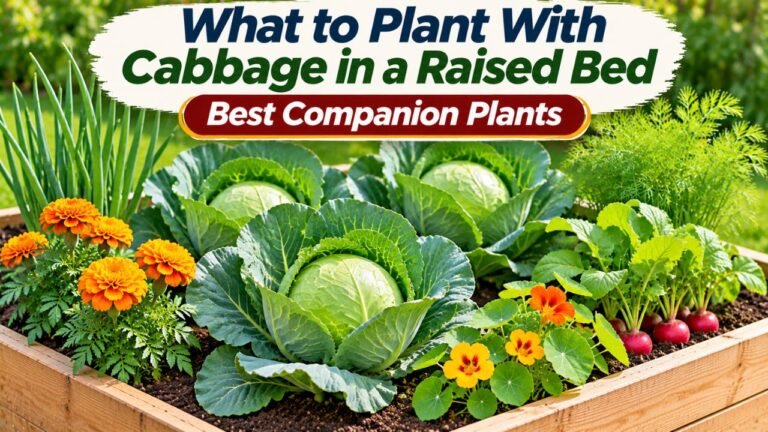
The best plants to grow with cucumbers in a raised bed include bush beans, radishes, leaf lettuce, carrots, beets, dill, sweet alyssum, nasturtiums, and marigolds. These plants can make practical companions because they provide different harvests, attract beneficial insects, or use the available growing space differently. For a small raised bed, bush beans, radishes, and compact flowers are particularly useful choices.
Cucumbers are vigorous, warm-season vegetables that need full sunlight, fertile soil, consistent moisture, and room for their vines. Without proper planning, their leaves can spread across the entire bed and shade neighboring vegetables.
Growing cucumbers vertically on a trellis creates more usable planting space. Short vegetables can grow near the front of the bed, while flowers at the corners or edges help attract pollinating insects.
However, companion planting does not guarantee pest control or higher yields. Good spacing, healthy soil, adequate watering, and correct plant selection remain essential.
In this article, I explain which vegetables, herbs, and flowers grow well alongside cucumbers, which combinations are less practical, and how to arrange them in 4 × 4 and 4 × 8 raised beds. I also cover planting distances, trellising, watering, pollination, and seasonal planting strategies.
What to Plant With Cucumbers in a Raised Bed: Best Options

Cucumbers grow well alongside several vegetables and flowers when their sunlight, moisture, and space requirements are compatible.
For small raised beds, prioritize plants that remain relatively compact or can be harvested before the cucumber vines reach their full size.
| Companion Plant | Main Benefit | Best Placement |
| Bush beans | Additional vegetable harvest without tall vines | Sunny open section |
| Radishes | Fast-growing crop that uses space early | Between young cucumber plants |
| Leaf lettuce | Short crop that benefits from some shade in warm weather | Front or partially shaded edge |
| Carrots | Root crop that can share space with trellised cucumbers | Open section away from stems |
| Beets | Edible roots and greens | Front or side of bed |
| Spinach | Early or late cool-season harvest | Before cucumbers spread |
| Green onions | Compact upright growth | Bed edges |
| Dill | Flowers that attract some beneficial insects | Corner or nearby container |
| Sweet alyssum | Flowers that attract beneficial insects | Bed edges or nearby pots |
| Nasturtiums | Flowers and ground-level diversity | Outer edge or adjacent container |
| Marigolds | Flowers that support garden insect diversity | Sunny corners |
| Basil | Warm-season herb with similar growing conditions | Open sunny section |
Not every plant needs to be included.
In a small raised bed, two or three complementary species are usually more manageable than a crowded mixture of many crops.
According to West Virginia University Extension’s garden planning guidance, bush beans, lettuce, and radishes are among the suggested companion crops for cucumbers.
The extension also recommends combining crops with different growth rates or harvest times to use garden space more efficiently.
Best Vegetables to Plant With Cucumbers in a Raised Bed
Vegetables that stay compact or grow at different times from cucumbers are often the easiest companions.
The goal is to harvest more food from the same bed without reducing air circulation or causing excessive competition for water and nutrients.
1. Bush Beans
Bush beans are one of the most practical vegetables to grow near cucumbers.
Unlike pole beans, bush beans generally remain relatively compact and do not require a tall shared trellis.
They also enjoy warm weather and grow during much of the same season as cucumbers.
Why they work together:
- Both prefer warm growing conditions.
- Bush beans provide an additional summer harvest.
- Their upright growth can occupy open space.
- They do not usually require the same tall climbing structure.
Beans are legumes that can form relationships with nitrogen-fixing bacteria.
However, bush beans do not automatically provide enough nitrogen to fertilize neighboring cucumbers during the same season.
The nitrogen benefit depends on root nodulation, soil conditions, and how plant residues are managed.
For a raised bed, plant bush beans in a sunny section where cucumber leaves will not cover them.
Follow the seed packet’s spacing instructions and leave sufficient access for harvesting.
2. Radishes
Radishes are excellent short-season companions for cucumbers.
Many spring radish varieties mature in approximately 25–35 days under suitable conditions.
This allows you to harvest them before cucumber vines become large.
Why they work together:
- Radishes grow quickly.
- They occupy little space early in the season.
- They can be harvested before cucumbers spread.
- Their small plants are relatively easy to fit into open areas.
Sow radishes between young cucumber plants or in a nearby row.
Avoid disturbing established cucumber roots when harvesting.
Planting radishes next to cucumbers is sometimes claimed to repel cucumber beetles, but that specific effect should not be assumed to provide dependable pest protection.
The strongest benefit is efficient use of growing space.
3. Leaf Lettuce
Leaf lettuce can be a useful companion during spring and early summer.
It grows relatively quickly and may tolerate some shade.
Cucumber vines trained on a trellis can provide partial shade under certain planting arrangements.
However, lettuce is a cool-season crop and may bolt or become bitter during prolonged summer heat.
Best planting approach:
- Plant lettuce early in spring.
- Allow it to establish before cucumbers become large.
- Train the cucumbers vertically.
- Harvest the lettuce before intense summer heat.
- Replace finished lettuce plants with another suitable crop if space permits.
For a raised bed, loose-leaf lettuce is often easier to manage than large heading varieties.
Use the front or a partially shaded section of the bed.
Avoid placing lettuce where mature cucumber foliage will block nearly all sunlight.
4. Carrots
Carrots can grow alongside trellised cucumbers when enough root space is available.
Their edible roots develop below the soil surface, while cucumber vines can be trained upward.
However, both crops still compete for water and nutrients.
Why carrots can work:
- They produce a different type of harvest.
- Their foliage is relatively low-growing.
- They can occupy an open section of the bed.
- Some varieties have manageable spacing requirements.
Carrots need loose soil that permits healthy root development.
Avoid planting them directly against the cucumber stems.
Also avoid digging aggressively around cucumber roots when harvesting carrots.
Short-rooted carrot varieties may be useful in shallower beds, but the depth must suit the particular variety.
5. Beets
Beets can provide both edible roots and leafy greens.
Their growth habit makes them possible companions for cucumbers when sufficient space remains.
They perform best in cooler conditions than peak-summer cucumbers, so timing matters.
For example, you may grow spring beets before cucumber vines become large.
In climates with a suitable fall season, you can also plant beets as cucumber production declines.
Use a sunny section with sufficient root space.
Thin beet seedlings according to the variety’s recommendations.
Overcrowding can reduce root development.
6. Spinach
Spinach is another useful early-season crop.
It grows best in cool weather and generally does not tolerate prolonged summer heat well.
This makes it particularly suitable for succession planting rather than relying on spinach and mature cucumber plants to grow together throughout the entire summer.
A practical schedule is:
- Grow spinach in early spring.
- Harvest it before the main summer cucumber crop becomes established.
- Plant cucumbers after frost danger passes and the soil warms.
- Consider another spinach crop in fall if the climate allows.
This approach helps keep the raised bed productive over multiple seasons.
7. Green Onions
Green onions or scallions have a relatively narrow, upright growth habit.
They may fit along the front or sides of a raised bed without occupying much horizontal space.
They can provide a useful culinary harvest while cucumbers grow nearby.
However, green onions should not be relied on to repel cucumber beetles or other pests.
Their main advantage is their compact size.
Avoid planting them so densely that the cucumber roots have insufficient moisture or nutrients.
Best Flowers to Plant With Cucumbers in a Raised Bed
Flowers can contribute to a more diverse vegetable garden.
Some provide nectar and pollen for beneficial insects, including pollinators and natural enemies of certain pests.
This can be particularly useful because many outdoor cucumber varieties depend on insect pollination to produce fruit.
However, flower selection should account for plant size and available sunlight.
8. Sweet Alyssum
Sweet alyssum is a useful low-growing flowering plant for vegetable gardens.
Its small flowers can attract hoverflies and other beneficial insects.
Some hoverfly larvae feed on aphids.
This makes sweet alyssum a worthwhile plant for supporting beneficial insect populations.
Best placement:
- Along the front edge of the raised bed
- At a sunny corner
- In a small container beside the bed
Avoid letting alyssum become buried beneath cucumber vines.
If the raised bed is crowded, planting it in a nearby container can provide flowers without competing for bed space.
9. Nasturtiums
Nasturtiums produce colorful flowers and rounded leaves.
They can attract pollinating insects and contribute to garden biodiversity.
Some research involving other cucurbit crops suggests that nasturtiums can influence certain pest populations.
However, this does not mean they will reliably prevent cucumber beetle damage in every raised bed.
Nasturtiums can also attract aphids and other insects.
Therefore, they require monitoring.
Important: Some nasturtium varieties spread extensively.
Choose a compact variety or plant it near the outer edge where it can trail away from the cucumbers.
A nearby container may be even more practical in a small raised bed.
10. Marigolds
Marigolds are popular companion flowers because they provide bright blooms and attract various insects.
Some garden studies suggest that particular marigold plantings can influence certain pest populations.
However, the effectiveness depends on the pest, plant species, planting arrangement, and growing conditions.
Do not assume that one marigold will eliminate cucumber beetles or prevent disease.
Why marigolds are useful:
- They add flowers to the vegetable garden.
- Compact varieties fit in small spaces.
- They may support beneficial insects.
- They are relatively easy to maintain in warm weather.
For a 4 × 8-foot raised bed, one or two compact marigolds near the corners may be sufficient.
Avoid planting large, tall varieties where they would shade young cucumber plants.
11. Calendula
Calendula produces flowers that can attract visiting insects.
It is often grown in vegetable gardens for ornamental value and insect diversity.
However, calendula generally performs best under cooler growing conditions than some summer flowers.
In hot climates, it may decline during peak summer.
Plant it in a separate area or an open corner where the growing conditions suit it.
It should not be treated as a guaranteed pest-control plant.
Do Flowers Really Help Cucumbers?
Flowers can help support pollinators and other beneficial insects.
Research discussed by the University of Minnesota Extension’s companion planting guide shows that certain flowering companions, including nasturtiums, marigolds, and sweet alyssum, have had beneficial insect or pest-management effects in particular vegetable studies.
However, these findings do not guarantee the same result for every cucumber garden.
Flower diversity is helpful, but good growing conditions and pest monitoring remain necessary.
Key Takeaway: Sweet alyssum, compact marigolds, and appropriately placed nasturtiums are practical flowering companions. Their benefits are most dependable as sources of floral resources and garden diversity, not as guaranteed pest repellents.
Best Herbs to Grow With Cucumbers
Some herbs grow well near cucumbers, especially when their water and sunlight requirements are compatible.
However, herbs can also become large or compete with vegetables if planted too closely.
12. Dill
Dill can attract beneficial insects when allowed to flower.
Its flower clusters are visited by various insects, including some hoverflies and parasitic wasps.
However, dill can become tall.
Mature plants may also self-seed.
For a raised bed, place dill at a corner or in a nearby container.
Avoid positioning it where it shades cucumber plants or blocks harvesting access.
If the goal is to support beneficial insects, allow some dill plants to flower.
Do not expect dill to eliminate cucumber pests on its own.
13. Basil
Basil and cucumbers both prefer warm growing conditions.
Basil also benefits from reasonably consistent soil moisture.
This can make it a practical companion in some summer raised beds.
However, basil needs sufficient sunlight and room to grow.
If cucumber vines form a dense canopy over it, basil growth may decline.
For a small raised bed, plant basil near a sunny edge.
Harvest regularly to keep its growth manageable.
Claims that basil automatically repels pests from cucumbers are not sufficiently reliable to use as the main reason for planting it.
14. Cilantro
Cilantro can attract beneficial insects when allowed to flower.
However, it generally prefers cooler weather and often bolts quickly in summer heat.
In warmer regions, cilantro may be better as an early spring or fall crop.
It can share a raised bed during the early stages of cucumber growth.
Once temperatures become consistently hot, it may finish its growing cycle.
What About Rosemary and Thyme?
Rosemary and thyme are useful culinary herbs, but they usually prefer drier, well-drained conditions than actively growing cucumbers.
Cucumbers need consistent moisture, particularly when flowering and producing fruit.
For easier watering management, plant rosemary and thyme in a separate bed or container rather than directly among moisture-demanding cucumber plants.
Can You Plant Cucumbers and Tomatoes Together in a Raised Bed?
Yes. Cucumbers and tomatoes can grow near each other when the bed provides enough space, sunlight, water, and nutrients.
They are not inherently incompatible.
However, both can become large and vigorous.
Why the Combination Can Be Difficult
Cucumbers and tomatoes may compete for:
- Sunlight
- Root space
- Water
- Nutrients
- Trellis support
- Air circulation
Tall indeterminate tomatoes can shade nearby cucumbers.
Sprawling cucumber vines can also cover smaller tomato plants.
Poor airflow in dense foliage may increase the risk of certain plant diseases.
When Does the Combination Work?
It is more practical in a large raised bed with separate supports.
For example, a long raised bed may accommodate tomatoes at one end and trellised cucumbers at the other.
Each crop should have adequate spacing.
However, a compact 4 × 4-foot bed is usually better dedicated to one major vining crop with smaller companions.
Are Tomatoes Bad Companion Plants for Cucumbers?
Not automatically.
The primary problem is competition and crowding rather than a universal biological incompatibility.
If you have enough garden space, growing cucumbers and tomatoes in neighboring beds can simplify spacing and irrigation.
What Not to Plant With Cucumbers in a Raised Bed
Some plants are poor choices because they grow too large, have different moisture requirements, or compete heavily for space.
This does not necessarily mean they release harmful substances or cannot grow near cucumbers.
The issue is often practical compatibility.
Large Pumpkins and Winter Squash
Pumpkins and many winter squash varieties develop extensive vines.
They can quickly cover a small raised bed.
Planting them directly beside cucumbers may create severe competition for sunlight, space, and nutrients.
They can also share some insect pests and diseases with cucumbers.
For a 4 × 8-foot raised bed, it is often more practical to grow large vining squash separately.
Potatoes
Potatoes and cucumbers can both require substantial water and nutrients.
Potatoes also need space for underground tubers, while cucumbers develop vigorous vines.
Harvesting potatoes can disturb nearby cucumber roots.
Although traditional companion planting charts sometimes list potatoes as unsuitable neighbors, the more practical concern in a small raised bed is competing growth and disruptive harvesting.
Consider growing them in separate beds.
Large Sunflowers
Sunflowers may attract pollinators and other beneficial insects.
However, tall varieties can become difficult companions inside a small raised bed.
Potential problems include:
- Shading cucumbers
- Competing for moisture
- Occupying valuable root space
- Making harvesting difficult
A sunflower planted nearby, where it does not shade the cucumbers, may be more useful than one planted directly inside the bed.
Pole Beans on the Same Trellis
Pole beans and cucumbers can grow in the same garden, but sharing one small trellis can become crowded.
Both plants climb vigorously.
Their stems and leaves may become tangled.
This can reduce airflow and make harvesting difficult.
If growing both, use separate supports or allow enough trellis space for each crop.
Bush beans are generally easier companions in compact raised beds.
Mint
Mint spreads aggressively through underground stems in many growing conditions.
It can take over a raised bed and compete with vegetables.
Plant mint in a separate container.
This allows you to enjoy the herb without allowing it to spread through the cucumber root zone.
Large Fennel Plants
Fennel can become relatively tall and occupy substantial space.
It may compete for sunlight and root room in a small raised bed.
Some companion planting charts advise separating fennel from many vegetables, although claims about universal chemical incompatibility are not well established.
In practical terms, fennel is usually easier to manage in its own location.
Drought-Tolerant Mediterranean Herbs
Rosemary, sage, and thyme often perform best under drier conditions than cucumbers.
They may survive nearby, but the different moisture requirements can make irrigation difficult.
Keeping them in separate containers or beds simplifies watering.
How Far Apart Should Cucumbers and Companion Plants Be?
Spacing is one of the most important factors in a successful companion planting arrangement.
Even plants that are considered good companions can perform poorly when overcrowded.
Cucumbers need room for roots, stems, airflow, and harvesting.
Cucumber Spacing in Raised Beds
According to University of Maryland Extension’s vegetable seed-spacing guidance, vertically grown cucumbers may be spaced approximately 18 inches apart in intensive gardens.
However, closer spacing increases the need for careful watering, fertility management, and airflow.
A practical starting point for many trellised cucumber varieties is 12–24 inches between plants, depending on the cultivar and trellis system.
Follow the seed packet when it specifies a different distance.
Suggested Companion Plant Spacing
| Plant | Approximate Plant Spacing | Important Note |
| Trellised cucumber | 12–24 inches | Follow variety-specific recommendations |
| Bush beans | 4–6 inches | Leave room for mature bush growth |
| Radishes | 2–3 inches | Thin seedlings as needed |
| Leaf lettuce | 6–12 inches | Depends on variety and harvest size |
| Carrots | 2–3 inches | Thin according to root size |
| Beets | 3–4 inches | Larger roots may need more room |
| Green onions | 2–4 inches | Depends on harvest stage |
| Basil | 10–12 inches or more | Some varieties become much larger |
| Compact marigolds | 8–12 inches | Depends on cultivar |
| Sweet alyssum | 6–9 inches | Allow spreading space |
These are general garden-planning distances.
Use the recommended final spacing for the specific variety.
Why Not Plant Everything Close Together?
Overcrowding can cause:
- Reduced airflow
- Greater competition for water
- Limited sunlight
- Smaller harvests
- Difficult pest inspection
- Harder harvesting
- Increased humidity within dense foliage
Cucumber leaves can become quite large.
Plan the bed based on mature plant size, not the size of newly planted seedlings.
What to Plant With Cucumbers in a 4 × 8 Raised Bed
A 4 × 8-foot raised bed provides enough room for a productive cucumber planting with a few smaller companions.
For a practical layout, grow cucumbers vertically.
This frees the remaining surface for shorter crops.
Suggested 4 × 8 Raised Bed Layout
<box gap={1}>
<text size=”sm” color=”secondary”>This is an example layout, not a fixed planting requirement.</text>
</box>
| Bed Area | Suggested Planting |
| North/back edge | 2–3 cucumber plants on a sturdy trellis |
| Front sunny section | One short row of bush beans |
| Open spaces early in the season | Radishes |
| Front corners | 1–2 compact marigolds or sweet alyssum |
| Remaining open space | Leaf lettuce during suitable cool weather |
Positioning the trellis along the north edge often helps reduce shading of shorter plants to the south in Northern Hemisphere gardens.
However, local structures, tree shade, and the direction of available sunlight may require a different position.
Why This Layout Works
The cucumbers grow vertically rather than spreading across the soil.
Bush beans provide an additional summer crop.
Radishes can be harvested before the cucumbers mature.
Flowers add diversity without occupying the center of the bed.
However, avoid planting all these crops at maximum density.
If the cucumber variety is particularly vigorous, reduce the number of companion plants.
Should You Grow Three Cucumbers in a 4 × 8 Bed?
Three trellised cucumbers can fit along an 8-foot bed when the variety, support system, and spacing are suitable.
However, two vigorous plants may be easier to manage if you also want room for companion vegetables.
Check the mature size of your cucumber variety.
Do not choose plant count solely by how many seedlings fit into the bed at planting time.
What to Plant With Cucumbers in a 4 × 4 Raised Bed
A 4 × 4-foot raised bed has only 16 square feet of surface area.
Because cucumbers grow vigorously, companion planting should remain simple.
Recommended 4 × 4 Layout
A practical arrangement might include:
- One or two cucumber plants on a rear trellis
- A small planting of leaf lettuce or radishes in available space
- One compact flowering plant at a corner or in a nearby container
For a vigorous cucumber variety, a single plant may use much of the bed.
A compact or bush cucumber variety may make planning easier.
What Should You Avoid in a 4 × 4 Bed?
Avoid combining multiple large crops.
For example, growing cucumbers, indeterminate tomatoes, pumpkins, and pole beans together would likely create severe overcrowding.
Instead, focus on one main crop and a small number of compact companions.
The goal is healthy growth rather than the maximum possible plant count.
What to Plant With Cucumbers in a 3 × 6 Raised Bed
A 3 × 6-foot raised bed can accommodate trellised cucumbers and a small companion planting.
However, its narrow width limits how many rows can fit.
Simple Planting Plan
Use the back or north edge for one or two cucumbers on a trellis.
Reserve the front for a compact planting such as:
- Radishes
- Loose-leaf lettuce
- Green onions
- A few bush beans, if space allows
Place flowering companions in containers near the bed if the soil is crowded.
This provides insect-attracting flowers without sacrificing much growing area.
Why Trellising Matters More in Narrow Beds
Without a trellis, cucumber vines may cover the entire 3-foot width.
The leaves can shade companion plants and restrict access.
Vertical training keeps more of the bed surface available.
It also makes cucumbers easier to find and harvest.
How to Grow Cucumbers Vertically With Companion Plants
Vertical growing is one of the most useful strategies for maximizing raised-bed space.
A sturdy trellis allows cucumber vines to climb while smaller plants occupy the ground below.
Choose a Suitable Trellis
Common options include:
- Metal garden trellis
- Cattle-panel arch
- Nylon or polypropylene trellis netting
- Strong wire mesh
- Wooden garden frame
- Purpose-built cucumber support
The support must be strong enough to hold mature vines and developing fruit.
For many standard vining cucumbers, a trellis approximately 5–6 feet tall is a practical starting point.
Actual requirements vary by cultivar.
Position the Trellis Carefully
Place the trellis where the cucumber vines receive sufficient sunlight.
In many U.S. gardens, a north-side trellis can reduce shading of shorter plants.
However, the surrounding site matters more than a fixed directional rule.
Check nearby fences, trees, and buildings.
Train the Cucumber Vines
Young cucumber plants develop tendrils that can attach to supports.
Gently guide vines toward the trellis.
Use soft plant ties when necessary.
Avoid tying stems tightly.
As the plant grows, check that foliage remains supported and does not cover neighboring crops excessively.
Maintain Airflow
Do not allow cucumber leaves and companion plants to form an extremely dense canopy.
Adequate spacing makes it easier to inspect for pests and disease.
It can also reduce the period that leaves remain damp after rainfall or overhead irrigation.
Harvest Regularly
Frequent cucumber harvesting helps keep the plants productive.
Check the vines regularly once fruiting begins.
Harvest fruits at the recommended size for their variety.
Avoid pulling or tearing the vines.
Use a clean cutting tool when necessary.
When Should You Plant Companion Crops Around Cucumbers?
Planting time is as important as plant selection.
Cucumbers are warm-season crops that should not be exposed to frost.
Some suitable companions, including lettuce, spinach, radishes, and peas, grow better during cooler weather.
Early Spring
Grow cool-season vegetables such as:
- Radishes
- Spinach
- Lettuce
- Peas
These crops can occupy the bed before cucumber planting begins.
In suitable climates, some may still be growing when cucumber seedlings are planted.
Late Spring
After frost danger has passed and the soil has warmed, plant cucumbers.
Avoid disturbing established roots when transplanting nearby crops.
If radishes or lettuce are ready for harvest, remove them before the cucumber vines become large.
Summer
Focus on warm-season companions such as:
- Bush beans
- Basil
- Marigolds
- Nasturtiums
- Other suitable flowering plants
Avoid adding too many plants during peak summer if the cucumbers already fill the bed.
Fall
As cucumber production slows or ends, remove spent plants and consider cool-season vegetables.
Depending on your region, suitable fall crops may include:
- Lettuce
- Spinach
- Radishes
- Beets
- Other appropriate cool-season greens
Succession planting can be more productive than trying to grow every crop together at the same time.
Do Companion Plants Help Prevent Cucumber Beetles?
Some plant combinations can influence insect activity, but companion planting should not be considered a guaranteed cucumber beetle control method.
Cucumber beetles can damage leaves, flowers, stems, and fruit.
Certain species can also transmit bacterial wilt.
Do Radishes Repel Cucumber Beetles?
Radishes are frequently recommended beside cucumbers.
However, reliable pest prevention should not depend on radishes alone.
Their most predictable benefit is quick harvesting and efficient use of garden space.
Do Marigolds Keep Cucumber Beetles Away?
Some research involving particular flower and vegetable combinations has found reductions in certain pest damage.
However, the results depend on the crop, pest species, and planting arrangement.
Marigolds are not a universal cucumber beetle repellent.
Continue monitoring cucumber plants even when marigolds are present.
What Works Better for Cucumber Beetles?
Practical management may include:
- Inspecting seedlings regularly
- Removing crop debris
- Rotating planting areas when possible
- Using appropriate early-season row covers
- Monitoring beetle populations
- Using properly selected pest-management methods when necessary
For insect-pollinated cucumbers, row covers generally need to be removed or managed when flowering begins so pollinators can reach the blossoms.
Can Flowers Increase Pollination?
Yes, flowering plants can provide resources that support pollinators.
Many ordinary outdoor cucumber varieties require insect pollination.
However, some parthenocarpic cucumber varieties can set fruit without pollination.
Check the seed packet to understand your cultivar.
Flowers near the raised bed can be helpful, but they do not replace suitable growing conditions or pest management.
How Much Sun Do Cucumbers and Their Companion Plants Need?
Cucumbers generally grow best in full sun.
A minimum of approximately 6 hours of direct sunlight is important, with 8 or more hours often preferred.
The amount of light available to companion plants also matters.
Full-Sun Companions
Plants such as bush beans, basil, and marigolds generally perform well in sunny locations.
Place them where mature cucumber foliage will not block their light.
Plants That Tolerate Some Shade
Lettuce and certain leafy greens can tolerate partial shade.
In warm weather, some shade may help reduce heat stress.
However, heavy shade can still reduce growth.
Avoid Excessive Trellis Shade
A cucumber trellis can create a shaded area as the vines mature.
Plan for the final leaf canopy.
Do not plant sun-loving crops in areas that will receive little direct light.
How to Water Cucumbers and Companion Plants Together
Water management is important because cucumbers need consistent moisture.
Raised beds may dry relatively quickly, particularly during hot weather.
The ideal watering schedule depends on the soil mixture, weather, and plant size.
Keep the Root Zone Evenly Moist
Cucumbers have relatively shallow roots and can suffer when the root zone dries excessively.
Water deeply enough to moisten the active root area.
Avoid allowing the soil to alternate repeatedly between very dry and saturated conditions.
During fruit development, consistent moisture becomes especially important.
Use Drip Irrigation When Possible
Drip irrigation delivers water close to the roots.
It can help reduce unnecessary wetting of foliage.
This is useful when several plant types share a raised bed.
However, ensure that the irrigation layout reaches both the cucumbers and companion plants.
One emitter placed near a cucumber stem may not adequately water vegetables growing farther away.
Add Organic Mulch
A suitable organic mulch can reduce evaporation.
Common choices include:
- Clean straw
- Shredded leaves
- Other appropriate plant-based mulch
A layer approximately 2–3 inches deep is a reasonable starting point for established vegetables.
Keep mulch from being piled directly against plant stems.
Group Plants With Similar Water Needs
Bush beans, basil, and other warm-season vegetables may fit more easily into a cucumber irrigation routine than drought-tolerant herbs.
Rosemary and thyme often prefer drier conditions.
For easier maintenance, grow those herbs in separate containers.
How to Fertilize a Mixed Cucumber Raised Bed
Cucumbers need adequate nutrients to support vine growth and fruit development.
Companion plants also use nutrients from the soil.
Therefore, planting several crops together can increase competition in a small space.
Start With Fertile, Well-Drained Soil
Use a suitable raised-bed soil mixture containing mature organic matter.
Avoid filling the bed with uncomposted materials that could interfere with plant growth.
A soil test can help identify nutrient deficiencies and guide fertilizer use.
Do Not Rely on Beans to Feed Cucumbers
Beans can fix atmospheric nitrogen through relationships with certain soil bacteria.
However, that does not mean growing bush beans beside cucumbers automatically supplies all the nitrogen the cucumbers need.
Nutrient availability depends on many factors.
Follow soil test recommendations and the fertilizer needs of the actual crops.
Avoid Excessive Nitrogen
Too much available nitrogen can encourage vigorous leafy growth at the expense of balanced crop development.
Use fertilizer according to soil conditions and product directions.
Do not automatically add more fertilizer simply because the cucumber vines are growing slowly.
Check light, temperature, moisture, and root conditions as well.
Common Mistakes When Planting Cucumbers With Other Vegetables
Companion planting works best when it improves the growing environment rather than creating competition.
Avoid these common mistakes.
Planting Too Many Crops in One Bed
A small raised bed has limited root space.
Even compatible plants can struggle when crowded.
Choose a few useful companions instead of trying to include every plant listed in a companion planting chart.
Letting Cucumber Vines Cover Everything
Untrained cucumber vines can spread across the bed.
This may block sunlight and make harvesting difficult.
Use a trellis for standard vining varieties when possible.
Planting Cool-Season Crops Too Late
Lettuce, spinach, and peas may struggle during peak summer heat.
Use succession planting rather than expecting all these crops to grow vigorously alongside mature cucumbers throughout the summer.
Expecting Flowers to Eliminate Pests
Flowers can contribute to garden insect diversity.
However, a marigold or nasturtium does not guarantee freedom from cucumber beetles, aphids, or other pests.
Inspect plants regularly.
Ignoring Mature Plant Size
Small seedlings may appear to have plenty of space.
However, cucumber plants can become large within a few weeks.
Plan around mature foliage and root growth.
Using the Same Trellis for Too Many Climbers
Pole beans, cucumbers, and other vigorous vines can become tangled.
This may make harvesting and pest inspection difficult.
Use separate supports or provide sufficient space.
Forgetting Pollinator Access
Fine mesh row covers can exclude beneficial pollinators as well as pests.
For ordinary insect-pollinated cucumber varieties, provide access when flowers appear.
Follow variety-specific recommendations for parthenocarpic or greenhouse cucumbers.
Best Companion Plant Combinations for Different Raised Beds
The following combinations provide practical starting points.
They are not fixed planting formulas.
| Raised Bed Size | Recommended Combination | Main Advantage |
| 2 × 4 ft | One compact cucumber with nearby radishes | Simple, space-efficient planting |
| 3 × 6 ft | Trellised cucumbers with leaf lettuce or green onions | Uses vertical and low-growing space |
| 4 × 4 ft | One or two cucumbers with compact marigolds | Easy to manage |
| 4 × 8 ft | Trellised cucumbers, bush beans, and radishes | Multiple vegetable harvests |
| 4 × 10 ft | Cucumbers, bush beans, lettuce, and edge flowers | More room for varied crops |
| Large raised-bed garden | Cucumbers with vegetables in separate zones and nearby flowers | Better spacing and crop management |
For most beginners, a 4 × 8-foot raised bed with two trellised cucumbers, a modest planting of bush beans, and a few compact flowering plants is a manageable arrangement.
If the vines become too dense, remove or harvest companion crops rather than allowing them to compete excessively.
Conclusion
Choosing what to plant with cucumbers in a raised bed depends on available space, growing season, sunlight, and moisture requirements.
Bush beans, radishes, leaf lettuce, carrots, and beets are practical vegetable companions when planted with adequate spacing. Dill, sweet alyssum, nasturtiums, marigolds, and other suitable flowers can add diversity and help support beneficial insects.
However, not every companion needs to grow in the same bed. Large plants such as pumpkins, winter squash, tall sunflowers, and vigorous tomatoes may be better placed elsewhere when space is limited.
For a compact raised garden, I recommend growing cucumbers vertically on a sturdy trellis and using the remaining space for one or two short-growing vegetables.
Add flowering companions at the edges or in nearby containers to avoid crowding.
Maintain consistent soil moisture, adequate sunlight, and good airflow throughout the growing season.
The best cucumber companion planting arrangement is one that increases useful harvests while giving every plant enough room, water, light, and nutrients to grow properly.
FAQs About What to Plant With Cucumbers in a Raised Bed
What Is the Best Companion Plant for Cucumbers?
Bush beans and radishes are among the most practical companions for cucumbers in raised beds. Bush beans provide an additional warm-season harvest, while radishes mature quickly and can be harvested before cucumber vines become large. The best choice depends on available space and planting time.
Can You Grow Cucumbers and Tomatoes in the Same Raised Bed?
Yes. Cucumbers and tomatoes can grow together when the bed is large enough to provide proper spacing, sunlight, water, and airflow. However, both crops can become vigorous, so growing them in separate beds is often easier in small gardens.
Can You Plant Cucumbers and Peppers Together?
Yes. Cucumbers and peppers can grow near each other because both prefer warm weather and fertile, well-drained soil. However, they need adequate spacing and consistent watering. A small raised bed may not provide enough room for multiple cucumber vines and pepper plants.
Can You Plant Cucumbers and Lettuce Together?
Yes. Leaf lettuce can grow near cucumbers, especially during spring and early summer. Trellised cucumbers may provide some shade, but lettuce can bolt during intense heat. Growing lettuce early and harvesting it before cucumber vines become large is often the most practical approach.
Do Marigolds Keep Cucumber Beetles Away?
Marigolds may contribute to garden insect diversity, and certain companion planting studies have shown pest-management benefits in particular vegetable systems. However, they do not reliably prevent cucumber beetles in every garden. Use monitoring, appropriate barriers, and other established pest-management practices when needed.
Can You Plant Cucumbers and Beans Together?
Yes. Bush beans are practical companions for cucumbers because they grow during the same warm season and have a relatively compact habit. Pole beans can also grow nearby, but the two climbing crops need enough separate trellis space to avoid crowding.
How Many Cucumber Plants Can You Grow in a 4 × 8 Raised Bed?
A 4 × 8-foot raised bed can often accommodate two or three trellised cucumber plants with appropriate spacing. However, vigorous varieties may need more room, particularly if companion vegetables are also planted. Follow the variety’s spacing recommendation and avoid crowding the bed.

I’m Maya L. Greenwood, a lifelong plant lover who believes anyone can grow something beautiful with the right guidance. After years of testing soil mixes, pruning methods, irrigation tricks, and pest-safe solutions, I started EasyGardenTips.com to turn hard-won lessons into step-by-step advice. From seed starting and container gardens to composting and seasonal checklists, my goal is to make gardening simple, sustainable, and fun.