What Is the Best Material for Raised Garden Beds? Top Choices
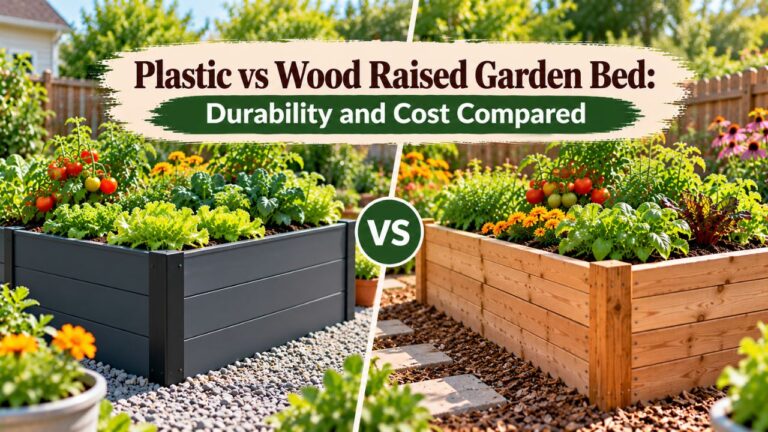
Cedar is one of the best materials for raised garden beds because it naturally resists decay, is easy to build with, and does not require chemical preservatives. Galvanized steel is another excellent choice for gardeners who want a durable, low-maintenance bed that won’t rot. Both materials work well for growing vegetables, herbs, and flowers.
However, the best option depends on your budget, climate, preferred appearance, and how long you want the garden bed to last. Untreated pine is affordable but generally deteriorates faster, while stone and concrete blocks offer long-lasting construction at the expense of greater weight and installation work.
Modern pressure-treated lumber and recycled composite boards are also worth considering, although their suitability depends on the specific product.
The choice becomes especially important for vegetable gardens, where the safety of construction materials and their contact with growing soil deserve attention.
This guide compares the most common raised bed materials, including wood, galvanized metal, composite, stone, and concrete. It explains their durability, maintenance needs, safety considerations, and practical advantages so you can select the right material for your garden.
What Is the Best Material for Raised Garden Beds Overall?
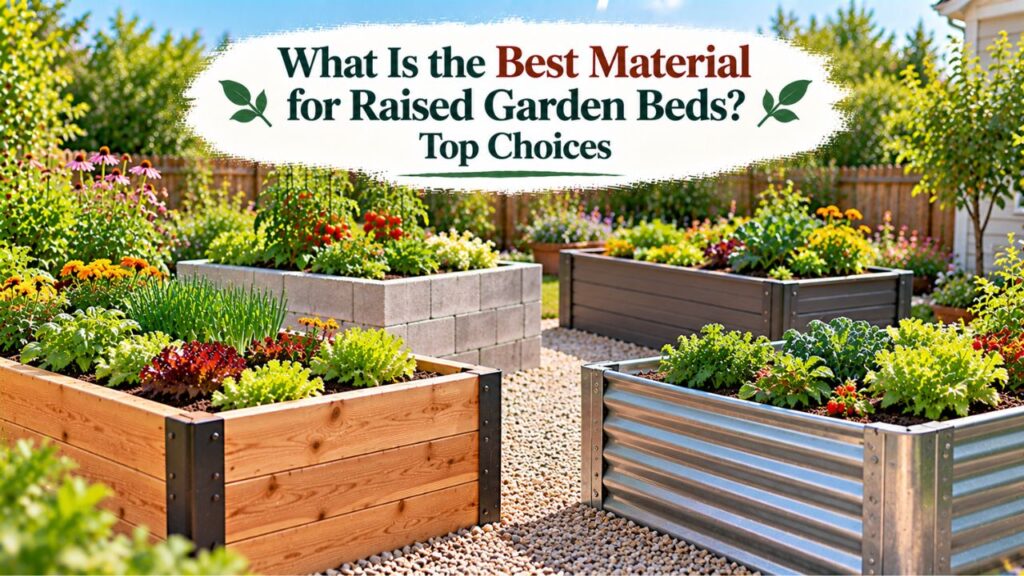
For most backyard gardeners, untreated cedar and galvanized steel offer the strongest balance of durability, practicality, and everyday usability.
Cedar is particularly suitable for DIY wooden raised beds because it can be cut, drilled, and assembled using ordinary woodworking tools.
Galvanized steel is a strong alternative when minimizing rot and routine maintenance is a priority.
Other materials may be more appropriate for specific budgets, landscapes, and accessibility needs.
Raised Garden Bed Material Comparison
| Material | Durability | Relative Cost | Maintenance | Best Use |
| Cedar | Good to excellent | Medium to high | Low to moderate | DIY vegetable beds |
| Redwood | Good to excellent | High | Low to moderate | Premium wooden beds |
| Untreated pine or fir | Lower | Low | Moderate to high | Budget and temporary beds |
| Modern pressure-treated wood | Good | Low to medium | Low to moderate | Affordable, longer-lasting wooden frames |
| Galvanized steel | Good to excellent | Medium to high | Low | Long-term, low-maintenance beds |
| Recycled plastic or composite | Product-dependent | Medium to high | Generally low | Moisture-resistant garden frames |
| Concrete blocks | Excellent structural potential | Low to medium | Low when properly installed | Permanent beds and taller borders |
| Natural stone | Excellent structural potential | High | Low when properly installed | Permanent decorative gardens |
| Brick | Good to excellent | Medium to high | Low to moderate | Formal landscaping |
These are general comparisons. Actual performance depends on material quality, thickness, structural design, climate, and installation.
A well-built pine bed may perform better than a poorly assembled cedar bed, while low-quality galvanized panels may deteriorate sooner than a properly manufactured steel kit.
The best choice is the one that fits your growing conditions and can safely contain the soil for the intended service period.
Cedar Wood: Best All-Around Material for DIY Raised Garden Beds
Cedar is a popular choice because it combines natural decay resistance with easy construction.
It is especially useful for gardeners who prefer the appearance of natural wood and want to build customized rectangular or square beds.
Why Cedar Works Well for Raised Beds
Cedar contains naturally occurring compounds that help some varieties and grades resist fungal decay and insect damage.
The degree of resistance varies by species, growing conditions, and whether the lumber contains heartwood or sapwood.
Heartwood generally provides better natural durability than less-resistant sapwood.
Cedar also has practical construction advantages:
- Easy to cut using ordinary woodworking tools
- Relatively lightweight compared with stone or concrete
- Suitable for custom bed dimensions
- Compatible with common exterior-rated fasteners
- Attractive without requiring paint
- Available in boards suitable for simple rectangular frames
Cedar does not require chemical pressure treatment to achieve its natural decay resistance.
For vegetable gardeners who prefer untreated construction materials, this is one of its main advantages.
How Long Do Cedar Raised Beds Last?
A well-constructed cedar raised bed can remain serviceable for many years, but there is no reliable universal lifespan.
Durability depends on the cedar species, heartwood content, board thickness, climate, drainage, and how often the wood remains wet.
The lower portions of the boards often experience the greatest moisture exposure because they contact damp soil.
Thin cedar boards may deteriorate or bow sooner than thicker, properly reinforced lumber.
Good construction and adequate drainage help extend useful service life.
When Cedar Is the Best Choice
Choose cedar when you want a natural-looking wooden bed that is relatively easy to build, modify, and repair.
It is particularly practical for:
- Small backyard vegetable gardens
- Raised flower beds
- Custom wooden frames
- Gardens where untreated materials are preferred
- Beds that may need occasional repairs or alterations
The main disadvantage is cost. Cedar commonly costs more than ordinary untreated pine or fir.
Redwood: A Premium Wood for Raised Garden Beds
Redwood is another naturally decay-resistant material suitable for outdoor garden construction.
Like cedar, it can be used without adding a chemical preservative.
However, its availability and price vary significantly by region.
Benefits of Redwood Raised Beds
Redwood offers a combination of natural durability, workability, and distinctive appearance.
Its advantages include resistance to decay in suitable grades, compatibility with conventional woodworking tools, and an attractive natural finish.
The heartwood is generally more resistant to deterioration than sapwood.
For gardeners who want wooden raised beds that complement decks, fences, or other landscaping, redwood can be an appealing option.
Is Redwood Better Than Cedar?
Neither is universally superior.
Both are useful naturally durable woods, and performance depends on the exact species, grade, and construction.
Redwood may be competitive in areas where it is locally available.
Cedar may be easier or less expensive to obtain elsewhere.
Compare actual lumber quality and cost rather than assuming one wood always lasts longer.
When Redwood Makes Sense
Redwood is worth considering for permanent decorative garden beds where appearance and natural durability are priorities.
For a basic vegetable garden, the higher price may not provide enough additional practical value to justify the expense.
Galvanized Steel: Best Raised Bed Material for Low Maintenance
Galvanized steel is one of the strongest alternatives to wood because it does not suffer from fungal rot.
It is commonly used in modular raised bed kits and custom corrugated-metal garden frames.
Why Galvanized Steel Is Popular
Galvanization protects steel with a zinc-based coating that helps resist corrosion.
Some manufactured raised bed systems use additional protective coating layers or zinc-aluminum-magnesium alloys.
These coatings are intended to reduce rusting when the material is exposed to outdoor weather and soil moisture.
Galvanized steel offers several advantages:
- Does not rot like untreated wood
- Requires little routine maintenance
- Available in modular kits
- Suitable for different bed heights
- Can provide a clean, modern appearance
- Does not attract wood-decay fungi
- Often allows a relatively thin wall compared with bulky masonry
Its long-term performance depends on the steel thickness, protective finish, fasteners, and structural reinforcement.
Are Galvanized Metal Raised Beds Safe for Vegetables?
Galvanized steel is widely used for raised vegetable beds.
The University of Maryland Extension’s raised-bed gardening guidance includes galvanized steel among suitable nonbiodegradable materials for raised garden construction.
However, product quality and coating composition still matter.
Choose materials intended for outdoor gardening rather than using old metal panels with unknown coatings or contamination.
Inspect metal for damaged protective surfaces, exposed sharp edges, and unsuitable fasteners.
Do Metal Raised Beds Get Too Hot?
Metal surfaces can become hot when exposed to direct summer sunlight.
However, the temperature of the sidewall does not necessarily represent the temperature throughout the entire root zone.
Soil temperature depends on several factors:
- Bed color
- Direct sunlight
- Soil depth
- Moisture levels
- Mulch coverage
- Air temperature
- Soil volume
A light-colored metal bed may absorb less solar energy than a dark-colored one.
Maintaining suitable soil moisture and applying mulch can help moderate growing conditions during hot weather.
There is no reason to assume that every galvanized metal bed will damage roots simply because its outer surface becomes warm.
How Long Do Galvanized Steel Raised Beds Last?
Quality galvanized steel beds can provide many years of use.
However, lifespan depends on the coating and exposure conditions.
Salt exposure, prolonged contact with aggressive materials, scratches, and damaged edges can increase corrosion risks.
Metal beds used in coastal environments may require more attention to corrosion resistance.
Inspect panel joints and damaged coatings periodically.
When Galvanized Steel Is the Best Choice
Galvanized steel is especially practical for gardeners who want a permanent-looking bed without the maintenance associated with wood decay.
It is a strong choice for humid or rainy climates, provided the steel coating and assembly are suitable for those conditions.
It is also useful when a modular kit provides the desired size without requiring custom woodworking.
Untreated Pine and Fir: Best Budget Materials for Raised Beds
Untreated pine and fir are common choices for inexpensive raised garden beds.
They are readily available in many home improvement stores and are easy to cut and assemble.
Their main limitation is lower natural decay resistance.
Why Pine Is Affordable
Pine and fir typically cost less than premium naturally durable woods.
This makes them suitable for beginners who want to construct a raised bed without a large initial investment.
They also work well for straightforward rectangular designs.
For example, standard construction lumber can be used to create a basic frame with exterior-rated screws and corner supports.
How Long Does Untreated Pine Last in Raised Beds?
Untreated pine and fir generally deteriorate faster than naturally durable cedar or redwood when exposed to persistent moisture.
The rate of deterioration depends on the climate, soil contact, board thickness, and lumber quality.
The bottom edge of a raised bed is particularly vulnerable because it may remain damp for extended periods.
Avoid assuming that inexpensive untreated lumber will provide the same long-term performance as rot-resistant wood.
Is Pine Worth Using?
Yes, when low initial cost is the priority.
Pine can be a reasonable option for temporary gardens, experimental layouts, or beds that may be moved or rebuilt later.
If you plan to maintain the same garden for many years, compare the cost of replacing pine boards with the higher initial price of cedar or coated metal.
The cheapest material at purchase is not necessarily the least expensive over the entire life of the garden.
Pressure-Treated Wood: A Durable and Affordable Alternative
Modern pressure-treated lumber is another option for raised garden bed construction.
It receives chemical preservatives intended to reduce deterioration caused by fungi and certain insects.
However, the specific treatment matters, especially when growing edible plants.
Is Pressure-Treated Wood Safe for Vegetable Beds?
Modern residential pressure-treated lumber commonly uses copper-based preservatives such as:
- Micronized copper azole (MCA)
- Copper azole (CA)
- Alkaline copper quaternary (ACQ)
These differ from older arsenic-containing treatments.
The Oregon State University Extension’s research on pressure-treated raised beds reports a study comparing copper-azole-treated lumber with untreated wood.
Across four growing seasons of soil and plant analysis, researchers found increased copper concentrations in soil within approximately 1 inch of treated bed walls. They did not detect increased copper concentrations in the vegetables and herbs grown in the tested beds.
These findings are specific to the studied treatment, location, and growing conditions. They should not be assumed to apply identically to every preservative or product.
For new construction, use lumber labeled for appropriate residential and ground-contact applications.
Why Older Treated Wood Is Different
Older lumber treated with chromated copper arsenate (CCA) contains arsenic, copper, and chromium.
CCA-treated wood was phased out for most residential applications in the United States at the end of 2003.
Unknown reclaimed lumber from older structures may contain treatments no longer used for residential garden construction.
Avoid using unidentified older treated wood in vegetable beds.
Railroad ties and industrial utility poles may contain other preservatives unsuitable for food gardening.
Should You Line a Pressure-Treated Raised Bed?
A barrier along the inside walls can reduce direct contact between soil and treated wood.
A durable plastic liner may be used on the sides while leaving the bottom open for drainage.
Do not create a waterproof basin unless the planter is specifically designed with a drainage system.
A liner is an optional precaution, not proof that every treated lumber product is unsuitable.
When Pressure-Treated Lumber Makes Sense
Modern residential ground-contact-rated lumber can be useful when affordability and longer service life are priorities.
Choose it when you understand the treatment type and are comfortable using the material.
Gardeners who prefer to avoid preservatives entirely can select cedar, redwood, coated steel, or suitable masonry instead.
Composite and Recycled Plastic Raised Garden Beds
Composite lumber and recycled plastic boards are alternatives to conventional wood.
They are often marketed as low-maintenance materials because they do not decay in the same way as untreated timber.
However, composition and structural performance vary significantly.
Recycled Plastic Raised Beds
Solid recycled plastic boards may be manufactured from materials such as high-density polyethylene.
Suitable outdoor-grade products can resist moisture and avoid the fungal rot associated with wood.
They also generally do not require painting.
However, plastic boards can expand and contract with temperature changes.
Some products may bend or sag when supporting substantial soil loads.
Choose boards specifically designed for structural garden use.
Wood-Plastic Composite Raised Beds
Wood-plastic composite materials contain a combination of wood-based particles or fibers and plastic binders.
They may provide a wood-like appearance while reducing some maintenance requirements.
However, composites are not identical to solid recycled plastic.
Depending on the formulation, they may experience:
- Thermal expansion
- Bowing under soil pressure
- Surface fading
- Moisture-related changes
- Fastener or joint problems
A composite decking board is not automatically suitable for retaining the pressure of a deep raised bed.
Check the manufacturer’s structural recommendations.
Are Plastic Raised Beds Safe for Vegetables?
Suitability depends on the specific material and manufacturing process.
Not every recycled plastic product has the same composition, additives, or intended applications.
Choose products explicitly intended for gardening or suitable soil-contact use.
Avoid repurposing unidentified industrial plastics, chemical containers, or materials with unknown previous contents.
When Composite Is a Good Choice
Composite or recycled plastic beds may suit gardeners who want moisture-resistant frames and minimal surface maintenance.
They can also be useful where conventional wood requires frequent replacement.
However, compare the structural design, UV resistance, and warranty rather than assuming that all plastic or composite products last indefinitely.
Concrete Blocks: Best Material for Strong, Permanent Bed Walls
Concrete blocks are commonly used for raised beds because they can form sturdy walls without relying on wood or thin metal panels.
They are especially useful where gardeners want a long-term layout.
Benefits of Concrete Block Raised Beds
Concrete blocks offer several practical advantages.
They do not rot, are commonly available, and can be arranged into rectangular or geometric garden borders.
Some low designs can be built from properly placed interlocking landscaping blocks.
Taller walls may require reinforced construction, appropriate foundations, or professional installation.
The blocks’ weight provides stability but also makes them harder to reposition.
Are Concrete Blocks Safe for Vegetable Gardens?
Modern concrete blocks are generally considered suitable for raised vegetable beds when used appropriately.
However, the composition of manufactured concrete products can vary.
Some blocks contain industrial byproducts such as fly ash, and manufacturers may not provide detailed ingredient information.
University extension guidance notes that intact concrete blocks are generally considered safe for food gardening, while acknowledging limited research about every possible formulation.
For gardeners concerned about a particular product, obtaining manufacturer information or choosing another material is reasonable.
Avoid using unidentified industrial blocks or construction waste with a questionable history.
Problems With Concrete Block Beds
Concrete blocks are heavy and may require careful ground preparation.
Uneven foundations can lead to movement or misalignment.
Their relatively wide walls also occupy more horizontal space than some metal or wooden frames.
For taller installations, dry-stacking ordinary blocks without reinforcement may create a stability hazard.
When Concrete Blocks Are the Best Choice
Concrete blocks make sense for permanent raised garden borders, decorative landscaping, and locations where rebuilding wooden frames would be inconvenient.
They are less practical when the bed may need to be moved or resized.
Natural Stone and Brick: Best for Decorative Raised Garden Beds
Stone and brick can produce attractive, long-lasting garden structures.
They are particularly useful for permanent landscaping where the raised beds are intended to become part of the overall garden design.
Natural Stone Raised Beds
Natural stone resists wood rot and can tolerate outdoor exposure for long periods.
Its appearance varies depending on the material.
Common choices include granite, limestone, sandstone, and locally available building stone.
However, the physical properties of these stones differ.
Some stones are more porous or vulnerable to weathering than others.
A stone wall also requires suitable construction to remain stable.
Brick Raised Garden Beds
Brick can create a formal appearance that works well near patios, pathways, and traditional landscaping.
Properly constructed brick walls can remain functional for many years.
However, mortar joints may require maintenance, especially in climates with repeated freezing and thawing.
Unreinforced brickwork may not be suitable for tall soil-retaining structures.
Are Stone and Brick Better Than Wood?
Stone and brick generally avoid the decay problems associated with wooden frames.
However, they are heavier, harder to modify, and often more expensive to install.
A permanent masonry bed may be worthwhile when the garden layout is unlikely to change.
For a beginner who wants a straightforward DIY project, cedar or galvanized steel may be easier.
Which Raised Bed Material Lasts the Longest?
There is no single reliable lifespan ranking that applies to every product.
However, properly built stone and masonry structures can provide very long service life, while quality galvanized steel and durable recycled-plastic products can avoid many wood-decay problems.
Wooden beds remain functional for varying periods depending on the wood species and environmental exposure.
Factors That Affect Raised Bed Lifespan
The main factors include:
- Material composition and quality
- Thickness of the walls
- Soil moisture exposure
- Local temperature and humidity
- Protective coatings
- Corrosion-resistant hardware
- Structural bracing
- Installation quality
- Maintenance practices
For example, a galvanized steel frame may last longer than untreated pine in one garden but deteriorate faster in another location with aggressive corrosion conditions.
Similarly, a thick cedar frame may remain structurally sound much longer than one made from thin, low-quality boards.
Does Board Thickness Matter?
Yes.
Thicker wooden boards can provide greater resistance to bending and may retain more useful material as surface decay develops.
Nominal 2-inch lumber is commonly used for DIY raised beds.
Actual thickness is typically about 1½ inches for standard dressed dimensional lumber.
Long sides may need additional braces or supports, particularly on taller beds.
Do not rely on thin boards to retain deep, wet soil without considering the structural load.
Best Raised Garden Bed Material for Different Climates
Local weather affects the durability of raised bed construction.
A material that performs well in a dry climate may need different maintenance in a humid or coastal location.
Hot and Sunny Climates
For hot climates, both wood and coated metal can work well.
Metal surfaces may become hot under direct sunlight, while wood also absorbs and transfers heat.
Soil depth, moisture, mulch, and bed color influence growing conditions.
Choose a design with adequate soil volume and consider light-colored surfaces where heat exposure is a concern.
Rainy and Humid Climates
Persistent moisture increases the risk of fungal decay in untreated wood.
Cedar and other decay-resistant woods are useful options.
Galvanized steel and suitable masonry also avoid conventional wood rot.
However, metal corrosion and structural movement remain possible, so choose quality materials and inspect the installation periodically.
Coastal Gardens
Salt exposure can accelerate corrosion in some metals.
For coastal locations, pay particular attention to steel coating specifications, fastener compatibility, and manufacturer limitations.
Naturally durable wood or appropriate masonry may also be useful.
The best choice depends on the bed’s distance from salt exposure and the materials’ actual ratings.
Cold Climates
Wood, metal, and masonry can all be used in cold climates.
However, freeze-thaw cycles, moisture, and seasonal movement may affect masonry foundations and exposed joints.
Elevated beds also expose their soil to different temperature conditions than open-bottom beds connected to the ground.
Choose materials and construction methods appropriate to local weather, and ensure the bed drains properly.
Best Material for Raised Vegetable Beds vs. Flower Beds
The best material is influenced more by construction and maintenance needs than by whether the bed contains vegetables or flowers.
However, some differences are worth considering.
Materials for Raised Vegetable Beds
For vegetables, prioritize materials with known composition and suitability for edible gardening.
Good options include:
- Untreated cedar
- Untreated redwood
- Quality galvanized steel intended for gardening
- Appropriate modern residential pressure-treated lumber
- Suitable concrete or stone products
Avoid unknown salvaged materials, industrially treated lumber, and potentially contaminated construction waste.
The growing soil should also be safe for producing food.
Materials for Raised Flower Beds
Flower beds provide more design flexibility because appearance may be a major priority.
Stone, brick, cedar, and galvanized metal can all work well.
For perennial flowers, consider the long-term durability of the structure because established roots may make frame replacement inconvenient.
For seasonal annual flowers, a less expensive wooden frame may be perfectly reasonable.
Materials for Tall or Waist-High Raised Beds
Tall raised beds place more pressure on their sidewalls when filled with soil.
The best material is one that can be assembled into a stable structure at the intended height.
Reinforced metal kits, appropriately braced wood, and engineered masonry structures are possible options.
For a fully elevated planter with legs, the base and supports must safely carry the wet growing medium and plants.
The selection should consider structural capacity, not just resistance to rot.
What Materials Should You Avoid for Raised Garden Beds?
Some materials are unsuitable because their previous use, treatment, or condition creates avoidable concerns.
Old Railroad Ties
Railroad ties may contain creosote or other industrial wood preservatives.
They should not be repurposed for vegetable raised beds.
Their treatment is intended for industrial service rather than direct use in residential food gardens.
Older Arsenic-Treated Lumber
Older CCA-treated wood may contain arsenic.
Avoid using lumber with an uncertain treatment history, especially material salvaged from older outdoor structures.
Modern residential pressure-treated wood is a different product category and should not be confused with historical CCA-treated lumber.
Painted Wood With Unknown Coatings
Unknown reclaimed painted lumber may contain lead-based paint or other unsuitable finishes.
Do not use questionable painted materials where the coating can contact food-growing soil.
Select new, identifiable materials instead.
Unidentified Plastic or Industrial Containers
Do not assume every plastic container or recycled panel is suitable for gardening.
Industrial containers may have held chemicals or other substances that make them inappropriate for growing food.
Use materials designed for the intended gardening application.
Sharp or Severely Corroded Metal
Metal with exposed sharp edges presents an injury hazard.
Severely corroded or damaged panels may also lack sufficient strength to hold soil.
Use proper protective edging and replace structurally compromised components.
How to Choose the Right Raised Bed Material for Your Budget
The best value depends on initial cost, expected service life, maintenance, and installation effort.
Low-Budget Raised Beds
Untreated pine or fir is often the most affordable choice for a simple wooden frame.
It can be assembled using basic tools and readily available lumber.
However, replacement may be necessary sooner than with naturally durable wood or suitable metal.
Midrange Raised Beds
Cedar and quality galvanized steel are strong choices for gardeners willing to spend more initially.
Cedar offers easy customization and a natural finish.
Galvanized steel reduces concerns about wood rot and is convenient when purchased as a modular kit.
Compare the actual dimensions and material thickness before buying.
Premium Permanent Raised Beds
Stone, brick, and carefully constructed masonry beds can provide a long-term landscaping solution.
Their installation costs may be higher because of material weight, site preparation, and labor.
They make the most sense when the garden layout is intended to remain in place.
Compare the Total Project Cost
A raised bed requires more than its frame.
Account for:
- Building materials
- Fasteners and braces
- Soil and compost
- Delivery costs
- Tools or professional labor
- Irrigation equipment
- Future repairs or replacement
For example, a 4-by-8-foot raised bed filled to a depth of 12 inches needs approximately 32 cubic feet of growing material before allowing for settling and the frame’s inside dimensions.
That volume equals approximately 1.19 cubic yards.
A taller bed may require substantially more soil, regardless of the frame material.
Calculating the total project cost helps avoid choosing a frame that looks inexpensive but is costly to install.
How to Make Raised Garden Bed Materials Last Longer
Proper installation and maintenance improve the performance of almost every raised bed material.
Use Appropriate Fasteners
Exterior-rated screws and corrosion-resistant bolts are important for outdoor frames.
For pressure-treated lumber, use fasteners approved for contact with the particular wood preservative.
For coated metal systems, use the manufacturer’s recommended hardware.
Incompatible metals and fasteners can contribute to corrosion problems.
Reinforce Long or Tall Walls
Long raised bed sides can bow outward under soil pressure.
Use suitable corner supports and intermediate braces when required.
A tall raised bed may need substantially stronger reinforcement than a shallow frame.
Follow the manufacturer’s assembly specifications for prefabricated kits.
Maintain Proper Drainage
Open-bottom beds should be installed over suitable ground.
Avoid creating a sealed base that traps excess water around plant roots.
For elevated planters, provide appropriate drainage openings and a structurally supported bottom.
Drainage problems affect the plants and may increase moisture exposure around the frame.
Protect Wooden Surfaces Appropriately
Some gardeners choose to apply suitable exterior finishes to reduce weathering.
Select a product appropriate for the wood type and intended application.
If a liner is installed along the inside walls, avoid blocking drainage across the bottom.
Inspect wooden frames for loose fasteners, damaged corners, and developing decay.
Inspect Metal and Masonry Beds
For galvanized steel, check damaged coatings, sharp edges, and loose connections.
For masonry, inspect movement, cracks, and deteriorating joints.
Address structural problems before the soil pressure creates additional damage.
Which Raised Garden Bed Material Should You Choose?
The best selection depends on your priorities.
| Your Main Priority | Recommended Material | Reason |
| Best all-around DIY choice | Cedar | Naturally decay-resistant and easy to build |
| Low maintenance | Galvanized steel | Does not suffer from wood rot |
| Lowest initial cost | Untreated pine or fir | Affordable and easy to obtain |
| Durable wood at a reasonable cost | Modern residential pressure-treated lumber | Preservatives help resist decay |
| Natural premium wood | Redwood | Naturally decay-resistant in suitable grades |
| Recycled-material construction | Appropriate outdoor-grade recycled plastic | Moisture resistance and low surface maintenance |
| Permanent decorative garden | Stone or brick | Long-lasting masonry appearance |
| Strong modular kit | Reinforced galvanized steel | Convenient assembly and multiple configurations |
| Tall garden walls | Engineered wood, metal, or masonry | Structural support can be designed for greater soil loads |
For most homeowners building a conventional raised vegetable bed, cedar is an excellent first choice. It balances durability, workability, natural appearance, and straightforward construction.
For gardeners who prefer to avoid replacing wooden boards, a well-manufactured galvanized steel bed may offer better convenience.
If the budget is extremely limited, untreated pine can be used successfully with the understanding that its service life may be shorter.
Conclusion
The answer to what is the best material for raised garden beds depends on how you balance durability, safety, maintenance, appearance, and cost.
Cedar is a strong all-around choice for conventional DIY raised beds because it naturally resists decay and is easy to work with. Galvanized steel is an excellent alternative for gardeners who want low-maintenance construction without wood rot.
Untreated pine is useful for budget projects, while suitable modern pressure-treated lumber can provide a longer-lasting wooden option. Composite materials, concrete blocks, and stone also have practical applications when their structural and material properties suit the garden.
For vegetable beds, prioritize materials with known origins and avoid older industrially treated wood or unidentified reclaimed materials.
Choose a frame that matches the garden layout, provides enough structural support, and can withstand local weather conditions. A properly constructed cedar or galvanized steel bed will meet the needs of most home gardeners without requiring an unnecessarily expensive installation.
FAQs About What Is the Best Material for Raised Garden Beds
Is wood or metal better for raised garden beds?
Both can work well. Cedar is easier to customize with ordinary woodworking tools and offers a natural appearance. Galvanized metal avoids fungal wood rot and typically requires less surface maintenance. The better option depends on the preferred design, climate, and budget.
What is the safest wood for vegetable raised beds?
Untreated, naturally decay-resistant wood such as cedar or redwood is a strong choice for gardeners who want to avoid preservatives. Modern residential pressure-treated lumber can also be suitable when the treatment is identified and appropriate for the application. Avoid old CCA-treated lumber and industrially treated railroad ties.
Is galvanized steel better than cedar for raised beds?
Galvanized steel may be more convenient for gardeners who want a low-maintenance frame that does not rot. Cedar is often preferable for custom wooden construction and a natural appearance. Neither is universally superior in every climate or installation.
Can I use untreated pine for raised garden beds?
Yes. Untreated pine can be used for raised beds and is often less expensive than cedar. However, it is generally less resistant to decay when exposed to damp soil, so the frame may require replacement sooner.
Do cedar raised beds need a plastic liner?
Not necessarily. Cedar can be used without a liner, especially in open-bottom beds. A sidewall liner may reduce direct soil contact with the wood, but it should not obstruct drainage. A liner is optional and should be selected according to the bed’s construction.
Are concrete blocks safe for growing vegetables?
Concrete blocks are generally considered suitable for raised vegetable beds when they are intact and appropriately installed. However, their ingredients vary, and gardeners concerned about a particular product should obtain manufacturer information or choose another material.
What is the best material for a raised garden bed that lasts many years?
Quality galvanized steel, suitable composite materials, and properly constructed stone or masonry beds can provide long service life without the fungal decay associated with untreated wood. Actual durability depends on material quality, installation, climate, and maintenance rather than a guaranteed number of years.

I’m Maya L. Greenwood, a lifelong plant lover who believes anyone can grow something beautiful with the right guidance. After years of testing soil mixes, pruning methods, irrigation tricks, and pest-safe solutions, I started EasyGardenTips.com to turn hard-won lessons into step-by-step advice. From seed starting and container gardens to composting and seasonal checklists, my goal is to make gardening simple, sustainable, and fun.