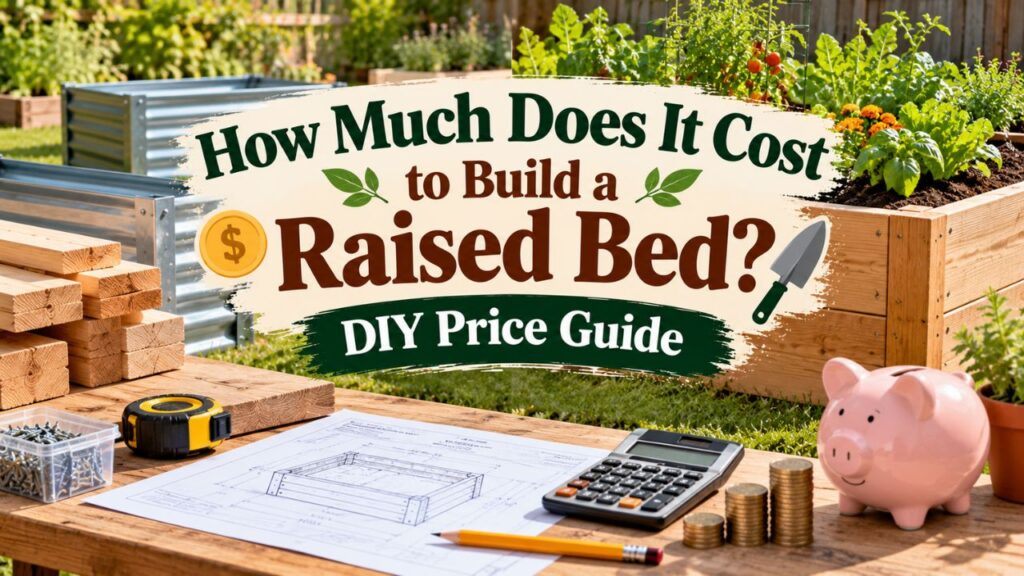
How Much Does It Cost to Build a Raised Bed? DIY Price Guide
Building a basic 4-by-8-foot raised garden bed in the United States typically costs approximately 160–450 when you do the work yourself and purchase the growing soil. A smaller, inexpensive bed can cost under $100, while premium cedar, taller metal structures, and professional installation can push the total above $500.
The frame is only part of the budget. Soil, compost, fasteners, delivery, and optional irrigation can significantly increase the final expense. For example, a 4-by-8-foot bed filled 12 inches deep requires approximately 32 cubic feet of soil. Depending on how you purchase it, the soil may cost as much as the frame itself.
Material selection also makes a difference. Untreated pine is often affordable, cedar provides natural decay resistance, and galvanized steel offers a durable alternative. Each option has different upfront and long-term costs.
The following breakdown covers construction materials, soil quantities, bed dimensions, installation expenses, and practical ways to reduce costs without compromising the garden’s structure or growing conditions.
How Much Does It Cost to Build a Raised Bed by Size?
The total construction cost depends on the bed’s length, width, height, and material.
Larger and deeper beds require more framing material and growing soil. However, even beds with the same planting area can have considerably different costs.
For a basic DIY raised garden bed, the following ranges provide reasonable starting budgets.
| Raised bed size | Estimated DIY cost | Soil volume |
| 2 × 4 ft, 12 inches deep | 70–180 | 8 cu. ft. |
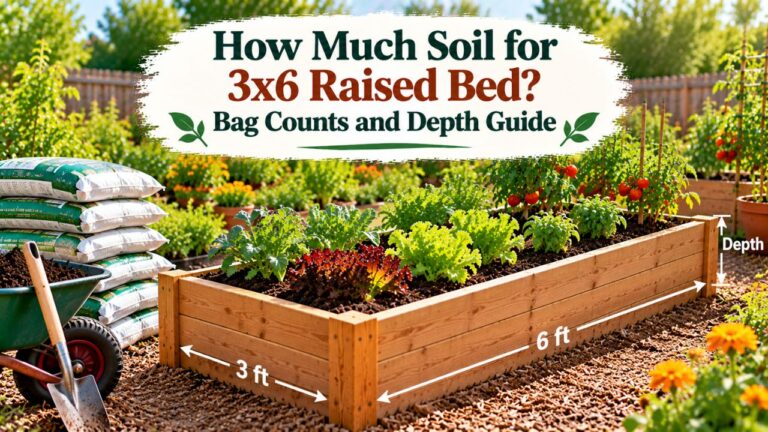
| 3 × 6 ft, 12 inches deep | 110–300 | 18 cu. ft. |
| 4 × 4 ft, 12 inches deep | 90–250 | 16 cu. ft. |
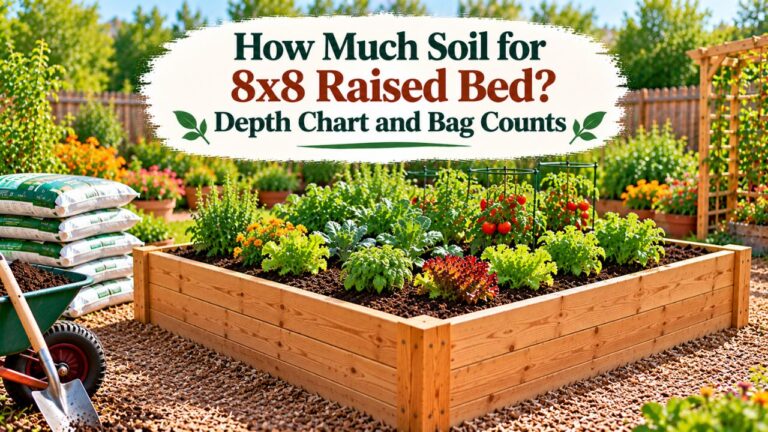
| 4 × 8 ft, 12 inches deep | 160–450 | 32 cu. ft. |
| 4 × 8 ft, 18 inches deep | 230–600 | 48 cu. ft. |
| 4 × 8 ft, 24 inches deep | 300–800+ | 64 cu. ft. |
These are approximate U.S. planning ranges for ordinary DIY construction using economical framing materials and purchased growing soil. They are not national price averages or retailer quotes.
They generally assume an open-bottom garden bed, basic hardware, and no paid installation labor. Premium materials, difficult site preparation, special accessories, and delivery can raise the total.
The soil volumes assume the stated dimensions are the inside dimensions and that the full indicated depth is filled. Actual quantities may be slightly lower when frame thickness or headspace reduces the usable volume.
Cost of Building a Small Raised Garden Bed
A 2-by-4-foot raised bed is a practical starting option for herbs, lettuce, flowers, and smaller vegetables.
At 12 inches deep, it holds approximately 8 cubic feet of soil.
The frame can be built from inexpensive lumber, and a relatively small quantity of soil is needed.
If you already own basic tools and have suitable garden soil, construction costs may be relatively low.
However, premium kits and expensive bagged growing mixes can make even a small bed costly.
Cost of Building a 4×4 Raised Garden Bed
A 4-by-4-foot bed provides 16 square feet of planting area.
At 12 inches deep, it requires approximately 16 cubic feet of soil, or 0.59 cubic yards.
This size can be economical because it uses shorter framing components.
It is also practical for gardens with limited space.
When comparing costs, include the price of soil, not just the lumber or kit.
Cost of Building a 4×8 Raised Garden Bed
A 4-by-8-foot raised bed provides 32 square feet of growing area.
This is a popular size because gardeners can generally reach the middle from both sides without stepping on the soil.
A basic frame using inexpensive lumber may be relatively affordable.
However, filling the bed can represent a substantial portion of the budget.
At a full 12-inch soil depth, it requires approximately 1.19 cubic yards of growing medium.
Buying a suitable soil mix in bulk may be more economical than purchasing many individual bags.
Raised Garden Bed Material Costs Compared
The frame material affects the initial construction cost, durability, appearance, and future maintenance expenses.
Different materials also require different hardware and construction methods.
Wood Raised Bed Construction Cost
Wood is one of the most practical materials for a DIY raised bed.
It is easy to cut, fasten, and customize.
Common choices include untreated pine, pressure-treated pine, cedar, and redwood.
| Wood material | Approximate 4×8 frame budget | Main characteristic |
| Untreated pine | 50–130 | Economical but less decay-resistant |
| Ground-contact pressure-treated pine | 70–160 | Improved decay resistance |
| Cedar | 180–400+ | Natural decay resistance |
| Redwood | 200–450+ | Durable but availability varies |
These are illustrative frame-material allowances for a basic bed approximately one board high. They exclude growing soil, delivery, and professional labor.
Board thickness and lumber grade can change prices considerably.
For a concrete retail reference, Home Depot’s pressure-treated lumber listings show an 8-foot ground-contact-rated 2-by-12 board priced at $22.78 in the checked listing.
Three boards at that price would cost $68.34 before corner supports, fasteners, and applicable taxes.
Two boards can form the long sides of a 4-by-8-foot frame, while a third can be cut into two shorter end pieces, with dimensions adjusted for board thickness.
Local prices may differ.
Metal Raised Garden Bed Cost
Galvanized steel raised beds are popular because they resist biological decay and often require relatively little maintenance.
A typical prefabricated metal bed may cost approximately 80–350 for the frame, depending on size, height, steel quality, and brand.
Larger or taller premium models can cost considerably more.
Metal kits commonly include:
- Prefabricated side panels.
- Corner or curved connecting panels.
- Bolts and nuts.
- Structural bracing, where required.
- Protective edge trim on some models.
Because most components are manufactured before purchase, metal kits can reduce cutting and assembly work.
However, the growing soil is usually purchased separately.
A tall metal bed may also need substantially more soil than a shallow wooden frame.
Concrete Block Raised Bed Cost
Concrete masonry blocks can create strong, long-lasting raised garden beds.
The overall cost depends on block size, wall height, local prices, and whether the design requires mortar or reinforcement.
A basic 4-by-8-foot block frame might require approximately 80–250 or more in blocks and supporting materials.
Professional masonry work can increase the cost substantially.
Blocks are heavy, so transporting and placing them may require additional effort.
For low walls, dry-stacked construction may be possible with an appropriate design. Taller structures require more careful structural planning.
Brick and Stone Raised Bed Cost
Decorative brick and natural stone usually cost more than basic wood construction.
Costs depend on the materials, wall thickness, foundation requirements, and labor.
A decorative masonry raised bed may cost several hundred dollars or substantially more.
These materials are often selected for their appearance and permanence rather than minimum construction cost.
For an inexpensive backyard vegetable garden, wood or an economical metal kit is usually easier to budget.
How Much Does Soil Cost to Fill a Raised Bed?
Soil is often one of the largest expenses when building a raised garden bed.
The amount required increases directly with the planting area and soil depth.
For large beds, soil can cost more than the framing materials.
Bulk Raised Bed Soil Cost
Bulk growing soil is usually sold by the cubic yard.
As a planning allowance, basic bulk topsoil and compost blends may cost approximately 40–100 per cubic yard, while specialty mixtures may cost more.
Delivery charges can substantially affect the final price, particularly for small orders.
The Alabama Cooperative Extension System’s raised bed cost comparison provides a useful reference. Its spring 2024 retail survey estimated approximately 54–71 for enough bulk growing mix to fill a 4-by-8-foot bed 12 inches deep, compared with substantially higher costs for comparable bagged mixes.
Those figures are historical benchmarks, not guaranteed current prices.
When purchasing bulk soil, ask whether the quoted amount includes delivery, loading, and taxes.
Some suppliers also have minimum order quantities.
Bagged Raised Bed Soil Cost
Bagged soil is convenient because it can be transported in smaller quantities.
However, purchasing enough bags for a large bed can be expensive.
For budgeting, consider a 1.5-cubic-foot bag priced at an illustrative 8–12.
A 4-by-8-foot bed filled 12 inches deep needs approximately 22 bags of that size.
The estimated cost would be:
- 22 bags × $8 = $176.
- 22 bags × $10 = $220.
- 22 bags × $12 = $264.
These calculations use example bag prices, not a verified national average.
Compare the price per cubic foot rather than comparing bag prices alone.
A larger bag may offer better value even when its purchase price is higher.
Compost and Soil Amendment Costs
Some gardeners purchase topsoil and compost separately.
A common starting mixture for an open-bottom garden bed is approximately two parts suitable loamy topsoil to one part finished compost.
The final proportions should depend on the existing soil’s texture and organic matter content.
Additional products may include:
- Finished compost.
- Screened topsoil.
- Organic mulch.
- Soil amendments based on test results.
- Fertilizer when needed.
Avoid buying expensive amendments automatically.
A suitable soil blend may already contain enough organic matter and nutrients for initial planting.
How to Calculate Raised Bed Soil Costs
Calculating soil volume before purchasing materials helps prevent unexpected expenses.
For a rectangular bed, use:
Soil volume (cubic feet) = Length (ft) × Width (ft) × Soil depth (ft)
Then convert cubic feet into cubic yards:
Cubic yards = Cubic feet ÷ 27
Example: 4×8 Raised Bed With 12 Inches of Soil
A bed measuring 4 feet by 8 feet with 1 foot of soil requires:
4 × 8 × 1 = 32 cubic feet
32 ÷ 27 = 1.19 cubic yards
The actual amount needed may differ slightly because of frame thickness, incomplete filling, or settling.
How Many Bags of Soil Are Needed?
For a bed requiring 32 cubic feet:
| Bag size | Bags required |
| 0.75 cu. ft. | 43 bags |
| 1 cu. ft. | 32 bags |
| 1.5 cu. ft. | 22 bags |
| 2 cu. ft. | 16 bags |
Always round up to a whole bag.
For bulk orders, verify the supplier’s minimum quantity and whether additional material is needed for expected settling.
Does a Taller Raised Bed Cost More?
Yes. Increasing the height increases both the framing requirements and potential soil volume.
A 4-by-8-foot bed filled 24 inches deep needs approximately 64 cubic feet of soil.
That is twice as much as the same bed filled 12 inches deep.
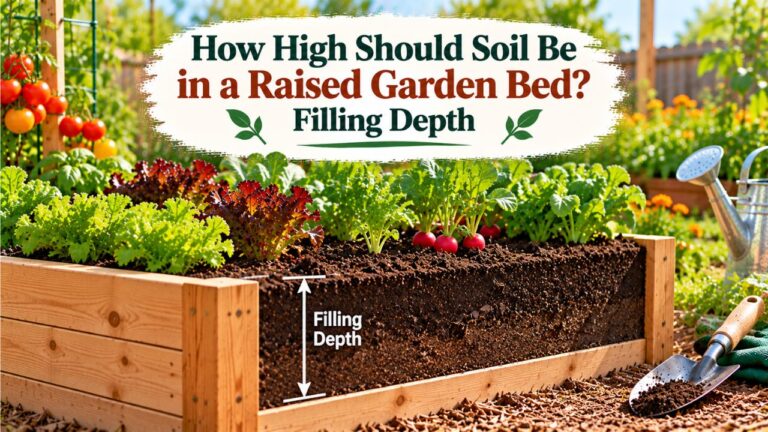
However, an open-bottom bed doesn’t always need to be filled to its entire frame height if a shallower soil depth meets the intended plants’ needs.
Never reduce the rooting depth below what the crop requires simply to save money.
Example Budget for Building a 4×8 Wooden Raised Bed
A detailed example makes it easier to understand how individual expenses contribute to the final cost.
Consider a basic open-bottom wooden raised bed approximately 12 inches tall.
The example uses three 8-foot pressure-treated boards, corner supports, exterior screws, and bulk soil.
| Material or expense | Example cost |
| Three 2×12×8 pressure-treated boards | $68.34 |
| Corner posts or supports | $24.00 |
| Exterior-rated screws | $15.00 |
| Bulk growing mix, approximately 1.2 cu. yd. | $72.00 |
| Soil delivery | $65.00 |
| Basic mulch | $15.00 |
| Estimated total | $259.34 |
Only the lumber figure reflects the specific retailer listing discussed earlier. The remaining prices are illustrative budget assumptions.
The example excludes sales tax, tools, seeds, plants, irrigation equipment, and paid labor.
Actual 2-by-12 lumber is typically about 11.25 inches wide, so a single-board-high frame holds slightly less soil than a full 12-inch-deep calculation suggests.
The example allows a little extra growing medium for practical planning.
Can You Build a 4×8 Raised Bed for Under $100?
It is possible under favorable conditions.
For example, a gardener might use suitable reclaimed lumber, leftover compatible fasteners, existing healthy garden soil, and homemade compost.
However, purchasing all-new lumber and enough growing medium for a full 4-by-8-foot bed will usually make a $100 budget difficult.
A low-cost project shouldn’t rely on unidentified chemically treated wood or contaminated fill soil.
Using safe, suitable materials is more important than meeting an arbitrary price target.
DIY Raised Bed Cost vs. Professional Installation
Doing the work yourself can significantly reduce the total project cost.
A basic wooden raised bed requires relatively simple construction techniques, although it still involves measuring, cutting, fastening, and moving heavy soil.
DIY Construction Expenses
DIY construction usually includes:
- Framing materials.
- Fasteners and supports.
- Soil and compost.
- Delivery.
- Basic tools.
- Optional mulch and irrigation.
If you already own a drill, saw, tape measure, level, and shovel, you may not need additional equipment.
Buying tools specifically for one raised bed can increase the initial cost.
Some lumber stores can cut boards to the requested dimensions, potentially reducing the need for a saw.
Professional Raised Bed Installation Cost
Professional installation may be appropriate when the project involves multiple beds, difficult access, extensive grading, or heavy masonry.
For a basic residential installation, labor may add approximately 150–500 or more, depending on the scope and local contractor rates.
This is a planning allowance, not a universal contractor price.
Complex landscaping, retaining structures, drainage corrections, or custom construction can cost considerably more.
Request an itemized quote that distinguishes labor, frame materials, soil, delivery, and site preparation.
Is It Cheaper to Build or Buy a Raised Bed Kit?
Building from individual lumber is often economical when you already have tools and can purchase materials locally.
A prefabricated kit may offer better value when it includes all required hardware and saves substantial assembly time.
Compare the completed frame price rather than the price of one board or one kit panel.
Check whether the kit includes soil, a bottom panel, bracing, and shipping.
Most raised bed kits do not include growing soil.
Additional Costs When Building a Raised Garden Bed
Several optional expenses can influence the total budget.
Not every raised bed requires these accessories.
Irrigation System Costs
A watering can or existing garden hose may be enough for one small raised bed.
Drip irrigation is useful when managing multiple beds or maintaining consistent soil moisture.
A basic DIY drip or soaker setup may require an additional budget of roughly 20–100, depending on layout and existing equipment.
Timers, filters, pressure regulators, and additional tubing can raise costs.
Choose equipment based on the actual watering needs rather than automatically buying a complete system.
Garden Bed Liners and Hardware Cloth
A bottom liner isn’t necessary for a typical open-bottom raised bed placed on suitable garden soil.
However, hardware cloth may be useful where burrowing rodents damage crops.
A sidewall barrier may also be considered for certain construction materials.
Costs depend on the material, dimensions, and installation method.
Avoid covering the bottom with impermeable plastic that prevents drainage.
Mulch and Weed Control Materials
Mulch helps protect the soil surface, limit evaporation, and reduce weeds.
Shredded leaves or suitable home-produced organic materials may reduce costs.
Purchased straw, wood chips, or other mulches add to the budget.
Avoid using untreated, contaminated, or unsuitable landscaping waste around edible plants.
Seeds, Seedlings, and Fertilizer
A completed raised bed is only the beginning of the garden.
Seeds, transplants, plant supports, and fertilizer may add another 10–100 or more, depending on what you grow.
For a small vegetable bed, starting some crops from seed can reduce expenses.
However, buying transplants may be more practical for certain crops and growing seasons.
Avoid unnecessary fertilizer applications when the soil already contains adequate nutrients.
How to Build a Raised Bed on a Budget
Reducing expenses doesn’t require sacrificing basic construction quality.
The most effective savings usually come from selecting appropriate materials, avoiding unnecessary height, and purchasing soil efficiently.
Step 1: Choose an Economical Bed Size
A smaller bed requires less framing and less growing soil.
For a first garden, a 4-by-4-foot or 3-by-6-foot bed can provide useful planting space without the expense of a much larger structure.
Choose a width that allows easy access without stepping on the growing area.
Beds that can be accessed from both sides are commonly built around 3–4 feet wide.
Step 2: Consider a Frameless Raised Bed
A raised bed doesn’t necessarily need wood, metal, or masonry walls.
A mounded raised bed is simply an elevated growing area formed from suitable soil.
This can eliminate most frame construction expenses.
However, the mound needs enough space for stable sloped edges, and some maintenance may be necessary to preserve its shape.
Frameless beds are especially useful when the existing garden soil is suitable and only moderate improvement is needed.
Step 3: Use Affordable, Suitable Lumber
Untreated pine is often an economical option.
Modern ground-contact-rated lumber may provide greater decay resistance at a reasonable price.
Naturally durable cedar is another choice when the budget permits.
Avoid unidentified reclaimed materials, old railroad ties, or lumber with unknown chemical treatments.
Also avoid buying unnecessarily thick or oversized lumber for small, shallow structures.
Step 4: Purchase Growing Soil in Bulk When Practical
For a large raised bed, compare bulk soil prices with bagged products.
Bulk soil may be substantially cheaper per cubic foot.
However, delivery fees and minimum orders can reduce the savings for small projects.
If several raised beds are planned, purchasing the soil together may make delivery more economical.
Inspect the soil mix or request composition information before purchasing a large quantity.
Step 5: Avoid Unnecessary Soil Fillers
Gardeners sometimes fill deep beds with large amounts of logs, branches, or other organic materials to reduce soil costs.
These materials can decompose and cause settling.
They may also temporarily affect nitrogen availability or create uneven growing conditions.
For ordinary shallow raised beds, a suitable soil mixture throughout the intended root zone is generally the simplest approach.
For very tall beds, decide whether the full height needs growing soil or whether an engineered design with a suitable base would be more appropriate.
Avoid using gravel as a supposed drainage solution.
Step 6: Build Multiple Beds With a Shared Material Plan
If you’re building several beds, calculate all lumber and soil requirements together.
This can reduce waste from unnecessary cuts.
For example, shorter pieces left over from one frame may be useful for corner supports or another smaller bed.
However, don’t compromise structural strength simply to use every scrap.
Larger soil orders may also reduce the delivery cost per bed.
What Is the Cheapest Way to Build a Raised Garden Bed?
The cheapest practical method is often to create a frameless mound using suitable existing garden soil and available finished compost.
If a rigid frame is required, inexpensive untreated lumber can be a low-cost option.
A small raised bed built from appropriate reclaimed materials may also be affordable.
However, not every low-cost material is suitable for growing food.
The final choice should account for:
- Structural strength.
- Soil drainage.
- Chemical treatment history.
- Expected service life.
- Access for planting and harvesting.
- Replacement and maintenance requirements.
A cheaply constructed frame that fails after a short time may not provide the best long-term value.
For gardeners expecting to use the same beds for many seasons, spending more on durable materials can reduce reconstruction work later.
Is Building a Raised Garden Bed Worth the Cost?
Raised beds can be worth the investment when they solve a specific gardening problem.
They are especially useful where native soil is compacted, poorly drained, rocky, or difficult to manage.
They also allow gardeners to create a defined growing area with controlled soil conditions.
However, raised beds don’t guarantee higher yields or immediate financial savings.
The value depends on what you’re growing, the garden’s productivity, and how the structure is maintained.
When a Raised Bed Makes Financial Sense
A raised bed may be a reasonable investment when:
- Existing garden soil requires substantial improvement.
- A compact growing area is easier to manage.
- Better access reduces gardening difficulty.
- The bed will be used for many growing seasons.
- You already have suitable tools or materials.
- The design supports productive vegetable or herb gardening.
Growing vegetables over several seasons may help offset some of the initial costs, but results depend on crops, climate, and ongoing expenses.
When an In-Ground Garden May Cost Less
If your yard already contains healthy, well-drained soil, planting directly in the ground is often less expensive.
You may need only basic preparation, seeds, mulch, and appropriate soil amendments.
There is no frame to purchase or maintain.
For a large vegetable garden, this difference can be substantial.
Raised beds are most useful when their practical advantages justify the additional construction expense.
Conclusion
Understanding how much does it cost to build a raised bed requires looking beyond lumber or kit prices.
For a typical 4-by-8-foot DIY bed in the United States, approximately 160–450 is a useful starting budget for economical framing and purchased soil. Smaller projects may cost less, while premium materials, deeper beds, delivery, and professional labor increase the total.
Soil is one of the most important expenses to calculate early. A 4-by-8-foot bed with 12 inches of growing medium needs approximately 32 cubic feet, making the choice between bulk and bagged soil financially significant.
For most budget-conscious gardeners, a simple wooden frame with suitable bulk soil offers a practical balance of cost and usability.
If the existing ground is already suitable, a frameless raised bed or an ordinary in-ground garden may cost substantially less.
Choose the smallest practical design that provides the root space, accessibility, and growing conditions your plants need.
FAQs About How Much Does It Cost to Build a Raised Bed
Can You Build a Raised Garden Bed for $50?
Yes, but usually only under favorable conditions.
A small bed built with available lumber, existing suitable soil, and leftover hardware may cost around $50 or less. Purchasing new framing materials and bagged soil will often increase the total.
How Much Does a 4×8 Raised Bed Cost With Soil?
A basic 4-by-8-foot DIY raised bed with purchased soil may cost approximately 160–450, depending on materials, delivery, and soil type.
Cedar, premium metal kits, and professionally built structures can cost more.
Is It Cheaper to Build a Raised Bed From Wood or Metal?
Basic wooden beds made from inexpensive lumber often have lower upfront costs.
However, some galvanized steel kits are competitively priced, and premium cedar may cost more than metal.
Compare frame dimensions, height, hardware, and expected maintenance before deciding.
How Much Does It Cost to Fill a Raised Bed With Soil?
A 4-by-8-foot bed filled 12 inches deep requires approximately 1.19 cubic yards.
Bulk soil may cost roughly 50–120 or more for the material itself, depending on the supplier and mix, with delivery charged separately. Bagged specialty soil can cost substantially more.
How Much Does It Cost to Build Two Raised Garden Beds?
Two basic 4-by-8-foot DIY beds might require a combined budget of approximately 320–900, based on the individual planning ranges used here.
Ordering soil together and sharing tools or leftover materials may reduce the combined cost.
Do Raised Garden Beds Save Money on Vegetables?
They can reduce some food purchases when managed productively, but savings aren’t guaranteed.
Initial construction, soil, irrigation, seeds, and maintenance all affect the total cost. A durable bed used for several seasons may offer better long-term value than one used briefly.
Is a Taller Raised Bed More Expensive?
Usually, yes. Taller beds need additional framing and may require more growing soil.
For example, a 4-by-8-foot bed filled 24 inches deep needs approximately twice the soil of the same bed filled 12 inches deep. The extra soil and structural materials can significantly increase costs.

I’m Maya L. Greenwood, a lifelong plant lover who believes anyone can grow something beautiful with the right guidance. After years of testing soil mixes, pruning methods, irrigation tricks, and pest-safe solutions, I started EasyGardenTips.com to turn hard-won lessons into step-by-step advice. From seed starting and container gardens to composting and seasonal checklists, my goal is to make gardening simple, sustainable, and fun.