What Is Bagged Topsoil? Uses for Lawns, Gardens, and Raised Beds
Bagged topsoil is natural soil or a commercially blended soil product packaged in bags for gardening, lawn repair, and landscaping. It is commonly used to fill low spots, establish grass, improve planting areas, and add soil to garden beds. However, not every bag contains the same ingredients, and some products labeled topsoil are better suited to landscaping than growing vegetables.
Natural topsoil is the uppermost mineral-soil layer of the ground. It typically contains sand, silt, clay, organic matter, and microorganisms. Commercial bagged topsoil may contain screened mineral soil, compost, or other organic materials, depending on the manufacturer.
Unlike potting mix, bagged topsoil can be relatively dense and may compact inside containers. Its quality also varies, so a dark color or an attractive package does not automatically mean it contains enough nutrients for healthy plant growth.
In this article, I explain what bagged topsoil is made of, how it differs from garden soil and potting mix, and where it works best. I also cover its advantages and limitations, how to recognize good-quality products, how to use it for lawns and raised beds, and how to calculate the number of bags needed for a project.
What Is Bagged Topsoil Made Of?

Bagged topsoil does not have one universal ingredient formula.
Some products contain screened natural topsoil, while others combine different soil and organic materials to create a commercially prepared growing or landscaping product.
The exact composition depends on the source and manufacturer.
1. Mineral Soil
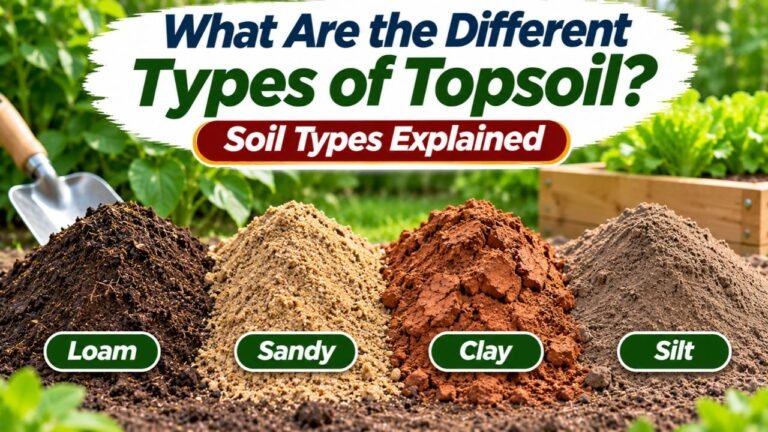
Natural mineral soil contains three main particle types:
- Sand: Larger particles that generally support drainage and airflow.
- Silt: Medium-sized particles that contribute to moisture and nutrient retention.
- Clay: Very fine particles that can retain substantial water and nutrients.
The proportions determine much of the soil’s texture.
For example, sandy soil drains relatively quickly but may require more frequent watering.
Clay-rich soil can hold water and nutrients well, but it may drain slowly and become difficult to work when wet.
Loamy soil contains a balanced combination of particle sizes and is generally desirable for many gardening applications.
2. Organic Matter
Some bagged topsoil products include organic matter such as:
- Mature compost
- Decomposed plant material
- Composted bark
- Other processed organic ingredients
Organic matter can improve soil structure, moisture retention, and biological activity.
However, the amount varies.
A product containing a large amount of organic material is not necessarily equivalent to natural mineral topsoil.
3. Compost
Manufacturers sometimes blend compost with mineral soil to create a more suitable planting material.
Compost can improve the physical characteristics of soil.
It may also contribute plant nutrients.
However, its nutrient content depends on the starting materials and composting process.
A bag labeled topsoil with compost is not guaranteed to provide all the fertilizer plants need.
4. Sand
Some topsoil products contain additional sand.
This may affect soil texture and help create a more workable blend when used appropriately.
However, adding sand does not automatically improve drainage.
A poorly designed mixture can still compact or drain inadequately.
The final soil structure matters more than the presence of any single ingredient.
5. Other Organic Materials
Some commercially packaged products contain peat moss, wood fiber, or fine bark particles.
These ingredients are common in soil amendments and soilless growing media.
However, a bag containing mostly processed organic materials may not be true mineral topsoil.
The University of Maryland Extension’s raised-bed soil guidance explains that some bagged products marketed as organic soil contain processed wood materials, compost, peat, and other organic ingredients rather than natural mineral topsoil.
This is why checking the product description and ingredients is important.
Does Every Bag Contain Real Topsoil?
No.
The word topsoil on a commercial product does not necessarily guarantee that the entire bag contains naturally developed surface soil.
Some products are blended or manufactured.
Others may contain screened soil collected from different locations.
According to Oregon State University Extension, there is no generally defined legal quality standard for commercially sold topsoil in the gardening context it discusses.
Regulations can vary by jurisdiction, and product labels should not be treated as proof of a specific soil composition.
Key Takeaway: Bagged topsoil may contain natural mineral soil, processed organic materials, or a combination of both. The ingredient list and product specifications are more informative than the product name alone.
What Is Bagged Topsoil Used For?
Bagged topsoil is useful for several outdoor projects.
Its suitability depends on the product’s texture, composition, and drainage characteristics.
The most common applications include lawn repair, minor grading, and improving in-ground planting areas.
| Application | Is Bagged Topsoil Suitable? | Important Consideration |
| Filling small lawn depressions | Yes | Use an appropriate texture and avoid burying existing grass |
| Repairing bare lawn patches | Yes | Prepare soil and apply appropriate grass seed |
| Establishing a new lawn | Yes, if suitable quality | Soil depth and preparation matter |
| Improving in-ground garden soil | Yes | Blend with existing soil and amendments as needed |
| Filling raised garden beds | Sometimes | Choose a suitable blend, not dense topsoil alone |
| Growing vegetables | Yes, if appropriate quality | Check fertility, drainage, and possible contamination |
| Filling flower beds | Yes | Match soil conditions to the plants |
| Planting in containers | Generally not alone | Use a suitable potting mix |
| Starting seeds indoors | Not recommended | Use seed-starting media |
| Mulching established plants | Not as a substitute for mulch | Topsoil and mulch serve different purposes |
Filling Low Spots in a Lawn
Small depressions can develop because of soil settling, erosion, or previous landscaping work.
Bagged topsoil can help restore the surface level.
However, use soil with a texture compatible with the existing lawn soil.
Adding heavy clay-rich topsoil over sandy ground may create an undesirable change in the soil profile.
For minor leveling, apply thin layers and work the material into the existing surface.
Avoid burying healthy grass beneath a thick layer of soil.
Repairing Bare Grass Patches
Bagged topsoil can be used when repairing areas where grass has died or failed to establish.
A suitable soil layer provides a surface for seed germination and early root growth.
However, grass seed still requires adequate moisture, suitable temperatures, and proper seed-to-soil contact.
Topsoil alone does not create a new lawn.
Improving Flower Beds
Bagged topsoil can be useful when flower beds need more soil or better planting depth.
For example, a bed containing shallow, poor-quality fill may benefit from suitable topsoil.
However, the existing soil should be assessed before adding a new layer.
If drainage is already poor, simply adding soil on top may not solve the problem.
Filling Raised Garden Beds
Bagged topsoil can serve as the mineral-soil component of a raised-bed mixture.
However, not every product is suitable for this purpose.
Dense soil may limit airflow around plant roots, particularly in enclosed or elevated beds.
Choose a suitable growing mixture based on the bed’s construction, depth, and intended crops.
Bagged Topsoil vs. Garden Soil: What Is the Difference?
Bagged topsoil and garden soil are closely related, but they are not always identical products.
Bagged topsoil generally emphasizes mineral soil or general-purpose landscaping material, while bagged garden soil is often blended or amended for planting in the ground.
However, commercial product names vary significantly.
Bagged Topsoil
Bagged topsoil is commonly used for:
- Lawn repair
- Filling shallow depressions
- Adding soil to landscaping areas
- Preparing new lawns
- Certain in-ground garden projects
Its texture can vary from sandy to clay-rich.
Some products contain compost or other organic materials.
Bagged Garden Soil
Garden soil is commonly marketed for planting flowers, vegetables, shrubs, and other plants in the ground.
Many products contain a combination of soil and organic amendments.
However, the term garden soil does not guarantee an identical recipe across brands.
Some garden soils are relatively dense and are unsuitable for containers.
Main Differences
| Feature | Bagged Topsoil | Bagged Garden Soil |
| Main purpose | Landscaping, filling, lawn repair | In-ground planting |
| Typical composition | Mineral soil or soil blend | Soil with possible amendments |
| Organic matter | Varies | Often added |
| Fertilizer | Not necessarily included | May be included |
| Drainage | Depends on product | Depends on product |
| Raised-bed suitability | Depends on texture and mixing | Depends on product and bed |
| Container suitability | Generally poor when used alone | Generally poor when used alone |
Neither name guarantees superior growing performance.
Read the actual product information before deciding.
Bagged Topsoil vs. Potting Soil
Bagged topsoil and potting soil are designed for different growing conditions.
This distinction is particularly important when planting flowers or vegetables in containers.
Bagged Topsoil
True topsoil contains mineral soil particles.
It can be relatively heavy.
When placed inside a small container, it may become compacted and restrict the movement of air and water.
This can negatively affect root health.
Potting Soil
Despite its name, many commercial potting soils are actually soilless growing mixes.
Common ingredients include:
- Peat moss
- Coconut coir
- Perlite
- Vermiculite
- Composted bark
- Compost
- Small amounts of fertilizer or lime
These materials are selected to provide a balance of water retention, drainage, and aeration inside containers.
The University of Maryland Extension’s guide to container growing media explains that ordinary garden soils can be too dense for containers and that lightweight growing media generally provide better root aeration.
Which Is Better for Containers?
For flowerpots, hanging baskets, and most container vegetables, use a potting mix designed for containers.
Do not fill a typical flowerpot entirely with dense bagged topsoil.
For large planters, suitable formulations may include some mineral soil, but the mixture should be designed for the container’s volume and drainage system.
Can Bagged Topsoil Replace Potting Mix?
Not usually.
Even high-quality topsoil may become too compact when confined in a small pot.
If a plant is already growing poorly in dense container soil, adding more topsoil may make the problem worse.
Choose a suitable potting mix rather than treating topsoil as a universal replacement.
Is Bagged Topsoil Good for Raised Garden Beds?
Bagged topsoil can be good for raised beds when it has an appropriate texture and is combined with suitable organic matter. However, filling every raised bed with plain topsoil is not always the best approach.
The correct mixture depends on the type of raised bed.
Open-Bottom Raised Beds
Open-bottom beds allow plant roots to extend into the underlying ground.
These beds can often accommodate a mineral-soil-based growing mixture.
The University of Minnesota Extension’s raised-bed guide suggests a mixture containing approximately one-half to two-thirds good-quality topsoil and the remaining portion plant-based compost for many raised beds.
This is a useful starting approach when the topsoil has a suitable loamy texture.
However, the exact proportions should be adjusted according to the soil’s existing organic matter, texture, and drainage.
Raised Beds on Concrete
Beds placed over concrete cannot drain or develop roots into the natural ground in the same way as open-bottom beds.
The growing mixture must provide sufficient root-zone aeration and drainage.
A dense bagged topsoil may be inappropriate when used alone.
Choose a mix suitable for a contained raised planter and ensure that the bed has functional drainage.
Elevated Raised Beds
Elevated planters are essentially large containers.
They generally benefit from a lighter growing mixture rather than dense natural topsoil.
Use a product specifically intended for elevated planters or container-style raised beds.
Can You Fill a Raised Bed Entirely With Bagged Topsoil?
It depends on the product and the bed.
Good-quality loam may be workable in a suitable open-bottom bed, but it may still benefit from mature compost or other appropriate amendments.
A poor-quality, dense, or clay-heavy topsoil should not be used simply because it is inexpensive.
For a closed-bottom or elevated bed, plain mineral topsoil can restrict drainage and aeration.
Key Takeaway: Bagged topsoil is a possible ingredient in raised-bed soil, not an automatically complete raised-bed mix. Match the product to the bed’s construction and the plants you intend to grow.
Is Bagged Topsoil Good for Growing Vegetables?
Yes, suitable bagged topsoil can support vegetable growth.
However, vegetable production depends on more than the presence of soil.
Plants also need adequate nutrients, water, oxygen, sunlight, and root space.
Check the Soil Texture
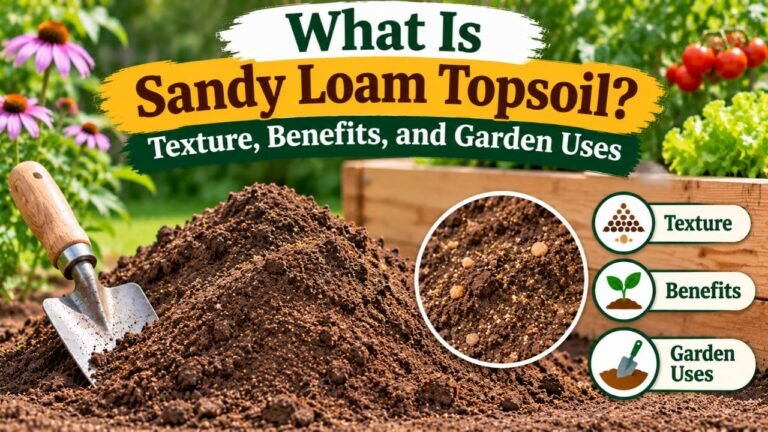
Vegetables generally grow well in loam or sandy loam.
These soils balance drainage and moisture retention.
Very clay-heavy soil may remain wet for too long.
Extremely sandy soil may dry rapidly and hold relatively few nutrients.
Inspect the soil before buying large quantities.
Check Soil Fertility
Topsoil is not necessarily fertilized.
A bag may contain mineral soil without substantial available nutrients.
For a vegetable garden, a soil test can help identify nutrient needs and pH.
Use fertilizer according to the soil test results and crop requirements.
Consider Soil Safety
When growing vegetables, consider the source of purchased soil.
Soil from contaminated sites may contain unwanted substances, including heavy metals.
Packaging does not automatically guarantee that soil has been tested for every possible contaminant.
For large purchases or products with uncertain origins, ask the supplier about source materials and available testing.
This is particularly important for food gardens and properties with a history of industrial use or contamination.
Can You Plant Seeds Directly in Bagged Topsoil?
Sometimes.
A clean, fine-textured topsoil may provide a suitable seedbed for outdoor planting.
However, coarse pieces, compaction, and poor drainage can interfere with germination.
For indoor seed starting, use a designated seed-starting mix.
For outdoor vegetables, ensure that the soil is suitable for the particular crop and planting conditions.
How to Tell if Bagged Topsoil Is Good Quality
The word topsoil does not guarantee a high-quality product.
You should evaluate its texture, appearance, odor, ingredients, and intended use.
Look for a Crumbly Texture
Good-quality loamy topsoil generally breaks apart relatively easily when handled at an appropriate moisture level.
It should not consist entirely of hard clay clods.
However, very dry soil may also crumble even when its composition is poor.
Use texture alongside other quality checks.
Check for Excessive Sand or Clay
A soil that feels extremely gritty may contain a high proportion of sand.
A soil that becomes sticky and forms dense clumps when wet may be clay-rich.
Neither condition automatically makes the product unusable, but it may not be the best choice for every garden.
Examine the Organic Materials
Small amounts of well-decomposed organic material can improve soil structure.
However, a bag containing mostly large wood pieces may not be appropriate when you need mineral topsoil.
Some organic products are intentionally designed around wood fiber or bark, so check what the manufacturer claims the product is intended to do.
Check for Unpleasant Odors
Quality topsoil typically has an earthy smell.
Strong sewage-like, chemical, or rotten odors are warning signs.
Do not use suspicious material in a food garden.
Contact the manufacturer or supplier if the product appears contaminated.
Look for Foreign Objects
Inspect for:
- Plastic pieces
- Broken glass
- Sharp metal
- Construction debris
- Excessive rocks
- Other unexpected waste
A few small stones may be normal in natural soil.
However, substantial debris may indicate poor screening or handling.
Do Not Judge Quality by Color Alone
Dark soil may contain organic matter, but dark color does not automatically mean the soil is fertile.
Some mineral soils are naturally dark.
Other products may look dark because they contain processed organic materials.
A soil test provides more useful information about fertility and pH.
Bagged Topsoil Quality Checklist
| Quality Factor | Desirable Sign | Potential Concern |
| Texture | Loose, workable, crumbly | Hard clods or extreme grit |
| Odor | Natural, earthy smell | Chemical or rotten smell |
| Debris | Minimal unwanted material | Glass, plastic, construction waste |
| Composition | Suitable mineral soil or specified blend | Unclear ingredients |
| Moisture | Manageable, not waterlogged | Saturated or severely compacted |
| Source | Clear manufacturer information | Unknown origin |
| Label | Volume and intended use stated | Vague or misleading description |
What Does Screened Bagged Topsoil Mean?
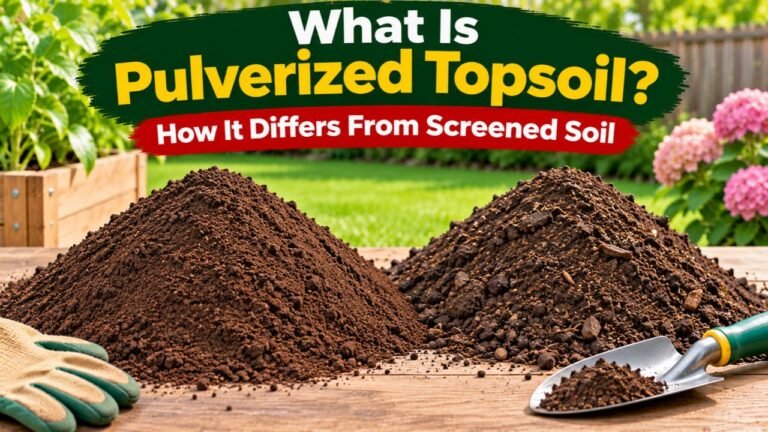
Screened topsoil has passed through a screening process that removes some larger materials.
Depending on the screen size, this may reduce:
- Large stones
- Roots
- Sticks
- Soil clods
- Other oversized debris
Screening can create a finer, more uniform product.
However, screening does not automatically improve soil fertility or eliminate every contaminant.
Is Screened Topsoil Better?
It is often more convenient for lawn repair and planting preparation because it spreads more evenly.
A finer product can be useful when establishing a seedbed.
However, the soil’s composition still matters.
Screened clay-heavy soil may remain clay-heavy.
Screened soil with poor fertility does not become nutrient-rich simply because debris has been removed.
Is All Bagged Topsoil Screened?
No.
Some products are screened, while others contain a range of particle and organic-material sizes.
Check the packaging or manufacturer specifications.
If the product does not state that it is screened, do not assume a particular particle size.
How to Use Bagged Topsoil for Lawn Repair
Bagged topsoil is commonly used for patching bare lawn areas and minor surface leveling.
The application method depends on the condition of the existing grass and soil.
Step 1: Identify the Problem
Determine why the area needs additional soil.
Possible reasons include:
- Shallow depressions
- Soil settlement
- Erosion
- Bare patches
- Previous construction work
- Uneven ground
If the problem involves standing water, compacted subsoil, or a drainage failure, adding topsoil alone may not solve it.
Step 2: Prepare the Area
Remove debris, weeds, and loose material.
For bare patches, loosen the existing soil surface where appropriate.
Avoid working soil when it is excessively wet because this can cause compaction.
Step 3: Apply the Topsoil
Spread a suitable amount of topsoil.
For minor leveling over living grass, work in thin layers rather than burying the turf.
For bare patches, create a smooth seedbed that matches the surrounding lawn grade.
Avoid leaving abrupt mounds or depressions.
Step 4: Rake the Surface
Use a garden or lawn rake to distribute the material.
Blend the new soil into the existing surface where appropriate.
For an established lawn, keep the grass blades exposed.
Step 5: Seed if Necessary
If the area is bare, apply suitable grass seed according to its recommended planting rate and season.
Ensure good seed-to-soil contact.
Do not bury the seed deeper than recommended for its species.
Step 6: Maintain Moisture
Keep the seed zone appropriately moist during germination.
Once the grass establishes, transition to the irrigation schedule suitable for the species and local climate.
Avoid keeping the soil continuously saturated.
How to Use Bagged Topsoil in a Garden Bed
Adding topsoil to an existing garden requires more than opening the bags and spreading the contents.
The goal is to create a suitable growing environment.
Step 1: Evaluate the Existing Soil
Inspect the current soil for:
- Drainage
- Texture
- Compaction
- Organic matter
- Rooting depth
- Possible contamination
A soil test is helpful if the garden has persistent nutrient or pH problems.
Step 2: Choose a Compatible Product
Select topsoil with a texture appropriate for the existing soil.
Avoid introducing a dramatically different soil layer without considering drainage and root development.
Step 3: Add the Required Amount
Spread the soil evenly.
For an in-ground garden, incorporate it into the existing soil where appropriate.
Avoid leaving a sharply contrasting layer over compacted subsoil that restricts root growth.
Step 4: Add Compost if Needed
Mature compost can improve many garden soils.
However, the amount should reflect the existing organic matter and soil properties.
Do not assume that every bagged topsoil product needs the same compost ratio.
Step 5: Check Drainage and Fertility
Water the soil and observe whether it drains appropriately.
If the soil remains saturated for long periods, investigate the drainage problem.
Follow soil test recommendations for any needed fertilizer or pH adjustment.
Step 6: Plant and Mulch
Plant suitable vegetables or flowers at their recommended spacing.
Apply mulch where appropriate to reduce evaporation and weed growth.
Keep mulch away from stems and plant crowns when necessary.
How Many Bags of Topsoil Do You Need?
Bagged topsoil is commonly sold by volume or weight.
For calculating coverage, cubic feet are usually more useful than pounds.
The required amount depends on the area’s length, width, and desired soil depth.
Topsoil Calculation Formula
For a rectangular area measured in feet:
[
\text{Cubic Feet}=\text{Length}\times\text{Width}\times\text{Depth in Feet}
]
If the depth is measured in inches:
[
\text{Cubic Feet}=\frac{\text{Length}\times\text{Width}\times\text{Depth in Inches}}{12}
]
Then:
[
\text{Bags Needed}=\frac{\text{Total Cubic Feet}}{\text{Volume Per Bag}}
]
Round up to the next whole bag.
Example: Topsoil for a 4 × 8-Foot Area
Suppose you want to add 2 inches of topsoil over a 4 × 8-foot area.
First, calculate the volume:
[
\frac{4\times8\times2}{12}=5.33\text{ cubic feet}
]
You need approximately 5.33 cubic feet of soil.
The bag count depends on the bag size.
| Bag Volume | Approximate Bags Required |
| 0.75 cubic feet | 8 bags |
| 1 cubic foot | 6 bags |
| 1.5 cubic feet | 4 bags |
| 2 cubic feet | 3 bags |
These figures do not include an allowance for settlement, spillage, or uneven ground.
A small additional allowance may be useful for some projects.
Example: Filling a 4 × 8 Raised Bed
Suppose the bed is 12 inches deep.
Its volume is:
[
4\times8\times1=32\text{ cubic feet}
]
This equals approximately 1.19 cubic yards.
If you used 1-cubic-foot bags to fill the entire volume, you would need approximately 32 bags.
However, that does not mean you should fill the entire raised bed with plain bagged topsoil.
A suitable raised-bed mixture may include compost and other ingredients.
Calculate the required quantity of each component separately.
Bag Count by Common Project Size
| Project | Soil Depth | Required Volume |
| 4 × 4 ft area | 2 inches | 2.67 cubic feet |
| 4 × 8 ft area | 2 inches | 5.33 cubic feet |
| 4 × 8 ft area | 4 inches | 10.67 cubic feet |
| 4 × 8 ft bed | 12 inches | 32 cubic feet |
| 100 sq ft lawn patch | ¼ inch | 2.08 cubic feet |
| 100 sq ft bare area | 1 inch | 8.33 cubic feet |
For large projects, bulk topsoil may be more economical and practical than purchasing dozens of bags.
How Much Does a Bag of Topsoil Weigh?
Bag weight varies with the volume, soil composition, and moisture content.
A dense mineral-soil product can weigh much more than a lightweight organic blend of the same volume.
Some topsoil products are sold in bags labeled 40 pounds.
Others are labeled by cubic volume, such as 0.75 or 1 cubic foot.
Is a 40-Pound Bag Equal to 1 Cubic Foot?
Not necessarily.
Weight and volume are different measurements.
The volume occupied by 40 pounds of soil depends on its bulk density.
Wet, dense mineral soil weighs more per cubic foot than a lightweight, dry organic blend.
Therefore, do not assume every 40-pound bag contains exactly 1 cubic foot.
Check the manufacturer’s stated volume when calculating project coverage.
Why Does Bag Weight Matter?
Weight affects:
- Transportation
- Lifting
- Storage
- Delivery arrangements
- Handling costs
- The number of bags that can be transported safely
Use appropriate lifting techniques.
For large quantities, consider delivery rather than repeatedly moving heavy bags.
Bagged Topsoil vs. Bulk Topsoil: Which Should You Buy?
Both products can be useful, but the more practical choice depends on the size of the project.
Advantages of Bagged Topsoil
Bagged products are convenient for small jobs.
Potential benefits include:
- Easy purchase in small quantities
- Less need for delivery equipment
- Convenient storage
- Clear product identification
- Easier handling of separate small projects
- Less leftover material
Bagged topsoil is often practical for repairing a lawn patch or adding a modest amount of soil to a planting area.
Advantages of Bulk Topsoil
Bulk topsoil is commonly sold by the cubic yard.
It may be more economical for large projects.
For example, filling several raised beds could require a substantial number of bags.
A bulk delivery may reduce packaging and the amount of manual handling required.
However, inspect the material and investigate the supplier before purchasing.
Comparison Table
| Factor | Bagged Topsoil | Bulk Topsoil |
| Best project size | Small to moderate | Moderate to large |
| Packaging | Individual bags | Loose material |
| Quantity | Usually sold per bag | Usually sold per cubic yard |
| Transport | Can often be carried home | May require delivery |
| Storage | Easier in unopened bags | Requires suitable covered area |
| Cost per cubic foot | Often higher | Often lower |
| Quality | Varies by product | Varies by supplier |
| Waste | More packaging | Less packaging |
For a small lawn repair, bagged topsoil is often convenient.
For a large raised-bed project, compare the total cost of bags against a bulk delivery.
Remember that neither form guarantees better soil quality.
Is Bagged Topsoil Better Than Natural Garden Soil?
Not automatically.
Healthy existing garden soil may already contain suitable mineral particles, organic matter, nutrients, and microbial activity.
Adding purchased topsoil does not necessarily improve it.
When Bagged Topsoil Can Help
Bagged topsoil may be useful when:
- The existing soil level is too low.
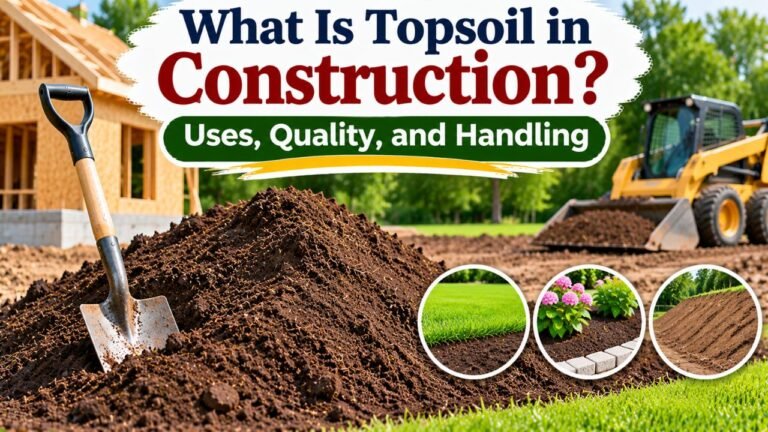
- Construction removed the original surface soil.
- A bare lawn area needs additional material.
- An in-ground bed needs more usable soil.
- A suitable raised-bed mixture requires mineral soil.
When Existing Soil May Be Better
If your garden soil already drains well, supports healthy plant growth, and has adequate fertility, adding more topsoil may be unnecessary.
In many cases, maintaining organic matter and minimizing compaction are more useful than importing additional soil.
Can Bagged Topsoil Fix Clay Soil?
Sometimes, but simply covering clay soil with a thin layer of topsoil does not necessarily improve drainage or eliminate compaction.
You may create a distinct boundary between two soil textures.
Roots can struggle if the underlying layer remains compacted or poorly aerated.
Consider soil testing, suitable organic amendments, and improved drainage rather than relying entirely on a topsoil layer.
Can Bagged Topsoil Improve Sandy Soil?
A suitable loam-based product may improve certain sandy growing areas.
However, the results depend on how the new soil is incorporated and the amount applied.
Organic matter management is often important for improving moisture and nutrient retention in sandy soils.
Avoid assuming that a small amount of topsoil will permanently transform a large sandy garden.
Does Bagged Topsoil Have Fertilizer in It?
Not always.
Some bagged products contain fertilizer or nutrient-rich amendments.
Others contain primarily mineral soil.
Read the product label to determine whether nutrients have been added.
Is Topsoil Naturally Fertile?
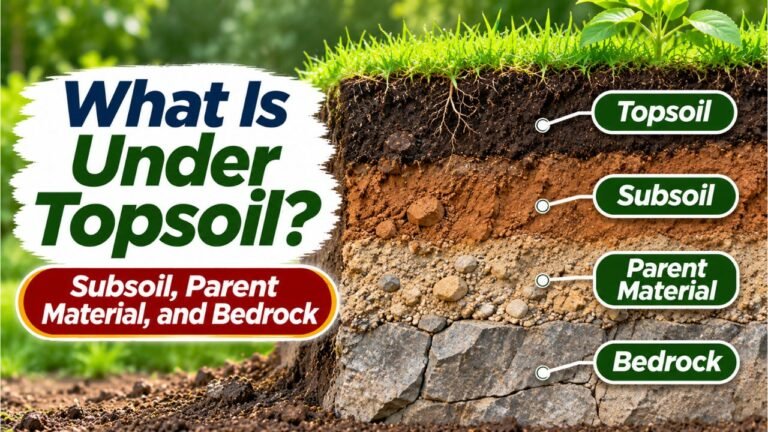
Natural topsoil often contains more organic matter and biological activity than deeper subsoil.
However, its actual nutrient availability varies.
A dark color does not prove that the soil contains sufficient nitrogen, phosphorus, potassium, or other nutrients.
A soil test provides more dependable information.
Should You Add Fertilizer to Bagged Topsoil?
Only as needed.
If the soil is being used for vegetables, flowers, or lawns, select fertilizer based on the plants and soil test results.
Avoid adding large amounts of fertilizer without knowing what is already present.
Excess nutrients can damage plants and contribute to runoff.
Common Problems With Low-Quality Bagged Topsoil
Not every bagged topsoil product performs well in every setting.
Understanding possible problems can help you avoid purchasing unsuitable material.
Excessive Compaction
Dense soil can become difficult for roots to penetrate.
It may also restrict water infiltration and air movement.
Avoid using heavy, clay-rich topsoil alone in small containers or elevated planters.
Poor Drainage
A product with too many fine particles may remain saturated after watering.
If excess water cannot drain, roots may lack oxygen.
Choose a suitable growing mixture and ensure the planting area has adequate drainage.
Excessive Sand
Very sandy soil can lose moisture rapidly.
It may also provide limited nutrient retention.
A balanced loamy texture is generally more useful for many garden plants.
Undecomposed Wood Material
Large amounts of fresh or insufficiently decomposed woody material may affect nitrogen availability as microorganisms break it down.
Some processed organic materials are suitable for particular soil products, but composition matters.
Check whether the product is intended for soil amendment, raised beds, or general landscaping.
Weed Seeds
Bagged topsoil is not necessarily sterile.
Some products may contain viable weed seeds.
Screening removes some physical debris but does not guarantee that all seeds, pests, or disease organisms are absent.
Unknown Contaminants
Topsoil from an uncertain source may contain unwanted chemicals or heavy metals.
For a food garden, ask about the source and available testing.
If there is reason to suspect contamination, use an appropriate laboratory test before planting edible crops.
How to Store Unused Bagged Topsoil
Proper storage can help prevent unnecessary deterioration and contamination.
Keep Unopened Bags in a Suitable Location
Store bags away from areas where they may be damaged by vehicles, tools, or sharp objects.
Keep them on a stable surface.
Protect them from excessive standing water.
Cover Opened Bags
If you have leftover soil, cover it to reduce contamination and prevent unwanted weed growth.
A clean, suitable container may be more convenient for storing partially used material.
Avoid storing wet soil in a sealed, poorly ventilated condition for prolonged periods.
Check the Soil Before Reusing It
Inspect stored soil for:
- Unpleasant odors
- Visible contamination
- Large weed growth
- Excessive clumping
- Unusual moisture conditions
Break up ordinary clumps when appropriate.
Do not use material that appears contaminated.
Does Bagged Topsoil Expire?
Mineral soil does not have an expiration date in the same way as food.
However, a bagged product may change during storage.
Added fertilizer can have manufacturer-specific shelf-life guidance, and organic components can continue decomposing.
Check the product’s storage instructions.
For ordinary mineral topsoil, the main concerns are contamination, excessive moisture, and changes in physical condition.
How to Choose the Right Bagged Topsoil for Your Project
The best product depends on what you are trying to accomplish.
Do not select soil solely because it is labeled premium or organic.
For Lawn Patches
Look for a workable, appropriately screened soil with a texture compatible with the existing lawn.
Avoid excessive stones or large wood pieces.
Check whether the product is intended for lawn repair or seeding.
For In-Ground Vegetable Gardens
Choose a suitable loamy topsoil with a known source.
Consider compost, soil testing, and crop nutrient requirements.
For larger edible gardening projects, ask about available contaminant testing.
For Open-Bottom Raised Beds
Use suitable topsoil as part of an appropriately balanced raised-bed mixture.
Ensure that the combined growing media provides adequate drainage, moisture retention, and root aeration.
For Elevated Planters
Use a lighter mix designed for containers or elevated garden beds.
Dense bagged topsoil alone is generally a poor choice.
For Flower Beds
Match the product to the flowers’ needs and the existing soil.
For example, some flowering plants prefer relatively lean, well-drained soil, while others benefit from more organic matter.
Choose based on the plants rather than using one mixture for every landscape situation.
Bagged Topsoil Buying Checklist
Before purchasing, confirm:
- The intended application
- Whether the product contains mineral soil
- Listed ingredients or amendments
- Bag volume
- Drainage and texture characteristics
- Manufacturer or supplier information
- Whether fertilizer is included
- Any available testing information
- The quantity required for the project
A suitable product should match the actual growing conditions.
Conclusion
Understanding what bagged topsoil is helps you choose the right soil for gardening, lawn repair, and landscaping.
Bagged topsoil is a packaged mineral soil or commercial soil blend. Its ingredients may include sand, silt, clay, compost, and other organic materials.
It is commonly used to repair bare lawn areas, fill small depressions, establish new planting areas, and supply mineral soil for suitable garden mixtures.
However, not every bag contains naturally developed topsoil, and product quality varies significantly.
Bagged topsoil is also different from potting mix. It may be too dense for flowerpots, seed-starting trays, and some elevated raised beds.
For outdoor gardening, I recommend choosing a loamy, workable product with a clear description of its ingredients and intended use. For raised vegetable beds, combine suitable topsoil with appropriate organic matter and consider soil testing when needed.
Before buying, calculate the required volume in cubic feet and compare bagged and bulk options for larger projects.
The most important rule is to choose bagged topsoil based on its actual composition, drainage, and intended purpose—not simply the name printed on the bag.
FAQs About Bagged Topsoil
What Is the Difference Between Bagged Topsoil and Regular Topsoil?
Bagged topsoil is topsoil or a soil blend packaged for retail sale. Regular topsoil refers to the upper mineral-soil layer found naturally in the ground. Commercial bagged products may contain screened soil, compost, or other ingredients, so they are not always identical to undisturbed natural topsoil.
Can You Plant Directly Into Bagged Topsoil?
Yes, if the product provides suitable texture, drainage, fertility, and rooting conditions. However, some bagged topsoil is better suited to lawn repair or landscaping than growing vegetables. For raised beds, combining suitable mineral soil with mature compost or using a purpose-made raised-bed mix may provide better results.
Is Bagged Topsoil Good for Grass Seed?
Yes. Suitable bagged topsoil can help prepare bare lawn areas for grass seed. It should have a fine, workable texture that supports good seed-to-soil contact. Avoid burying existing healthy grass beneath thick layers of soil, and follow the recommended planting depth for the grass seed.
Can You Use Bagged Topsoil in a Raised Garden Bed?
Yes, but it depends on the product and bed design. Good-quality loamy topsoil can be part of an open-bottom raised-bed mixture when combined with suitable organic matter. For elevated or closed-bottom planters, a lighter growing mix is generally preferable to dense mineral topsoil alone.
How Many Bags of Topsoil Do I Need for a 4 × 8 Raised Bed?
A 4 × 8-foot raised bed that is 12 inches deep holds approximately 32 cubic feet of material. That equals 32 bags if each contains 1 cubic foot. However, a complete raised-bed mix may contain compost and other ingredients, so calculate the topsoil portion separately.
Is Bagged Topsoil the Same as Potting Soil?
No. Bagged topsoil usually contains mineral soil or a soil-based blend. Commercial potting soil is often a lightweight soilless mixture containing ingredients such as peat moss, coconut coir, perlite, and composted bark. Potting mix is generally more suitable for containers because it provides better aeration and drainage.
Does Bagged Topsoil Contain Nutrients?
Some bagged topsoil contains plant nutrients, but the amounts vary considerably. Certain products include compost or fertilizer, while others contain mostly mineral soil. Soil color alone does not indicate fertility. A soil test can help determine whether fertilizer or other amendments are needed.

I’m Maya L. Greenwood, a lifelong plant lover who believes anyone can grow something beautiful with the right guidance. After years of testing soil mixes, pruning methods, irrigation tricks, and pest-safe solutions, I started EasyGardenTips.com to turn hard-won lessons into step-by-step advice. From seed starting and container gardens to composting and seasonal checklists, my goal is to make gardening simple, sustainable, and fun.