What Is Topsoil in Construction? Uses, Quality, and Handling
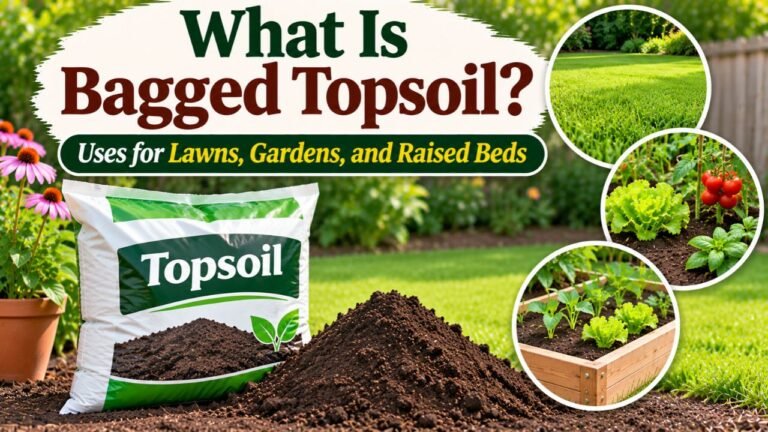
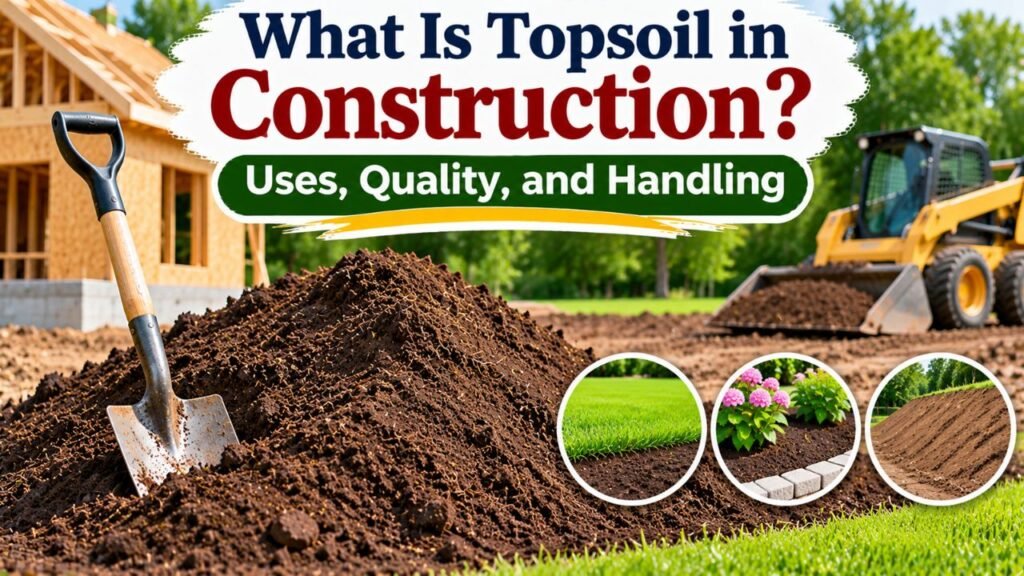
Topsoil in construction is the upper layer of soil that contractors remove, preserve, and later use to support grass, trees, shrubs, and other landscaping plants. It typically contains more organic matter and biological activity than the underlying subsoil. On construction sites, topsoil is usually stripped before major excavation or grading and reapplied during final landscape preparation.
Unlike structural fill, topsoil is not normally used beneath foundations, roads, or concrete slabs. Its organic content, variable composition, and moisture sensitivity make it unsuitable for most structural support applications.
Topsoil is an important construction resource because it helps establish vegetation, supports root development, and improves water infiltration. However, not every surface soil is suitable for reuse. Contractors may need to screen, test, amend, or replace it according to the project’s specifications.
The U.S. Environmental Protection Agency (EPA) recommends preserving suitable native topsoil where practical because it supports vegetation establishment and reduces erosion.
In this article, I explain what topsoil means in construction, how it differs from subsoil and structural fill, and where contractors use it. You’ll also learn how topsoil is stripped, stockpiled, tested, and replaced, what placement depths are commonly specified, and how to calculate the amount needed for landscaping work.
What Is Topsoil in Construction and Why Is It Important?
In construction terminology, topsoil refers to the surface soil layer suitable for supporting vegetation and landscape establishment.
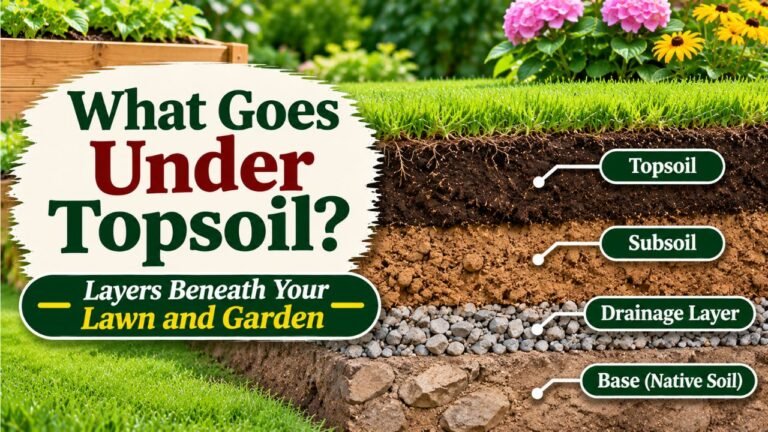
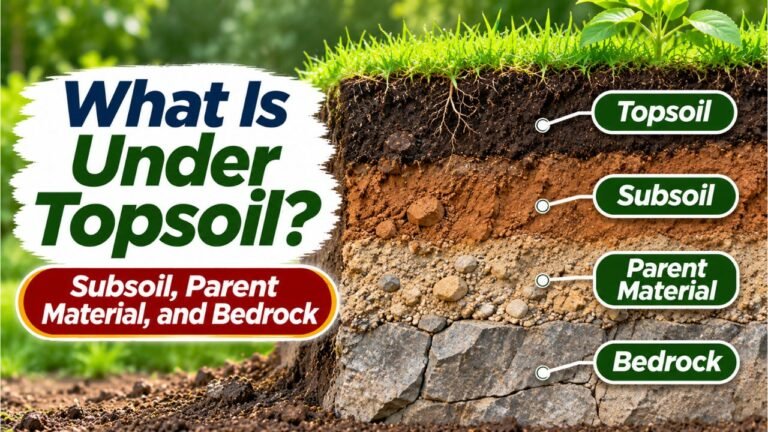
Naturally occurring topsoil generally corresponds to the A horizon of the soil profile.
According to the USDA Natural Resources Conservation Service, the A horizon is usually the surface mineral-soil layer and commonly contains organic matter, plant roots, and substantial biological activity.
Its composition includes:
- Sand, silt, and clay
- Decomposed organic matter
- Soil microorganisms
- Plant nutrients
- Water and air spaces
- Small roots and other biological materials
The proportions vary considerably by location.
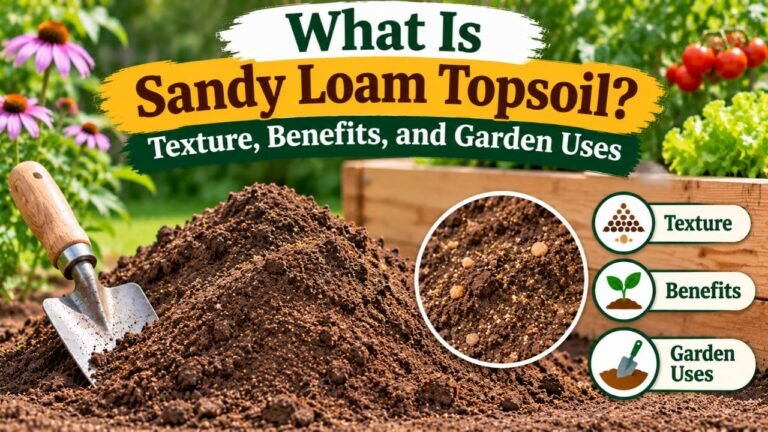
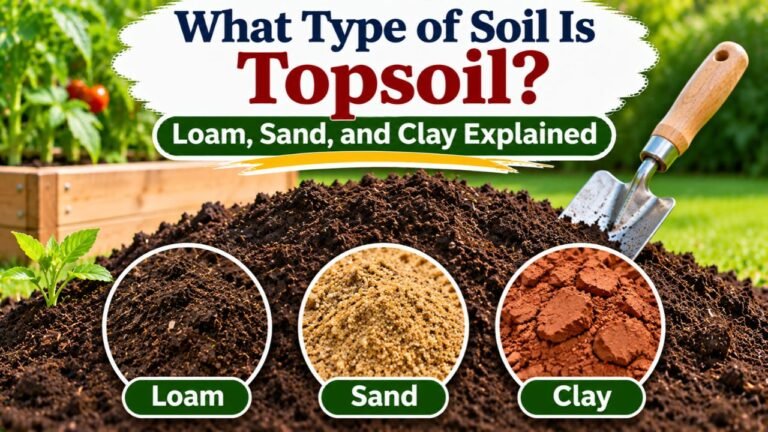
Some topsoils are sandy, while others contain more silt or clay.
A dark color can indicate organic matter, but color alone does not prove that soil is suitable for landscaping.
Why Construction Projects Need Topsoil
Construction work frequently disturbs the natural soil profile.
Excavation equipment, trucks, grading machinery, and material storage can remove or compact the original surface soil.
If disturbed land is left without suitable growing soil, grass and other vegetation may struggle to establish.
Preserving and replacing appropriate topsoil helps restore a productive surface.
Topsoil is commonly used for:
- Lawn establishment
- Roadside revegetation
- Landscape restoration
- Planting areas
- Erosion-control vegetation
- Parks and recreational landscapes
- Construction-site rehabilitation
The Federal Highway Administration’s roadside revegetation guidance describes topsoiling as the salvage, storage, and application of suitable soil to support vegetation and improve infiltration.
Key Takeaway: In construction, topsoil is primarily a landscaping and revegetation material, not a foundation-support material.
What Is the Difference Between Topsoil, Subsoil, and Fill Dirt?
Topsoil, subsoil, and structural fill are often confused because all may look like ordinary earth.
However, they perform different functions.
Topsoil
Topsoil is the upper soil layer containing relatively high biological activity and often more organic matter.
It provides a growing environment for plants.
During construction, it is commonly removed before excavation and returned to landscaped areas after structural earthwork is complete.
Subsoil
Subsoil lies beneath the upper surface horizons.
It generally contains less organic matter and may be denser or have a different texture.
Some subsoils can serve as engineered earthwork materials when their properties meet the relevant requirements.
However, subsoil is not automatically suitable as structural fill.
Its suitability depends on testing and engineering specifications.
Fill Dirt and Structural Fill
Fill dirt is a broad commercial term for earth material used to fill depressions, change elevations, or build up a site.
Structural fill is more specific.
It must meet engineering requirements for material quality, placement, moisture conditioning, and compaction.
Structural fill may contain approved sand, gravel, or suitable natural soil.
It is designed to provide a stable foundation for a structure or engineered surface.
Topsoil vs. Subsoil vs. Structural Fill
| Feature | Topsoil | Subsoil | Structural fill |
| Primary role | Plant growth | Natural underlying soil | Engineered support |
| Typical location | Near the ground surface | Beneath surface horizons | Placed in designed earthwork |
| Organic matter | Often relatively high | Generally lower | Usually restricted |
| Plant nutrients | Often more biologically active | Variable | Not the primary concern |
| Compaction requirements | Avoid harmful overcompaction | Depends on use | Controlled by specifications |
| Foundation support | Generally unsuitable | May be suitable after evaluation | Designed and tested for support |
| Common construction use | Final landscaping | Excavation and possible earthwork | Foundations, roads, pads, embankments |
| Material evaluation | Plant-growth suitability | Geotechnical properties | Engineering specifications |
The Federal Highway Administration’s embankment guidelines identify highly organic soils among materials generally unsuitable for engineered embankment fill.
Is Topsoil the Same as Loam?
No.
Topsoil describes a soil layer or its intended landscape use.
Loam describes a soil texture with a particular balance of sand, silt, and clay.
Topsoil may be loamy, sandy, silty, or clayey.
Similarly, a soil sold as screened loam is not automatically equivalent to natural topsoil or guaranteed to meet a construction specification.
Why Is Topsoil Removed Before Construction?
Topsoil is commonly removed before earthwork because it is not usually a suitable foundation for structural loads.
Its organic matter, roots, variable density, and moisture sensitivity can create problems when buried beneath engineered construction.
1. To Prepare Stable Ground
Foundations and paved surfaces need suitable supporting material.
Organic-rich topsoil can compress or change volume over time.
This may contribute to settlement if it is left beneath structural fill or foundations.
The Federal Highway Administration’s geotechnical guidance explains that removing organic surface soils is important because they can be compressible and lose strength when wet.
2. To Protect Valuable Growing Soil
Removing topsoil separately allows suitable material to be preserved for later landscaping.
If topsoil is mixed with deep excavation material, debris, or unsuitable fill, it can lose its usefulness.
Separating it at the beginning of the project helps avoid unnecessary replacement costs.
3. To Allow Proper Excavation and Grading
Earthwork often requires changing the site’s elevation or creating stable surfaces.
Removing topsoil allows contractors to expose and evaluate the underlying material.
They can then perform excavation, backfilling, grading, and compaction according to the engineering plans.
4. To Support Final Landscape Restoration
Preserved topsoil can be reused after the main construction activities are complete.
This helps establish lawns and other vegetation around buildings, roads, and landscaped areas.
Important: Contractors do not necessarily remove every inch of topsoil across an entire property. Stripping limits should follow the site plans, specifications, environmental requirements, and areas that actually need disturbance.
How Deep Is Topsoil on a Construction Site?
There is no universal natural topsoil thickness.
The actual depth varies according to soil formation, land use, erosion, deposition, and previous disturbance.
Natural topsoil may be only a few inches deep in one location and substantially deeper in another.
For construction, it is important to distinguish two different measurements:
- Stripping depth: How much existing topsoil is removed before earthwork.
- Replacement depth: How much topsoil is placed back during landscaping.
These measurements do not have to be identical.
Typical Topsoil Depths
| Application | General depth guidance |
| Natural topsoil before stripping | Site-specific; determined by soil profile |
| Lawn establishment | Often 4–6 inches of suitable finished topsoil |
| General planting areas | May require greater depth depending on the plants |
| Roadside landscaping | As specified in project plans |
| Construction-site soil restoration | Based on soil condition and restoration specifications |
| Structural fill beneath pavement | Topsoil is generally excluded |
The Penn State Extension’s lawn-establishment guide recommends approximately 4–6 inches of quality topsoil at its finished, settled depth for good turf establishment.
However, this is not a universal requirement for every construction project.
How Do Contractors Determine Stripping Depth?
The contractor or project team may evaluate:
- Soil profile observations
- Geotechnical or landscape reports
- Organic-rich horizon depth
- Existing vegetation
- Project specifications
- Local soil conditions
The Minnesota Stormwater Manual recommends identifying the actual topsoil depth before stripping because it varies across the landscape.
Removing too deeply can mix lower-quality subsoil with valuable surface material.
How Is Topsoil Handled During Construction?
Topsoil management normally follows a sequence of stripping, storage, protection, and replacement.
Step 1: Survey and Identify Topsoil
Before earthwork begins, identify the areas where topsoil will be disturbed.
Determine which surface soils are suitable for reuse.
Check the site plans for stripping limits and designated stockpile areas.
Where contamination is suspected, appropriate environmental evaluation may be necessary before soil is reused.
Step 2: Strip the Topsoil
Contractors typically use suitable earthmoving equipment to remove the designated topsoil layer.
The goal is to separate the soil without unnecessary mixing with subsoil.
Equipment may include:
- Excavators
- Bulldozers
- Wheel loaders
- Skid steers
- Scrapers
The choice depends on the site size, soil condition, and project requirements.
Avoid stripping excessively wet soil when practical because handling wet soil can damage its structure.
Step 3: Stockpile Topsoil Separately
Place suitable topsoil in a designated storage area.
Keep it separate from:
- Structural fill
- Excavated subsoil
- Concrete waste
- Asphalt debris
- Construction rubbish
- Potentially contaminated material
Separating soil types helps preserve quality.
Step 4: Protect the Stockpile
Topsoil stockpiles are vulnerable to erosion, runoff, compaction, and contamination.
Use the erosion-control measures required by the site’s stormwater management plan.
The Minnesota Stormwater Manual recommends relatively shallow stockpiles, generally less than 6 feet tall, to help preserve soil biological activity.
It also recommends minimizing storage time and using suitable breathable protection or vegetation where appropriate.
These are soil-health recommendations; specific site requirements may differ.
Step 5: Complete Structural Earthwork
After stripping, contractors can proceed with:
- Excavation
- Foundation preparation
- Utility installation
- Engineered backfilling
- Compaction
- Rough grading
- Pavement or building construction
Topsoil should remain separate from structural fill unless the project engineer specifically approves a different use.
Step 6: Prepare the Landscaping Subgrade
Before replacing topsoil, inspect the underlying soil.
Heavy construction equipment may have compacted it.
Compacted subsoil can limit plant rooting and water infiltration.
Where permitted by the project specifications, loosen appropriate landscape areas before spreading topsoil.
Avoid disturbing buried utilities or engineered structures.
Step 7: Replace and Grade the Topsoil
Spread approved topsoil evenly over the designated landscape areas.
Follow the required finished depth.
Avoid excessive mechanical compaction.
Fine grading should create the intended surface elevations while leaving suitable conditions for vegetation growth.
Step 8: Establish Vegetation
Once the soil is prepared, install the specified grass seed, sod, plants, or other vegetation.
Protect exposed soil from erosion until the vegetation becomes established.
The EPA’s construction stormwater guidance explains that soil stabilization and sediment controls are important for preventing construction-site runoff pollution.
What Makes Good Construction Topsoil?
Topsoil quality depends on its physical, chemical, and biological properties.
A material that looks dark and fertile is not necessarily suitable for every project.
Important Topsoil Quality Factors
| Property | Why it matters |
| Soil texture | Influences drainage and moisture retention |
| Organic matter | Supports soil structure and biological activity |
| pH | Affects nutrient availability |
| Nutrient content | Influences plant establishment |
| Drainage | Helps prevent waterlogging |
| Soil structure | Affects root growth and infiltration |
| Soluble salts | Excessive levels may injure plants |
| Debris content | Rocks, construction waste, and foreign material may be unacceptable |
| Weed contamination | Can complicate landscape establishment |
| Chemical contamination | May make soil unsuitable or unsafe for the intended use |
What Is ASTM D5268?
ASTM D5268-23 is the active standard specification titled Standard Specification for Topsoil Used for Landscaping and Construction Purposes.
It covers the evaluation of topsoil intended for vegetative growth.
The standard addresses physical and related soil properties, including organic matter, texture, and objectionable material.
However, it does not independently establish the nutrient requirements for every landscape planting.
The project specification must identify which tests and acceptance limits apply.
See ASTM D5268-23.
Does Construction Topsoil Need Testing?
Testing depends on the project requirements and the source material.
Common evaluations may include:
- Particle-size distribution
- Organic matter content
- Soil pH
- Soluble salts
- Nutrient levels
- Deleterious materials
- Potential contaminants, where warranted
Some projects require laboratory approval before imported topsoil is delivered.
Do not assume every construction site follows identical soil-quality limits.
Is Screened Topsoil Better?
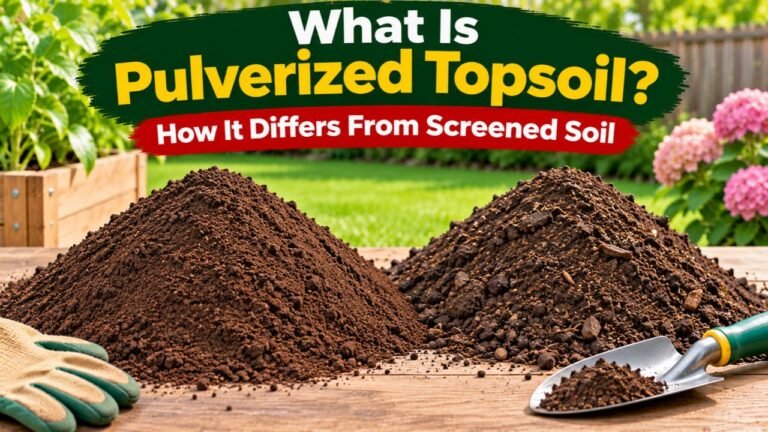
Screening removes larger particles and debris from soil.
This can make it easier to spread and fine-grade.
However, screening does not automatically improve:
- Nutrient levels
- pH
- Organic matter quality
- Drainage characteristics
- Chemical safety
A screened material still needs to be suitable for the intended landscaping application.
Can Topsoil Be Used as Fill Dirt or Under Concrete?
Topsoil should generally not be used as structural fill beneath foundations, concrete slabs, pavement, or other load-bearing construction.
Its organic material and variable properties may lead to settlement and moisture-related performance problems.
Why Topsoil Is Unsuitable for Structural Fill
Potential problems include:
- Compression under loads
- Organic matter decomposition
- Variable moisture retention
- Inconsistent compaction behavior
- Settlement
- Reduced stability when saturated
The EPA’s construction-site soil management guidance specifically distinguishes organic-rich topsoil from suitable materials used beneath pavement.
Can Topsoil Be Used for Final Grading?
Yes, in landscaped areas.
Topsoil is commonly placed during finish grading to establish the intended surface and prepare for planting.
However, it should not replace the engineered materials required to create stable building pads, pavement foundations, or structural slopes.
Can Topsoil Be Used Behind a Retaining Wall?
Not as a substitute for specified structural backfill.
Retaining walls often require carefully selected drainage and backfill materials.
Using unsuitable topsoil in the structural backfill zone can affect drainage and stability.
Follow the retaining-wall design and geotechnical recommendations.
Topsoil may be appropriate in designated planting areas above or adjacent to the engineered backfill.
How Much Topsoil Is Needed for a Construction Project?
Topsoil is commonly measured and purchased in cubic yards in the United States.
The amount required depends on the area and specified placement depth.
Topsoil Calculation Formula
Cubic yards = Area (sq. ft.) × Depth (inches) ÷ 324
For example, suppose a contractor must cover 2,000 square feet of landscaping area with 4 inches of topsoil.
Calculation:
2,000 × 4 ÷ 324 = 24.69 cubic yards
The theoretical volume is approximately 24.7 cubic yards.
This assumes a uniform 4-inch layer.
Topsoil Quantity Chart
| Area | 4-inch depth | 6-inch depth |
| 500 sq. ft. | 6.2 cu. yd. | 9.3 cu. yd. |
| 1,000 sq. ft. | 12.3 cu. yd. | 18.5 cu. yd. |
| 2,000 sq. ft. | 24.7 cu. yd. | 37.0 cu. yd. |
| 5,000 sq. ft. | 61.7 cu. yd. | 92.6 cu. yd. |
| 10,000 sq. ft. | 123.5 cu. yd. | 185.2 cu. yd. |
These are theoretical in-place volumes.
Actual delivery quantities may differ because of settlement, material condition, grading irregularities, waste, and the contract’s method of measurement.
Should You Order Extra Topsoil?
An allowance may be appropriate, but there is no universal extra percentage.
Consider:
- Whether the specified depth is loose or settled
- Existing grade irregularities
- Material moisture and bulk condition
- Expected settlement
- Stockpile and handling losses
- The supplier’s measurement method
For engineered or contract work, calculate quantities according to the drawings and specification rather than adding an arbitrary allowance.
Where Is Topsoil Used on Construction Projects?
Topsoil has several practical applications after excavation and grading are complete.
Residential Construction
In house construction, topsoil is commonly used around completed buildings for:
- Lawn installation
- Landscape beds
- Shrub planting
- Site restoration
- Final surface grading
The underlying grades must already satisfy drainage and structural requirements.
Road and Highway Construction
Highway projects may use topsoil for:
- Roadside slopes
- Medians
- Grassed shoulders outside structural pavement areas
- Revegetation
- Erosion-control planting
The Texas Department of Transportation’s 2024 construction specifications include Item 160, which governs furnishing and placing topsoil to depths shown in the project plans.
Commercial Landscaping
Commercial projects may require topsoil for:
- Office landscapes
- Retail developments
- Parks and green spaces
- Planting beds
- Turf areas
- Landscape restoration
The required material quality and thickness should follow the landscape specification.
Environmental Restoration
Topsoil can also support vegetation establishment on disturbed land.
For example, suitable preserved topsoil may help restore plant cover after earthmoving.
However, salvaged topsoil does not completely recreate the structure and biological properties of undisturbed native soil.
The Federal Highway Administration notes that soil disturbance and stockpiling can reduce some of those original soil qualities.
Common Topsoil Mistakes in Construction
Several problems can reduce topsoil quality or cause failures during landscape establishment.
| Mistake | Potential consequence | Better approach |
| Mixing topsoil with subsoil | Reduced growing-medium quality | Strip and store separately |
| Using topsoil as structural fill | Settlement and stability problems | Use approved engineered material |
| Removing too much material | Contamination with poorer underlying soil | Verify stripping depth |
| Leaving stockpiles unprotected | Erosion and soil loss | Follow erosion-control requirements |
| Driving heavy machinery over finished topsoil | Soil compaction | Limit traffic on planted areas |
| Placing topsoil over severely compacted subsoil | Restricted roots and infiltration | Prepare the subgrade appropriately |
| Using contaminated soil | Plant or environmental hazards | Evaluate the source and test when warranted |
| Assuming screened soil is automatically fertile | Poor plant establishment | Check relevant soil properties |
| Ignoring finished placement depth | Insufficient rooting medium | Follow the grading plans |
| Planting before final grading is complete | Rework and vegetation damage | Complete soil preparation first |
Why Compaction Is Especially Important
Construction machinery can compact the soil beneath future landscape areas.
Simply spreading a thin layer of new topsoil over severely compacted material may not restore good rooting conditions.
The University of Florida IFAS Extension explains that construction activity can compact exposed subsoil and significantly reduce its suitability for plant growth.
Where appropriate, soil restoration should address the underlying compaction problem as well as the surface layer.
Conclusion
Topsoil in construction is the upper soil layer used primarily for landscaping, vegetation establishment, and restoration of disturbed ground. It is normally removed before major excavation or grading, stored separately, and reapplied after the structural work is complete.
Its organic matter, mineral composition, and biological activity make it useful for plant growth, but these same properties mean it is generally unsuitable for structural fill beneath buildings and pavement.
I recommend treating topsoil as a separate construction material with its own handling, testing, and placement requirements.
Before stripping, identify the actual topsoil depth and evaluate the material’s suitability. During construction, protect stockpiles from contamination and erosion. Before replacement, prepare the underlying soil and follow the specified finished depth.
For many lawn projects, approximately 4–6 inches of suitable finished topsoil is a common guideline, although landscape and engineering specifications may require different depths.
Proper topsoil management helps create healthier landscaped areas while reducing unnecessary soil loss and replacement costs.
FAQs About Topsoil in Construction
What Is Topsoil Used for in Construction?
Topsoil is primarily used for landscaping, lawn establishment, revegetation, and restoration of disturbed ground.
Contractors may strip and stockpile existing topsoil before excavation, then spread it over completed landscape areas during final grading.
Why Do Builders Remove Topsoil?
Builders remove topsoil because organic-rich surface soil is generally unsuitable beneath foundations and structural fill.
Removing it allows contractors to prepare stable ground while preserving suitable material for later landscaping.
How Many Inches of Topsoil Are Needed After Construction?
Approximately 4–6 inches of suitable finished topsoil is a common recommendation for lawn establishment.
However, the required depth depends on the project specification, planting requirements, and soil conditions.
Can Topsoil Be Used Under Concrete?
Generally, no.
Topsoil contains organic material and may be compressible or moisture-sensitive.
Concrete slabs and other structural surfaces require properly prepared subgrade and approved supporting materials.
What Is the Difference Between Topsoil and Fill Dirt?
Topsoil is intended to support plant growth and often contains relatively high organic matter.
Fill dirt is used to change ground elevation or fill excavations.
Structural fill must meet engineering requirements for compaction, stability, and material quality.
Is Screened Topsoil Good for Construction?
Screened topsoil can be suitable for landscape construction because large debris and particles have been removed.
However, screening alone does not guarantee suitable nutrients, pH, organic matter, or drainage.
Check the project requirements and material quality.
How Is Topsoil Measured in Construction?
Topsoil is commonly measured in cubic yards.
Multiply the area in square feet by the placement depth in inches, then divide by 324.
Project specifications determine whether payment and measurement are based on delivered volume, in-place volume, or another method.

I’m Maya L. Greenwood, a lifelong plant lover who believes anyone can grow something beautiful with the right guidance. After years of testing soil mixes, pruning methods, irrigation tricks, and pest-safe solutions, I started EasyGardenTips.com to turn hard-won lessons into step-by-step advice. From seed starting and container gardens to composting and seasonal checklists, my goal is to make gardening simple, sustainable, and fun.