How to Care for Tomato Plants in Raised Beds: A Complete Guide
To care for tomato plants in raised beds, provide at least 6–8 hours of direct sunlight, water deeply and consistently, maintain fertile well-drained soil, and support plants with sturdy cages or trellises. Add mulch to conserve moisture, fertilize according to soil needs, and regularly inspect leaves, stems, and fruit for pests or diseases.
Raised beds can be excellent for growing tomatoes because they offer improved control over soil quality, drainage, and planting arrangements. The soil also tends to warm earlier in spring, which can benefit these heat-loving plants.
However, raised beds sometimes dry out faster than traditional garden soil. Limited root space, crowded planting, or excessive fertilizer can also create problems, including weak fruit development, leaf diseases, and blossom-end rot.
Proper care changes throughout the growing season. Newly transplanted tomatoes need time to establish roots, while mature fruiting plants require consistent moisture, support, and attention to their nutrient needs.
In this article, I explain how to care for tomato plants in raised beds from planting through harvesting. I cover soil depth, spacing, watering schedules, fertilizer, pruning, mulching, trellising, and seasonal maintenance, along with practical solutions for yellow leaves, blossom-end rot, pests, and other common growing problems.
How to Care for Tomato Plants in Raised Beds: Essential Requirements

Tomatoes grow best when sunlight, soil moisture, nutrients, and growing space are balanced.
A raised bed makes many of these conditions easier to manage, but it does not eliminate the need for regular maintenance.
Tomato Care Requirements at a Glance
| Growing Factor | Recommended Starting Point |
| Sunlight | At least 6 hours; 8 or more preferred |
| Soil pH | Approximately 6.0–6.8 |
| Soil depth | Preferably 12–18 inches or more when roots cannot reach ground soil |
| Plant spacing | Commonly 18–36 inches, depending on variety and support |
| Water | Approximately 1–2 inches weekly as an initial guide, including rainfall |
| Soil moisture | Consistently moist, not waterlogged |
| Mulch | Approximately 2–3 inches after soil warms |
| Fertilizer | Based on soil testing and plant development |
| Support | Cages, stakes, or a sturdy trellis |
| Pruning | Mainly for indeterminate varieties |
| Planting temperature | After frost danger passes and soil warms |
| Harvesting | When fruit reaches an appropriate mature ripening stage |
These guidelines are starting points rather than fixed requirements for every tomato variety or growing climate.
According to the University of Minnesota Extension’s tomato growing guide, consistent soil moisture, appropriate spacing, support, and careful fertilization are important for healthy plants and high-quality fruit.
Key Takeaway: Tomato care in raised beds comes down to consistent root-zone moisture, adequate space, sufficient sunlight, and avoiding excessive fertilization.
Choose the Right Raised Bed for Growing Tomatoes
Before focusing on watering and feeding, make sure the raised bed provides enough growing space and soil depth.
Tomatoes develop extensive root systems when growing conditions allow.
The bed should support those roots while providing adequate drainage.
How Deep Should a Raised Bed Be for Tomatoes?
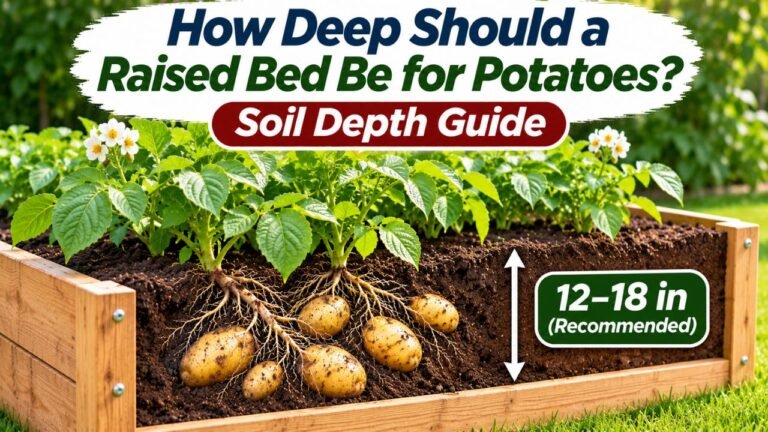
A raised bed approximately 12–18 inches deep is a practical choice for tomatoes when roots cannot extend into the ground below.
However, the required depth depends on how the bed is constructed.
Open-bottom raised beds: If the bed sits over healthy, accessible garden soil, roots can grow through the raised-bed mix into the ground below. A shallower frame may therefore be workable.
Raised beds on concrete or another hard surface: Roots cannot extend downward beyond the bed. Greater soil depth and volume become more important.
The University of Maryland Extension’s raised-bed vegetable gardening guide recommends approximately 12–24 inches of soil depth for tomatoes, peppers, and squash in raised beds installed over hard surfaces.
For large indeterminate tomatoes, deeper soil and greater root volume can make watering and nutrient management easier.
What Size Raised Bed Is Best for Tomatoes?
Four-foot-wide beds are popular because gardeners can reach the center from either side without stepping on the soil.
Common options include:
- 4×4-foot raised beds.
- 4×6-foot raised beds.
- 4×8-foot raised beds.
- 3×6-foot raised beds.
- Larger custom beds with accessible paths.
A 4×8-foot bed provides enough room for a small group of tomatoes when properly spaced.
However, plant count depends more on the mature size of the selected varieties than on the bed’s dimensions alone.
Should Raised Beds Have Drainage Holes?
Open-bottom raised beds usually drain into the underlying soil.
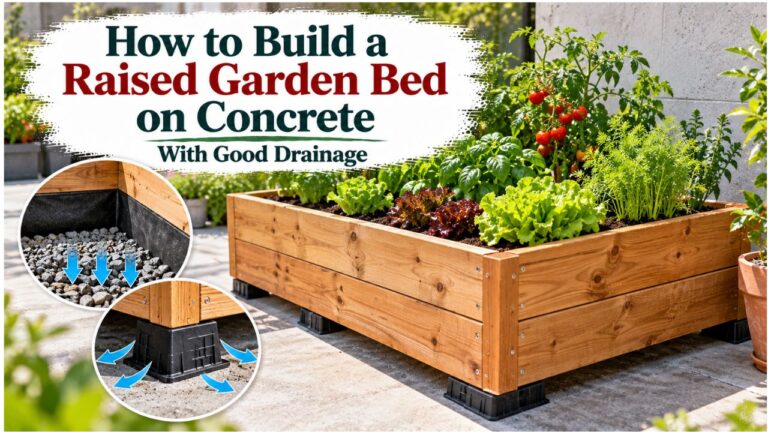
Beds placed on solid surfaces or built as enclosed planters need an appropriate drainage system.
Water must be able to leave the root zone.
Standing water can deprive roots of oxygen and contribute to root problems.
Avoid using an impermeable plastic liner that traps excess water inside the bed.
Choose the Best Tomato Varieties for Raised Beds
Tomato varieties differ substantially in their growth habits.
Selecting the right type helps prevent overcrowding and reduces the amount of pruning or support required.
Determinate Tomatoes
Determinate tomatoes are commonly called bush tomatoes.
They grow to a genetically limited size and generally produce their main harvest over a relatively concentrated period.
Some varieties are particularly suitable for raised beds because they remain compact.
Popular examples include:
- Roma.
- Celebrity, depending on the specific cultivar.
- Patio-type tomatoes.
- Bush Early Girl.
- Certain compact cherry tomatoes.
Actual plant size varies by cultivar.
Always check the seed packet or transplant label.
Best for: Smaller raised beds, gardeners wanting a more concentrated harvest, and situations where limited pruning is preferred.
Indeterminate Tomatoes
Indeterminate tomatoes continue producing new growth, flowers, and fruit while growing conditions remain favorable.
They can become large and require substantial support.
Examples include:
- Sungold.
- Sweet 100.
- Brandywine.
- Many beefsteak varieties.
- Numerous vining cherry tomato varieties.
These tomatoes can perform very well in raised beds, but their height and spread must be managed.
Best for: Gardeners who want repeated harvests and can provide sturdy cages or trellises.
Determinate vs. Indeterminate Tomatoes
| Feature | Determinate | Indeterminate |
| Growth habit | Usually bushier and more compact | Continues producing vines |
| Harvest pattern | More concentrated | Often continues through the season |
| Support requirements | Varies; cages often useful | Strong support usually needed |
| Pruning | Usually minimal | Selective pruning may help |
| Raised-bed suitability | Good for compact spaces | Good with enough spacing and support |
| Typical challenge | Heavy fruit load in a short period | Managing plant height and spread |
Key Takeaway: Compact determinate varieties are often easier for beginners, while indeterminate tomatoes can produce over a longer period when properly supported.
How Many Tomato Plants Can You Grow in a Raised Bed?
Overcrowding is one of the most common mistakes in raised-bed tomato gardening.
Tomato plants need enough space for air circulation, root growth, maintenance, and harvesting.
Recommended Tomato Spacing
| Tomato Type | Practical Starting Spacing |
| Compact patio tomato | Follow cultivar guidance; often 12–18 inches |
| Determinate bush tomato | Approximately 18–30 inches |
| Caged indeterminate tomato | Approximately 24–36 inches |
| Carefully pruned, staked indeterminate | Sometimes 18–24 inches with appropriate management |
| Large, unpruned tomato | Often requires more space |
Spacing varies by variety, support method, climate, and growing conditions.
How Many Tomatoes in a 4×4 Raised Bed?
A 4×4-foot bed provides 16 square feet of growing area.
For a beginner, one large indeterminate tomato with appropriate support is a conservative arrangement.
Two compact bush tomatoes may fit if their mature sizes and recommended spacing allow it.
Avoid forcing four large tomato plants into a 4×4 bed simply because their transplants look small.
Mature tomatoes can quickly fill the space.
How Many Tomatoes in a 4×8 Raised Bed?
A 4×8-foot bed provides 32 square feet.
A practical starting arrangement is:
- Two or three indeterminate tomatoes with adequate support and spacing.
- Three or four compact determinate tomatoes, depending on the cultivar.
- Fewer plants when growing particularly large varieties.
For example, three indeterminate tomatoes positioned along the center of an 8-foot bed may have enough room when their support and pruning are managed carefully.
However, the final spacing must follow the varieties’ mature growth requirements.
Why Proper Spacing Matters
Overcrowding can cause:
- Poor air circulation.
- Increased leaf moisture retention.
- Greater disease pressure.
- Difficult harvesting.
- Competition for water.
- Competition for nutrients.
- Excessive shading.
- Tangled stems and vines.
Key Takeaway: Plan for the mature size of tomato plants, not their size when transplanted. Fewer healthy plants often make better use of a raised bed than an overcrowded planting.
What Soil Is Best for Tomato Plants in Raised Beds?
Tomatoes grow well in fertile soil that retains moisture while allowing excess water to drain.
The soil should also provide enough air for healthy root development.
Recommended Raised-Bed Soil Characteristics
A suitable tomato-growing mix generally contains:
- Mineral soil or appropriate raised-bed soil components.
- Finished compost.
- Materials that support good soil structure.
- Adequate drainage.
- Enough moisture-holding capacity.
- Balanced nutrients.
Avoid filling a raised bed entirely with unfinished compost or poorly decomposed organic materials.
These can change volume substantially and may create inconsistent growing conditions.
A commercial raised-bed mix can be convenient if it is suitable for edible vegetables.
What Soil pH Do Tomatoes Prefer?
Tomatoes generally perform well in slightly acidic soil.
A pH around 6.0–6.8 is a useful target.
However, tomatoes can tolerate a somewhat broader range when nutrient availability and other growing conditions are suitable.
Use a soil test before applying lime or sulfur.
Adding amendments without knowing the current pH can create unnecessary problems.
Should You Add Compost Every Year?
Adding finished compost can help maintain soil organic matter.
However, the amount needed depends on the existing soil.
For an established raised bed, a modest surface application may be sufficient when organic matter is already adequate.
Avoid repeatedly adding large quantities of compost without checking soil fertility.
Excessive amendments can lead to nutrient imbalances, particularly phosphorus accumulation.
Should You Replace Raised-Bed Soil Every Year?
No.
Healthy raised-bed soil generally does not need complete annual replacement.
Instead:
- Remove old plant debris.
- Inspect soil structure and drainage.
- Check soil fertility when appropriate.
- Add finished compost or other amendments as needed.
- Replenish soil lost through settling.
- Address any identified disease or contamination problems.
Soil testing is more useful than automatically replacing the entire growing mix.
How to Plant Tomato Seedlings in Raised Beds
Proper transplanting helps tomatoes establish strong root systems.
Tomatoes can form additional roots along buried sections of their stems, making them different from many other vegetable transplants.
Step 1: Wait for Suitable Weather
Tomatoes are frost-sensitive.
Transplant them outdoors after the danger of frost has passed and the soil has warmed.
A soil temperature around 60°F or warmer is a reasonable starting point, although warmer conditions often support faster growth.
Cold soil can slow root development.
Check your local frost dates and short-term weather forecast before planting.
Step 2: Harden Off the Seedlings
If the plants were raised indoors, gradually expose them to outdoor conditions.
Over approximately one week, increase their exposure to sunlight, wind, and outdoor temperatures.
Protect them from frost and harsh conditions.
This process helps reduce transplant stress.
Step 3: Prepare the Planting Hole
Dig a hole slightly wider than the root ball.
For an ordinary nongrafted tomato, you can plant part of the lower stem beneath the soil.
Remove the leaves that would otherwise be buried.
However, do not bury the graft union of a grafted tomato plant. Keep it above the soil line according to the supplier’s instructions.
Step 4: Position the Plant
Place the root ball in the planting hole.
Backfill with soil and gently firm it around the roots.
Avoid compacting the surrounding raised-bed soil excessively.
Step 5: Water Thoroughly
Water immediately after transplanting.
The goal is to settle the soil around the roots and eliminate large air pockets.
Check moisture again during the first few days.
Newly transplanted tomatoes may need more frequent attention until their roots extend into the surrounding soil.
Step 6: Install the Support
Place a cage, stake, or trellis at planting time.
Installing supports early reduces the likelihood of damaging established roots later.
Choose a support strong enough for the mature plant and its fruit load.
Key Takeaway: Transplant after frost danger passes, plant suitable nongrafted tomatoes deeply, water thoroughly, and install support while the roots are still small.
How Often Should You Water Tomato Plants in Raised Beds?
Tomatoes need consistent soil moisture, especially when they are flowering and developing fruit.
However, watering frequency depends on weather, soil composition, plant size, and bed construction.
General Watering Requirements
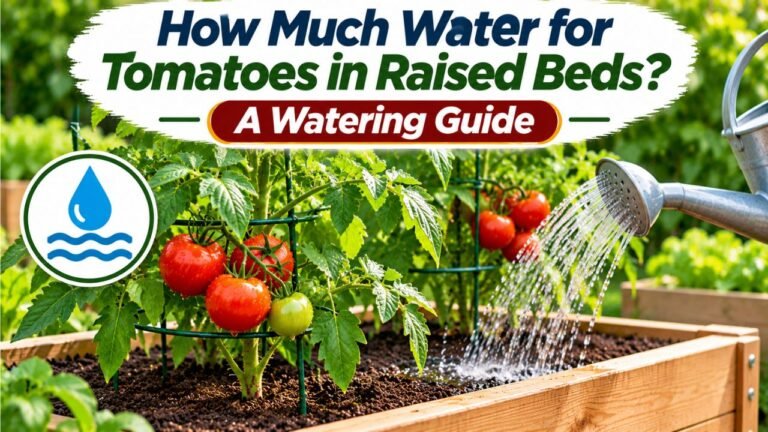
A common starting guideline is approximately 1–2 inches of water per week, including rainfall.
Actual needs may be lower or higher.
Raised beds can dry out quickly in hot, windy weather, especially when built above concrete or filled with a coarse, fast-draining mix.
Avoid using a fixed daily schedule without checking the soil.
Suggested Watering Approach by Growth Stage
| Growth Stage | Watering Approach |
| Newly transplanted | Check moisture frequently and maintain steady root-zone moisture |
| Early vegetative growth | Water thoroughly as the soil begins drying |
| Flowering | Avoid major moisture fluctuations |
| Fruit development | Maintain consistent moisture throughout the root zone |
| Ripening | Continue watering according to soil conditions |
| Hot or windy weather | Check moisture more frequently |
| Cool or rainy weather | Reduce or skip irrigation when soil remains adequately moist |
These are management guidelines, not mandatory watering intervals.
How to Check Soil Moisture
Insert your finger or a small trowel into the soil.
Check moisture several inches below the surface.
The soil should feel moist but not saturated.
For established plants, check whether water is reaching the deeper active root zone.
If only the top inch is damp while the soil below is dry, the watering cycle may be too shallow.
Should You Water Tomatoes Every Day?
Not necessarily.
Daily watering may be appropriate in some hot, rapidly drying raised beds.
However, deeply rooted tomatoes in moisture-retentive soil may require less frequent irrigation.
Watering lightly every day can leave the deeper root zone dry.
It is generally better to water thoroughly when needed.
How Much Water Does a 4×8 Raised Bed Need?
A 4×8-foot bed has an area of 32 square feet.
One inch of water over one square foot equals approximately 0.623 gallons.
Therefore:
32 × 0.623 = 19.9 gallons
Approximately 20 gallons of water represents one inch of water evenly applied across the entire 4×8-foot bed.
Two inches would be approximately 40 gallons.
This is a water-depth conversion, not a fixed weekly prescription.
Actual irrigation needs depend on rainfall, soil moisture, plant growth, and the distribution pattern of the irrigation system.
Is Drip Irrigation Good for Raised-Bed Tomatoes?
Yes.
Drip irrigation delivers water near the root zone and can help maintain more consistent moisture.
It also reduces unnecessary wetting of foliage.
Position emitters so they wet an adequate portion of the developing root system.
As plants grow, check whether the watered area remains sufficient.
A properly programmed timer can make watering easier, but it should still be adjusted for weather and soil conditions.
Key Takeaway: Water deeply and consistently, then adjust the frequency based on root-zone moisture. Irregular watering can contribute to fruit cracking and blossom-end rot.
How to Fertilize Tomato Plants in Raised Beds
Tomatoes need nutrients to support healthy leaves, flowers, roots, and fruit.
However, adding too much fertilizer can be as problematic as adding too little.
Which Nutrients Do Tomatoes Need?
Tomatoes require several essential nutrients.
The three nutrients commonly listed on fertilizer packages are:
- Nitrogen (N): Supports leafy growth.
- Phosphorus (P): Supports energy transfer and plant development.
- Potassium (K): Supports water regulation and other processes involved in plant growth and fruit quality.
Tomatoes also need calcium, magnesium, sulfur, and micronutrients.
A balanced nutrient supply matters more than maximizing any single ingredient.
What Fertilizer Is Best for Raised-Bed Tomatoes?
Choose fertilizer according to a soil test and the plant’s needs.
A tomato-specific fertilizer may be convenient, but no single N-P-K ratio is ideal for every raised bed.
Some soils already contain enough phosphorus and potassium.
Adding more without testing may be unnecessary.
Avoid repeatedly using high-nitrogen fertilizer if plants are producing abundant leaves but little fruit.
When Should You Fertilize Tomatoes?
A practical approach is to evaluate fertility at several stages.
| Growth Stage | Fertilizer Consideration |
| Before planting | Amend soil according to testing |
| At transplanting | Use starter fertilizer only if appropriate |
| Early growth | Observe plant color and vigor |
| First fruit development | Consider side-dressing if nutrients are needed |
| Ongoing harvest | Supplement only when soil fertility and plant growth justify it |
Follow the fertilizer label carefully.
Do not combine multiple products without accounting for their total nutrient contributions.
How to Side-Dress Tomato Plants
Side-dressing means applying fertilizer to the soil beside an established plant.
If fertilization is needed:
- Measure the amount according to the product label and soil-test recommendations.
- Apply it to soil away from direct contact with the stem.
- Incorporate lightly if the product instructions require it.
- Water appropriately.
Avoid placing concentrated fertilizer directly against stems or roots.
Can You Overfertilize Tomatoes?
Yes.
Excess fertilizer can cause:
- Very leafy growth.
- Delayed flowering.
- Reduced fruit production.
- Root damage from excessive salts.
- Nutrient imbalances.
- Poor plant performance.
Too much nitrogen is a particularly common problem.
Large, dark green plants with few flowers may have received excessive nitrogen, although other factors can produce similar symptoms.
Key Takeaway: Fertilize according to soil needs. More fertilizer does not automatically produce more tomatoes, and excessive nitrogen can reduce fruiting.
How to Support Tomato Plants in Raised Beds
Tomatoes may become heavy as their stems grow and fruit develops.
Support keeps plants more manageable and helps prevent fruit from lying on the soil.
Tomato Cages
Cages are convenient for bush and some vining tomato varieties.
Choose a sturdy cage large enough for the mature plant.
Lightweight cages may bend or collapse under a heavy crop.
Install the cage at transplanting time.
Secure it to the bed or another appropriate support if necessary.
Tomato Stakes
Stakes can support tomatoes trained to one or a few main stems.
A sturdy stake should be anchored adequately.
For tall indeterminate tomatoes, a support approximately 6–8 feet above ground may be useful, depending on the variety.
However, the entire structure must withstand wind and fruit weight.
Tie stems loosely with soft plant ties.
Avoid thin wire or string that can cut into stems.
Trellis Systems
A trellis can help manage multiple tomato plants in one raised bed.
Options include:
- Vertical string trellises.
- Sturdy panel trellises.
- Post-and-wire systems.
- Other purpose-built tomato supports.
A trellis is especially useful for indeterminate varieties.
However, shallow raised beds may not provide enough anchoring depth for tall structures.
Attach large supports securely, potentially using suitable posts outside the bed.
Which Support Is Best?
| Support | Suitable Tomatoes | Maintenance |
| Sturdy cage | Determinate and some indeterminate varieties | Low to moderate |
| Individual stake | Pruned indeterminate plants | Regular tying |
| String trellis | Indeterminate tomatoes | Frequent training |
| Panel trellis | Multiple supported vines | Training and checking |
| Small patio cage | Compact dwarf varieties | Usually limited |
Key Takeaway: Install support early. For vigorous indeterminate tomatoes, prioritize strength and secure anchoring rather than relying on lightweight cages.
How to Prune Tomato Plants in Raised Beds
Pruning helps manage plant size, airflow, and access.
However, not every tomato should be pruned the same way.
The most important distinction is whether the variety is determinate or indeterminate.
Should You Prune Determinate Tomatoes?
Usually, determinate tomatoes need little pruning.
Their growth pattern limits the number of flowering shoots.
Removing too many branches can reduce potential fruit production.
For determinate plants:
- Remove dead or diseased material.
- Remove leaves touching the soil when practical.
- Maintain reasonable airflow.
- Avoid unnecessary removal of healthy flowering shoots.
Heavy sucker pruning is generally not recommended.
How to Prune Indeterminate Tomatoes
Indeterminate tomatoes can benefit from selective pruning when grown on stakes or trellises.
A common approach is to maintain one or two main stems.
Some systems use three stems, depending on plant spacing and support.
What Are Tomato Suckers?
Tomato suckers are side shoots that develop in the angle between a main stem and a leaf branch.
As they grow, they can form additional stems with leaves, flowers, and fruit.
Removing a sucker reduces the number of growing stems.
This can make the plant easier to manage, but it also removes potential fruiting growth.
Step-by-Step Pruning Instructions
- Identify the main stem.
- Locate small side shoots growing in leaf axils.
- Decide which main stems to retain.
- Pinch off selected small suckers while the plant is dry.
- Remove damaged or diseased foliage as needed.
- Tie remaining stems to the support.
- Recheck the plant regularly.
For large shoots, use clean pruning tools rather than tearing the stem.
Avoid pruning when foliage is wet, particularly if disease is present.
Should You Remove Lower Tomato Leaves?
Some lower leaves can be removed to reduce contact with the soil and improve airflow.
However, do not remove excessive healthy foliage.
Leaves produce energy that supports plant growth and fruit development.
Removing too many leaves can expose developing fruit to strong sunlight and increase the risk of sunscald.
How Often Should You Prune?
For actively growing indeterminate tomatoes, inspect the plants approximately once a week.
Small suckers are easier to remove than large, established branches.
Adjust the frequency to the plant’s growth rate.
Key Takeaway: Prune indeterminate tomatoes selectively to manage height and airflow. Avoid heavily pruning determinate varieties or removing excessive healthy leaves.
Should You Mulch Tomato Plants in Raised Beds?
Yes. Mulch is particularly beneficial for raised-bed tomatoes because it helps conserve soil moisture.
It can also reduce weed growth and limit soil splashing onto lower leaves.
Best Mulch Materials for Tomatoes
Suitable organic options include:
- Weed-free straw.
- Shredded leaves.
- Untreated grass clippings applied appropriately.
- Fine, aged organic mulch.
- Other clean, garden-compatible plant materials.
Avoid using hay or other materials containing large quantities of weed seeds.
Do not use grass clippings from lawns recently treated with herbicides unless the product label and treatment history establish that they are suitable.
How Thick Should Tomato Mulch Be?
Approximately 2–3 inches of loose organic mulch is a practical starting point.
The best depth depends on the material.
Fluffy straw settles differently from shredded leaves or fine mulch.
Avoid piling mulch tightly against the stem.
Leave a small opening around the plant crown to reduce prolonged moisture contact.
When Should You Add Mulch?
Apply organic mulch after the soil has warmed sufficiently.
Adding a thick insulating layer too early in a cool climate can slow spring soil warming.
Once plants are established and the soil is warm, mulch can help moderate moisture and temperature fluctuations.
Can Mulch Prevent Tomato Diseases?
Mulch may reduce soil splashing onto leaves.
This can help limit some pathways through which soil-associated disease organisms reach lower foliage.
However, mulch does not eliminate disease risk.
Spacing, sanitation, resistant varieties, and careful watering remain important.
Key Takeaway: A moderate mulch layer helps conserve moisture and reduce soil splash. Keep it loose and avoid piling it against tomato stems.
How Much Sunlight Do Raised-Bed Tomatoes Need?
Tomatoes are sun-loving plants.
Most varieties perform best with at least 6–8 hours of direct sunlight daily.
Eight or more hours is often preferable when the climate allows.
What Happens if Tomatoes Don’t Get Enough Sun?
Insufficient sunlight may cause:
- Weak or elongated growth.
- Reduced flowering.
- Lower fruit production.
- Slower ripening.
- Less vigorous plants.
However, low fruit production can also result from heat, nutrition, pollination problems, or disease.
Can Tomatoes Get Too Much Heat?
Yes.
Tomatoes benefit from warm conditions, but prolonged extreme heat can interfere with flower pollination and fruit set.
Daytime temperatures around or above 90°F, especially when combined with very warm nights, may reduce successful fruit development.
How to Protect Tomatoes During Extreme Heat
Possible measures include:
- Maintaining consistent soil moisture.
- Using appropriate mulch.
- Providing temporary afternoon shade during severe heat.
- Using breathable shade cloth when necessary.
- Avoiding unnecessary heavy pruning.
- Maintaining good airflow.
Do not keep tomatoes under dense shade throughout the growing season.
Temporary protection during extreme heat is different from growing them in a permanently shaded location.
Can Raised-Bed Walls Make Soil Too Hot?
Raised-bed materials can affect soil temperature.
Metal beds, dark-colored containers, and exposed sides can absorb solar heat.
However, the actual root-zone temperature depends on bed size, soil moisture, climate, and insulation from surrounding materials.
Check the soil rather than assuming every metal raised bed overheats.
Mulch and consistent watering can help moderate temperature fluctuations.
How to Prevent Tomato Pests and Diseases in Raised Beds
Raised beds do not completely protect tomatoes from insects or diseases.
However, good spacing, watering, and sanitation can reduce some problems.
Common Tomato Pests
| Pest | Common Signs | Practical Response |
| Tomato hornworm | Large areas of missing leaves | Inspect and hand-remove when appropriate |
| Aphids | Clusters of small insects, sticky residue | Monitor natural enemies and use suitable controls |
| Whiteflies | Tiny white insects disturbed from leaves | Inspect undersides and manage infestations early |
| Spider mites | Fine stippling, webbing in severe cases | Check leaf undersides, especially in hot, dry weather |
| Stink bugs | Feeding marks and discolored fruit areas | Monitor and use appropriate control methods |
| Flea beetles | Small holes in leaves | Protect vulnerable young plants when necessary |
Identify the pest before applying a treatment.
Not every insect found on tomatoes is harmful.
Beneficial insects may help control certain pests.
Tomato Hornworms
Hornworms are large caterpillars that can remove substantial amounts of foliage.
Inspect stems and leaf undersides.
Hand-picking can be effective in small gardens.
If a hornworm carries white parasitoid wasp cocoons, leaving it in place may help beneficial insects complete their development.
Aphids
Aphids may cluster on new growth.
Small populations are often managed by natural predators.
For larger infestations, consider an appropriate, labeled insecticidal soap or other suitable control.
Avoid applying sprays during extreme heat or without following the product’s label.
Early Blight
Early blight is a fungal disease that can produce dark leaf spots, sometimes with concentric rings.
Symptoms often develop on older leaves first.
Management may include:
- Removing heavily affected foliage when appropriate.
- Providing adequate spacing.
- Mulching.
- Watering at soil level.
- Removing infected plant debris.
- Selecting varieties with useful resistance or tolerance.
Fungicides, where appropriate, must be labeled for edible tomatoes and the specific disease.
Septoria Leaf Spot
Septoria leaf spot commonly produces many small spots on tomato foliage.
It often begins on lower leaves.
Good airflow, reducing prolonged leaf wetness, and garden sanitation can help limit disease development.
However, these practices do not guarantee prevention.
Late Blight
Late blight is a serious disease that can spread rapidly under favorable conditions.
Symptoms may include rapidly expanding dark lesions on leaves and stems and damage to fruit.
If you suspect late blight, consult local extension guidance promptly.
It requires different management considerations from ordinary minor leaf spotting.
How to Reduce Disease Risk
- Space tomatoes appropriately.
- Avoid unnecessary overhead watering.
- Water near the soil surface.
- Keep fruit and lower leaves off the ground.
- Remove diseased material when appropriate.
- Clean pruning tools.
- Avoid working among wet plants.
- Remove old crop debris after harvest.
- Rotate crops when practical.
Key Takeaway: Inspect tomato plants regularly. Early identification, good airflow, suitable watering, and sanitation help prevent manageable problems from becoming severe.
How to Prevent Blossom-End Rot in Raised-Bed Tomatoes
Blossom-end rot is a common tomato problem.
It appears as a dark, sunken, often leathery patch at the blossom end of a developing fruit.
The condition is associated with inadequate calcium delivery to developing fruit.
However, the soil does not always lack calcium.
What Causes Blossom-End Rot?
Potential contributing factors include:
- Irregular watering.
- Rapid fluctuations in soil moisture.
- Root injury.
- Excessive nitrogen fertilization.
- Salinity or nutrient imbalances.
- Environmental stress.
- Inadequate calcium availability.
Water movement within the plant plays an important role in calcium transport.
Therefore, inconsistent moisture can cause blossom-end rot even when the soil contains sufficient calcium.
How to Prevent Blossom-End Rot
- Water consistently.
- Avoid allowing the root zone to become extremely dry.
- Use mulch to reduce moisture fluctuations.
- Avoid excessive nitrogen fertilizer.
- Prevent root damage.
- Maintain good soil drainage.
- Test the soil before adding calcium amendments.
Do Eggshells Prevent Blossom-End Rot?
Adding crushed eggshells is not a dependable quick treatment.
Eggshells break down slowly.
They cannot reliably correct calcium transport problems in developing fruit.
If a soil test identifies a calcium deficiency or unsuitable pH, amend the soil according to the recommendations.
Otherwise, improving moisture consistency is often more useful than adding calcium blindly.
Should You Use Epsom Salt on Tomatoes?
Not routinely.
Epsom salt supplies magnesium and sulfur, not calcium.
It does not directly treat blossom-end rot.
Excessive magnesium may also interfere with nutrient balance.
Use it only when a soil test or reliable diagnosis indicates that additional magnesium is needed.
Can You Save Tomatoes With Blossom-End Rot?
The damaged area will not return to normal.
However, the plant can continue producing healthy fruit if growing conditions improve.
Remove severely damaged fruit when appropriate and focus on consistent watering and balanced nutrition.
Key Takeaway: Blossom-end rot is often linked to poor calcium movement caused by moisture or root stress. Consistent watering is more useful than automatically adding eggshells or Epsom salt.
Why Are My Raised-Bed Tomato Plants Turning Yellow?
Yellow leaves can indicate several different problems.
The location of the yellowing and the presence of other symptoms help narrow down the cause.
Common Causes of Yellow Tomato Leaves
| Symptom | Possible Cause |
| Older lower leaves gradually yellow | Natural aging or nutrient deficiency |
| Yellowing with consistently wet soil | Poor drainage or root stress |
| Yellowing with dry, wilting foliage | Insufficient water |
| Yellow leaves with dark spots | Possible fungal disease |
| Yellowing between veins | Possible nutrient imbalance |
| General pale growth | Nutrition, root, temperature, or light problem |
| Yellowing after transplanting | Transplant stress or unfavorable growing conditions |
How to Diagnose the Problem
Start by checking the soil.
If it is waterlogged, investigate drainage and reduce unnecessary watering.
If it is dry below the surface, water thoroughly.
Next, inspect the leaves for spots, insects, and other symptoms.
Consider whether the plant was recently transplanted or fertilized.
Do not immediately apply more fertilizer without assessing the cause.
Yellowing can result from several unrelated issues.
When Is Yellowing Normal?
Older lower leaves may gradually decline as the plant grows.
A small amount of lower-leaf yellowing is not always a serious problem.
However, rapid yellowing, spreading spots, wilting, or substantial leaf loss warrants closer inspection.
How to Care for Tomatoes During Flowering and Fruiting
Flowering and fruiting are important stages because the plant must support both vegetative growth and developing fruit.
Keep Watering Consistent
Avoid repeated cycles of very dry and saturated soil.
Large moisture fluctuations may contribute to fruit cracking and blossom-end rot.
Check the soil regularly during hot weather.
Avoid Excessive Nitrogen
Too much nitrogen can encourage leafy growth without proportionate fruit production.
Follow soil-test recommendations and avoid unnecessary fertilizer applications.
Support Developing Fruit Clusters
As fruit becomes heavier, check that stems and supports are secure.
Tie long stems gently where necessary.
Avoid constricting the stems.
Encourage Pollination
Most common tomato varieties are self-fertile.
Their flowers can usually be pollinated through normal movement and vibration, including wind and insect activity.
However, very hot or cold conditions can interfere with successful fruit set.
If greenhouse or protected plants aren’t setting fruit, appropriate gentle flower vibration may help under otherwise suitable conditions.
Watch for Fruit Cracking
Tomatoes may crack following major changes in water availability, particularly after dry periods followed by heavy rain or irrigation.
Maintain consistent moisture where possible.
Some varieties are more resistant to cracking than others.
Avoid Excessive Leaf Removal
Healthy foliage protects fruit from direct sunlight.
Removing too many leaves can increase sunscald.
Prune selectively rather than stripping the plant.
Key Takeaway: During fruit development, prioritize steady moisture, balanced nutrition, strong supports, and protection from extreme heat.
How to Harvest Tomatoes From Raised Beds
Harvesting at the correct stage helps maintain fruit quality and reduces damage to heavily loaded plants.
When Are Tomatoes Ready to Harvest?
Tomatoes can be harvested when they have reached an appropriate stage of maturity.
Many varieties are picked when they develop their expected ripe color.
However, tomatoes can also ripen after harvest once they have reached a physiologically mature stage.
A mature tomato that has begun changing color can often finish ripening indoors.
How to Pick Tomatoes Without Damaging the Plant
Hold the fruit carefully and detach it at the stem using the appropriate method for the variety.
Some tomatoes separate easily when mature.
Others are better cut with clean pruning shears.
Avoid pulling so hard that the vine or fruit cluster becomes damaged.
Should You Pick Tomatoes Before They Turn Fully Red?
You can harvest tomatoes that have begun ripening and allow them to finish indoors.
This may be useful when:
- Heavy rain is expected.
- Animals are damaging fruit.
- Fruit cracking is a recurring issue.
- Frost is approaching.
However, very immature green tomatoes may not ripen normally.
How to Store Fresh Tomatoes
For short-term storage, many ripe tomatoes maintain better flavor and texture at room temperature.
Keep them out of direct sunlight.
If you need to slow spoilage, refrigeration may be appropriate, especially for fully ripe fruit.
Allow refrigerated tomatoes to return toward room temperature before serving when practical.
Check for spoilage and handle cut tomatoes according to food-safety guidance.
Weekly Tomato Plant Care Checklist
A simple routine makes raised-bed tomato maintenance easier.
{@body const tasks = [
“Check soil moisture below the surface”,
“Inspect leaves for spots, insects, and yellowing”,
“Check tomato cages, stakes, and plant ties”,
“Remove damaged or diseased material when appropriate”,
“Prune selected suckers on indeterminate varieties”,
“Inspect mulch and keep it away from stems”,
“Check flowers and developing fruit”,
“Harvest ripe or appropriately mature tomatoes”,
“Review irrigation and weather conditions”
]}
{@body const [done,setDone] = DIL.useState([])}
<box border radius=”lg” padding={3} gap={3}>
<row align=”center” justify=”between”>
Weekly Raised-Bed Tomato Care
<text color=”secondary” size=”xs” tabularNums>{done.length}/{tasks.length} complete</text>
</row>
<box background=”surface-tertiary” height=”6px” radius=”full” clip>
<box background=”surface-inverted” width={${100*done.length/tasks.length}%} height=”100%” radius=”full”/>
</box>
{#each tasks as task, i}
<checkbox key={i} checked={done.includes(i)} onChange={v=>setDone(old=>v?[…old,i].filter(x=>x!==i))}>{task}</checkbox>
{/each}
<row justify=”end”>
<button color=”secondary” variant=”outline” size=”sm” onClick={()=>setDone([])}>Reset checklist</button>
</row>
</box>
Weekly inspection is a useful routine, but watering and extreme-weather protection may require more frequent attention.
Fertilizer should not be applied automatically every week.
Base feeding decisions on soil conditions, crop growth, and product instructions.
Common Mistakes When Growing Tomatoes in Raised Beds
Even a well-built raised bed can produce poor results if basic growing requirements are overlooked.
Planting Too Many Tomatoes
Crowded plants compete for resources and restrict airflow.
Follow cultivar spacing and provide enough room for mature growth.
Using a Bed That’s Too Shallow
Tomatoes need adequate root volume.
A shallow enclosed bed can dry quickly and restrict roots.
Choose deeper beds when roots cannot extend into the ground beneath.
Watering Only the Soil Surface
Light irrigation may leave deeper roots dry.
Water enough to moisten the active root zone, then adjust frequency based on soil conditions.
Letting the Soil Dry Out Completely
Large moisture fluctuations can stress plants and contribute to fruit disorders.
Use mulch and consistent irrigation.
Adding Too Much Fertilizer
Excess nutrients can encourage foliage growth and interfere with fruiting.
A soil test is a better guide than frequent, unmeasured fertilizer applications.
Forgetting to Support Tomato Plants
Unsupported stems can fall onto the soil or break under fruit weight.
Install cages or stakes early.
Pruning Every Tomato Variety the Same Way
Determinate tomatoes generally need less pruning than indeterminate types.
Removing too much growth from bush tomatoes may reduce production.
Removing Too Many Leaves
Excessive pruning can expose fruit to intense sunlight.
Maintain enough healthy foliage to support the plant and protect developing tomatoes.
Ignoring Soil Drainage
Constantly wet soil can stress roots.
Improve drainage before adding more water or fertilizer.
Planting Tomatoes in the Same Soil Without Considering Disease
Some tomato diseases persist in soil or plant debris.
Crop rotation, resistant varieties, and sanitation can help reduce recurring problems.
When rotation is possible, avoid repeatedly planting tomatoes and related crops in the same location.
Complete soil replacement is not automatically necessary, but a history of serious soilborne disease may require a more specific management plan.
Conclusion
Learning how to care for tomato plants in raised beds involves providing consistent moisture, adequate sunlight, fertile soil, proper spacing, and reliable plant support.
Start by choosing tomato varieties suited to the available space. Use a well-draining raised-bed soil mixture and transplant after the danger of frost has passed.
For most tomatoes, at least 6–8 hours of direct sunlight and approximately 1–2 inches of weekly water, adjusted for weather and soil conditions, provide useful starting guidelines.
Mulch helps maintain soil moisture, while cages or trellises keep stems and fruit supported.
Fertilize according to soil needs rather than applying large amounts of nutrients automatically. Prune indeterminate tomatoes selectively, but avoid unnecessary heavy pruning of determinate plants.
Inspect the plants regularly for yellow leaves, insects, disease symptoms, and developing fruit problems.
With consistent care throughout the growing season, raised beds can provide a productive environment for growing healthy, flavorful tomatoes.
FAQs About How to Care for Tomato Plants in Raised Beds
How Often Should You Water Tomato Plants in Raised Beds?
Watering frequency depends on the soil mixture, weather, bed depth, and plant size.
A common starting guideline is approximately 1–2 inches of total water weekly, including rainfall.
However, some raised beds need more frequent irrigation during hot weather.
Check the soil several inches below the surface and water when the root zone needs moisture.
How Many Tomato Plants Can You Put in a 4×8 Raised Bed?
Two or three indeterminate tomatoes are a reasonable starting choice when properly spaced and supported.
Some compact determinate varieties may allow three or four plants.
Always follow the specific cultivar’s spacing recommendations and consider the mature plant size.
Should You Water Tomatoes Every Day in a Raised Bed?
Not automatically.
Daily watering may be necessary in hot, fast-draining beds, but other beds remain moist longer.
Deep, consistent watering based on soil conditions is generally preferable to frequent shallow watering.
What Is the Best Fertilizer for Raised-Bed Tomatoes?
The best fertilizer depends on the nutrients already present in the soil.
A tomato fertilizer may be suitable, but soil testing helps determine whether nitrogen, phosphorus, potassium, or other nutrients are needed.
Avoid excessive nitrogen because it can encourage leaf growth at the expense of fruit production.
Should You Prune Tomato Plants in Raised Beds?
Indeterminate tomatoes may benefit from selective sucker pruning, especially when grown on stakes or trellises.
Determinate varieties generally need minimal pruning.
Remove dead or diseased foliage as appropriate, but avoid excessive removal of healthy leaves.
How Deep Should a Raised Bed Be for Tomato Plants?
A soil depth of approximately 12–18 inches or more is a useful starting point when roots cannot extend into the ground.
The University of Maryland Extension recommends 12–24 inches for tomatoes grown in beds over hard surfaces.
Open-bottom raised beds may work with shallower frames when roots can grow into suitable underlying soil.
How Do You Keep Tomato Plants From Falling Over in Raised Beds?
Install sturdy cages, stakes, or trellises at planting time.
Secure the supports adequately and tie growing stems loosely when necessary.
Large indeterminate varieties often require taller and stronger structures than compact bush tomatoes.
Why Are My Tomato Plants Growing Leaves but No Tomatoes?
Possible causes include excessive nitrogen fertilizer, insufficient sunlight, extreme temperatures, poor pollination conditions, or normal delays in plant development.
Check the plant’s growth habit, light exposure, fertilizer history, and temperature conditions.
Avoid adding more nitrogen simply because the plant is not producing fruit.
How Do You Prevent Blossom-End Rot in Raised-Bed Tomatoes?
Maintain consistent soil moisture, use mulch, avoid root damage, and fertilize according to soil-test recommendations.
Blossom-end rot involves poor calcium delivery to developing fruit, often associated with moisture fluctuations rather than a simple lack of calcium in the soil.
Do not routinely add Epsom salt or eggshells as a treatment.
Do Raised-Bed Tomatoes Need Mulch?
Mulch is strongly recommended in many raised-bed gardens.
Approximately 2–3 inches of suitable organic mulch can help reduce moisture loss, suppress weeds, and limit soil splash.
Apply it after the soil warms and avoid piling it against the plant stems.

I’m Maya L. Greenwood, a lifelong plant lover who believes anyone can grow something beautiful with the right guidance. After years of testing soil mixes, pruning methods, irrigation tricks, and pest-safe solutions, I started EasyGardenTips.com to turn hard-won lessons into step-by-step advice. From seed starting and container gardens to composting and seasonal checklists, my goal is to make gardening simple, sustainable, and fun.