Garden Soil vs Potting Soil: Which One Should You Use and When?
Use garden soil for plants growing in the ground, and use potting soil or potting mix for plants growing in containers. Garden soil is usually denser and varies by location, while potting products are made to drain and hold air in the tight space of a pot.
Have you ever watered a container plant, then watched the water sit on the surface instead of draining? Or dug up a garden bed and wondered whether the soil from that spot could fill a porch planter?
I once used heavy garden soil to fill a large container because it seemed like a thrifty shortcut. The pot turned into a damp, stubborn lump, and the plant struggled until I replaced the mix. That’s a common mistake, not a dumb one.
I wrote this to help you choose the right growing medium without getting lost in labels or paying for a bag that doesn’t suit the job. You’ll get plain guidance for beds, containers, raised beds, and mixed situations.
Choose well, and you give roots room to breathe, reduce watering trouble, and avoid hauling the wrong soil back out of a pot. Choose poorly, and water can pool, roots can suffocate, and a simple planting job can become a muddy do-over.
This takes about 10 minutes to read. By the end, you’ll know how to:
- Match soil to beds, pots, and raised gardens
- Read a bag label without getting tripped up by the name
- Improve soil that drains too slowly or dries too fast
- Decide when mixing the two is reasonable
Garden Soil vs Potting Soil: Which Works Where?
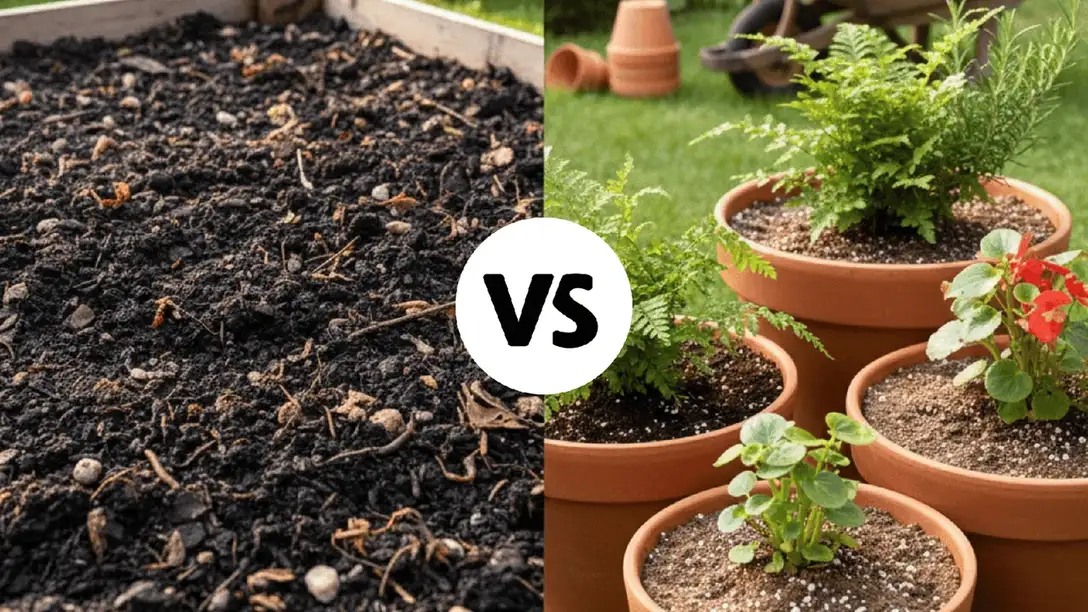
Garden soil belongs in in-ground beds, while potting soil belongs in containers. If you’re planting tomatoes in a yard bed, use the existing garden soil and improve it as needed; if the tomatoes are in a five-gallon bucket, use a container mix.
The main difference is how each medium handles water and air around roots. Garden soil is native or amended soil from the ground, so its texture depends on the site and may include sand, silt, clay, and organic matter. Potting mix is a formulated growing medium designed to stay loose enough for roots in a pot.
A container has limited space and no surrounding ground for excess water to move into. Dense soil can settle and hold water in that small space, leaving less oxygen for roots. In a garden bed, the surrounding earth gives water a larger area to move through, though poorly drained ground can still stay soggy.
The word “soil” on a bag can be confusing. Some products marketed as potting soil contain actual soil, while many container products are soilless mixes made with ingredients like peat moss, coir, bark, perlite, or compost. Check the label and intended use instead of trusting the name alone.
| Growing situation | Best starting choice | Why it fits |
|---|---|---|
| In-ground flower or vegetable bed | Existing garden soil, amended if needed | Roots can spread into the surrounding ground |
| Indoor houseplant in a pot | Potting mix suited to the plant | Loose structure supports drainage and airflow |
| Patio container or hanging basket | Potting mix labeled for containers | Lightweight mix is easier to manage and drains more freely |
| Raised bed open to native ground | Garden soil blended with organic matter | The bed connects with soil below, though its fill still needs good structure |
| Raised bed on pavement | A raised-bed mix or blend intended for deep beds | Roots rely on the material inside the bed for water and air |
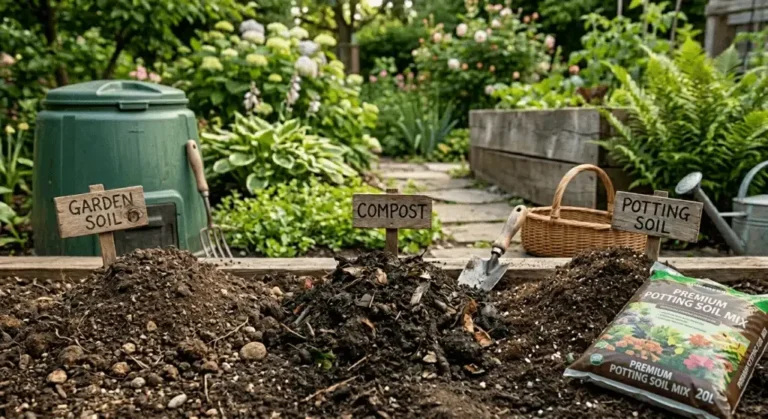
People sometimes use “garden soil,” “topsoil,” and “potting soil” as if they were interchangeable. They aren’t: garden soil and topsoil differences matter because topsoil usually refers to the upper layer of earth, while potting products are meant for container growing.
For an ordinary in-ground bed, the soil already there is often a better starting point than replacing everything with bagged material. A soil test can help identify pH and nutrient needs when plants keep struggling, but don’t assume a plant needs fertilizer just because it looks unhappy.
Pro Tip: Before filling a big container, check that it has drainage holes and read the product label for container use. A high-quality mix can’t fix a pot with nowhere for excess water to go.
Choose a Mix That Fits the Plant and Container
A good container mix drains excess water while holding enough moisture for roots to use. The right balance depends on the plant, pot size, indoor or outdoor conditions, and how often you can water.
Start with the plant’s needs. Many common houseplants do well in a general-purpose potting mix, but plants that prefer fast drainage may need a mix with extra coarse material. Seed starting, orchids, cacti, and moisture-loving plants each have different needs, so a single bag won’t be right for every pot in the house.
The container matters, too. A large pot filled with a mix that holds lots of water can stay wet longer than a small pot, especially indoors or in cool weather. A porous clay pot dries faster than a plastic or glazed pot, so the same mix can behave differently on a sunny porch and in a dim room.
Look for a label that names the intended use and lists ingredients. Perlite is a light, porous mineral that helps create air spaces; coir is a fiber made from coconut husks that can hold moisture; compost adds organic matter and may contribute nutrients. Ingredients don’t tell the whole story, but they give you a useful clue about how the mix may behave.
If you’re comparing bagged products, match the label to your plant and growing conditions rather than choosing by price or a claim like “all-purpose.” This guide to choosing the best potting soil can help you compare the job each product is designed to do.
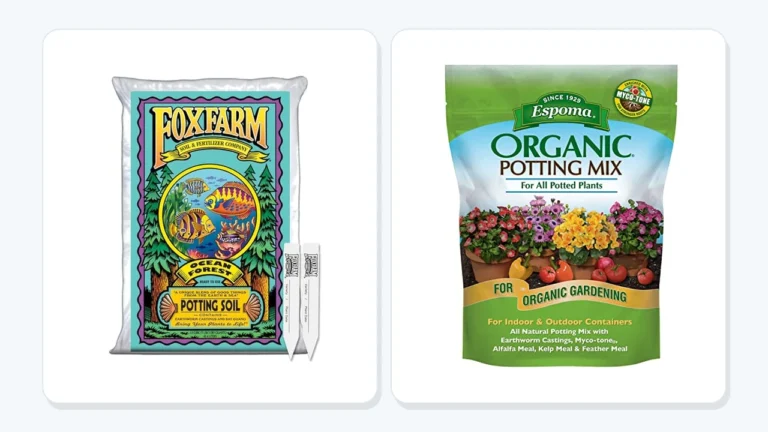
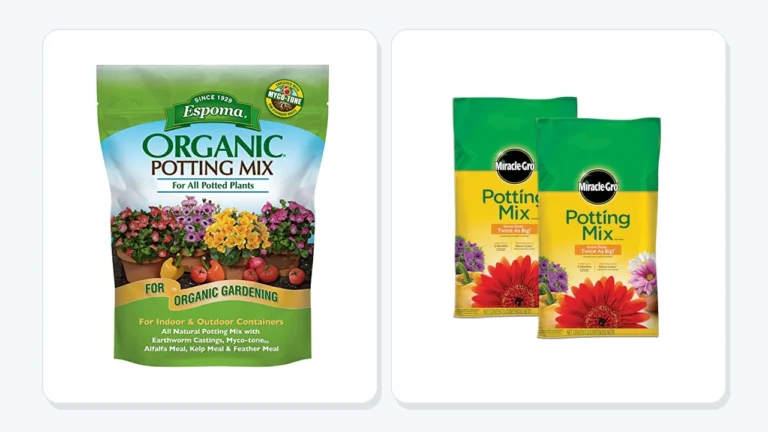
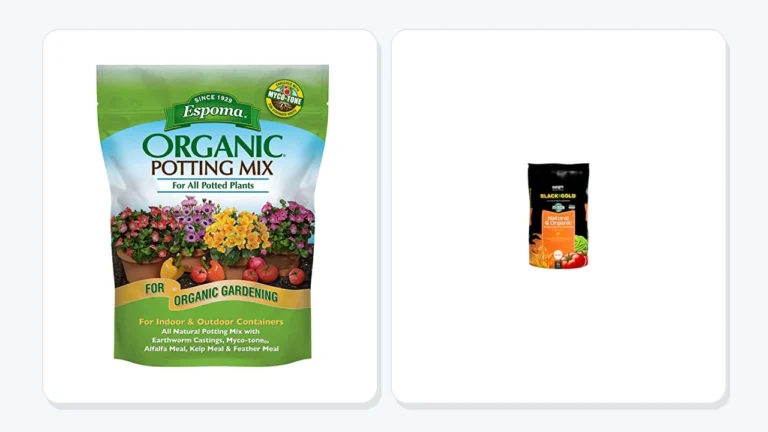
Organic labels don’t mean every mix behaves the same way. Organic products can differ in ingredients, drainage, texture, and nutrient content, so check the bag and look for a formulation that suits your plant. A comparison of organic potting soil options can help narrow the field if that’s your preference.
Potting mix and potting soil may also describe different kinds of products. Many potting mixes contain no field soil, while some potting soils include it; the useful question is whether the bag is labeled for containers and suits the plant. The details in potting mix versus potting soil are handy when two bags sound nearly identical.
Pro Tip: Moisten a new mix before planting if it’s very dry. Some dry ingredients resist water at first, and pre-moistening helps keep the root ball from sitting in a dry pocket after the first watering.
Raised beds need a little more thought than ordinary pots. A bed set directly on soil lets roots grow downward into the ground, while a bed on concrete acts more like a giant container. For the first kind, blend the existing soil with organic matter where needed; for the second, use material suited to deep raised beds rather than filling the box with dense yard soil.
Can you use garden soil in a pot if you mix it with potting soil? You can, but a small amount can still make a container mix denser, and the result depends on the soil’s texture and the pot’s drainage. If you’re considering that route, use safe soil mixing ratios as a starting point and watch how the mix drains.
A useful habit is to test moisture with a finger rather than watering by the calendar. If the top layer feels dry but the root zone is still wet, adding more water may make the problem worse; a pot’s size and material affect how quickly it dries.
- Use garden soil for in-ground planting and container mix for pots.
- Choose a product by intended use, ingredients, and plant needs.
- Raised beds on hard surfaces need a mix that can support roots without help from the ground below.
Fix Drainage and Soil Problems Before They Spread
Poor drainage and unsuitable soil can stress roots, but the right fix depends on where the plant is growing. A wet garden bed, a compacted pot, and a dry container may all look like “bad soil,” yet each calls for a different response.
In a garden bed that stays wet, check whether water collects after rain and whether the soil feels sticky or packed. Adding organic matter can improve soil structure over time, but piling a thin layer of compost on top won’t instantly fix a site with poor drainage. If water regularly stands in the bed, choose plants suited to the conditions or consider a raised bed with a workable fill.
For a container, make sure the drainage holes are open and the pot isn’t sitting in a saucer full of water. A compacted mix may need replacing, especially if it has shrunk, become hard to wet, or drains extremely slowly. Don’t add a layer of gravel at the bottom as a supposed drainage cure; water can remain perched above that layer instead of leaving the pot freely.
I once tried to rescue a container by poking holes into the mix with a stick, hoping to create airflow without disturbing the roots. It only opened a few narrow channels, and water still moved unevenly through the pot. When a mix has broken down badly, replacing it is often less frustrating than trying to patch it.
If the container’s contents dry out too fast, check the pot size, exposure to sun and wind, and the mix itself before watering more often. A small pot on a hot, breezy deck can dry much faster than a large indoor planter. The best soil for potted plants is the one that fits the plant and your watering routine, not a bag with the flashiest label.
A plant can wilt in wet soil as well as dry soil. Check the root zone before reaching for the watering can; adding water to already saturated soil can leave roots short of oxygen. Yellow leaves, slow growth, and a sour smell can signal trouble, but those symptoms have other causes too, so check light, pests, and watering habits as well.
Here’s a quick way to sort the problem:
- Water runs straight through a dry pot: moisten the mix slowly in several passes and check that the root ball takes up water.
- Water sits on top: check for compaction, clogged holes, or a mix that has broken down.
- Garden soil stays sticky and wet: improve the bed’s structure over time or choose plants that tolerate the site.
- A container dries out quickly: consider pot size, sun exposure, wind, and the plant’s water needs before changing the mix.
Important Tip: Wear gloves when handling soil or compost, and wash your hands afterward. If a bag smells strongly sour or looks moldy throughout, don’t use it for a sensitive indoor plant.
For edible plants, follow the bag’s label and any local guidance for materials used in raised beds. Don’t assume that every product labeled “garden” or “organic” is automatically suited to every crop or growing setup.
FAQs About Garden Soil vs Potting Soil
Can I use garden soil in a pot?
Usually, no. Garden soil can be too dense for containers, where roots depend on a small volume of mix for both water and air. A container-labeled potting mix is a safer starting point, while a small amount of garden soil may be workable only after considering texture, drainage, plant needs, and the pot.
Is potting soil better than garden soil?
Neither is better for every job. Potting soil or potting mix is better suited to containers because it’s formulated for roots in a confined space. Garden soil is the sensible choice for in-ground beds, where the surrounding ground supports drainage and root growth.
Match the medium to where the plant grows.
Can I mix garden soil and potting soil?
Yes, but the result can become dense if the garden soil contains a lot of clay or fine particles. The mix’s performance depends on its ingredients, the container’s drainage, and the plant’s moisture needs. For most container plants, starting with a container mix avoids uncertainty about how the added soil will behave.
Is potting mix the same as potting soil?
Not always. Potting mix often refers to a soilless blend, while some products called potting soil contain actual soil or compost. Labels vary, so check whether the product is intended for containers and what ingredients it contains.
The name alone doesn’t tell you how quickly it drains or how much moisture it holds.
What should I use in a raised garden bed?
Use a material intended for raised beds, and consider what’s underneath the bed. A bed directly on the ground can connect with native soil, while a bed on pavement depends entirely on its fill. Match the fill to the bed’s depth, drainage, and crops, and follow the product label for use.
Make the Soil Choice That Fits the Job
The practical choice is simple: use garden soil where roots can spread into the ground, and use a suitable potting mix where roots are contained by a pot. Raised beds sit between those cases, so pay attention to whether the bed opens into native soil or rests on a hard surface.
I’d rather see you start with the right medium than try to rescue a plant from a dense, waterlogged pot later. You don’t need the most expensive bag or a separate mix for every plant; you need one suited to the plant, container, and conditions you can provide.
Before planting, check the bag’s intended use, look at the drainage holes, and match the mix to the setup. That small pause can save you a muddy repotting job and give roots a much better start.

I’m Maya L. Greenwood, a lifelong plant lover who believes anyone can grow something beautiful with the right guidance. After years of testing soil mixes, pruning methods, irrigation tricks, and pest-safe solutions, I started EasyGardenTips.com to turn hard-won lessons into step-by-step advice. From seed starting and container gardens to composting and seasonal checklists, my goal is to make gardening simple, sustainable, and fun.