5 Cheap Potting Soil That Still Grows Healthy Plants: Top Picks
The wrong potting soil can leave a container soggy for days or dry out before your plant has a chance to settle in. Buy a bag that is too small and you may need another trip halfway through planting; buy a heavy, oversized bag for one little pot and the leftovers can become a storage chore.
For container plants, the important thing is a mix that suits where you plan to grow and how often you can water. Bag size matters too: a stated fill estimate gives you a useful starting point, while a large bag can be poor value if most of it sits unused.
Here’s what this guide will help you sort out:
- Match bag size and mix type to your pots and plants.
- Understand what fertilizer and moisture-control claims mean in everyday care.
- Pot a plant without burying its roots or blocking drainage.
- Store leftover soil so it stays tidy and ready to use.
Quick Picks
-
Best For Outdoor Container Plants

Miracle-Gro Organic Outdoor Potting Mix, 16 qt.
A 16-quart bag feeds outdoor container plants for up to two months and fills a 12-inch pot, suiting patio gardeners.
-
Best For Peat-Free Small Batches
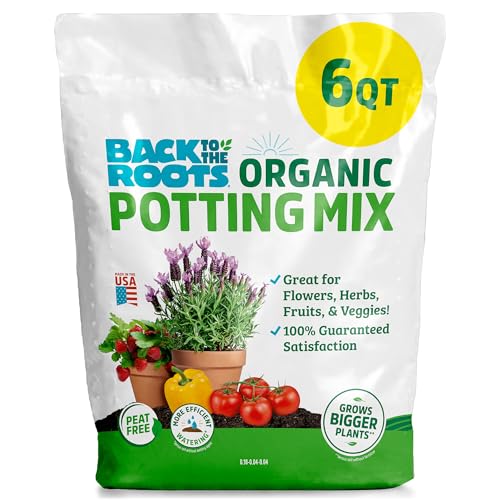
Back to the Roots Organic Potting Soil,
Peat-free 6-quart mix uses yucca for moisture control, making a smaller bag useful for mixed indoor and outdoor planting.
Top 5 Cheap Potting Soils at a Glance
Miracle-Gro’s outdoor mix suits gardeners filling a few outdoor pots, while Back to the Roots offers a smaller peat-free option for mixed planting. The other choices focus on indoor moisture needs, longer feeding, or a larger general-purpose bag, so read the use and coverage notes before buying.
| Product image | Product name | Check product |
|---|---|---|
| 1 |
Miracle-Gro Organic Outdoor Potting Mix, 16 qt. | Check Price |
| 2 |
Back to the Roots Organic Potting Soil, | Check Price |
3 |
Miracle-Gro Organic Indoor Potting Mix, 16 qt. | Check Price |
4 |
Miracle-Gro Moisture Control Potting Mix, 8 qt. | Check Price |
5 |
Michigan Peat Garden Magic General Purpose Potting | Check Price |
5 Best Cheap Potting Soils: Detailed Reviews
When I chose cheap potting soil, I paid attention to stated use, bag size, moisture features, and whether fertilizer is included. Those details help prevent the familiar beginner problems: buying too little, choosing a mix that doesn’t suit the growing space, or watering by guesswork.
The five options range from small bags to a 40-pound general-purpose mix, with different guidance for indoor and outdoor containers. Looking at the stated ingredients and use instructions side by side helps you focus on what fits your actual pots instead of assuming every bag labeled potting soil works the same way.
1. Miracle-Gro Organic Outdoor Potting Mix, 16 qt.
A 16-quart bag feeds outdoor container plants for up to two months and fills a 12-inch pot, suiting patio gardeners.
- Size16QT
- Colorbrown
- Number Of Items1
- COVERAGEOne 16 qt. bag of Miracle-Gro Organic Outdoor Potting Mix fills one 12-inch pot with garden soil for containers (am
Miracle-Gro Organic Outdoor Mix is a 16-quart potting mix for people filling outdoor containers with flowers, herbs, vegetables, annuals, or perennials. It combines an all-purpose outdoor use with a stated fill estimate, which can help you plan before opening the bag.
The mix includes quick-release natural fertilizer, meaning plant food intended to become available soon after planting. The stated feeding period is up to two months, so a beginner has a simple starting point for feeding plans rather than needing to add fertilizer immediately. Follow the plant’s needs and the package directions as that period passes.
The blend also contains responsibly sourced peat moss. Peat moss is a material used in potting mixes to help hold moisture, and the bag’s outdoor-container focus makes this a straightforward match for patio pots. The stated coverage is one 12-inch pot, though a large root ball can change how far the bag goes.
Pros:
- 16-quart bag, with a stated 12-inch-pot fill estimate.
- Outdoor use includes vegetables, flowers, herbs, and perennials.
- Natural fertilizer feeds plants for up to two months.
- Peat is described as responsibly sourced.
Cons:
- The stated feeding period is limited to up to two months.
- Outdoor-container focus may not suit someone planting houseplants.
- One bag’s coverage can change with root-ball size.
Buy it if: you’re filling outdoor containers and want a stated feeding period, because the mix includes quick-release natural fertilizer for up to two months.
Skip it if: you’re potting only indoor houseplants, because this mix is described for outdoor containers and an indoor-focused potting mix may suit your planting better. For another fit, consider Back or Miracle.
I’d choose Miracle-Gro Organic Outdoor Mix when the job is a handful of patio pots and an easy-to-understand bag size matters. The feeding period and 12-inch-pot coverage estimate make planning more concrete for a beginner. Check the current bag instructions and confirm that the quantity suits your containers before buying.
This is the practical fit for outdoor container planting, not a universal answer for every indoor pot.
2. Back to the Roots Organic Potting Soil,
Peat-free 6-quart mix uses yucca for moisture control, making a smaller bag useful for mixed indoor and outdoor planting.
- Size6 Quart
- ColorPremium Potting Mix
- WeightNot listed; check details
- DimensionsNot listed; check details
Back to the Roots Organic Potting Soil is a 6-quart peat-free mix for someone who wants one small bag for herbs, vegetables, fruits, or flowers. Its smaller size can help avoid a bulky leftover bag when you have only a few containers to fill.
The mix is made from upcycled plant matter and wood fines, and the description says it contains no peat. Yucca extract is included for moisture control. In plain terms, the ingredient is intended to help manage water in the mix, which may be useful if you’re still getting a feel for how quickly a pot dries.
Dolomitic limestone is another listed ingredient, included for pH balancing. Soil pH affects how well plants can access nutrients, though the bag details here don’t give a particular pH reading. This is an all-purpose mix, but the six-quart quantity means checking your pot sizes matters before you assume one bag will fill several large containers.
Pros:
- Peat-free mix, made with upcycled plant matter and wood fines.
- 6-quart bag is manageable for small planting jobs.
- Yucca extract is included for moisture control.
- Listed for herbs, vegetables, fruits, and flowers.
- Dolomitic limestone is included for pH balancing.
Cons:
- Six quarts may not cover multiple large containers.
- No numeric coverage estimate is stated here.
- The provided details don’t give a measured pH value.
Buy it if: you want a small peat-free bag for a few kinds of plants, because the mix includes yucca for moisture control.
Skip it if: you need enough mix for many large pots, because a 6-quart bag may run short and a larger-volume bag would better suit the job. Miracle-Gro Organic Outdoor Potting Mix, 16 and Miracle-Gro Organic Indoor Potting Mix, 16 are worth a closer look instead.
What I like about Back to the Roots is the useful combination of a compact bag and a peat-free blend. That makes it easier to try a potting mix across a few herbs or flowers without bringing home a very large quantity. The details don’t state how many pots the bag fills, so check your containers’ volume before ordering.
It suits a small planting session better than a big patio refresh.
3. Miracle-Gro Organic Indoor Potting Mix, 16 qt.
The catalog lists HELPS REGULATE SOIL MOISTURE: Miracle-Gro Organic Indoor Potting Soil Mix is an organic potting soil that prot. Compare fit and care needs before choosing.
- Size16.qt
- COVERAGEOne 16 qt. bag of Miracle-Gro Organic Indoor Potting Mix fills one 12-inch container with potting soil for indoor p
- WeightNot listed; check details
- DimensionsNot listed; check details
Miracle-Gro Organic Indoor Mix is a 16-quart blend for houseplants, indoor herbs, and seed starting. Its stated moisture-regulation purpose makes it a relevant option for someone who tends to overwater one week and forget the watering can the next.
The mix is described as helping protect indoor plants against over- and underwatering. That is a moisture-management claim, not a promise that the soil can replace checking the plant or using a pot with drainage. Think of moisture control as a buffer: it may help make watering less unforgiving, while the plant’s needs and the room still matter.
This blend contains sphagnum peat moss, coir, and quick-start natural fertilizer. Coir is a plant-fiber material used in growing mixes; alongside peat, it helps make up the soil blend, while the fertilizer is included to get plants started. The stated coverage is one 12-inch container, with the amount affected by the size of the root ball.
Pros:
- 16-quart bag, with a stated one-container fill estimate.
- Intended for indoor containers and houseplants.
- Also listed for indoor herbs and seed starting.
- Includes coir, peat moss, and natural fertilizer.
- Moisture-regulation feature addresses over- and underwatering.
Cons:
- Contains peat, unlike a peat-free option.
- Stated coverage can vary with root-ball size.
- Moisture-control wording does not remove the need for drainage.
Buy it if: you’re repotting indoor plants and want a mix designed to help regulate moisture, because it’s made for houseplants and indoor containers.
Skip it if: you specifically need a peat-free mix, because this blend includes peat moss and a peat-free potting soil may better match that preference. If those trade-offs rule it out, Miracle or Back may suit you better.
I’d put Miracle-Gro Organic Indoor Mix on the list for a new plant owner who wants a stated indoor use and a little help managing watering swings. The blend’s ingredients and seed-starting use give it more than one possible job around the house. Before you buy, check that the intended plants and pot sizes match the instructions on the bag.
It’s a sensible indoor-focused choice if peat is acceptable to you.
4. Miracle-Gro Moisture Control Potting Mix, 8 qt.
The catalog lists FEEDS UP TO 6 MONTHS: Miracle-Gro Moisture Control Potting Soil Mix feeds plants for up to 6 months and Grows . Compare fit and care needs before choosing.
- Size8 qt. (2-pack)
- Number Of Items2
- COVERAGEThis bundle comes with two 8 qt. bags of Miracle-Gro Moisture Control Potting Mix; each bag fills two 8-inch contai
- WeightNot listed; check details
Miracle-Gro Moisture Control Potting Mix is an outdoor container mix sold here as two 8-quart bags. The two-bag format can be convenient if you’d rather open one bag at a time or spread planting across separate sessions.
The mix is described as absorbing up to 33% more water than basic potting soil without sphagnum peat moss, coir, and a wetting agent. A wetting agent helps water spread through the mix instead of running off dry spots. That can be useful if a container dries unevenly, but it doesn’t mean a pot can stay waterlogged or skip its drainage hole.
The listed feeding period is up to six months, and the mix is intended for flowers, vegetables, annuals, perennials, and shrubs in containers. Each 8-quart bag is stated to fill two 8-inch containers, with the amount depending on the root ball. Those details help with planning, though you’ll still want to size the bag to your actual pots.
Pros:
- Two separate 8-quart bags can be opened as needed.
- Each bag is stated to fill two 8-inch containers.
- Moisture mix absorbs up to 33% more water than the stated comparison.
- Feeding period is up to six months.
- Listed for several kinds of outdoor container plants.
Cons:
- The stated use is outdoor container planting.
- Moisture retention doesn’t replace drainage or sensible watering.
- The six-month feeding period is an upper stated period, not a schedule for every plant.
Buy it if: you want separate bags for outdoor pots and a longer stated feeding period, because this mix comes in two 8-quart bags and feeds for up to six months.
Skip it if: you want a single small bag for a couple of houseplants, because the two-bag outdoor format may be more soil than your job calls for.
To me, the clearest reason to choose Miracle-Gro Moisture Control is the split-bag format paired with a stated container fill estimate. The moisture feature may also help gardeners whose pots dry unevenly, provided the containers drain properly. Check the plant’s feeding needs and bag directions rather than treating the maximum feeding period as a universal rule.
This mix makes the most sense for someone planting multiple outdoor pots.
5. Michigan Peat Garden Magic General Purpose Potting
The catalog lists Versatile Potting Soil: Let your plants grow healthy and strong with this general-purpose potting soil featuri. Compare fit and care needs before choosing.
- Size40 lbs
- Number Of Items1
- WeightNot listed; check details
- DimensionsNot listed; check details
Michigan Peat Garden Magic is a general-purpose 40-pound soil blend for someone with several planting jobs and a place to store a heavy bag. It is described for indoor and outdoor use, including flower pots, raised beds, and other planters.
The blend includes reed sedge peat, organic peat moss, and other materials, with moisture retention as a stated feature. Moisture retention can help soil stay damp through moderate dry spells, but it also makes good drainage and careful watering important. A large bag can be useful for repeated projects, while its weight makes it a less convenient choice for a single small indoor pot.
The description says the mix is ready to use without additional mixing. That can save a step when you’re filling containers, though the word “soil” doesn’t tell you whether every plant has the same needs. Before using it in a container, make sure the container has drainage and follow the plant’s care requirements.
Pros:
- 40-pound bag suits larger or repeated planting jobs.
- Listed for indoor and outdoor planting.
- Described for pots, raised beds, and other planters.
- Moisture retention can help during moderate dry periods.
- Ready to use out of the bag, according to the description.
Cons:
- A 40-pound bag may be heavy to move or store.
- No volume-based pot coverage estimate is stated here.
- Moisture-retaining soil still needs sensible watering and drainage.
Buy it if: you have several planting jobs and room to handle a heavy bag, because the 40-pound blend is listed for indoor and outdoor use.
Skip it if: you’re filling just one small pot or can’t manage a heavy bag, because a smaller bag would be easier to carry and store.
I’d consider Michigan Peat Garden Magic for a gardener who expects to use a lot of soil and wants a ready-to-use general blend. Its weight is the main trade-off, so don’t let a large bag look like a bargain if you have nowhere to keep it. The stated coverage is not given in pot sizes, which means estimating quantity takes extra care.
Pick it when the amount and storage space genuinely fit your plans.
How to Choose the Best Cheap Potting Soil
The best cheap potting soil for you is the least expensive mix that suits your plant, pot, and watering habits without leaving you with a pile of unused soil. Start with where the plant will grow, then compare bag quantity, moisture features, and feeding instructions.
Match the mix to the growing place
A potting mix described for indoor containers is a clearer starting point for houseplants than one focused on outdoor planters. Outdoor containers, herbs, and vegetables may call for a mix whose use directions name those plants. For a broader overview of potting soil choices, focus on the stated plant use and container instructions rather than a broad “all-purpose” phrase alone.
The word “organic” by itself does not tell you whether a mix suits an indoor plant, a vegetable pot, or seed starting. Read the listed uses and ingredients, and don’t treat a label as proof of a plant result. If your plant has a specific growing requirement, compare that requirement with the bag directions before purchasing.
Estimate how much soil you need
A quart is a measure of volume, so bag size gives you a better clue about pot coverage than bag weight alone. Use a manufacturer’s stated container estimate when it’s available, then allow for the root ball and the pot’s shape. A deep or wide container can take more mix than a smaller pot, even if both are described by a similar width.
Count the containers you’ll fill and check whether the bag description gives a fill estimate. If it doesn’t, measure your pots or compare their capacity with the bag’s volume before ordering. Buying slightly more than you need can be sensible for a planned set of pots, but excess soil is only a bargain if you can store it properly.
Decide whether you want fertilizer included
Some mixes include fertilizer and describe how long it feeds plants. That can reduce the need to add plant food right away, but the stated period is not a universal feeding schedule for every plant. Check the plant’s care needs and follow the bag’s directions before adding extra fertilizer.
If you want to control feeding separately, compare the ingredients and look for a mix whose description does not list fertilizer. A guide to potting soil without fertilizer can help clarify what to look for when you want to choose the feeding plan yourself. Don’t assume that an ingredient list is complete beyond what the package states.
Think about how quickly the mix dries
Moisture-control ingredients and claims can be useful if you often forget a watering or tend to water too often. They don’t replace a drain hole, and they don’t mean every plant should be kept equally damp. The pot, room temperature, sunlight, plant size, and season all affect how quickly soil dries.
If you’re a beginner, choose a mix whose intended use fits your plant and learn to check the soil before watering. Press a finger into the top layer and feel whether it’s still damp; for a larger pot, check a little below the surface. A simple check is more dependable than watering on a rigid calendar.
Read the ingredient and texture clues
Potting mixes can contain peat, coir, wood fines, plant matter, limestone, or other ingredients. These names describe materials, not an automatic quality ranking. For instance, coir is plant fiber, while limestone may be included to help balance pH; the exact role depends on the blend and package directions.
A loam-based mix may be a different choice from a lightweight container blend, so read the intended use before substituting one for another. If you’re comparing loam potting soil, check what the mix is meant to grow and whether the container has adequate drainage. Don’t choose by texture alone when the growing instructions matter more.
Set a realistic budget for the job
Compare how much soil you get with the number and size of your containers, not just the bag price. A small bag may cost less upfront but require several bags for a large project. A bulkier bag can lower the cost per amount yet become poor value if it is hard to move or most of it goes unused.
Also consider what comes in the mix. Fertilizer, moisture-control ingredients, and intended use can change whether you need another purchase, but don’t assume those features automatically save money. Your best value is a bag you can use for the planned plants without extra purchases you didn’t want or a surplus you can’t store.
How to Use Cheap Potting Soil for the Best Results
Use potting soil in a clean container with drainage, settle the plant at the right height, and water according to the mix and plant directions. Good setup matters more than pressing the soil down hard or adding extra ingredients by guesswork.
- Check the plant and bag directions. Confirm that the mix is intended for your plant and growing location. Look for any instructions about fertilizer, seed starting, or watering before you begin.
- Choose a pot with a drainage hole. Water needs a way to leave the container. A decorative outer pot can hold a nursery pot, but empty standing water after watering.
- Add enough mix to support the roots. Partially fill the pot so the plant’s root ball can sit at the correct height. Avoid burying stems that should remain above the soil line.
- Loosen the root ball gently. Tease apart tightly packed outer roots without yanking or tearing them. If the plant is delicate, handle the root ball carefully and follow any plant-specific directions.
- Set the plant and fill around it. Add mix around the roots, leaving space near the rim for watering. Press lightly to remove large gaps, but don’t pack the soil into a hard block.
- Water thoroughly and let excess drain. Follow the bag’s instructions, which may call for thorough watering after planting. Let the pot drain rather than leaving it in a saucer full of water.
- Label what you planted and when. A simple note helps you remember which mix and feeding instructions you used. It also gives you a useful record if several pots need different care.
For seeds, use the instructions on the seed packet and the soil bag rather than treating all seed-starting setups alike. Keep track of moisture and light, and don’t bury seeds deeper than their directions suggest. If your main job is starting young plants, compare guidance on organic seedling potting soil before assuming an all-purpose mix is the right fit.
How to Make Your Potting Soil Last Longer
Store leftover potting soil sealed, dry, and out of direct weather, then use clean tools when scooping it. Good storage keeps the bag easier to manage and helps prevent rain, spilled water, or yard debris from changing what’s inside.
Close the bag after each use or move the remaining mix into a clean, covered container. Keep it somewhere dry and protected from rain, and avoid storing it where a leak or damp floor can soak through. If the bag is too bulky to close neatly, divide the soil into smaller containers and label them with the mix type.
Before reusing stored soil, inspect it for excess moisture, clumping, debris, or anything that seems out of place. Follow the package directions for use and storage, especially if fertilizer is included. Don’t add old soil to a new pot automatically; first consider what was planted in it and whether it remains suitable for the next job.
Use a scoop or trowel that is reasonably clean, and avoid dropping soil onto a surface where it can pick up debris. Keep the bag away from pets and children, and wash your hands after handling potting mix. If a bag has been left open outdoors, check its condition before using it rather than assuming it stayed unchanged.
A simple maintenance rhythm works well: close the bag after each use, check stored mix before a new planting session, and review fertilizer directions whenever you repot. Don’t pour leftover soil into a container simply to empty the bag. Use only as much as the pot needs, and keep the plant’s roots at a suitable depth.
If you want to stretch a budget further, plan a few compatible planting jobs before opening a large bag. For tips on making potting soil on a budget, compare the ingredients and intended uses of any mix you consider. Avoid adding unmeasured materials to a bag just because they are cheap; changing the blend can change how it drains and holds water.
Common Mistakes to Avoid When Buying and Using Cheap Potting Soil
A little planning prevents most potting-soil headaches. These are the mistakes that can waste a bag or make watering harder than it needs to be.
- Buying by price alone: A low upfront cost can still leave you short of soil. Estimate pot volume and compare the bag’s stated coverage before choosing.
- Ignoring indoor or outdoor use: A mix made for outdoor containers may not be the right match for houseplants. Check the stated use against where your plant will live.
- Overestimating how far a bag goes: Root balls take up space, and pot shapes differ. Use the bag’s coverage estimate as a guide, not a guarantee.
- Choosing a moisture feature instead of adding drainage: Moisture control does not let water escape the pot. Use a container with a drain hole and empty standing water.
- Adding fertilizer without checking the mix: Some potting soil already includes plant food. Read the feeding directions first so you don’t add more by habit.
- Packing soil too tightly: Firmly compressing a potting mix can make it harder to water evenly. Settle soil gently around the roots instead.
- Leaving an open bag in the rain: Wet or contaminated leftovers may not be suitable for your next planting job. Close the bag and store it somewhere dry.
Another common misstep is expecting a generic mix to suit every plant equally well. A bag can be useful across several kinds of plants without being the ideal choice for every seed, houseplant, or container. Read the use directions, then adjust your watering based on the actual plant and pot rather than the bag’s broadest claim.
How to Set Up Potting Soil for a New Container
Potting soil doesn’t need assembly, but preparing a container and placing the plant correctly still takes a few simple steps. Keep the bag, pot, plant, and watering can close by so you don’t have to carry an open container across the room.
- Pick a work surface. Use a spot you can sweep or wipe afterward. Potting mix can spill, so keep it away from food-preparation areas.
- Check the drainage hole. Make sure water can leave the container before adding soil. If the pot has no drainage, choose a different planting setup rather than letting water collect at the bottom.
- Read the bag before opening it. Confirm the intended use, coverage, and any feeding instructions. This is the moment to notice if you bought an outdoor blend for an indoor planting job.
- Open the bag carefully. Cut or tear only what you need, and keep the opening pointed away from your face. A smaller scoop is easier to control than tipping a heavy bag over the pot.
- Partially fill the container. Add enough mix to support the plant while leaving room for the root ball and more soil around it. Don’t fill to the rim before the plant is in place.
- Position the plant. Loosen the root ball gently, then set it at a suitable height. Avoid covering the plant’s stem simply to use up extra soil.
- Fill, water, and tidy up. Add mix around the roots, press lightly, and water as the directions say. Let the pot drain and close the soil bag before cleaning the work surface.
The most common stumbling point is using too much mix before checking where the plant will sit. If the root ball ends up too high or too low, remove some soil and adjust instead of forcing the plant into place. A little patience here saves a messy repotting redo.
Common Questions About Cheap Potting Soil
Is cheap potting soil okay for houseplants?
Yes, lower-cost potting soil can work for houseplants if its stated use matches the plant and container. Check whether the mix is intended for indoor use, whether it includes fertilizer, and whether the pot drains. A low price doesn’t tell you those details, so read the bag before filling the pot.
How much potting soil do I need for one pot?
The amount depends on the pot’s volume and how much space the plant’s root ball takes up. Use a bag’s container coverage estimate when one is given, then account for the plant. If no estimate is stated, measure your container or compare its capacity with the bag size before you buy.
Should cheap potting soil include fertilizer?
It can include fertilizer, but that feature isn’t right for every gardener or every plant. A feeding period on the bag gives you a starting point, not a rule to fertilize every plant the same way. Read the instructions and avoid adding extra plant food until you know what the mix contains.
Is peat-free potting soil better?
Peat-free is a preference, not a guarantee that a mix will suit every plant better. Compare the ingredients, intended use, and watering guidance, then choose based on your needs. If you want to avoid peat, check the package description rather than assuming every mix labeled organic is peat-free.
Can I use potting soil for seedlings?
Some potting mixes are described for seed starting, while others focus on established container plants. Check the bag and seed packet for directions before planting. Seed depth, moisture, and light also matter, so a general-purpose label alone doesn’t answer whether a particular mix is a good match.
How long can I keep an opened bag of potting soil?
There isn’t one useful time limit for every opened bag because storage conditions and mix ingredients differ. Close it, keep it dry and protected from weather, and inspect it before using it again. Follow the package instructions, and don’t use soil that has become soaked or visibly contaminated.
Make the Bag Fit the Planting Job
Before you buy, count the pots, check their size, and decide whether your plants need an indoor or outdoor mix. Then compare the stated coverage and feeding details with your plan; if those match, you can choose a bag size you’re likely to use rather than paying for soil that stays in storage.

I’m Maya L. Greenwood, a lifelong plant lover who believes anyone can grow something beautiful with the right guidance. After years of testing soil mixes, pruning methods, irrigation tricks, and pest-safe solutions, I started EasyGardenTips.com to turn hard-won lessons into step-by-step advice. From seed starting and container gardens to composting and seasonal checklists, my goal is to make gardening simple, sustainable, and fun.