Best Reflective Material for Grow Tent: 3 Bright, Durable Picks
Choosing the best reflective material for grow tent walls is about more than making the inside of the enclosure look bright. A good lining should return stray light toward the canopy, tolerate humidity, clean easily, resist tearing during installation, and remain flat enough that it does not become frustrating to work with.
The right material also depends on what you are building. A complete manufactured grow tent already has a reflective interior, so adding another layer usually provides little benefit. Reflective rolls become much more useful when you are building a DIY grow enclosure, lining a closet or room, repairing damaged reflective walls, or creating a custom propagation space.
My first recommendation is the VIVOSUN Black & White Panda Film. It combines a durable 5.5-mil polyethylene construction, an opaque black side for light blocking, and a white reflective side rated by VIVOSUN at over 90% reflectivity. Its combination of strong Amazon customer feedback and practical DIY-room durability makes it the most versatile material in this comparison.
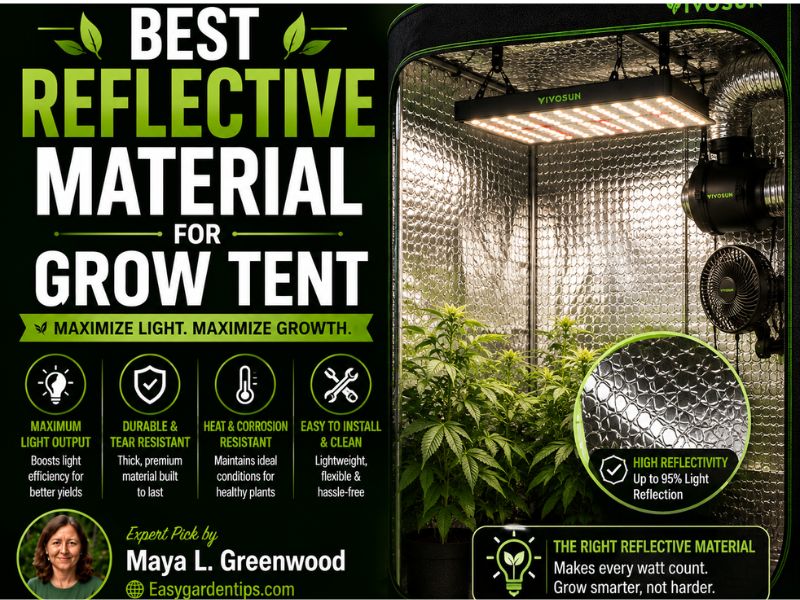
If maximizing reflectivity is the priority, the VIVOSUN 6 Mil Diamond Mylar Film is the stronger choice. VIVOSUN specifies roughly 92%–97% reflectivity, a 6-mil laminated construction, and a diamond-textured surface designed to spread reflected light more evenly.
The VIVOSUN Highly Reflective Mylar Film Roll takes third place. It uses aluminum-coated PET film and is rated around 95% reflectivity, making it useful when you want lightweight, highly reflective material that can cover a large wall area without the bulk of thicker Panda Film.
3 Best Reflective Materials for Grow Tents
| Image | Product Name | Check Price |
|---|---|---|
Best Choice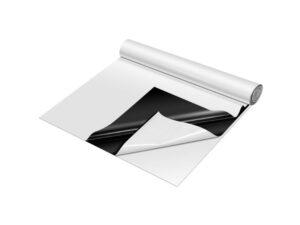 | VIVOSUN Black & White Panda Film | Check Price |
Second Best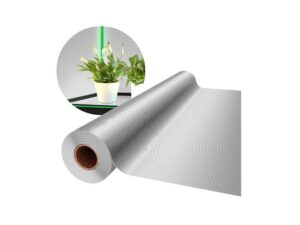 | VIVOSUN 6 Mil Diamond Mylar Film | Check Price |
Third Choice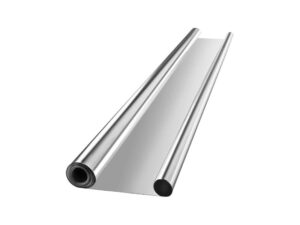 | VIVOSUN Highly Reflective Mylar Film Roll | Check Price |
I ranked these materials using current Amazon rating and review confidence together with practical indoor-growing characteristics:
- Reflectivity
- Durability
- Thickness
- Light blocking
- Moisture resistance
- Ease of cleaning
- Installation difficulty
- Ability to lie reasonably flat
- Suitability for DIY grow tents and grow rooms
The most reflective material is not automatically the best one for every installation. A slightly less reflective sheet can be preferable if it is easier to stretch flat, blocks external light, and survives repeated cleaning.
1. VIVOSUN Black & White Panda Film
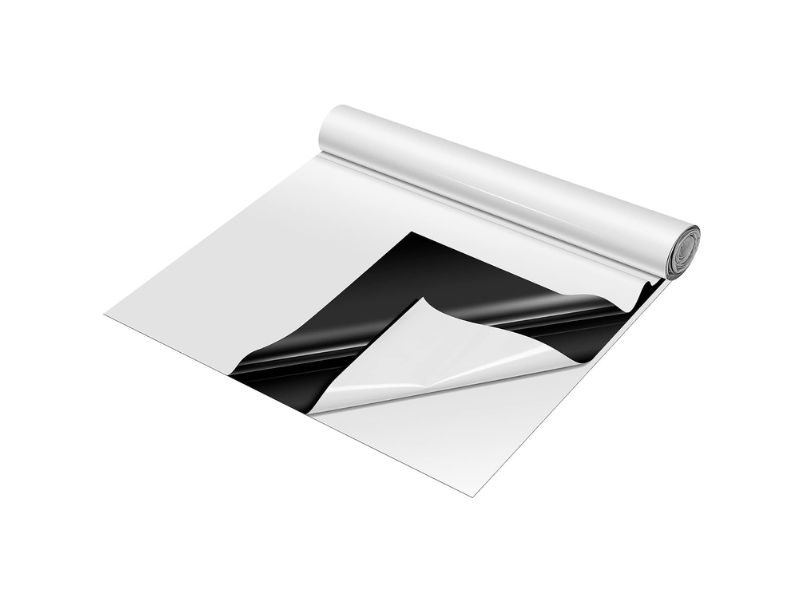
Key Features
- 5.5-mil poly construction
- White reflective surface
- Black light-blocking reverse side
- Over 90% stated reflectivity
- Multiple roll sizes
- Durable and moisture-resistant
- Suitable for DIY grow rooms and enclosures
Panda Film takes first place because it solves two problems simultaneously: reflection on the inside and light blocking on the outside.
VIVOSUN uses a black-and-white design with the white surface facing the plants. The manufacturer states that the white side provides more than 90% reflectivity, while the black side helps prevent light penetration through the material. The film is 5.5 mil thick and made from high-strength poly material rather than very thin reflective foil.
That thickness makes Panda Film particularly useful for DIY structures. You can stretch it across a frame, staple or tape it to rigid walls, or use it as a removable lining without worrying as much about every small wrinkle or accidental pull.
White reflective surfaces also produce a visually softer reflection than mirror-like film. Rather than seeing sharp reflections of the grow light, the wall looks diffusely bright.
The main tradeoff is slightly lower stated reflectivity than VIVOSUN’s diamond Mylar. If maximum reflected-light percentage is your only goal, the diamond film has the stronger specification. But for a complete DIY wall covering, Panda Film’s combination of opacity, durability, and easy handling makes it more practical.
What I Like
- Reflective and light-blocking in one sheet
- Thick enough for repeated handling
- Easier to install than very thin Mylar
- Good choice for large DIY enclosures
What I Do Not Like
- Stated reflectivity is lower than diamond Mylar
- White surface can show dirt and residue
For a grower constructing an enclosure from scratch, Panda Film is the material I would choose first because it works as both a reflective interior wall and an opaque enclosure skin.
2. VIVOSUN 6 Mil Diamond Mylar Film
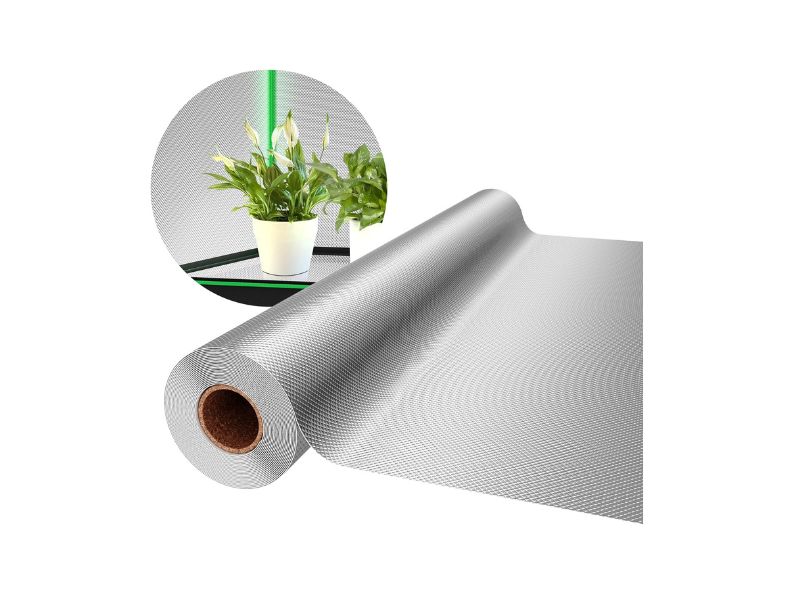
Key Features
- 6-mil heavy-duty film
- Diamond-textured reflective surface
- Approximately 92%–97% stated reflectivity
- PET/aluminum-based laminated construction
- Resistant to normal humidity exposure
- Available in multiple roll lengths
- Wipe-clean surface
VIVOSUN Diamond Mylar takes second place because it offers the strongest combination of high reflectivity and substantial construction.
The current Amazon listing specifies approximately 92%–97% reflectivity and describes the material as a 6-mil PET-based reflective film with an embedded diamond texture. The textured face is intended to scatter reflected light across a broader area rather than producing a single mirror-like reflection.
VIVOSUN also uses reflective Mylar extensively inside its own grow tents and describes textured Mylar as a way of returning otherwise wasted light toward plants. Its grow-light guidance specifically discusses Diamond Mylar as a reflective lining intended to distribute reflected light without concentrated hot spots.
The 6-mil construction is important. Thin reflective film can tear, crease, and wrinkle easily during installation. A thicker roll is more forgiving when you are covering a plywood wall, closet interior, or homemade frame.
The surface can also be wiped down when dust or water residue accumulates. Keeping reflective surfaces clean matters because dirt reduces the amount of usable light returned toward the canopy.
What I Like
- Highest stated reflectivity in this group
- Thick, durable construction
- Diamond texture helps diffuse reflections
- Easy to clean
What I Do Not Like
- Does not provide the same convenient black outer layer as Panda Film
- More reflective than necessary if the existing tent walls are already good
Choose Diamond Mylar when your priority is creating a highly reflective interior surface and the underlying wall or enclosure already provides structural support and light blocking.
3. VIVOSUN Highly Reflective Mylar Film Roll
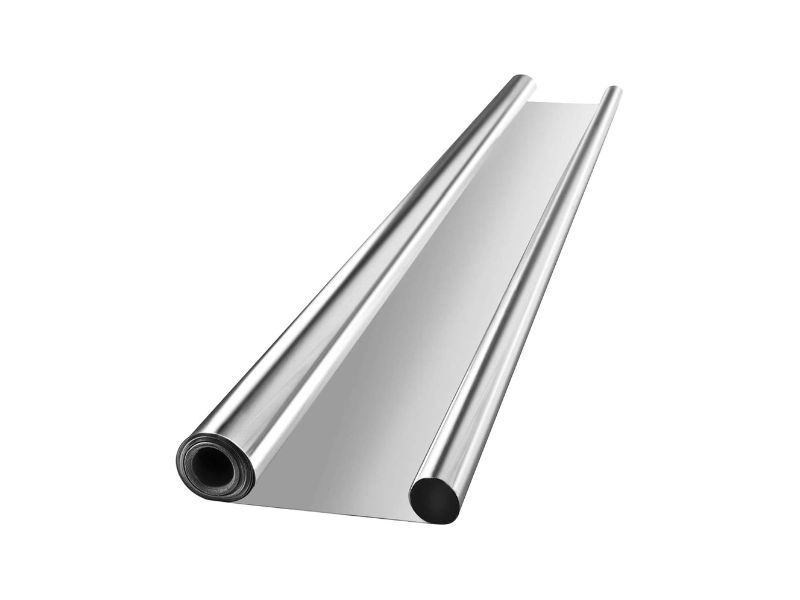
Key Features
- Aluminum-coated PET reflective film
- Approximately 95% stated reflectivity
- Lightweight roll format
- Water-resistant surface
- Large coverage options
- Easy to roll for storage
- Suitable for walls and DIY growing spaces
The smooth VIVOSUN Mylar roll is the lightweight option.
The current Amazon listing identifies it as aluminum-coated PET reflective film and states approximately 95% reflectivity. It is designed to reflect grow-light output back toward plants and can be rolled up again when the space is no longer being used.
Its biggest advantage is coverage.
A light roll can cover a relatively large wall or temporary growing space without adding significant weight. That makes it useful for:
- Closets
- Propagation areas
- Temporary walls
- Light-reflecting panels
- Small DIY grow boxes
The downside is installation sensitivity.
Smooth reflective film needs to be mounted reasonably flat. Heavy wrinkles and folds create uneven geometry and make the finished room harder to clean. The material also offers less structural durability than thick Panda Film or the 6-mil Diamond Mylar.
What I Like
- Highly reflective
- Lightweight
- Easy to cover large areas
- Simple to roll and store
What I Do Not Like
- Easier to crease than heavy film
- Needs careful installation for a clean result
This is the better option when you want maximum coverage with minimal material weight and are willing to spend more time mounting it neatly.
Reflective Material Comparison
| Material | Stated Reflectivity | Construction | Light Blocking | Main Strength |
| VIVOSUN Panda Film | 90%+ | 5.5-mil black/white poly | Excellent | Durable DIY enclosure walls |
| VIVOSUN Diamond Mylar | 92%–97% | 6-mil textured reflective film | Depends on backing | High reflectivity and durability |
| VIVOSUN Smooth Mylar | ~95% | Aluminum-coated PET | Limited by installation/backing | Lightweight large-area coverage |
The important takeaway is that reflectivity is only one buying factor. Panda Film gives up a few percentage points on the specification sheet but adds opacity and substantially easier DIY handling.
Why Grow Tents Use Reflective Material
LED grow lights send most of their useful output downward, but not every photon lands directly on a leaf.
Some light reaches:
- Side walls
- Floor
- Corners
- Gaps between plants
A reflective lining redirects part of that light back into the growing area instead of allowing it to be absorbed by a dark wall.
VIVOSUN describes reflective Mylar as an important grow-tent feature because it helps return otherwise unused light toward the plants.
Reflection does not create more light.
If a fixture produces a certain amount of photosynthetically active radiation, reflective walls cannot generate additional photons.
They can simply reduce some of the losses that would otherwise occur when light reaches a poorly reflective surface.
Mylar vs Panda Film
This is the main decision for most DIY growers.
Mylar
Mylar-style reflective film is usually the better choice when:
- Maximum reflection matters
- The enclosure wall already exists
- Light blocking is handled separately
- You want a metallic reflective interior
Advantages include:
- High reflectivity
- Low weight
- Easy cleaning
- Good use on flat rigid walls
Panda Film
Panda Film is generally better when:
- You are building the enclosure itself
- External light needs to be blocked
- Durability matters
- You expect repeated setup and teardown
- The material needs to span gaps between supports
The white side reflects light inward.
The black side helps block transmitted light. VIVOSUN specifically describes its Panda Film this way.
For a DIY tent frame made from PVC, lumber, or metal tubing, I usually prefer Panda Film.
For lining a finished closet or plywood enclosure, Diamond Mylar becomes more attractive.
Diamond Mylar vs Smooth Mylar
Both are highly reflective, but they behave differently physically.
Smooth Mylar
Smooth film creates more specular, mirror-like reflections.
Its advantages include:
- High reflectivity
- Lightweight construction
- Simple roll storage
Its main weakness is installation.
Creases and loose areas are obvious, and a very thin reflective sheet can be frustrating to keep flat.
Diamond Mylar
Diamond film has a textured surface.
VIVOSUN describes its pattern as spreading reflected light more evenly across the growing area, and its current product line uses textured reflective interiors in grow tents for this reason.
The thicker 6-mil material is also easier to handle than very lightweight film.
For a permanent DIY grow room, Diamond Mylar is generally the better Mylar format.
Is White Material Good for Grow Tent Walls?
Yes.
A bright white surface can provide excellent diffuse reflection.
That is one reason Panda Film works despite not looking like a metallic mirror.
The white side scatters incident light in many directions rather than producing a sharp reflected image. VIVOSUN rates the white face of its Panda Film at more than 90% reflectivity.
This is particularly useful on uneven DIY walls where metallic film would be difficult to mount perfectly flat.
Why the Black Side of Panda Film Matters
The black reverse face primarily helps with opacity and light control.
If you are constructing a homemade grow enclosure around a frame, a single white reflective sheet may allow some external room light to penetrate.
Panda Film combines:
White inward-facing surface → reflection
with:
Black outward-facing surface → light blocking
That makes it function more like a complete tent wall rather than merely a reflective liner.
Does Higher Reflectivity Always Mean Better Plant Growth?
No.
A difference between, for example, 92% and 95% wall reflectivity does not automatically translate into a measurable difference in final plant performance.
The biggest factors remain:
- Grow-light output
- PPFD distribution
- Hanging height
- Canopy area
- Plant spacing
- Environment
Reflective material is a supporting component.
A poorly sized grow light cannot be fixed by adding expensive wall film.
Likewise, if plants already receive a uniform and appropriate intensity, making the wall marginally more reflective may provide very little practical benefit.
Reflective Walls Cannot Fix Poor Light Coverage
Imagine a grow light designed for a 2×2 canopy being installed over a full 4×4.
Adding reflective Mylar does not transform that fixture into a 4×4 light.
Wall reflection is strongest near the edges and cannot replace direct fixture coverage.
Choose the grow light based on the actual canopy footprint, then use reflective walls to reduce losses around that canopy.
What About Aluminum Foil?
Household aluminum foil is usually not my preferred DIY grow-room material.
It is:
- Easy to wrinkle
- Easy to tear
- Difficult to keep flat
- Narrow compared with purpose-made rolls
Purpose-built Mylar and Panda Film are easier to install over large surfaces and are designed specifically around horticultural or reflective-room use.
The goal is not merely to find something shiny.
It is to create a durable, cleanable, stable reflective wall.
Do Mirrors Work in a Grow Tent?
Mirrors are generally unnecessary.
They are heavy, fragile, expensive to cover large areas with, and produce specular reflections.
A lightweight horticultural reflective lining accomplishes the practical wall-reflection job with far less structural burden.
There is also no reason to put large glass panels near irrigation equipment and a working indoor garden when flexible reflective material can cover the same wall.
Can Reflective Material Cause Hot Spots?
This concern is often associated with highly specular or badly wrinkled reflective surfaces.
A textured film such as VIVOSUN’s Diamond Mylar is specifically designed to produce a more diffuse reflection pattern. VIVOSUN’s current lighting guidance describes Diamond Mylar as a way of distributing reflected light without producing concentrated hot spots.
The practical solution is straightforward:
- Mount the material smoothly
- Avoid deep folds
- Use textured film when possible
- Verify canopy intensity with measurements rather than guessing
How Thick Should Grow Tent Reflective Material Be?
Thickness affects durability more than optical efficiency.
Thin Film
Advantages:
- Lightweight
- Easy to roll
- Easy to cut
Disadvantages:
- Tears more easily
- Wrinkles easily
- Requires better wall support
5–6 Mil Material
Advantages:
- More resistant to tearing
- Easier to tension
- Better for repeated handling
- Useful for temporary wall systems
Both Panda Film and VIVOSUN Diamond Mylar fall into this heavier-duty range.
If you are building a permanent rigid wall, thin film can work.
If you are building a movable enclosure, I would choose thicker material.
How Much Reflective Material Do You Need?
Calculate the surface area you actually intend to cover.
For a simple rectangular grow space, measure:
- Wall width
- Wall height
- Number of walls
- Ceiling if needed
- Floor if needed
For example, a 4×4 enclosure with 6.5-foot-high walls has four walls measuring roughly:
4 × 6.5 = 26 square feet each
Four walls total approximately:
104 square feet
Then add overlap and trimming allowance.
A 4-foot-wide roll generally works conveniently because many small grow-room dimensions are multiples of approximately four feet.
Do You Need Reflective Material on the Floor?
Not always.
The floor is often partly covered by:
- Pots
- Drain trays
- Reservoirs
- Equipment
A waterproof and easy-to-clean floor may be more important than maximum reflectivity.
Commercial grow tents frequently use reflective floor liners, but their removable trays are also designed around spill containment and cleaning.
If you line a DIY floor with reflective material, make sure water cannot become trapped underneath it.
Should the Ceiling Be Reflective?
A reflective ceiling can help return some upward and sideways light into the enclosure, but most modern LED grow lights direct the majority of their output toward the canopy.
The walls usually provide more useful reflective area.
The ceiling should also remain compatible with:
- Light hangers
- Carbon filters
- Ducting
- Electrical cables
- Ventilation openings
Do not cover necessary exhaust paths simply to maximize reflective area.
How to Install Panda Film
Panda Film is relatively forgiving.
1. Face White Inward
The white surface should face the plants.
2. Face Black Outward
The opaque side helps prevent external light from passing through the enclosure.
3. Stretch It Smoothly
Remove large wrinkles without applying enough tension to tear mounting points.
4. Overlap Seams
A modest overlap helps reduce light leaks between panels.
5. Seal Where Needed
Suitable tape can close gaps around seams and frame joints.
6. Leave Planned Openings
Cut or construct proper openings for:
- Exhaust
- Intake
- Electrical cables
- Irrigation
Do not poke random holes after the enclosure is finished.
How to Install Diamond Mylar
Diamond Mylar performs best against a relatively smooth backing.
1. Measure First
Cut panels with enough excess for trimming.
2. Work From the Top Down
This makes long wall sheets easier to align.
3. Attach One Edge First
Secure the upper edge and gradually tension the film downward.
4. Keep It Flat
Avoid deep creases and bubbles.
5. Tape Seams
Use a durable tape suitable for the environment.
6. Keep Ventilation Openings Clear
Reflection should never interfere with airflow.
How to Install Smooth Mylar
Smooth Mylar requires the most patience.
Because it is lightweight, avoid pulling aggressively from one small mounting point.
Use broader attachment areas where possible.
On a rigid wall, double-sided mounting material or evenly spaced tape can help create a smoother surface.
Work slowly rather than trying to stretch the entire sheet after every edge has already been fixed.
Adhesive vs Staples
The correct mounting method depends on the wall.
Tape or Adhesive
Works well on:
- Smooth plywood
- Drywall
- Plastic panels
- Existing enclosure walls
Advantages:
- Cleaner finish
- Fewer punctures
Staples
Useful on:
- Wood framing
- Temporary structures
Advantages:
- Fast
- Strong
If using staples, avoid placing high tension directly on each staple point.
A washer, batten strip, or folded edge can distribute force better than pinning thin plastic at isolated points.
Keep Reflective Material Away From Hot Equipment
Reflective wall film should not touch:
- Hot light drivers
- Heaters
- Exposed high-temperature equipment
Follow the clearance instructions for every electrical device.
Reflection does not make plastic fireproof.
Leave enough space around equipment for its intended cooling and ventilation.
Cleaning Reflective Grow Tent Walls
Clean walls reflect better than dusty walls.
VIVOSUN describes its Diamond Mylar as wipeable and resistant to normal moisture exposure.
For routine cleaning:
- Remove loose dust
- Use a damp soft cloth
- Avoid abrasive scrubbing
- Dry the surface
- Repair tears promptly
Harsh abrasives can damage reflective coatings.
Always follow the specific material’s care instructions if the manufacturer provides them.
Why Humidity Resistance Matters
Grow rooms routinely operate at humidity levels above an ordinary office or bedroom.
Reflective materials may also encounter:
- Water splashes
- Humidifier mist
- Foliar spray
- Condensation
- Runoff cleanup
VIVOSUN markets its Diamond Mylar as resistant to water and humidity and its Panda Film as a durable poly material suitable for grow-room environments.
The wall material may tolerate moisture, but the structure behind it also needs consideration.
Do not trap persistent moisture against untreated wood or drywall.
Reflective Material and Mold Prevention
Reflective film itself does not control mold.
Good prevention still depends on:
- Ventilation
- Air circulation
- Humidity management
- Cleaning
- Avoiding trapped moisture
If a reflective liner is attached over a damp surface, the liner can hide the underlying problem rather than solve it.
Inspect behind removable wall material occasionally, especially in humid basement installations.
Reflective Material for a 2×2 DIY Grow Tent
A small enclosure is easy to cover with almost any of these materials.
I would lean toward Panda Film if constructing the entire enclosure because one sheet can provide both the reflective inner wall and opaque outer barrier.
If lining an existing cabinet or closet, Diamond Mylar is more attractive because the underlying structure already blocks light.
Reflective Material for a 2×4 Grow Space
A four-foot-wide reflective roll works conveniently in a 2×4 setup.
Long panels can run vertically or horizontally depending on wall height.
Diamond Mylar is particularly easy to plan because VIVOSUN sells it in four-foot-wide rolls across multiple lengths.
Try to minimize seams around the main canopy area.
Reflective Material for a 4×4 Grow Room
A 4×4 requires significantly more wall area than the floor dimensions suggest.
For a full DIY enclosure, Panda Film is attractive because the black backing reduces the need for a separate blackout layer.
For a rigid 4×4 room, Diamond Mylar is my preferred high-reflectivity liner.
Whichever you use, leave proper openings for a 4×4-class ventilation system.
Can You Add Reflective Material to an Existing Grow Tent?
Usually there is little reason if the existing lining remains intact.
Modern grow tents already use highly reflective Mylar interiors. VIVOSUN’s current tent range, for example, uses reflective Mylar as a standard lining feature.
Adding loose film over good existing Mylar can:
- Create folds
- Block ports
- Trap moisture
- Interfere with zippers
- Make cleaning harder
Repair damaged areas instead of automatically lining the entire tent again.
When Reflective Material Is Worth Buying
Reflective rolls make the most sense when you are:
- Building a DIY grow tent
- Converting a closet
- Lining a custom cabinet
- Creating a propagation area
- Repairing damaged reflective walls
- Building temporary grow-room partitions
For someone purchasing a complete modern grow tent, reflective material should rarely be the first accessory.
Common Mistakes When Buying Reflective Material
Choosing Only by Reflectivity Percentage
Durability and installation matter too.
Buying Thin Film for a Freestanding Wall
Thin Mylar needs structural backing.
Installing Panda Film Backward
The white reflective side should face the plants.
Leaving Severe Wrinkles
Mount reflective material reasonably flat.
Blocking Ventilation Ports
Reflection never takes priority over airflow.
Covering Electrical Equipment
Maintain required equipment clearances.
Ignoring Light Leaks at Seams
Overlap and seal DIY wall joints where light control matters.
Using Household Foil Because It Is Shiny
Purpose-made horticultural film is easier to cover large spaces with.
Assuming Reflection Replaces a Proper Grow Light
Reflective walls reduce losses; they do not create additional fixture output.
Adding Extra Mylar to an Already Reflective Tent
More layers are not automatically better.
Ignoring Moisture Behind the Film
Inspect the underlying wall or frame.
Frequently Asked Questions
1. What is the best reflective material for grow tent walls?
VIVOSUN Black & White Panda Film is my first choice for a DIY grow tent because it combines good reflection, light blocking, and a durable 5.5-mil construction.
Its white side provides more than 90% stated reflectivity, while the black reverse side helps create an opaque enclosure.
2. Is Mylar the best reflective material for a grow tent?
Mylar is one of the strongest choices when maximum reflectivity and low weight are priorities.
VIVOSUN’s Diamond Mylar is rated at approximately 92%–97% reflectivity and uses a textured surface to spread reflected light.
3. Is Panda Film better than Mylar?
Panda Film is better for many DIY enclosures, while Mylar is better as a dedicated reflective lining.
Panda Film includes an opaque black reverse side and is easier to use as the actual wall of a homemade tent.
4. Is VIVOSUN Panda Film reflective?
Yes. VIVOSUN states that its white surface provides more than 90% reflectivity.
The reverse side is black to help block light transmission.
5. Is Diamond Mylar better than smooth Mylar?
Diamond Mylar is often easier to use for a permanent grow space because its textured surface creates a more diffuse reflection and the VIVOSUN version uses a heavy 6-mil construction.
Smooth Mylar remains useful when low weight and large-area coverage matter more.
6. How reflective is Diamond Mylar?
The VIVOSUN Diamond Mylar reviewed here is rated at approximately 92%–97% reflectivity.
Actual performance in your grow room also depends on cleanliness, installation, and the angle of incoming light.
7. Is white plastic reflective enough for a grow tent?
Yes, a suitable bright white horticultural surface can be highly reflective.
VIVOSUN rates the white side of its Panda Film at over 90%.
8. Should the black or white side of Panda Film face inward?
The white side should face the grow area and the black side should face outward.
The white surface reflects light, while the black surface helps prevent external light penetration.
9. Can aluminum foil replace Mylar?
I would not choose household aluminum foil for a full grow-tent lining.
Purpose-made Mylar and Panda Film are easier to install over large areas, more durable, and available in useful wide rolls.
10. Can I use mirrors inside a grow tent?
You can, but there is little practical reason to use heavy glass mirrors when lightweight reflective film can cover the same area.
Flexible horticultural materials are easier to install, remove, and clean.
11. Can Mylar create hot spots?
A well-installed textured Mylar surface is designed to diffuse reflected light rather than create one concentrated reflection.
VIVOSUN specifically promotes Diamond Mylar for broader light distribution and reduced hot-spot concerns.
12. Does reflective material increase grow-light output?
No. It cannot increase the light produced by the fixture.
It helps recover some light that would otherwise be absorbed by darker walls.
13. Should I line the floor with Mylar?
It is optional. A waterproof, easy-to-clean floor is usually more important than squeezing out maximum floor reflectivity.
If you use reflective material on the floor, prevent water from becoming trapped beneath it.
14. Do I need reflective material on the ceiling?
Not necessarily, although a reflective ceiling can reduce some light loss.
Keep adequate space and openings for grow lights, ventilation, filters, cables, and other overhead equipment.
15. Can reflective film get wet?
The VIVOSUN Diamond Mylar and Panda Film are designed for humid growing environments and tolerate routine moisture exposure.
That does not mean water should be allowed to accumulate behind the material or around electrical equipment.
16. How do I keep Mylar from wrinkling?
Mount it gradually against a smooth surface, secure one edge first, and apply light even tension while working across the panel.
Thicker Diamond Mylar is generally easier to handle than very thin smooth reflective film.
17. Should I add Mylar inside an existing grow tent?
Usually not if the original reflective lining is still in good condition.
Modern tents already use reflective interiors, so an additional loose layer may create more installation problems than benefits.
18. Which reflective material is easiest for a DIY grow tent?
Panda Film is the easiest of these three for a complete DIY enclosure.
Its thicker black-and-white poly construction can serve as the wall itself instead of requiring a separate blackout layer plus reflective liner.
Conclusion
The best reflective material for grow tent walls depends on whether you are building an enclosure from scratch or simply lining an existing structure.
For a full DIY tent, the VIVOSUN Black & White Panda Film is my first recommendation. Its 5.5-mil construction, white reflective face, black light-blocking reverse side, and more than 90% stated reflectivity make it much easier to use as an actual enclosure wall than lightweight reflective foil.
VIVOSUN’s 6 Mil Diamond Mylar is the better option when maximum wall reflectivity is the priority. Its 92%–97% stated reflectivity, thicker construction, and textured surface make it especially suitable for lining rigid grow-room or closet walls.
The smooth VIVOSUN Highly Reflective Mylar Film is the lightweight alternative. Its aluminum-coated PET construction and roughly 95% stated reflectivity provide excellent coverage when you have a large, reasonably flat surface and want a roll that is easy to store afterward.
Do not focus exclusively on the reflectivity percentage. A clean 90% reflective surface installed flat and securely is more useful than a theoretically higher-reflectivity film that is torn, heavily wrinkled, dirty, or constantly falling away from the wall.
For most DIY builds, choose Panda Film for complete walls, Diamond Mylar for a durable high-reflectivity liner, and smooth Mylar when lightweight large-area coverage matters most.

I’m Maya L. Greenwood, a lifelong plant lover who believes anyone can grow something beautiful with the right guidance. After years of testing soil mixes, pruning methods, irrigation tricks, and pest-safe solutions, I started EasyGardenTips.com to turn hard-won lessons into step-by-step advice. From seed starting and container gardens to composting and seasonal checklists, my goal is to make gardening simple, sustainable, and fun.